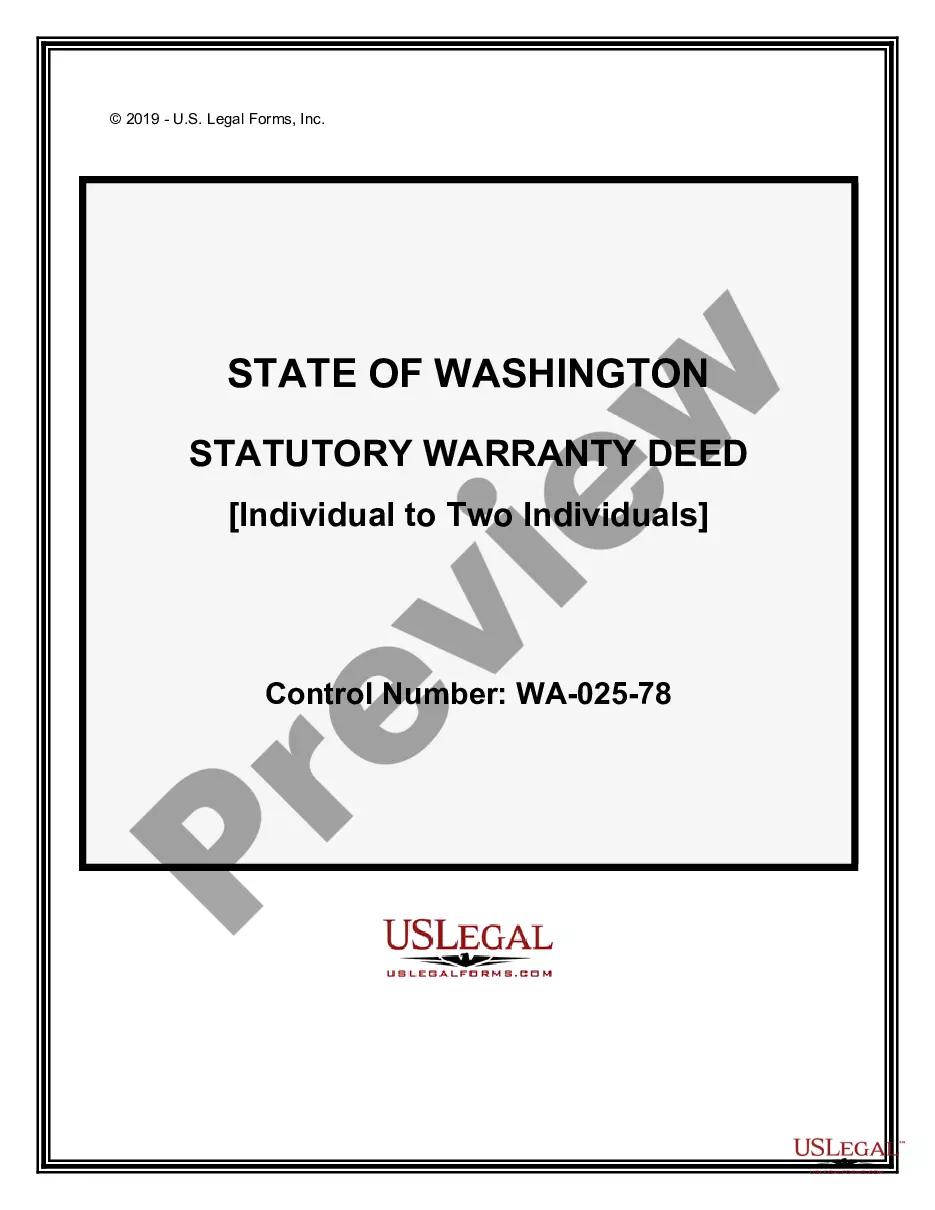
Washington Statutory Warranty Deed from One Individual to Two Individuals
Overview of this form
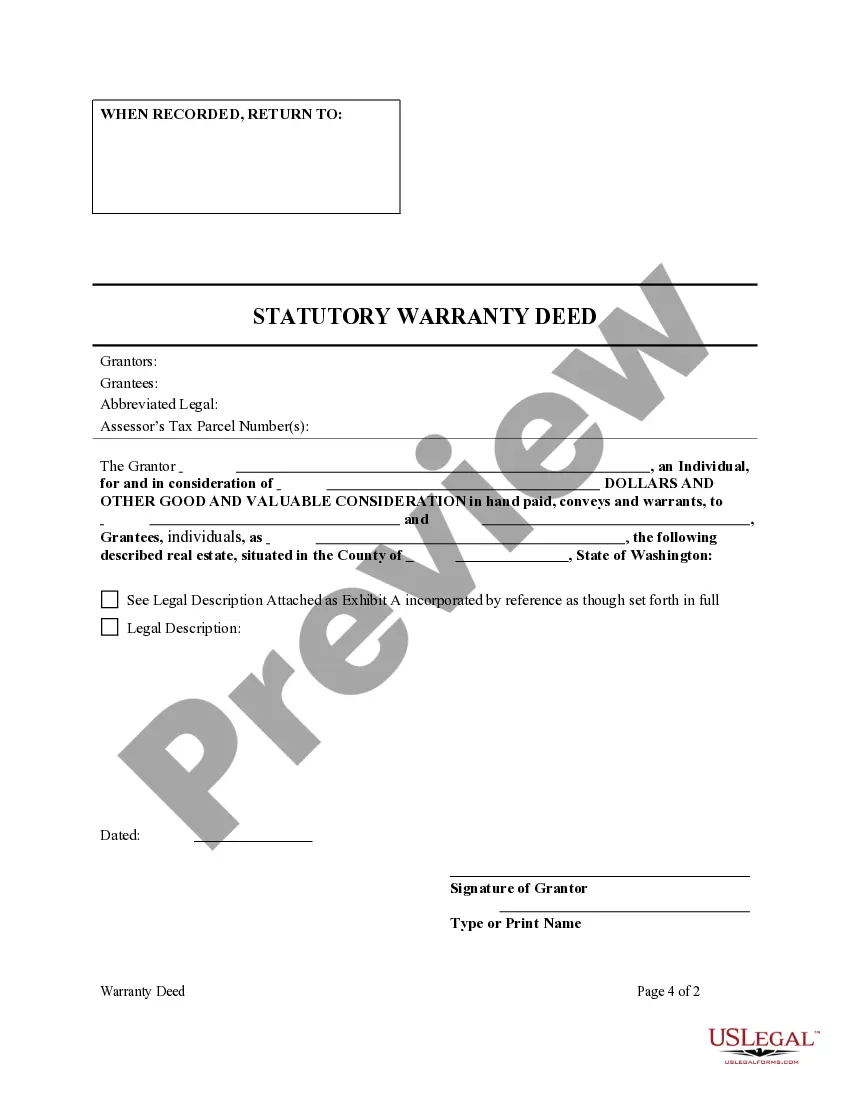
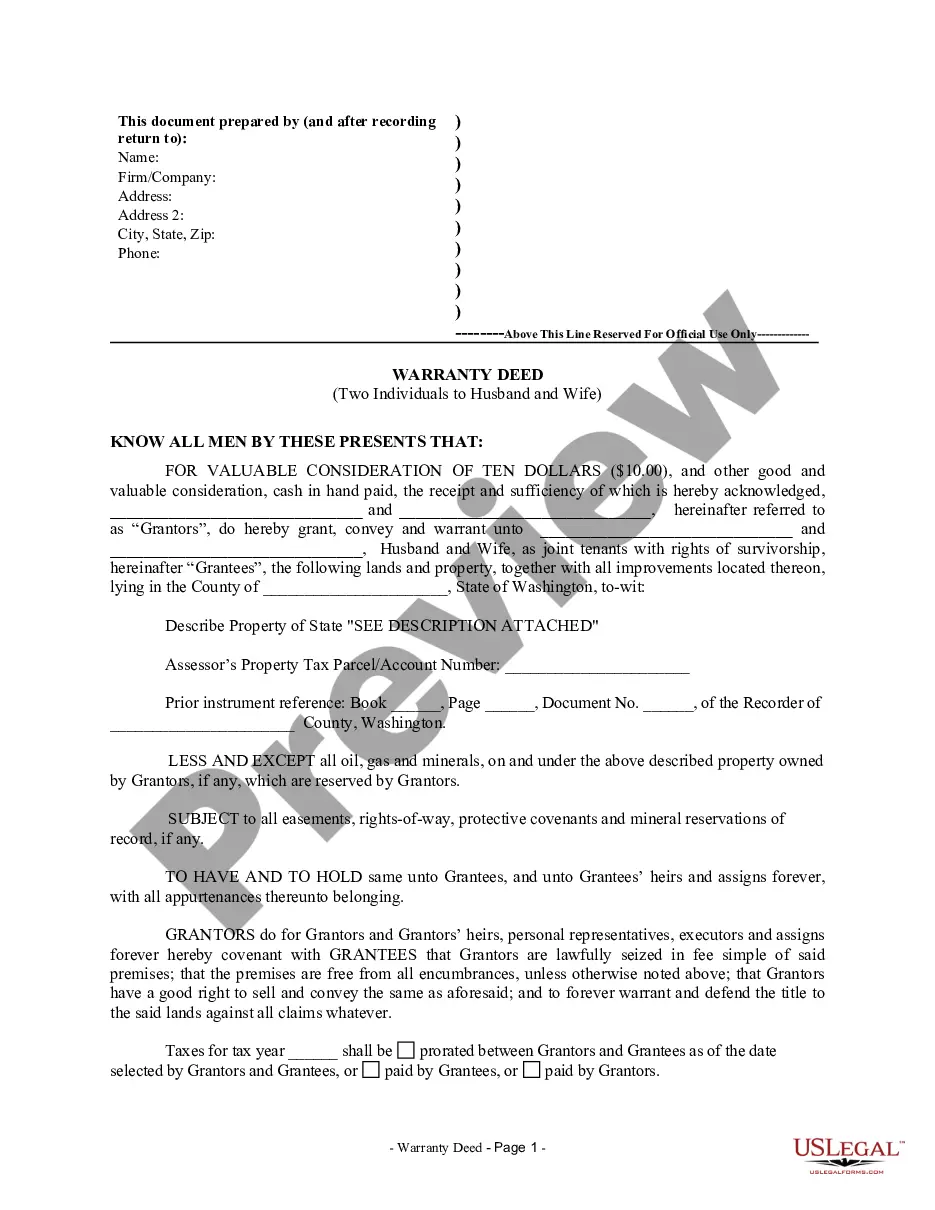
This Statutory Warranty Deed serves to transfer property ownership from one individual (the Grantor) to two individuals (the Grantees). It ensures that the Grantor provides a warranty, safeguarding the Grantees against any claims to the property. This deed allows for various ways in which the Grantees can hold the property, such as tenants in common, joint tenants with right of survivorship, or community property if they are married. It complies with the statutory laws of the relevant state, making it an essential legal document for secure property transfer.
What’s included in this form
- Identification of the Grantor and Grantees
- Detailed description of the property being transferred
- Warranties made by the Grantor regarding the property
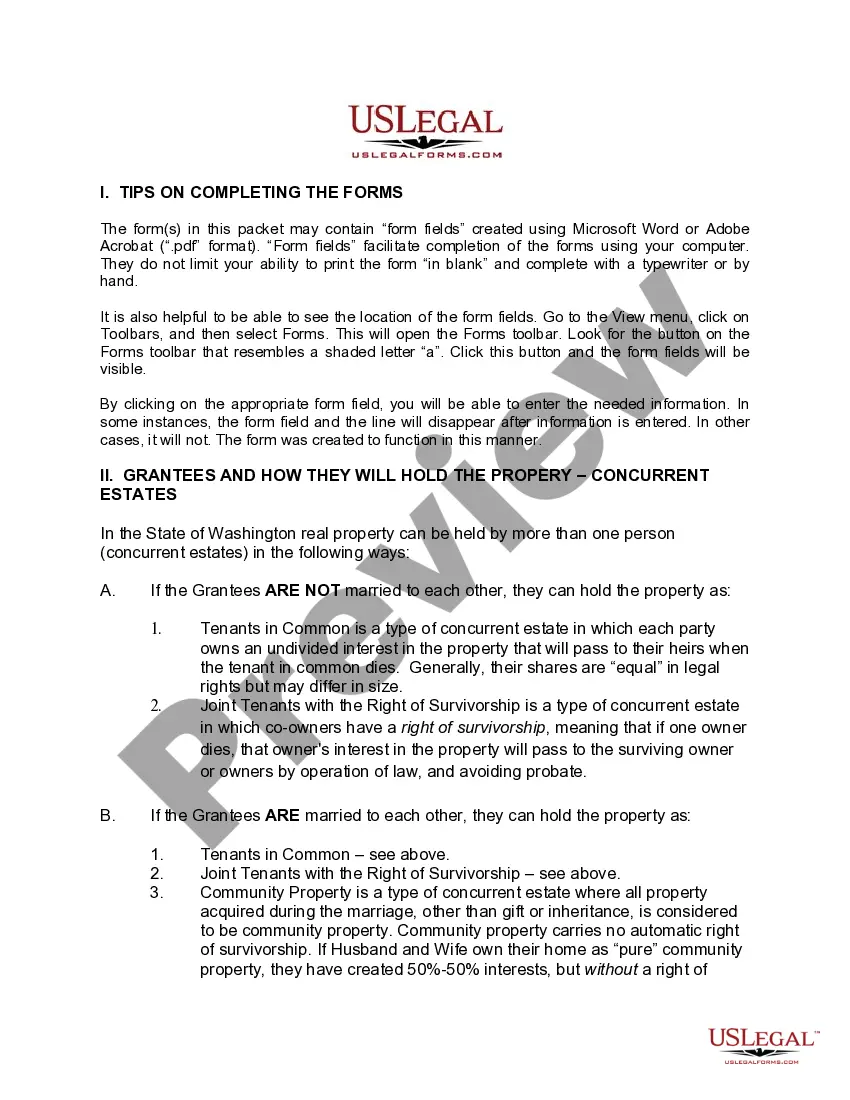
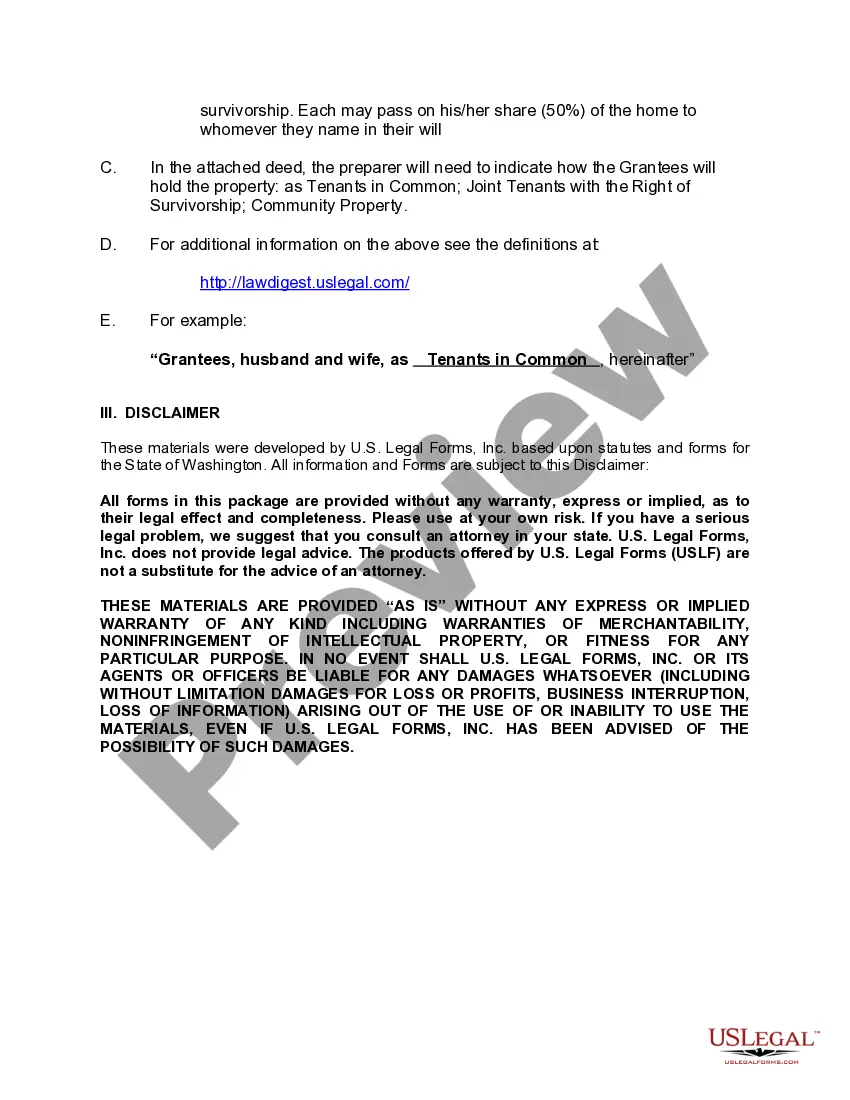
- Options for how Grantees will hold the property
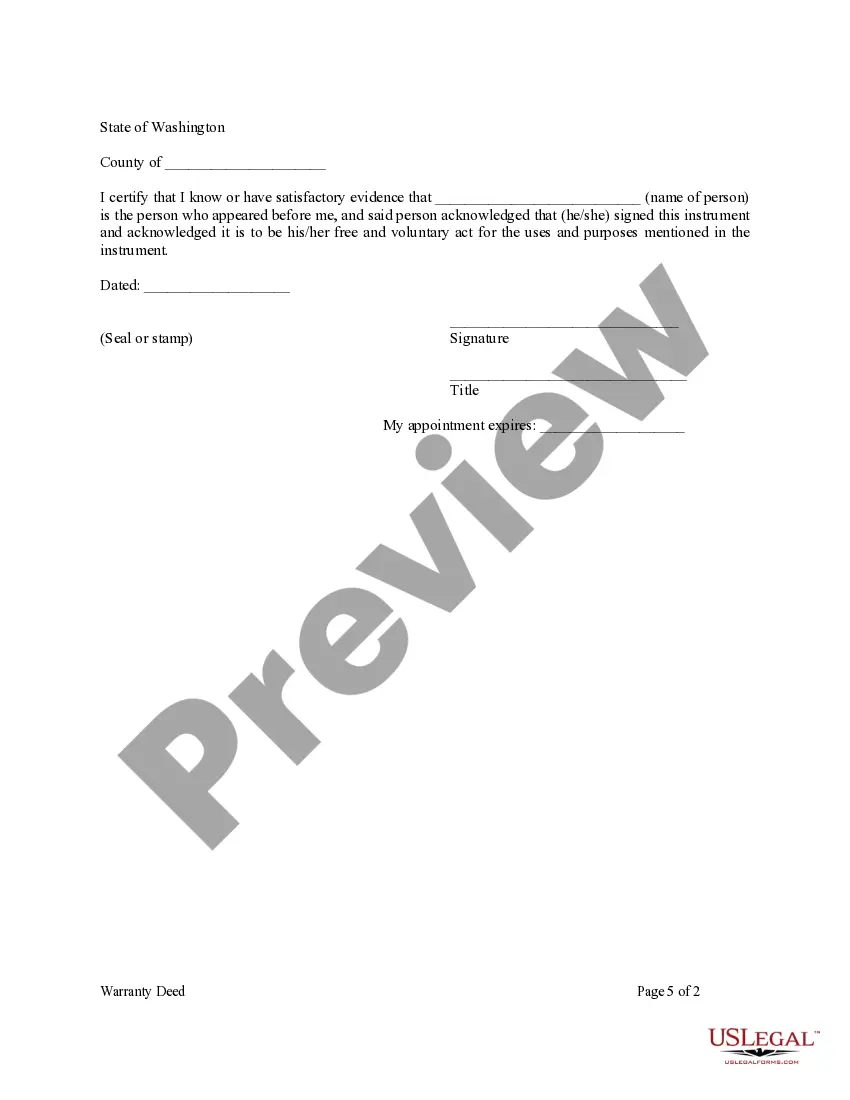
- Signatures of involved parties




Situations where this form applies
This form should be used when an individual wishes to legally transfer property title to two individuals, whether friends, family members, or spouses. It is applicable in situations such as gifting property, selling a property, or transferring ownership as part of an estate arrangement. Knowing the different ways the Grantees can hold the property is essential to ensure that future ownership aligns with their intentions.
Intended users of this form
This form is intended for:
- Individuals looking to convey property to two other individuals
- Real estate professionals handling property transfers
- Estate planners managing property distribution
Instructions for completing this form
- Gather the full names and addresses of the Grantor and Grantees.
- Provide a precise legal description of the property being conveyed.
- Select how the Grantees will hold the property: as tenants in common, joint tenants with right of survivorship, or community property.
- Complete the form fields, ensuring all necessary information is accurate.
- Both Grantor and Grantees should sign the document in the presence of a notary if required.
Notarization guidance
Notarization is required for this form to take effect. Our online notarization service, powered by Notarize, lets you verify and sign documents remotely through an encrypted video session, available 24/7.
Get your form ready online
Our built-in tools help you complete, sign, share, and store your documents in one place.
Make edits, fill in missing information, and update formatting in US Legal Forms—just like you would in MS Word.
Download a copy, print it, send it by email, or mail it via USPS—whatever works best for your next step.
Sign and collect signatures with our SignNow integration. Send to multiple recipients, set reminders, and more. Go Premium to unlock E-Sign.
If this form requires notarization, complete it online through a secure video call—no need to meet a notary in person or wait for an appointment.
We protect your documents and personal data by following strict security and privacy standards.

Make edits, fill in missing information, and update formatting in US Legal Forms—just like you would in MS Word.

Download a copy, print it, send it by email, or mail it via USPS—whatever works best for your next step.

Sign and collect signatures with our SignNow integration. Send to multiple recipients, set reminders, and more. Go Premium to unlock E-Sign.

If this form requires notarization, complete it online through a secure video call—no need to meet a notary in person or wait for an appointment.

We protect your documents and personal data by following strict security and privacy standards.
Common mistakes to avoid
- Failing to include a complete legal description of the property.
- Not specifying how the Grantees will hold the property.
- Overlooking signatures from both parties.
- Not having the document notarized when required.
Why use this form online
- Immediate access to forms for quick completion.
- Editability allows for tailored information without starting from scratch.
- Ensures compliance with the latest legal standards.
- Easy download for convenient record-keeping.
What to keep in mind
- The Statutory Warranty Deed is essential for transferring property from one individual to two others.
- It ensures that the property is free of claims and grants specific rights based on how the Grantees hold the property.
- Properly completing the deed and understanding state-specific requirements is crucial for legal enforceability.
Looking for another form?
Form popularity
FAQ
A statutory warranty deed is different from a warranty deed because it is a shorter form made available through your state's statutes and it may not outright list the promise that the title is guaranteed to be clear. Instead, because it is a statutory form, this guarantee is implied and is still legally enforceable.
Before adding your spouse to the deed, speak with your attorney. The easiest way to grant your spouse title to your home is via a quitclaim deed (Californians generally use an interspousal grant deed). With a quitclaim deed, you can name your spouse as the property's joint owner.
Contact all owners of the property. All vested owners currently on the title must sign a quitclaim deed. In order to share ownership with another person, you must get all other vested owners to consent and sign. Hire a Washington notary public.
Adding someone to your house deed requires the filing of a legal form known as a quitclaim deed. When executed and notarized, the quitclaim deed legally overrides the current deed to your home. By filing the quitclaim deed, you can add someone to the title of your home, in effect transferring a share of ownership.
In most states you can file a disclaimer or deed of disclaimer that says specifically you were placed in title without your knowledge or consent and disclaim the deed.
Discuss property ownership interests. Access a copy of your title deed. Complete, review and sign the quitclaim or warranty form. Submit the quitclaim or warranty form. Request a certified copy of your quitclaim or warranty deed.
The easiest way to grant your spouse title to your home is via a quitclaim deed (Californians generally use an interspousal grant deed). With a quitclaim deed, you can name your spouse as the property's joint owner. The quitclaim deed must include the property's description, including its boundary lines.
Yes you can. This is called a transfer of equity but you will need the permission of your lender. If you are not married or in a civil partnership you may wish to consider creating a deed of trust and a living together agreement which we can explain to you.