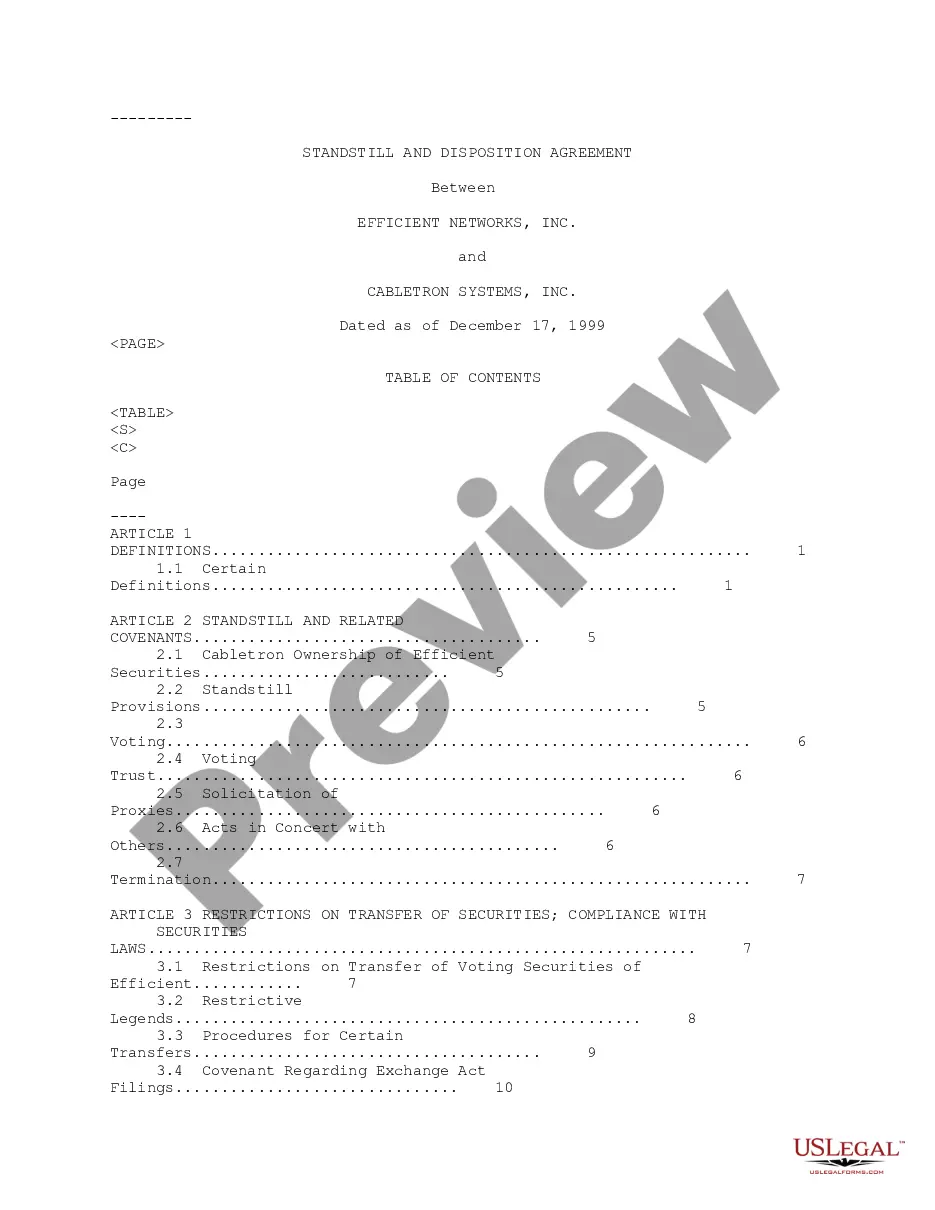
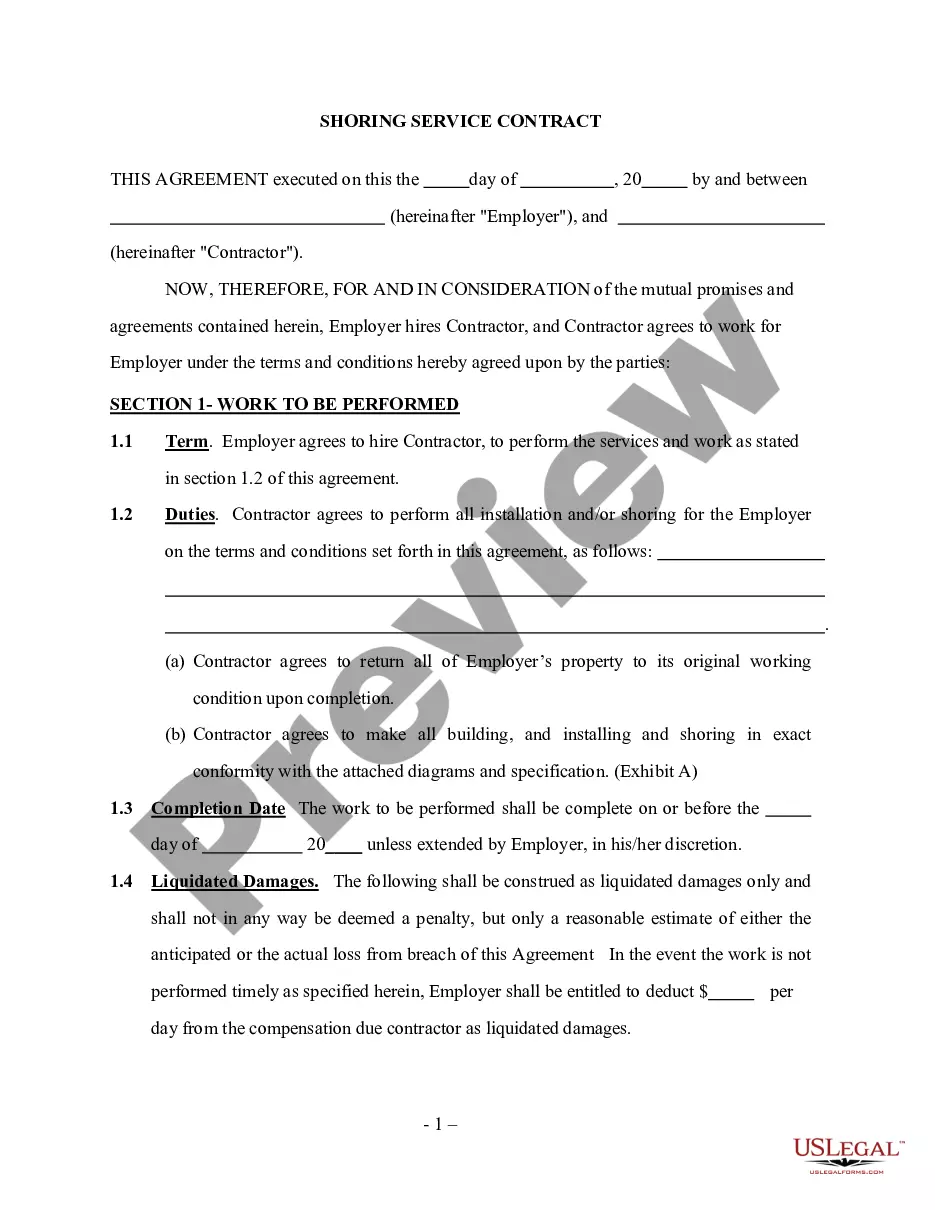
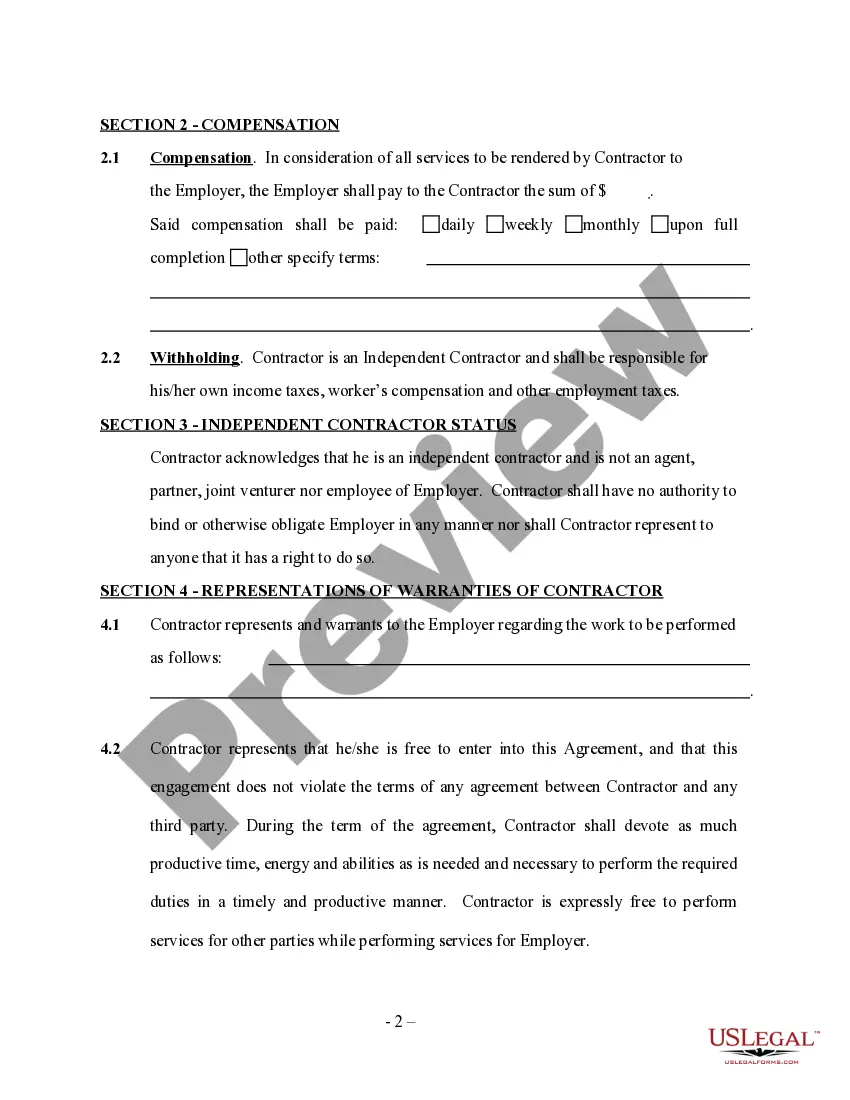
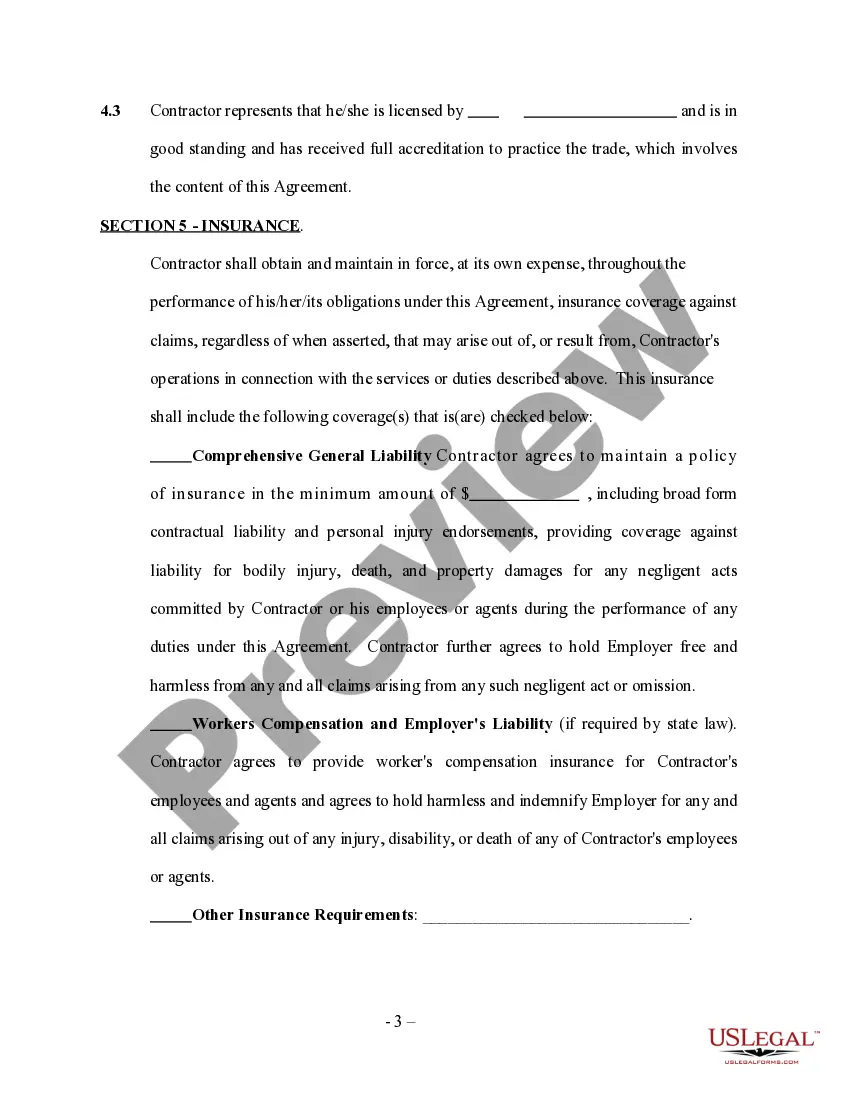
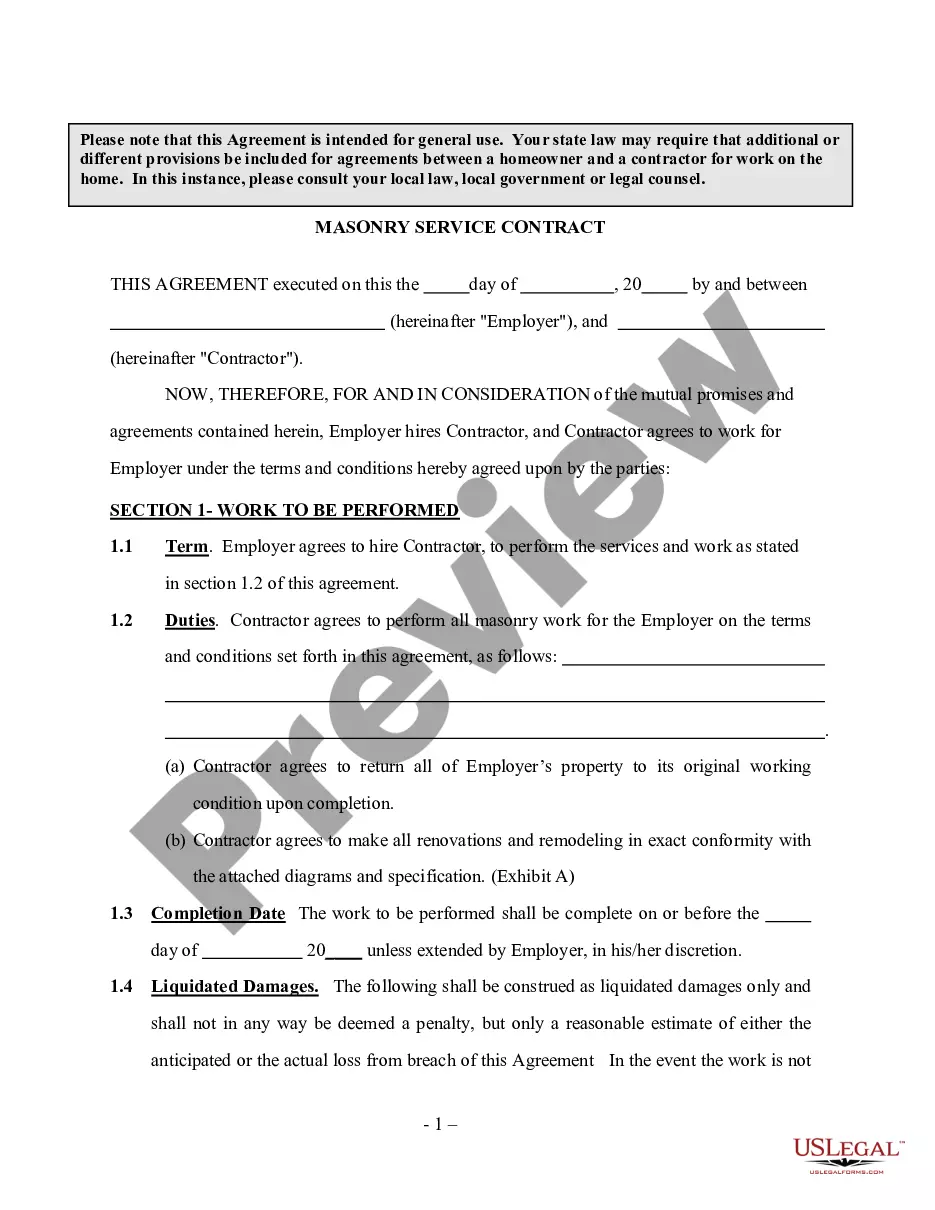
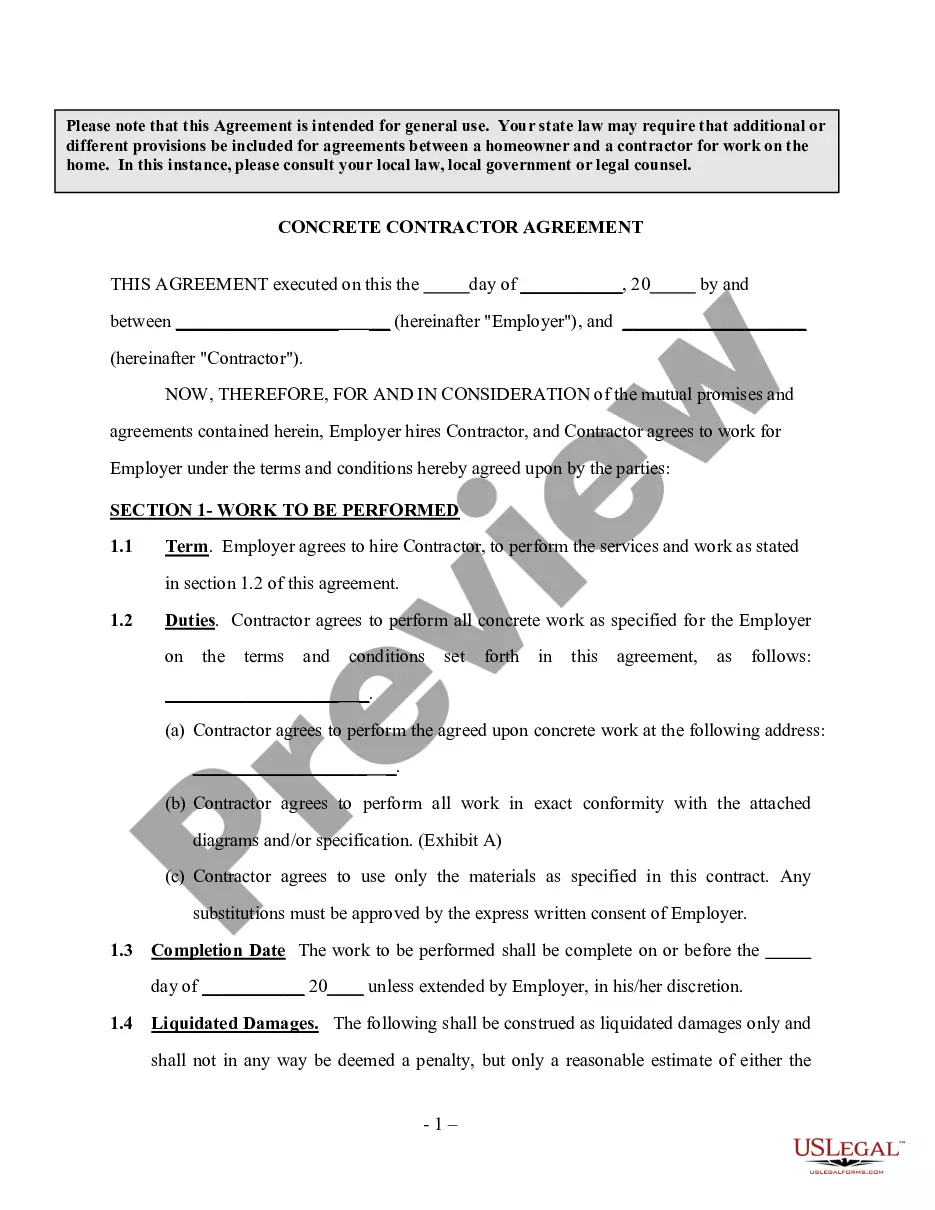
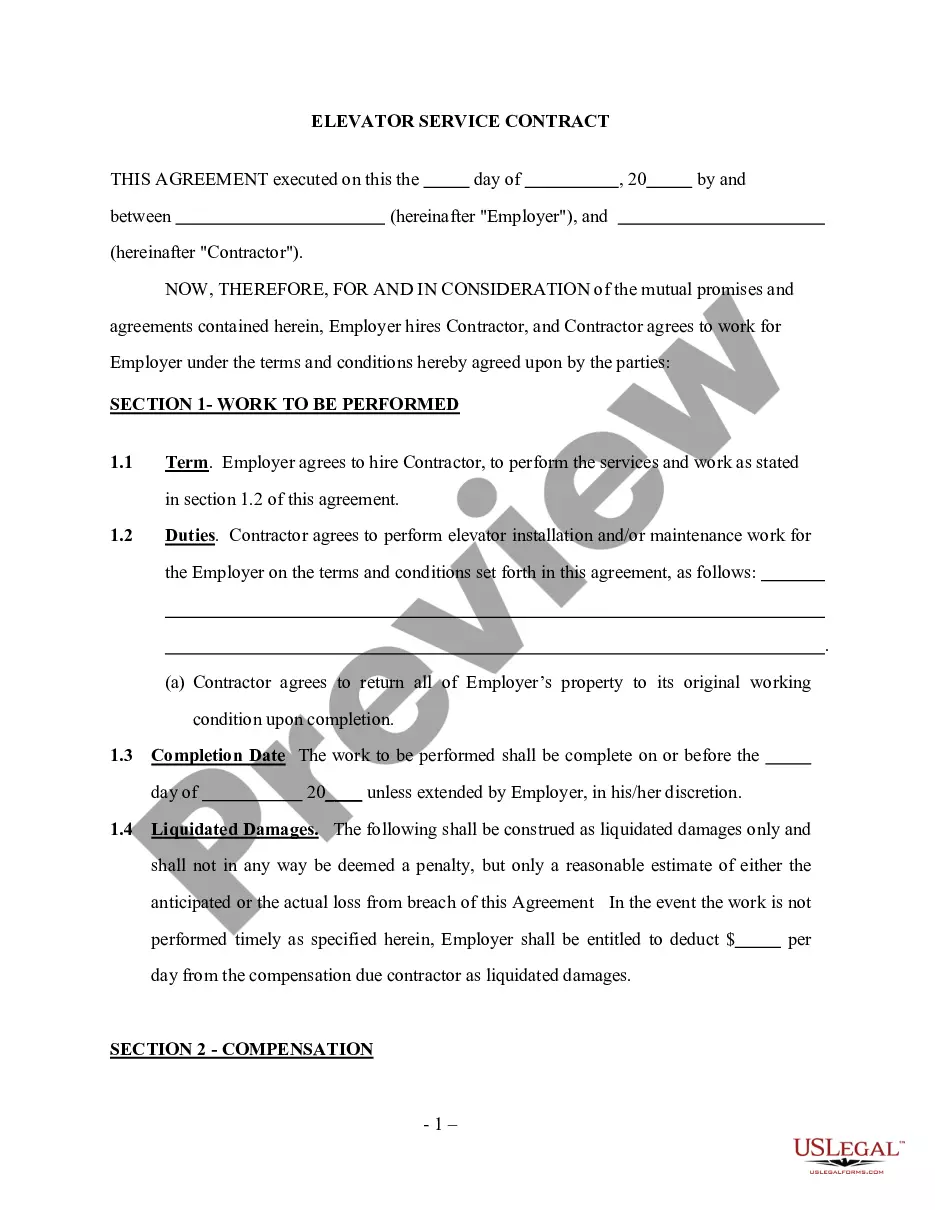
Employer contracts with an independent contractor to provide shoring as specified and agreed upon in the contract.
Vermont Shoring Services Contract - Self-Employed
State:
Multi-State
Control #:
US-INDC-100
Format:
Word;
Rich Text
Instant download
Description
Free preview
Get your form ready online
Our built-in tools help you complete, sign, share, and store your documents in one place.
Built-in online Word editor
Make edits, fill in missing information, and update formatting in US Legal Forms—just like you would in MS Word.
Export easily
Download a copy, print it, send it by email, or mail it via USPS—whatever works best for your next step.
E-sign your document
Sign and collect signatures with our SignNow integration. Send to multiple recipients, set reminders, and more. Go Premium to unlock E-Sign.
Notarize online 24/7
If this form requires notarization, complete it online through a secure video call—no need to meet a notary in person or wait for an appointment.
Store your document securely
We protect your documents and personal data by following strict security and privacy standards.

Make edits, fill in missing information, and update formatting in US Legal Forms—just like you would in MS Word.

Download a copy, print it, send it by email, or mail it via USPS—whatever works best for your next step.

Sign and collect signatures with our SignNow integration. Send to multiple recipients, set reminders, and more. Go Premium to unlock E-Sign.

If this form requires notarization, complete it online through a secure video call—no need to meet a notary in person or wait for an appointment.

We protect your documents and personal data by following strict security and privacy standards.
Looking for another form?









How to fill out Shoring Services Contract - Self-Employed?
Locating the correct certified document template can be quite a challenge.
It's worth mentioning that there are numerous templates accessible online, but how do you discover the certified version you require.
Utilize the US Legal Forms website. The service offers thousands of templates, including the Vermont Shoring Services Agreement - Self-Employed, which you can employ for professional and personal needs.
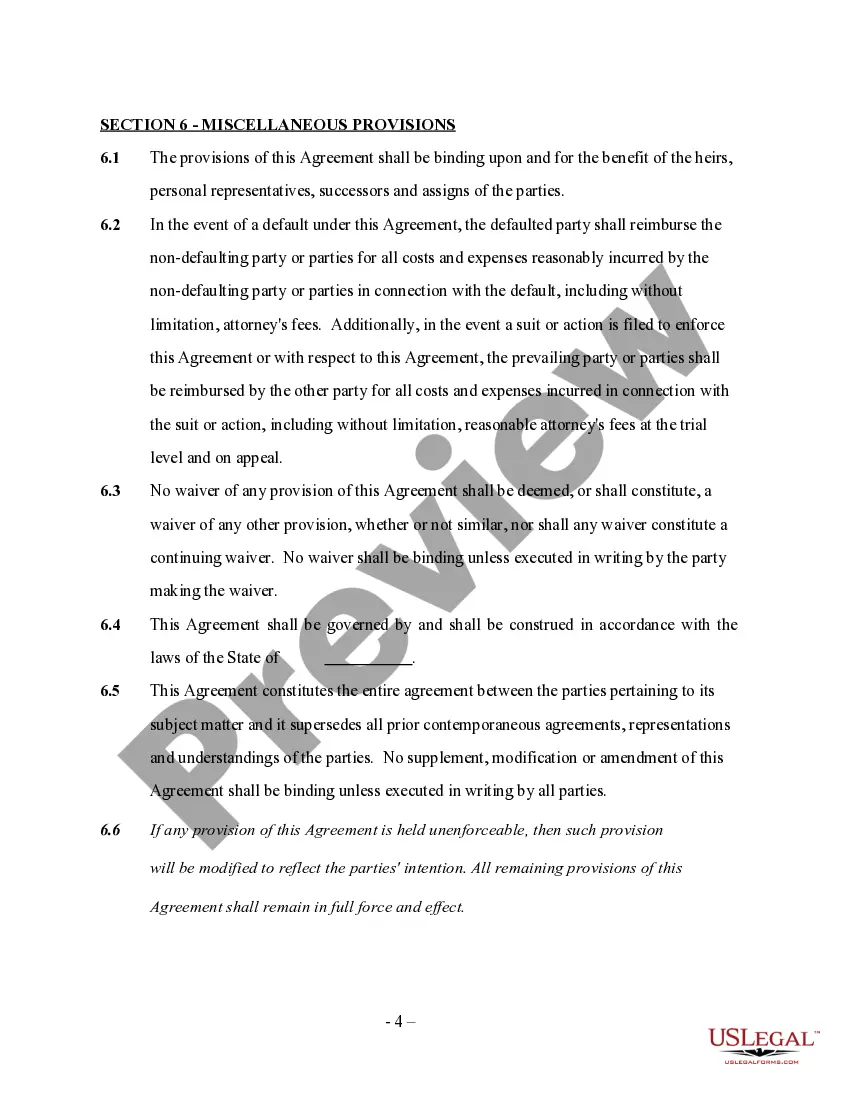
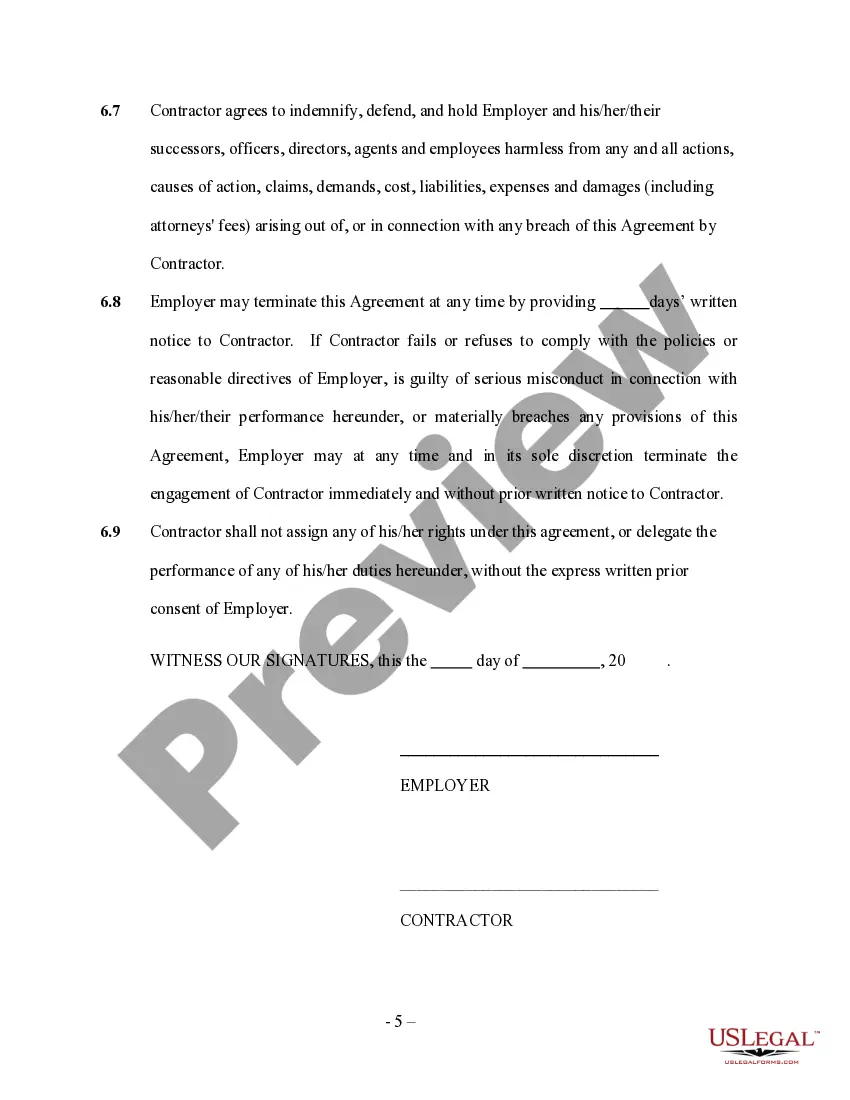
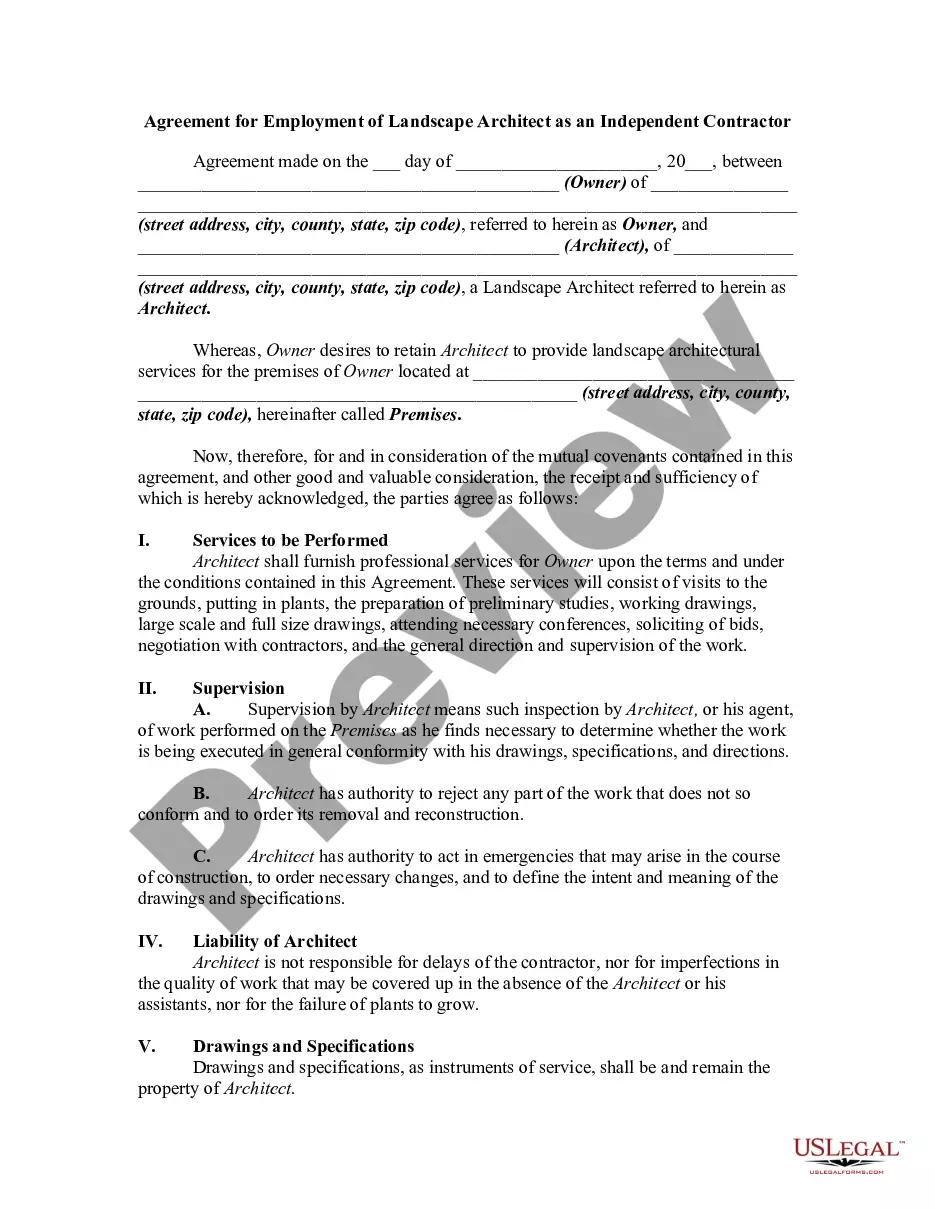
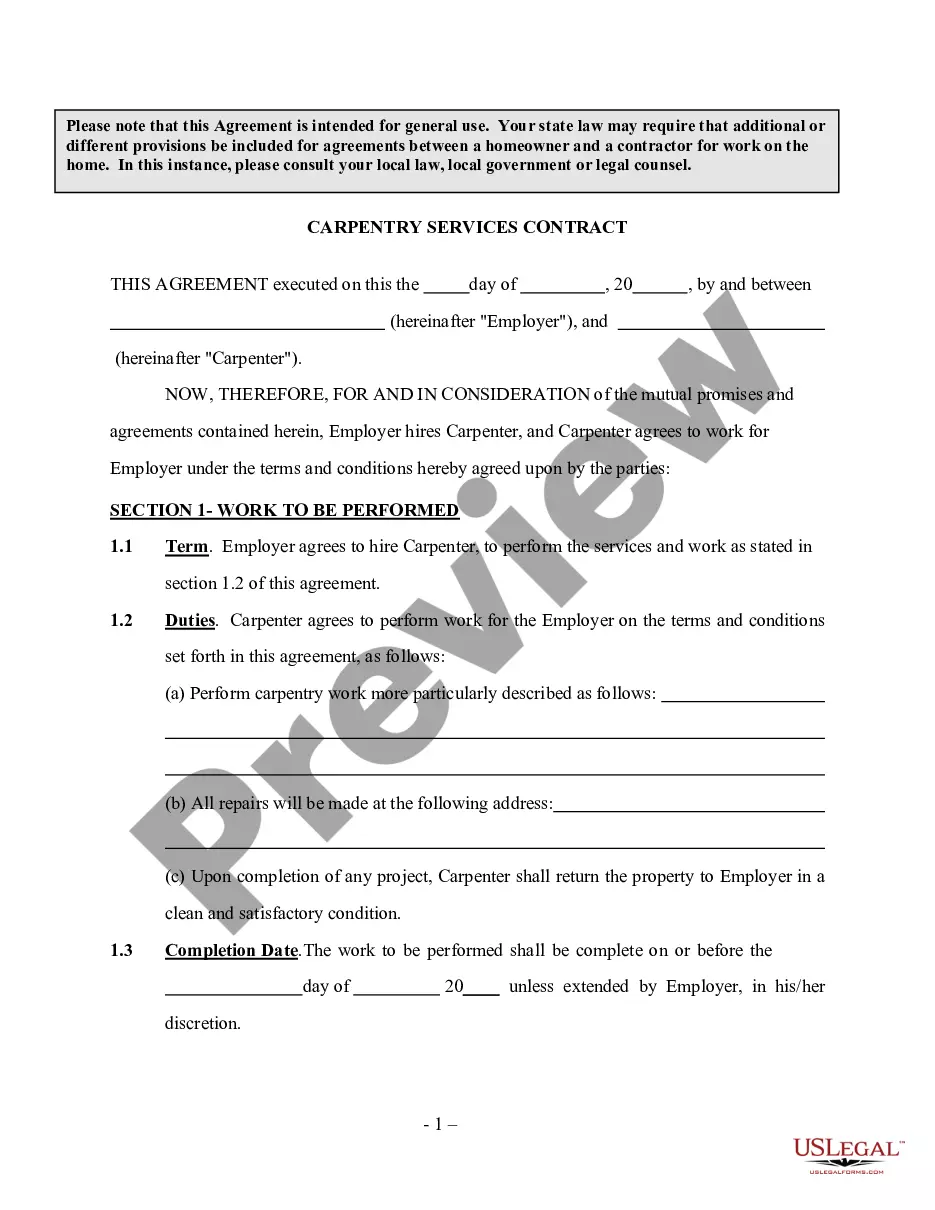
You can preview the document using the Review button and check the document summary to confirm it is appropriate for you.
- All of the documents are reviewed by experts and meet federal and state requirements.
- If you are already a member, sign in to your account and press the Download button to acquire the Vermont Shoring Services Agreement - Self-Employed.
- Use your account to browse through the certified documents you have purchased previously.
- Visit the My Documents section of your account to retrieve another copy of the file you need.
- If you are a new user of US Legal Forms, here are simple steps you should follow.
- First, ensure you have chosen the correct template for your city/state.
Form popularity
FAQ
The new federal rule on independent contractors clarifies the criteria for determining independent contractor status. It emphasizes the importance of economic independence and the nature of the working relationship. If you're navigating this with a Vermont Shoring Services Contract - Self-Employed, understanding these changes will help you better align your business practices with current regulations and protect your rights.
As an independent contractor, you have several rights that protect your interests. These include the right to negotiate your contracts, receive compensation for services rendered, and protect your intellectual property. With a Vermont Shoring Services Contract - Self-Employed, you also have the ability to set your own business practices while adhering to the terms established in your agreement.
The rules for independent contractors are designed to maintain a clear distinction from employees. As an independent contractor with a Vermont Shoring Services Contract - Self-Employed, you should be aware of your obligations, which include paying self-employment taxes and understanding your rights regarding contract terms. It's essential to follow these rules to ensure legal compliance and protect your business interests.
Independent contractors must meet specific legal requirements that vary by state. For a Vermont Shoring Services Contract - Self-Employed, these often include obtaining any required licenses and permits, ensuring compliance with tax obligations, and maintaining accurate records of business expenses and income. It is crucial to follow these guidelines to avoid misclassification.
To be classified as an independent contractor, one key requirement is that you must have control over how you complete your work. This means you can set your own hours and choose the methods and tools you use. In the context of a Vermont Shoring Services Contract - Self-Employed, this independence is essential, as it distinguishes contractors from employees.
To write a contract as an independent contractor, you should clearly outline the scope of work, payment terms, project timeline, and any specific requirements. Including these details helps prevent misunderstandings and establishes a professional framework for your engagement. Using a template for a Vermont Shoring Services Contract - Self-Employed can streamline this process and ensure you cover all important aspects.
Yes, in most cases, you need a contractor's license in Vermont for both residential and commercial construction projects. This requirement helps ensure that the work is performed safely and in accordance with building codes. When drafting a Vermont Shoring Services Contract - Self-Employed, it is essential to verify that the contractor possesses the necessary licenses to ensure project success and compliance.
In Vermont, homeowners can often perform certain minor construction tasks without a contractor's license, such as small renovations or repairs. However, larger projects, particularly those involving shoring or structural changes, typically require a licensed contractor. When managing your Vermont Shoring Services Contract - Self-Employed, it is prudent to consult local regulations before starting any work.
A licensed contractor holds legal credentials to perform specific construction work, while a certified contractor has completed additional training or certification programs. The distinction is crucial for projects like those covered by a Vermont Shoring Services Contract - Self-Employed, as hiring a licensed contractor ensures compliance with local laws and safety standards when managing specialized tasks.
Yes, contractors in Vermont are generally required to be licensed for many types of construction work. This requirement helps ensure that the contractor meets specific standards and is knowledgeable about local regulations. When entering into a Vermont Shoring Services Contract - Self-Employed, opting for a licensed contractor assures you that your project complies with state laws.