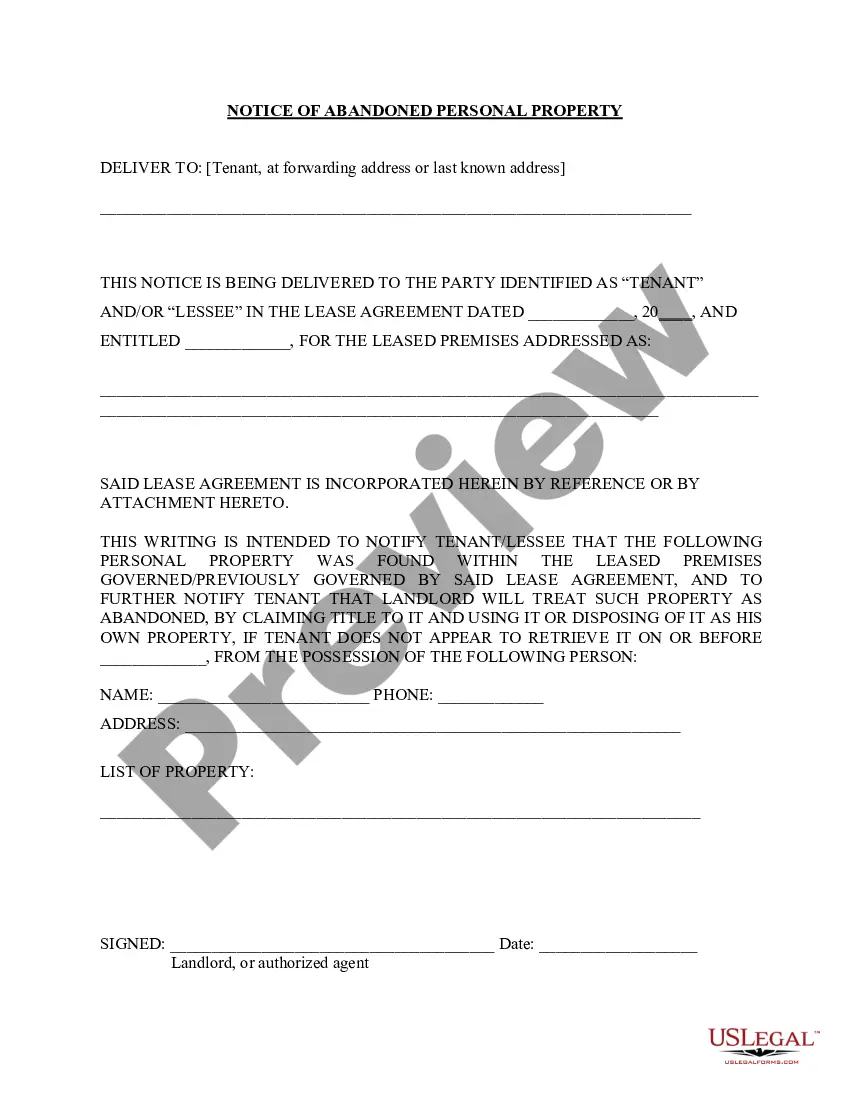
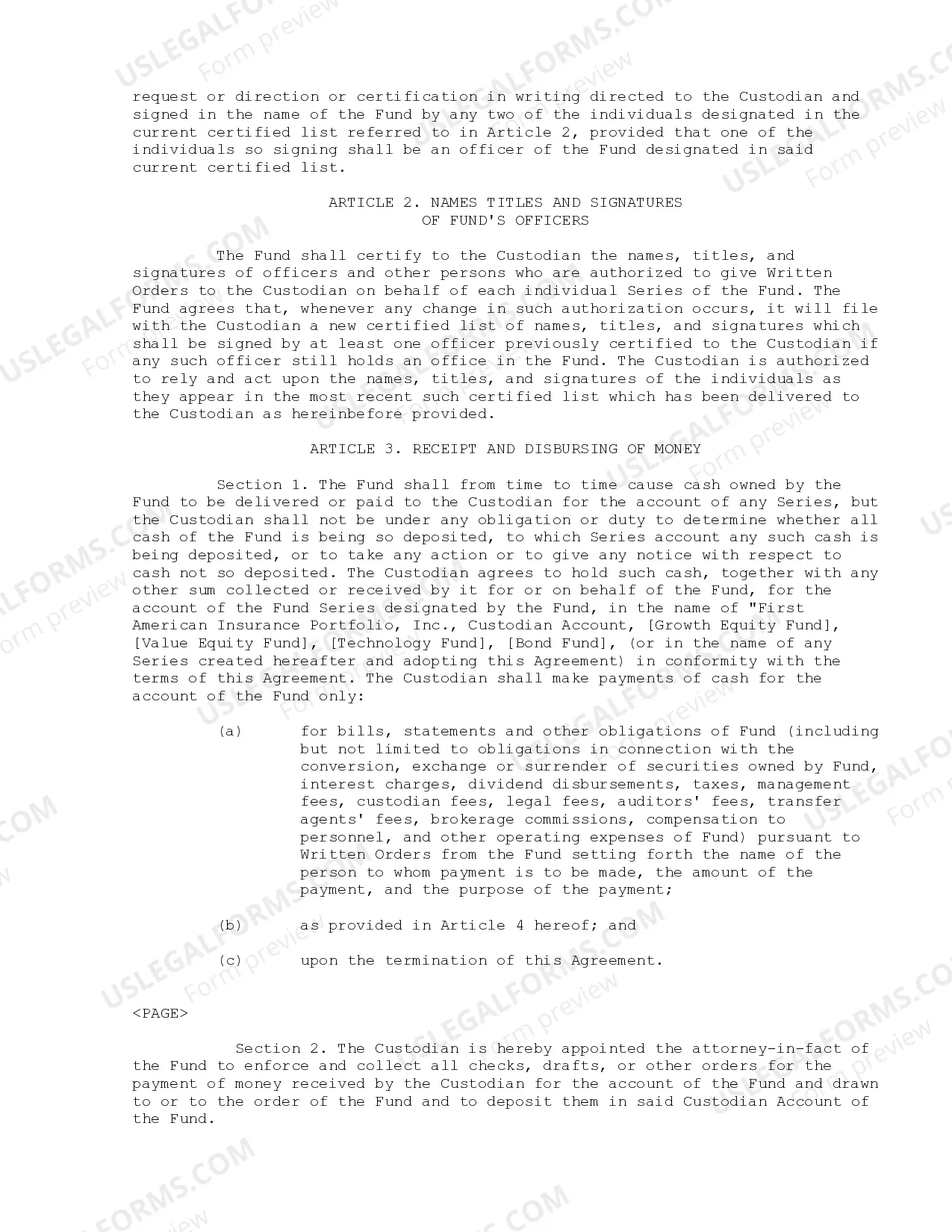
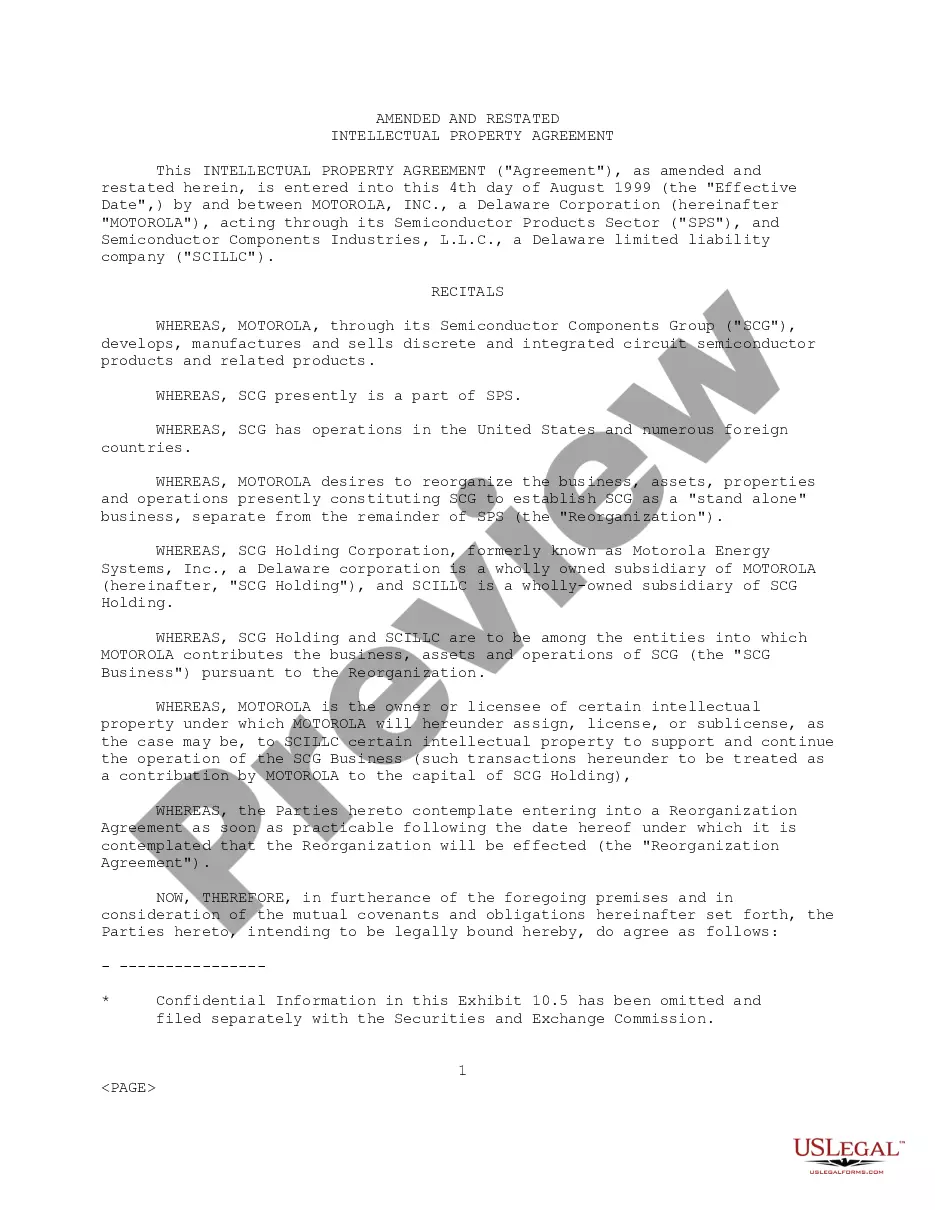
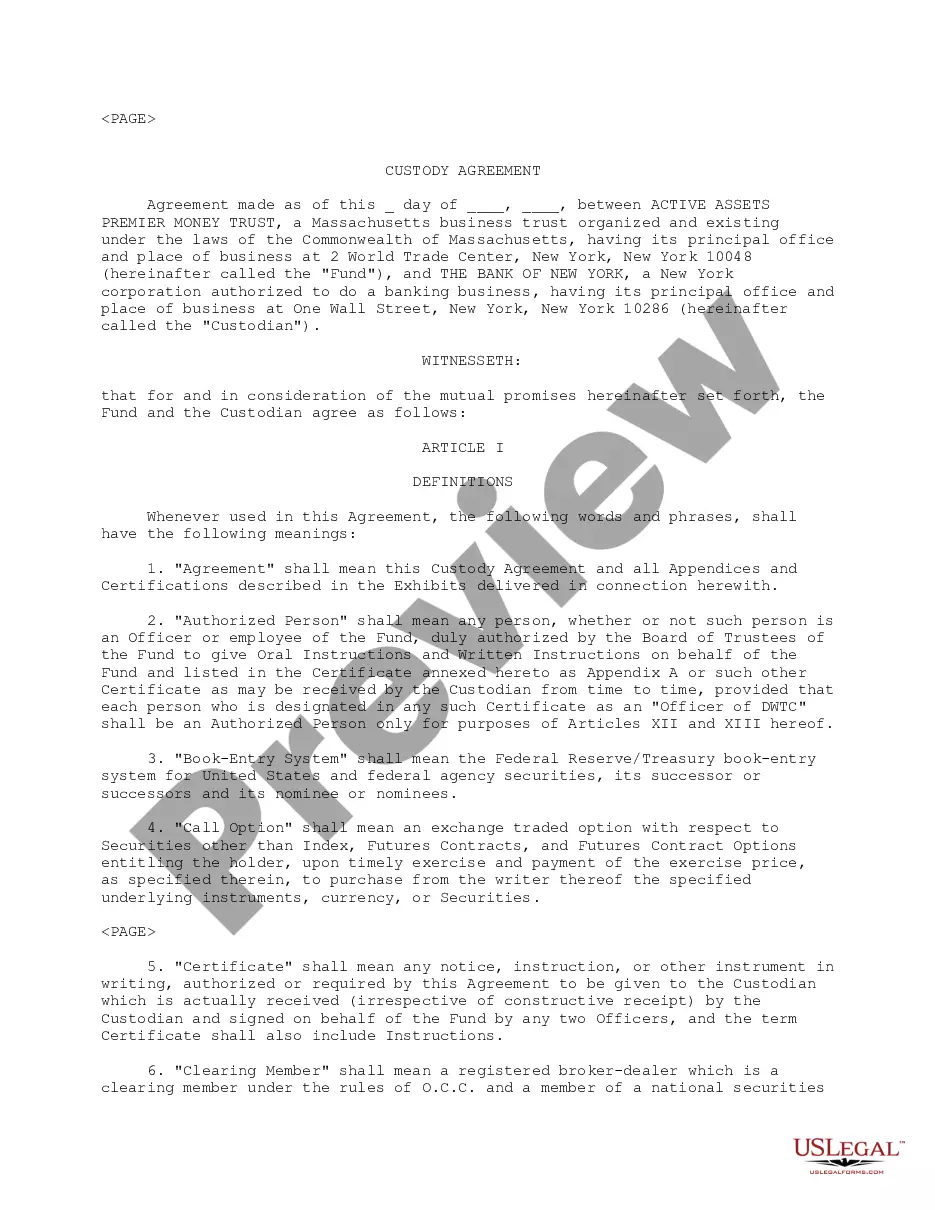
Vermont Custodian Agreement
Description



Get your form ready online
Our built-in tools help you complete, sign, share, and store your documents in one place.
Make edits, fill in missing information, and update formatting in US Legal Forms—just like you would in MS Word.
Download a copy, print it, send it by email, or mail it via USPS—whatever works best for your next step.
Sign and collect signatures with our SignNow integration. Send to multiple recipients, set reminders, and more. Go Premium to unlock E-Sign.
If this form requires notarization, complete it online through a secure video call—no need to meet a notary in person or wait for an appointment.
We protect your documents and personal data by following strict security and privacy standards.

Make edits, fill in missing information, and update formatting in US Legal Forms—just like you would in MS Word.

Download a copy, print it, send it by email, or mail it via USPS—whatever works best for your next step.

Sign and collect signatures with our SignNow integration. Send to multiple recipients, set reminders, and more. Go Premium to unlock E-Sign.

If this form requires notarization, complete it online through a secure video call—no need to meet a notary in person or wait for an appointment.

We protect your documents and personal data by following strict security and privacy standards.
Looking for another form?
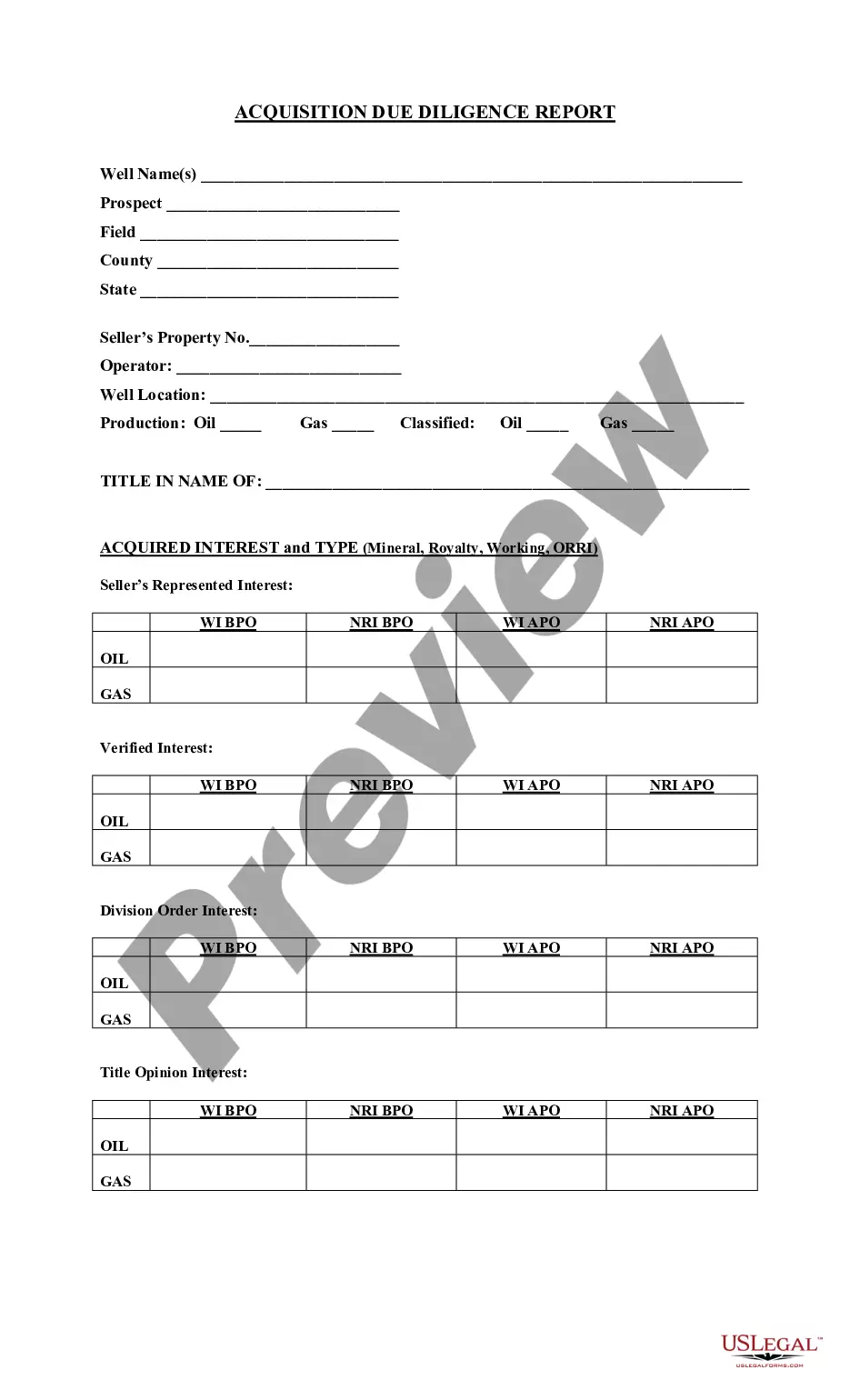

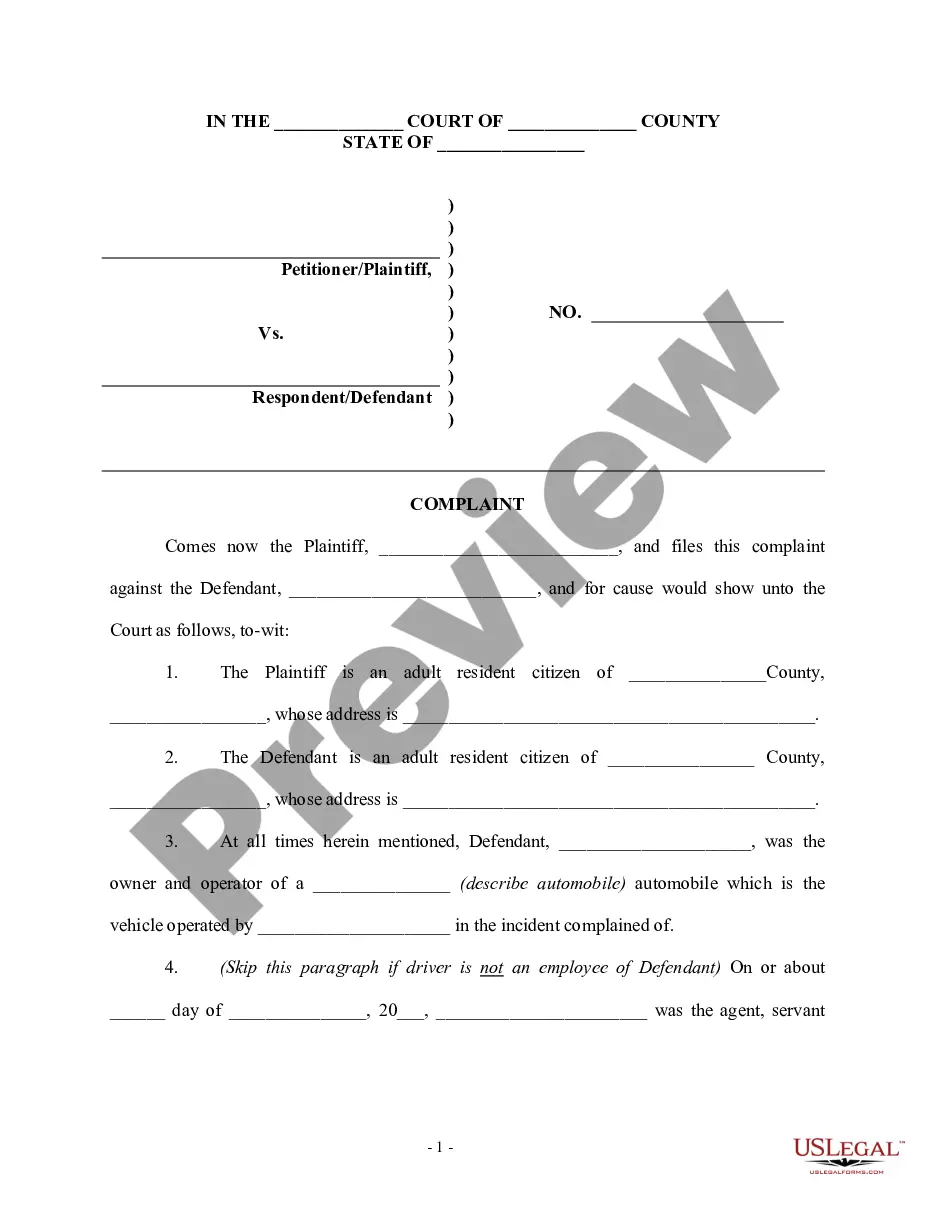



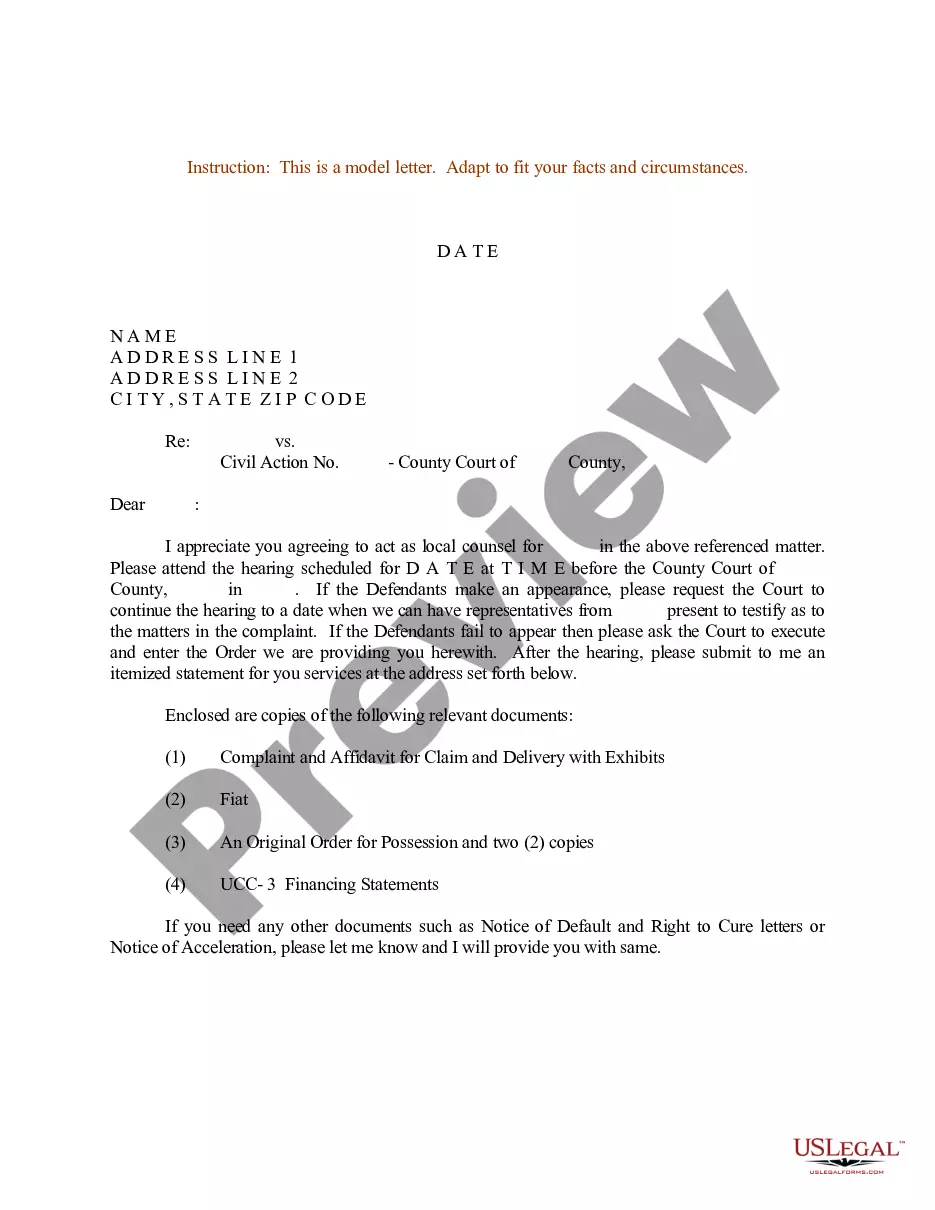

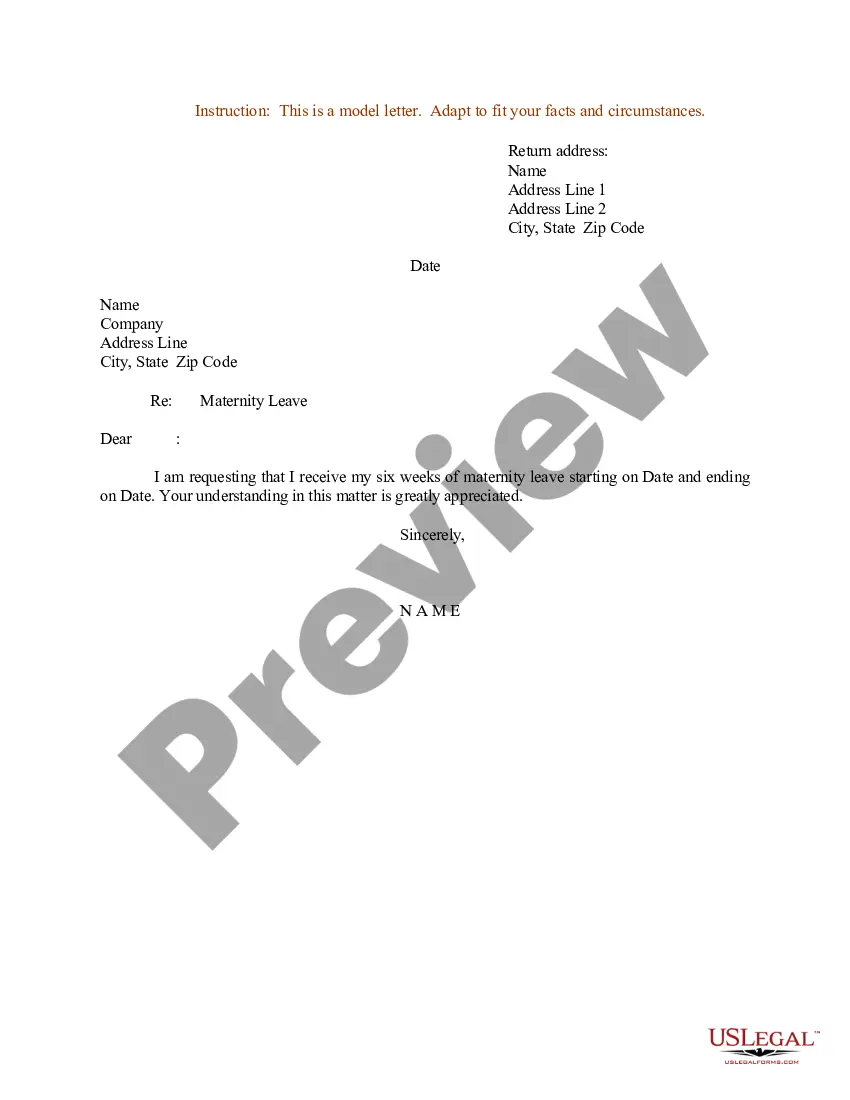
How to fill out Custodian Agreement?
Discovering the right legal file web template can be quite a struggle. Naturally, there are a variety of templates available online, but how will you get the legal kind you will need? Utilize the US Legal Forms internet site. The service delivers a large number of templates, like the Vermont Custodian Agreement, which you can use for business and personal needs. All of the types are examined by specialists and fulfill federal and state demands.
If you are presently registered, log in for your profile and then click the Download key to get the Vermont Custodian Agreement. Make use of your profile to check throughout the legal types you have purchased formerly. Proceed to the My Forms tab of your profile and get one more copy from the file you will need.
If you are a new consumer of US Legal Forms, allow me to share easy guidelines that you should comply with:
- Initially, make certain you have chosen the proper kind to your city/area. It is possible to check out the form while using Preview key and look at the form description to guarantee it will be the right one for you.
- In case the kind will not fulfill your requirements, take advantage of the Seach industry to obtain the correct kind.
- Once you are positive that the form is suitable, go through the Get now key to get the kind.
- Pick the pricing strategy you want and enter the necessary information. Create your profile and pay money for the transaction using your PayPal profile or charge card.
- Opt for the document formatting and acquire the legal file web template for your device.
- Comprehensive, change and produce and indicator the received Vermont Custodian Agreement.
US Legal Forms may be the largest collection of legal types for which you can see a variety of file templates. Utilize the service to acquire skillfully-made documents that comply with state demands.
Form popularity
FAQ
To ask the court to change an order in a divorce case, you must file a motion with an affidavit. A motion is a request for the court to take some action. An affidavit is a statement about the facts that support your motion.
50/50. Your parenting plan can be split. You can share legal responsibilities (decision making) and split time with the kids. The schedule can be one week with you, the next week with the other parent.
If you just can't agree, the court will decide for you. Every case is unique, but the court considers the same factors in most cases when parental rights and responsibilities are in dispute: The relationship of the child with each parent and their responsibility to provide the child with love, affection, and guidance.
The UCCJEA defines the home state as ?the state in which a child lived with a parent or a person acting as a parent for at least six consecutive months immediately before the commencement of a child custody proceeding.? UCCJEA, §102(7).
I'm not married to the father of my child If there isn't a court order about parentage, only the mother has legal and physical responsibility. This is called guardianship.
When the child lives with one parent, that parent has sole physical responsibility or sole custody. A parent with sole physical responsibility has the child live with him or her for most of the time. Legally, a parent with sole custody is responsible for the child's care for between 75% and 100% of the child's time.
Minors residing in the State and having reached the age of 14 years may choose their guardians, subject to the approval of the Probate Division of the Superior Court, and may appear before the court or before a Superior judge and make their choice.