Acquisition Due Diligence Report
Understanding this form
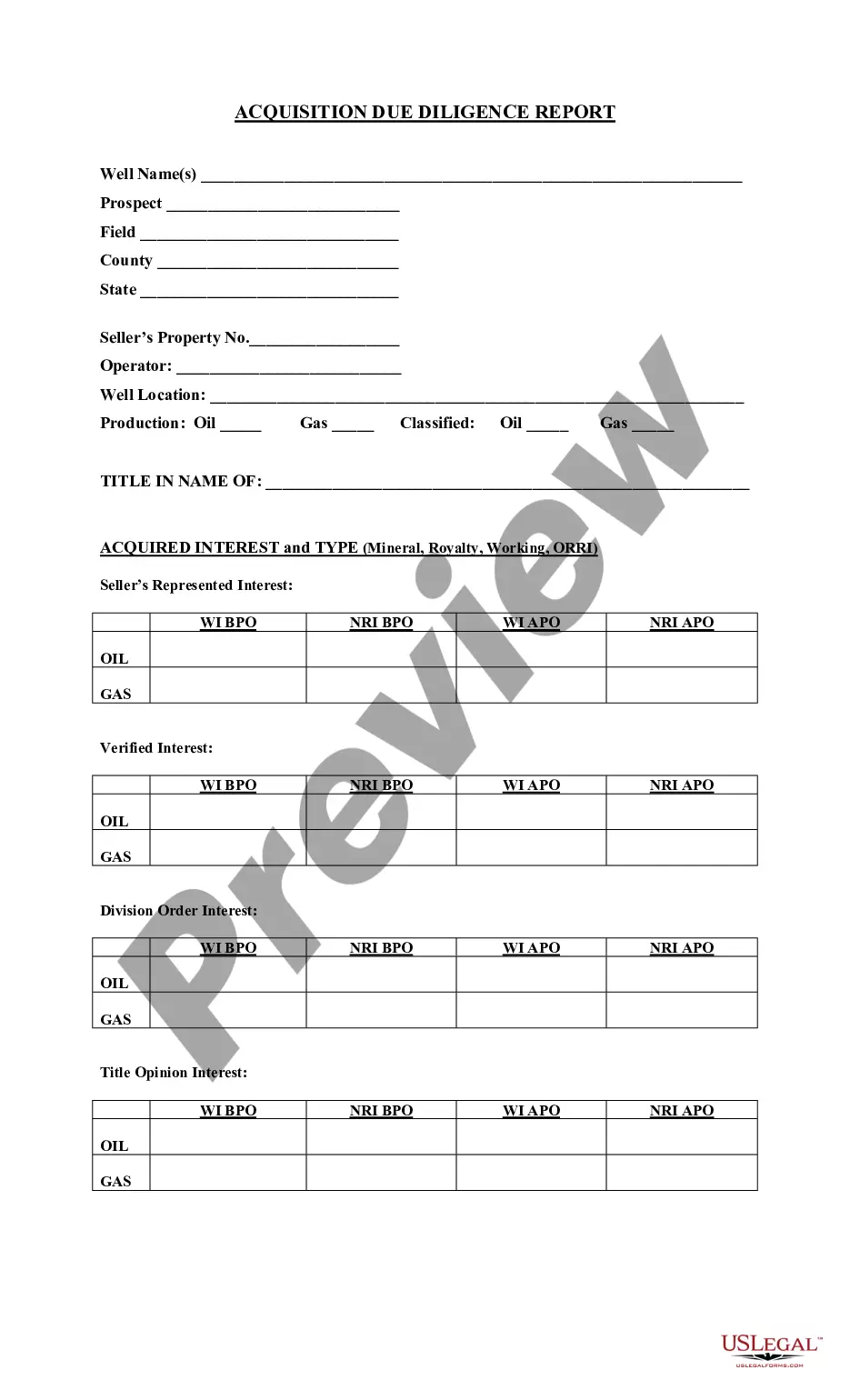
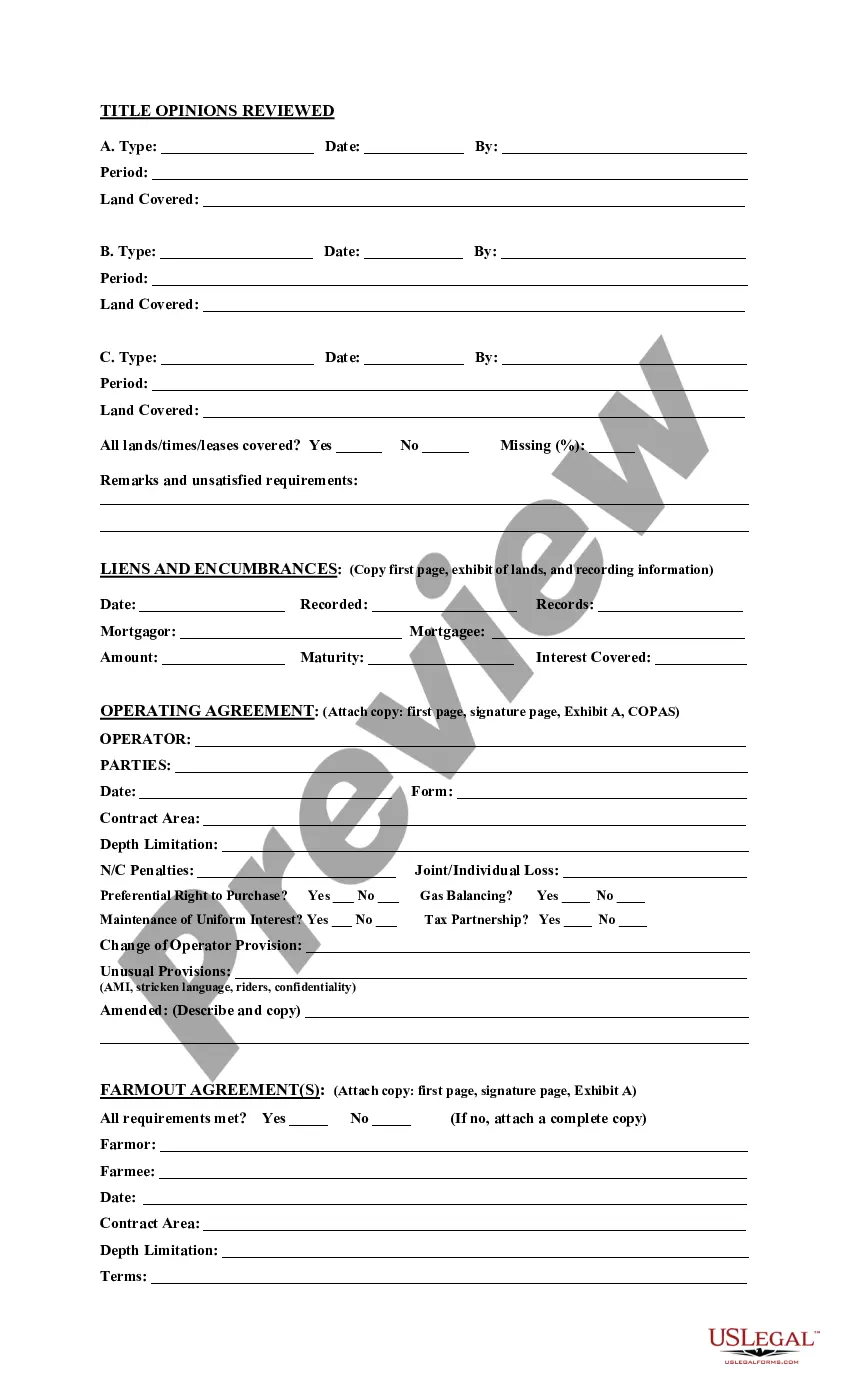
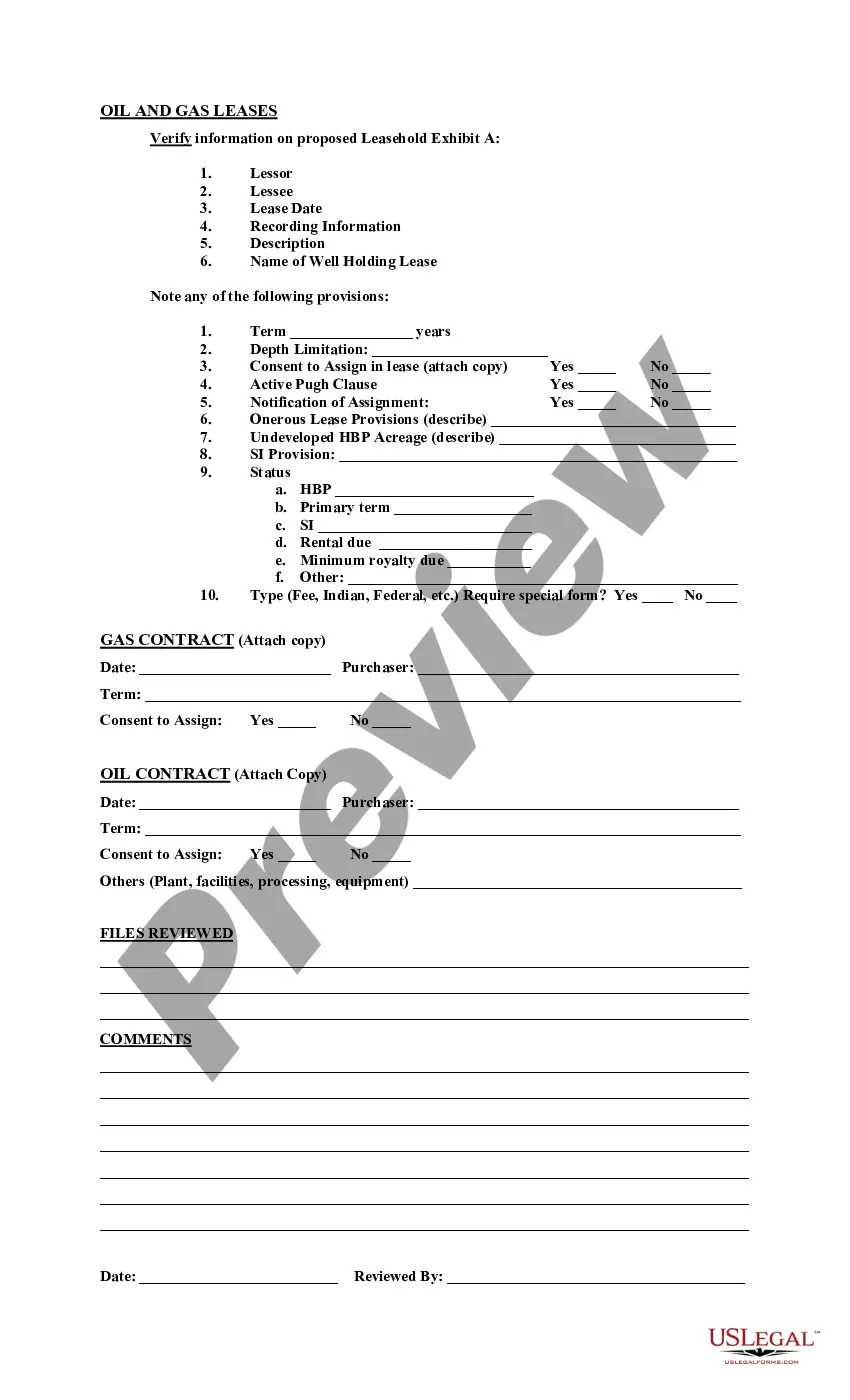
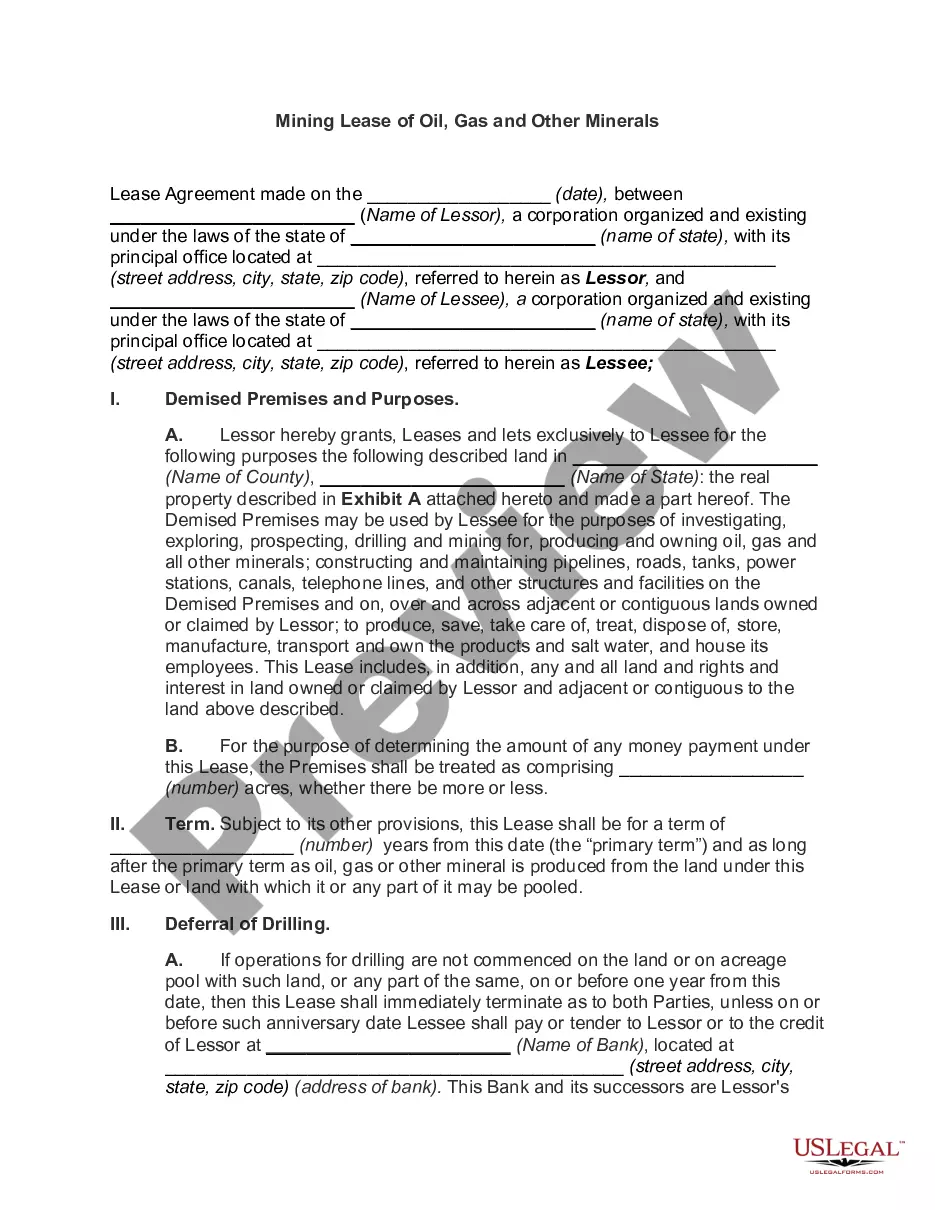
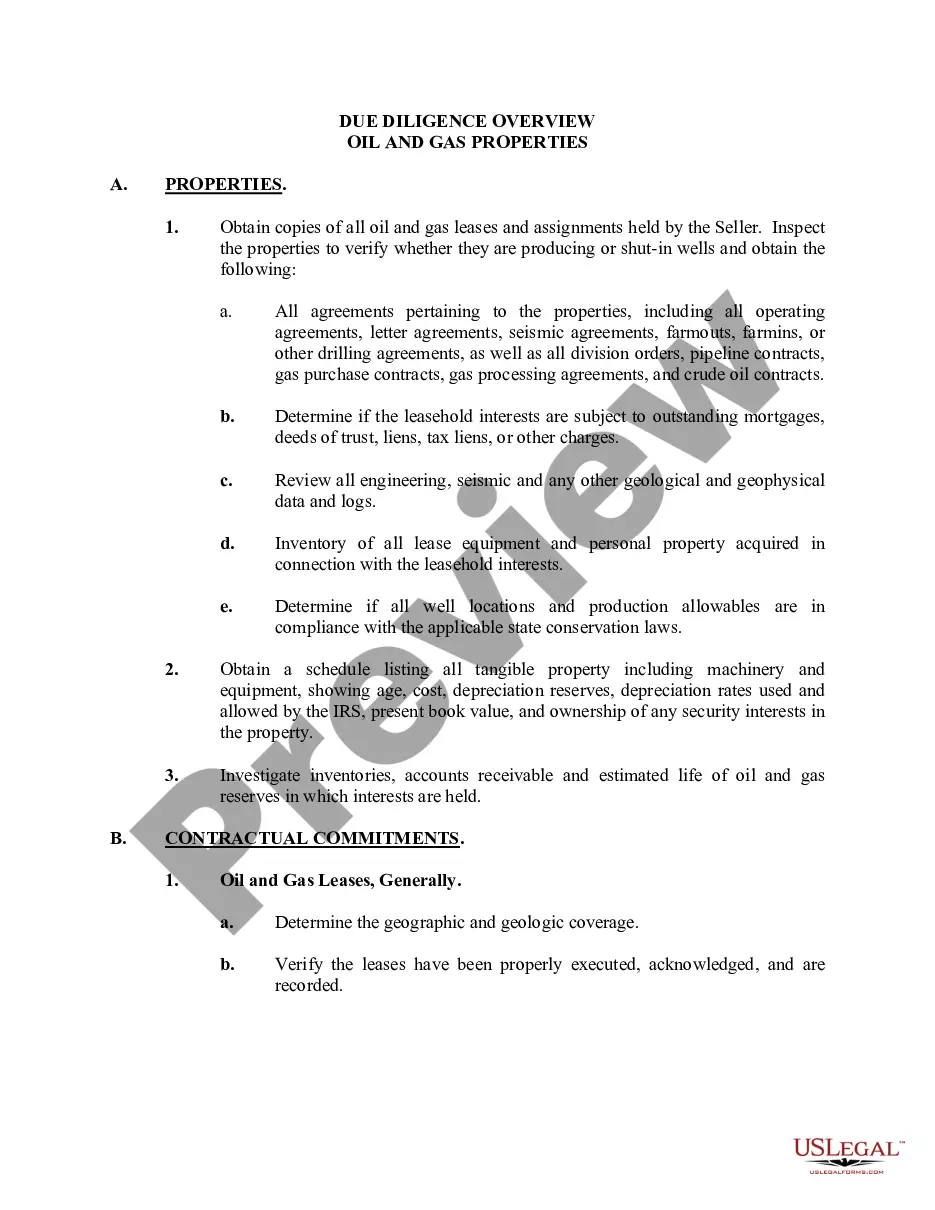
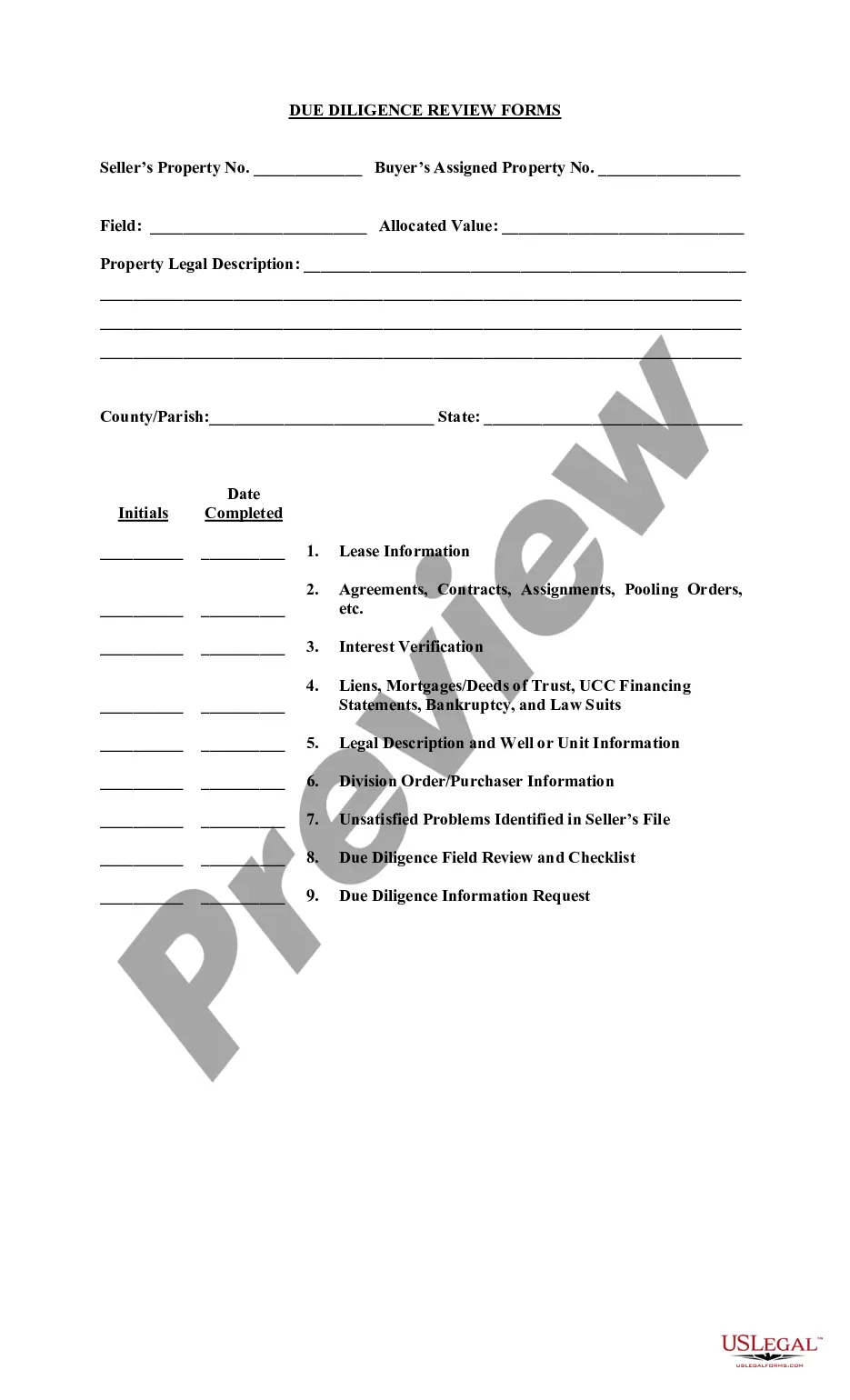
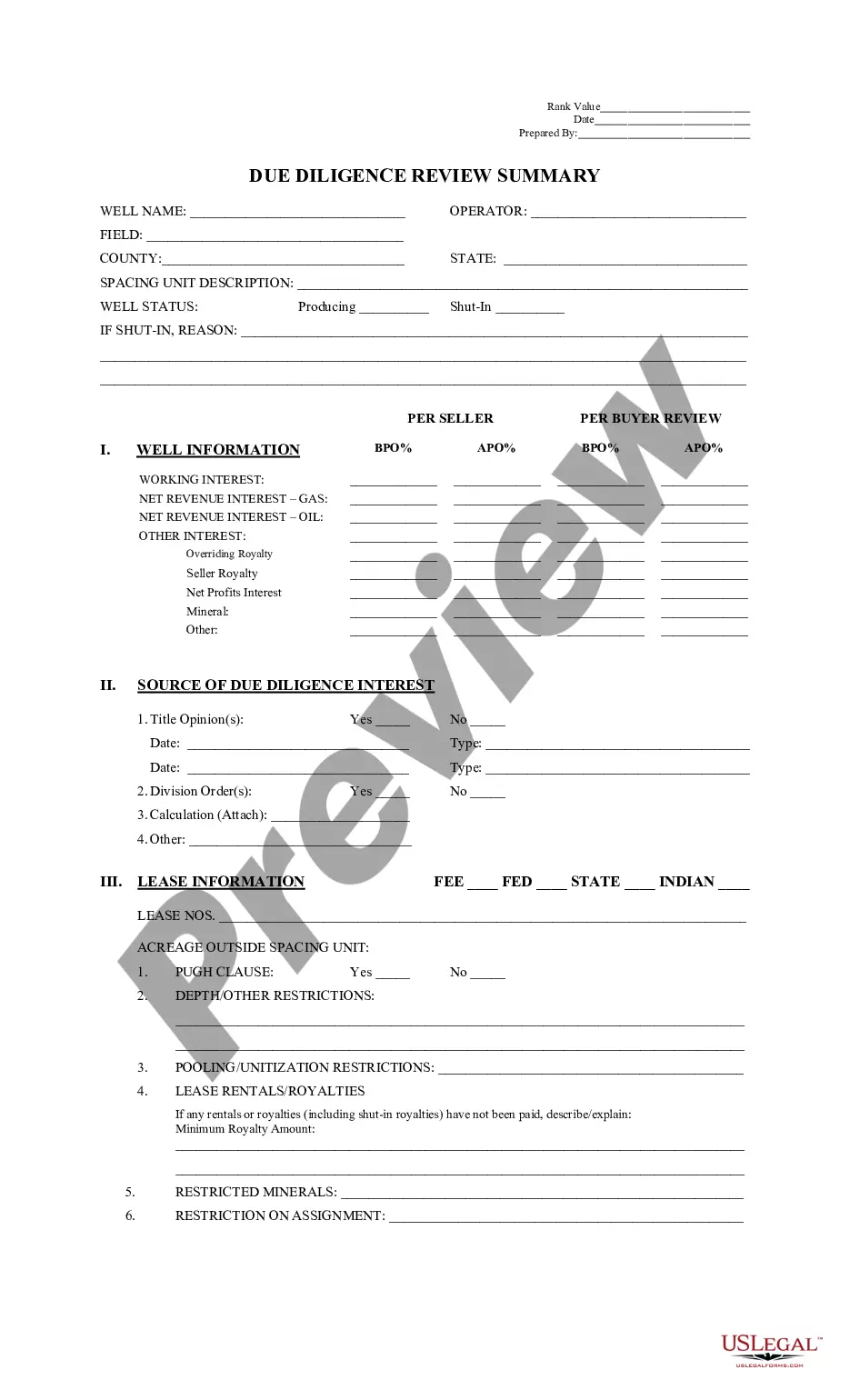
The Acquisition Due Diligence Report is a crucial document used in oil, gas, or mineral transactions. It provides a comprehensive overview of the assets involved, serving as a tool for buyers to assess the viability and value of the acquisition. This report is distinctive in its focus on detailed title opinions, encumbrances, agreements, and land information, ensuring that all aspects of due diligence are thoroughly documented and understood before completing the purchase.
Key components of this form
- Well details, including name, location, and operator information.
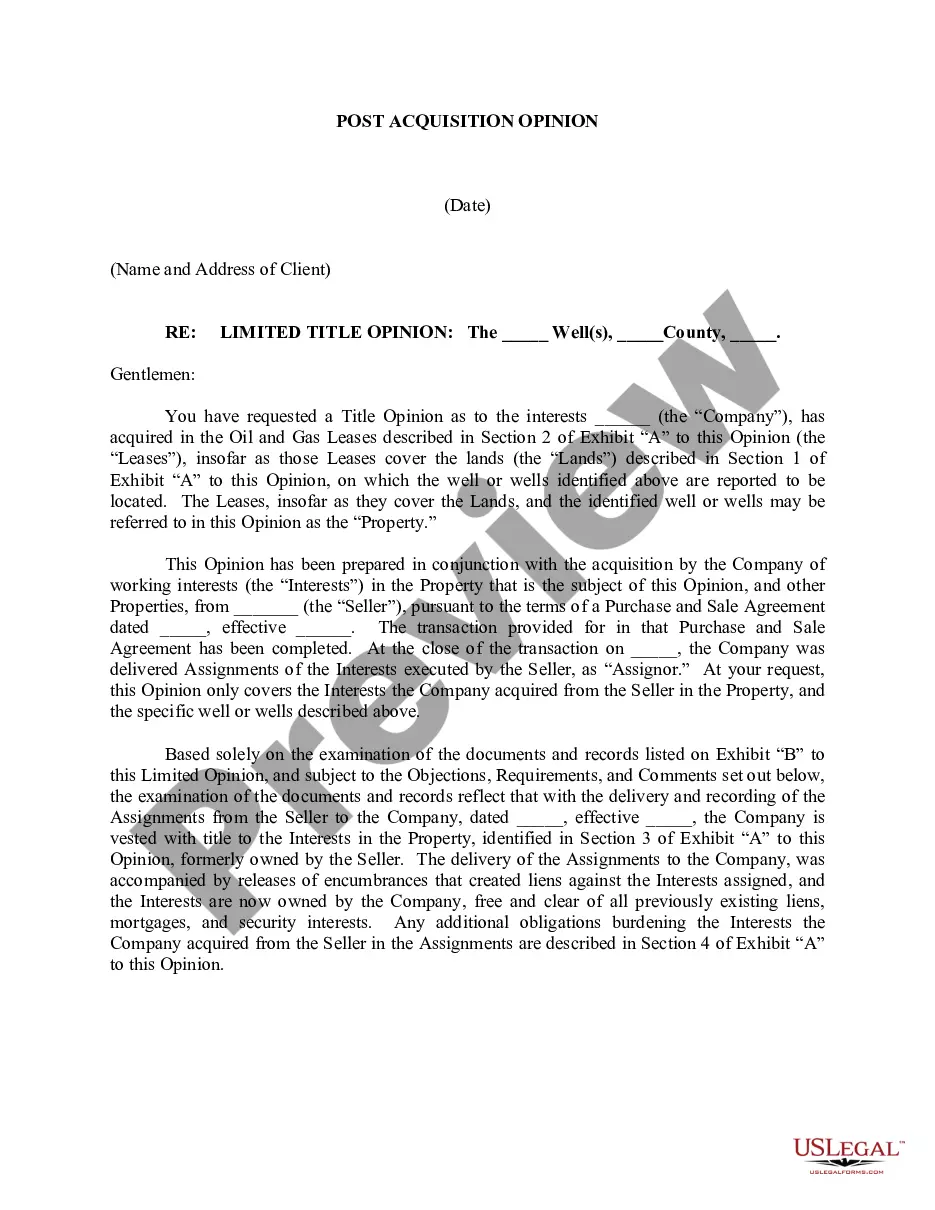
- Title opinions, including types and the dates of review.
- Liens and encumbrances affecting the asset.
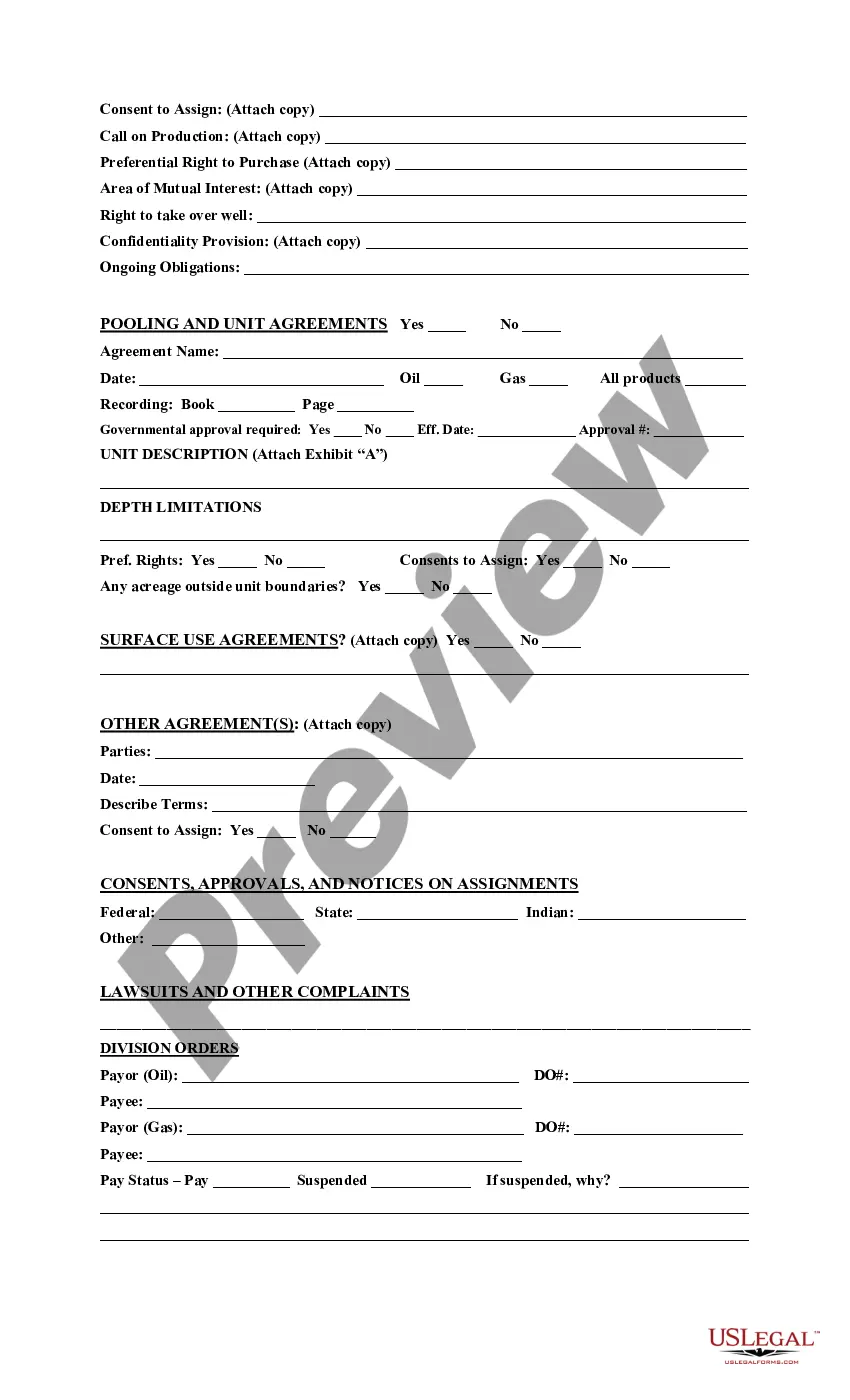
- Details on agreements such as operating agreement and farmout agreements.
- Division orders related to payor and payee specifics for oil and gas.
- Relevant lawsuits, complaints, and other legal considerations.
When this form is needed
This form should be used when conducting due diligence for a potential acquisition of oil, gas, or mineral rights. It is especially useful when assessing properties with complex ownership structures or when multiple parties are involved in the transaction. Utilizing this report will help to identify any legal issues, ensure compliance with agreements, and provide insights into the value of the interests being acquired.
Who should use this form
- Buyers or investors in oil, gas, or mineral assets.
- Legal professionals conducting due diligence for clients.
- Operators or companies engaged in transactions involving mineral rights.
- Financial institutions assessing collateral for financing in the energy sector.
How to prepare this document
- Identify and enter the well name, location, and associated operator information.
- Review and document the title opinions relevant to the transaction.
- List any liens or encumbrances that exist on the property.
- Confirm details of all related agreements, including operating and farmout agreements.
- Gather and note any pertinent legal issues such as lawsuits or division orders.
Is notarization required?
Notarization is generally not required for this form. However, certain states or situations might demand it. You can complete notarization online through US Legal Forms, powered by Notarize, using a verified video call available anytime.
Get your form ready online
Our built-in tools help you complete, sign, share, and store your documents in one place.
Make edits, fill in missing information, and update formatting in US Legal Forms—just like you would in MS Word.
Download a copy, print it, send it by email, or mail it via USPS—whatever works best for your next step.
Sign and collect signatures with our SignNow integration. Send to multiple recipients, set reminders, and more. Go Premium to unlock E-Sign.
If this form requires notarization, complete it online through a secure video call—no need to meet a notary in person or wait for an appointment.
We protect your documents and personal data by following strict security and privacy standards.

Make edits, fill in missing information, and update formatting in US Legal Forms—just like you would in MS Word.

Download a copy, print it, send it by email, or mail it via USPS—whatever works best for your next step.

Sign and collect signatures with our SignNow integration. Send to multiple recipients, set reminders, and more. Go Premium to unlock E-Sign.

If this form requires notarization, complete it online through a secure video call—no need to meet a notary in person or wait for an appointment.

We protect your documents and personal data by following strict security and privacy standards.
Avoid these common issues
- Failing to complete all sections thoroughly, leading to incomplete information.
- Not verifying title opinions or missing relevant documents.
- Overlooking any existing liens or encumbrances that may affect ownership.
- Neglecting to include updates or amendments to previous agreements.
Why use this form online
- Convenience of immediate access and download for prompt use.
- Editability allows users to customize the document to their specific transaction needs.
- Reliability, with forms drafted by licensed attorneys to ensure legal soundness.
Looking for another form?






Form popularity
FAQ
Statement of what is being studied, research or proposed. Background and supporting documentation on the proposal (corporate reports, financial statements, legal documents, copies of transaction history, market research)
A due diligence checklist is an organized way to analyze a company. The checklist will include all the areas to be analyzed, such as ownership and organization, assets and operations, the financial ratios, shareholder value, processes and policies, future growth potential, management, and human resources.
A due diligence report is a comprehensive exploration and explanation of a property, a company's financial records, or a company's overall standing in the marketplace.Following a due diligence checklist can ensure your due diligence report: Conveys all the information necessary for educated business decisions.
Step 1: Company Capitalization. Step 2: Revenue, Margin Trends. Step 3: Competitors & Industries. Step 4: Valuation Multiples. Step 5: Management and Ownership. Step 6: Balance Sheet Exam. Step 7: Stock Price History. Step 8: Stock Options & Dilution.
Due diligence is the thorough analysis of a commercial business, done typically by a potential buyer prior to business transactions. Common examples are in preparation for mergers and acquisitions (M&A) or purchasing new facilities.
Due diligence refers to being able to prove that your business has done everything reasonably possible to comply with current legislation and regulations. In other words, it helps to prove that you applied all reasonable precautions to avoid committing an offence.
Reviewing and auditing financial statements. Scrutinizing projections for future performance. Analyzing the consumer market. Seeking operating redundancies that can be eliminated. Reviewing potential or ongoing litigation. Reviewing antitrust considerations.
A Statement describing the subject of research. Documents in support of the research such as corporate reports, legal documents, transaction copies, market research, etc. SWOT Analysis i.e. an overview of the strengths, weaknesses, opportunities, and threats linked with the proposal.
The report will include a list of key findings and valid recommendations, as well as a reasoned conclusion with a financial analysis explaining the feasibility of our recommendations, and its impact on the company.