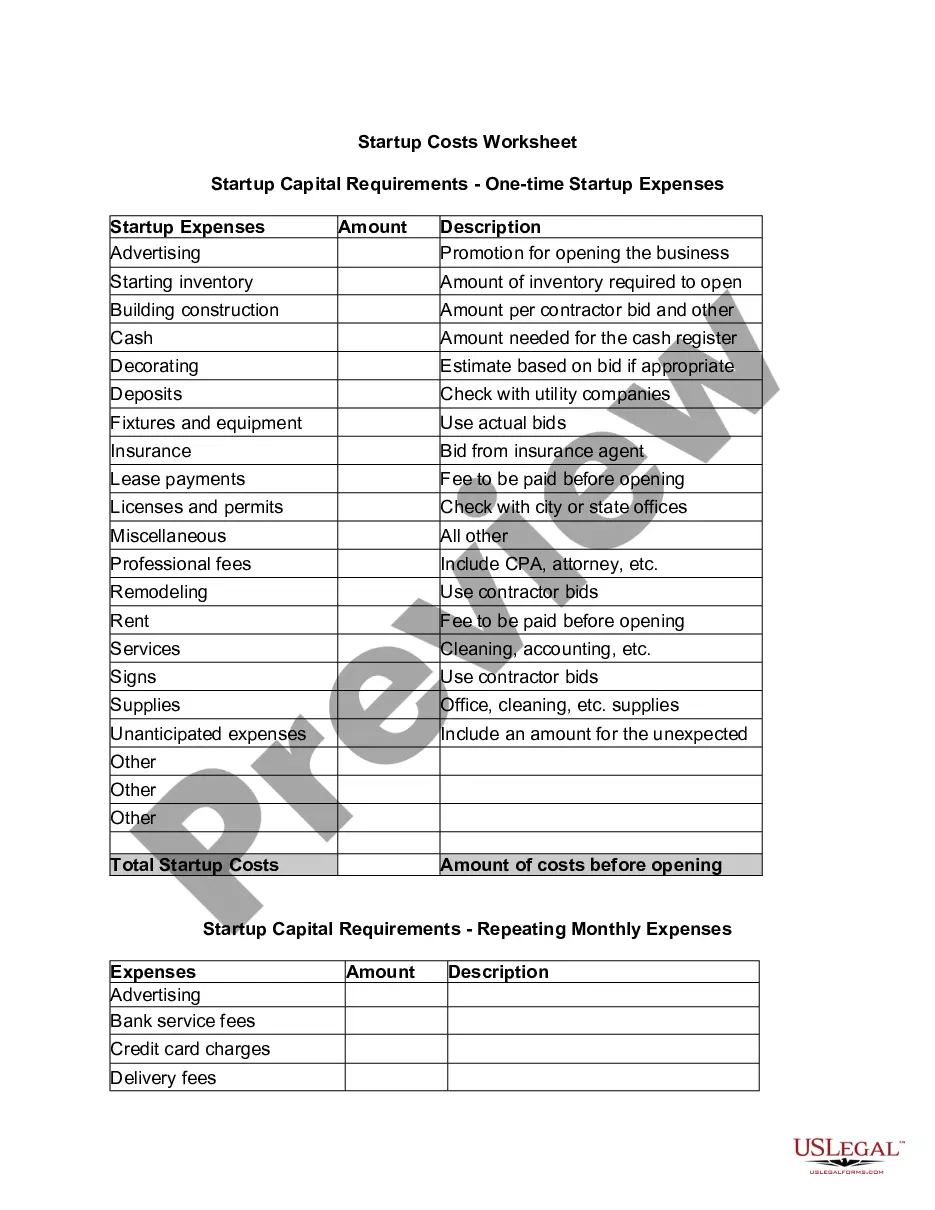
Vermont Jury Instruction - Caution - Multiple Defendants - Multiple Counts
Description

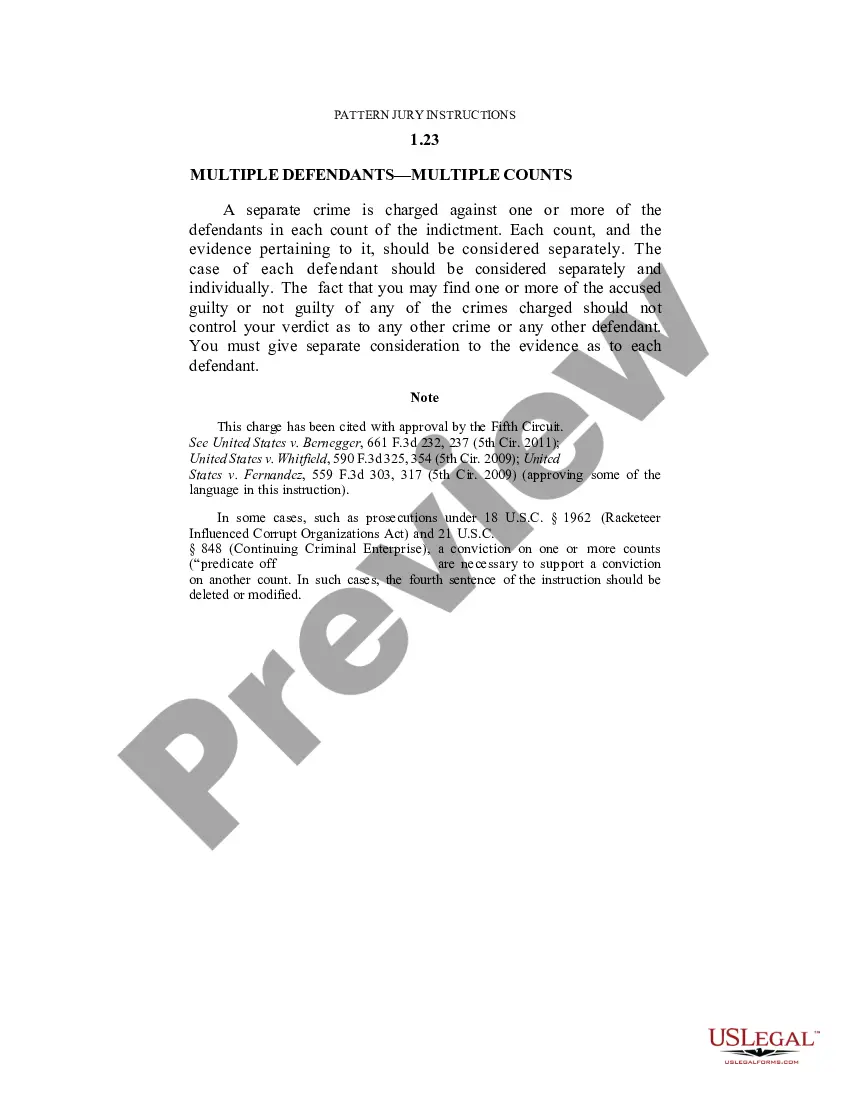
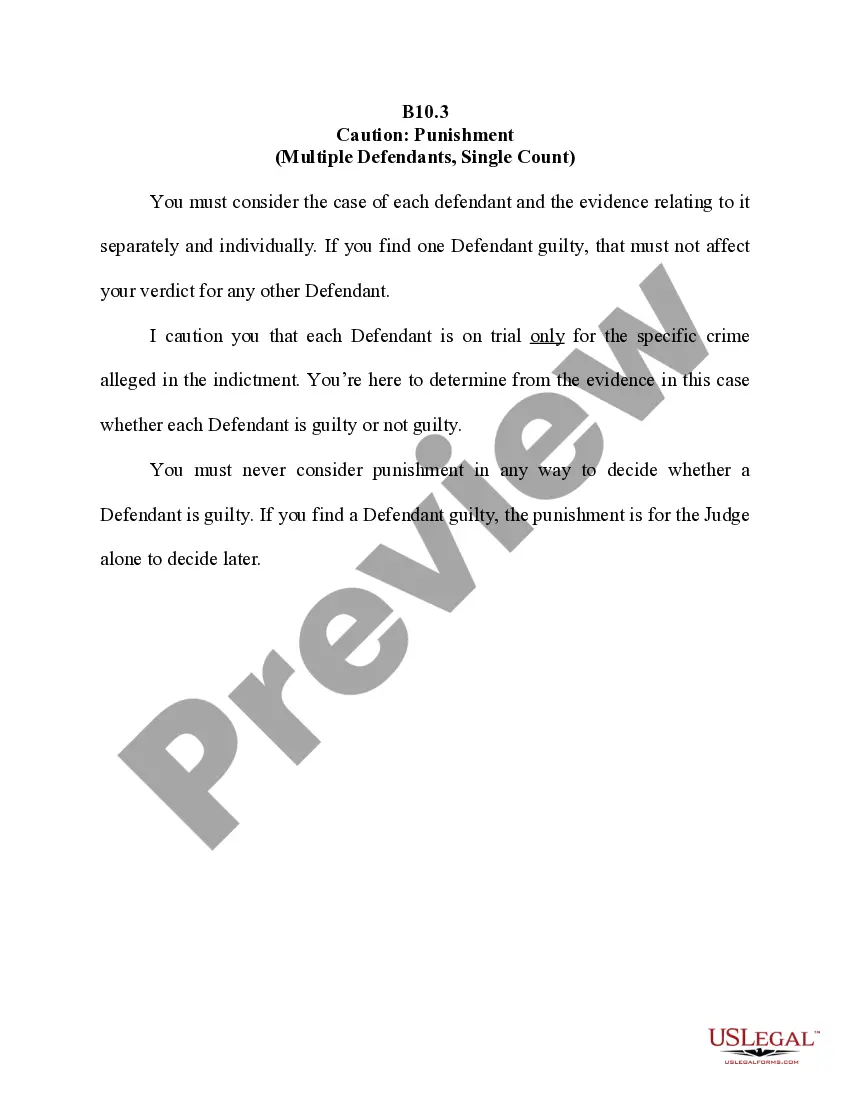
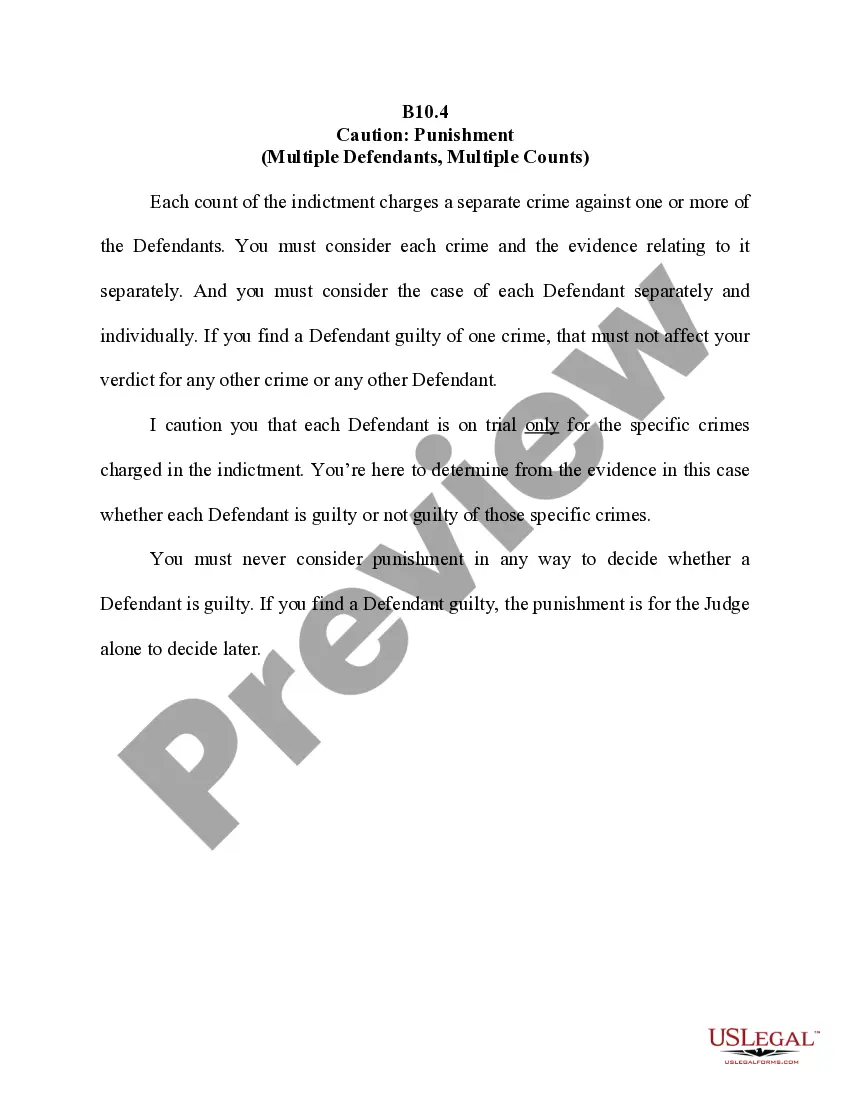
Get your form ready online
Our built-in tools help you complete, sign, share, and store your documents in one place.
Make edits, fill in missing information, and update formatting in US Legal Forms—just like you would in MS Word.
Download a copy, print it, send it by email, or mail it via USPS—whatever works best for your next step.
Sign and collect signatures with our SignNow integration. Send to multiple recipients, set reminders, and more. Go Premium to unlock E-Sign.
If this form requires notarization, complete it online through a secure video call—no need to meet a notary in person or wait for an appointment.
We protect your documents and personal data by following strict security and privacy standards.

Make edits, fill in missing information, and update formatting in US Legal Forms—just like you would in MS Word.

Download a copy, print it, send it by email, or mail it via USPS—whatever works best for your next step.

Sign and collect signatures with our SignNow integration. Send to multiple recipients, set reminders, and more. Go Premium to unlock E-Sign.

If this form requires notarization, complete it online through a secure video call—no need to meet a notary in person or wait for an appointment.

We protect your documents and personal data by following strict security and privacy standards.
Looking for another form?

How to fill out Jury Instruction - Caution - Multiple Defendants - Multiple Counts?
If you wish to complete, down load, or print legitimate file web templates, use US Legal Forms, the most important selection of legitimate forms, which can be found online. Utilize the site`s simple and easy handy lookup to find the papers you will need. Numerous web templates for organization and person uses are categorized by types and suggests, or search phrases. Use US Legal Forms to find the Vermont Jury Instruction - Caution - Multiple Defendants - Multiple Counts with a couple of mouse clicks.
When you are presently a US Legal Forms buyer, log in to your profile and click on the Acquire key to find the Vermont Jury Instruction - Caution - Multiple Defendants - Multiple Counts. You can even accessibility forms you previously acquired in the My Forms tab of your profile.
If you work with US Legal Forms the very first time, refer to the instructions below:
- Step 1. Make sure you have selected the form for that right area/country.
- Step 2. Utilize the Review method to look through the form`s content material. Never forget about to read through the explanation.
- Step 3. When you are not happy with the form, take advantage of the Lookup industry towards the top of the display screen to get other models of the legitimate form web template.
- Step 4. Once you have identified the form you will need, go through the Get now key. Select the pricing prepare you like and include your qualifications to register for the profile.
- Step 5. Process the purchase. You can use your bank card or PayPal profile to perform the purchase.
- Step 6. Select the format of the legitimate form and down load it on your device.
- Step 7. Full, modify and print or indicator the Vermont Jury Instruction - Caution - Multiple Defendants - Multiple Counts.
Each legitimate file web template you buy is yours forever. You have acces to every form you acquired inside your acccount. Select the My Forms segment and choose a form to print or down load again.
Remain competitive and down load, and print the Vermont Jury Instruction - Caution - Multiple Defendants - Multiple Counts with US Legal Forms. There are many specialist and condition-distinct forms you can use for the organization or person demands.
Form popularity
FAQ
A reasonable doubt is a doubt based upon reason and common sense and is not based purely on speculation. It may arise from a careful and impartial consideration of all the evidence, or from lack of evidence.
In all criminal trials the Crown must prove each and every essential element beyond a reasonable doubt. The standard of "reasonable doubt" consists of a doubt based on reason and common sense which must be logically based upon the evidence or lack of evidence. It is not based on "sympathy or prejudice."
In numbers, clear and convincing evidence is about 75% likely. In other words, a factfinder (or a judge or jury) must be able to use the evidence presented to determine that it is highly and substantially more likely that a particular fact is true rather than untrue.
In criminal law the burden of proof lies completely with the Crown. There is no doubt that it is a heavy and onerous burden and completely favours the accused. The Crown has to prove beyond a reasonable doubt that the accused has committed a crime.
To get to ?beyond reasonable doubt? the prosecution needs to convince the jury that there is no other reasonable explanation for what occurred other than the guilt of the person charged.
The burden of proving guilt beyond a reasonable doubt falls entirely on the prosecution. They must present strong and convincing evidence that leaves no room for any reasonable alternative explanations.
Reasonable doubt is insufficient evidence that prevents a judge or jury from convicting a defendant of a crime. If it cannot be proved without a doubt that a defendant in a criminal case is guilty, then that person should not be convicted.
PATTERN JURY INSTRUCTIONS WHICH PROVIDE A BODY OF BRIEF, UNIFORM INSTRUCTIONS THAT FULLY STATE THE LAW WITHOUT NEEDLESS REPETION ARE PRESENTED; BASIC, SPECIAL, OFFENSE, AND TRIAL INSTRUCTIONS ARE INCLUDED.