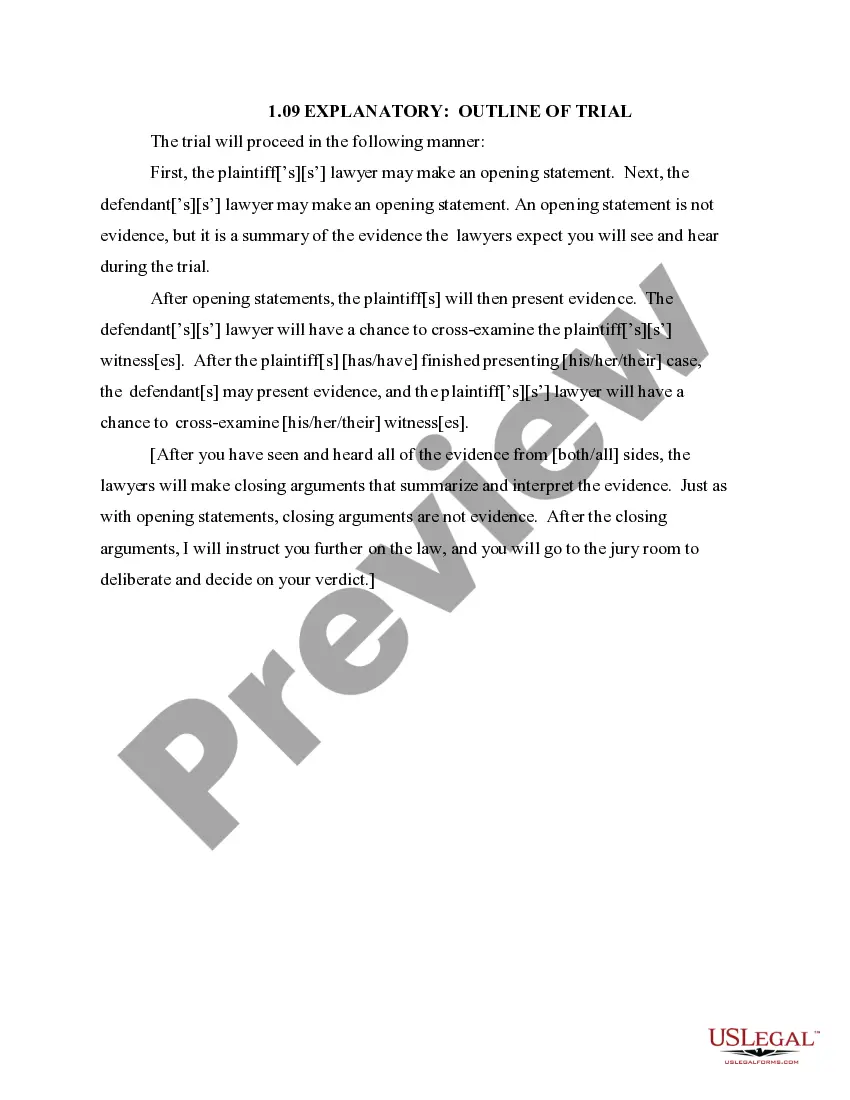
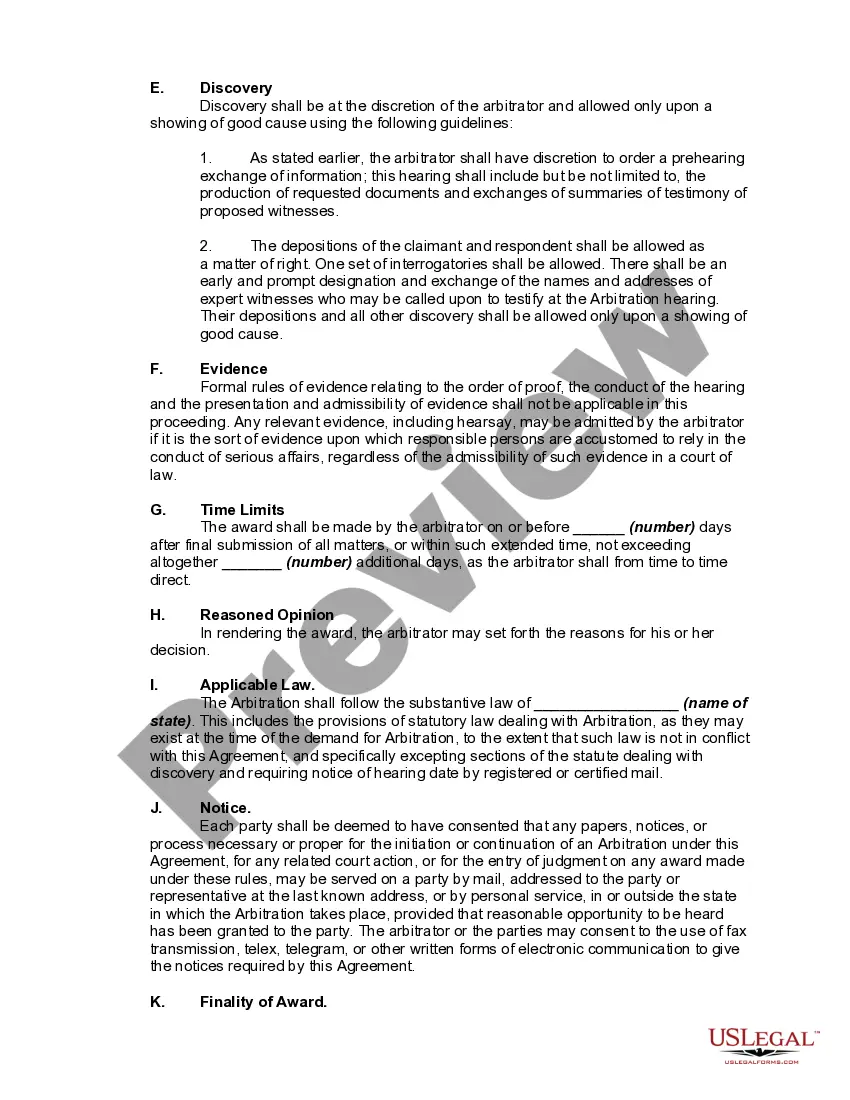
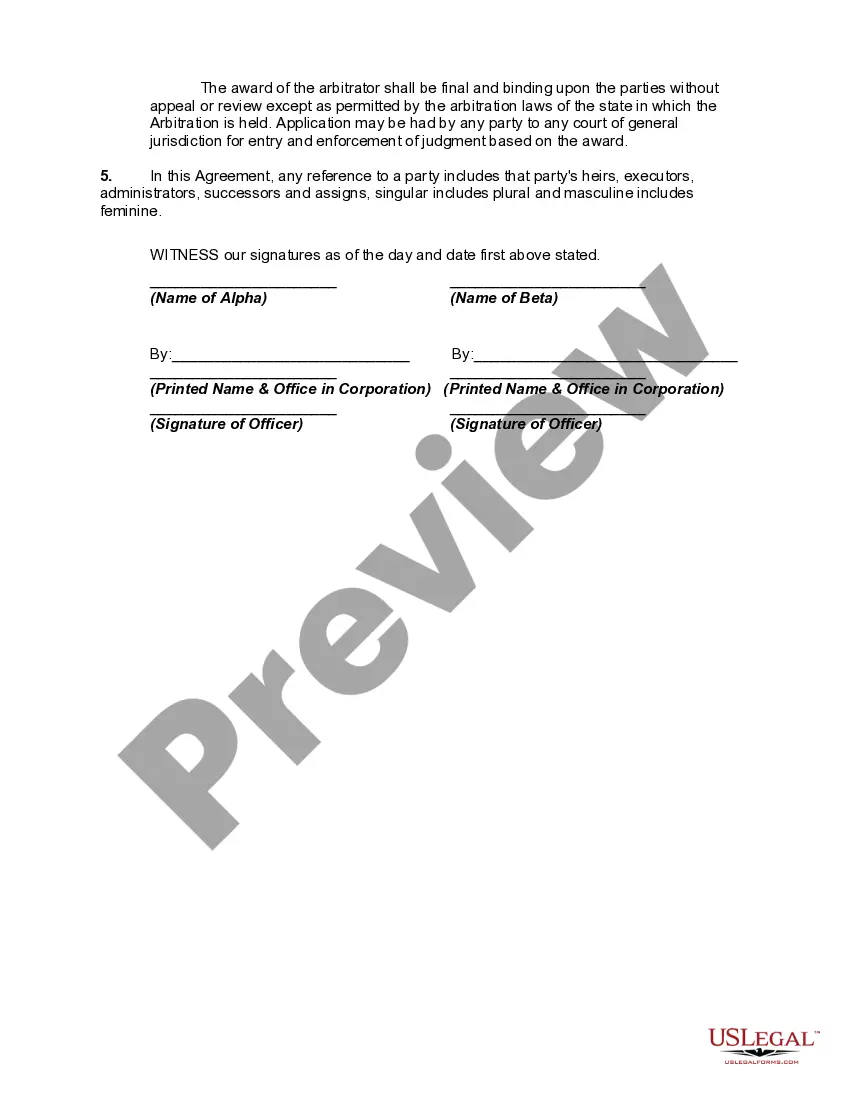
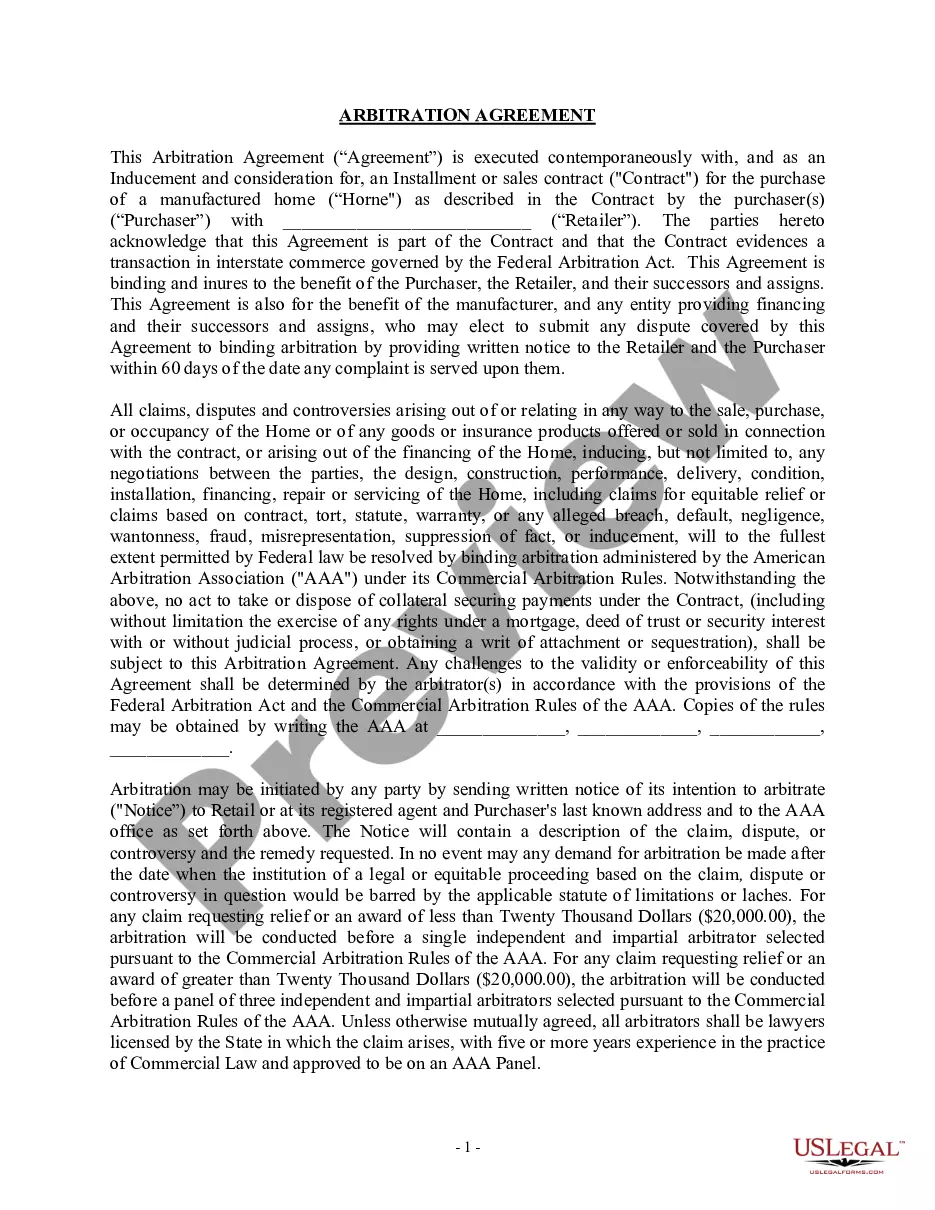
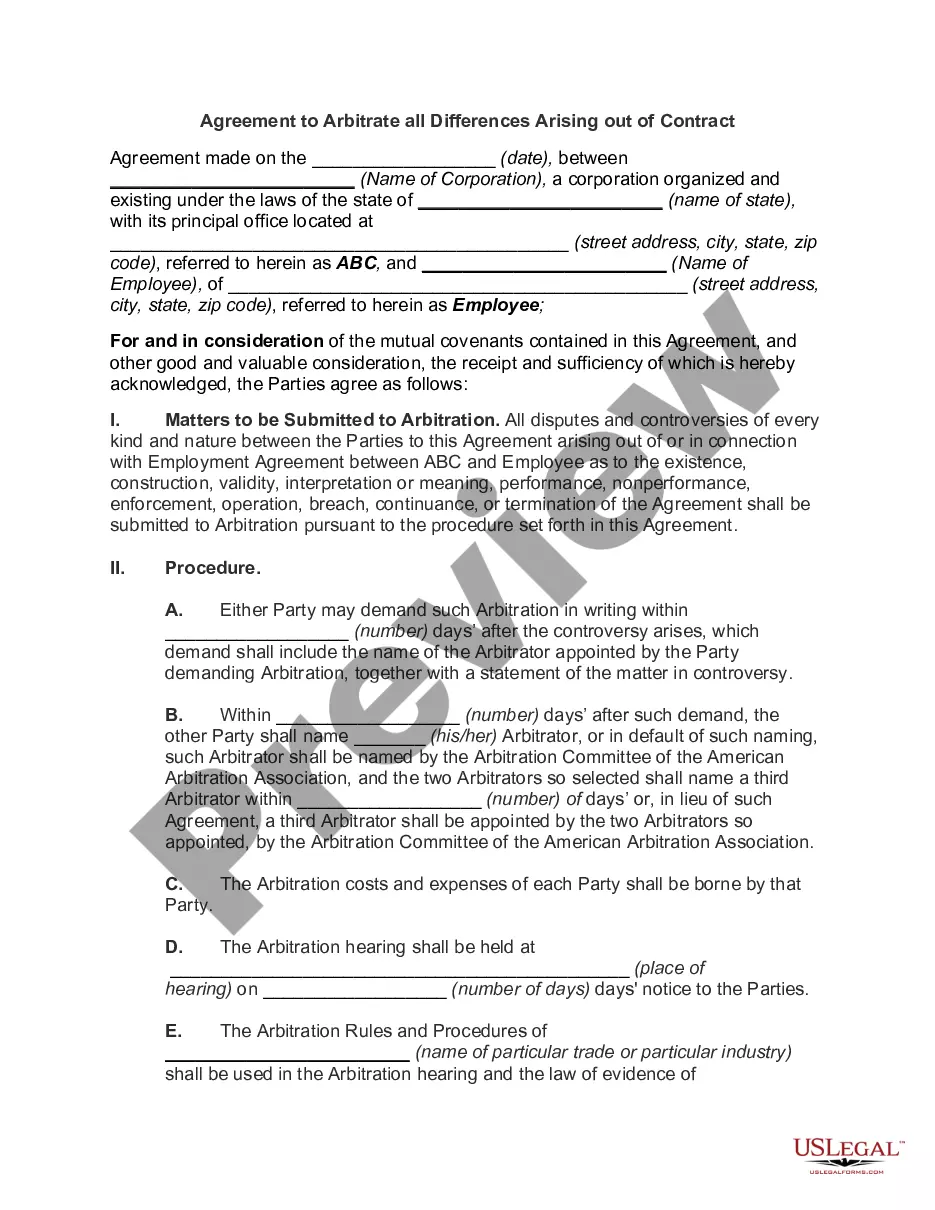
Arbitration is an alternative means of settling a dispute by impartial persons without proceeding to a court trial. It is sometimes preferred as a means of settling a matter in order to avoid the expense, delay, and acrimony of litigation. Discovery is with the discretion of the Arbitrator and there are simplified rules of evidence in arbitration.
Mediation is a non-adversarial method of alternative dispute resolution (ADR) in which a neutral third party helps resolve a dispute. The mediator does not have the power to render a decision on the matter or order an outcome. If a satisfactory resolution cannot be reached, the parties can pursue a lawsuit or arbitration.
This form provides for negotiation, then mediation if the negotiation fails to resolve the issues. If both negotiation and mediation fail to resolve the issues, the parties arbitrate the dispute.
Vermont Mediation and Arbitration Agreement
Category:
State:
Multi-State
Control #:
US-02980BG
Format:
Word;
Rich Text
Instant download
Description
Free preview



Get your form ready online
Our built-in tools help you complete, sign, share, and store your documents in one place.
Built-in online Word editor
Make edits, fill in missing information, and update formatting in US Legal Forms—just like you would in MS Word.
Export easily
Download a copy, print it, send it by email, or mail it via USPS—whatever works best for your next step.
E-sign your document
Sign and collect signatures with our SignNow integration. Send to multiple recipients, set reminders, and more. Go Premium to unlock E-Sign.
Notarize online 24/7
If this form requires notarization, complete it online through a secure video call—no need to meet a notary in person or wait for an appointment.
Store your document securely
We protect your documents and personal data by following strict security and privacy standards.

Make edits, fill in missing information, and update formatting in US Legal Forms—just like you would in MS Word.

Download a copy, print it, send it by email, or mail it via USPS—whatever works best for your next step.

Sign and collect signatures with our SignNow integration. Send to multiple recipients, set reminders, and more. Go Premium to unlock E-Sign.

If this form requires notarization, complete it online through a secure video call—no need to meet a notary in person or wait for an appointment.

We protect your documents and personal data by following strict security and privacy standards.
Looking for another form?




How to fill out Mediation And Arbitration Agreement?
It is feasible to utilize time on the internet exploring for the legal document template that fulfills the federal and state criteria you need.
US Legal Forms offers a vast selection of legal forms that are reviewed by specialists.
It is easy to download or print the Vermont Mediation and Arbitration Agreement from the platform.
Review the form outline to make certain you have selected the correct type. If available, utilize the Review button to peruse the document template as well.
- If you already possess a US Legal Forms account, you can Log In and select the Obtain button.
- After that, you can fill out, modify, print, or sign the Vermont Mediation and Arbitration Agreement.
- Every legal document template you acquire is yours indefinitely.
- To request an additional copy of any purchased form, navigate to the My documents tab and click the corresponding button.
- If you’re accessing the US Legal Forms site for the first time, follow the straightforward instructions below.
- First, ensure that you have chosen the correct document template for the county/city of your choice.
Form popularity
FAQ
Yes, you can go to arbitration after mediation if the mediation process does not result in a satisfactory agreement. A Vermont Mediation and Arbitration Agreement often includes provisions allowing for a transition to arbitration if mediation fails. This option provides an additional layer of dispute resolution, ensuring that you have a pathway to a final decision if initial discussions do not succeed. Thus, utilizing both methods can enhance your chances of resolving disputes effectively.
In the context of a Vermont Mediation and Arbitration Agreement, arbitration is typically considered legally binding, while mediation is not. Mediation serves as a collaborative process where parties work together to reach an agreement, without any enforceable resolution unless all parties consent. In contrast, arbitration involves a neutral third party making a binding decision after hearing both sides. Therefore, if you seek a solution that holds legal weight, arbitration is the route to take.
When writing a mediation agreement, start with identifying the parties and the dispute at hand. Clearly state the process, including timelines and expectations for each party. This ensures that everyone is on the same page and can contribute to a mutually beneficial resolution under the Vermont Mediation and Arbitration Agreement.
A good mediation statement should clearly present your position, the key facts, and the reasons for your stance. Keep it concise, while highlighting any interests or needs that are essential to you. When drafting this statement for a Vermont Mediation and Arbitration Agreement, remember it should foster a constructive atmosphere for resolution.
To write an arbitration agreement, you should clearly state the intention of both parties to resolve disputes through arbitration rather than litigation. Include terms such as the governing laws, the arbitration forum, and any specific rules to follow. A detailed approach ensures that your Vermont Mediation and Arbitration Agreement leaves no room for misunderstanding.
The average settlement offer during mediation can vary widely based on the complexity of the case and the parties involved. However, many reports suggest that settlements can range from 50% to 75% of the total claimed amount. The Vermont Mediation and Arbitration Agreement aims to facilitate fair discussions, thereby increasing the likelihood of reaching a satisfactory settlement.
Writing a mediation agreement involves outlining the parties involved, defining the dispute, and specifying the mediation process. Be sure to include the date, location, and chosen mediator, along with a clear statement of purpose. This structured approach makes the Vermont Mediation and Arbitration Agreement both effective and reliable for all parties.
A mediation clause specifies that parties must first attempt to resolve disputes through mediation before pursuing legal action. For instance, you might say, 'In the event of a disagreement, the parties will engage in mediation under the terms of the Vermont Mediation and Arbitration Agreement.' This clause encourages collaboration and can often lead to faster, less costly resolutions.
Mediation involves a facilitator guiding discussions between parties to help them find common ground. If mediation fails, arbitration proceeds, where a designated arbitrator examines the evidence and makes a final decision. Utilizing a Vermont Mediation and Arbitration Agreement can streamline this process by outlining the rules and procedures to follow, ensuring both parties are prepared for effective resolution.
The process typically starts with mediation, where a neutral mediator facilitates communication between the parties to help them reach an agreement. If mediation doesn’t succeed, arbitration follows, where an arbitrator listens to each side and makes a binding decision. Understanding the steps involved in both processes is crucial, and creating a Vermont Mediation and Arbitration Agreement can simplify these steps and clarify expectations.