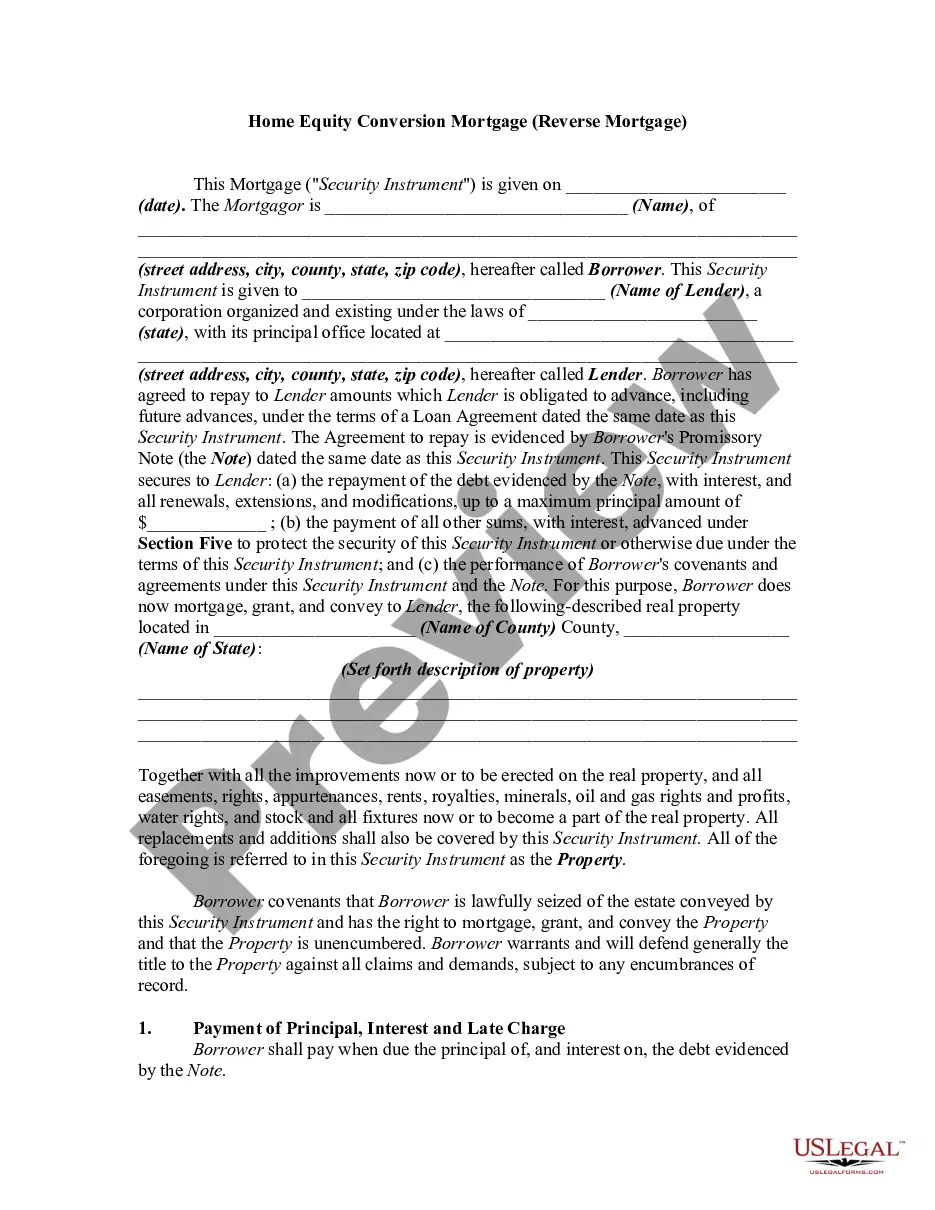
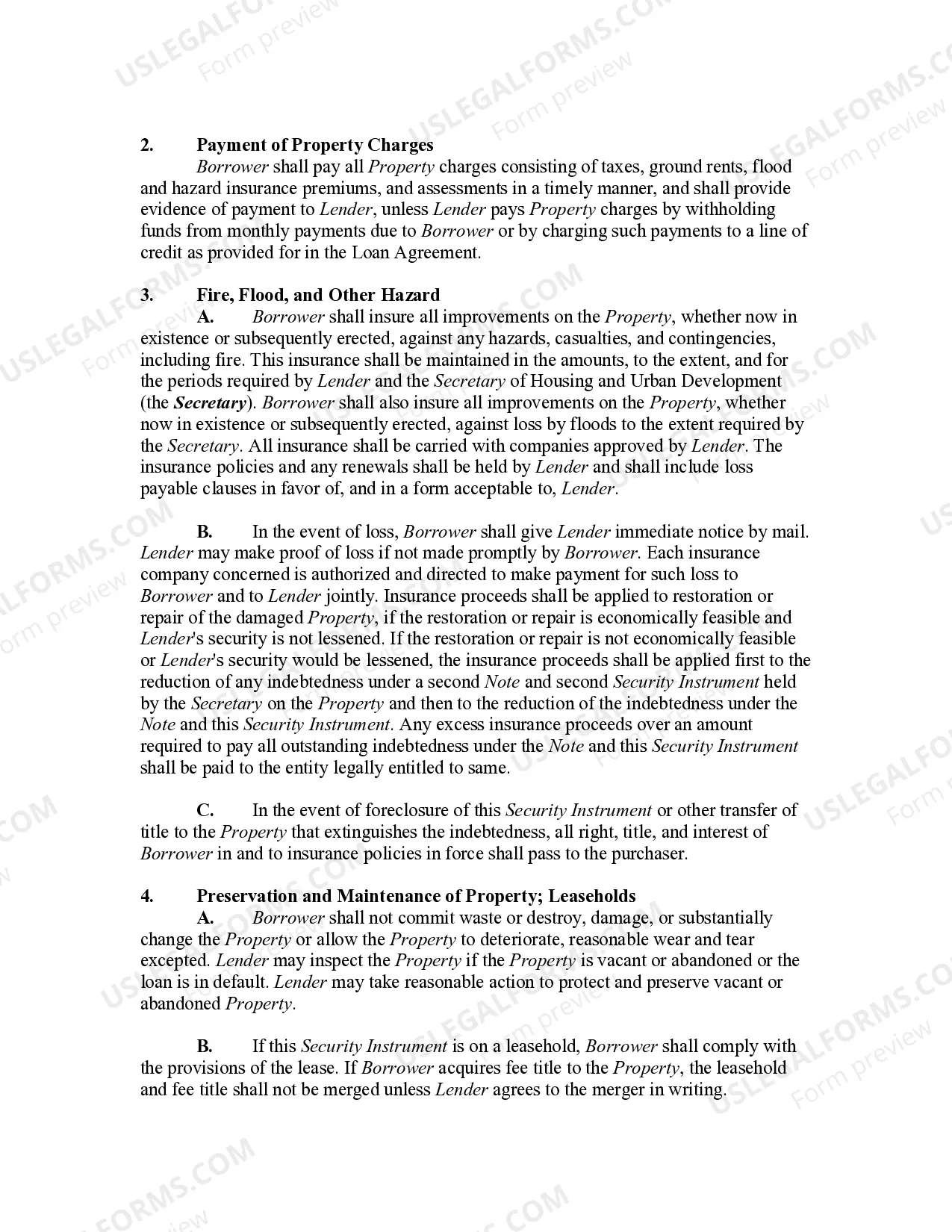
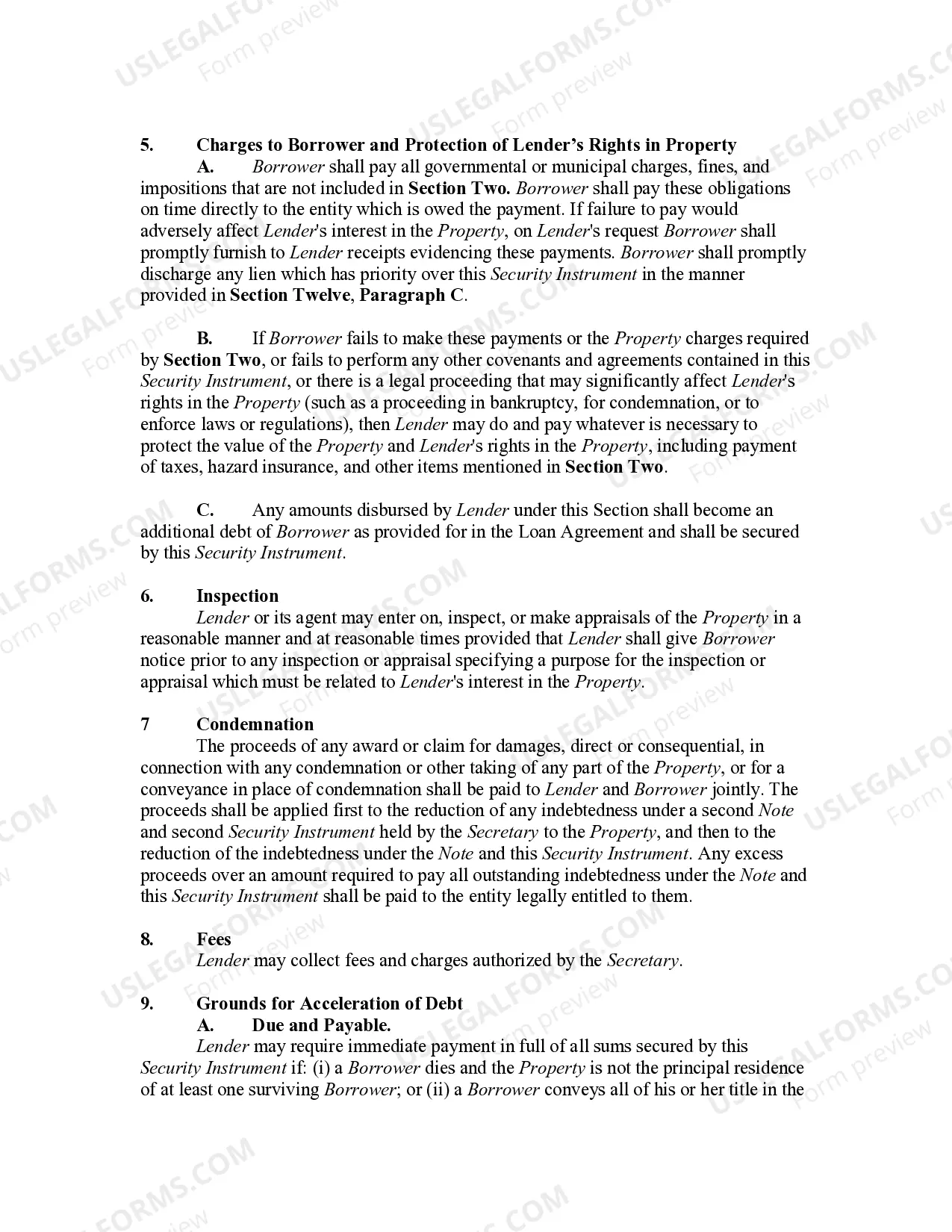
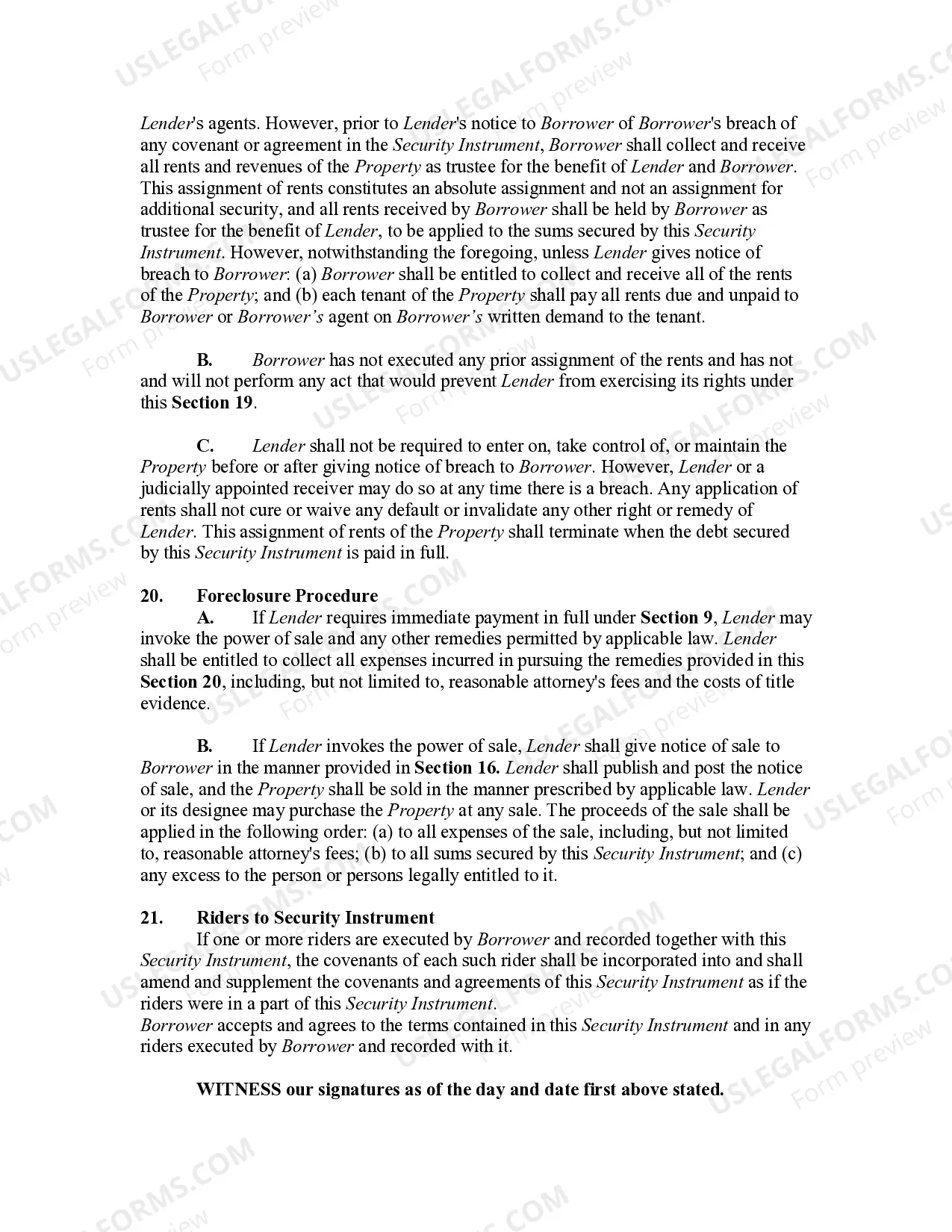
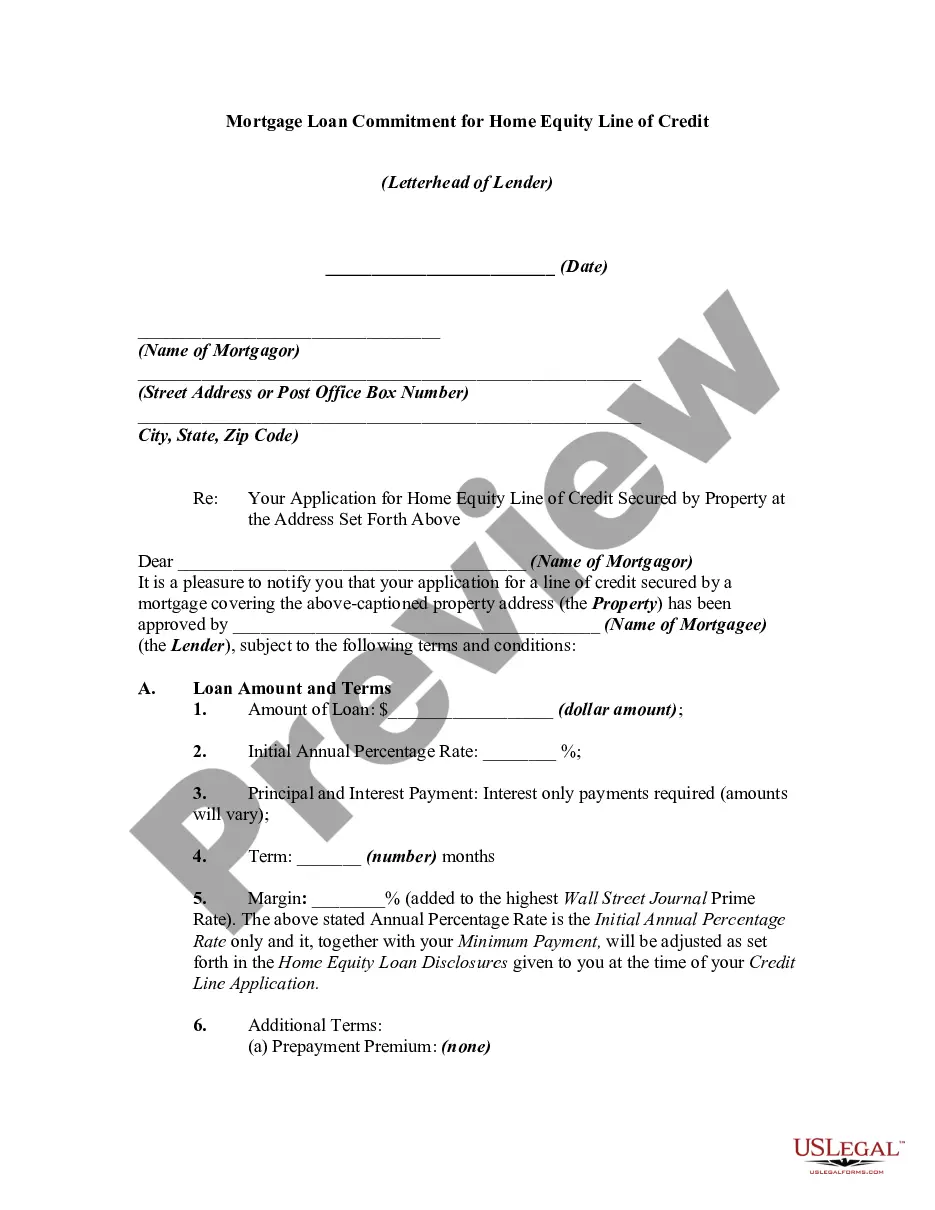
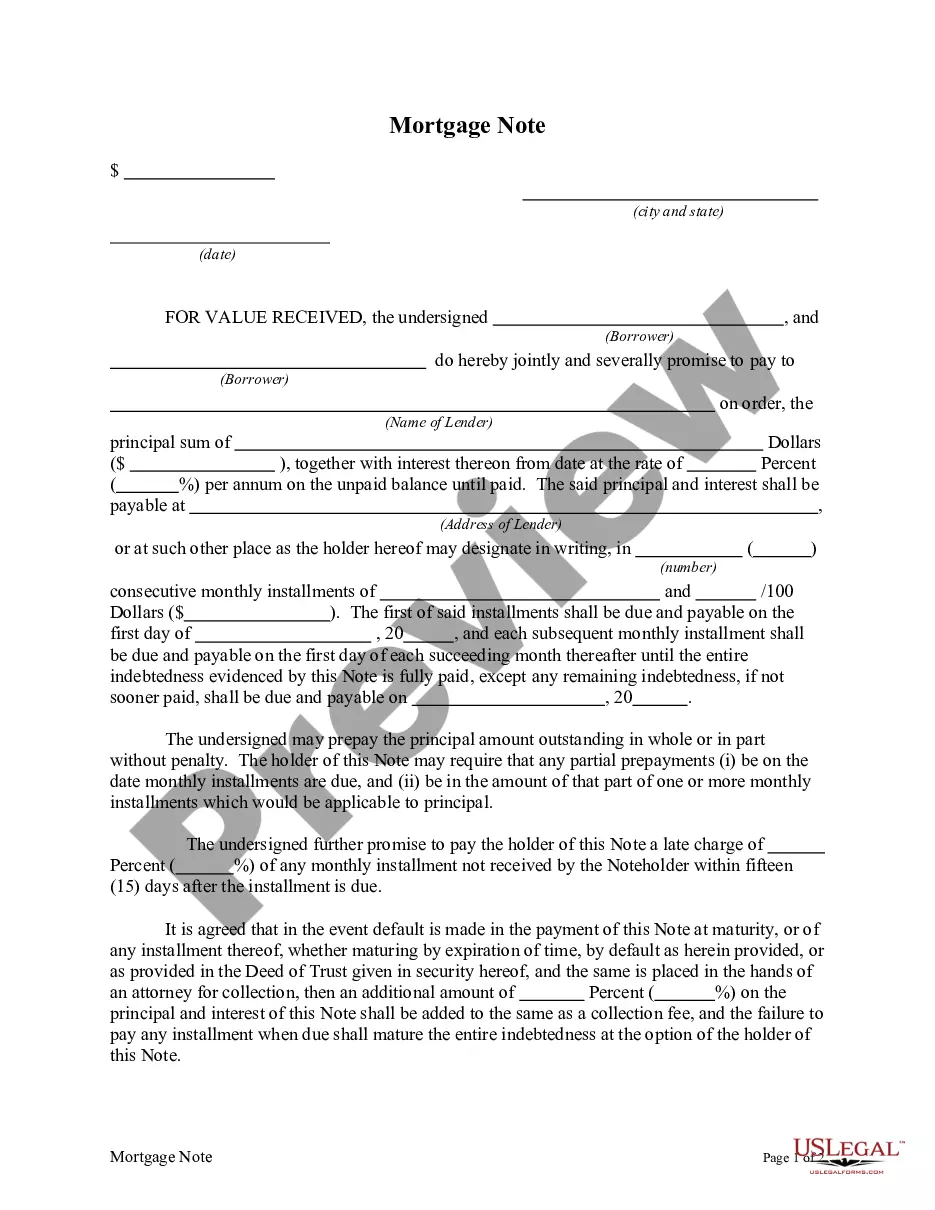
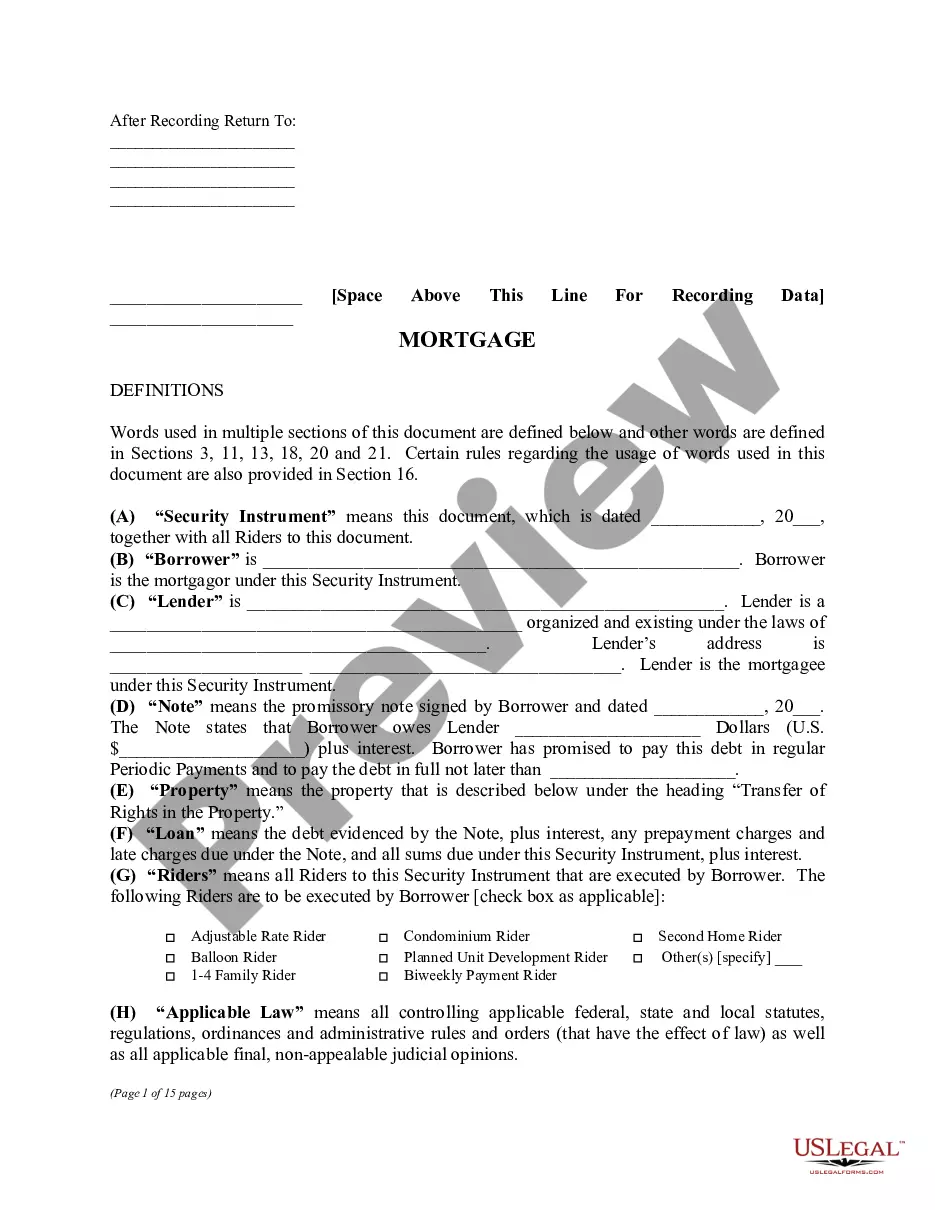
A reverse mortgage is a loan from the U.S. Government for 50% to 75% of the value of a home owned by a homeowner aged 62 and older. Instead of making monthly payments to a lender, as with a regular mortgage, a lender makes payments to the homeowner. The funds from a reverse mortgage are tax-free. The loan doesn't have to be repaid in the homeowner's lifetime, however, when the homeowner dies, the money received plus approximately 4% interest is repaid by their estate. The loan is repaid when the homeowner ceases to occupy the home as a principal residence, due to the homeowner (the last remaining spouse, in cases of couples) passing away, selling the home, or permanently moving out.
Vermont Home Equity Conversion Mortgage - Reverse Mortgage
State:
Multi-State
Control #:
US-01685BG
Format:
Word;
Rich Text
Instant download
Description
Free preview

Get your form ready online
Our built-in tools help you complete, sign, share, and store your documents in one place.
Built-in online Word editor
Make edits, fill in missing information, and update formatting in US Legal Forms—just like you would in MS Word.
Export easily
Download a copy, print it, send it by email, or mail it via USPS—whatever works best for your next step.
E-sign your document
Sign and collect signatures with our SignNow integration. Send to multiple recipients, set reminders, and more. Go Premium to unlock E-Sign.
Notarize online 24/7
If this form requires notarization, complete it online through a secure video call—no need to meet a notary in person or wait for an appointment.
Store your document securely
We protect your documents and personal data by following strict security and privacy standards.

Make edits, fill in missing information, and update formatting in US Legal Forms—just like you would in MS Word.

Download a copy, print it, send it by email, or mail it via USPS—whatever works best for your next step.

Sign and collect signatures with our SignNow integration. Send to multiple recipients, set reminders, and more. Go Premium to unlock E-Sign.

If this form requires notarization, complete it online through a secure video call—no need to meet a notary in person or wait for an appointment.

We protect your documents and personal data by following strict security and privacy standards.
Looking for another form?
How to fill out Home Equity Conversion Mortgage - Reverse Mortgage?
Have you ever been in a scenario where you require documents for potential business or personal purposes nearly every day.
There are numerous legal document templates available online, but finding reliable ones can be challenging.
US Legal Forms offers a vast array of form templates, including the Vermont Home Equity Conversion Mortgage - Reverse Mortgage, tailored to comply with federal and state regulations.
Once you find the correct form, simply click Get now.
Choose the pricing plan you want, fill in the necessary details to create your account, and pay for your order using your PayPal or credit card. Select a convenient file format and download your copy. You can find all the document templates you have purchased in the My documents menu. You can obtain an additional copy of the Vermont Home Equity Conversion Mortgage - Reverse Mortgage at any time. Just click on the necessary form to download or print the document template. Use US Legal Forms, the most extensive collection of legal forms, to save time and prevent mistakes. The service provides professionally crafted legal document templates that can be utilized for various purposes. Create an account on US Legal Forms and start making your life a little easier.
- If you are already acquainted with the US Legal Forms website and possess an account, simply sign in.
- Then, you can download the Vermont Home Equity Conversion Mortgage - Reverse Mortgage template.
- If you do not have an account and wish to start using US Legal Forms, follow these steps.
- Select the form you need and ensure it corresponds to the correct city/county.
- Utilize the Review button to examine the form.
- Check the description to ensure that you have selected the appropriate form.
- If the form is not what you’re looking for, use the Lookup section to find the form that suits your needs and specifications.
Form popularity
FAQ
Another refinancing option is to refinance the reverse mortgage into a conventional loan. The loan will pay off your reverse mortgage and you'll go back to making monthly mortgage payments.
The downside of a reverse mortgage can be that the closing costs can be higher than a traditional loan, the property must be your primary residence, the loan is not assumable, and there may be less equity to leave to your heir as an inheritance.
A reverse mortgage increases your debt and can use up your equity. While the amount is based on your equity, you're still borrowing the money and paying the lender a fee and interest. Your debt keeps going up (and your equity keeps going down) because interest is added to your balance every month.
The interest rate on a reverse mortgage is usually higher than on a home equity line of credit. Be sure to compare solutions. Interest rates may increase or decrease over time. Since you aren't required to repay the loan before the maturity date, interest keeps accruing and can end up being a significant cost.
Generally speaking, you can usually get somewhere between 40% to 60% of your home's appraised value. And the higher your home value is, the more money you can potentially access.
If you're a homeowner age 62 or older, a reverse mortgage can help you obtain tax-free income based on the equity in your home. A reverse mortgage might give you more flexibility in retirement and allow you to stay in your home.
Whether you have a conventional or reverse mortgage, you always risk losing your home if you don't meet loan obligations. With a traditional mortgage, the typical way that a borrower defaults on the loan is if they don't make monthly payments.
Repayment for a home equity loan is like your original mortgage: you borrow the money and start repaying the loan through monthly payments. On the opposite end, reverse mortgage balances aren't due unless the borrower dies, moves or sells the house. If the borrower passes away, heirs are responsible for repayment.