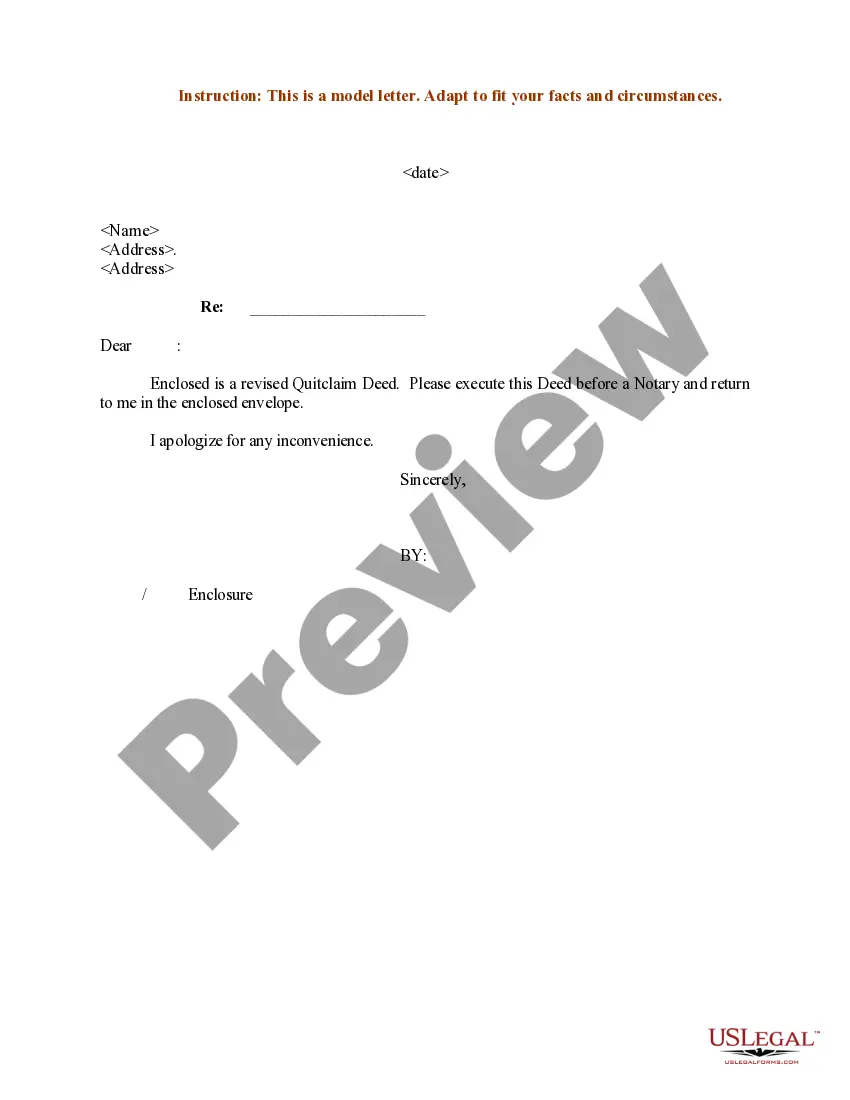
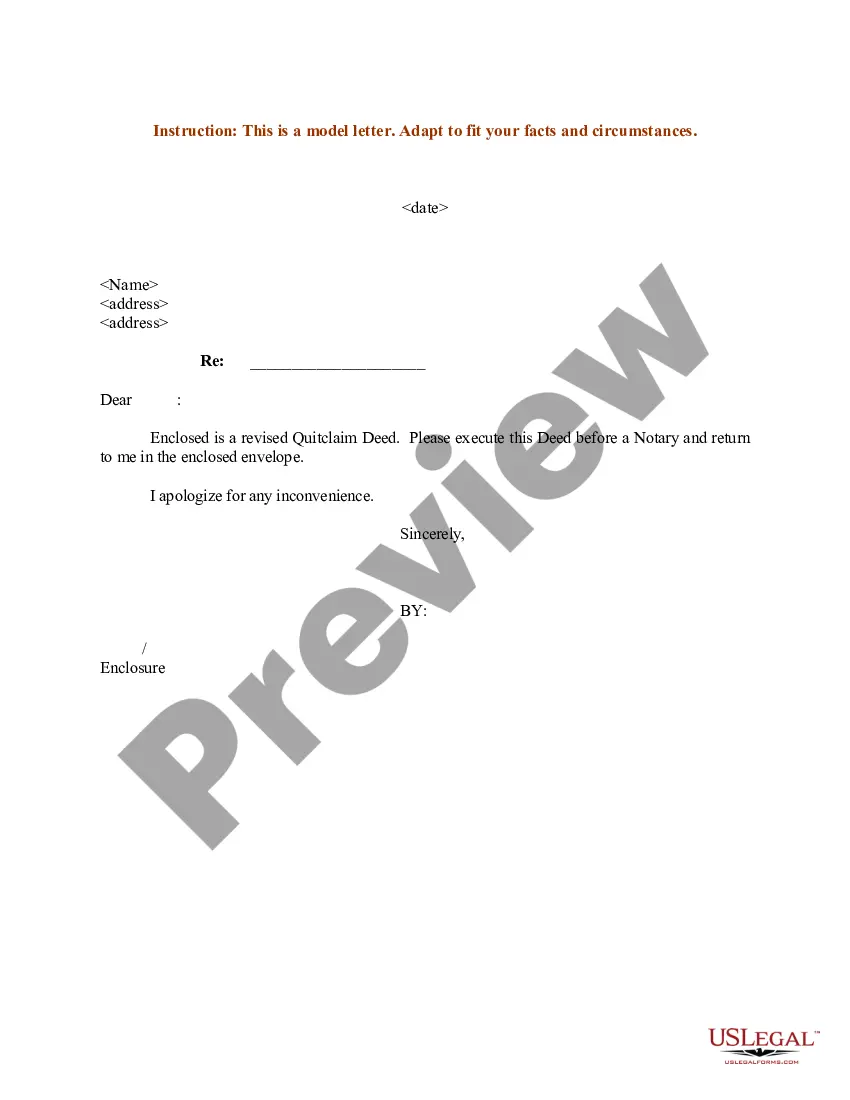
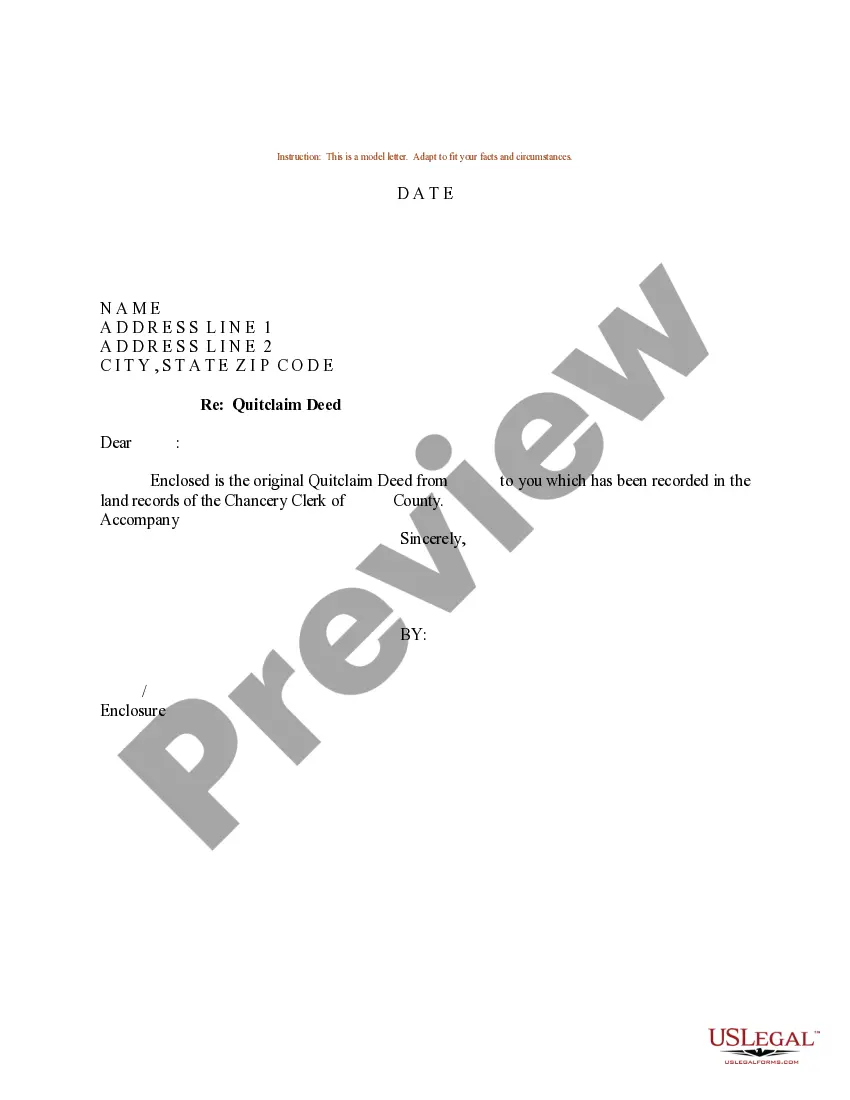
Vermont Sample Letter for Revised Quitclaim Deed
Description
Get your form ready online
Our built-in tools help you complete, sign, share, and store your documents in one place.
Make edits, fill in missing information, and update formatting in US Legal Forms—just like you would in MS Word.
Download a copy, print it, send it by email, or mail it via USPS—whatever works best for your next step.
Sign and collect signatures with our SignNow integration. Send to multiple recipients, set reminders, and more. Go Premium to unlock E-Sign.
If this form requires notarization, complete it online through a secure video call—no need to meet a notary in person or wait for an appointment.
We protect your documents and personal data by following strict security and privacy standards.

Make edits, fill in missing information, and update formatting in US Legal Forms—just like you would in MS Word.

Download a copy, print it, send it by email, or mail it via USPS—whatever works best for your next step.

Sign and collect signatures with our SignNow integration. Send to multiple recipients, set reminders, and more. Go Premium to unlock E-Sign.

If this form requires notarization, complete it online through a secure video call—no need to meet a notary in person or wait for an appointment.

We protect your documents and personal data by following strict security and privacy standards.
Looking for another form?




How to fill out Sample Letter For Revised Quitclaim Deed?
If you desire to thorough, acquire, or print official document templates, utilize US Legal Forms, the foremost collection of official forms, available online.
Employ the website's straightforward and efficient search to locate the documents you need. Various templates for business and personal use are categorized by types and states or keywords.
Utilize US Legal Forms to find the Vermont Sample Letter for Revised Quitclaim Deed with just a few clicks.
Each official document template you obtain is yours permanently. You will have access to every form you downloaded in your account. Navigate to the My documents section and choose a form to print or download again.
Be proactive and acquire, and print the Vermont Sample Letter for Revised Quitclaim Deed with US Legal Forms. There are numerous professional and state-specific forms you can utilize for your business or personal needs.
- If you are already a US Legal Forms user, Log In to your account and press the Download button to acquire the Vermont Sample Letter for Revised Quitclaim Deed.
- You can also access forms you previously downloaded in the My documents tab of your account.
- If you are using US Legal Forms for the first time, follow these steps.
- Step 1. Ensure you have selected the form for your appropriate area/state.
- Step 2. Use the Preview option to review the form's content. Make sure to read the details.
- Step 3. If you are not satisfied with the form, utilize the Search area at the top of the screen to find other variations in the official form template.
- Step 4. Once you have located the form you need, click the Buy now button. Choose the payment plan you prefer and enter your details to register for an account.
- Step 5. Complete the transaction. You can use your credit card or PayPal account to finalize the transaction.
- Step 6. Select the format of the official form and download it to your device.
- Step 7. Complete, modify, and print or sign the Vermont Sample Letter for Revised Quitclaim Deed.
Form popularity
FAQ
A deed transferring title to real property from the grantor to the grantee. In New York, a quitclaim deed transfers title in fee simple to the grantee without any covenants or warranties of title other than the covenant under Section 13 of the New York Lien Law.
If you wish to remove someone from a deed, you will need their consent. This can be done by recording a new deed, which will require their signature. If the person in question is deceased, you will need their death certificate and a notarized affidavit along with the new deed.
When you want to convey, or transfer, real property to someone else, either by sale, gift, or by court order, you must do so by using a written document that satisfies the requirements of the law in your state. This document is either a bargain and sale deed, a warranty deed, or a quitclaim deed.
A Warranty Deed and a Quitclaim Deed are two different types of real estate deeds commonly used in Vermont. Warranty Deed: A Warranty Deed provides a guarantee of clear title and full ownership to the buyer.
A Vermont quit claim deed is a form that records the transference of property from a grantor to a grantee. This is an informal manner of transfer in which it is assumed, but not verified by this form, that a grantor has a legal right to relinquish a claim, interest, or title to the property being discussed.
? Quitclaim deed must be written and signed by grantor before a notary public. ? Must include legal description, property address, county, date, grantor and grantee names, and transfer amount (if any). ? File the quitclaim deed with the County Clerk or City Registrar.
If you're preparing the quitclaim deed yourself, make sure to enter the property description just as it appears on an older deed of the property. If you can't find an old deed, check with the County Recorder of Deeds in the county where the property is located. They can tell you where to get a copy of an earlier deed.
The document must be notarized any time a deed is required as part of a real estate transaction. This is the case for all deeds, regardless of the situation. While you should check which type of deed best suits your situation, you will need to have the deed notarized regardless.