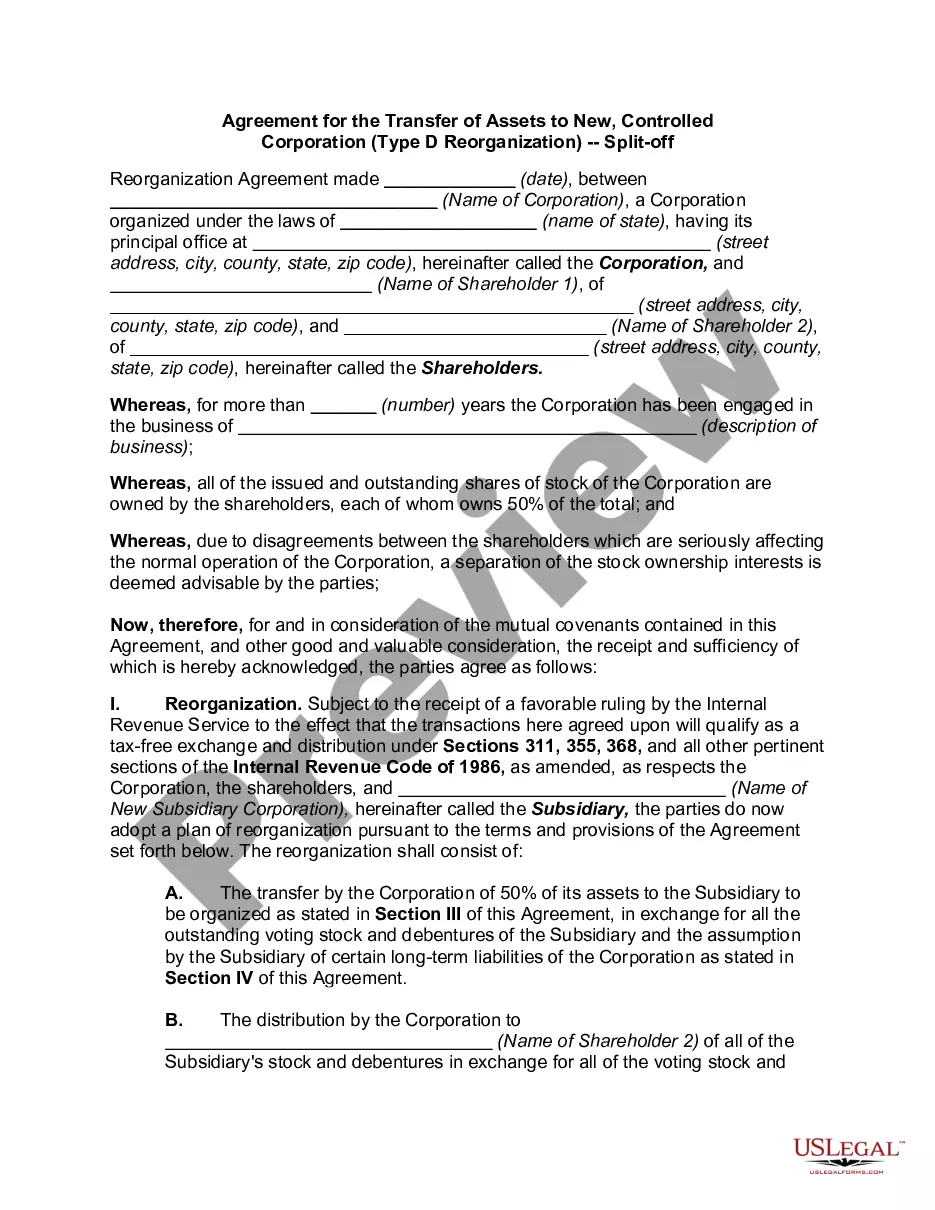
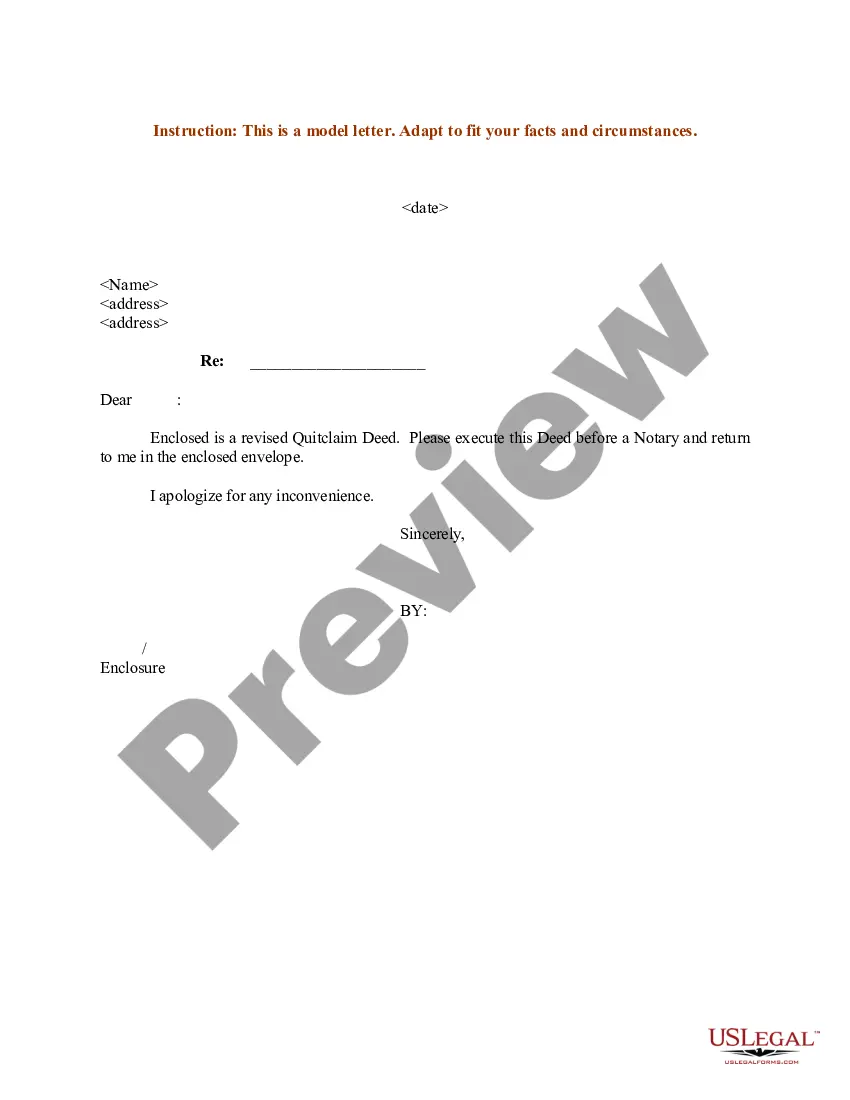
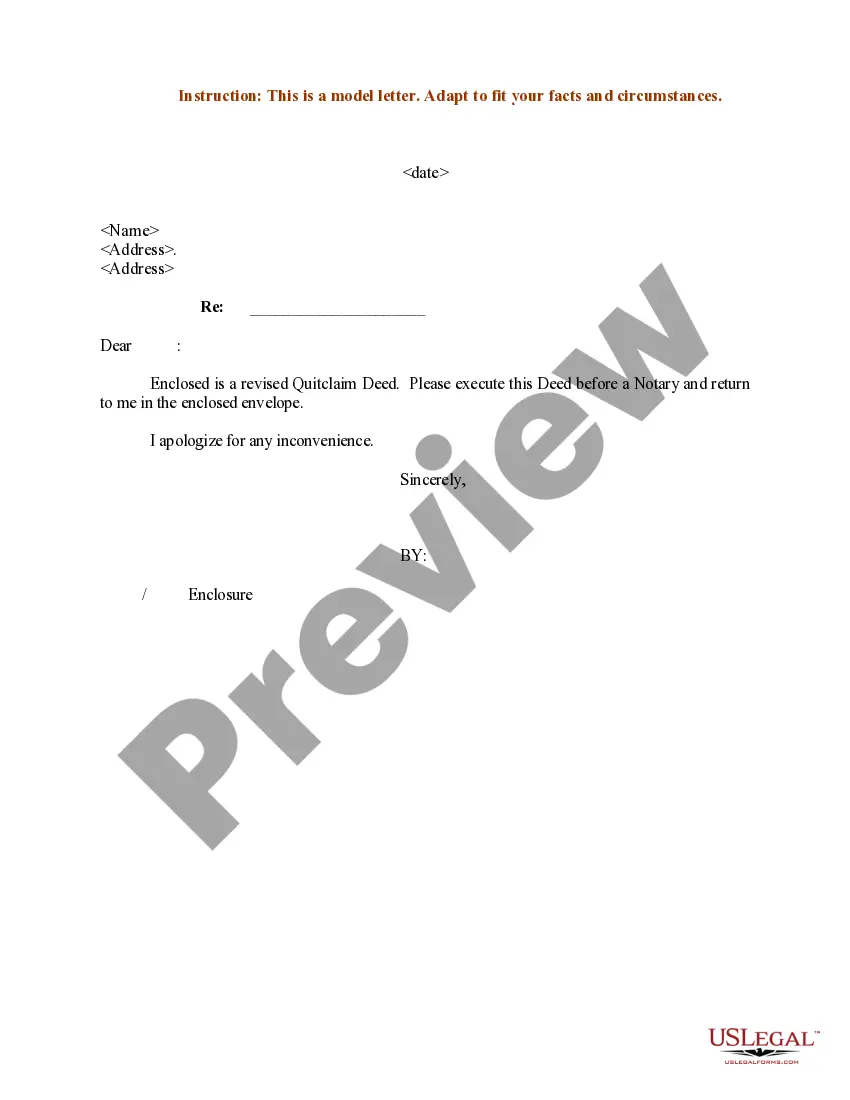
Vermont Sample Letter to accompany Revised Quitclaim Deed
Description
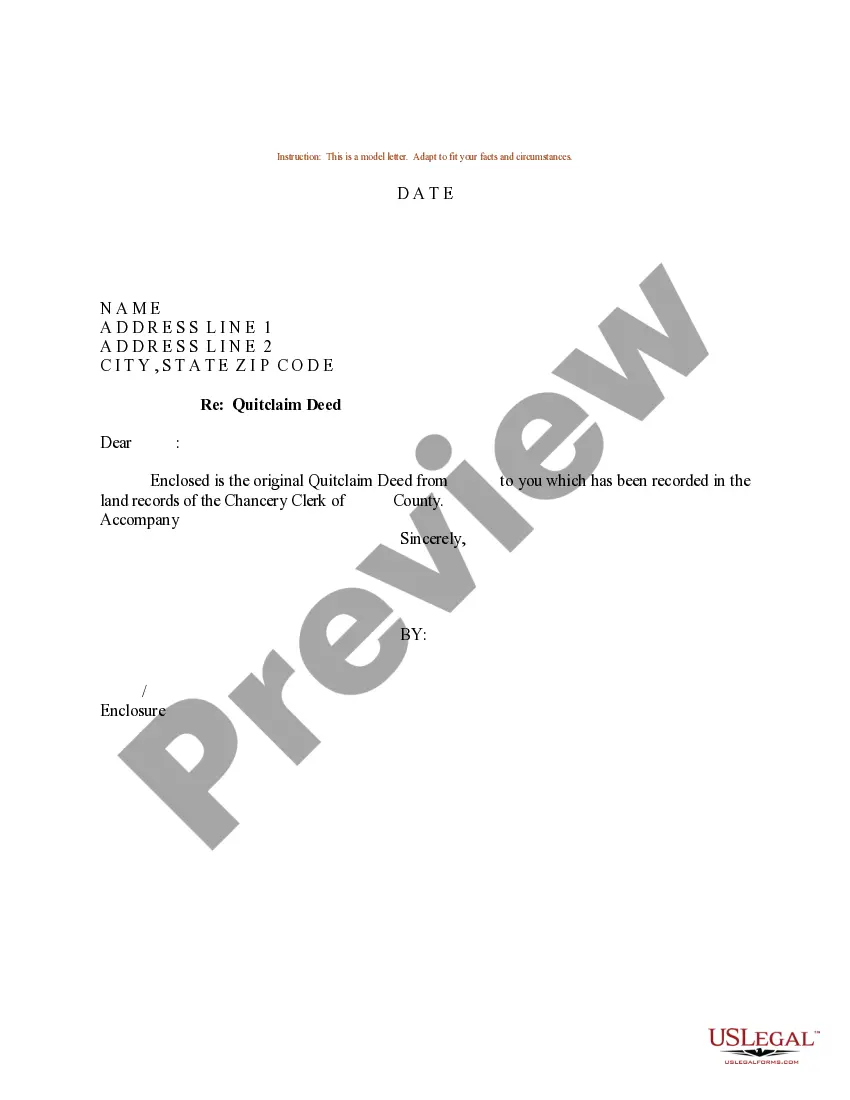
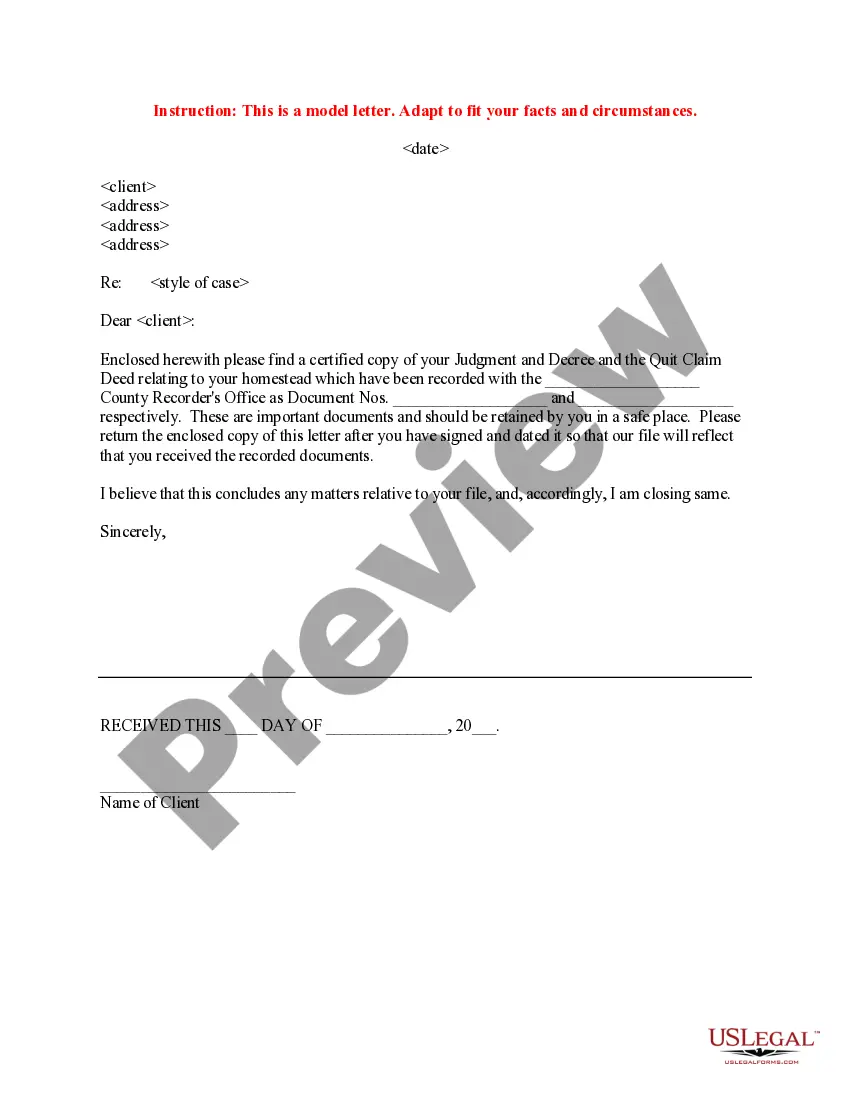
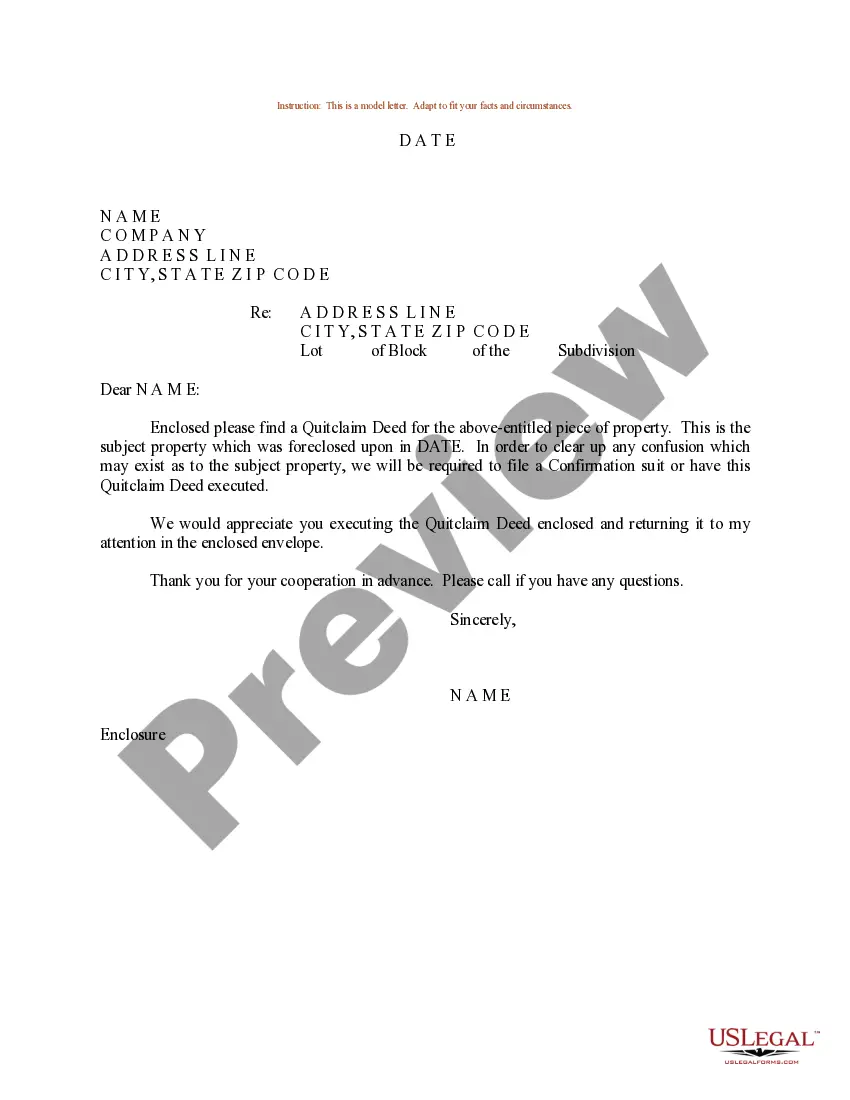
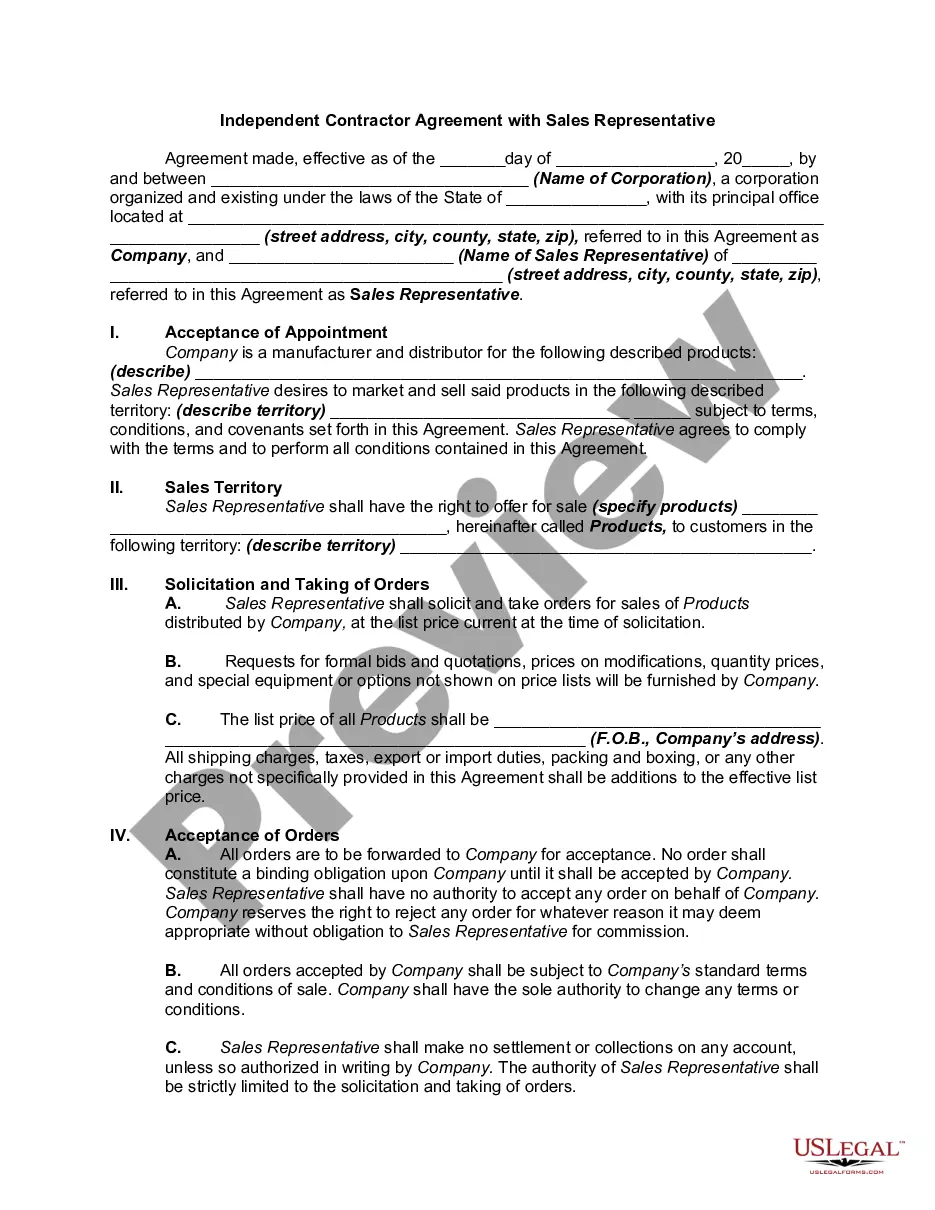

How to fill out Sample Letter To Accompany Revised Quitclaim Deed?
You might spend hours online searching for the legal document template that meets the state and federal requirements you need.
US Legal Forms offers thousands of legal forms that have been reviewed by experts.
You can easily download or print the Vermont Sample Letter to accompany Revised Quitclaim Deed from my services.
If available, use the Preview button to browse through the document template as well. To find another version of your form, utilize the Search field to locate the template that suits you and your needs.
- If you already possess a US Legal Forms account, you can Log In and click the Download button.
- Then, you can complete, edit, print, or sign the Vermont Sample Letter to accompany Revised Quitclaim Deed.
- Each legal document template you purchase is yours for an extended period.
- To obtain another copy of a purchased form, go to the My documents tab and click the corresponding button.
- If you are using the US Legal Forms site for the first time, follow the simple instructions below.
- First, ensure you have selected the correct document template for the region/area of your choice.
- Review the form description to confirm you have chosen the right form.
Form popularity
FAQ
To file a quitclaim deed in Vermont, you must complete the deed form accurately and ensure it is signed and notarized. Afterward, you need to file the deed with your local town clerk's office. Including a Vermont Sample Letter to accompany Revised Quitclaim Deed can provide clarity and aid in the filing process. For further assistance, consider using the resources available on the US Legal Forms platform.
Reversing a quit claim deed typically involves filing a new deed that explicitly states the reversal. You may also need to provide a Vermont Sample Letter to accompany Revised Quitclaim Deed to ensure proper documentation. It’s advisable to consult a legal professional to ensure that all steps are correctly followed and to avoid future complications.
Yes, you can challenge a quit claim deed, but it often requires strong evidence. Common grounds for challenge include fraud, lack of capacity, or failure to meet state requirements. If you find yourself in this situation, consulting a legal expert or using a Vermont Sample Letter to accompany Revised Quitclaim Deed can help you navigate the process effectively.
Common quitclaim deed mistakes include failing to include all necessary parties, not properly notarizing the document, and neglecting to provide a Vermont Sample Letter to accompany Revised Quitclaim Deed. These errors can lead to disputes or complications during property transfers. To avoid these pitfalls, ensure that you review the deed thoroughly and seek assistance if needed.
To remove someone from a quitclaim deed, the current owners must execute a new quitclaim deed that transfers the interest of the person being removed. This requires the consent of all parties involved and should be properly recorded with the local county recorder's office. It's advisable to consult an attorney when dealing with property interests to ensure compliance with state laws. Additionally, using a Vermont Sample Letter to accompany Revised Quitclaim Deed can clarify the intentions of all parties involved in the process.
A deed may be declared void for various reasons, such as improper execution, lack of capacity, or if it was signed under undue pressure. If the deed does not meet state-specific requirements, it may also be deemed void. Furthermore, a deed can be void if it violates public policy or law. Using a Vermont Sample Letter to accompany Revised Quitclaim Deed can help ensure all necessary details are covered, reducing the risk of invalidity.
In Minnesota, a quitclaim deed allows the property owner to transfer their interest without making warranties about the title. The grantor simply conveys whatever interest they have, if any, to the grantee. It is essential for the grantee to conduct a title search before accepting the deed to understand any potential issues. A Vermont Sample Letter to accompany Revised Quitclaim Deed can aid in specifying the intent and conditions of the transfer.
While quitclaim deeds can simplify property transfers, they come with potential problems. They do not guarantee clear title, meaning the grantee may inherit undisclosed liens or claims. Additionally, if the grantor has no actual ownership, the grantee receives nothing. To mitigate risks, consider using a Vermont Sample Letter to accompany Revised Quitclaim Deed, which can help outline specific terms and offer clarity.
A quitclaim deed may be voided under circumstances such as fraud, duress, or if the grantor lacked the legal capacity to transfer the property. If the deed is not properly executed or recorded, it may also become void. Moreover, any changes in property ownership that go against local laws could render the deed ineffective. Utilizing a Vermont Sample Letter to accompany Revised Quitclaim Deed can help clarify the terms and intentions behind the transfer.
A quitclaim deed can be considered invalid due to several factors. If the deed was not signed by the grantor, or if it lacks notarization, it may not hold up in court. Additionally, if the property description is vague or incorrect, this could also invalidate the deed. To ensure compliance, consider using a Vermont Sample Letter to accompany Revised Quitclaim Deed to clarify your intent.