This form is a sample letter in Word format covering the subject matter of the title of the form.
Vermont Sample Letter to Judge regarding Agreed Order
Instant download
Description

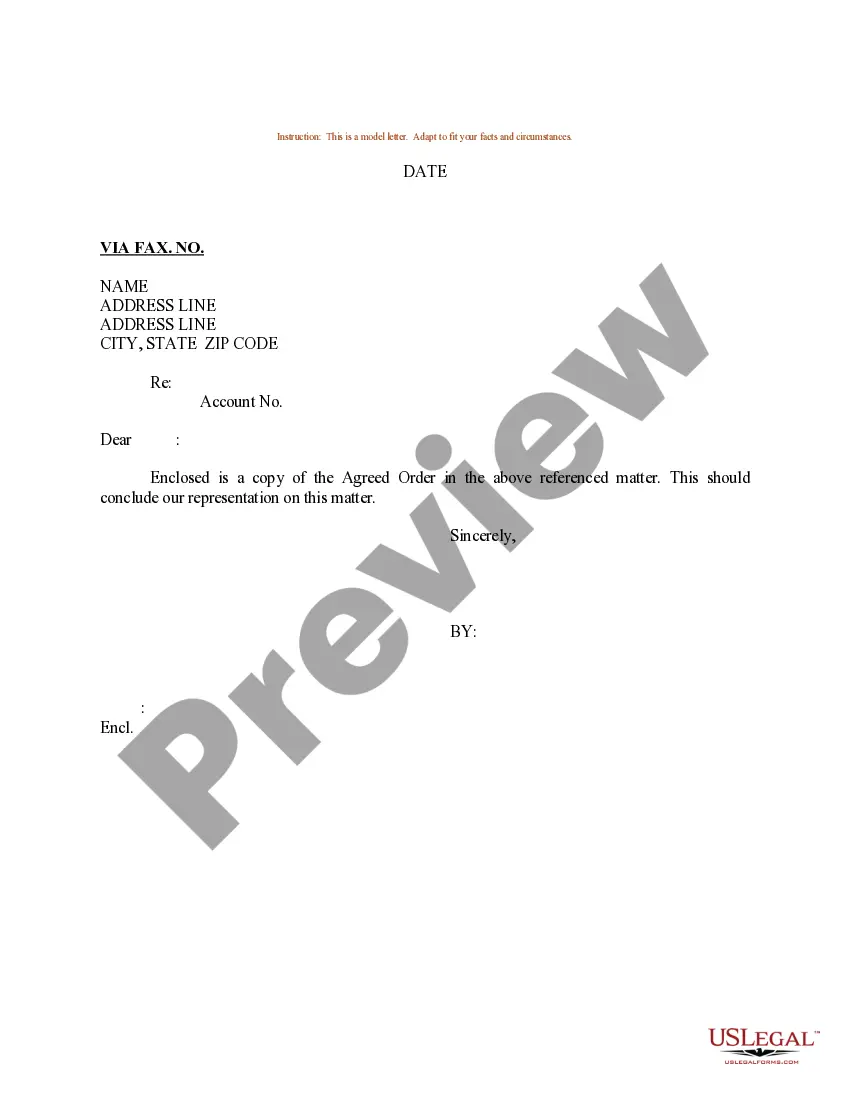

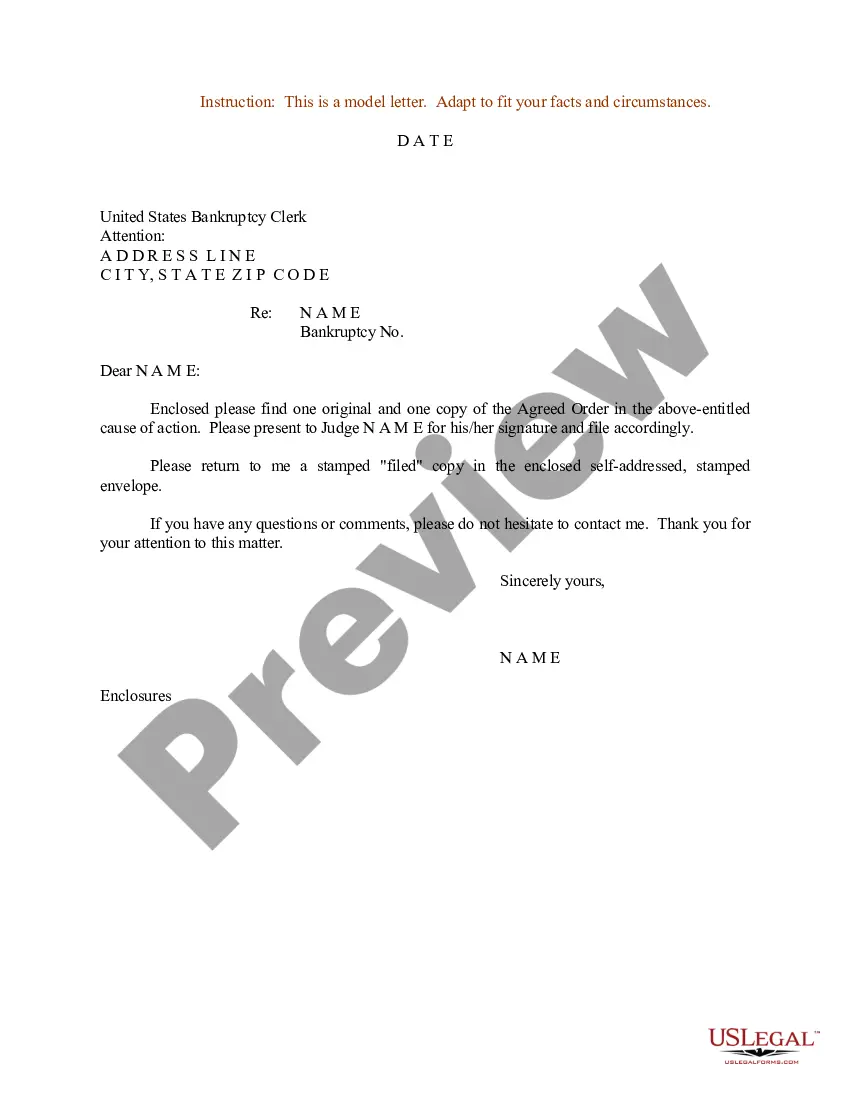
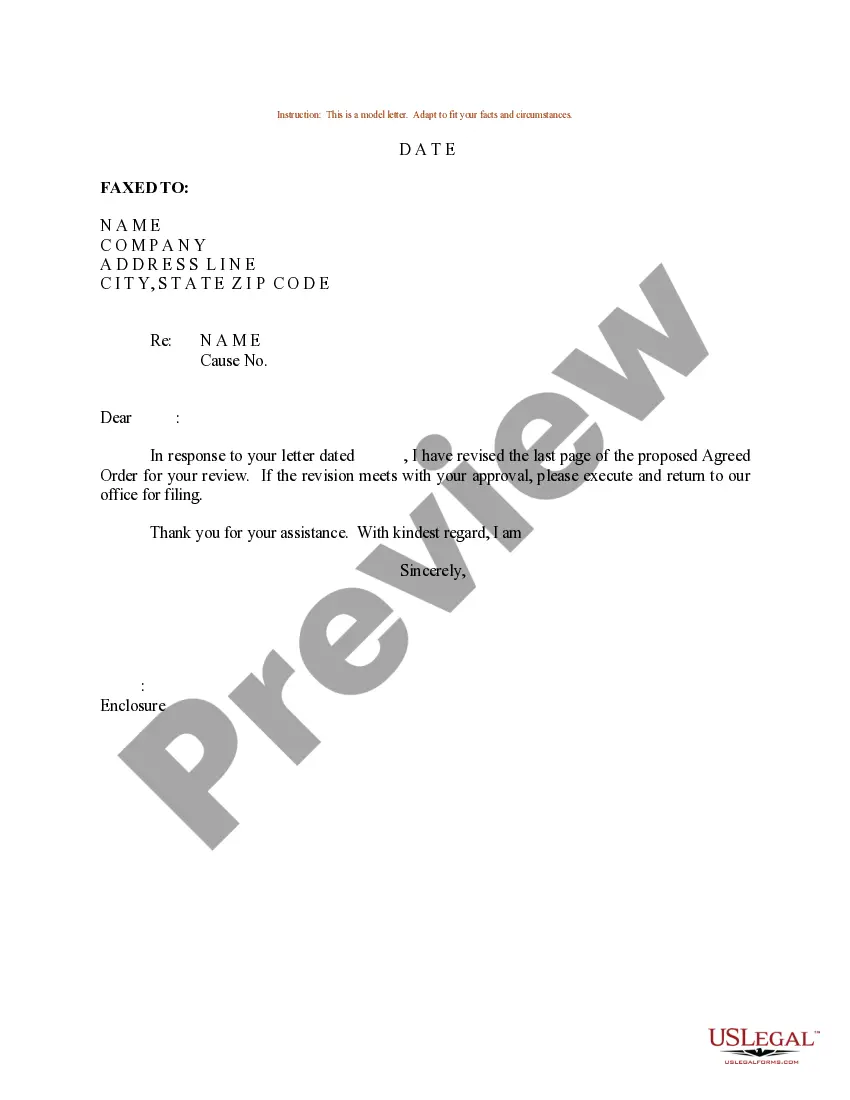

How to fill out Sample Letter To Judge Regarding Agreed Order?
You might spend time online searching for the legal document template that meets the federal and state criteria you require. US Legal Forms provides a vast array of legal forms that can be reviewed by experts.
You can download or print the Vermont Sample Letter to Judge concerning an Agreed Order from my assistance. If you already have a US Legal Forms account, you can Log In and click the Download button. After that, you can complete, modify, print, or sign the Vermont Sample Letter to Judge regarding Agreed Order. Each legal document template you purchase is yours indefinitely.
To obtain another copy of any purchased form, go to the My documents section and click the appropriate button. If you are using the US Legal Forms website for the first time, follow the simple instructions below: First, ensure you have selected the correct document template for the area/city of your choice. Review the form details to confirm you have chosen the suitable form. If available, utilize the Review button to examine the document template simultaneously.
- If you wish to find another version of the form, use the Search field to locate the template that meets your needs and specifications.
- Once you have found the template you want, click Get now to proceed.
- Select the pricing plan you prefer, enter your details, and register for your account on US Legal Forms.
- Complete the transaction. You can use your credit card or PayPal account to pay for the legal form.
- Select the format of the document and download it to your device.
- Make adjustments to your document if necessary. You can complete, modify, sign, and print the Vermont Sample Letter to Judge regarding Agreed Order.
- Download and print numerous document templates using the US Legal Forms site, which offers the largest collection of legal forms. Utilize professional and state-specific templates to address your business or personal needs.
Form popularity
FAQ
You can contact the Vermont judiciary through their official website, where you will find phone numbers and email addresses for various courts. Each court may have different contact methods depending on your location and the nature of your inquiry. If you need to communicate specific information, consider using a Vermont Sample Letter to Judge regarding Agreed Order to format your request professionally and clearly.
In Vermont, a judgment typically remains valid for eight years from the date it is entered. After this period, the creditor must renew the judgment to continue collection efforts. If you are dealing with a judgment and need to communicate with the court, a Vermont Sample Letter to Judge regarding Agreed Order can effectively present your circumstances.
To request access to court records in Vermont, you can visit the Vermont Judiciary's official website or contact the court clerk directly. Most records are public, but some may have restrictions. When making your request, you might find it beneficial to include a Vermont Sample Letter to Judge regarding Agreed Order to clearly outline your needs and ensure proper handling of your request.
A petition to open an estate in Vermont is a legal request made to the court to start the probate process after someone passes away. This petition allows the appointed executor to manage and distribute the deceased person's estate according to their will or Vermont law. If you're navigating this process, utilizing resources like a Vermont Sample Letter to Judge regarding Agreed Order can help streamline your communication with the court.
In Vermont, the statute of limitations on debt varies depending on the type of debt. Generally, the limit is six years for written contracts, including credit card debts. This means that creditors have up to six years to file a lawsuit to collect the debt. If you need to address this issue, you might consider drafting a Vermont Sample Letter to Judge regarding Agreed Order to clarify your position.
You should start your letter by addressing it to the court (for example, ?Dear Judge Jones?). Rather than use the generic term ?Sentencing Judge,? try to find the specific name of the judge that is sentencing the defendant. If you cannot find the name, address the letter to ?Honorable Judge.?
These letters can be a very important part of the sentencing process because they help the judge get to know the person they are sentencing in ways other than just the facts of the offense: The letter should be addressed to the Judge, but mailed to the defendant's attorney.
You can address the judge to ?The Honorable First Name Last Name? or ?Judge First Name Last Name? or ?Judge Last Name.? It is redundant to say ?Honorable Judge? so use either ?Judge? or ?Honorable.?
For individuals writing character letters, the goal should be to first establish your credibility as a reference for the defendant. Next, the letter should describe the defendant, in order to help the judge better understand him or her beyond the offense committed.
Follow the order of this format, leaving a space in between each section: Your Information (first thing that goes on the inside of the letter) Name. ... The Date. The Judge's Information. Honorable Judge First Name Last Name. ... What the Letter Is Going to Address. ... Salutation. ... Body. ... Signature.