Vermont New State Resident Package
Overview of this form package
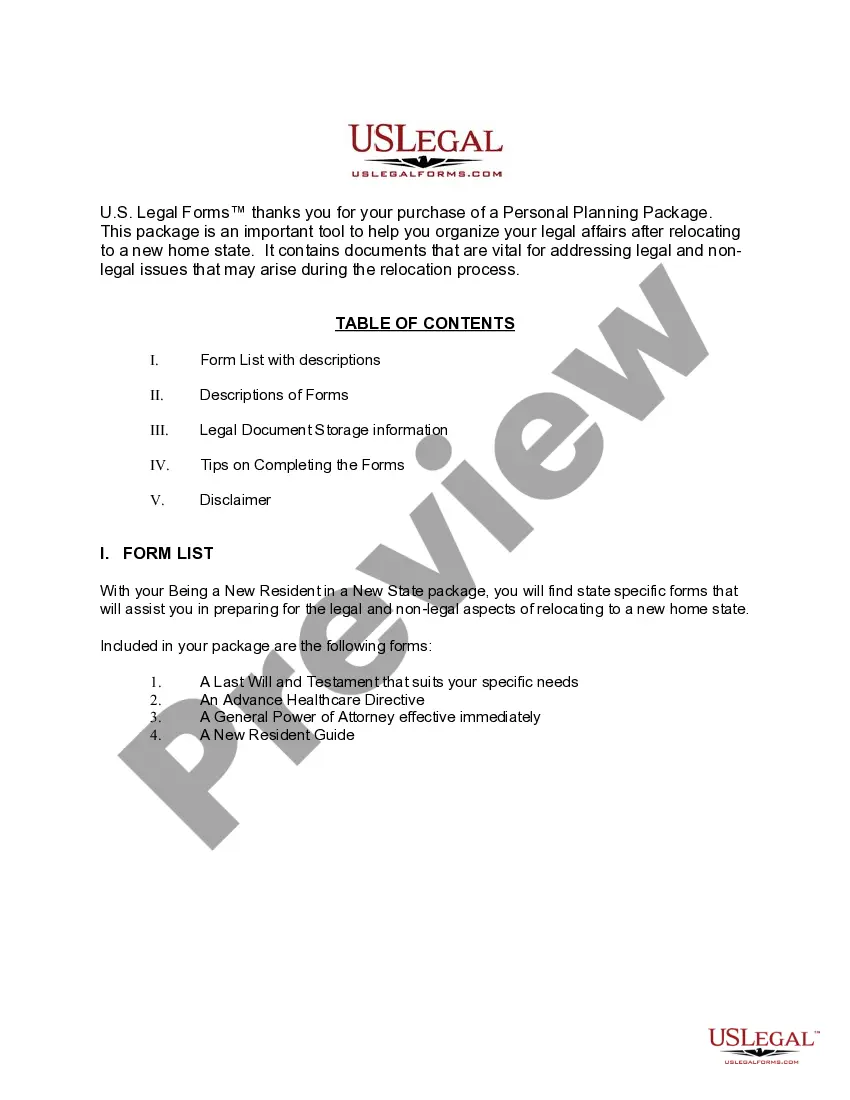
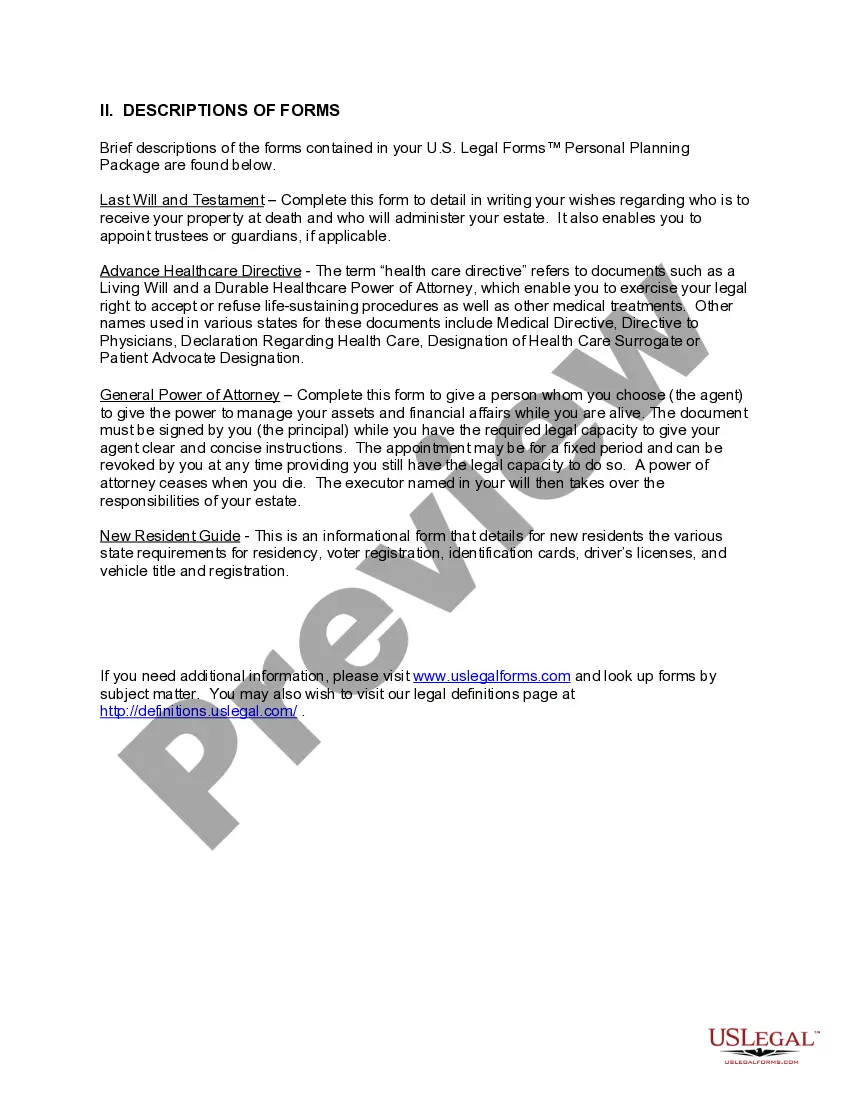
The Vermont New State Resident Package is a comprehensive collection of legal documents specifically designed for individuals who have moved to Vermont. This package includes essential forms to help you manage both legal and non-legal matters that often arise after relocating. Unlike other generic relocation packages, this one is tailored to meet the specific needs of new residents in Vermont, ensuring compliance with state laws and regulations.
Forms included in this package
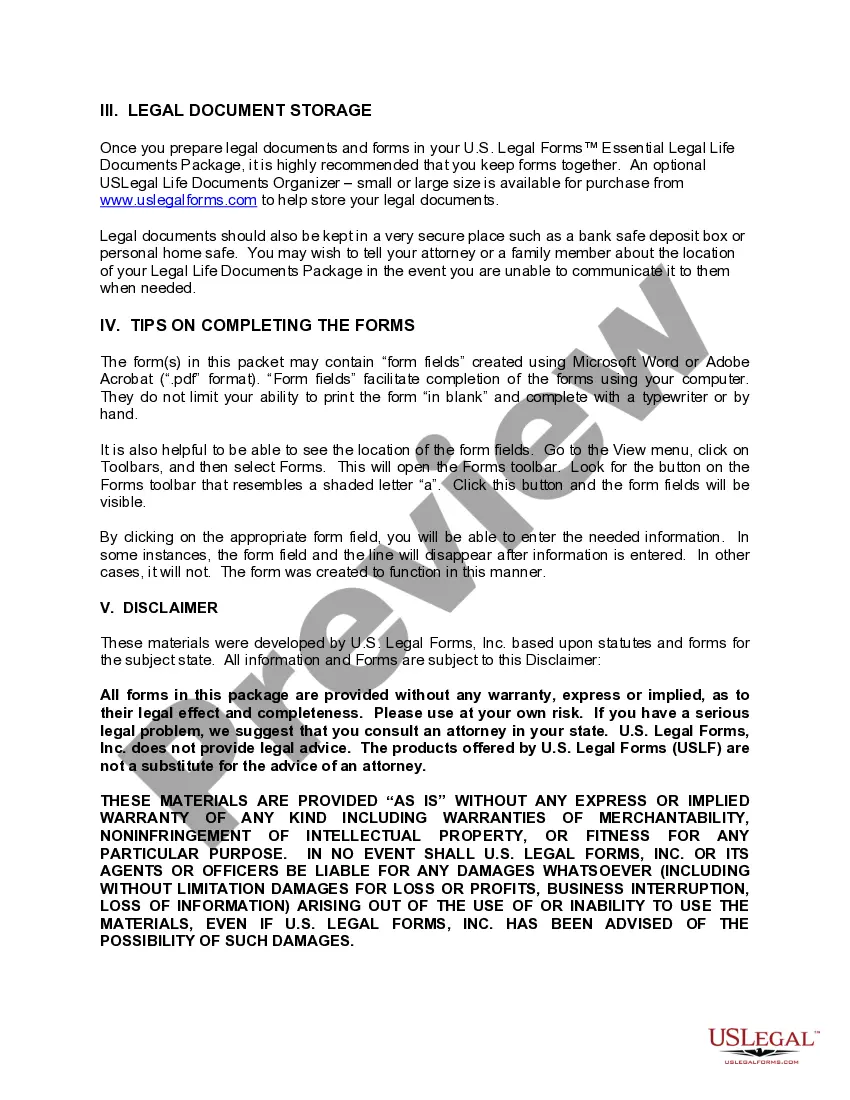
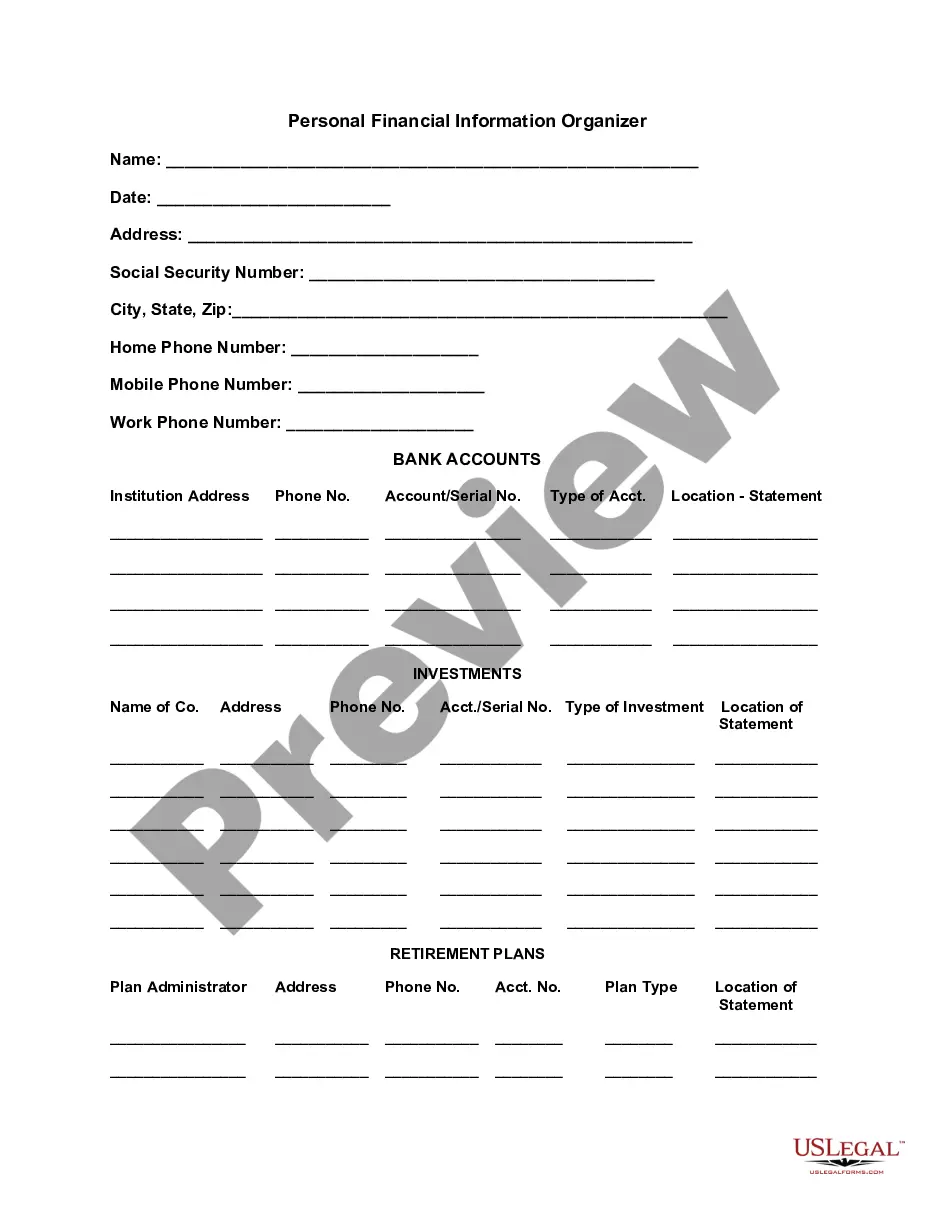
When to use this form package
This form package is useful when you are settling into Vermont as a new resident. You should consider using it in the following scenarios:
- After relocating to Vermont, to ensure all legal affairs are organized.
- When you need to establish legal healthcare decisions and financial power of attorney.
- If you seek guidance on state-specific requirements for residency and documentation.
Who should use this form package
- New residents who have moved to Vermont.
- Individuals looking to create a Last Will and Testament, Advance Healthcare Directive, or General Power of Attorney.
- Anyone needing assistance understanding local residency requirements and document completion processes.
How to complete these forms
- Review the included forms thoroughly to understand their purpose.
- Fill out each form accurately, providing required information in the designated fields.
- Sign and date the forms where indicated; ensure you have legal capacity to do so.
- Store the completed documents in a secure location, such as a safe deposit box.
- Consult with an attorney if you have questions about the forms or their implications.
Do documents in this package require notarization?
Most forms in this package do not require notarization. However, local laws or specific situations may demand it. Our online notarization service, powered by Notarize, lets you complete the process through a verified video call, available anytime.
Get your form ready online
Our built-in tools help you complete, sign, share, and store your documents in one place.
Make edits, fill in missing information, and update formatting in US Legal Forms—just like you would in MS Word.
Download a copy, print it, send it by email, or mail it via USPS—whatever works best for your next step.
Sign and collect signatures with our SignNow integration. Send to multiple recipients, set reminders, and more. Go Premium to unlock E-Sign.
If this form requires notarization, complete it online through a secure video call—no need to meet a notary in person or wait for an appointment.
We protect your documents and personal data by following strict security and privacy standards.

Make edits, fill in missing information, and update formatting in US Legal Forms—just like you would in MS Word.

Download a copy, print it, send it by email, or mail it via USPS—whatever works best for your next step.

Sign and collect signatures with our SignNow integration. Send to multiple recipients, set reminders, and more. Go Premium to unlock E-Sign.

If this form requires notarization, complete it online through a secure video call—no need to meet a notary in person or wait for an appointment.

We protect your documents and personal data by following strict security and privacy standards.
Typical mistakes to avoid
- Failing to sign and date the forms properly.
- Not reviewing state requirements adequately before completing the forms.
- Providing incomplete or inaccurate information on the documents.
Benefits of using this package online
- Convenience: Access and download your legal forms anytime, from anywhere.
- Editability: Forms are fillable, allowing you to easily input your information digitally.
- Reliability: All forms are crafted by licensed attorneys to ensure compliance and validity.
Key takeaways
- The Vermont New State Resident Package is designed for those who have recently moved to Vermont.
- This package includes essential documents like a Last Will and Testament, an Advance Healthcare Directive, and a General Power of Attorney.
- Ensure your documents are completed accurately to reflect your wishes and comply with state laws.
Looking for another form?

Form popularity
FAQ
Voter registration card. Driver's license and vehicle registration. Local bank account statement. State income tax returns. Declaration of Domicile from the county clerk.
Complete a Vermont Registration, Tax, and Title application(VD-119) and submit it (together with the above documentation and the appropriate fees) to the Vermont Department of Motor Vehicles.
Typical factors states use to determine residency. Often, a major determinant of an individual's status as a resident for income tax purposes is whether he or she is domiciled or maintains an abode in the state and are present" in the state for 183 days or more (one-half of the tax year).
So, The Vermont Loophole is totally real. Totally do-able. As long as you aren't in a rush.
According to the Vermont website: A Resident is an individual that is domiciled in Vermont or maintains a permanent home, and is physically present in the state for 183 days or more.
Generally, you need to establish a physical presence in the state, an intent to stay there and financial independence. Then you need to prove those things to your college or university. Physical presence: Most states require you to live in the state for at least a full year before establishing residency.
Find a new place to live in the new state. Establish domicile. Change your mailing address and forward your mail. Change your address with utility providers. Change IRS address. Register to vote. Get a new driver's license. File taxes in your new state.
Utility bill (must list service address). Property tax bill with physical location. Lease or Landlord statement. Vermont EBT (Electronic Benefit Transfer) card or Vermont AIM (Advanced Information Management) identification card. Homeowners/Renters insurance (policy/proof of claim).
You qualify as a Vermont resident for that part of the taxable year during which: You are domiciled in Vermont, or. You maintain a permanent home in Vermont, and you are present in Vermont for more than 183 days of the taxable year.