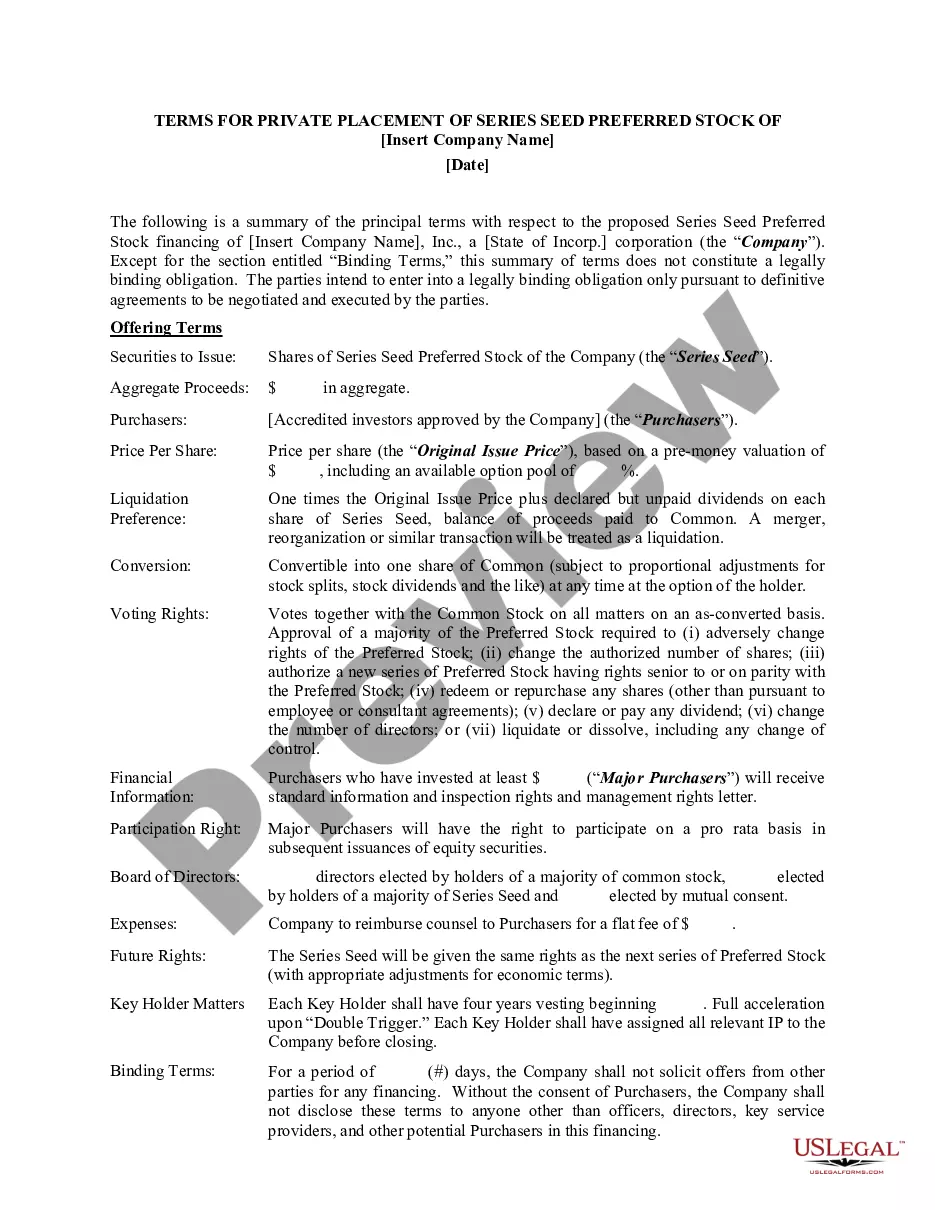
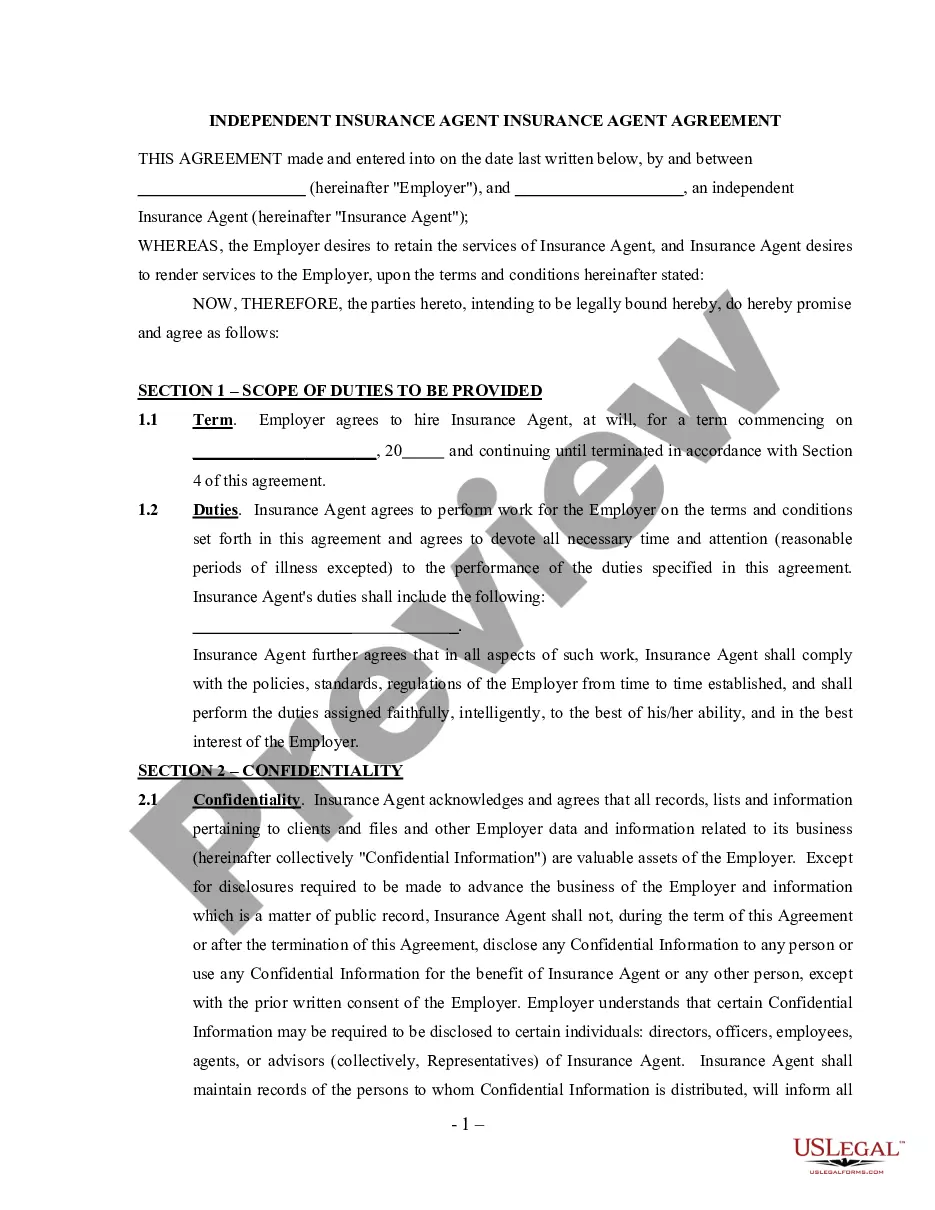
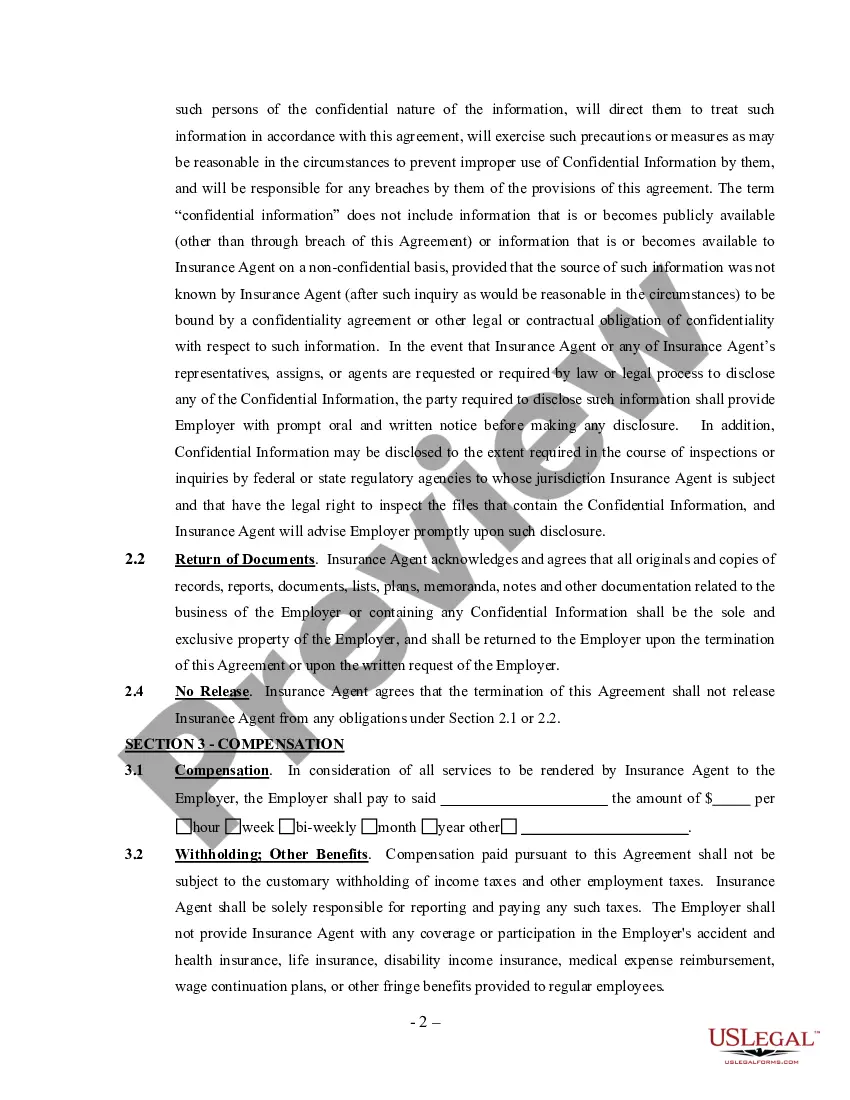
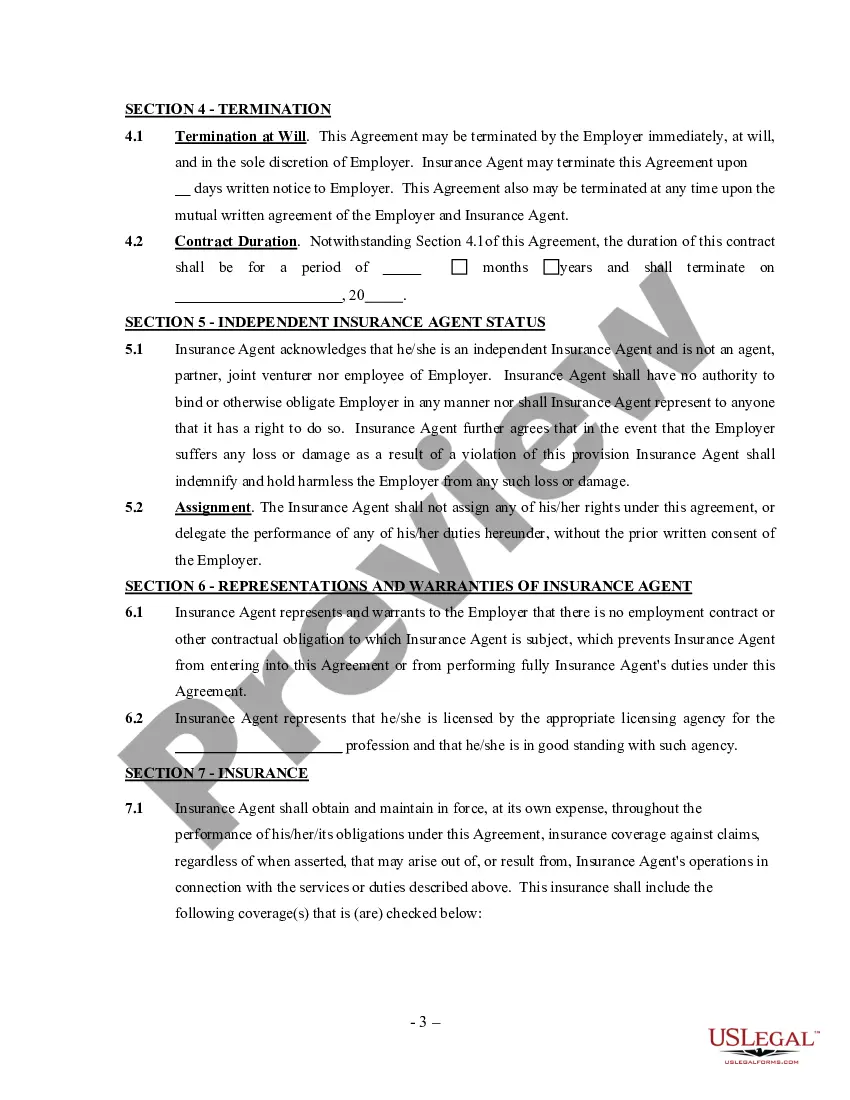
Virginia Insurance Agent Agreement - Self-Employed Independent Contractor
Description
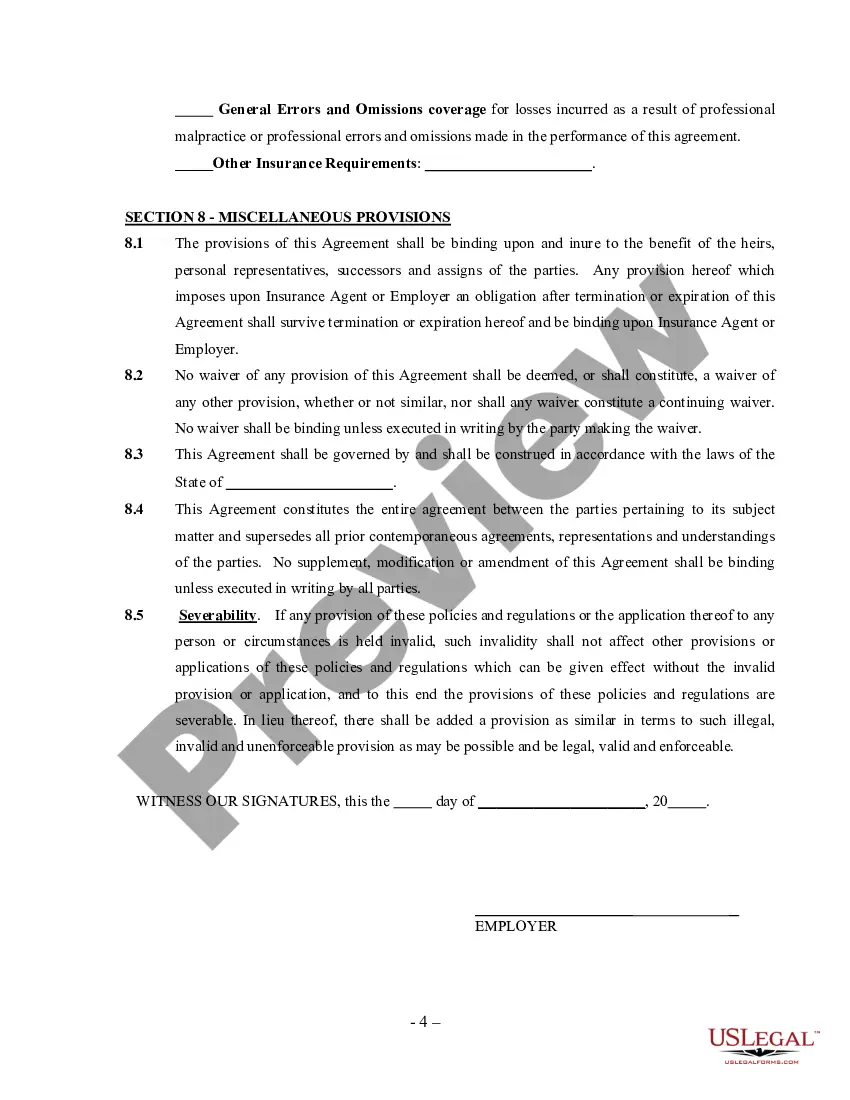

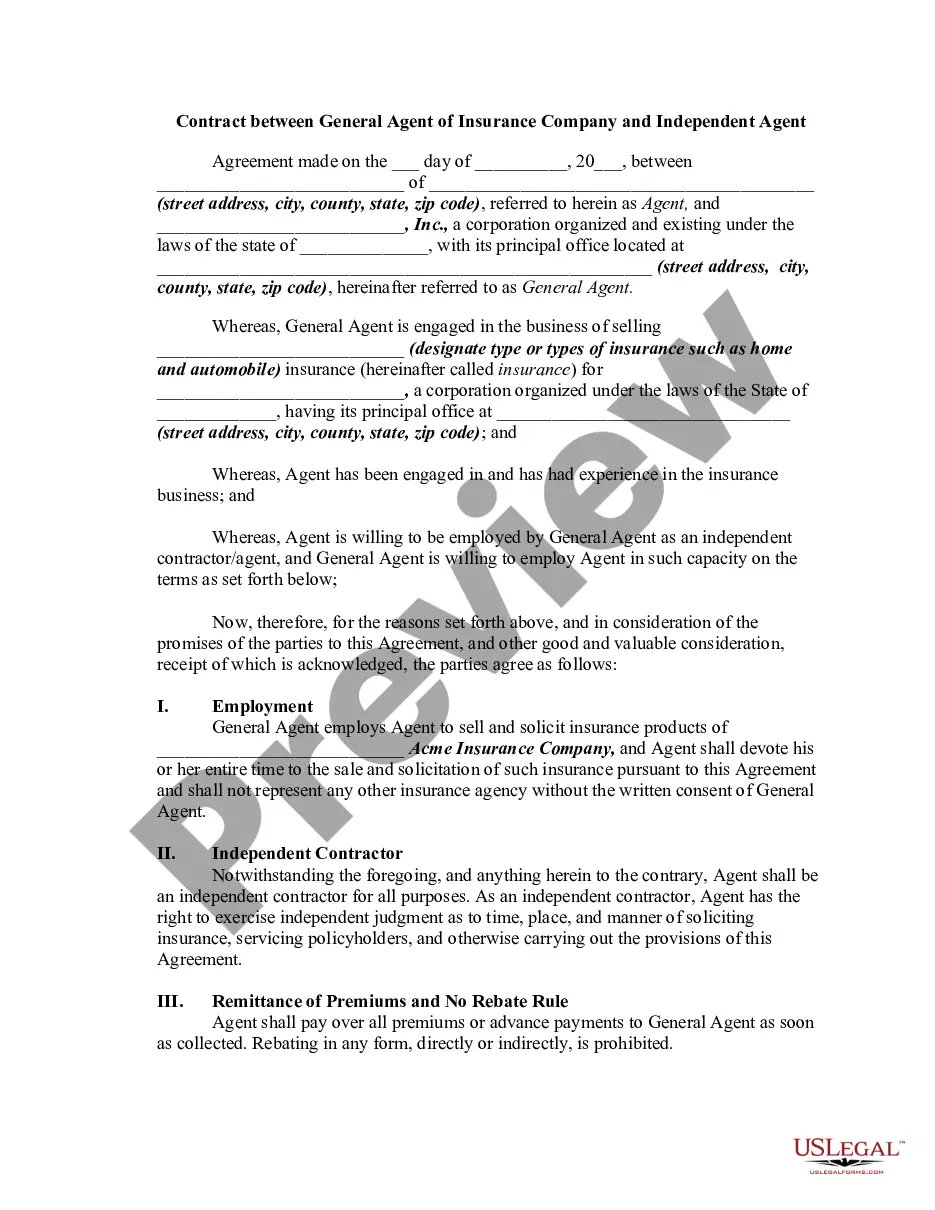
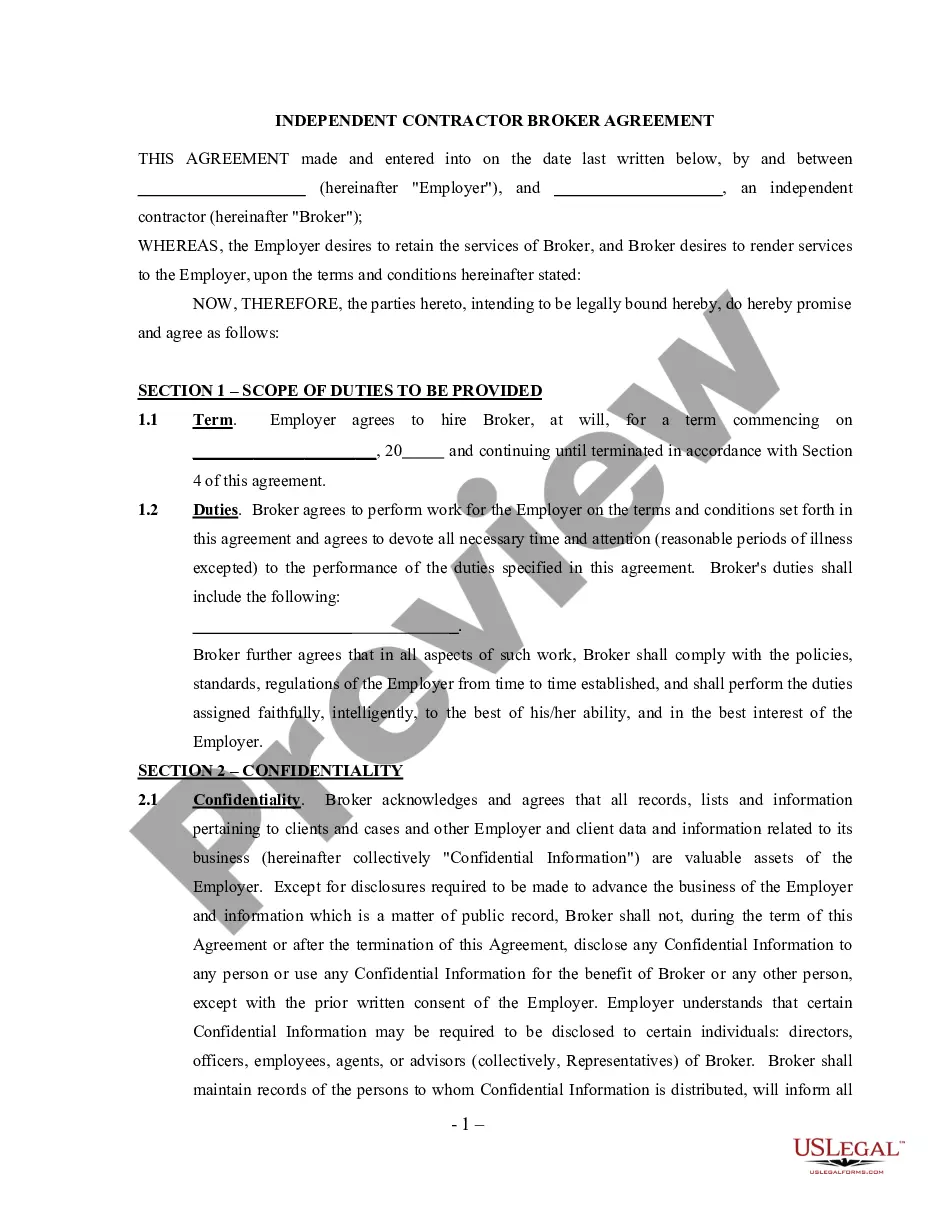
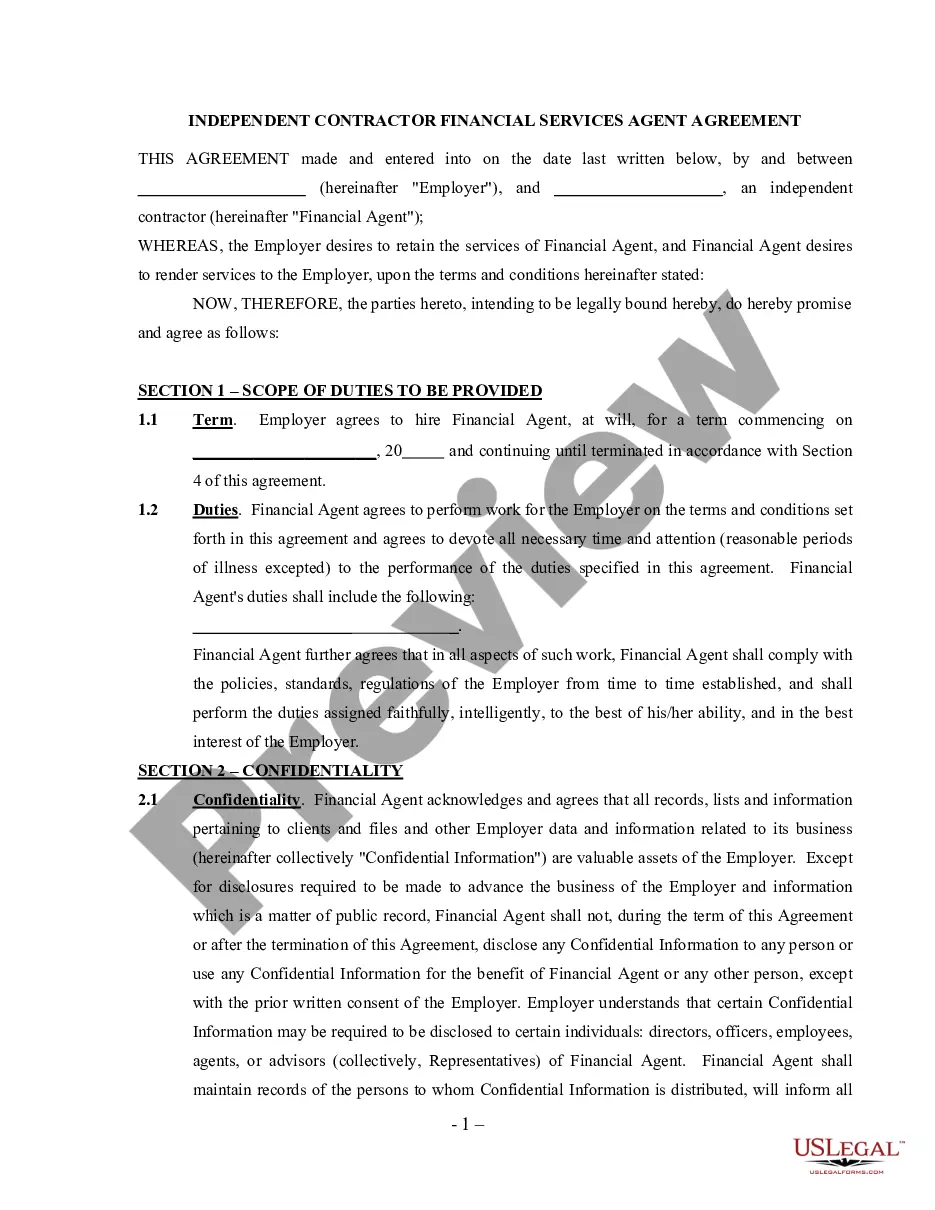
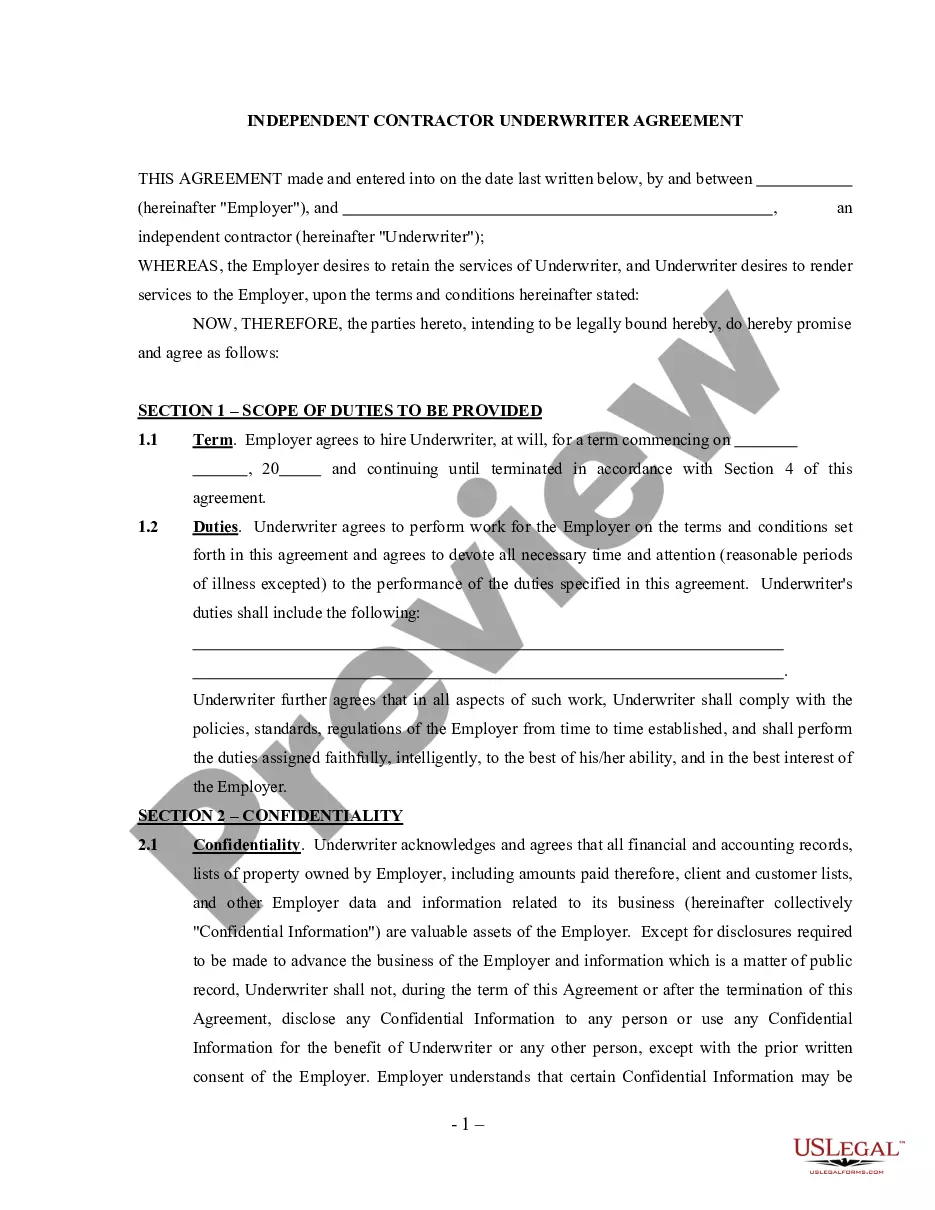
Get your form ready online
Our built-in tools help you complete, sign, share, and store your documents in one place.
Make edits, fill in missing information, and update formatting in US Legal Forms—just like you would in MS Word.
Download a copy, print it, send it by email, or mail it via USPS—whatever works best for your next step.
Sign and collect signatures with our SignNow integration. Send to multiple recipients, set reminders, and more. Go Premium to unlock E-Sign.
If this form requires notarization, complete it online through a secure video call—no need to meet a notary in person or wait for an appointment.
We protect your documents and personal data by following strict security and privacy standards.

Make edits, fill in missing information, and update formatting in US Legal Forms—just like you would in MS Word.

Download a copy, print it, send it by email, or mail it via USPS—whatever works best for your next step.

Sign and collect signatures with our SignNow integration. Send to multiple recipients, set reminders, and more. Go Premium to unlock E-Sign.

If this form requires notarization, complete it online through a secure video call—no need to meet a notary in person or wait for an appointment.

We protect your documents and personal data by following strict security and privacy standards.
Looking for another form?







How to fill out Insurance Agent Agreement - Self-Employed Independent Contractor?
Selecting the optimal legal document template can be a challenge. Naturally, there are numerous templates accessible online, but how do you locate the legal form you need.
Utilize the US Legal Forms website. The service offers thousands of templates, such as the Virginia Insurance Agent Agreement - Self-Employed Independent Contractor, which you can use for business and personal purposes. All forms are reviewed by professionals and comply with state and federal regulations.
If you are already registered, Log In to your account and click the Download button to obtain the Virginia Insurance Agent Agreement - Self-Employed Independent Contractor. Use your account to browse through the legal forms you have previously acquired. Navigate to the My documents tab of your account to retrieve another copy of the document you need.
Fill out, modify, print, and sign the downloaded Virginia Insurance Agent Agreement - Self-Employed Independent Contractor. US Legal Forms is the largest collection of legal forms where you can find a variety of document templates. Use the service to obtain well-crafted documents that adhere to state requirements.
- If you are a new user of US Legal Forms, here are straightforward instructions for you to follow.
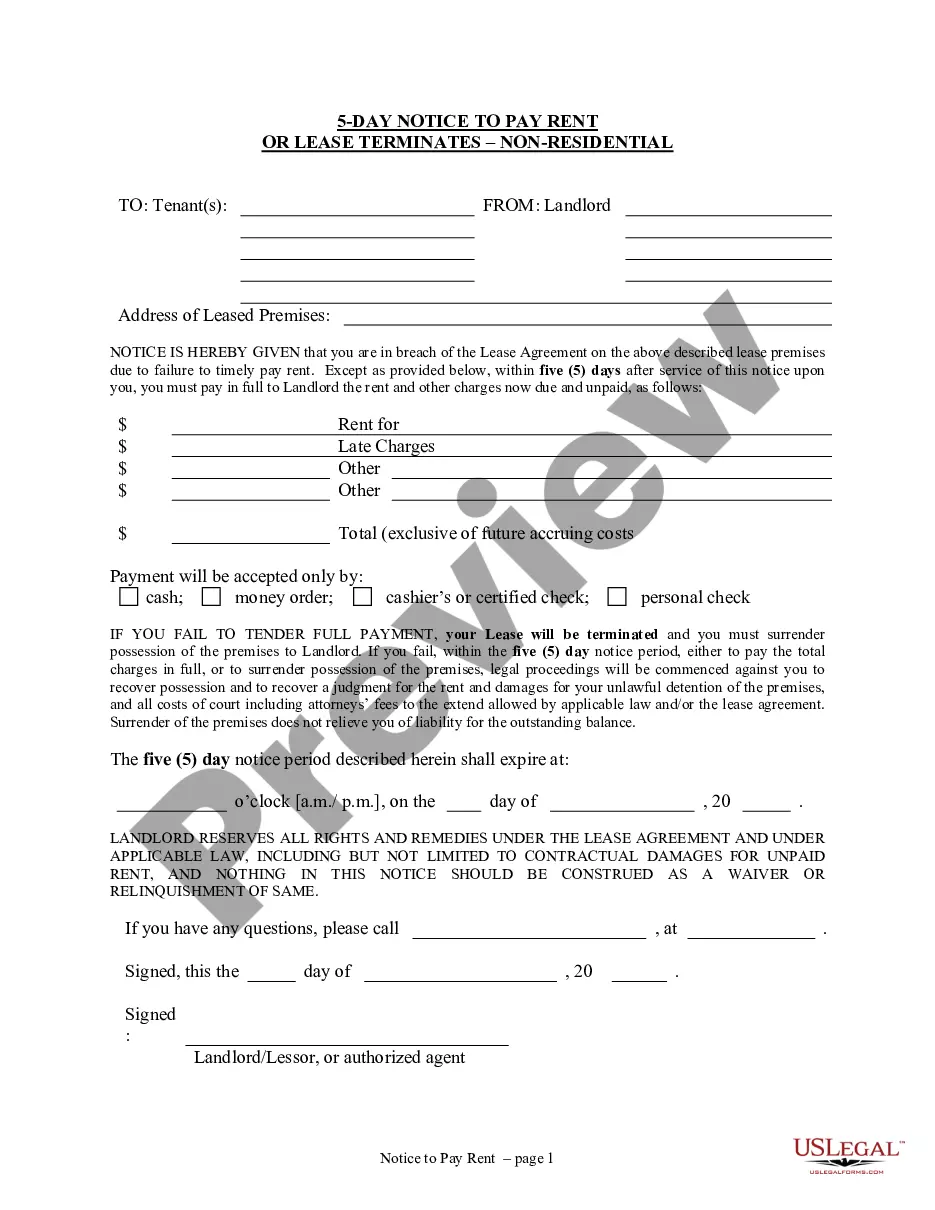
- First, ensure you have selected the correct form for your region/state. You can preview the form using the Review button and read the form description to confirm it is suitable for you.
- If the form does not meet your requirements, use the Search field to find the appropriate form.
- Once you are certain that the form is appropriate, click the Acquire now button to obtain the form.
- Choose the pricing plan you prefer and enter the necessary information. Create your account and process the payment using your PayPal account or Visa or Mastercard.
- Select the file format and download the legal document template to your device.
Form popularity
FAQ
The new independent contractor law in Virginia has specific guidelines to classify and regulate independent work. While the details can be complex, the key outcome is that it establishes clear delineations for employees versus independent contractors, ensuring protections for self-employed workers. Navigating the Virginia Insurance Agent Agreement - Self-Employed Independent Contractor within this legal framework can help you stay compliant and informed. Staying updated on these laws is crucial for your success as an independent contractor.
Yes, independent contractors can be regarded as agents, especially in fields like insurance where they represent companies to clients. Under the Virginia Insurance Agent Agreement - Self-Employed Independent Contractor, you may act on behalf of an insurance provider while remaining an independent entity. This means you have responsibilities towards both the clients and the companies for whom you represent. Understanding these dynamics is essential for a successful career in this role.
To classify yourself as an independent contractor, you should establish clear contracts with clients that outline your services and payment agreements. The Virginia Insurance Agent Agreement - Self-Employed Independent Contractor provides a robust framework for defining your relationship with clients. Documentation is crucial; ensure you keep accurate records of your work, agreements, and financial transactions. This clarity will benefit you in managing your status and tax obligations.
Yes, independent contractors often need to obtain their own insurance policies. The Virginia Insurance Agent Agreement - Self-Employed Independent Contractor emphasizes protecting yourself and your business. While specific requirements may vary by industry, having liability insurance is essential for covering any risks associated with your work. You should consider insurance as a vital part of your professional toolkit.
Independent contractors are classified as self-employed individuals who provide services to clients under contractual agreements. Within the context of the Virginia Insurance Agent Agreement - Self-Employed Independent Contractor, you function outside traditional employer-employee relationships. This classification allows for greater flexibility and potential income, but it also requires careful handling of contracts and agreements.
Yes, an independent contractor is typically considered self-employed. Under the Virginia Insurance Agent Agreement - Self-Employed Independent Contractor, you operate your own business and manage your clients independently. This designation brings both opportunities and responsibilities, including tax obligations and business expenses. It's important to understand your status to effectively navigate your professional landscape.
An independent contractor can indeed be considered an agent if they are authorized to act on behalf of a company. This relationship is defined by agreements that specify the contractor's ability to perform certain tasks or sell products. The Virginia Insurance Agent Agreement - Self-Employed Independent Contractor exemplifies an effective framework for establishing this important business relationship.
To fill out an independent contractor agreement effectively, start by providing your and the company’s basic information. Include the scope of work, payment terms, and any specific obligations or deadlines. Utilizing a template, such as the one offered in the Virginia Insurance Agent Agreement - Self-Employed Independent Contractor, simplifies this process and helps ensure all essential elements are clearly documented.
Typically, independent contractors do not serve as officers of a company, as officers usually hold formal roles within the corporate structure. However, the stipulations of the company's bylaws may allow for exceptions. It’s worth noting that understanding the distinctions helps when drafting agreements like the Virginia Insurance Agent Agreement - Self-Employed Independent Contractor, ensuring compliance with organizational policies.
Yes, an independent contractor can certainly serve as an agent for a company. In fact, many businesses prefer to engage independent contractors as agents due to the flexibility and specific expertise they bring. A properly structured Virginia Insurance Agent Agreement - Self-Employed Independent Contractor clarifies the expectations and terms of this relationship, making it beneficial for both parties.