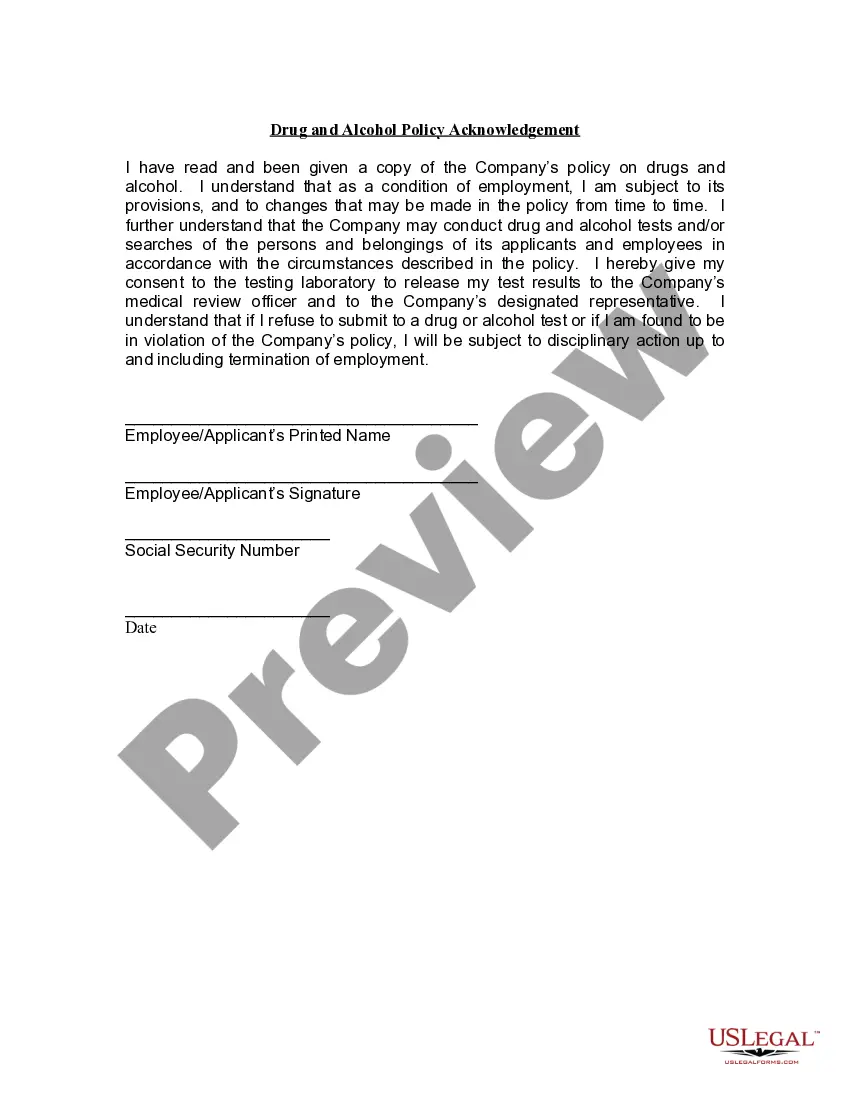
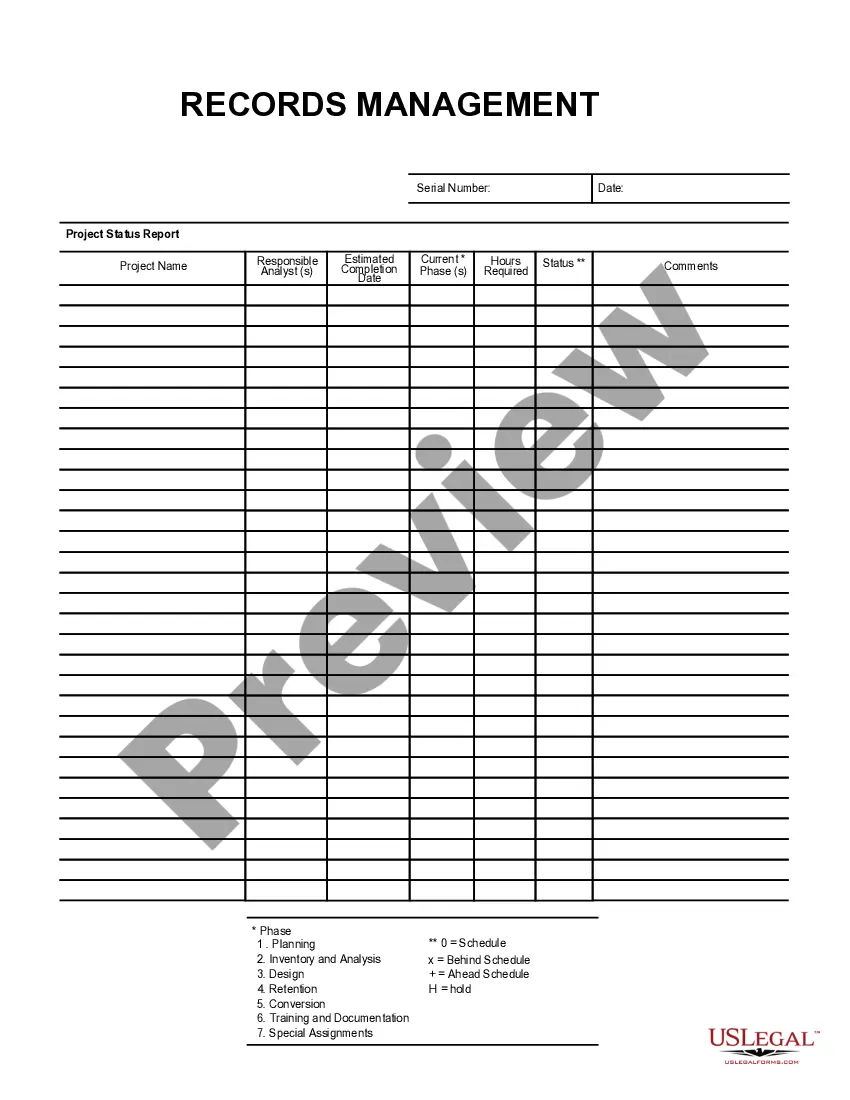
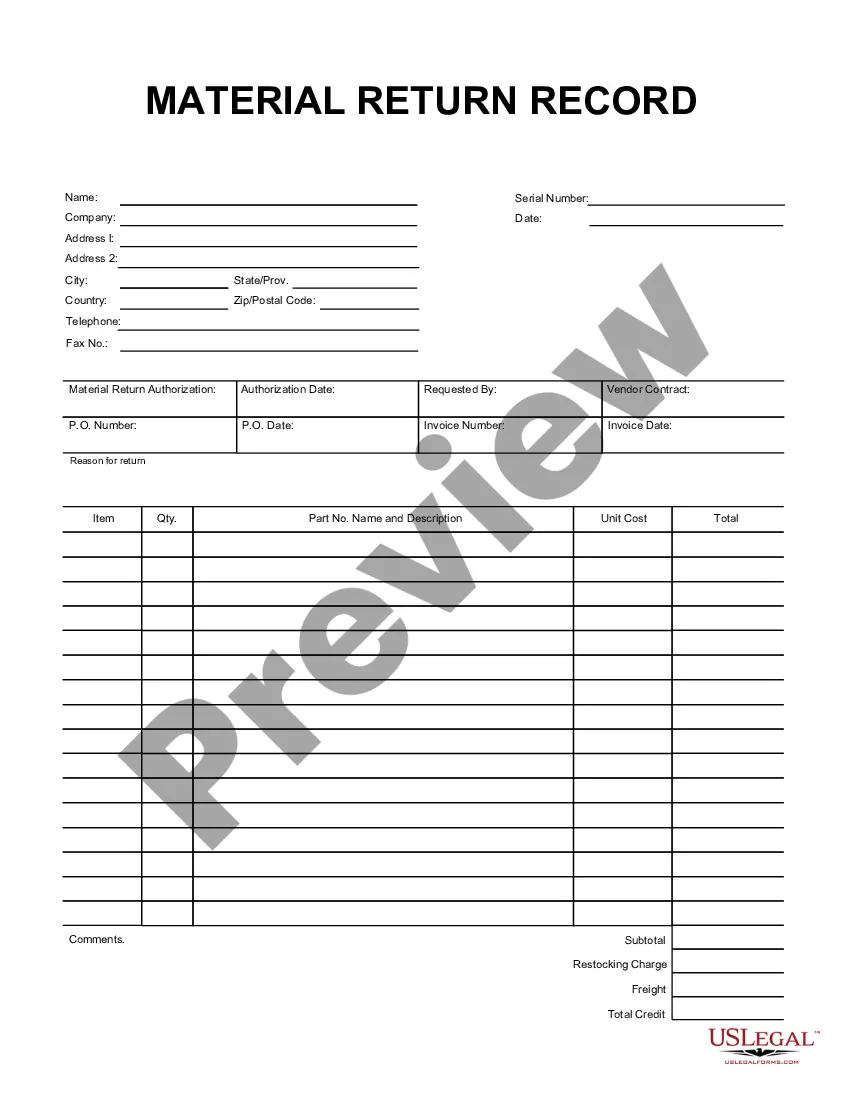
This form is a business type form that is formatted to allow you to complete the form using Adobe Acrobat or Word. The word files have been formatted to allow completion by entry into fields. Some of the forms under this category are rather simple while others are more complex. The formatting is worth the small cost.
Virginia Records Management
Category:
State:
Multi-State
Control #:
US-193-AZ
Format:
Word;
PDF;
Rich Text
Instant download
Description
Get your form ready online
Our built-in tools help you complete, sign, share, and store your documents in one place.
Built-in online Word editor
Make edits, fill in missing information, and update formatting in US Legal Forms—just like you would in MS Word.
Export easily
Download a copy, print it, send it by email, or mail it via USPS—whatever works best for your next step.
E-sign your document
Sign and collect signatures with our SignNow integration. Send to multiple recipients, set reminders, and more. Go Premium to unlock E-Sign.
Notarize online 24/7
If this form requires notarization, complete it online through a secure video call—no need to meet a notary in person or wait for an appointment.
Store your document securely
We protect your documents and personal data by following strict security and privacy standards.

Make edits, fill in missing information, and update formatting in US Legal Forms—just like you would in MS Word.

Download a copy, print it, send it by email, or mail it via USPS—whatever works best for your next step.

Sign and collect signatures with our SignNow integration. Send to multiple recipients, set reminders, and more. Go Premium to unlock E-Sign.

If this form requires notarization, complete it online through a secure video call—no need to meet a notary in person or wait for an appointment.

We protect your documents and personal data by following strict security and privacy standards.
Looking for another form?

How to fill out Records Management?
Are you in a situation where you will require documents for both business or personal needs nearly every day.
There are numerous legitimate document templates available on the internet, but finding ones you can trust isn't easy.
US Legal Forms provides thousands of form templates, including the Virginia Records Management, which are designed to comply with state and federal regulations.
Use US Legal Forms, the most extensive collection of legitimate forms, to save time and avoid errors.
The service provides professionally created legal document templates that you can use for various purposes. Create an account on US Legal Forms and start simplifying your life.
- If you are already familiar with the US Legal Forms website and possess an account, simply Log In.
- After that, you can download the Virginia Records Management template.
- If you do not have an account and wish to start using US Legal Forms, follow these steps.
- Select the form you need and ensure it is for the correct city/state.
- Use the Review button to check the form.
- Look over the summary to ensure you have chosen the right form.
- If the form isn’t what you're seeking, utilize the Research section to find the form that meets your needs and requirements.
- Once you locate the correct form, click Purchase now.
- Choose the pricing plan you prefer, fill in the required details to create your account, and complete your order using your PayPal or credit card.
- Select a suitable paper format and download your copy.
- Access all the document templates you have purchased in the My documents section. You can download an extra copy of the Virginia Records Management anytime if necessary. Just click on the desired form to download or print the template.
Form popularity
FAQ
Key elements of a records management policy include a clear purpose statement, guidelines for record creation, retention schedules, security measures, and protocols for disposal. Additionally, it should define roles and responsibilities, ensuring that everyone understands their part in managing records. Implementing these elements will strengthen your Virginia Records Management efforts and facilitate smoother operations.
The purpose of a records management policy is to provide clear guidelines for how an organization handles its records throughout their lifecycle. This includes creation, retention, and disposal of records, which is vital in complying with legal obligations and improving operational efficiency. A well-crafted policy fosters accountability and ensures that Virginia Records Management practices meet regulatory requirements.
(1) Category-I (e-Files/records to preserved permanently on which are of historical importance) For 10 years, it will be kept in the Department's sever and thereafter transferred to the server of the National Archives of India.
The record for the preceding twelve months for each such minor employee shall be kept on the premises for a period of thirty-six months from the date of the latest work period recorded for the minor employee involved. 1972, c. 480; 1982, c. 134; 1991, c.
An Act to provide for the rationalised management of all Government and other public records and archives under one single authority, for the preservation, utilisation and disposal of such records and archives, for the repeal of the Records (Disposal) Act, and for other connected matters.
The main goal of records management is to keep valuable information readily accessible for business requirements as well as compliance audits.
Records management (RM) is the supervision and administration of digital or paper records, regardless of format. Records management activities include the creation, receipt, maintenance, use and disposal of records. In this context, a record is content that documents a business transaction.
The ISO 30300 series standards apply to management systems for records (MSR). A MSR is a management system used to direct and control how records are managed within an organisation at a strategic level. The standards are aimed at any organisation which wants to implement and maintain a MSR to support its business.
Provides protection and support in litigation. Allows quicker retrieval of documents and information from files. Improves office efficiency and productivity. Provides better documentation more efficiently.
(also disposition standard), n. The length of time records should be kept in a certain location or form for administrative, legal, fiscal, historical, or other purposes.