Virginia Last Will and Testament Package

What is this form package?
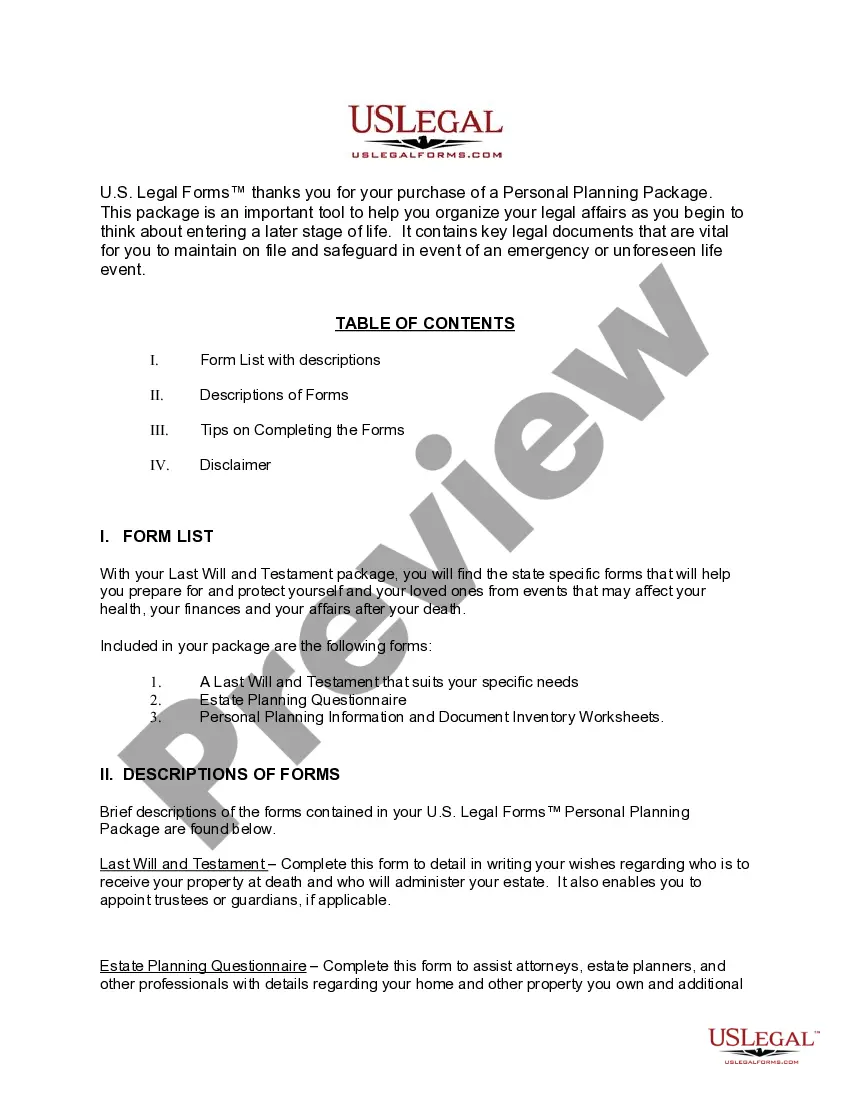
The Virginia Last Will and Testament Package provides essential legal documents needed for crafting a personalized Last Will and Testament. This comprehensive package includes state-specific forms designed to help you express your final wishes and manage the distribution of your assets after your passing, setting it apart from other generic options available online.
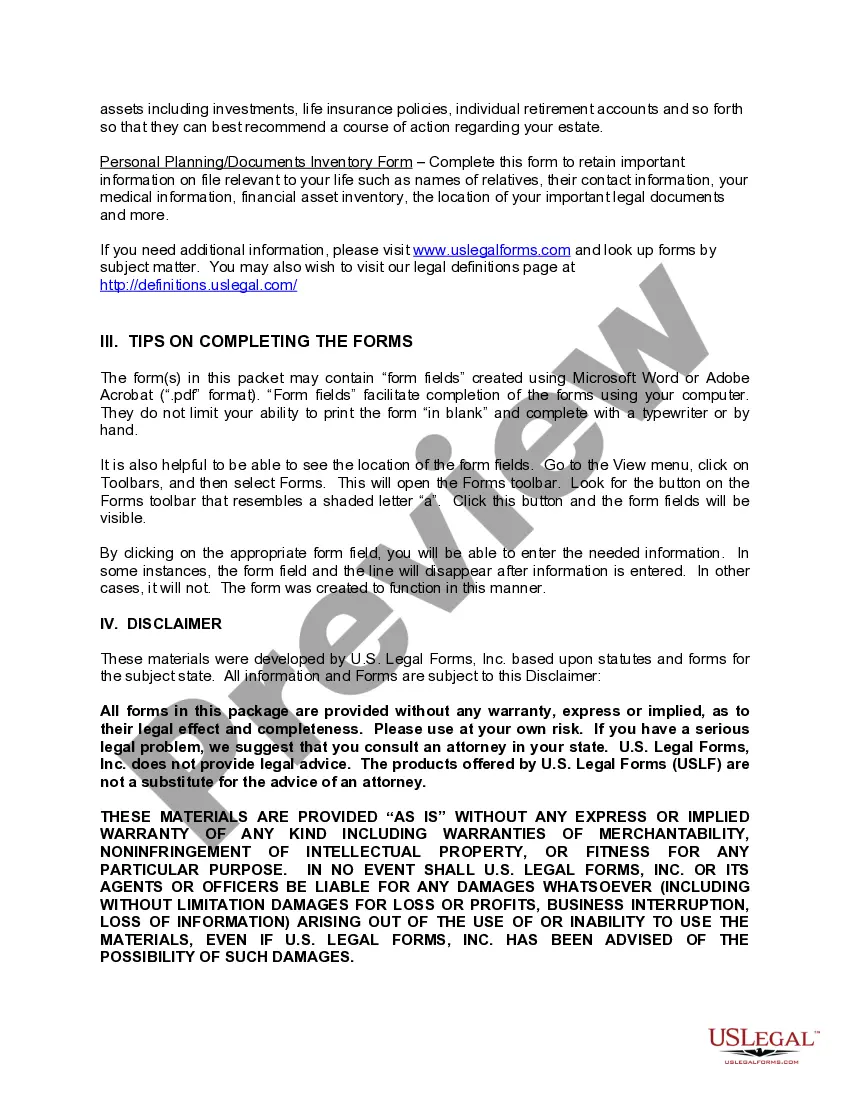
Documents contained in this package

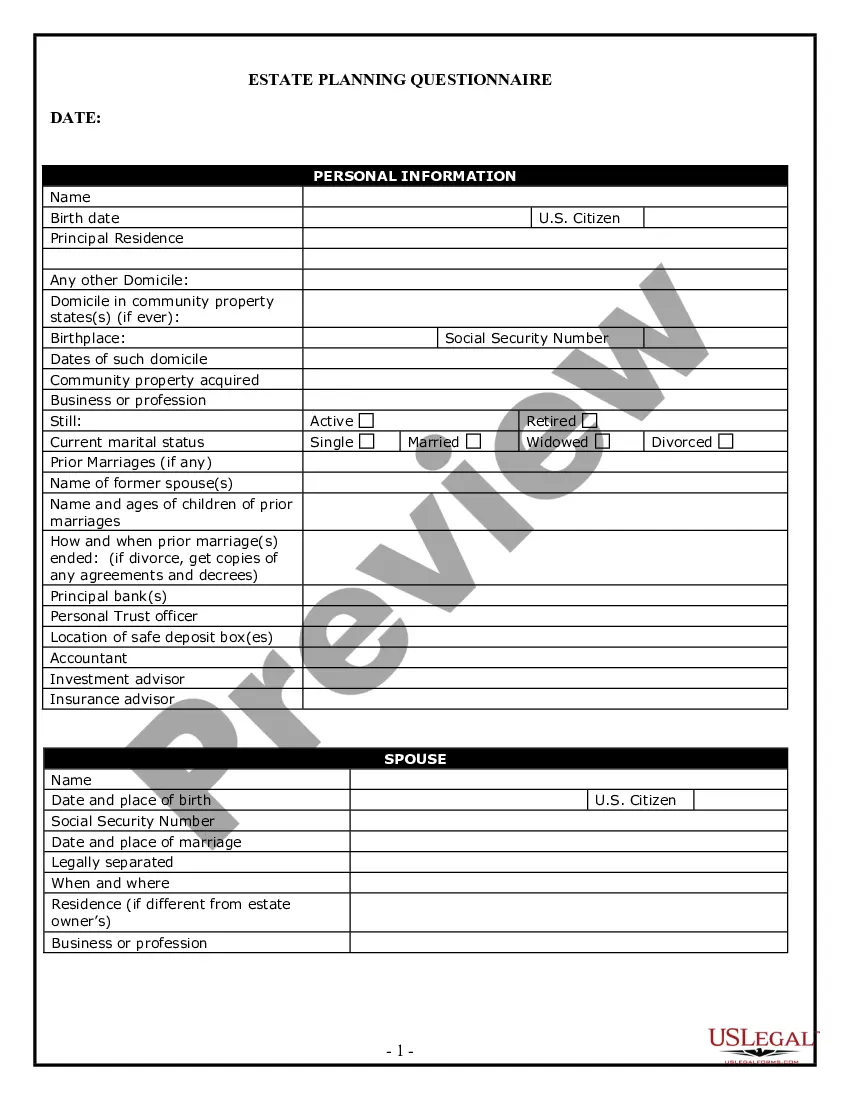
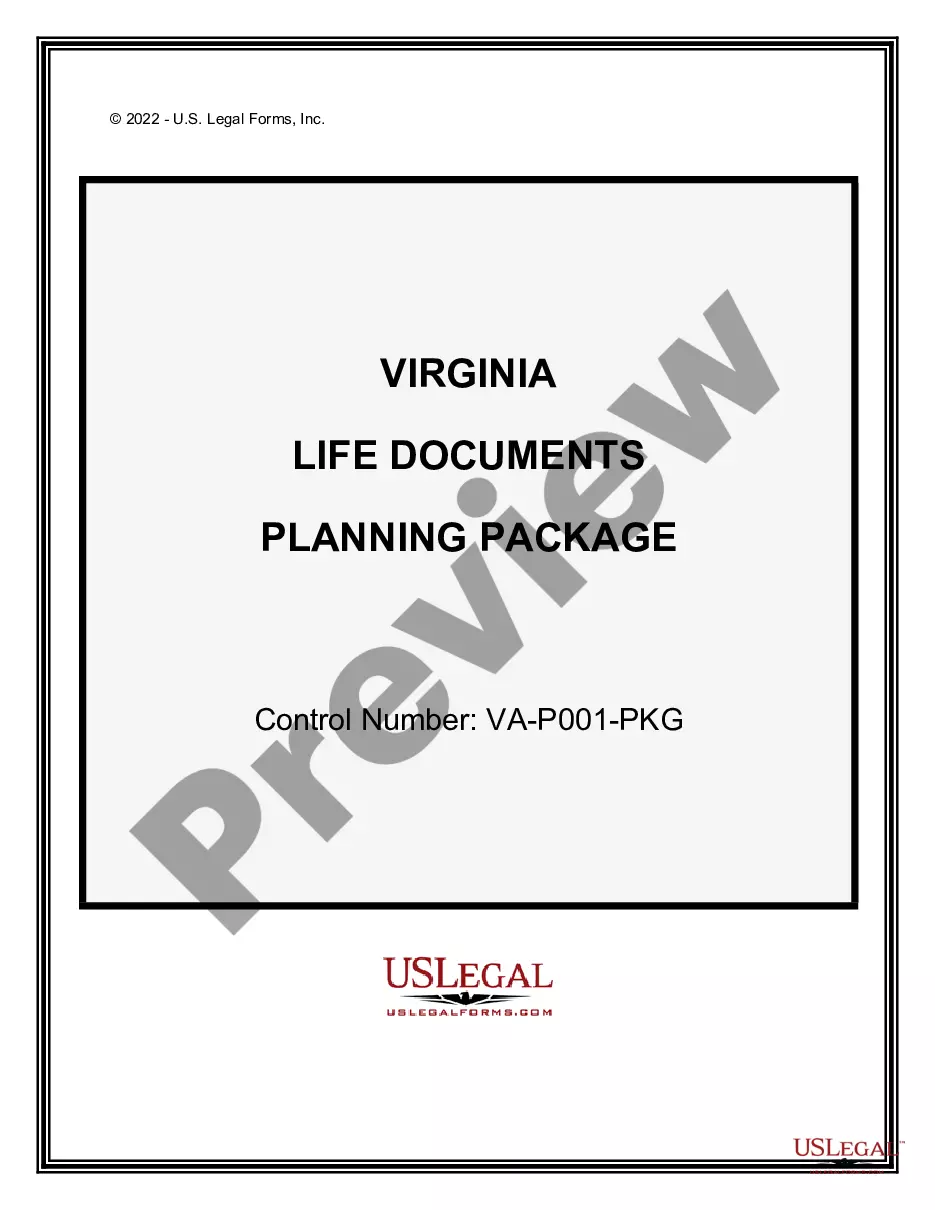

Common use cases
You should consider using this form package in the following scenarios:
- You need a legally valid Last Will and Testament that outlines your wishes regarding asset distribution upon your death.
- You are preparing for future estate planning and want to ensure your personal matters are documented effectively.
- You wish to organize important personal information, legal documents, and financial assets for your loved ones.
Intended users of this form package
- Individuals in Virginia who want to create or update their Last Will and Testament.
- Anyone seeking clarity on personal estate planning and organization.
- People preparing for significant life changes, such as marriage, divorce, or the birth of a child, and wanting to ensure their wishes are documented.
Completing these forms step by step
- Review the included forms carefully and ensure you understand each component.
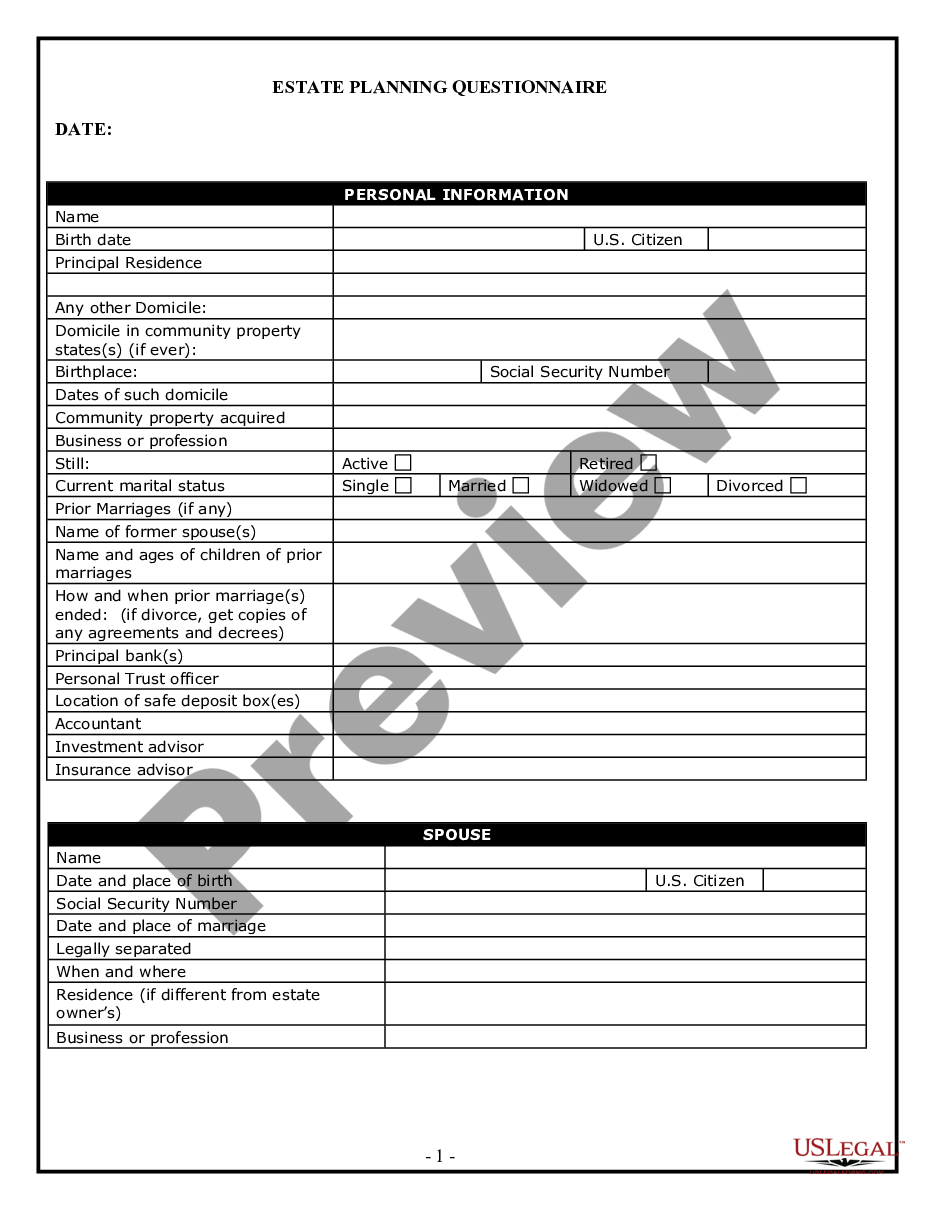
- Fill out the Estate Planning Questionnaire to provide detailed information on your assets and wishes.
- Complete the Personal Planning Information and Document Inventory Worksheets for future reference.
- Draft your Last Will and Testament using the provided template that best reflects your needs.
- Review your documents to ensure all information is accurate and complete.
- Consider having your will witnessed or notarized if required for added legal protection.
Do forms in this package need to be notarized?
Some forms in this package require notarization to be legally valid. US Legal Forms provides secure online notarization powered by Notarize, allowing you to complete the process through a verified video call, available 24/7.
Get your form ready online
Our built-in tools help you complete, sign, share, and store your documents in one place.
Make edits, fill in missing information, and update formatting in US Legal Forms—just like you would in MS Word.
Download a copy, print it, send it by email, or mail it via USPS—whatever works best for your next step.
Sign and collect signatures with our SignNow integration. Send to multiple recipients, set reminders, and more. Go Premium to unlock E-Sign.
If this form requires notarization, complete it online through a secure video call—no need to meet a notary in person or wait for an appointment.
We protect your documents and personal data by following strict security and privacy standards.

Make edits, fill in missing information, and update formatting in US Legal Forms—just like you would in MS Word.

Download a copy, print it, send it by email, or mail it via USPS—whatever works best for your next step.

Sign and collect signatures with our SignNow integration. Send to multiple recipients, set reminders, and more. Go Premium to unlock E-Sign.

If this form requires notarization, complete it online through a secure video call—no need to meet a notary in person or wait for an appointment.

We protect your documents and personal data by following strict security and privacy standards.
Typical mistakes to avoid
- Failing to update the Will after major life events, such as marriage, divorce, or the birth of children.
- Not providing enough detail about asset distribution, which can lead to confusion or disputes.
- Neglecting to sign and witness the document according to Virginia law requirements.
Benefits of using this package online
- Convenience: Access and download your forms anytime, from anywhere.
- Editability: Modify forms on your computer for easy completion.
- Reliability: Forms are drafted by licensed attorneys to ensure compliance with Virginia laws.
Looking for another form?
Form popularity
FAQ
Create the initial document. Start by titling the document Last Will and Testament" and including your full legal name and address. Designate an executor. Appoint a guardian. Name the beneficiaries. Designate the assets. Ask witnesses to sign your will. Store your will in a safe place.
Before distributing assets to beneficiaries, the executor must pay valid debts and expenses, subject to any exclusions provided under state probate laws.The executor must maintain receipts and related documents and provide a detailed accounting to estate beneficiaries.
In Virginia, an estate will need to be probated when a person dies with property valued at more than $50,000. So, the only way to avoid probate, is to die with either a very small estate, or to take steps to make sure that your assets transfer automatically to beneficiaries.
There are four requirements to make a valid will in Virginia. In order to successfully create a will you must be of the proper age, mental capacity, the will must be signed and in writing, and the signing must be witnessed by at least two individuals.
Virginia does not have a separate probate court, so the county Circuit Courts handle the process. In most cases, the Clerk of the Circuit Court or a deputy court clerk oversees the probate of smaller estates.
In Virginia, no will is valid unless it is in writing and signed by the testator, or by some person in the testator's presence and by his direction. Essentially, this means that the will itself must be both in writing and signed by you or someone at your direction. Further, oral wills are not valid in Virginia.
No, in Virginia, you do not need to notarize your will to make it legal. However, Virginia allows you to make your will "self-proving" and you'll need to go to a notary if you want to do that. A self-proving will speeds up probate because the court can accept the will without contacting the witnesses who signed it.
A. Every will or authenticated copy admitted to probate by any circuit court or clerk of any circuit court shall be recorded by the clerk and remain in the clerk's office, except during such time as the same may be carried to another court under a subpoena duces tecum or as otherwise provided in § 17.1-213.
In Virginia, the signing of a will must generally be witnessed by two competent persons, who also must sign the will in front of the testator.Although the law does not require a will to be notarized, it is a highly recommended practice followed by most lawyers.