Virginia Landlord Tenant Sublease Package
Understanding this form package
The Virginia Landlord Tenant Sublease Package includes essential legal documents designed to assist both landlords and tenants during the subleasing process. This package is distinct from standard leasing agreements as it specifically focuses on the legal rights and responsibilities that arise when a tenant seeks to sublease a rental property. Whether you are a tenant looking to sublease or a landlord granting permission, this package provides the necessary forms to ensure compliance with Virginia law and to protect your interests.
Documents contained in this package
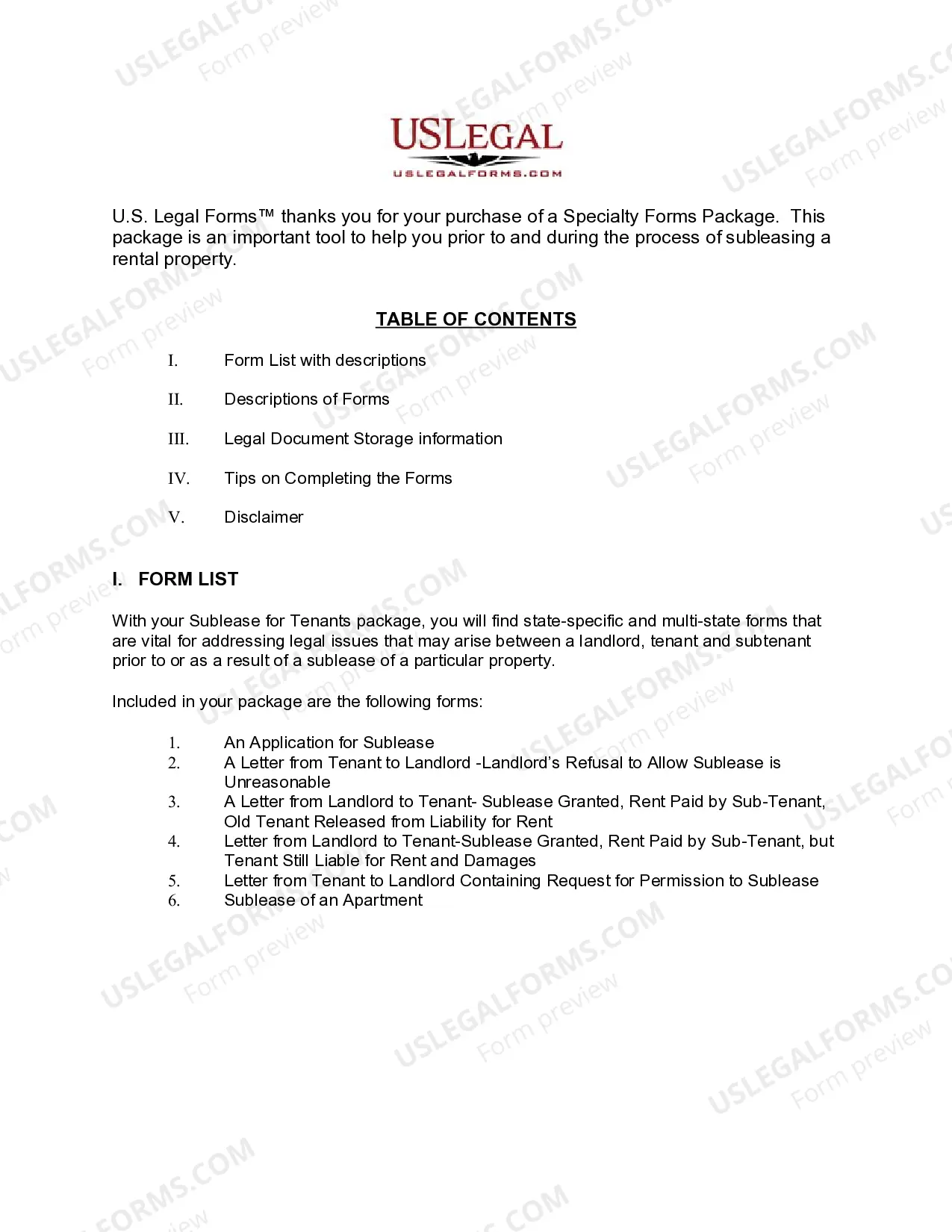
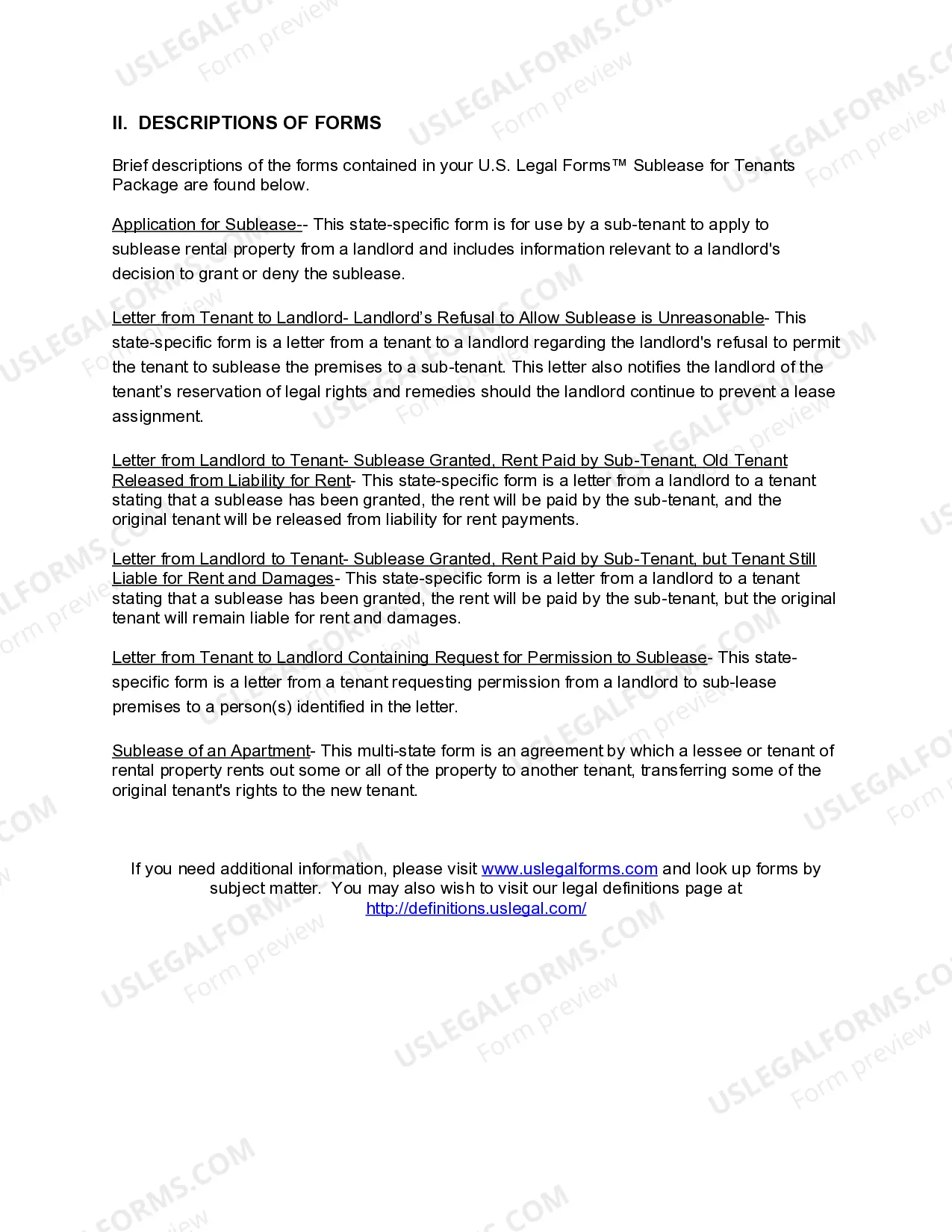
- Letter from Tenant to Landlord containing Request for permission to sublease
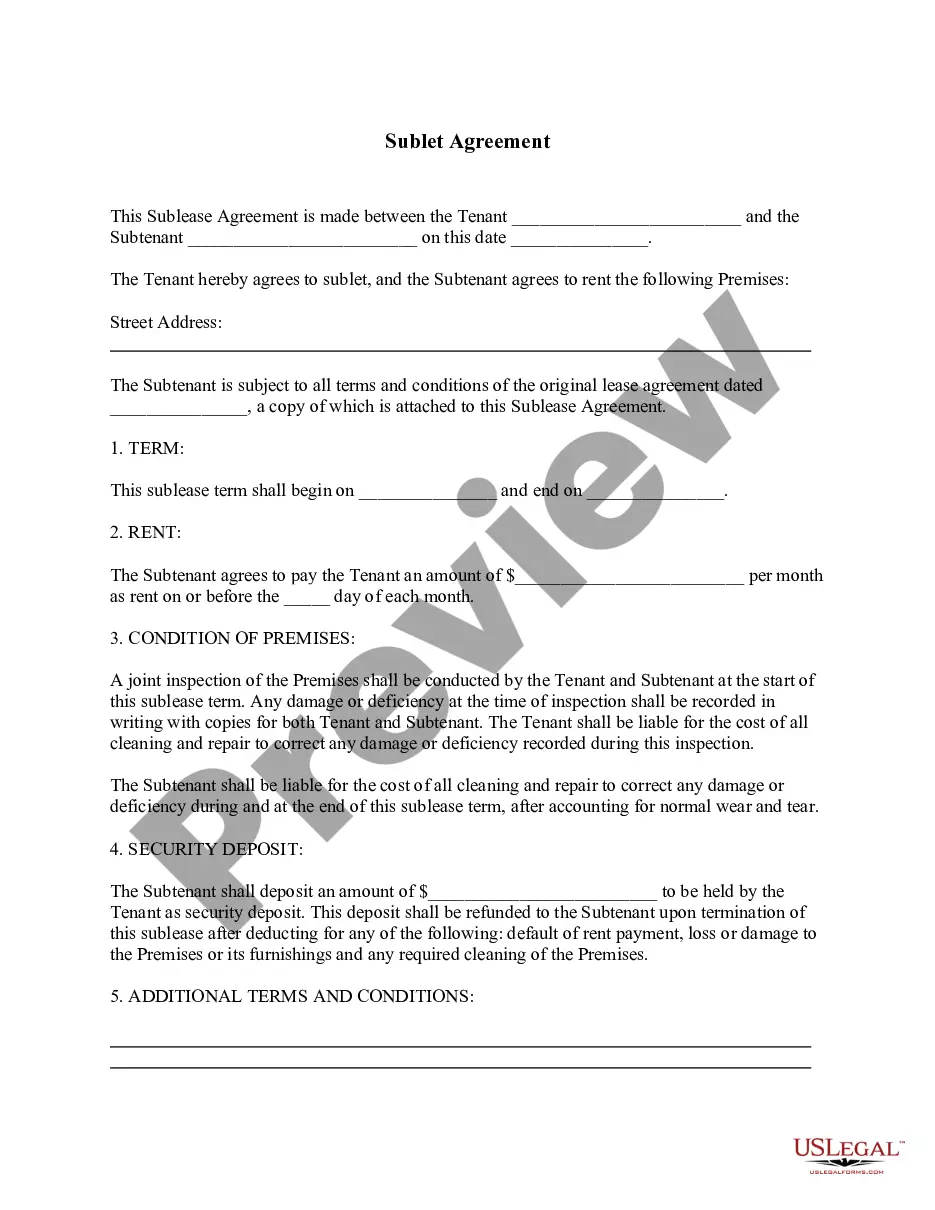
- Letter from Landlord to Tenant that Sublease granted - Rent Paid by Subtenant, but Tenant Still Liable for Rent and Damages
- Letter from Landlord to Tenant that Sublease granted - Rent Paid by Subtenant, Old Tenant Released from Liability for Rent
- Letter from Tenant to Landlord about Landlord's refusal to allow sublease is unreasonable
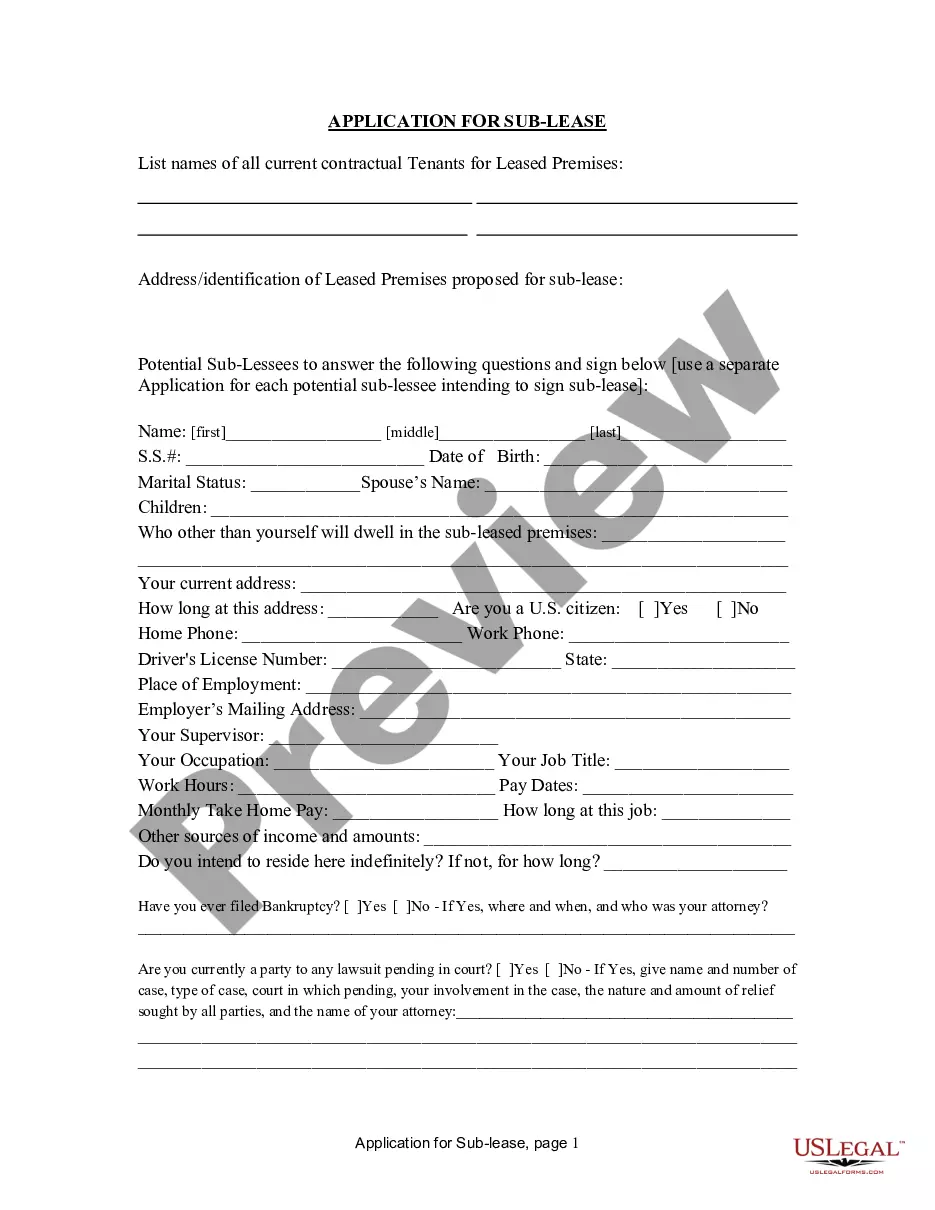
- Application for Sublease
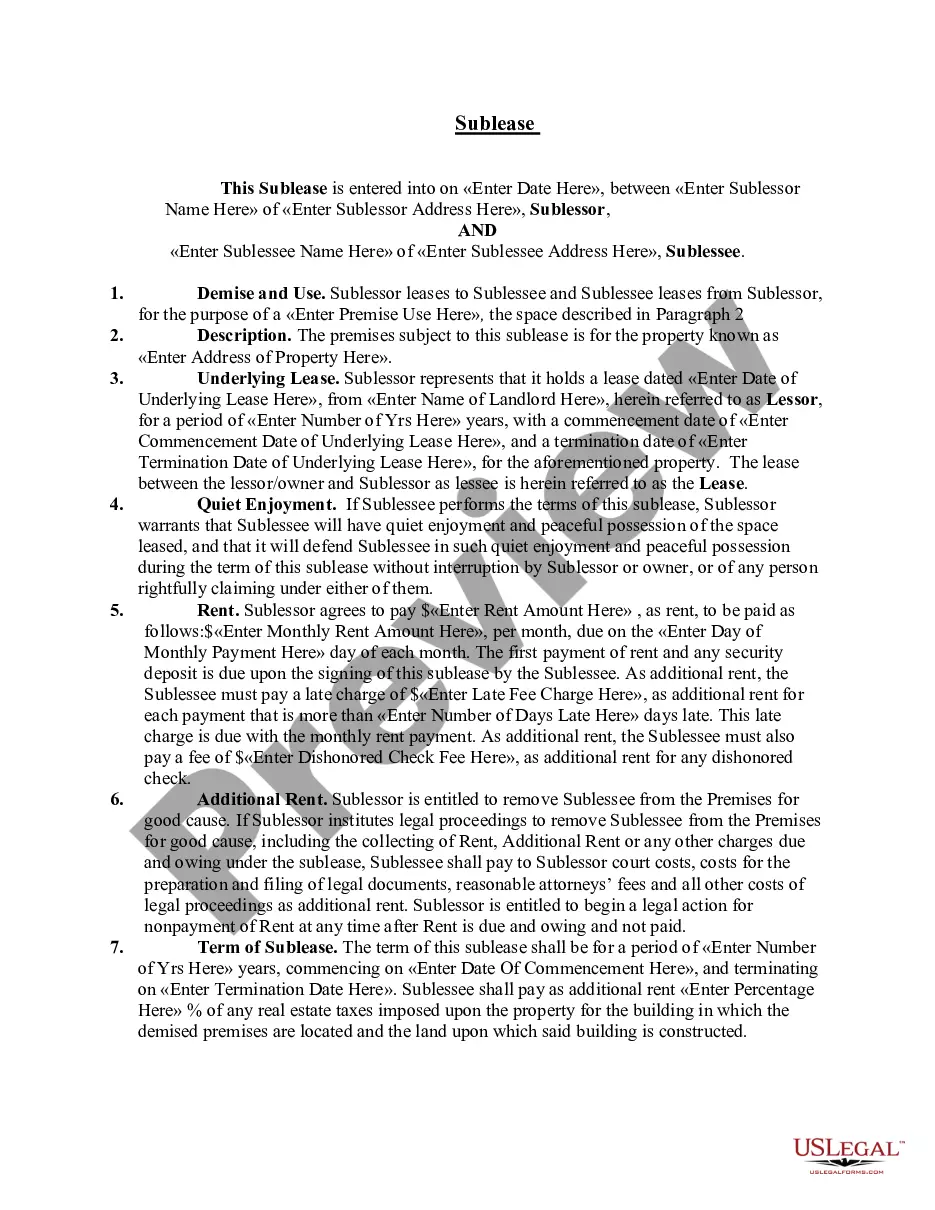
- Sublease of an Apartment - Real Estate Rental
When to use this form package
This form package is useful in several scenarios, including:
- When a tenant wishes to sublease their apartment due to relocation or temporary absence.
- If a landlord needs to formally approve or deny a tenant's request to sublease.
- During disputes regarding the terms of the sublease or the rights of the involved parties.
Intended users of this form package
- Current tenants looking to sublease their rental property.
- Landlords requiring formal documentation to manage subleasing requests.
- Subtenants who need clarity on their legal standing within subleasing agreements.
How to complete these forms
- Review all included forms thoroughly to understand your rights and obligations.
- Identify the parties involved in the sublease: the original tenant, the subtenant, and potentially the landlord.
- Fill in the necessary information where indicated, such as names, dates, and property details.
- Ensure that all parties sign the relevant documents to make them legally binding.
- Maintain a copy of each completed document for your records.
Notarization details for included forms
Forms in this package typically do not require notarization. However, certain states or document types may still need it. US Legal Forms provides online notarization powered by Notarize, available 24/7 for your convenience.
Get your form ready online
Our built-in tools help you complete, sign, share, and store your documents in one place.
Make edits, fill in missing information, and update formatting in US Legal Forms—just like you would in MS Word.
Download a copy, print it, send it by email, or mail it via USPS—whatever works best for your next step.
Sign and collect signatures with our SignNow integration. Send to multiple recipients, set reminders, and more. Go Premium to unlock E-Sign.
If this form requires notarization, complete it online through a secure video call—no need to meet a notary in person or wait for an appointment.
We protect your documents and personal data by following strict security and privacy standards.

Make edits, fill in missing information, and update formatting in US Legal Forms—just like you would in MS Word.

Download a copy, print it, send it by email, or mail it via USPS—whatever works best for your next step.

Sign and collect signatures with our SignNow integration. Send to multiple recipients, set reminders, and more. Go Premium to unlock E-Sign.

If this form requires notarization, complete it online through a secure video call—no need to meet a notary in person or wait for an appointment.

We protect your documents and personal data by following strict security and privacy standards.
Mistakes to watch out for
- Failing to obtain landlord approval before subleasing.
- Not clearly stating the duration and terms of the sublease in the agreement.
- Overlooking the need for signatures from all involved parties.
- Not keeping copies of completed forms for personal records.
Advantages of online completion
- Convenience: download and complete the forms at your own pace from the comfort of your home.
- Editability: easily modify the forms as needed to fit your specific situation.
- Reliability: rest assured that the forms are created by licensed attorneys, ensuring legal accuracy.
Legal use & context
- These forms are designed to create legally binding agreements between landlords, tenants, and subtenants.
- Properly executed forms can prevent legal disputes regarding subleasing arrangements.
- The forms ensure that all parties understand their rights and responsibilities within the sublease.
What to keep in mind
- The Virginia Landlord Tenant Sublease Package includes crucial documents for subleasing.
- It is important for all parties involved to understand their rights and obligations.
- Using attorney-drafted forms ensures legal compliance and reduces the risk of disputes.
Looking for another form?
Form popularity
FAQ
As a renter in Virginia, you have legal protections under the Virginia Residential Landlord and Tenant Act (VRLTA) that include the right to: A fair application fee. A fair security deposit. A decent and safe place to live.
Under Virginia Law, tenants have certain rights when they move in, while they are renting, and before they can be evicted.Generally speaking, the Virginia Residential Landlord Tenant Act, or VRLTA, applies to all residential tenancies unless the landlord is eligible to opt out, and states this in a written lease.
Virginia is a moderately landlord-friendly state as there is no rent control and landlords have a large amount of freedom when picking tenants.
A landlord cannot evict a tenant without an adequately obtained eviction notice and sufficient time. A landlord cannot retaliate against a tenant for a complaint. A landlord cannot forego completing necessary repairs or force a tenant to do their own repairs.A landlord cannot remove a tenant's personal belongings.
In Virginia, a tenant can legally sublet his or her rental as long as the lease that he or she signed does not specifically prohibit it. As a good business practice, and to prevent any potential issues, the tenant should receive written permission from the landlord.
NOTE: Under Virginia law, if you do not have a lease, and you do not pay rent, you are considered a tenant at sufferance. This means you can be evicted for any reason at all, at any time, and no notice needs to be given to you.
California isn't the most tenant-friendly state when it comes to subletting. According to California law you must receive written consent from your landlord prior to subletting, and if your lease says no subletting, then that really means no subletting.
Each state has different laws regarding subtenancy, with most landlords prohibiting subletting a property without prior permission. If subletting occurs without the landlord's knowledge, that landlord has the right to serve a three-day notice of eviction to both the tenant and the sublessor.
TERMINATING OR ENDING YOUR TENANCY If you have no written lease and you pay rent by the month, the tenancy can be terminated by either you or the landlord for any reason or no reason at all, by giving at least 30 days written notice before the next rental due date.