Virginia Hunting Forms Package
Understanding this form package
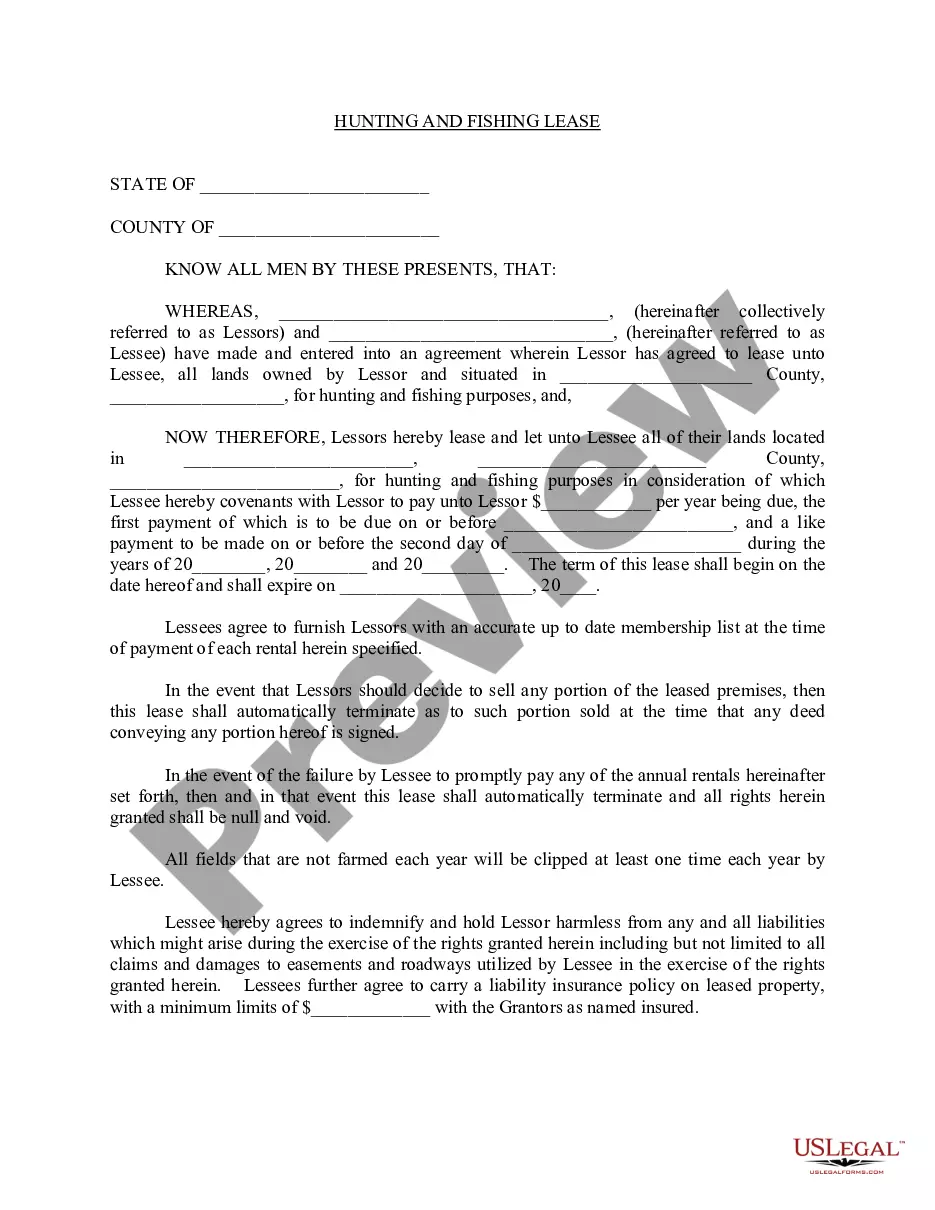
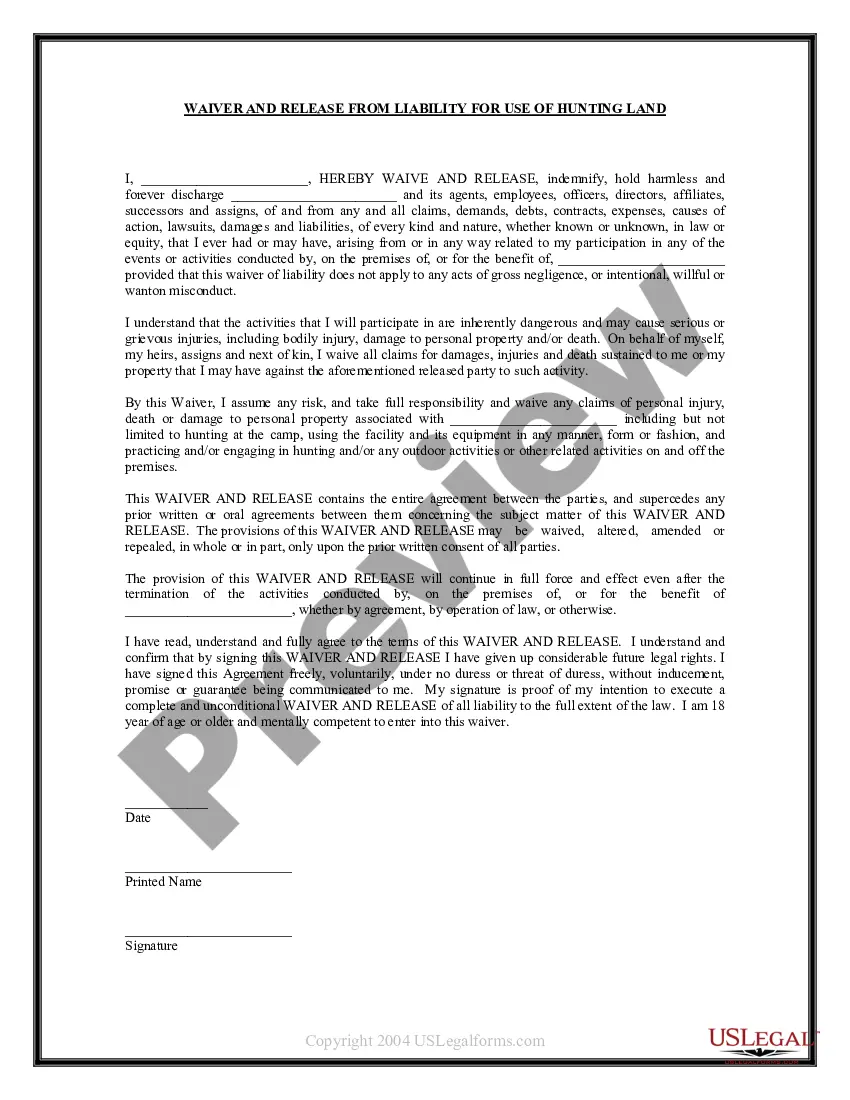
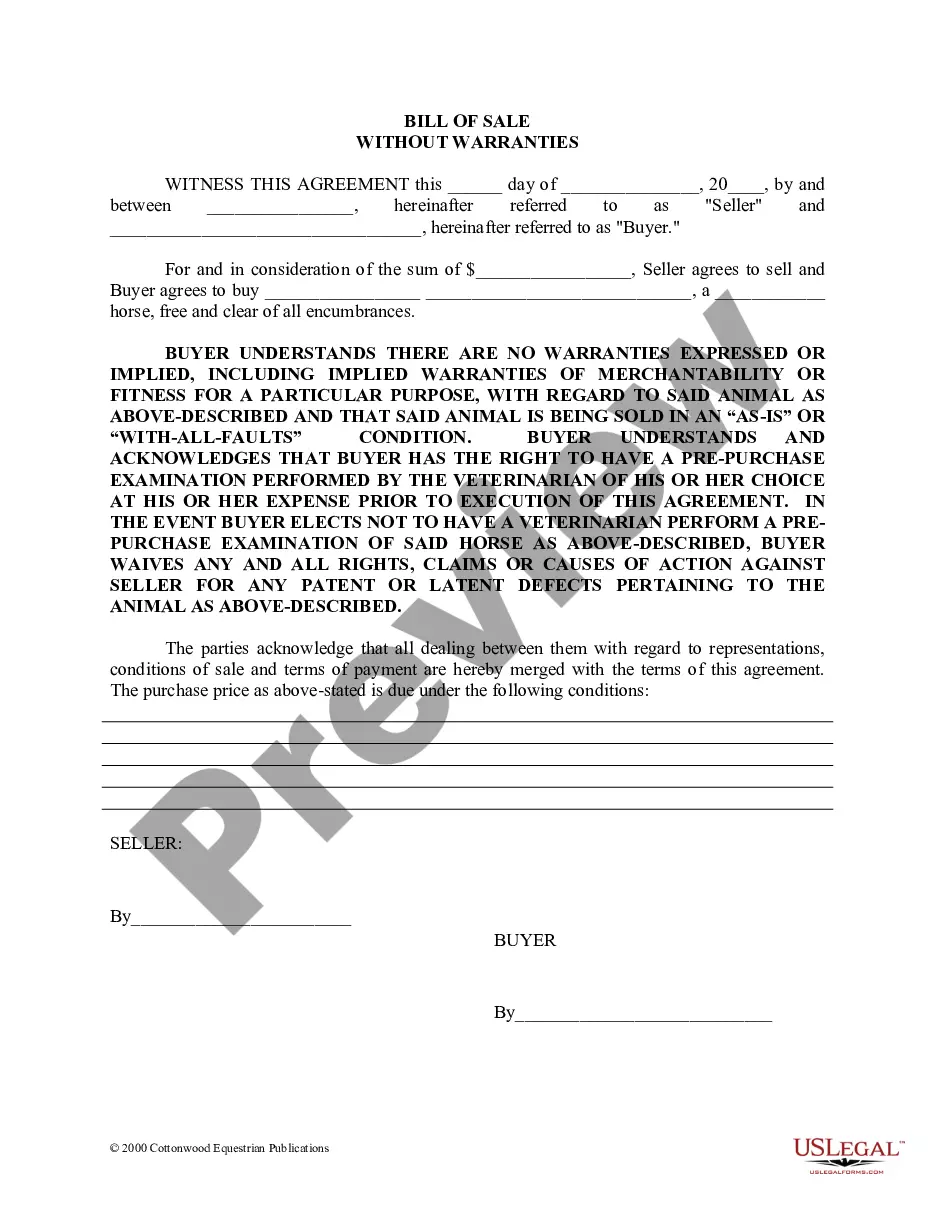
The Virginia Hunting Forms Package contains essential legal documents specifically designed for hunting purposes. This comprehensive package includes customizable forms to help users effectively manage and navigate the legal aspects of hunting on private or public lands. Unlike other form packages, this collection focuses specifically on Virginia hunting needs, ensuring you have the appropriate legal tools for various hunting-related situations.
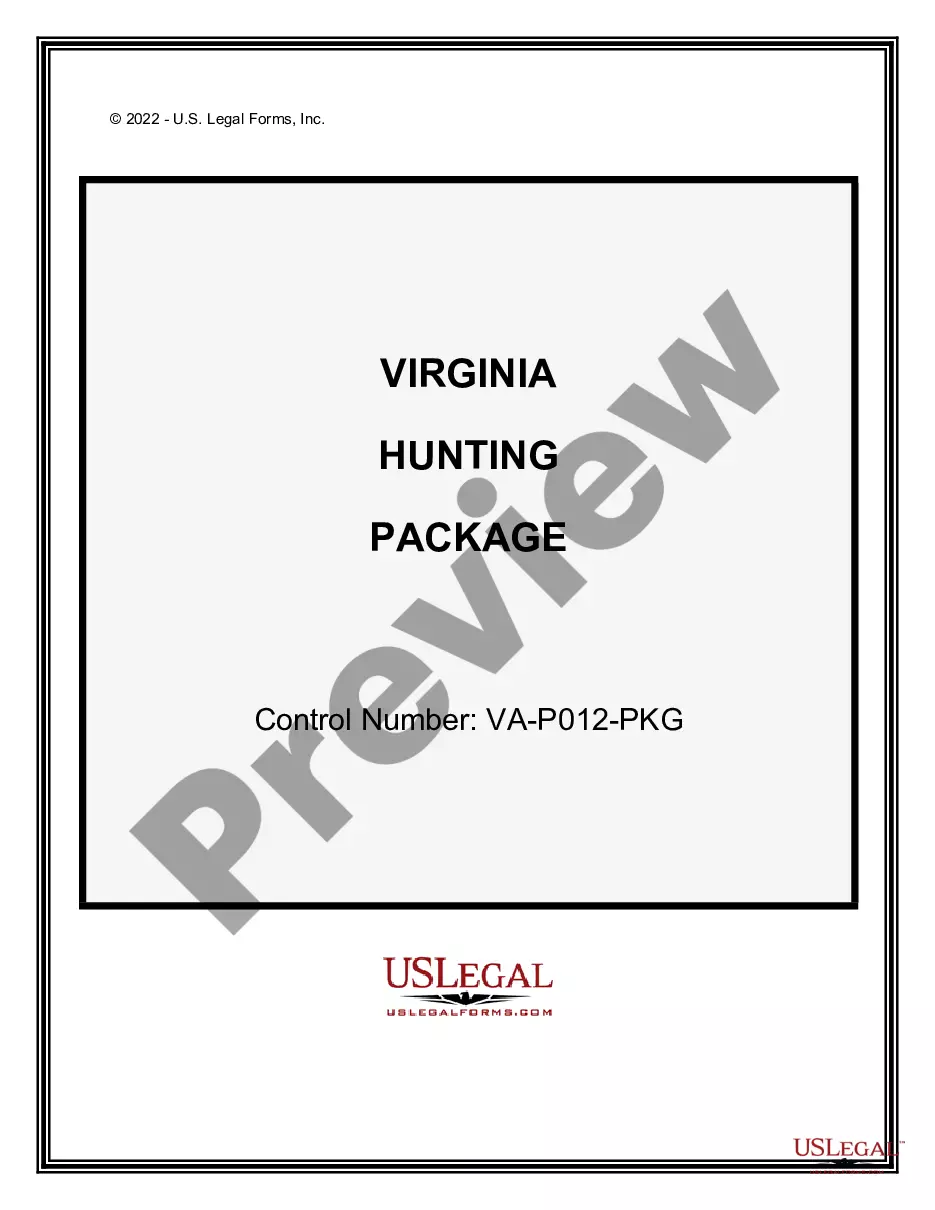
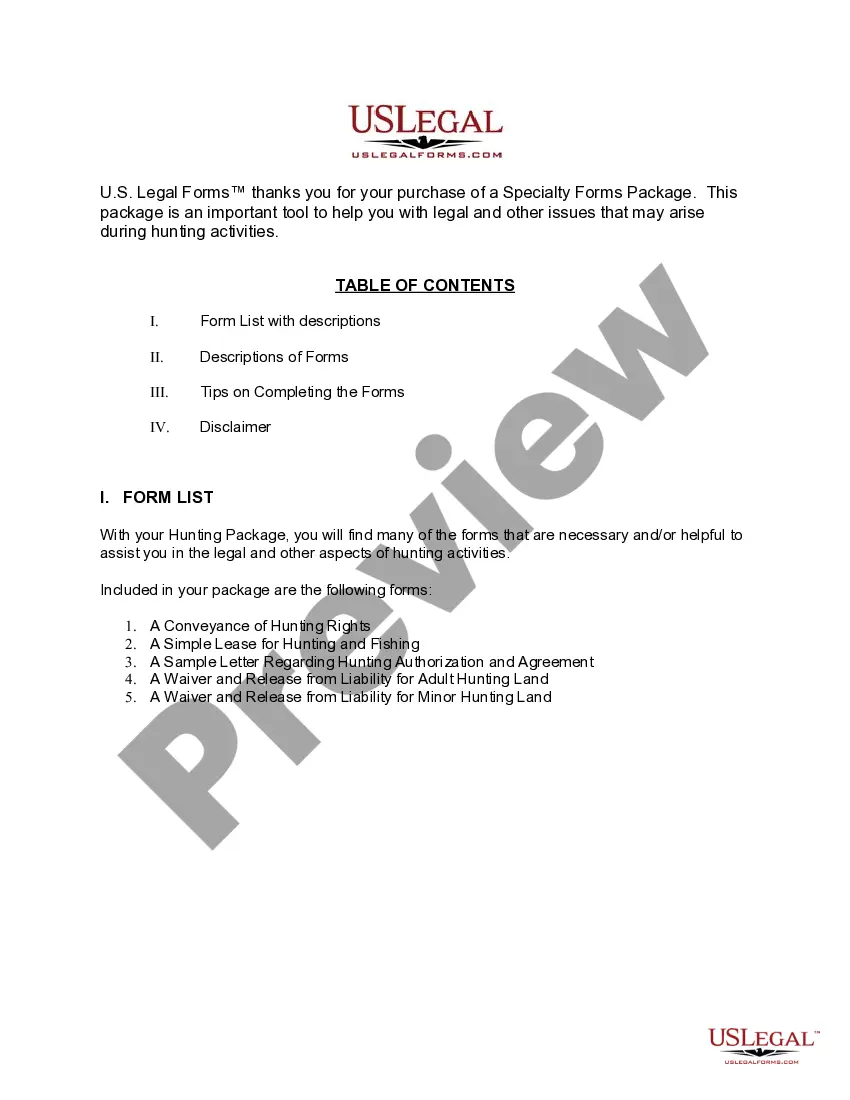
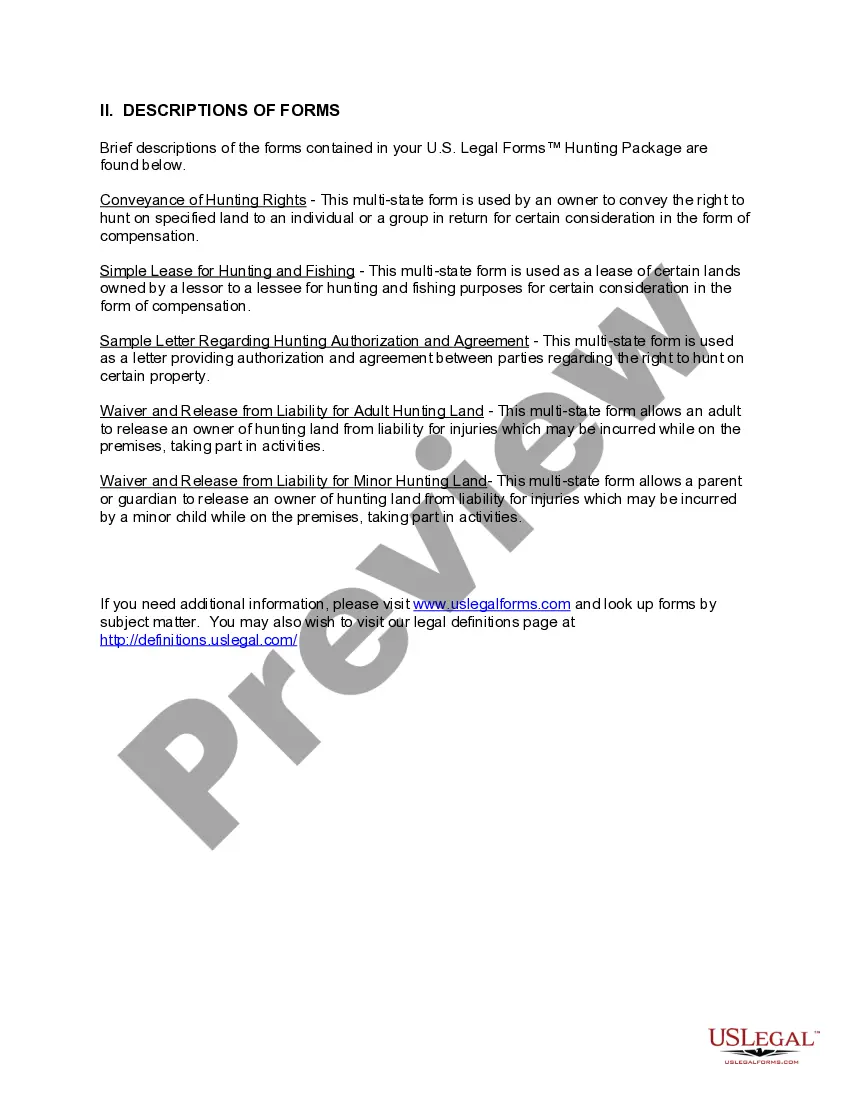
What’s included in this form package
Situations where these forms applies
This form package is useful in various scenarios, including:
- When leasing land for hunting
- When granting or obtaining authorization to hunt on someone else's property
- To clarify hunting rights and responsibilities
- When seeking to release liability for potential injuries while hunting
Who needs this form package
- Hunting landowners looking to lease their property
- Individuals seeking permission to hunt on private land
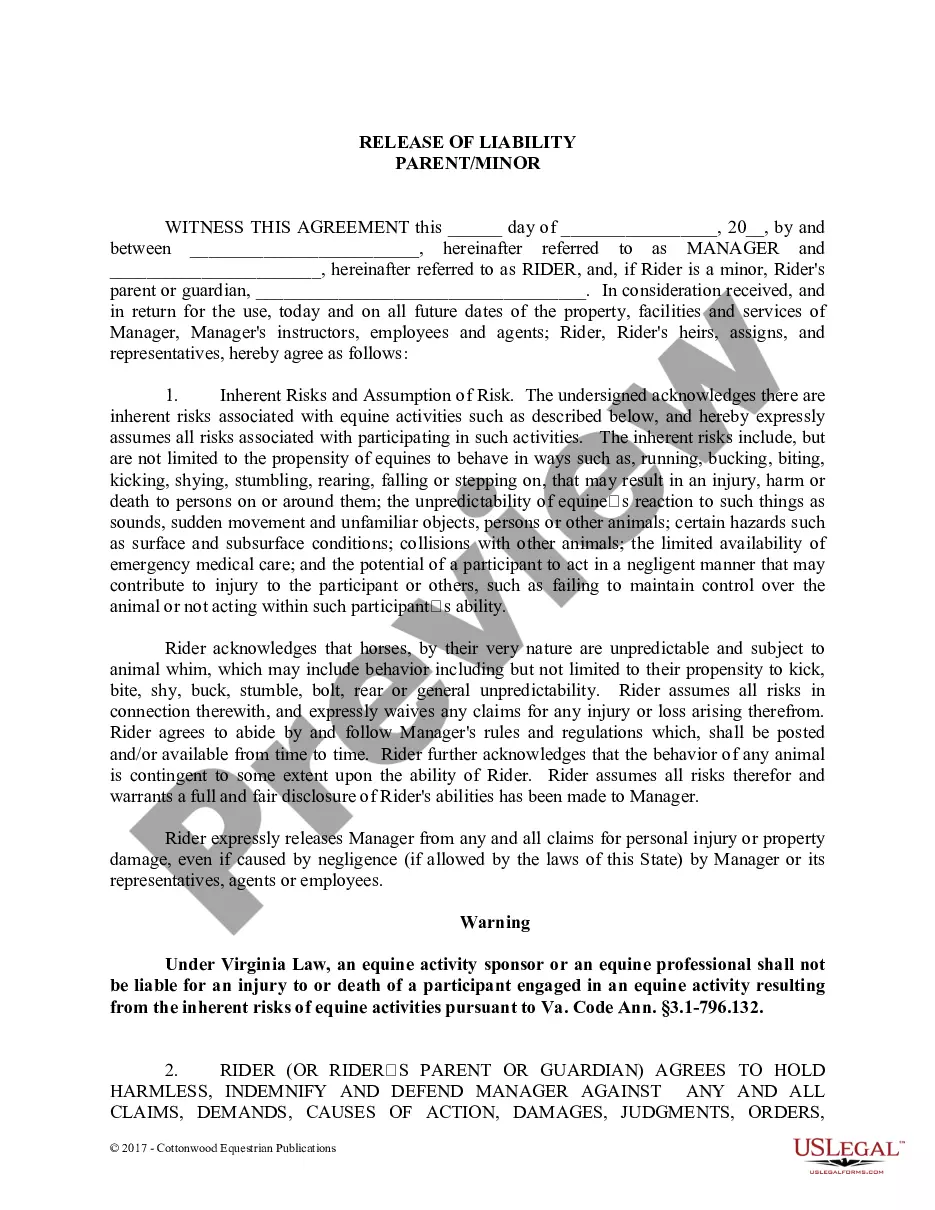
- Parents or guardians managing hunting activities for minors
- Hunters aiming to formalize agreements and protect against liability
Steps to complete these forms
- Review the included forms carefully to understand their purpose.
- Identify the parties involved in each agreement.
- Enter the necessary information, including names, dates, and other relevant details.
- Print the completed forms or save them digitally for future use.
- Have the forms signed by all relevant parties, ensuring you keep copies for your records.
Notarization details for included forms
Notarization is not commonly needed for forms in this package. However, if your state’s laws require it, our notarization service, powered by Notarize, allows you to finalize documents online 24/7 without in-person visits.
Get your form ready online
Our built-in tools help you complete, sign, share, and store your documents in one place.
Make edits, fill in missing information, and update formatting in US Legal Forms—just like you would in MS Word.
Download a copy, print it, send it by email, or mail it via USPS—whatever works best for your next step.
Sign and collect signatures with our SignNow integration. Send to multiple recipients, set reminders, and more. Go Premium to unlock E-Sign.
If this form requires notarization, complete it online through a secure video call—no need to meet a notary in person or wait for an appointment.
We protect your documents and personal data by following strict security and privacy standards.

Make edits, fill in missing information, and update formatting in US Legal Forms—just like you would in MS Word.

Download a copy, print it, send it by email, or mail it via USPS—whatever works best for your next step.

Sign and collect signatures with our SignNow integration. Send to multiple recipients, set reminders, and more. Go Premium to unlock E-Sign.

If this form requires notarization, complete it online through a secure video call—no need to meet a notary in person or wait for an appointment.

We protect your documents and personal data by following strict security and privacy standards.
Avoid these common issues
- Failing to properly identify all parties involved in the agreement.
- Not including specific dates or terms in lease agreements.
- Overlooking signatures from all parties required for validity.
- Not providing complete information in the waivers, potentially risking liability.
Why complete this package online
- Convenience of downloading and accessing legally sound forms from anywhere.
- Editability to customize forms to meet specific needs.
- Reliability with forms created by licensed attorneys, ensuring compliance with Virginia law.
- Cost savings of up to 40% compared to purchasing each form separately.
Legal use & context
- These forms are designed to create legally binding agreements regarding hunting rights and responsibilities.
- Properly completed forms can help prevent future disputes related to hunting activities.
- Liability waivers are important for protecting landowners and participants from legal claims.
Quick recap
- The Virginia Hunting Forms Package is essential for both hunters and landowners to ensure legal compliance.
- Utilizing this package proactively can help prevent misunderstandings and disputes.
- Each form is tailored to reflect the legal context specific to Virginia hunting regulations.
Looking for another form?
Form popularity
FAQ
Hunters cause injuries, pain and suffering to animals who are not adapted to defend themselves from bullets, traps and other cruel killing devices. Hunting destroys animal families and habitats, and leaves terrified and dependent baby animals behind to starve to death.
Hunting is most commonly done by humans to harvest useful animal products (meat, fur/hide, bone/tusks, horn/antler, etc), for recreation/taxidermy (see trophy hunting), to remove predators dangerous to humans or domestic animals (e.g. wolf hunting), to eliminate pests and nuisance animals that damage crops/livestock/
Hunting manages wildlife populations.Hunting is a vital wildlife management tool. It keeps nature at a healthy balance of which the available habitat can support (carrying capacity). For many wildlife species, hunting also helps to maintain populations at levels compatible with human activity and land use.
Hunting is the chasing and killing of wild animals by people or other animals, for food or as a sport.Hunting is the activity of searching for a particular thing.