Virginia Deed Given Pursuant to a Property Settlement Agreement
What is this form?
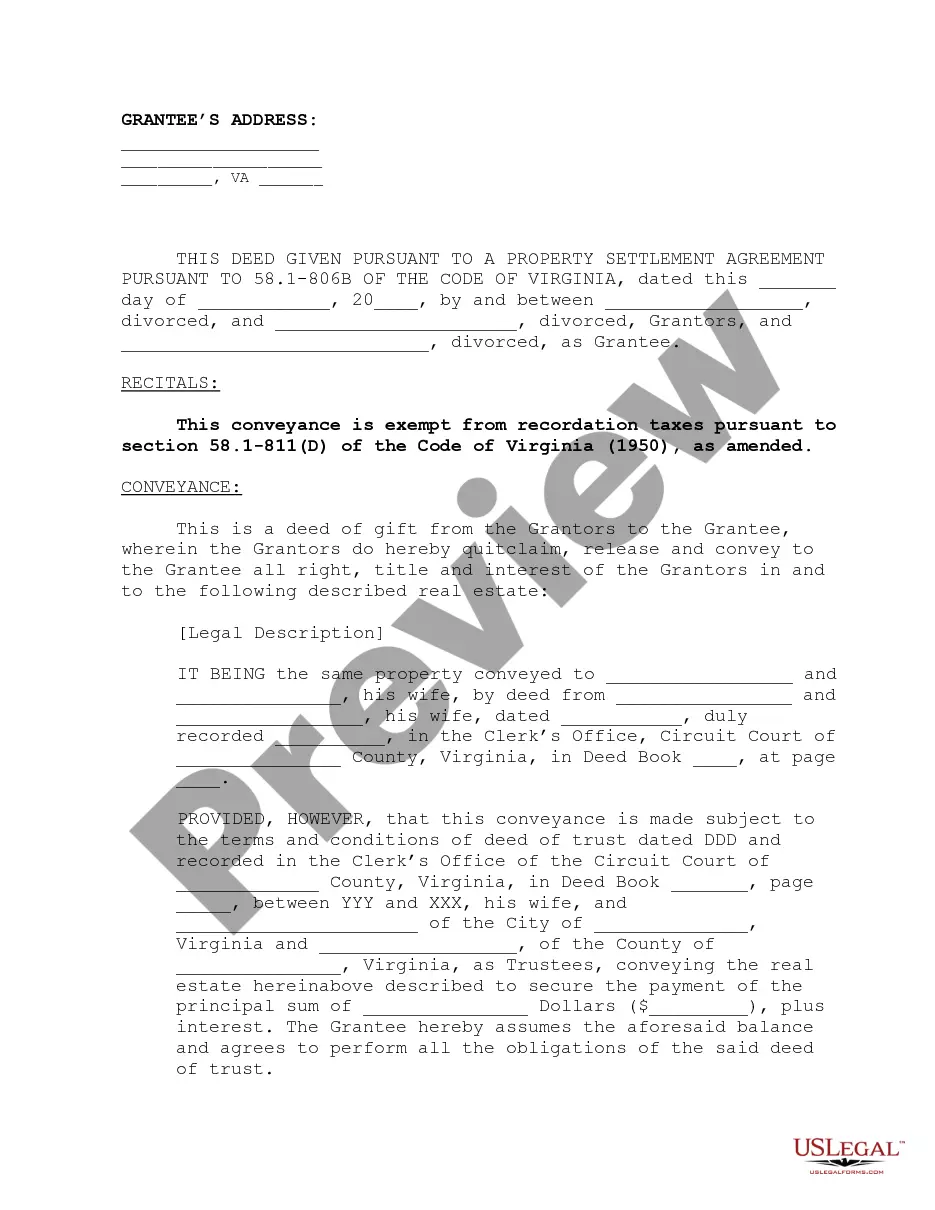
The Deed Given Pursuant to a Property Settlement Agreement is a legal document used to formally transfer property ownership from one party to another as part of a divorce settlement. This form serves as a deed of gift, allowing the parties involved to relinquish their rights to the property without requiring monetary compensation. Unlike standard sale deeds, this deed specifically addresses property settlements in divorce proceedings, ensuring that the transfer complies with applicable laws under Virginia state code.
Main sections of this form
- Date of the agreement
- Identification of the Grantors and Grantee
- Description of the property being conveyed
- Disclaimer regarding existing liens and obligations
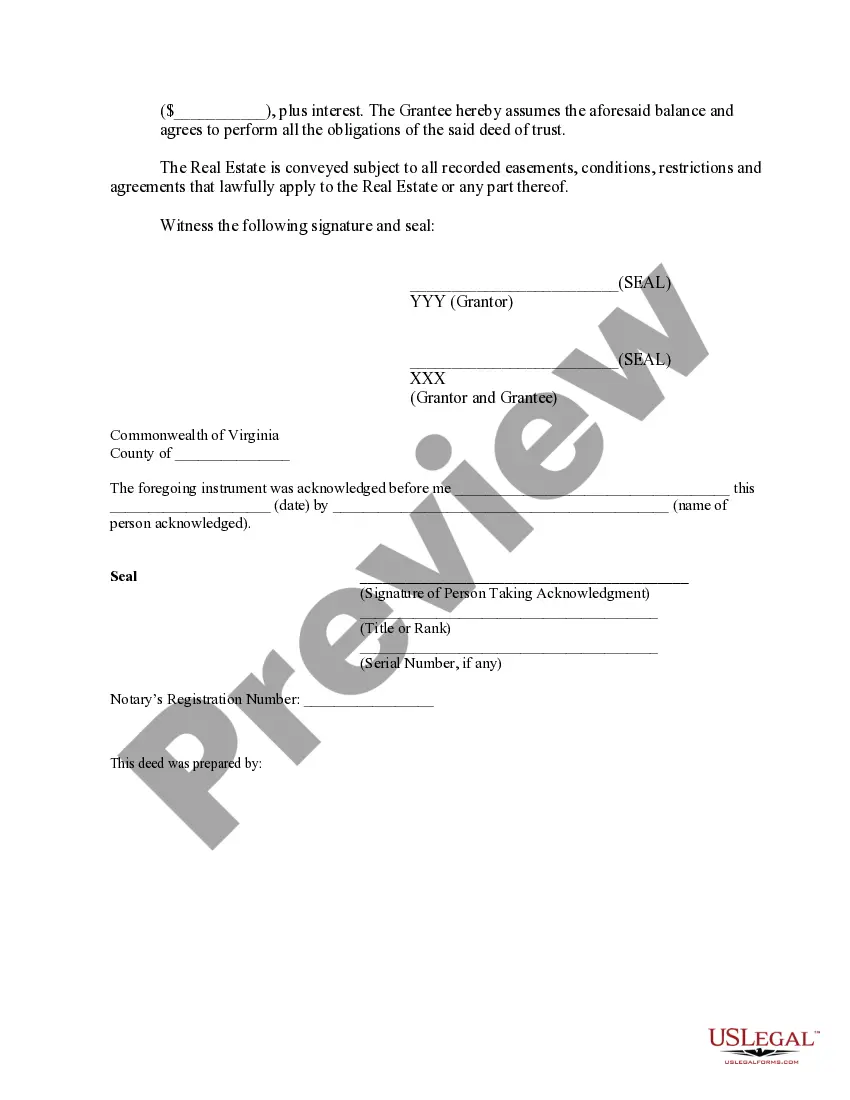
- Signatures of the Grantors and acknowledgment by a notary public
When this form is needed
This form is necessary when a married couple is going through a divorce and agrees to a property settlement that involves transferring real estate ownership as a gift to one spouse. It helps finalize the division of assets and ensures that property rights are clearly defined and legally recognized.
Intended users of this form
- Divorced individuals looking to transfer property as part of their divorce settlement
- Those who need to clarify property ownership after a divorce
- Individuals requiring documentation that their property transfer is a gift, exempt from taxes
How to prepare this document
- Identify and enter the date of the agreement.
- List the names of the Grantors (the individuals transferring property) and the Grantee (the individual receiving property).
- Provide a detailed legal description of the property being transferred.
- Specify any existing liens or obligations that the Grantee will assume.
- Both Grantors and the Grantee should sign and date the document.
- Have the deed notarized to ensure legal validity.
Notarization guidance
This form needs to be notarized to ensure legal validity. US Legal Forms provides secure online notarization powered by Notarize, allowing you to complete the process through a verified video call, available anytime.
Get your form ready online
Our built-in tools help you complete, sign, share, and store your documents in one place.
Make edits, fill in missing information, and update formatting in US Legal Forms—just like you would in MS Word.
Download a copy, print it, send it by email, or mail it via USPS—whatever works best for your next step.
Sign and collect signatures with our SignNow integration. Send to multiple recipients, set reminders, and more. Go Premium to unlock E-Sign.
If this form requires notarization, complete it online through a secure video call—no need to meet a notary in person or wait for an appointment.
We protect your documents and personal data by following strict security and privacy standards.

Make edits, fill in missing information, and update formatting in US Legal Forms—just like you would in MS Word.

Download a copy, print it, send it by email, or mail it via USPS—whatever works best for your next step.

Sign and collect signatures with our SignNow integration. Send to multiple recipients, set reminders, and more. Go Premium to unlock E-Sign.

If this form requires notarization, complete it online through a secure video call—no need to meet a notary in person or wait for an appointment.

We protect your documents and personal data by following strict security and privacy standards.
Mistakes to watch out for
- Failing to include all necessary signatures.
- Omitting the legal description of the property.
- Not providing correct or updated information about existing liens.
- Skipping the notarization step for the deed.
Advantages of online completion
- Convenient access to the form from anywhere, anytime.
- Easy to fill out and customize to fit individual needs.
- Reliable templates drafted by licensed attorneys.
Looking for another form?

Form popularity
FAQ
Gift. You can give ownership of your property to a family member as a gift. This simply requires filling out the necessary paperwork with your state revenue office and title office, including a Transfer of Land.
Generally, the lender sends the documents to be recorded after the closing. The recording fees are included in your closing costs. Typically, the lender will provide you with a copy of the deed of trust after the closing. The original warranty deeds are often mailed to the grantee after they are recorded.
It is possible to transfer the ownership of a property to a family member as a gift, meaning no money exchanges hands. This differs to a Transfer of Equity, where the owner remains on the title and simply adds someone else to it.
When you own a home, you own both the deed and title for that property. In real estate, title means you have ownership and a right to use the property.The deed is the physical legal document that transfers ownership. It shows who you bought your house from, and when you sell it, it shows who you sold it to.
Locate the most recent deed to the property. Create the new deed. Sign and notarize the new deed. Record the deed in the land records of the clerk's office of the circuit court in the jurisdiction where the property is located.
Legal Description The seller or the seller's broker will hire an attorney to prepare the real estate deed to ensure that all of the requirements in the creation of a valid deed are met before the seller conveys title to the property. All real estate deeds must be in writing.
Deed Preparation This fee is for drafting the document that conveys the property from the seller to the buyer and states the warranties and rights that the seller is granting the buyer. In most closings, I find that the seller pays this fee, at closing.
Retrieve your original deed. Get the appropriate deed form. Draft the deed. Sign the deed before a notary. Record the deed with the county recorder. Obtain the new original deed.
File a petition in probate court. The first step to transferring the property to the rightful new owners is to open up a case in probate court. Petition the court for sale and convey the property to the purchaser. Next, you must petition the court to sell the property.