Virginia Acknowledgment for an individual acting as principal by an attorney-in-fact
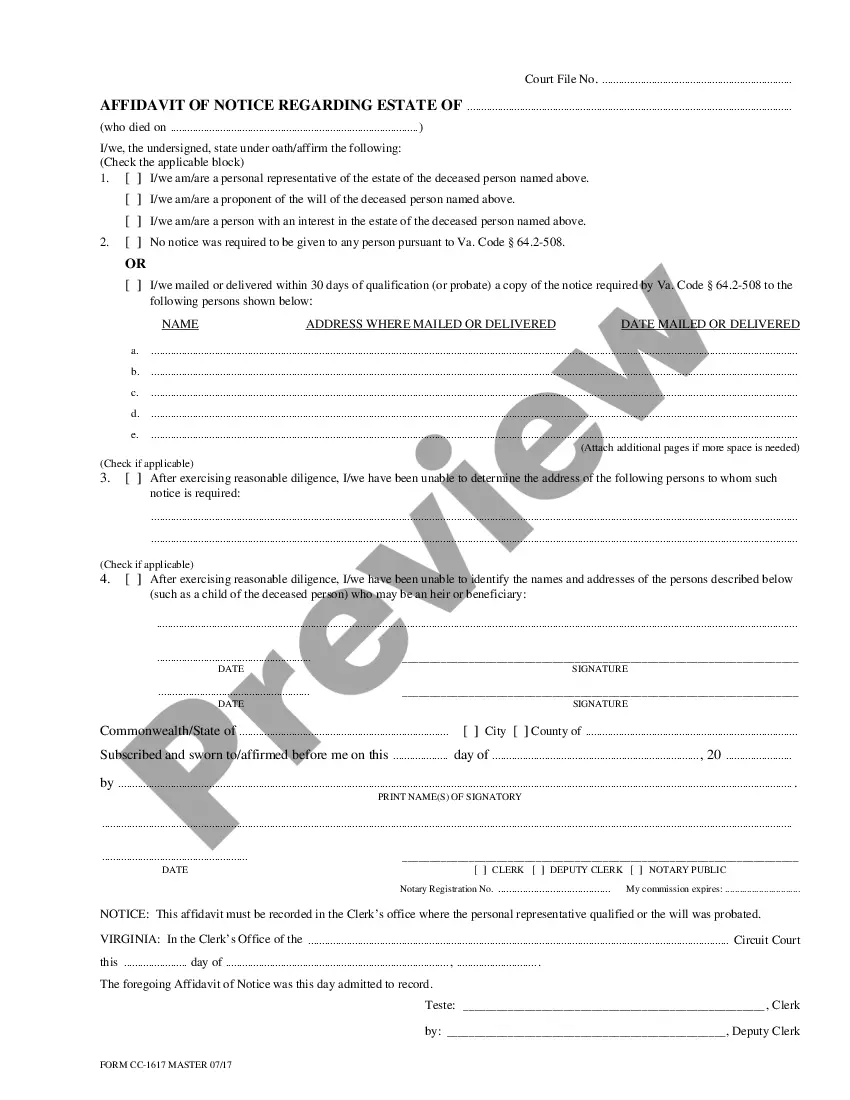
What is this form?
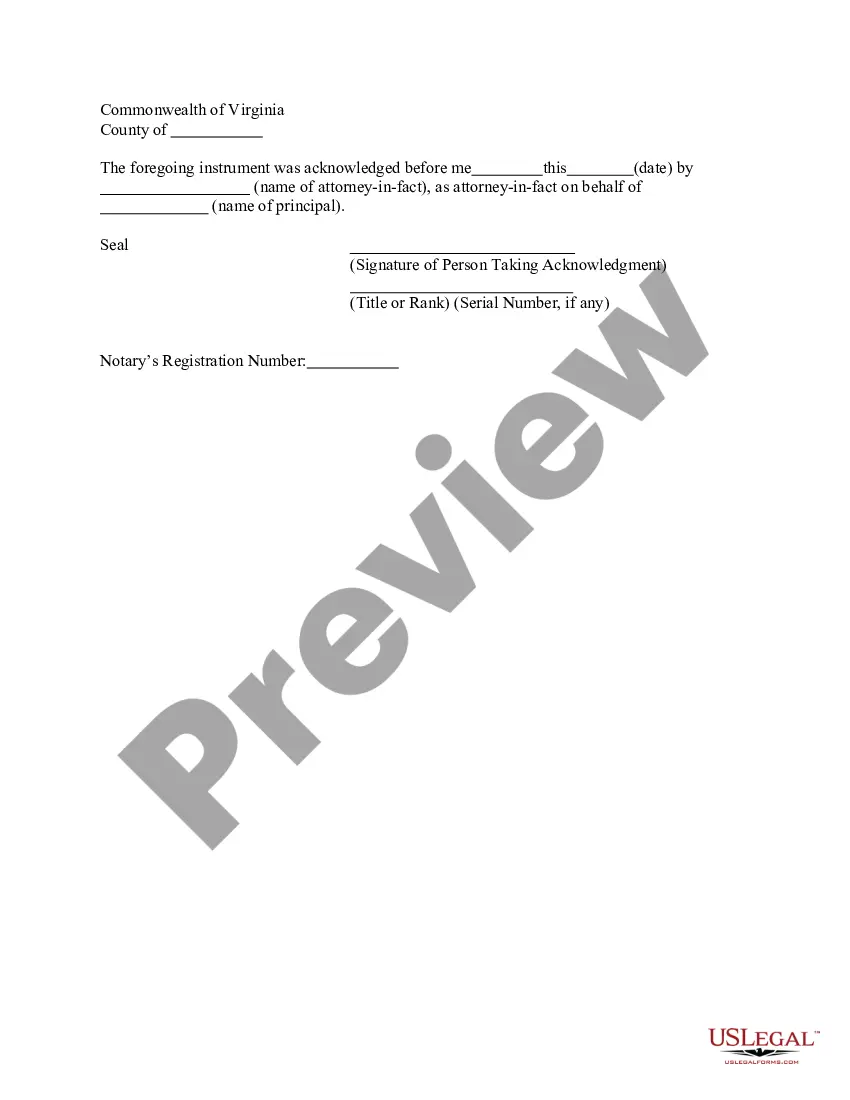
The Acknowledgment for an individual acting as principal by an attorney-in-fact is a legal document designed to confirm that an attorney-in-fact (the agent) has the authority to act on behalf of a principal (the individual granting authority) in legal matters. This form serves to validate the actions taken by the attorney-in-fact and ensures that they can effectively represent the principal in various transactions. Unlike general power of attorney forms, this acknowledgment provides a specific affirmation of the authority granted.
Form components explained
- Identification of the principal and attorney-in-fact: includes names and contact information.
- Date of acknowledgment: specifies when the acknowledgment was signed.
- Signature of the notary public: certifies the authenticity of the acknowledgment.
- Fields for title or rank: ensures clarity on the authority of the attorney-in-fact.
- Optional fields for additional information: such as serial numbers or other identifiers.

When to use this document
This form should be used when an individual (the principal) has appointed an attorney-in-fact to act on their behalf in legal matters. Situations where this form is necessary include executing contracts, managing assets, or making decisions regarding health care. It ensures that any actions taken by the attorney-in-fact are legally accepted and recognized by third parties.
Who needs this form
- Individuals granting authority to an attorney-in-fact.
- Attorneys-in-fact needing documented proof of their authority to act on behalf of a principal.
- Individuals involved in transactions requiring verification of representation.
Instructions for completing this form
- Identify the principal by entering their full name and contact information.
- Specify the attorney-in-fact's name who will be acting on behalf of the principal.
- Enter the date of the acknowledgment to indicate when the form was signed.
- Include the signature of the notary public to authenticate the acknowledgment.
- Add any relevant titles or additional identification numbers as necessary.
Does this form need to be notarized?
Notarization is required for this form to take effect. Our online notarization service, powered by Notarize, lets you verify and sign documents remotely through an encrypted video session, available 24/7.
Get your form ready online
Our built-in tools help you complete, sign, share, and store your documents in one place.
Make edits, fill in missing information, and update formatting in US Legal Forms—just like you would in MS Word.
Download a copy, print it, send it by email, or mail it via USPS—whatever works best for your next step.
Sign and collect signatures with our SignNow integration. Send to multiple recipients, set reminders, and more. Go Premium to unlock E-Sign.
If this form requires notarization, complete it online through a secure video call—no need to meet a notary in person or wait for an appointment.
We protect your documents and personal data by following strict security and privacy standards.

Make edits, fill in missing information, and update formatting in US Legal Forms—just like you would in MS Word.

Download a copy, print it, send it by email, or mail it via USPS—whatever works best for your next step.

Sign and collect signatures with our SignNow integration. Send to multiple recipients, set reminders, and more. Go Premium to unlock E-Sign.

If this form requires notarization, complete it online through a secure video call—no need to meet a notary in person or wait for an appointment.

We protect your documents and personal data by following strict security and privacy standards.
Typical mistakes to avoid
- Failing to have the document notarized when required.
- Not including the full names of all parties involved.
- Leaving out the date of acknowledgment.
- Using incorrect titles or ranks that do not accurately represent the attorney-in-fact's authority.
Benefits of using this form online
- Convenience of instant access and download from any location.
- Editability to customize the form based on individual needs.
- Reliability as the form is drafted by licensed attorneys and conforms to legal standards.
Looking for another form?

Form popularity
FAQ
The lawyer has asked you to sign for them, above their name and position title at the end of the letter. You write 'p. p' in the signature space and sign your name after it. This validates the letter, in informing the reader the letter has been signed on behalf of the lawyer with authorisation.
3 attorney answers Sign his name and then add underneath "by your name, attorney in fact".
When the document goes into effect, you become that person's attorney in fact, which means you act as their agent. Generally, to sign documents in this capacity, you will sign the principal's name first, then your name with the designation "attorney in fact" or "power of attorney."
An acknowledgment is a formal declaration before an authorized official such as a notary, by a person who has signed a document, that the document is his or her act.
You must sign the Power of Attorney, but you do not need witnesses to your signature. You should have your signature notarized.If you had a Power of Attorney prepared while you were living in another state or country and you have now moved to Virginia, that document might be legal under Virginia law.
After the principal's name, write by and then sign your own name. Under or after the signature line, indicate your status as POA by including any of the following identifiers: as POA, as Agent, as Attorney in Fact or as Power of Attorney.
This means you verify the identity of the attorney in fact not the principal and write only the attorney in fact's name in the notarial certificate wording. The attorney in fact signing your journal entry should sign only his or her name.
They key difference is that for a signature witnessing, the signer must always sign the document in the Notary's presence.An acknowledgment, on the other hand, does not require the Notary to witness the signature in most states (one exception is Maryland).
An attorney in fact is a person authorized to sign documents on someone else's behalf, but is not necessarily a practicing lawyer.When an attorney in fact signs a document, the signature should include the name of the principal he or she represents.