Virginia Amendment to Living Trust

Overview of this form
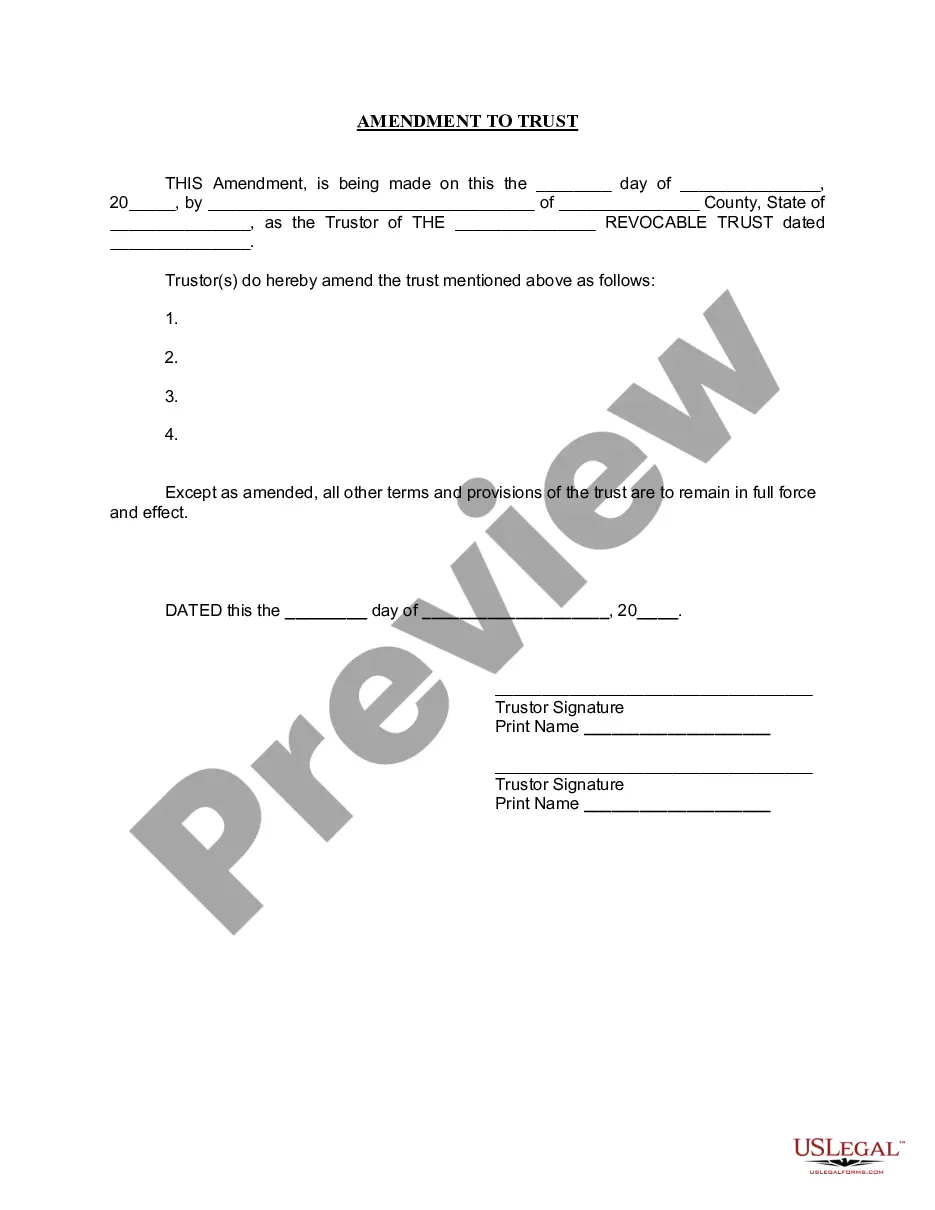
The Amendment to Living Trust is a legal document that allows the Trustor to make changes to an existing living trust. Unlike other estate planning documents, this form specifically addresses amendments to the trust's provisions while leaving the overall structure and purpose intact. It ensures that only the specified sections are altered, providing flexibility in the management of assets and estate planning without needing to create an entirely new trust document.
Key components of this form
- Date of amendment
- Name and county of the Trustor
- Name of the existing revocable trust
- Description of the specific amendments being made
- Signature lines for the Trustor(s)
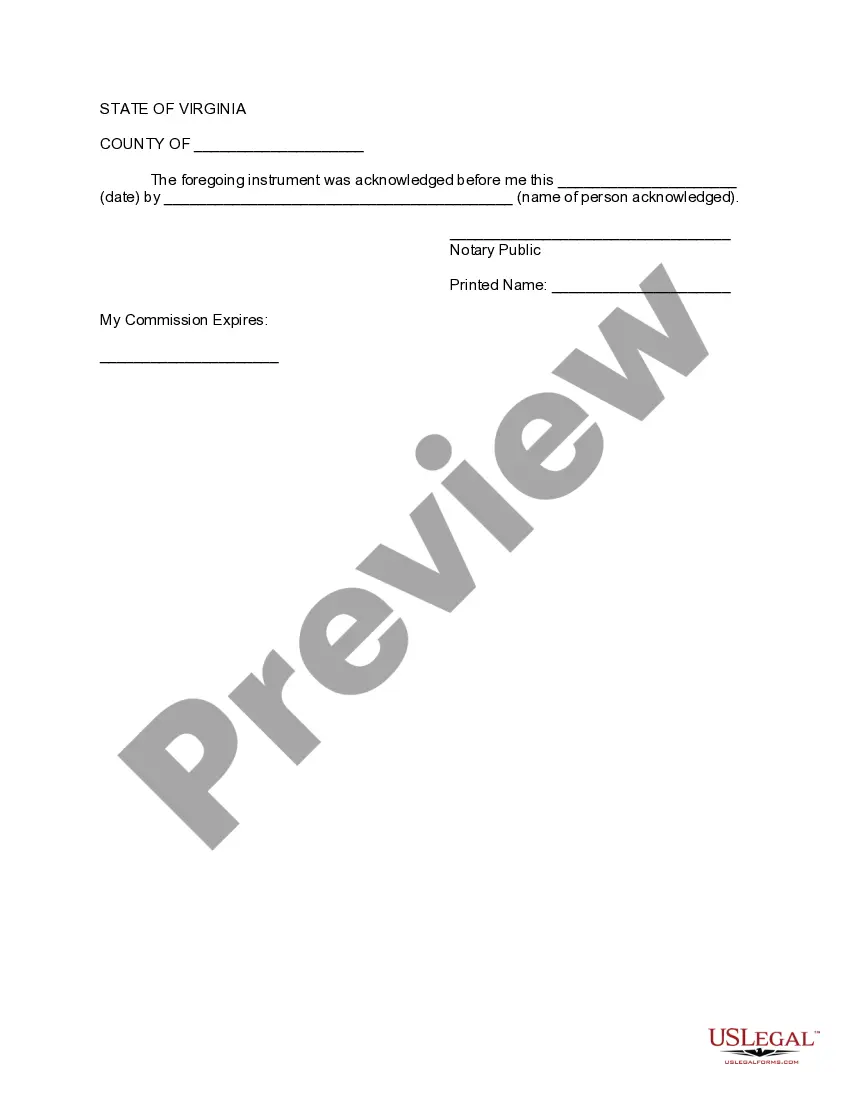
- Notary acknowledgment section


When to use this form
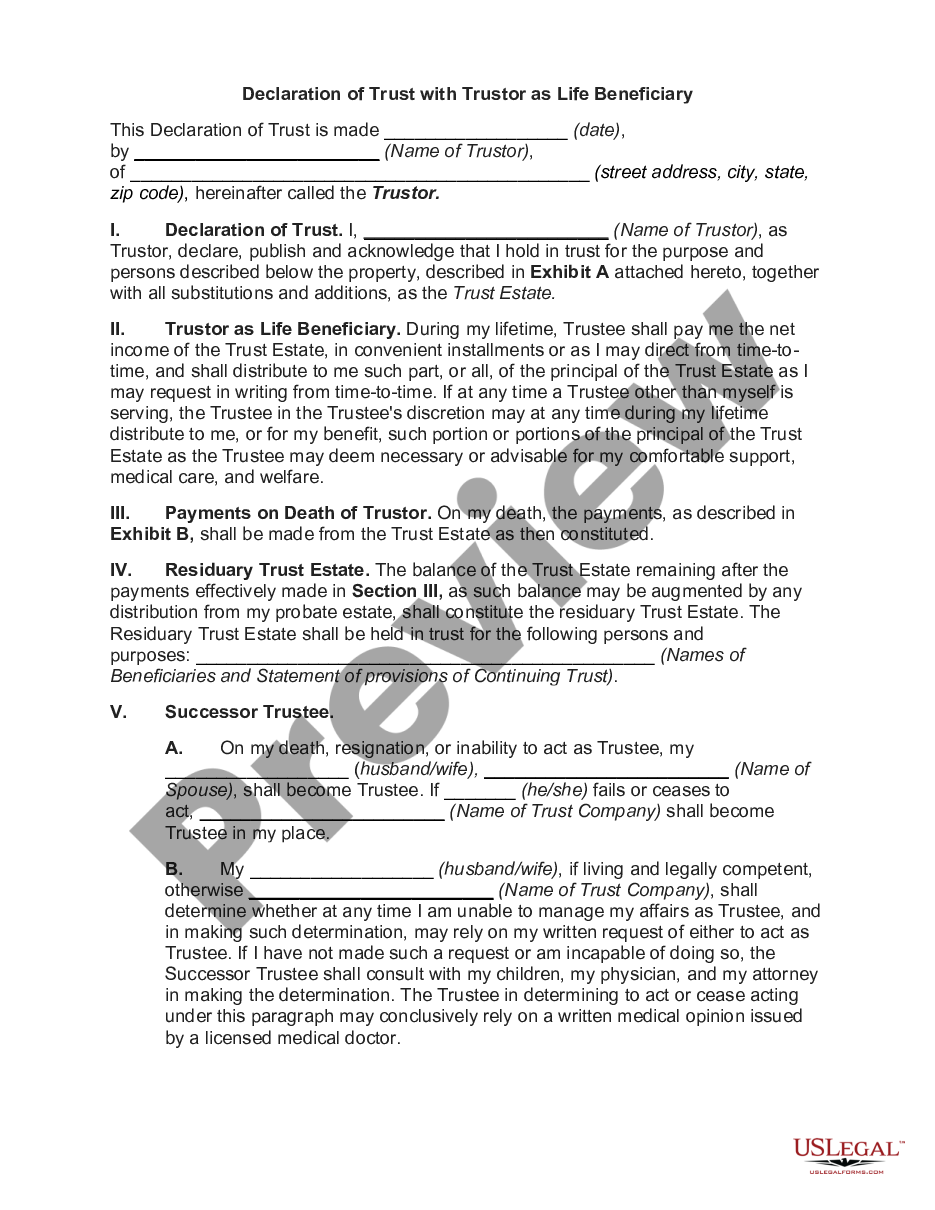
This form should be used when you need to modify certain provisions of your living trust. Common scenarios include changing beneficiaries, altering asset distributions, updating trustee information, or any other changes that do not affect the fundamental structure of the trust. It is especially useful if your circumstances have changed since the original trust was established, such as marriage, divorce, or changes in financial status.
Who needs this form
This form is intended for:
- Individuals who are the Trustor of a revocable living trust
- Trustors seeking to update the terms of their living trust due to life changes
- Those who wish to maintain the original trust's framework while making specific alterations
Completing this form step by step
- Identify the date of the amendment.
- Fill in your name and county as the Trustor.
- Specify the name of the existing revocable trust.
- Clearly describe the amendments you are making.
- Sign and print your name in the provided signature lines.
- Have the document notarized to ensure its legal validity.
Does this document require notarization?
This form must be notarized to be legally valid. US Legal Forms provides secure online notarization powered by Notarize, allowing you to complete the process through a verified video call.
Get your form ready online
Our built-in tools help you complete, sign, share, and store your documents in one place.
Make edits, fill in missing information, and update formatting in US Legal Forms—just like you would in MS Word.
Download a copy, print it, send it by email, or mail it via USPS—whatever works best for your next step.
Sign and collect signatures with our SignNow integration. Send to multiple recipients, set reminders, and more. Go Premium to unlock E-Sign.
If this form requires notarization, complete it online through a secure video call—no need to meet a notary in person or wait for an appointment.
We protect your documents and personal data by following strict security and privacy standards.

Make edits, fill in missing information, and update formatting in US Legal Forms—just like you would in MS Word.

Download a copy, print it, send it by email, or mail it via USPS—whatever works best for your next step.

Sign and collect signatures with our SignNow integration. Send to multiple recipients, set reminders, and more. Go Premium to unlock E-Sign.

If this form requires notarization, complete it online through a secure video call—no need to meet a notary in person or wait for an appointment.

We protect your documents and personal data by following strict security and privacy standards.
Typical mistakes to avoid
- Failing to include all required information about the Trustor and the trust.
- Not describing the amendments clearly, which could lead to confusion.
- Neglecting to sign before a notary public, which is essential for the document's validity.
Why complete this form online
- Convenience of accessing and downloading the form at any time.
- Editability to customize the form according to your specific needs.
- Reliability of using legally standardized templates drafted by licensed attorneys.
Looking for another form?


Form popularity
FAQ
The Virginia Amendment to Living Trust is a legal document that lets the Trustor modify specific provisions of an existing revocable living trust without rewriting the whole instrument. It's used when life changes require updates to beneficiaries, asset distributions, or trustee information while preserving the original trust's structure and purpose.
To amend, complete the Virginia Amendment to Living Trust with the amendment date, the Trustor's name and county, the name of the existing revocable trust, a description of the specific changes, and sign the document. A notary acknowledgment is included to verify signatures.
Yes, if your trust is revocable. The Virginia amendment form is designed to modify only selected provisions while keeping the overall trust framework intact. Be sure to clearly describe the changes and have the amendment signed, dated, and executed with the included notary acknowledgment while retaining the original document's structure.
This Virginia Amendment to Living Trust is a ready-to-use form designed to amend an existing revocable living trust. It includes lines for the amendment date, trustor information, the existing trust name, a description of amendments, signature lines, and a notary acknowledgment, helping you complete and verify the document correctly.
The form includes a notary acknowledgment section, which provides a place to have signatures witnessed. While Virginia practice varies, notarizing amendments is commonly recommended to help ensure validity; consult an attorney for your specific situation and to confirm correct execution of this trust amendment.
This amendment changes only the specific provisions described in the document, while preserving the original trust's structure and purpose. It avoids drafting a new trust; instead, it records updates such as changes in beneficiaries, distributions, or trustee details using the amendment format.