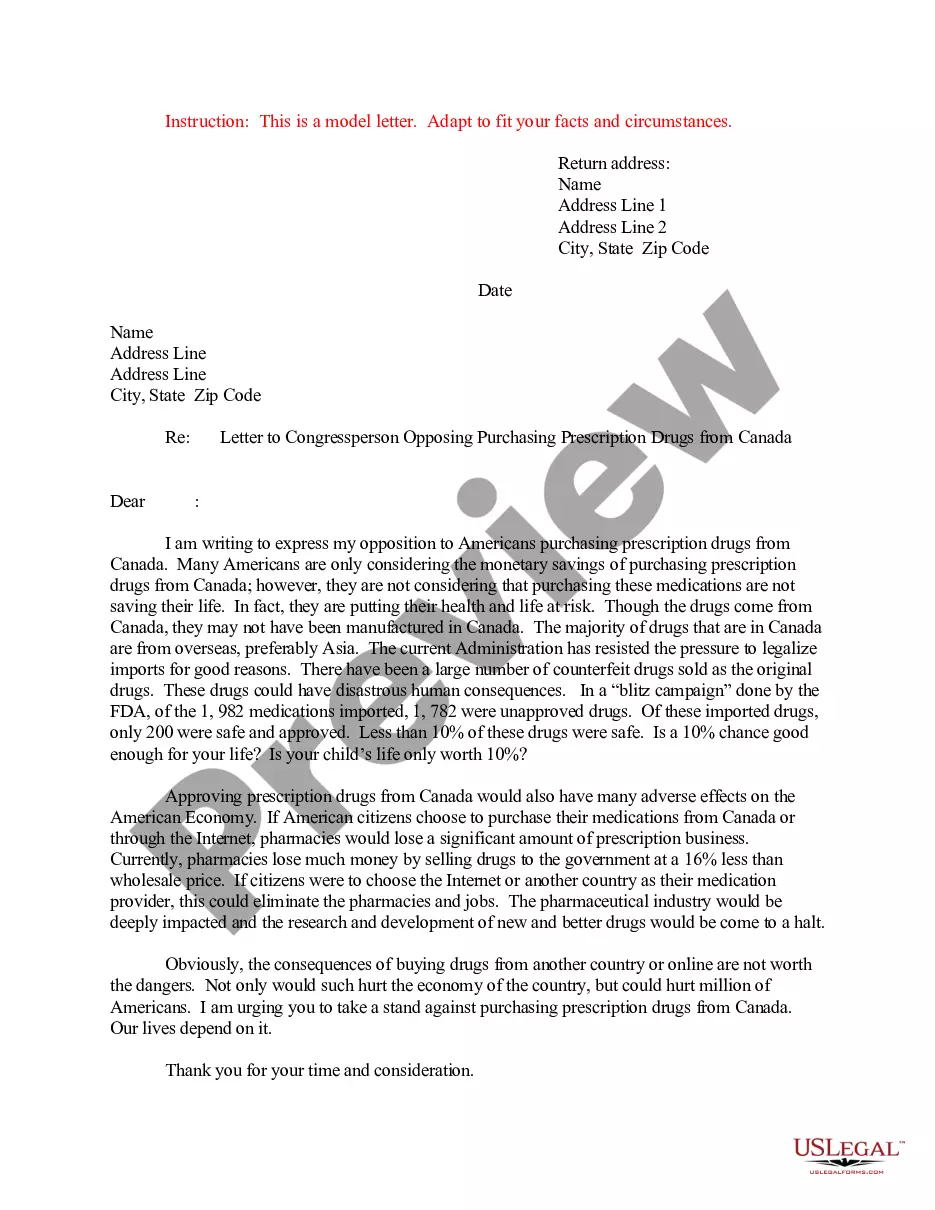
Virginia Business Credit Application
About this form
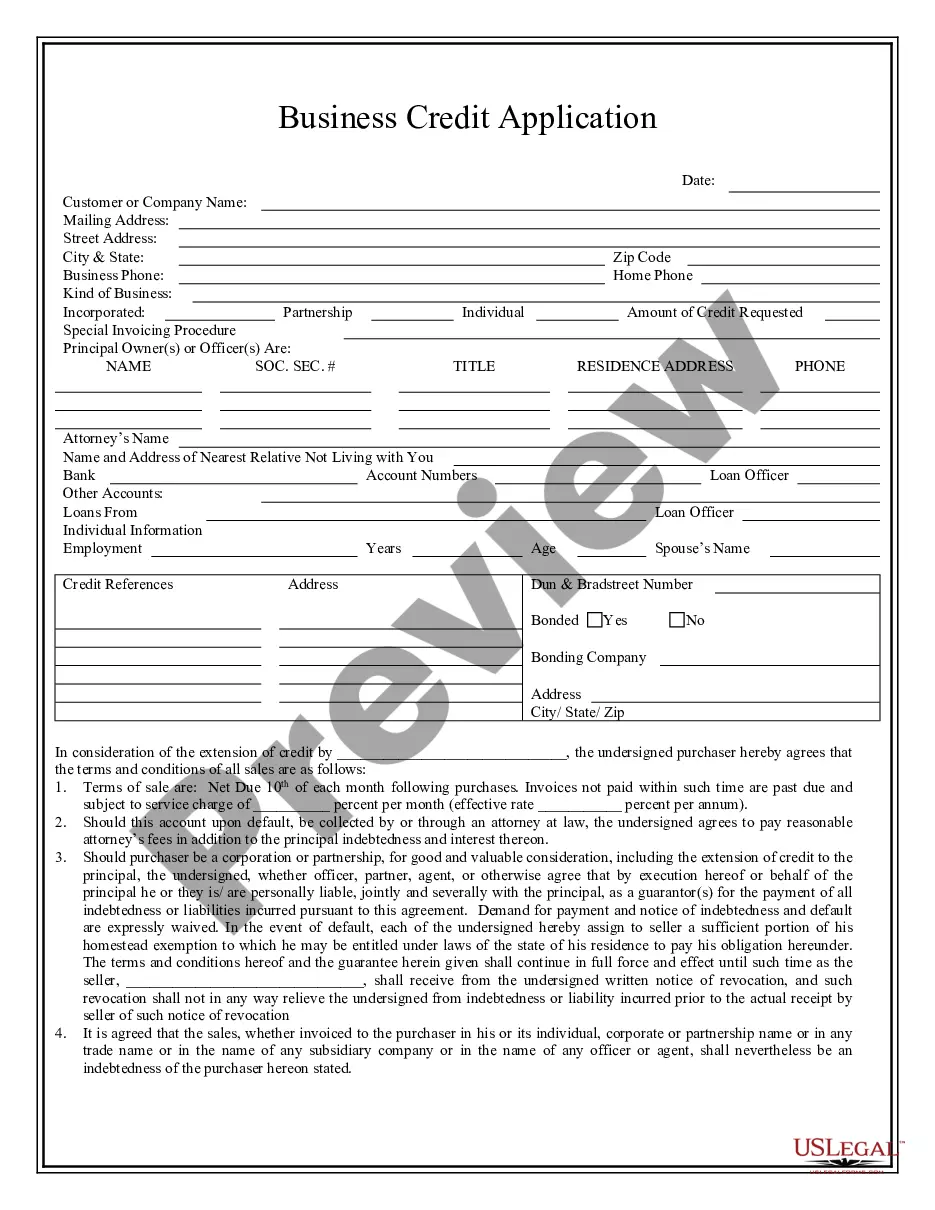
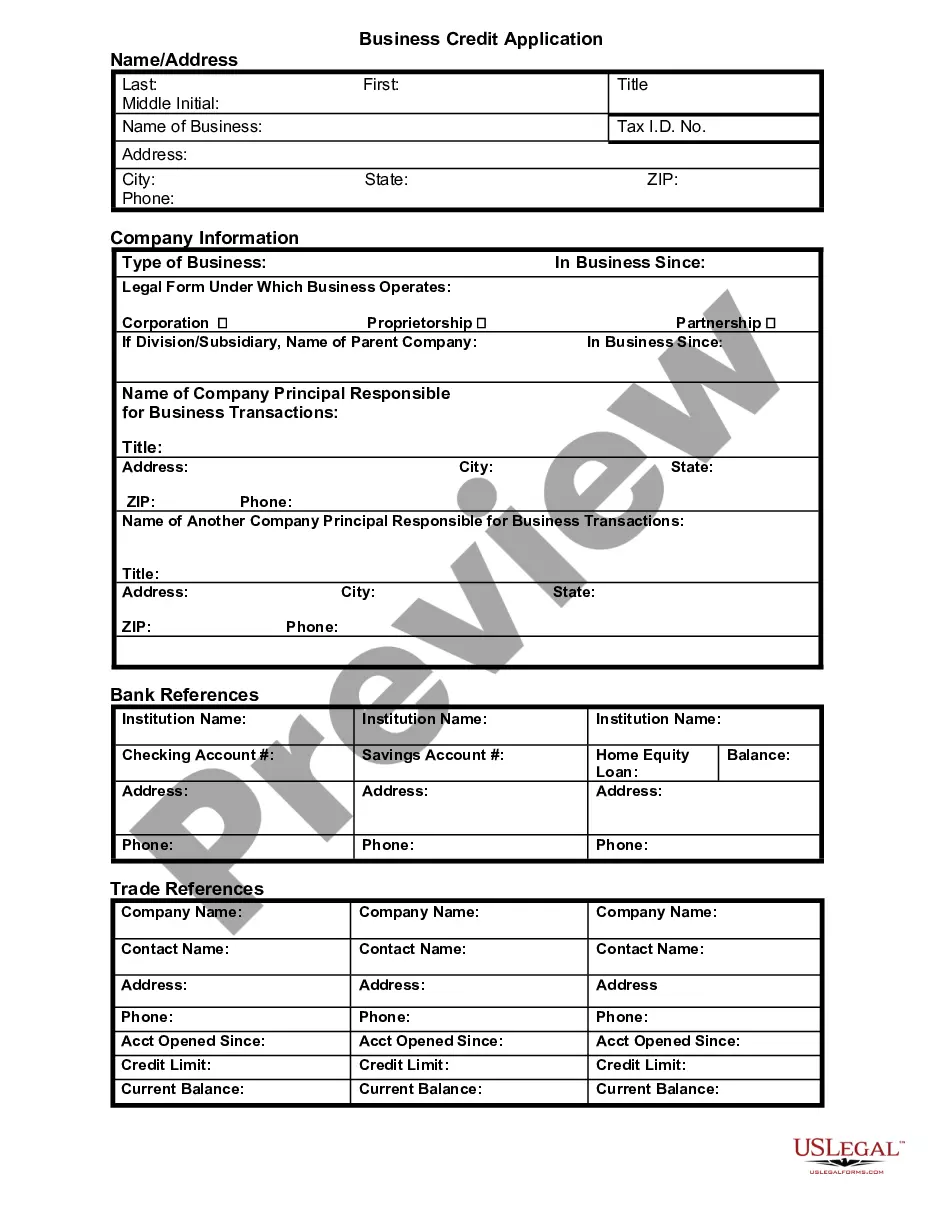
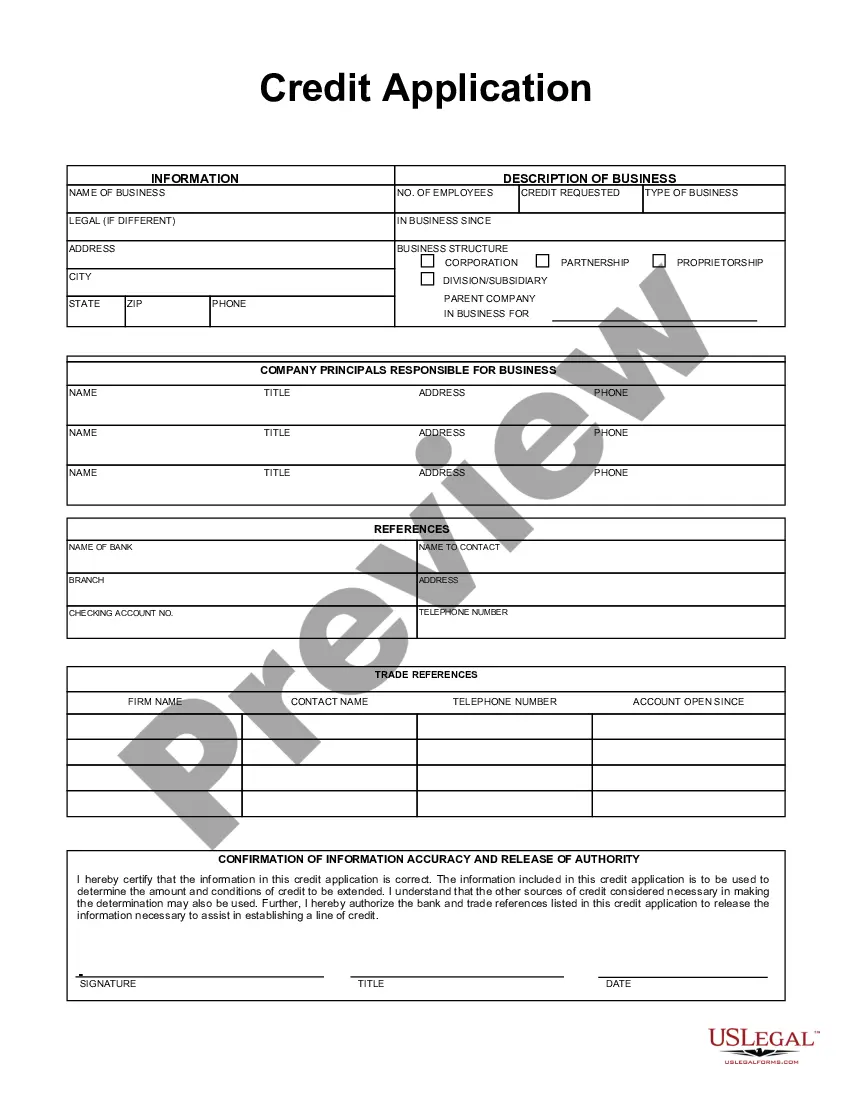
The Business Credit Application is a legal document used by individuals or businesses seeking credit from a seller to purchase goods or services. This form outlines the terms of credit, including repayment conditions, interest rates, and provisions in case of default. It is essential for establishing the credit relationship between a purchaser and a seller, distinguishing it from other forms like a simple purchase agreement or invoice.
Key parts of this document
- Details of the purchaser and seller, including names and contact information.
- Terms of sale, specifying payment due dates and service charges for late payments.
- Default provisions outlining actions if repayment is not made on time.
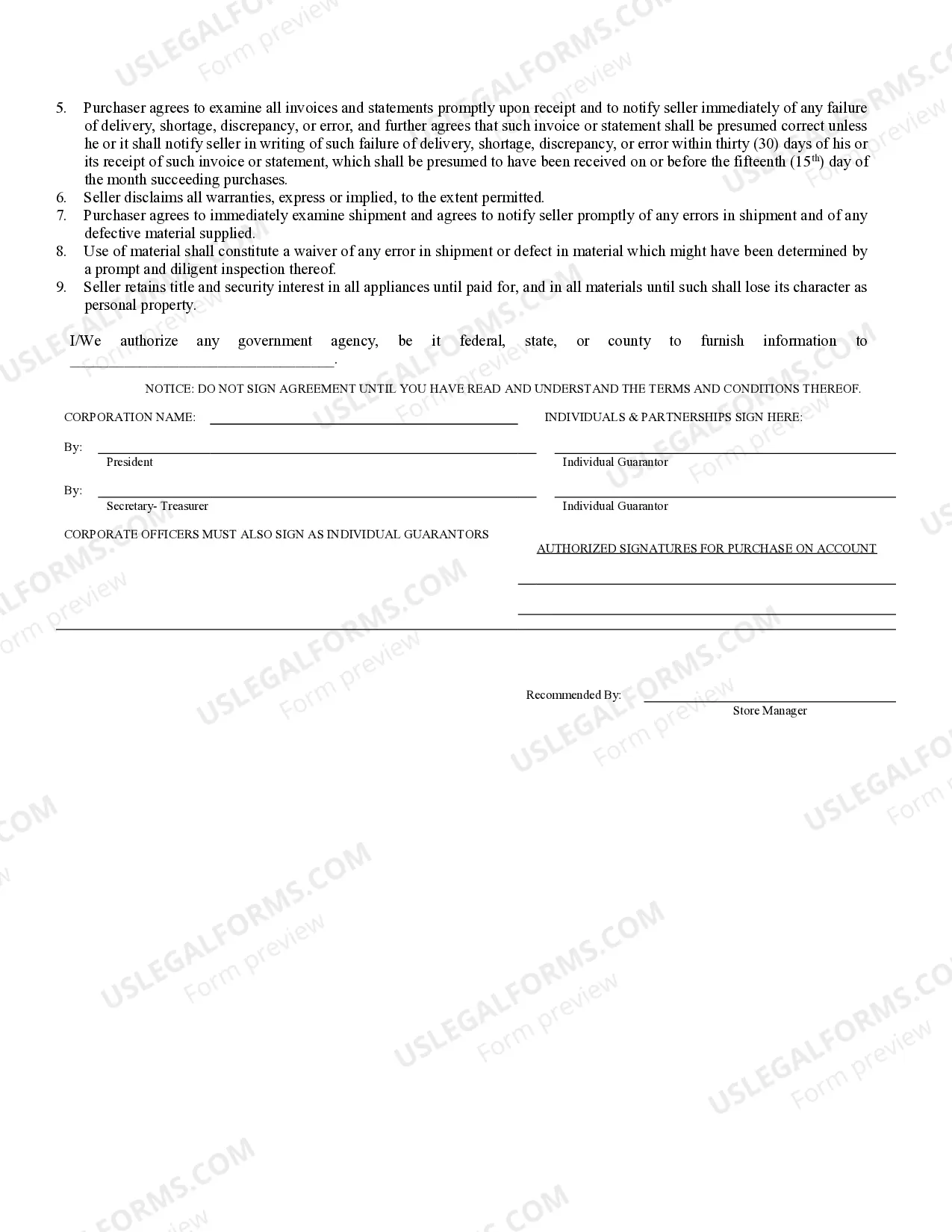
- Clauses regarding the retention of title and security interest until payments are completed.
- Provisions for personal liability of corporate officers and partners when applicable.
- Requirements for notification of invoice discrepancies and the examination of shipments.

Common use cases
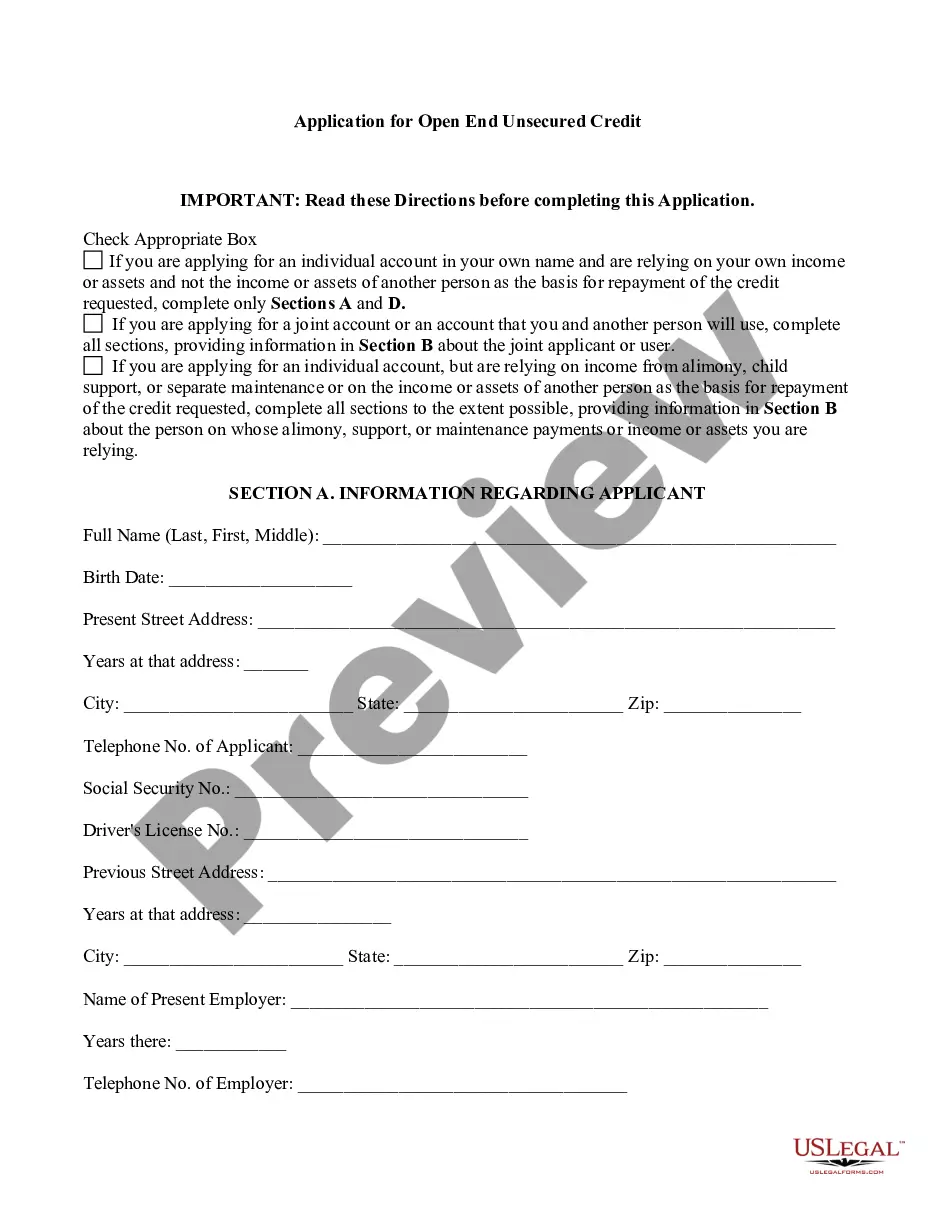
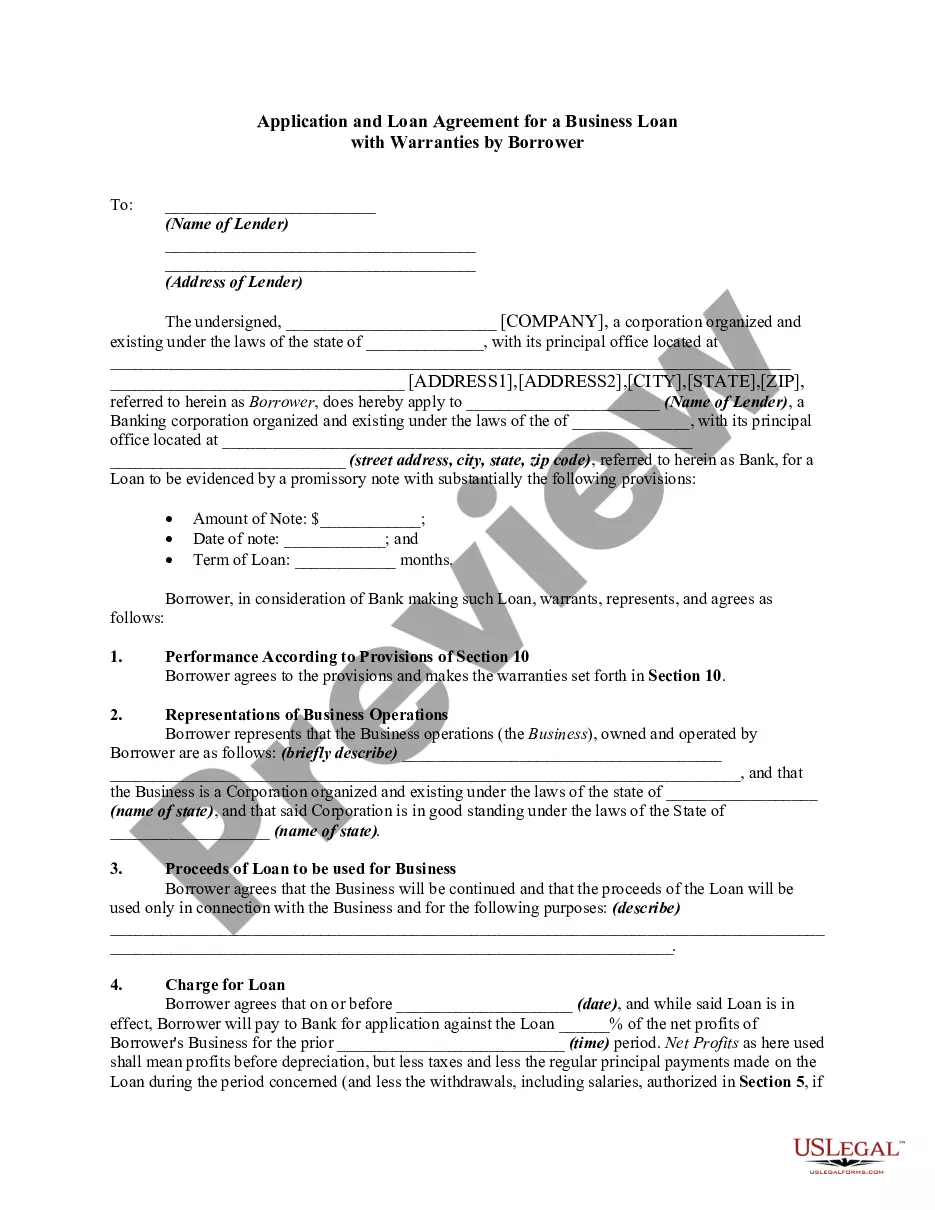
This form should be used when a business wishes to extend credit to a purchaser, allowing them to acquire goods or services without immediate payment. It is applicable in scenarios such as establishing relationships with new customers, managing ongoing client credit, or formalizing terms of payment for larger transactions. Additionally, it is crucial when the seller requires legal safeguards to recover funds in case of non-payment.
Who needs this form
This form is suitable for:
- Businesses offering goods or services on credit.
- Individuals or organizations applying for credit from a supplier.
- Corporate officers and partners who may act as guarantors for credit agreements.
- Financial institutions assessing credit applications for commercial purposes.
Steps to complete this form
- Identify the parties involved by filling in the names and addresses of both the purchaser and seller.
- Clearly outline the terms of sale, including payment due dates and applicable interest rates.
- Specify the amounts for any service charges related to late payments.
- Ensure any necessary personal guarantors sign to acknowledge their liability.
- Review and acknowledge receipt of invoices and the conditions for reporting discrepancies.
Does this form need to be notarized?
Notarization is generally not required for this form. However, certain states or situations might demand it. You can complete notarization online through US Legal Forms, powered by Notarize, using a verified video call available anytime.
Get your form ready online
Our built-in tools help you complete, sign, share, and store your documents in one place.
Make edits, fill in missing information, and update formatting in US Legal Forms—just like you would in MS Word.
Download a copy, print it, send it by email, or mail it via USPS—whatever works best for your next step.
Sign and collect signatures with our SignNow integration. Send to multiple recipients, set reminders, and more. Go Premium to unlock E-Sign.
If this form requires notarization, complete it online through a secure video call—no need to meet a notary in person or wait for an appointment.
We protect your documents and personal data by following strict security and privacy standards.

Make edits, fill in missing information, and update formatting in US Legal Forms—just like you would in MS Word.

Download a copy, print it, send it by email, or mail it via USPS—whatever works best for your next step.

Sign and collect signatures with our SignNow integration. Send to multiple recipients, set reminders, and more. Go Premium to unlock E-Sign.

If this form requires notarization, complete it online through a secure video call—no need to meet a notary in person or wait for an appointment.

We protect your documents and personal data by following strict security and privacy standards.
Avoid these common issues
- Failing to read the terms and conditions before signing.
- Not specifying service charges or interest rates clearly.
- Omitting to have authorized signatories sign the document.
- Not providing correct contact information for all parties involved.
Why use this form online
- Easy access to a professionally drafted legal document.
- Quick completion and customization to fit specific business needs.
- Secure storage and retrieval of documents for future reference.
- Reliable legal backing from licensed attorneys in drafting the form.
Looking for another form?
Form popularity
FAQ
Step 1: Choose a Business Idea. Step 2: Write a Business Plan. Step 3: Select a Business Entity. Step 4: Register a Business Name. Step 5: Get an EIN. Step 6: Open a Business Bank Account. Step 7: Apply for Business Licenses & Permits. Step 8: Find Financing.
There are 4 main types of business organization: sole proprietorship, partnership, corporation, and Limited Liability Company, or LLC. Below, we give an explanation of each of these and how they are used in the scope of business law.
Conduct market research. Market research will tell you if there's an opportunity to turn your idea into a successful business. Write your business plan. Fund your business. Pick your business location. Choose a business structure. Choose your business name. Register your business. Get federal and state tax IDs.
The most common forms of business are the sole proprietorship, partnership, corporation, and S corporation. A Limited Liability Company (LLC) is a business structure allowed by state statute. Legal and tax considerations enter into selecting a business structure.
Sole Proprietorship. Sole proprietorships are the most common type of online business due to their simplicity and how easy they are to create. Partnerships. Two heads are better than one, right? Limited Partnership. Corporation. Limited Liability Company (LLC) Nonprofit Organization. Cooperative.
Tutoring. House cleaning. Freelance writing. Personal training. Virtual assistance. Dog-walking. Marketing. Designing.
Conduct market research. Market research will tell you if there's an opportunity to turn your idea into a successful business. Write your business plan. Fund your business. Pick your business location. Choose a business structure. Choose your business name. Register your business. Get federal and state tax IDs.
Though you may have heard about a number of different types of ownership when researching business options, there are only four primary types that you'll likely have to consider: sole proprietorships, partnerships, limited liability companies and corporations.
State governments in the U.S. recognize more than a dozen different types of business entities, but the average small business owner chooses between these six: sole proprietorship, general partnership, limited partnership (LP), limited liability company (LLC), C-corporation, and S-corporation.