Utah Findings of Fact, Conclusions of Law and Order on Petition to Expunge Records
What this document covers
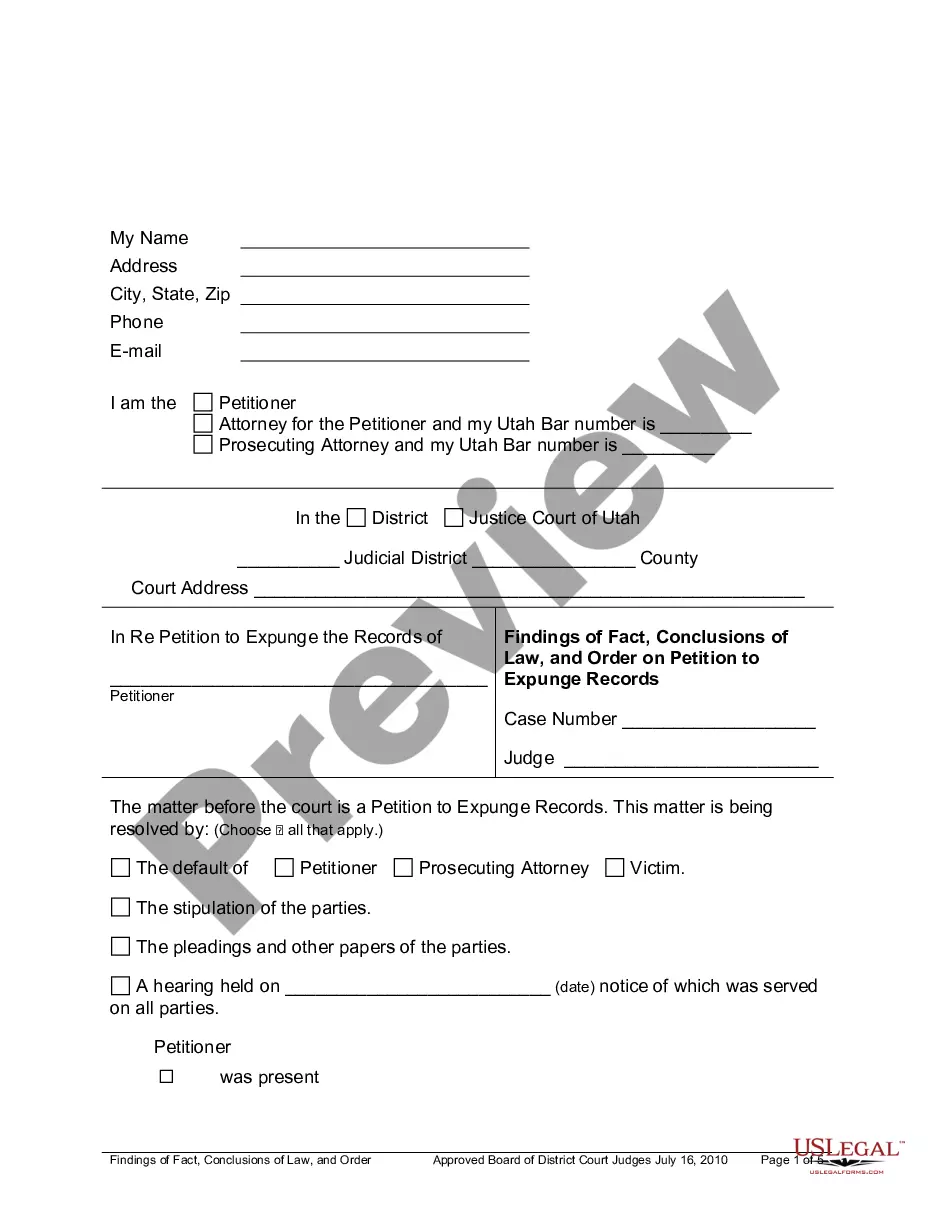
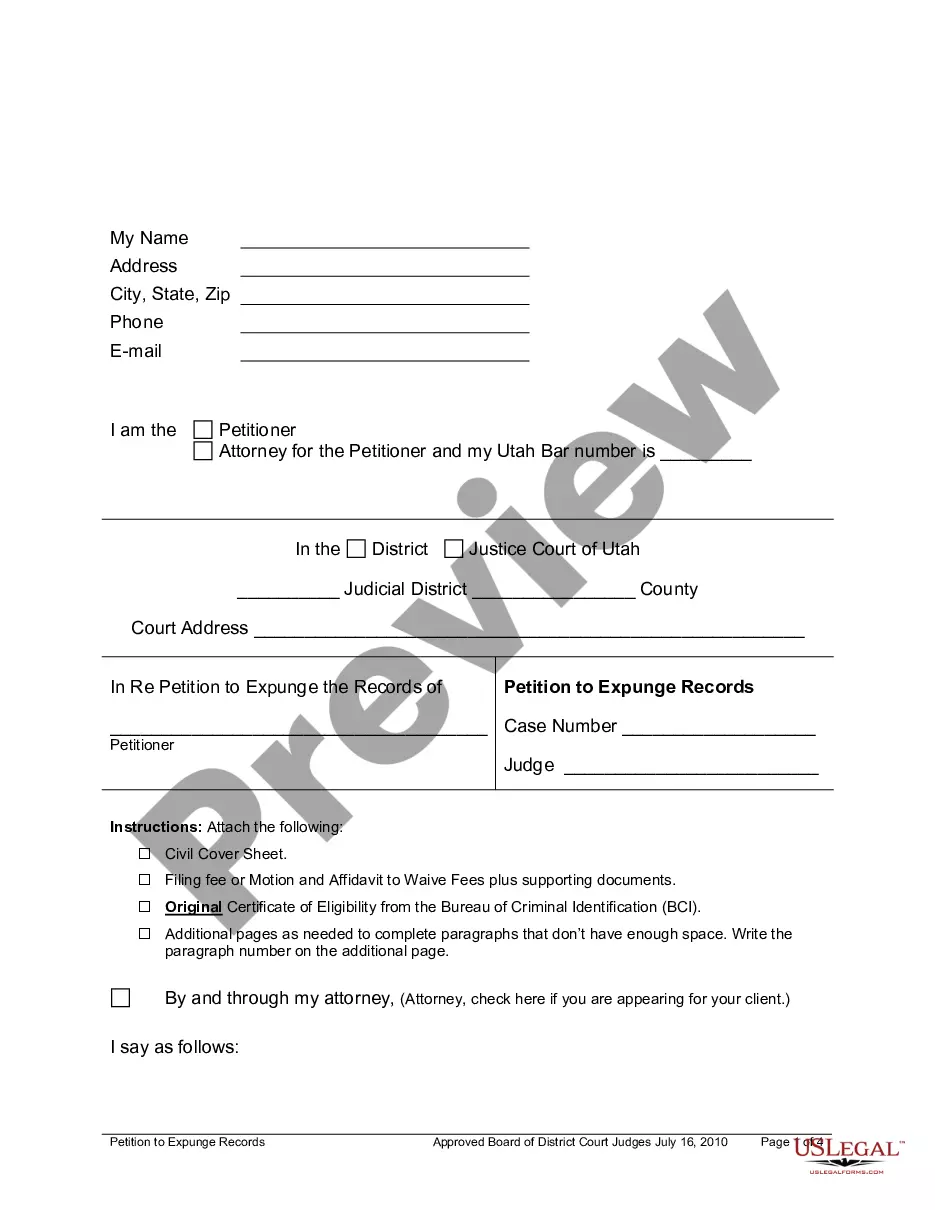
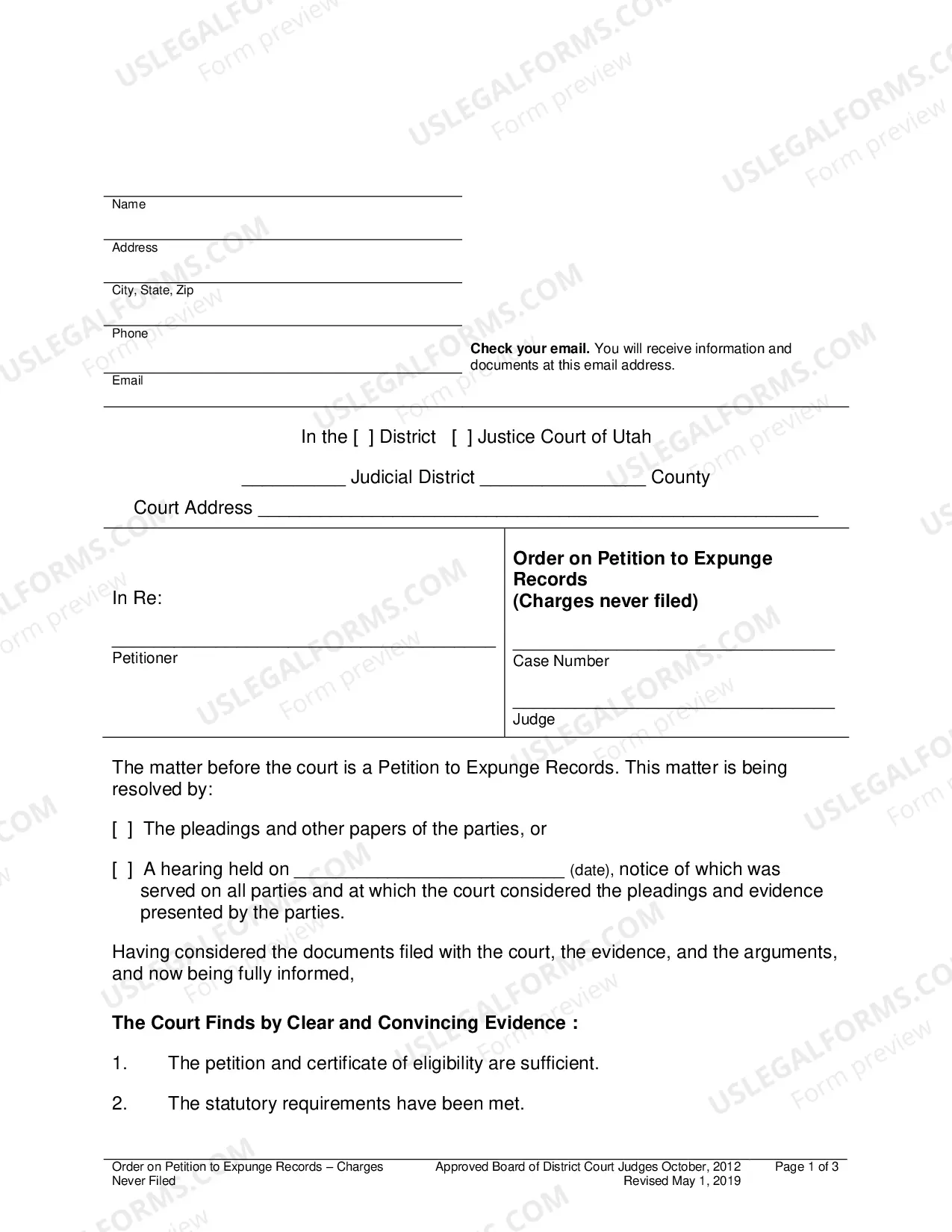
The Findings of Fact, Conclusions of Law and Order on Petition to Expunge Records is an official court form utilized in Utah to request the expungement of adult criminal records. This form is essential for individuals looking to clear their criminal history following specific legal criteria and differs from other legal forms by focusing specifically on expungement matters.
Key components of this form
- The identification of parties involved, including the petitioner, prosecuting attorney, and any victims.
- Details regarding the case, such as the court and case numbers.
- Findings of fact that outline whether the petition and eligibility requirements have been met.
- Conclusions regarding the expungement of records based on the evidence and arguments presented.
- An order directing the appropriate agencies to expunge records if the court finds in favor of the petitioner.
- Provisions for notifying relevant government agencies about the expungement order.


When this form is needed
This form is used when an individual seeks to expunge specific criminal records in Utah, typically after meeting the eligibility criteria outlined in the law. It is necessary when a petitioner wants to clear their record following a conviction, arrest, or other legal encounters, allowing them to move forward without the burden of past transgressions on their record.
Intended users of this form
This form is intended for:
- Individuals who have been arrested or convicted of a crime in Utah and wish to have their records expunged.
- Petitioners who meet the statutory requirements and wish to clear their criminal history.
- Attorneys representing clients seeking to expunge records.
Instructions for completing this form
- Identify the petitioner and their attorney, including the attorney's Utah Bar number.
- Provide the district and county details where the petition is filed.
- Fill in the details of the case or incidents for which the expungement is sought, including case numbers or LEA file numbers.
- Check the boxes to indicate how the petition is being resolved (default, stipulation, hearing).
- Enter the findings of fact and conclusions drawn by the court regarding the sufficiency of the petition and public interest.
- Complete the order section to expunge records if approved and indicate how documents will be delivered to necessary parties.
Does this form need to be notarized?
This form does not typically require notarization unless specified by local law. It is advisable to check with the court or a legal professional to confirm if notarization is necessary for your specific case.
Get your form ready online
Our built-in tools help you complete, sign, share, and store your documents in one place.
Make edits, fill in missing information, and update formatting in US Legal Forms—just like you would in MS Word.
Download a copy, print it, send it by email, or mail it via USPS—whatever works best for your next step.
Sign and collect signatures with our SignNow integration. Send to multiple recipients, set reminders, and more. Go Premium to unlock E-Sign.
If this form requires notarization, complete it online through a secure video call—no need to meet a notary in person or wait for an appointment.
We protect your documents and personal data by following strict security and privacy standards.

Make edits, fill in missing information, and update formatting in US Legal Forms—just like you would in MS Word.

Download a copy, print it, send it by email, or mail it via USPS—whatever works best for your next step.

Sign and collect signatures with our SignNow integration. Send to multiple recipients, set reminders, and more. Go Premium to unlock E-Sign.

If this form requires notarization, complete it online through a secure video call—no need to meet a notary in person or wait for an appointment.

We protect your documents and personal data by following strict security and privacy standards.
Typical mistakes to avoid
- Failing to provide complete identification of all parties involved.
- Omitting case numbers or relevant details about the incidents to be expunged.
- Not properly indicating how the matter is being resolved (default, stipulation, etc.).
- Providing insufficient evidence for the court to determine eligibility for expungement.
Why complete this form online
- Convenience of completing the form at your own pace from anywhere with internet access.
- Editability allows you to correct errors easily before final submission.
- Access to templates drafted by licensed attorneys to ensure legal compliance.
Key takeaways
- The form is essential for individuals seeking to expunge their adult criminal records in Utah.
- Accurate completion is critical to ensure the court properly considers the expungement request.
- Using the form online offers convenience and reduces the likelihood of errors.
- Fulfilling any legal obligations prior to filing is necessary for eligibility.
Looking for another form?
Form popularity
FAQ
Online expungement is only available through Maryland expungement.com and not offered by a State or government website. This legal expungement service is particularly convenient for individuals who don't want to have to travel to the courthouse, obtain all the paperwork, drive home.
Always begin the letter with a formal greeting, such as "Dear Judge...", before composing the rest of the letter. Then, write the first paragraph of your letter by explaining why you are writing, what charge you wish to have expunged, and a short description of why you feel it should be expunged.
Expect to pay $100 to $600 in document processing and filing fees. If you feel you may have trouble coming up with the money to pay those fees, some states do offer free expungement services to indigent clients.
In California, employers are prohibited by law from asking applicants about a past conviction that has been expunged.However, if an applicant is applying for a state LICENSE (for instance, a teaching license) rather than a JOB, then he is obligated to disclose anY expunged convictions.
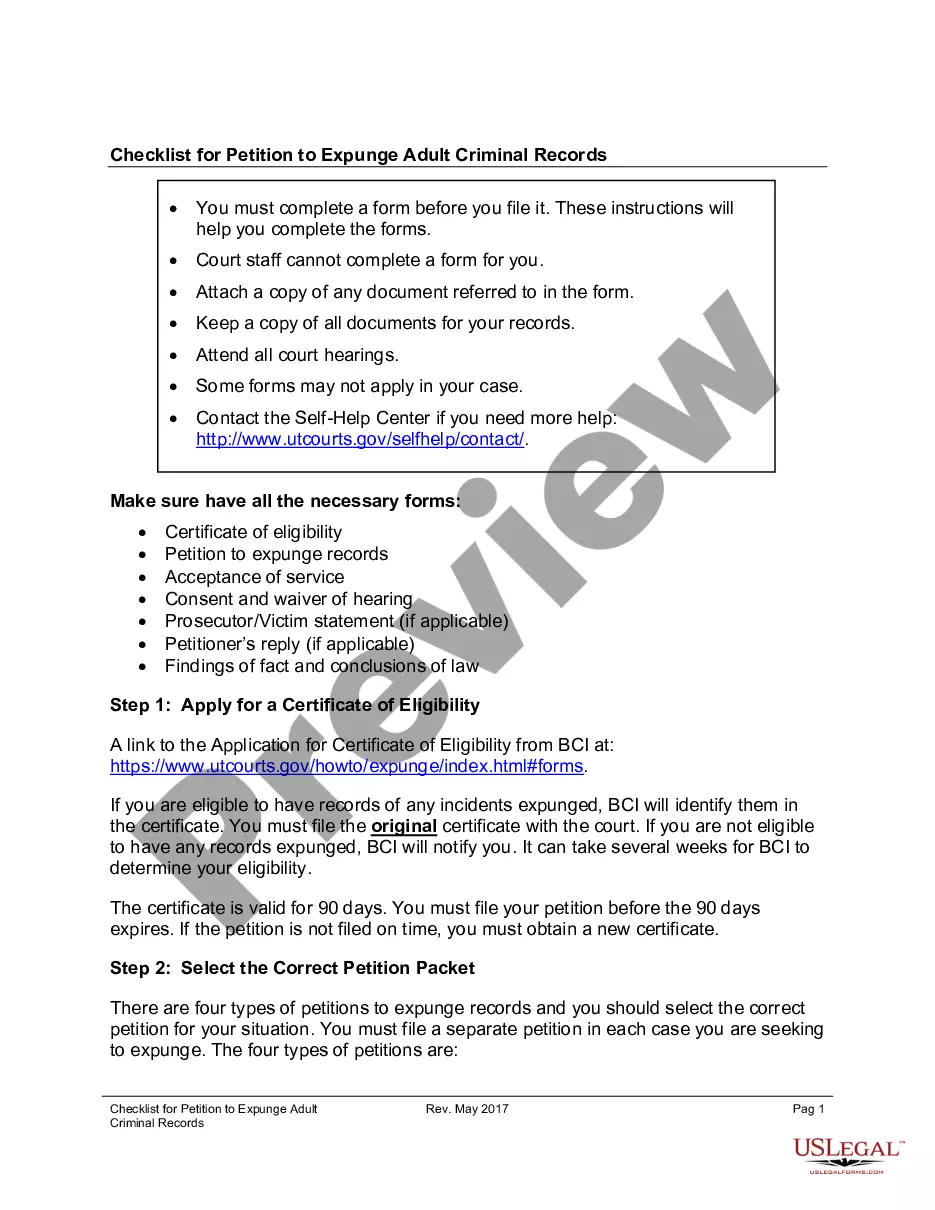
It can take several months for BCI to process your request. Once you receive your certificate, you will have 90 days from when it was issued to file it, along with the Petition to Expunge Records, with the court. If the certificate expires, you will have to request a new one.
Always begin the letter with a formal greeting, such as "Dear Judge...", before composing the rest of the letter. Then, write the first paragraph of your letter by explaining why you are writing, what charge you wish to have expunged, and a short description of why you feel it should be expunged.
In some states, once sealed or expunged, all records of an arrest and/or subsequent court case are removed from the public record, and the individual may legally deny or fail to acknowledge ever having been arrested for or charged with any crime which has been expunged.
A 402 reduction (a motion filed under Utah Code 76-3-402) can reduce a felony conviction to a misdemeanor.The most common use of a 402 reduction is to have a felony conviction reduced to a misdemeanor. Under Utah Code 76-3-402, the level of a conviction may be reduced by a maximum of two steps.
The Limits of Expunging Your Criminal Record. If you've successfully expunged, or sealed, your criminal record, in most situations you can answer No when asked whether you have a record.