Utah Landlord Agreement to allow Tenant Alterations to Premises
Understanding this form
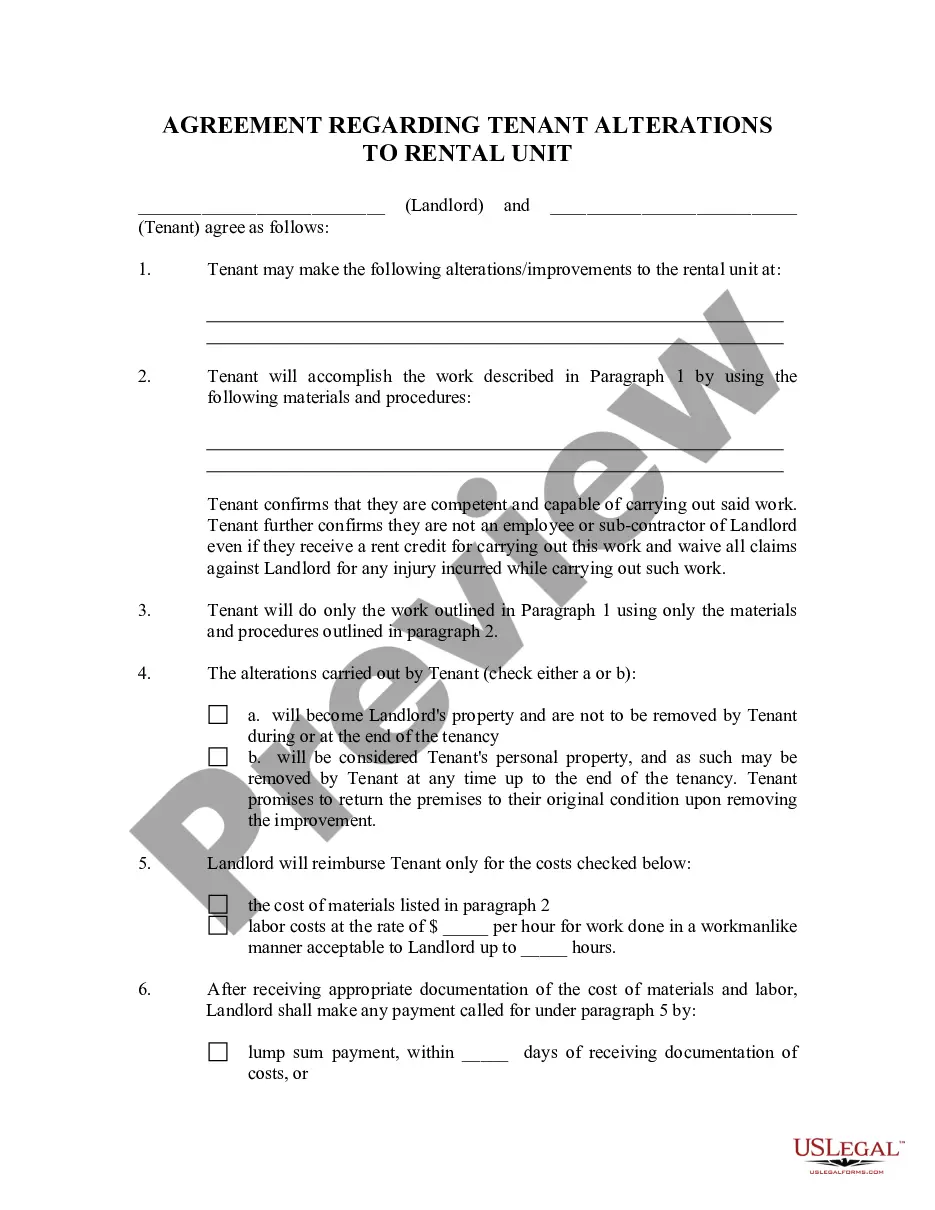
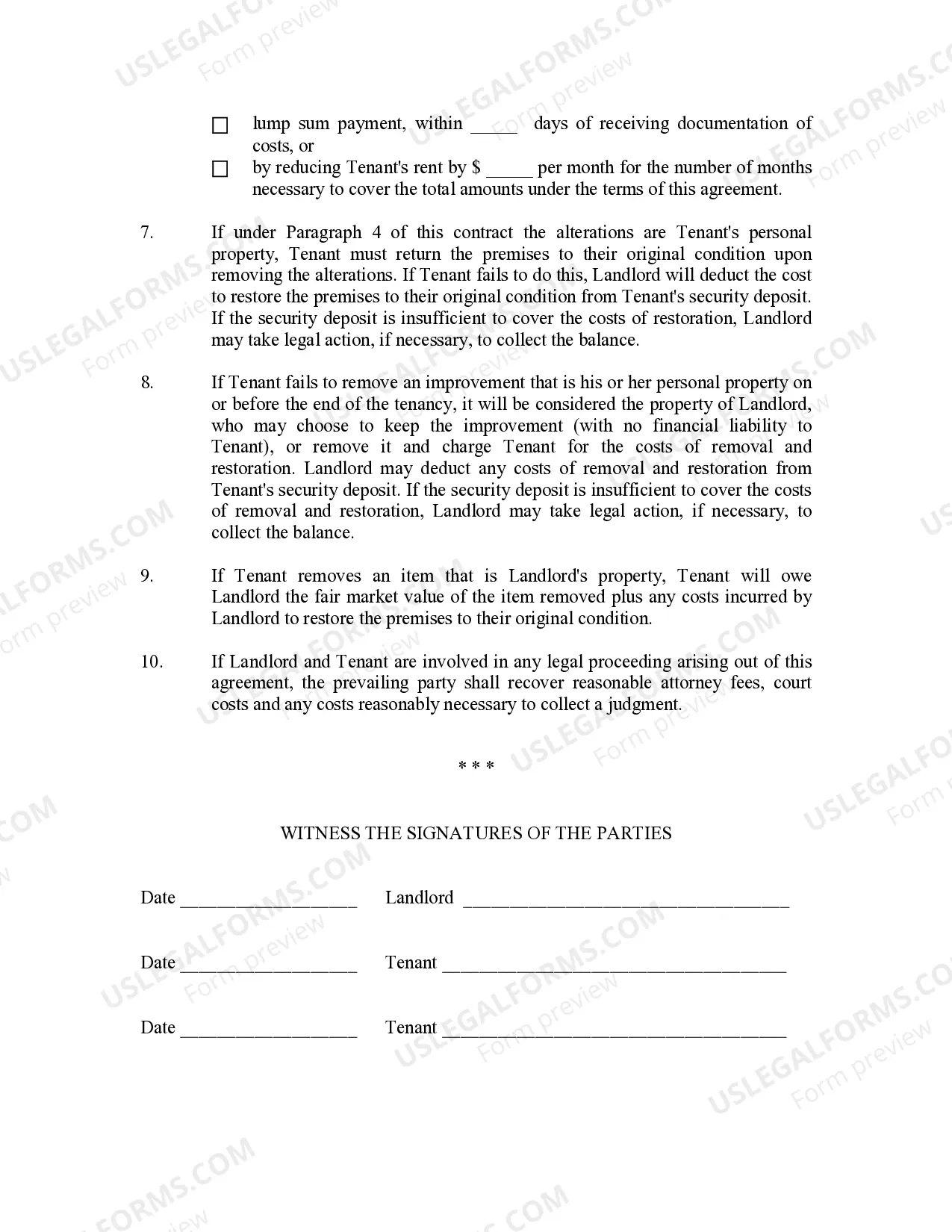
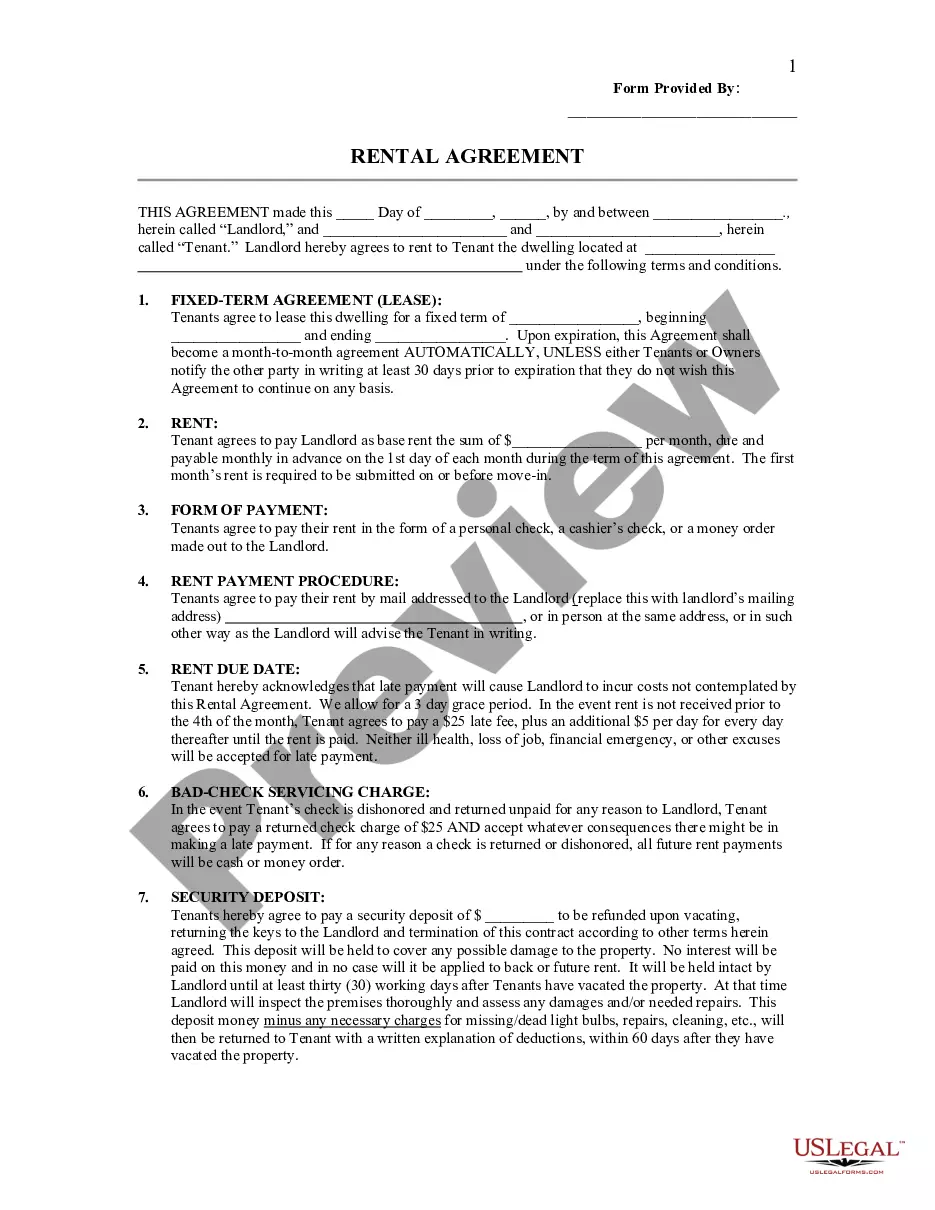
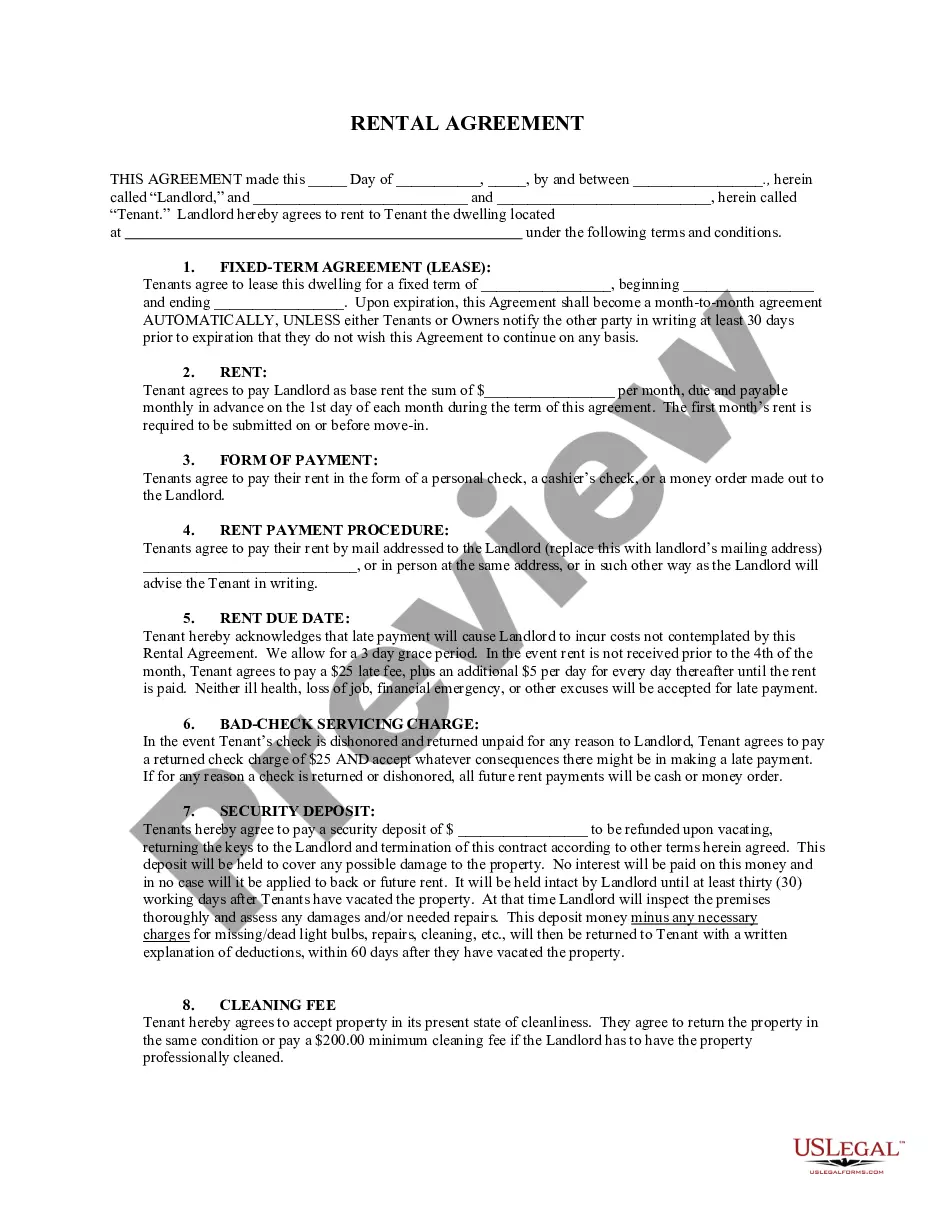
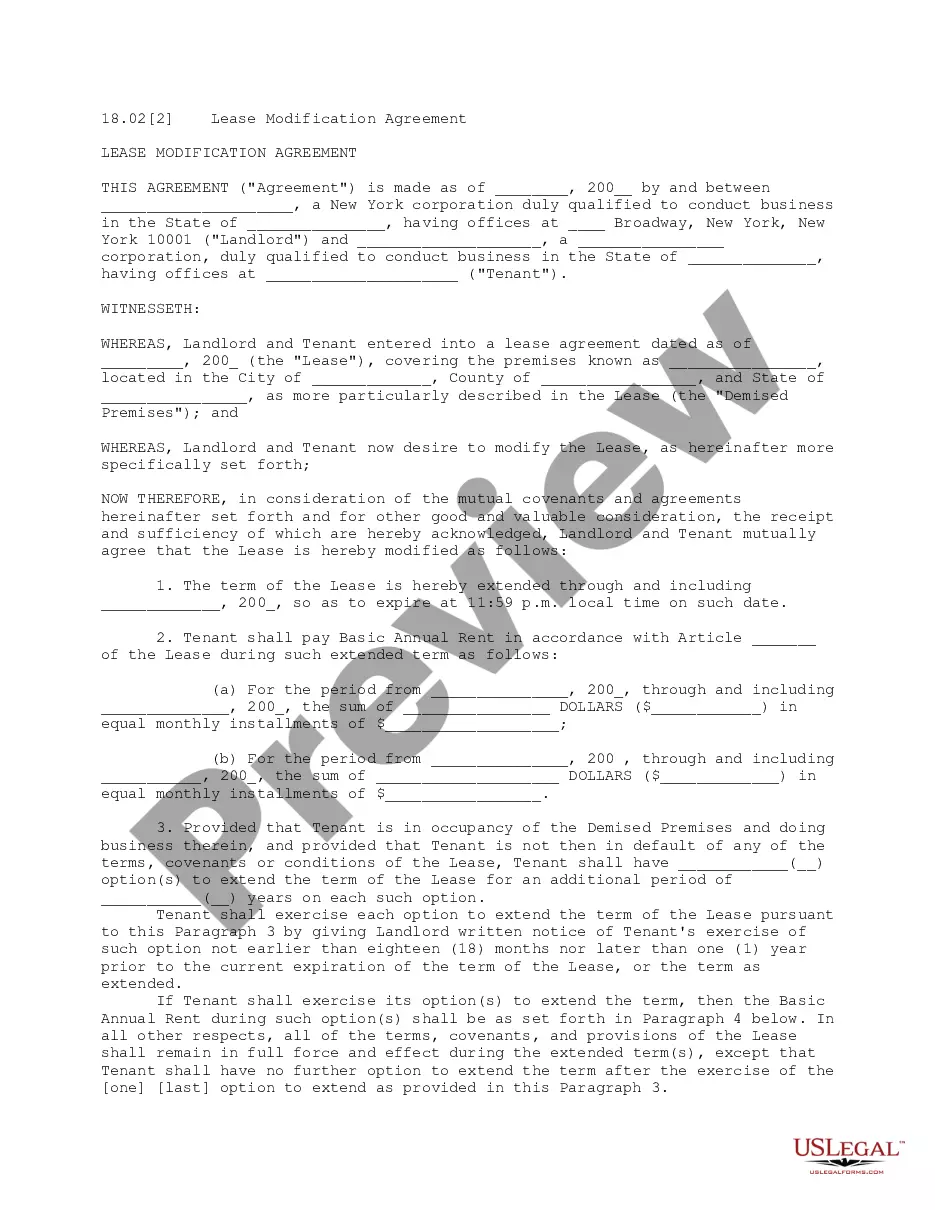
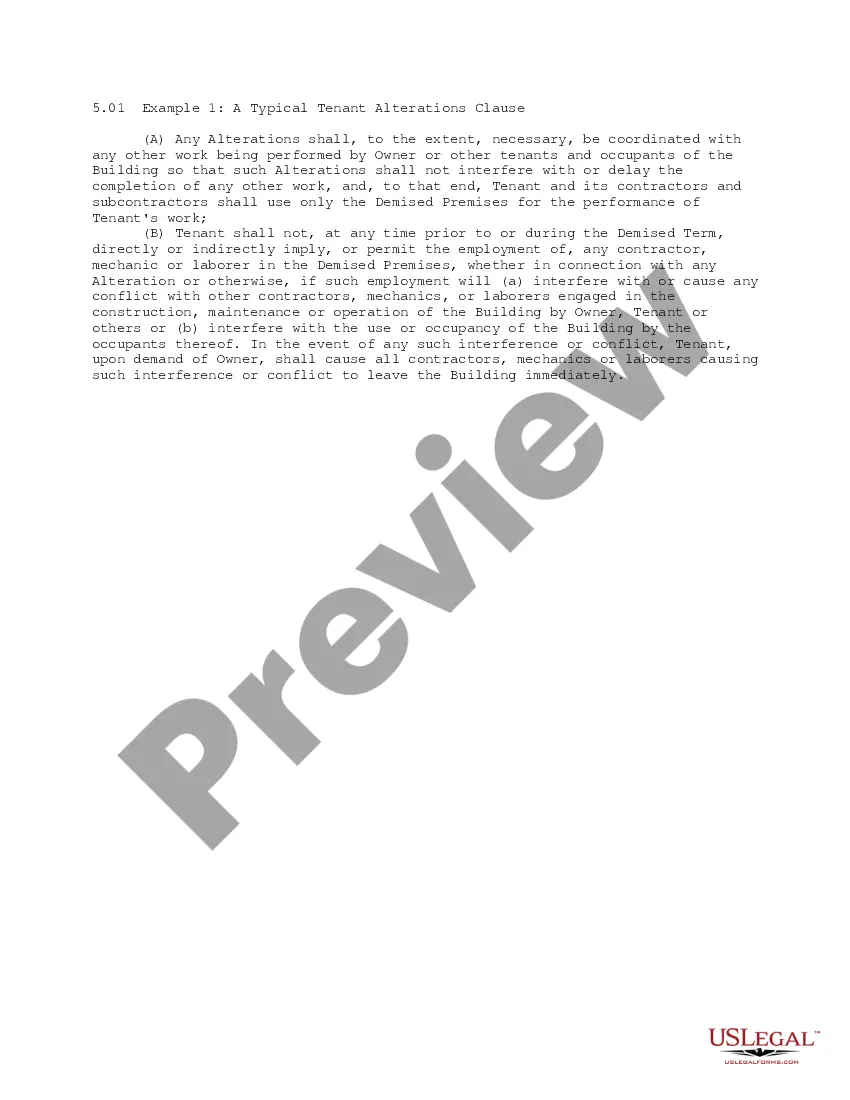
This Landlord Agreement to allow Tenant Alterations to Premises is a legally binding agreement that allows tenants to make alterations to a rental property with the landlord's permission. This form helps clarify the responsibilities of both the landlord and tenant regarding improvements made to the premises, including details on ownership of these alterations and the conditions for their removal. It distinguishes itself from general rental agreements by specifically focusing on tenant modifications to the property.
Key parts of this document
- Identification of the landlord and tenant.
- Details of the alterations or improvements the tenant wishes to make.
- Specification of whether the alterations will remain the landlord's property or be considered the tenant's personal property.
- Financial agreements regarding reimbursement for materials and labor.
- Conditions under which the tenant must restore the premises to their original condition.
- Legal consequences of failure to comply with the agreement.
When to use this document
This form should be used when a tenant wishes to make alterations to a rented property, such as renovations, installations, or other improvements that require landlord approval. It is particularly useful when changes could impact the condition or value of the property, ensuring that both parties are clear on expectations and obligations regarding these modifications.
Who can use this document
This form is intended for:
- Landlords who want to formalize their agreement to tenant alterations.
- Tenants planning significant improvements to the rental unit that may affect the property.
- Property managers overseeing rental agreements and alterations.
Steps to complete this form
- Fill in the names of the landlord and tenant at the beginning of the document.
- Detail the specific alterations or improvements being requested by the tenant.
- Indicate whether the alterations will become the landlord's property or remain the tenant's personal property.
- Specify the reimbursement terms for material and labor costs, including payment methods.
- Both parties should sign and date the form to indicate agreement.
Does this document require notarization?
This form does not typically require notarization to be legally valid. However, some jurisdictions or document types may still require it. US Legal Forms provides secure online notarization powered by Notarize, available 24/7 for added convenience.
Get your form ready online
Our built-in tools help you complete, sign, share, and store your documents in one place.
Make edits, fill in missing information, and update formatting in US Legal Forms—just like you would in MS Word.
Download a copy, print it, send it by email, or mail it via USPS—whatever works best for your next step.
Sign and collect signatures with our SignNow integration. Send to multiple recipients, set reminders, and more. Go Premium to unlock E-Sign.
If this form requires notarization, complete it online through a secure video call—no need to meet a notary in person or wait for an appointment.
We protect your documents and personal data by following strict security and privacy standards.

Make edits, fill in missing information, and update formatting in US Legal Forms—just like you would in MS Word.

Download a copy, print it, send it by email, or mail it via USPS—whatever works best for your next step.

Sign and collect signatures with our SignNow integration. Send to multiple recipients, set reminders, and more. Go Premium to unlock E-Sign.

If this form requires notarization, complete it online through a secure video call—no need to meet a notary in person or wait for an appointment.

We protect your documents and personal data by following strict security and privacy standards.
Common mistakes to avoid
- Failing to obtain the landlord's written consent before starting alterations.
- Not specifying the exact details of the improvements in the agreement.
- Neglecting to outline reimbursement terms clearly, leading to potential disputes later.
- Forgetting to sign and date the form, making it legally unenforceable.
Why complete this form online
- Convenience of filling out and downloading the form at your own pace.
- Editability allows users to customize the form as per their requirements.
- Reliability of forms drafted by licensed attorneys, ensuring legal compliance.
Main things to remember
- This agreement protects the interests of both landlords and tenants regarding property alterations.
- A clear written agreement can prevent future misunderstandings and legal disputes.
- Completion of this form is essential when any changes to the premises are anticipated.
Looking for another form?
Form popularity
FAQ
Before landlords can file an eviction suit, Utah law requires you to provide 3 days' notice to tenants to correct a deficiency or leave the premises. Generally, the eviction process in Utah takes just a matter of days or weeks from the time the landlord files the lawsuit to the time the tenant is out of the property.
Enacted in 2012, Utah Code § 10-9a-505.5 prevents local governments from adopting excessive limits on the numbers of unrelated persons that can occupy a single residential unit in a single family zone. The minimum number is 4 unrelated persons in most areas, and 3 in cities that contain a university.
The Fit Premises Act is the Utah law that governs housing conditions. Under this law, a landlord must provide safe and livable housing. This means the landlord must rent housing that is up to code.If you break something in your apartment or cause damage to the rental, you may have to pay for the repairs.
By the law, Utah tenants are required to abide in a certain way. They must follow certain procedures as outlined by the law as well. Tenants also have certain rights that they are entitled to, as well as things they are responsible for. The tenant has the right to dwell in a safe and sanitary housing unit.
If you refuse access to your home If you refuse access for repairs and inspections entirely, you could be breaking your tenancy agreement and putting your health or safety at risk.You could be at risk of section 21 eviction if you rent privately and refuse access for repairs or gas or electrical safety checks.
Although renters must abide by the Homeowners' Association rules, they still have rights under the law. The property owner must also follow their home state's Landlord-Tenant Laws that include the Fair Housing Act and Fair Credit Reporting Act.
Generally, no. The landlord cannot raise the rent during a 12-month lease term. Once a year, HUD calculates the median gross income in each part of the U.S. LIHTC rent amounts are based upon this calculation. If the local average income increases, the LIHTC rent may be increased during the next 12-month lease term.