Utah Letter from Tenant to Landlord for Failure of Landlord to return all prepaid and unearned rent and security recoverable by Tenant
What is this form?
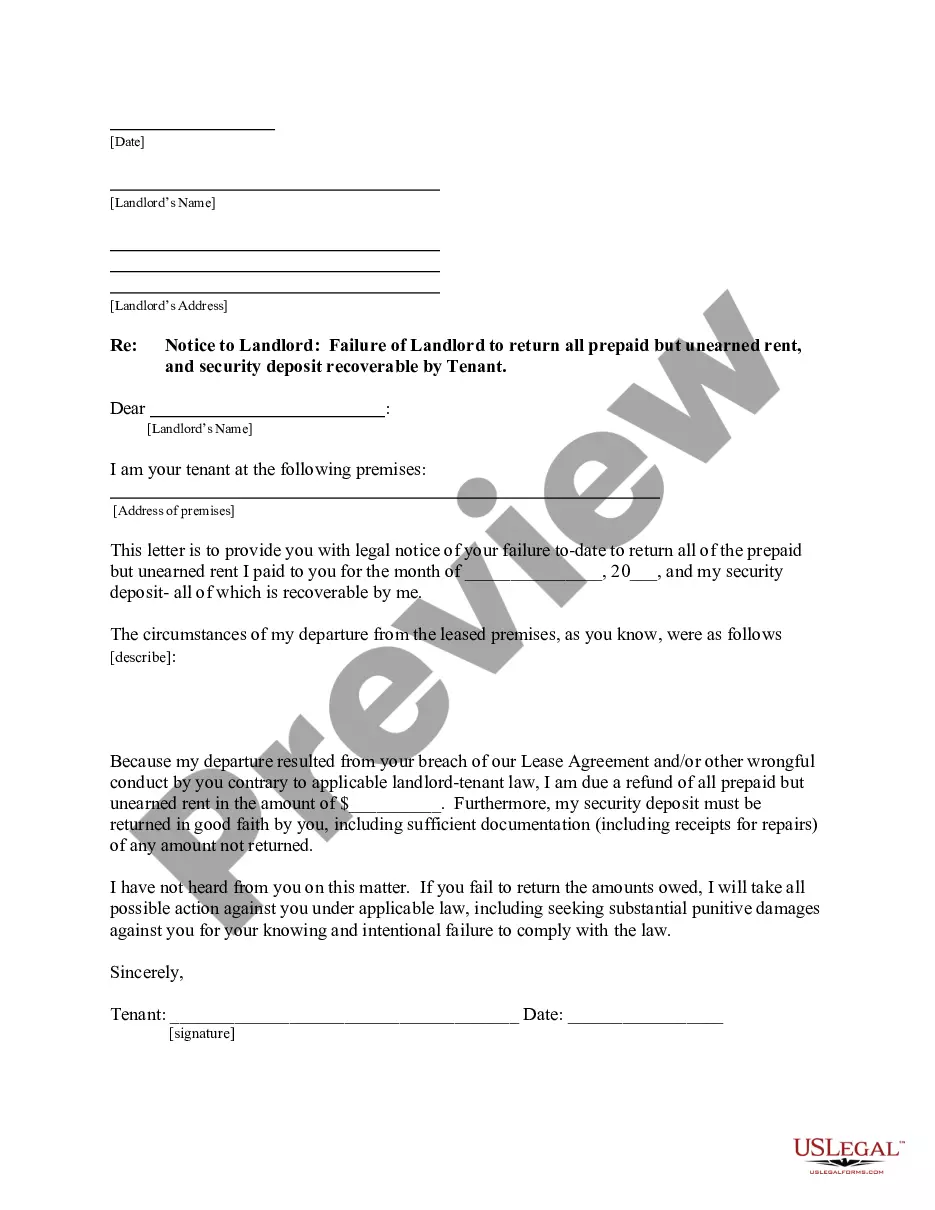
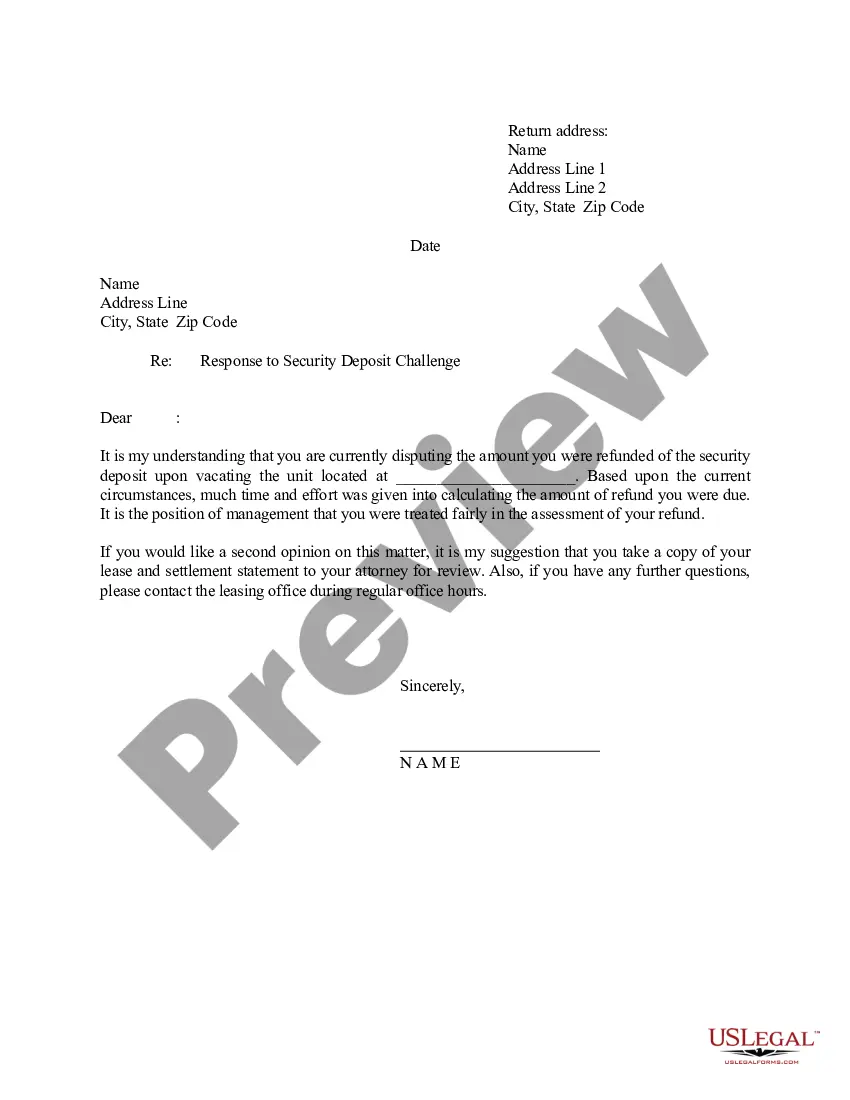
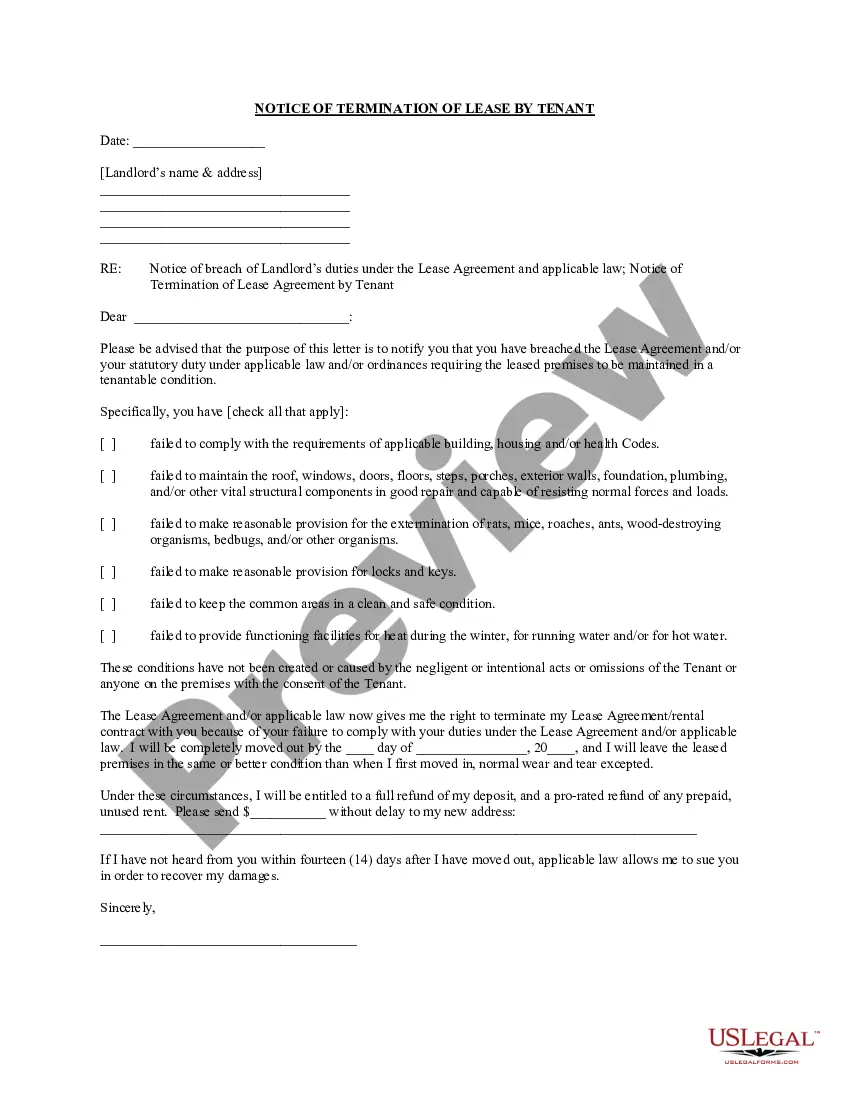
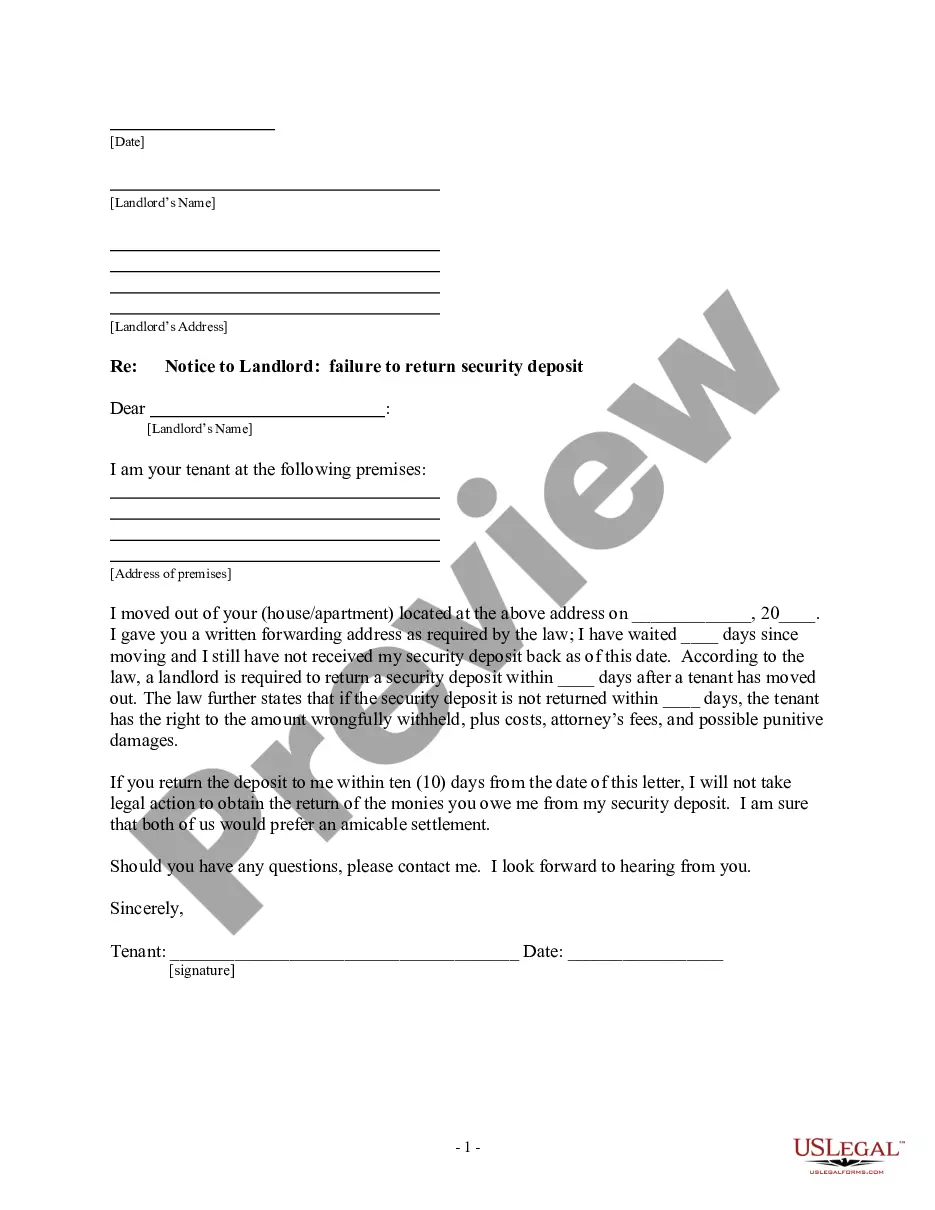
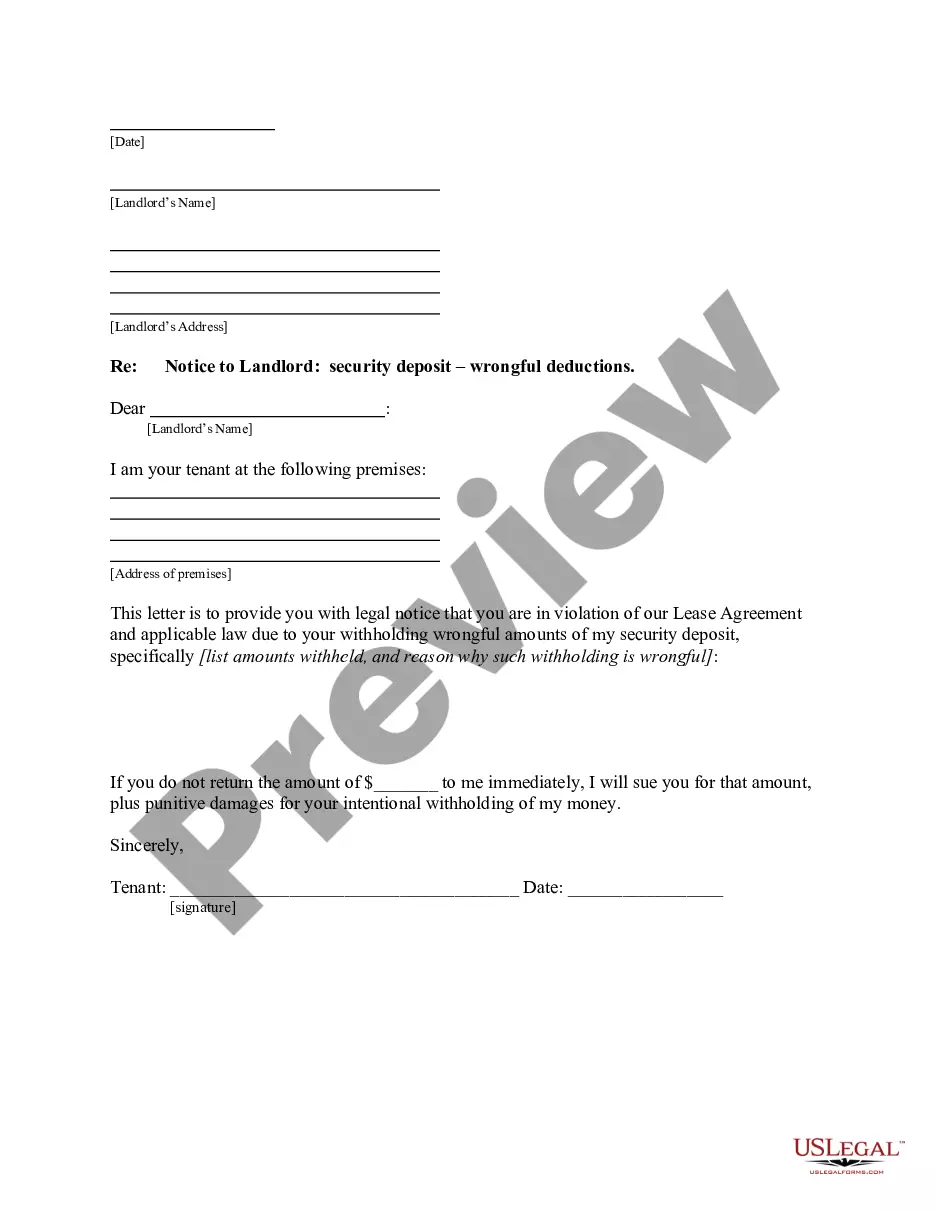
This form is a Letter from Tenant to Landlord regarding the failure to return all prepaid and unearned rent and security deposits. It provides the tenant with a means to formally notify the landlord about their noncompliance with landlord-tenant laws and demands a refund of the amounts owed. This differs from eviction notices or other forms of communication by focusing specifically on the financial aspects of the tenant's departure due to the landlord's breach of contract.
Key parts of this document
- Details of the tenant's departure from the leased premises
- Explicit demand for the return of prepaid but unearned rent
- Statement of potential legal action if the requested amounts are not returned
- Signature and date sections for tenant acknowledgment
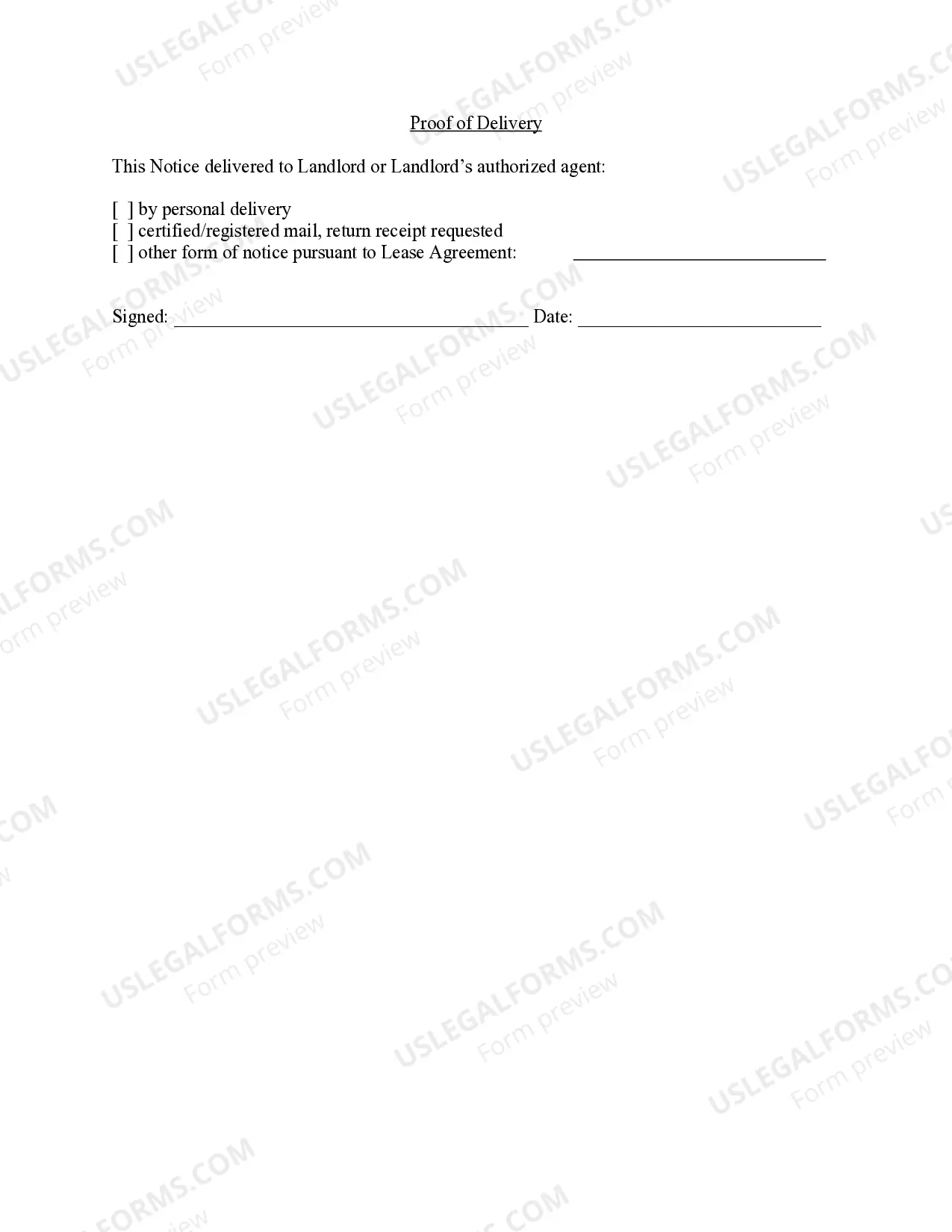
- Proof of delivery options to ensure proper notification
When to use this form
This form should be used when a tenant has vacated a rental property and the landlord has not returned the prepaid rent or security deposit. It is particularly applicable when the tenant's departure was due to the landlord breaching the lease agreement or engaging in conduct that violates applicable laws. If the tenant has made multiple requests without a satisfactory response, this letter serves as a formal legal notice.
Who needs this form
- Tenants who have vacated a rental unit and are owed money by the landlord
- Individuals who have experienced landlord breaches of lease agreements
- Any tenant seeking a formal way to communicate with their landlord regarding financial matters
How to complete this form
- Identify the parties involved, including the tenant and landlord.
- Specify the property address related to the rental agreement.
- Clearly state the circumstances of your departure and the amounts owed.
- Sign and date the letter to formalize your notice.
- Choose a delivery method for the notice and gather proof of delivery.
Notarization requirements for this form
Notarization is generally not required for this form. However, certain states or situations might demand it. You can complete notarization online through US Legal Forms, powered by Notarize, using a verified video call available anytime.
Get your form ready online
Our built-in tools help you complete, sign, share, and store your documents in one place.
Make edits, fill in missing information, and update formatting in US Legal Forms—just like you would in MS Word.
Download a copy, print it, send it by email, or mail it via USPS—whatever works best for your next step.
Sign and collect signatures with our SignNow integration. Send to multiple recipients, set reminders, and more. Go Premium to unlock E-Sign.
If this form requires notarization, complete it online through a secure video call—no need to meet a notary in person or wait for an appointment.
We protect your documents and personal data by following strict security and privacy standards.

Make edits, fill in missing information, and update formatting in US Legal Forms—just like you would in MS Word.

Download a copy, print it, send it by email, or mail it via USPS—whatever works best for your next step.

Sign and collect signatures with our SignNow integration. Send to multiple recipients, set reminders, and more. Go Premium to unlock E-Sign.

If this form requires notarization, complete it online through a secure video call—no need to meet a notary in person or wait for an appointment.

We protect your documents and personal data by following strict security and privacy standards.
Typical mistakes to avoid
- Failing to provide specific details about the amounts owed.
- Not including the date and signature, which can undermine the notice.
- Using vague language that does not clearly establish the landlord's breach.
Advantages of online completion
- Convenient access to standardized language drafted by licensed attorneys.
- Editability allows personalization to match your situation precisely.
- Reliability in ensuring the form meets legal standards for your state.
Legal use & context
- This letter serves as a formal notification to the landlord of their legal obligation to return prepaid rent.
- It is advisable to keep a copy of the letter and any proof of delivery for future reference in legal proceedings.
- Failure to respond or comply may lead to additional legal actions on the part of the tenant.
Quick recap
- Use this form to demand a return of prepaid but unearned rent from your landlord.
- Ensure that the letter is clear and detailed in stating the amounts owed.
- Deliver the notice through a method that provides proof of receipt.
Looking for another form?
Form popularity
FAQ
If your deposit didn't need to be protected and your landlord refuses to give it back, you might have to take them to court. Going to court can be expensive and stressful. You'll have to pay court costs upfront but you might get them back if you win your case.
By the law, Utah tenants are required to abide in a certain way. They must follow certain procedures as outlined by the law as well. Tenants also have certain rights that they are entitled to, as well as things they are responsible for. The tenant has the right to dwell in a safe and sanitary housing unit.
Step 1: make a formal complaint. You can make a formal complaint by writing a letter to your landlord. Step 2: complain to your local council. If making a formal complaint to your landlord doesn't solve your problem you might be able to complain to your local council.
Fill out the Request for Return of Security Deposit form (not interactive; you must print, then fill out the form). Send the form to your former landlord. Keep a photo-copy of the form for yourself. Hold on to the Return Receipt when it comes back in the mail.
Landlord Rights When Tenant Destroys PropertyIf the tenant is evicted or already abandoned the property the landlord can deduct money from the security deposit. If the damages exceed the funds in the security deposit the landlord can sue the tenant in small claims court.
Alerting state or local health and building inspectors. Suing your landlord in small claims court.
Use Utah Legal Services to file an official report and receive legal assistance for your landlord complaint by visiting utahlegalservices.org. Visit utcourts.gov for information regarding your rights as a renter who is suing a landlord.
Tenants who live in federal-funded housing or HUD properties must file their landlord complaints with the U.S. Department of Housing and Urban Development. The bad landlord Multifamily Housing Complaint Line may be reached by calling (800) 685-8470.
The landlord must refund the deposit within 30 days after the tenancy has ended. The refund must be delivered to the tenant's last-known address.