USLegal Pamphlet on Modus Operandi
Understanding this form
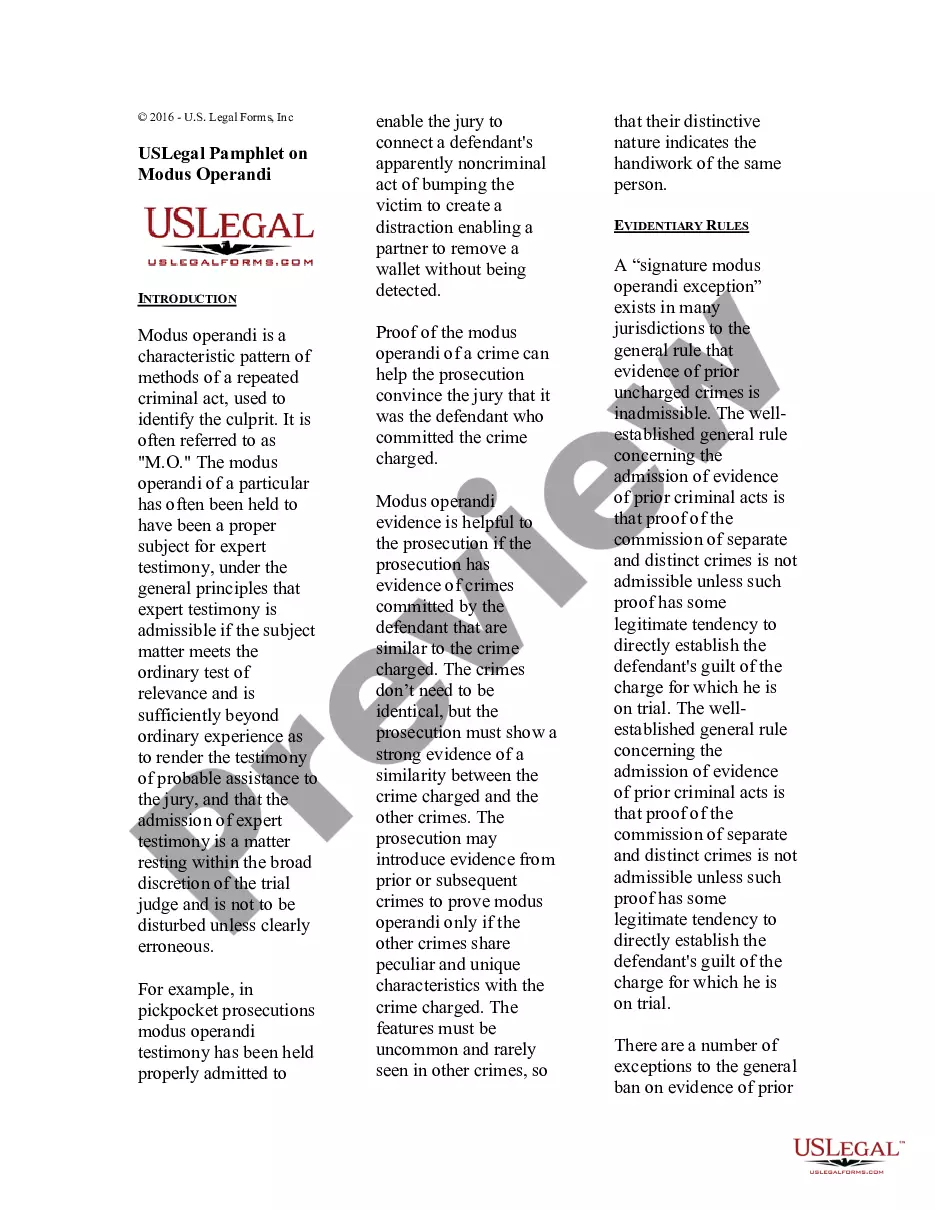
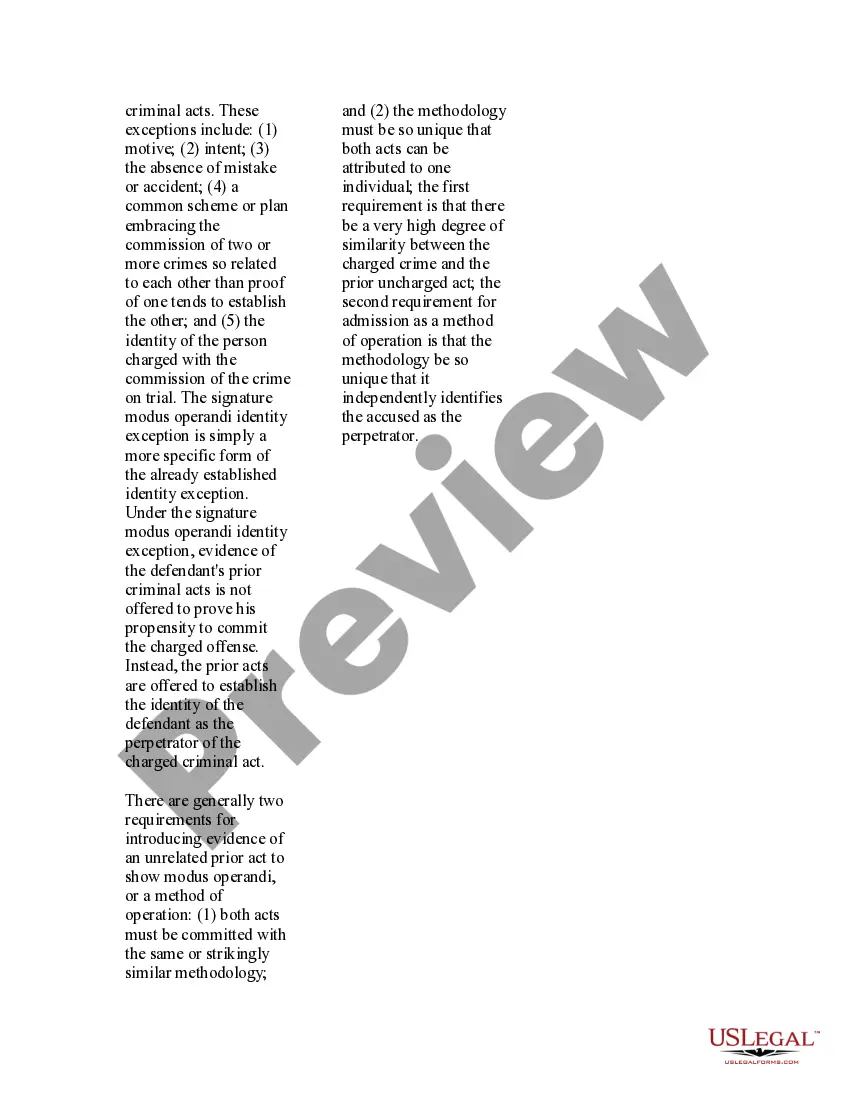
The USLegal pamphlet on modus operandi provides a detailed overview of the law regarding modus operandi evidence. It explains what modus operandi means and how evidence of a defendant's methods can be introduced in court. This pamphlet is essential for understanding the legal implications of modus operandi in criminal trials, distinguishing it from other forms of legal evidence.
Key components of this form
- Definition of modus operandi and its relevance in criminal law.
- Explanation of how modus operandi evidence can be used in court.
- Discussion of evidentiary rules and exceptions related to prior criminal acts.
- Requirements for introducing evidence of modus operandi in trials.
When to use this form
This pamphlet is beneficial when preparing for a criminal trial where modus operandi evidence is relevant. It can assist attorneys in determining whether to introduce evidence of past actions to establish a defendant's identity or intent in committing a crime.
Who can use this document
- Legal practitioners working on criminal cases.
- Students studying criminal law and evidentiary rules.
- Defendants or plaintiffs needing to understand the use of modus operandi evidence in their cases.
How to complete this form
- Read the pamphlet thoroughly to understand the content and implications of modus operandi evidence.
- Identify relevant case scenarios where modus operandi may apply.
- Consider the evidentiary rules and exceptions related to your jurisdiction.
- Discuss any findings with legal counsel to strategize on case preparation.
Does this document require notarization?
In most cases, this form does not require notarization. However, some jurisdictions or signing circumstances might. US Legal Forms offers online notarization powered by Notarize, accessible 24/7 for a quick, remote process.
Get your form ready online
Our built-in tools help you complete, sign, share, and store your documents in one place.
Make edits, fill in missing information, and update formatting in US Legal Forms—just like you would in MS Word.
Download a copy, print it, send it by email, or mail it via USPS—whatever works best for your next step.
Sign and collect signatures with our SignNow integration. Send to multiple recipients, set reminders, and more. Go Premium to unlock E-Sign.
If this form requires notarization, complete it online through a secure video call—no need to meet a notary in person or wait for an appointment.
We protect your documents and personal data by following strict security and privacy standards.

Make edits, fill in missing information, and update formatting in US Legal Forms—just like you would in MS Word.

Download a copy, print it, send it by email, or mail it via USPS—whatever works best for your next step.

Sign and collect signatures with our SignNow integration. Send to multiple recipients, set reminders, and more. Go Premium to unlock E-Sign.

If this form requires notarization, complete it online through a secure video call—no need to meet a notary in person or wait for an appointment.

We protect your documents and personal data by following strict security and privacy standards.
Avoid these common issues
- Failing to establish a clear connection between modus operandi and the crime charged.
- Overlooking the uniqueness requirement of prior acts.
- Misunderstanding the admissibility of evidence in different jurisdictions.
Why use this form online
- Convenient access to legal information without the need for in-person consultations.
- Editable format allows for customization based on individual legal scenarios.
- Reliable legal insights offered by licensed professionals experienced in criminal law.
Legal use & context
- Modus operandi evidence can strengthen a prosecution's case by linking a defendant to a crime.
- Evidence must meet specific legal standards to be admissible in court.
- Each jurisdiction may have different interpretations of admissibility, impacting legal strategy.
Quick recap
- Understanding modus operandi is crucial for legal practitioners in criminal cases.
- Clear and unique characteristics must be established to introduce past conduct as evidence.
- Consult jurisdiction-specific rules for precise legal application.
Definitions you should know
- Modus operandi: A method of operating or a recurring pattern of behavior associated with a specific criminal.
- Evidentiary rules: Legal standards governing the admissibility of evidence in court.
- Admissibility: The legal ability of evidence to be presented in court.