Waiver of Call on Production
What is this form?
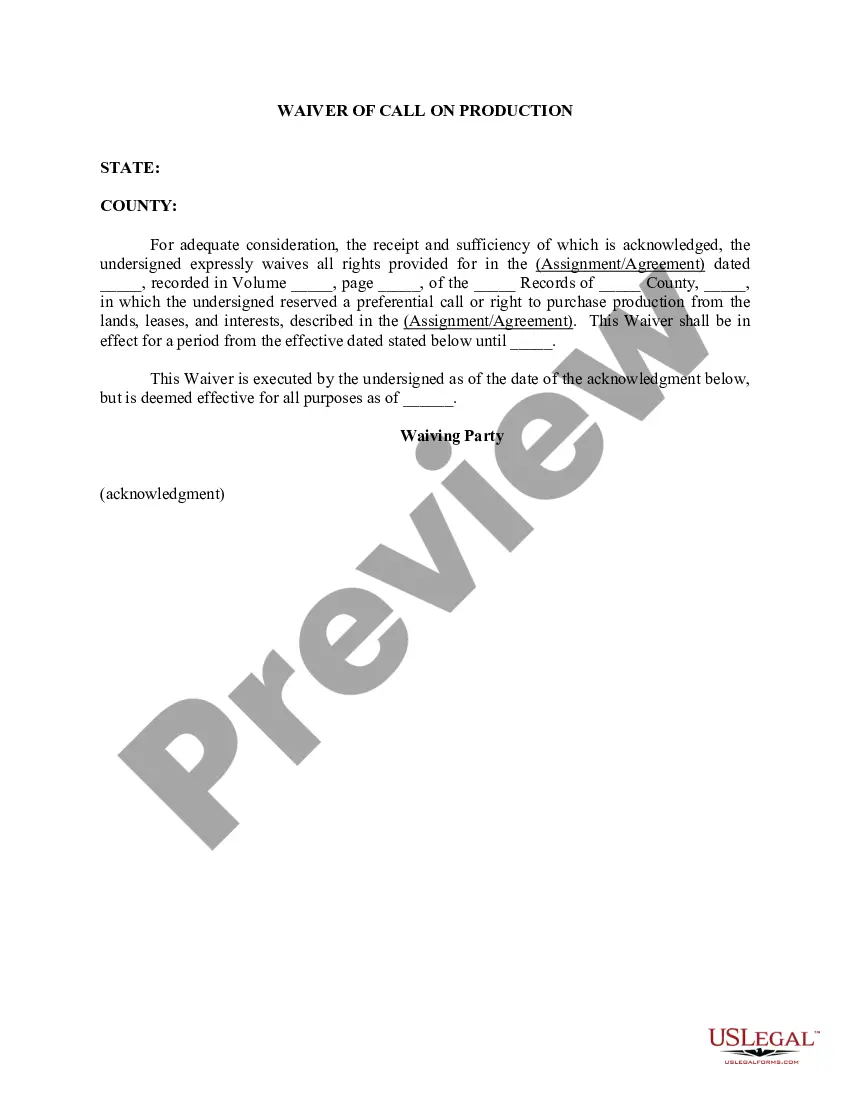
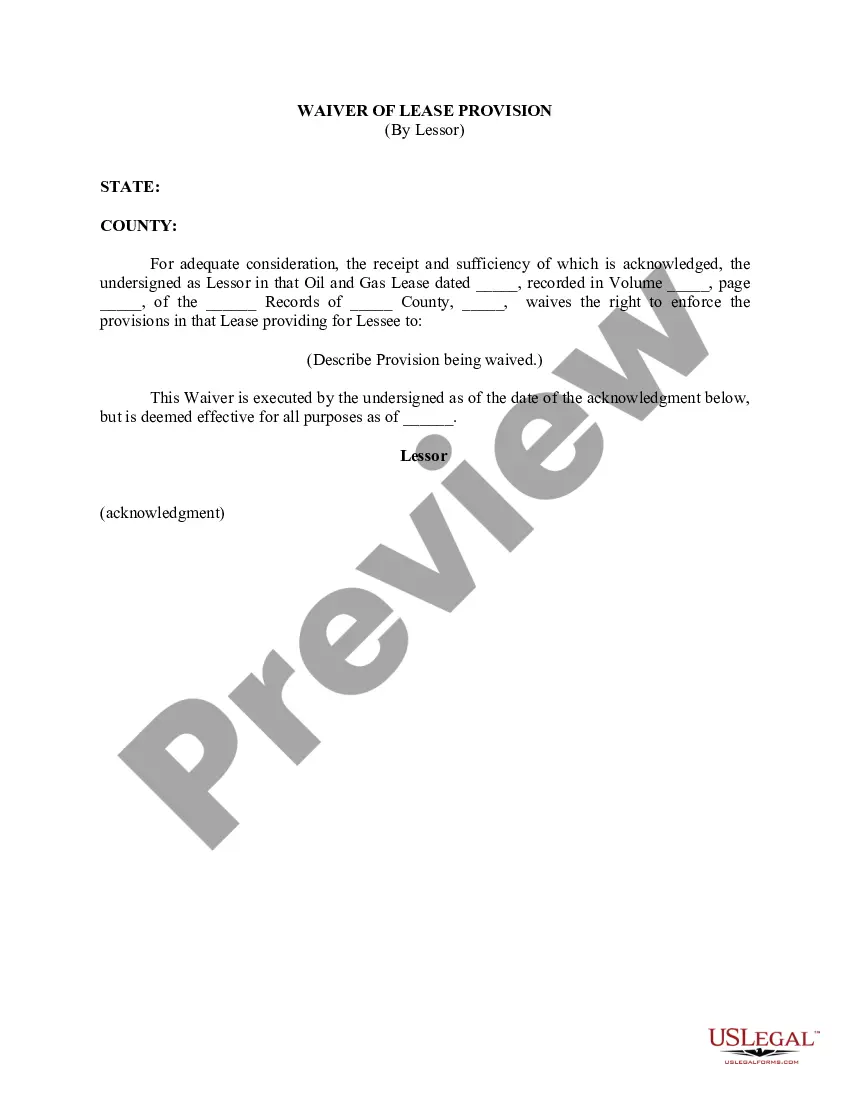
The Waiver of Call on Production is a legal document that allows a party to relinquish their right to demand production or performance of a specific obligation. This form is often used in various contractual agreements and differs from other waivers as it specifically addresses the call on production rights associated with contracts or agreements. By signing a Waiver of Call on Production, you confirm that you no longer require or expect the performance under the terms specified, which can help prevent disputes regarding obligations.
Key components of this form
- Identification of the parties involved.
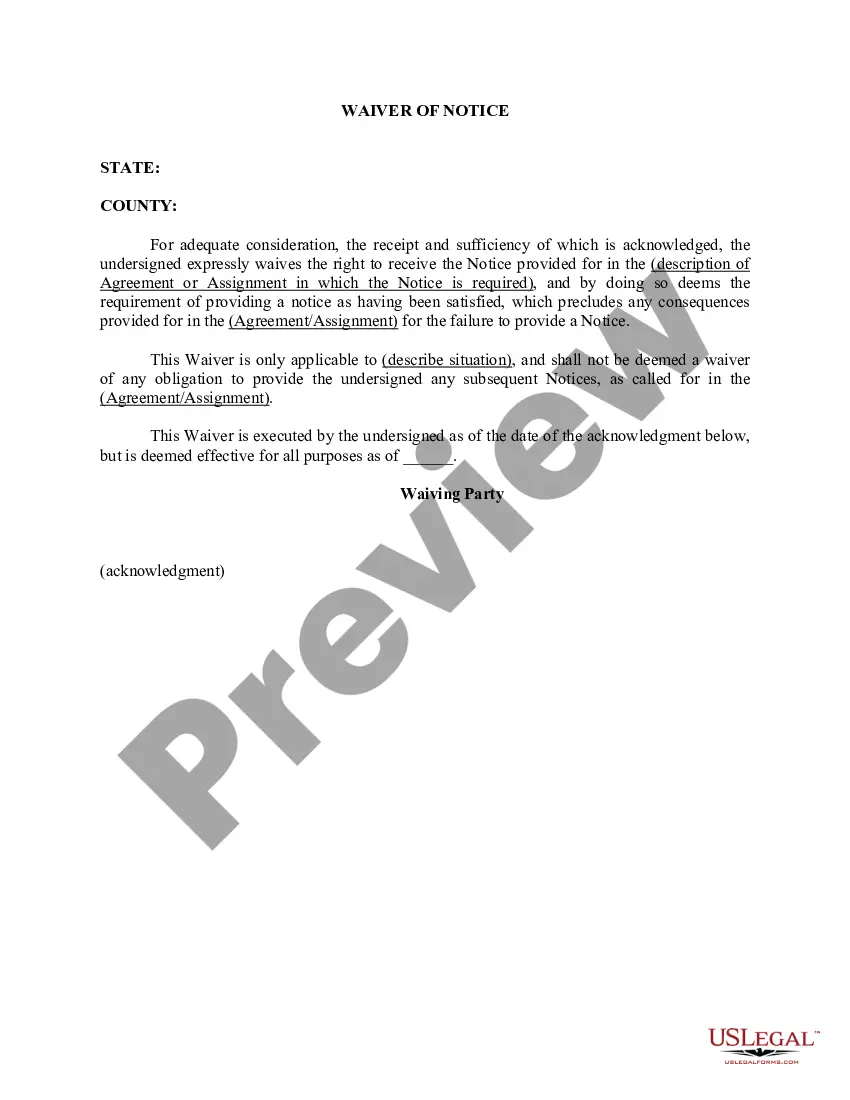
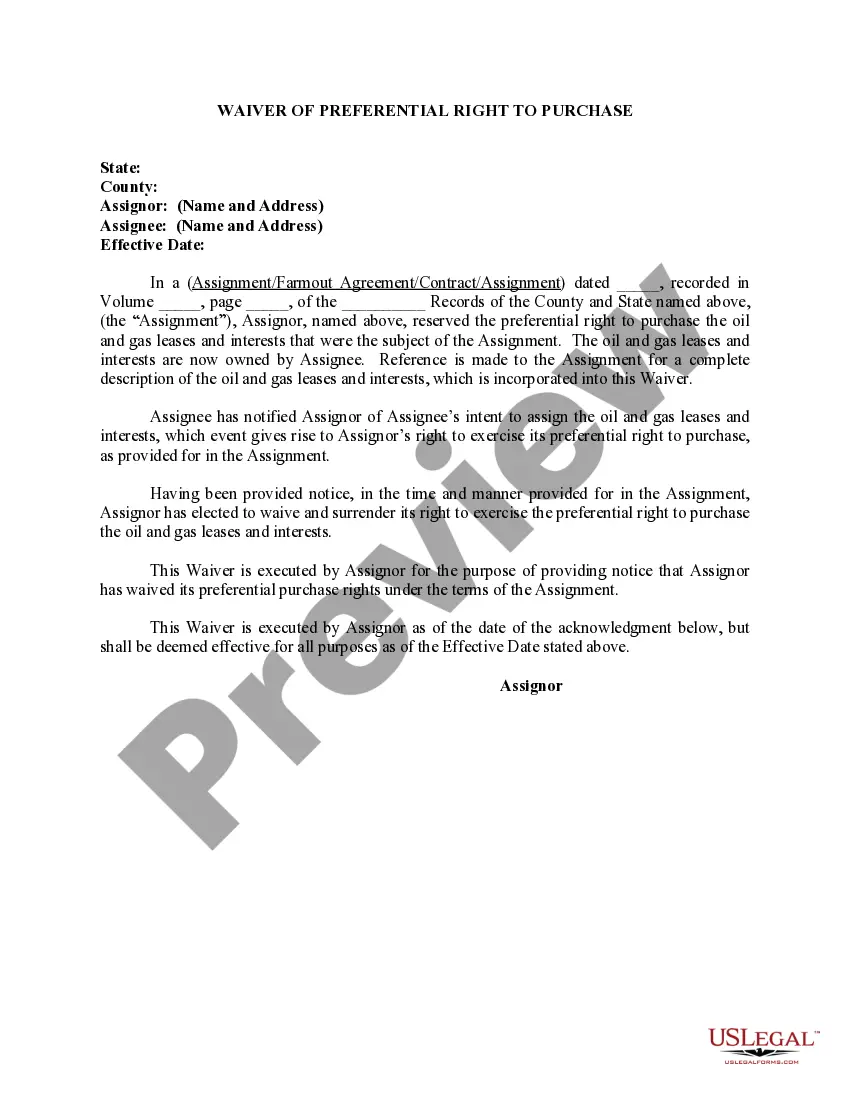
- Date on which the waiver is considered effective.
- Statement acknowledging receipt of adequate consideration.
- Signature of the undersigned waiving the call on production.
When to use this form
This form is typically used in situations where one party wishes to waive their right to enforce contractual obligations. For example, if you are involved in a business partnership and agree not to demand immediate production or performance from a partner, this form formalizes that decision. It can protect against potential disputes over obligations that arise from the contract.
Who can use this document
Eligible users of the Waiver of Call on Production include:
- Business partners and stakeholders.
- Individuals engaging in contractual agreements.
- Property owners releasing claims on rental or production duties.
Completing this form step by step
- Identify the parties involved in the agreement.
- Specify the effective date of the waiver.
- Provide acknowledgment of receipt of adequate consideration.
- Ensure the form is signed by the waiving party.
Does this form need to be notarized?
Notarization is not commonly needed for this form. However, certain documents or local rules may make it necessary. Our notarization service, powered by Notarize, allows you to finalize it securely online anytime, day or night.
Get your form ready online
Our built-in tools help you complete, sign, share, and store your documents in one place.
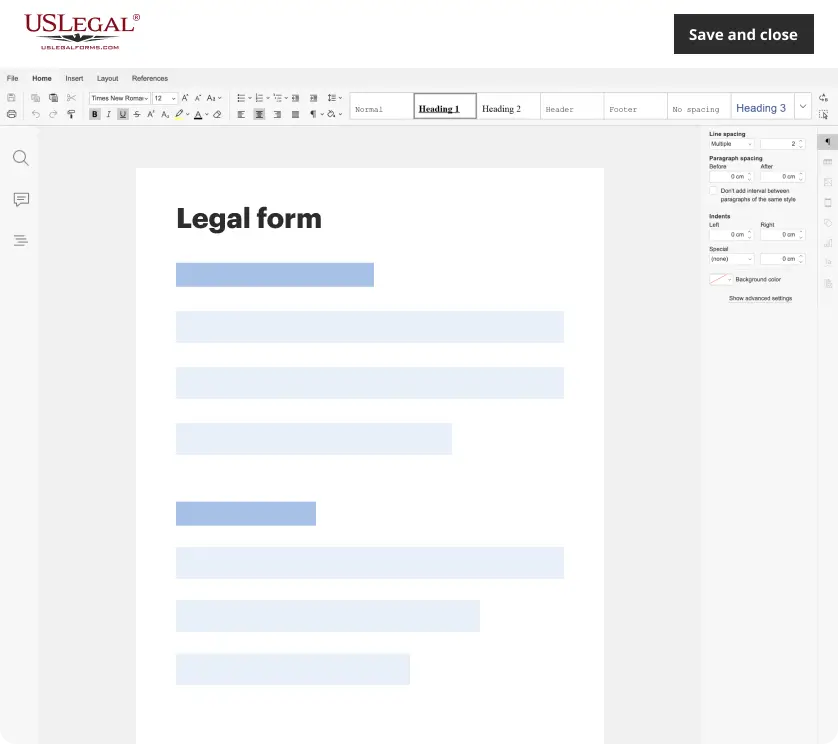
Make edits, fill in missing information, and update formatting in US Legal Forms—just like you would in MS Word.
Download a copy, print it, send it by email, or mail it via USPS—whatever works best for your next step.
Sign and collect signatures with our SignNow integration. Send to multiple recipients, set reminders, and more. Go Premium to unlock E-Sign.
If this form requires notarization, complete it online through a secure video call—no need to meet a notary in person or wait for an appointment.
We protect your documents and personal data by following strict security and privacy standards.
Make edits, fill in missing information, and update formatting in US Legal Forms—just like you would in MS Word.
Download a copy, print it, send it by email, or mail it via USPS—whatever works best for your next step.
Sign and collect signatures with our SignNow integration. Send to multiple recipients, set reminders, and more. Go Premium to unlock E-Sign.
If this form requires notarization, complete it online through a secure video call—no need to meet a notary in person or wait for an appointment.
We protect your documents and personal data by following strict security and privacy standards.
Typical mistakes to avoid
- Failing to specify an effective date for the waiver.
- Not obtaining proper signatures from all parties.
- Neglecting to include acknowledgment of consideration.
Benefits of using this form online
- Convenient access to instantly downloadable forms.
- Ability to edit and customize the form as needed.
- Reliability from documents drafted by licensed attorneys.
Legal use & context
- This waiver is enforceable as long as it is completed correctly and applicable state laws are followed.
- It is important to keep a signed copy for your records to avoid any disputes in the future.
What to keep in mind
- The Waiver of Call on Production formalizes the relinquishing of rights related to production obligations.
- Ensure accurate information is filled out to avoid issues later on.
- Use this form to help prevent disputes in contractual obligations.
Looking for another form?

Form popularity
FAQ
A waiver is a legally binding provision where either party in a contract agrees to voluntarily forfeit a claim without the other party being liable. Waivers can either be in written form or some form of action.
A waiver is a legal agreement the primary purpose of which is to let you or another party modify or relinquish a right, privilege, or claim. The agreement can be a separate document on its own, such as if you sign a waiver form, or added to a contract as a waiver clause.
Understanding Waivers Essentially, a waiver removes a real or potential liability for the other party in the agreement. For example, in a settlement between two parties, one party might, by means of a waiver, relinquish its right to pursue any further legal action once the settlement is finalized.
A deviation is a specific written authorization to depart from a particular requirement(s) of an item's current approved configuration documentation for a specific number of units or a specified period of time.
I know historically, a deviation has been defined as a request to accept a nonconformance that is understood prior to work start while a waiver is that found during production.
1 : the act of intentionally relinquishing or abandoning a known right, claim, or privilege also : the legal instrument evidencing such an act.
A waiver is a legal agreement the primary purpose of which is to let you or another party modify or relinquish a right, privilege, or claim. The agreement can be a separate document on its own, such as if you sign a waiver form, or added to a contract as a waiver clause.
A nonconformance is failure to meet specifications or requirements, while (generally) a deviation is permission to proceed (ship product, do further processing, e.g.) when a nonconformance has been discovered.
In California, a liability waiver must be clear, unambiguous, and explicit. In other words, waivers cannot be printed in faded ink, in small font, on the back of a paper, or in an otherwise ambiguous form. If the waiver that you sign is not represented clearly, it may not hold up in the event of a lawsuit.