Waiver of Lease Provision by Lessor
Overview of this form
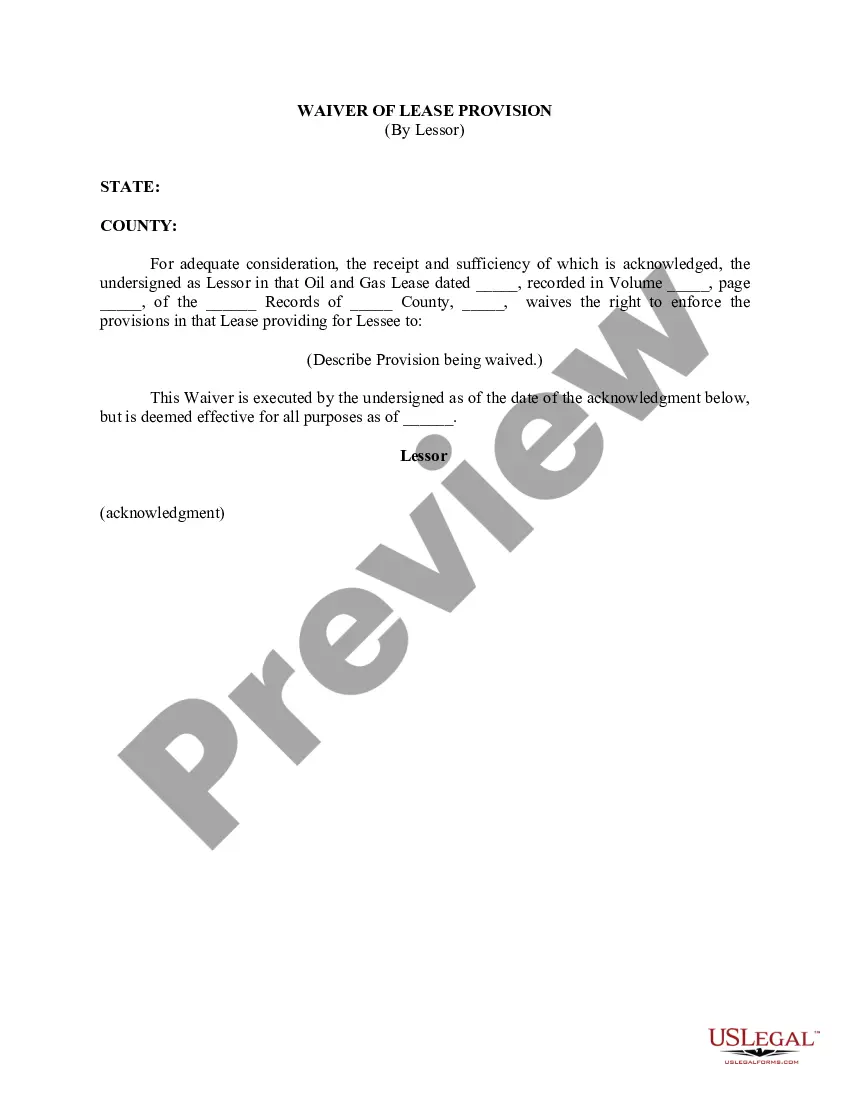
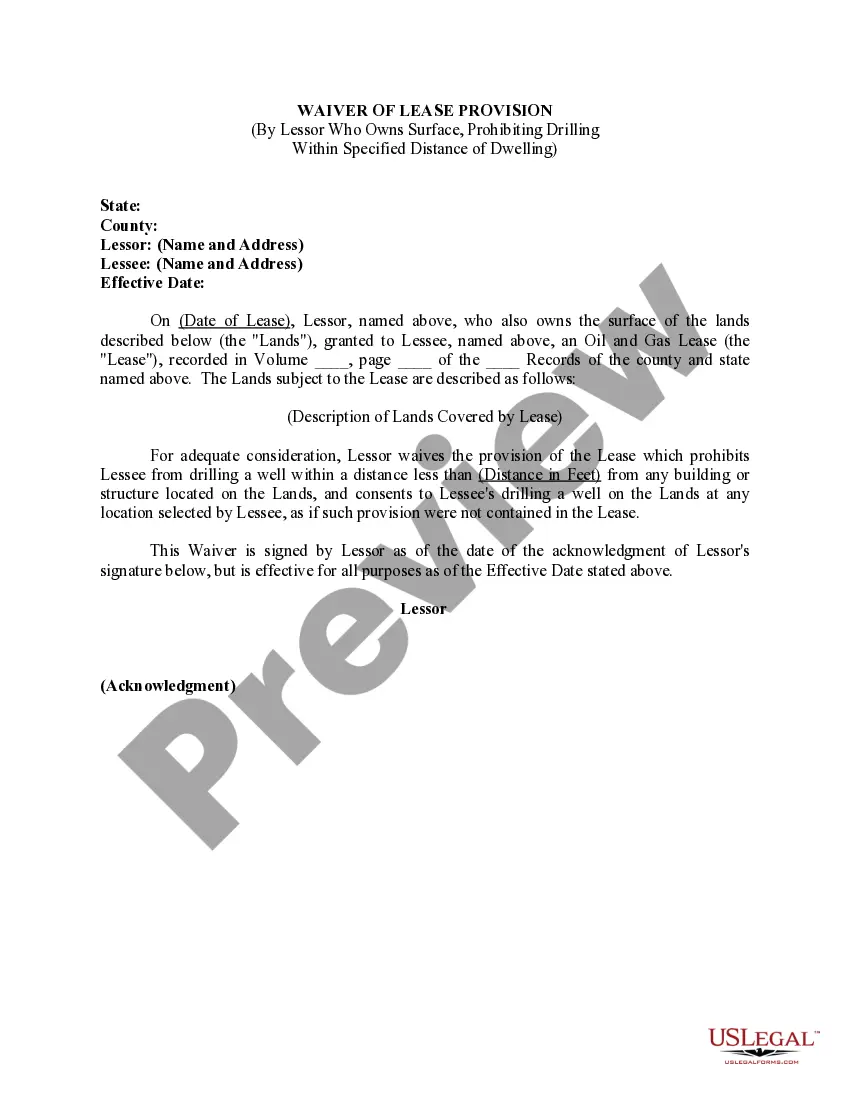
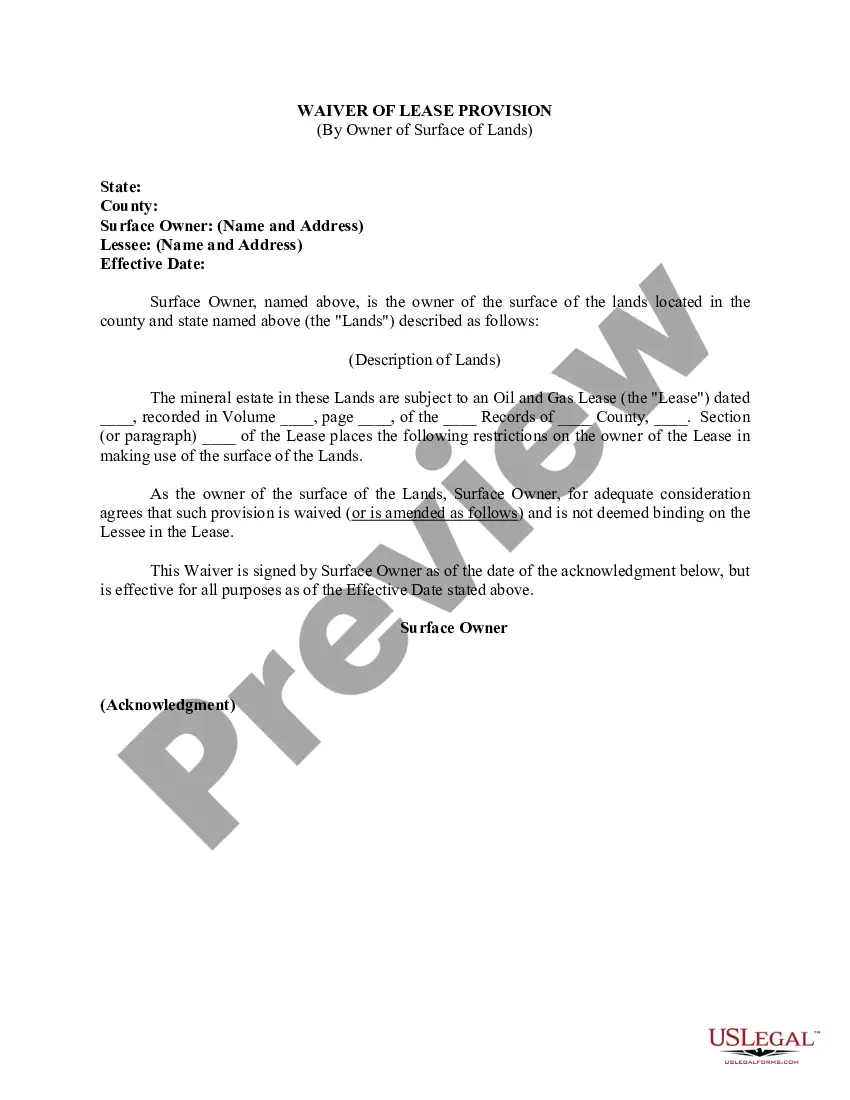
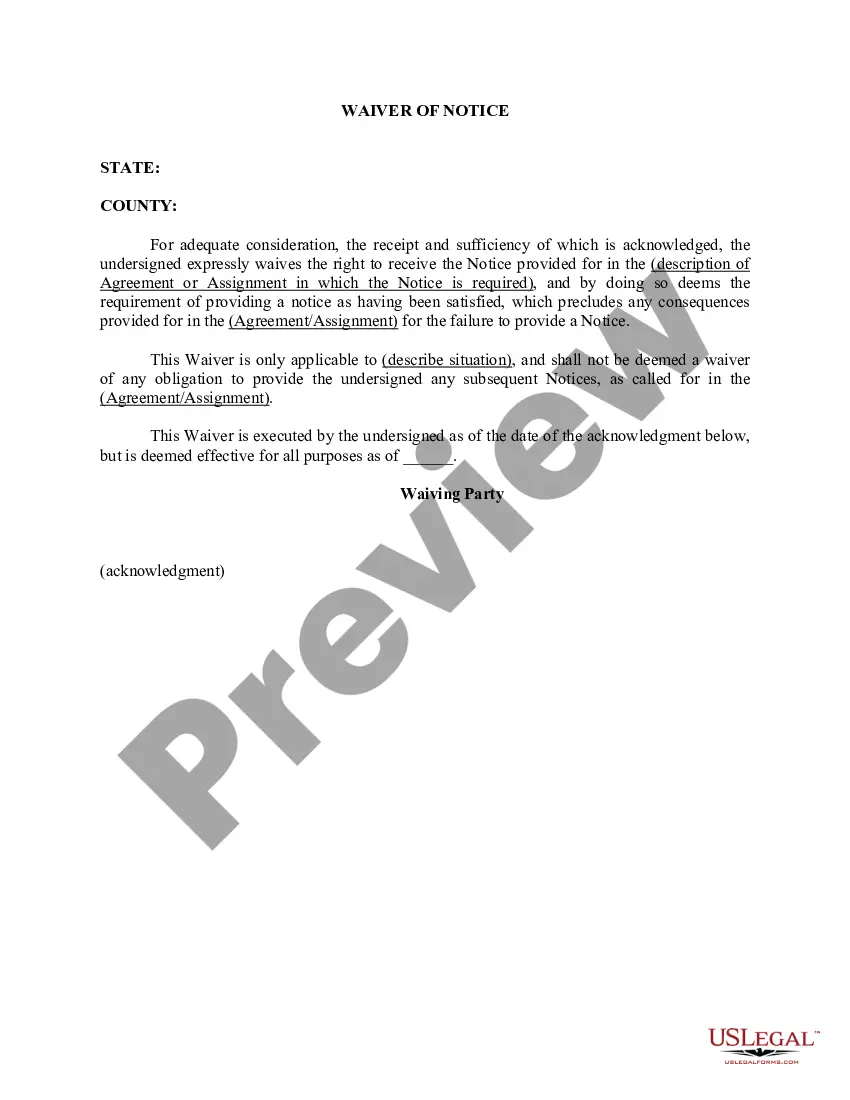
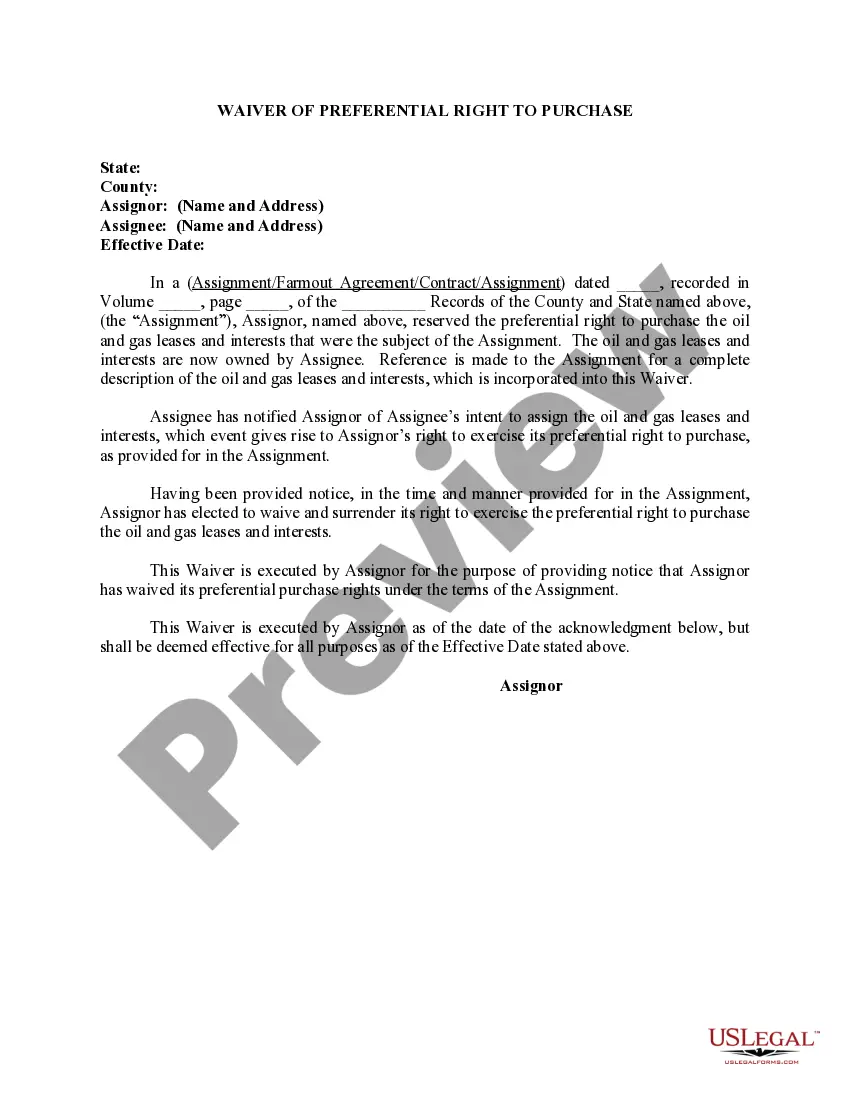
The Waiver of Lease Provision by Lessor is a legal document that allows a landlord (lessor) to voluntarily relinquish specific rights or provisions within a lease agreement. This form is essential for landlords looking to modify certain lease terms, ensuring flexibility in their leasing arrangements while maintaining legal compliance. Unlike standard lease agreements which outline various obligations, this waiver focuses solely on the relinquished rights specified by the lessor.
Main sections of this form
- State and County: Specifies the jurisdiction for the waiver.
- Acknowledgment of Consideration: Confirms that both parties recognize the waiver's consideration.
- Explicit Waiver Statement: Details the specific lease provisions being waived.
- Execution Date: Indicates the date the waiver is signed, with an effective date noted.
When to use this form
This form is useful in scenarios where a lessor wants to modify the terms of an existing lease agreement. For instance, if a landlord wishes to waive certain fees or requirements previously included in the lease, such as late payment penalties or maintenance obligations, this waiver enables them to do so legally. It can also be used in circumstances where the relationship between landlord and tenant may have changed, requiring a more flexible approach to the lease terms.
Who should use this form
- Landlords looking to adapt or soften lease terms without creating a new lease.
- Property managers managing multiple leases who need a streamlined process for amendments.
- Real estate professionals advising clients on property leasing issues.
- Individuals dealing with specific tenant situations that require temporary modifications to lease agreements.
How to prepare this document
- Identify the parties involved: Enter the names of the lessor and tenant.
- Specify the property: Clearly describe the leased property in question.
- Enter details of the waiver: Indicate which specific lease provisions are being waived by the lessor.
- Include the effective date: State the date when the waiver becomes effective.
- Sign and date the form: Ensure both parties sign and date the document as required.
Is notarization required?
This form does not typically require notarization unless specified by local law. However, having it notarized can add a layer of legal validation and clarity.
Get your form ready online
Our built-in tools help you complete, sign, share, and store your documents in one place.
Make edits, fill in missing information, and update formatting in US Legal Forms—just like you would in MS Word.
Download a copy, print it, send it by email, or mail it via USPS—whatever works best for your next step.
Sign and collect signatures with our SignNow integration. Send to multiple recipients, set reminders, and more. Go Premium to unlock E-Sign.
If this form requires notarization, complete it online through a secure video call—no need to meet a notary in person or wait for an appointment.
We protect your documents and personal data by following strict security and privacy standards.

Make edits, fill in missing information, and update formatting in US Legal Forms—just like you would in MS Word.

Download a copy, print it, send it by email, or mail it via USPS—whatever works best for your next step.

Sign and collect signatures with our SignNow integration. Send to multiple recipients, set reminders, and more. Go Premium to unlock E-Sign.

If this form requires notarization, complete it online through a secure video call—no need to meet a notary in person or wait for an appointment.

We protect your documents and personal data by following strict security and privacy standards.
Avoid these common issues
- Failing to specify the provisions being waived, leading to ambiguity.
- Not signing the document, which can invalidate the waiver.
- Overlooking the inclusion of an effective date, which is critical for clarity.
Why use this form online
- Convenience of downloading and completing the form at your own pace.
- Editability ensures you can customize the document according to your specific needs.
- Access to legal forms drafted by licensed attorneys, ensuring reliability.
Summary of main points
- The Waiver of Lease Provision by Lessor formally relinquishes specific lease terms.
- Ensure proper identification of all parties and the provision being waived.
- Including adequate consideration is crucial for the validity of the waiver.
Looking for another form?
Form popularity
FAQ
A landlord cannot evict a tenant without an adequately obtained eviction notice and sufficient time. A landlord cannot retaliate against a tenant for a complaint. A landlord cannot forego completing necessary repairs or force a tenant to do their own repairs.A landlord cannot remove a tenant's personal belongings.
Waiver is defined as follows: When the landlord knows that the tenant is breaching the lease, yet conducts the landlord-tenant relationship in the normal course (for example, accepts rent and otherwise does nothing to object to the violation of the lease), then the court may infer that the owner has waived, or forgiven
Landlord's Waivers are intercreditor agreements for the benefit of the tenant's lender or equipment lessor, stipulating the landlord's and the lender's respective rights in certain property owned by the tenant.
Put cameras everywhere (Nest Cam is a good brand), make sure you put signs "Premises secured by video surveillance" and you will be good to go. While it won't prevent the landlord from entering, it will prevent the landlord from doing anything funky, and who knows, with time even stop.
While tenants cannot unreasonably deny access to a landlord, landlords must also follow all of the state and local rules regarding access to tenants' apartments. Roughly half of states have rules governing landlord entry into tenants' apartments.
Under a typical lease assignment, you transfer all of your space to someone else for the entire remaining term of the lease, and the new tenant pays rent directly to the landlord.Once your landlord has agreed to allow a full assignment, you'll need to secure what the law so often requires: a piece of paper.
Your Lease Will Change Ownership A lease is an agreement between you and the owner of the property (landlord). If the landlord dies the property ownership will change.In most cases, ownership of the lease will transfer to the estate of the deceased landlord.
Most often, the lease won't permit assignment without the landlord's approval, but leases often state that the landlord cannot unreasonably withhold consent. As long as you produce a tenant who's shown a history of payment under prior leases and has been a model tenant, a landlord should consent to assignment.
The rental property address, including unit number (if applicable) The names of all tenants on the lease agreement. The date the lease violation notice was written. The specific reason for the notice. The time and date the violation occurred (if applicable)