Escrow Agreement Provides For Delivery of Assignment to Agent Until Payment Is Received
About this form
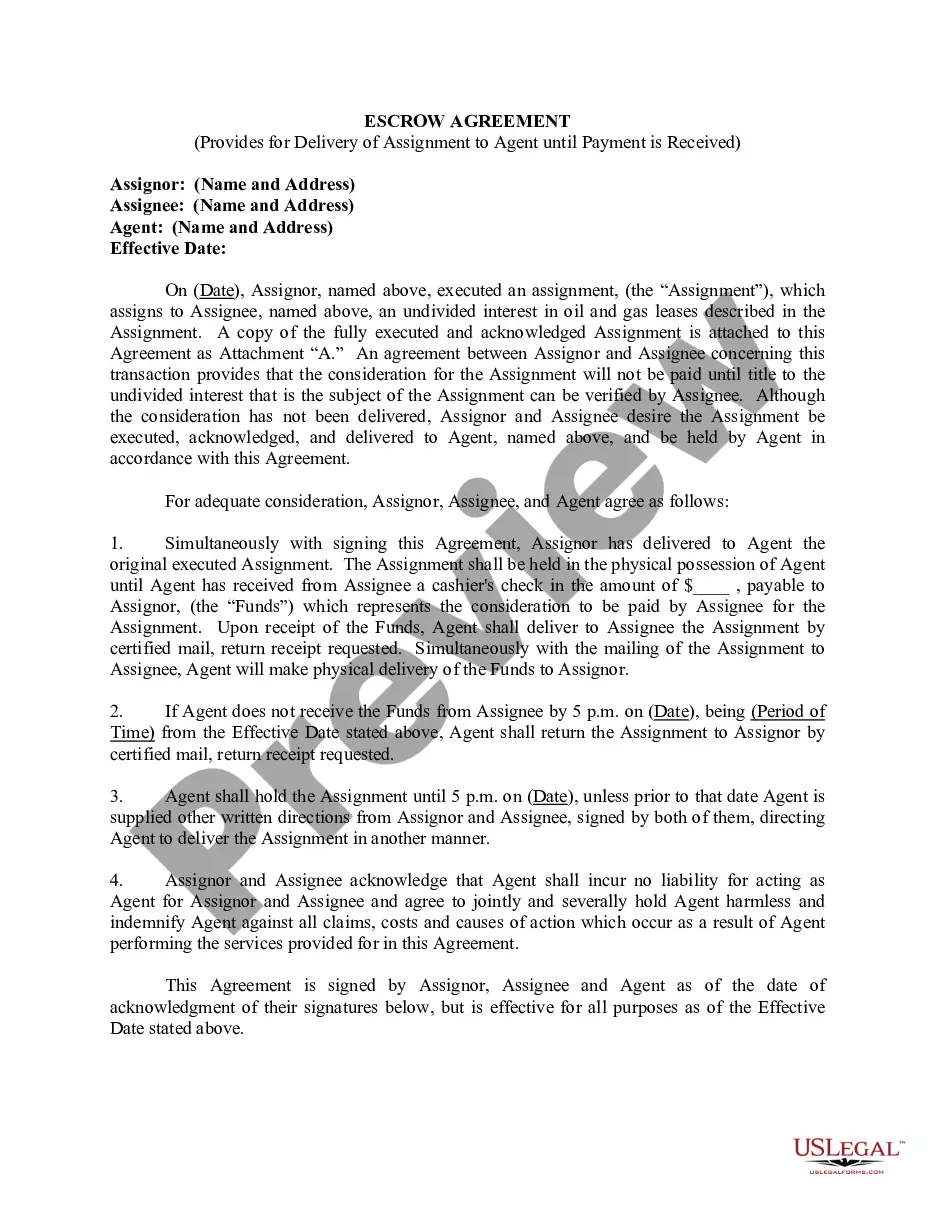
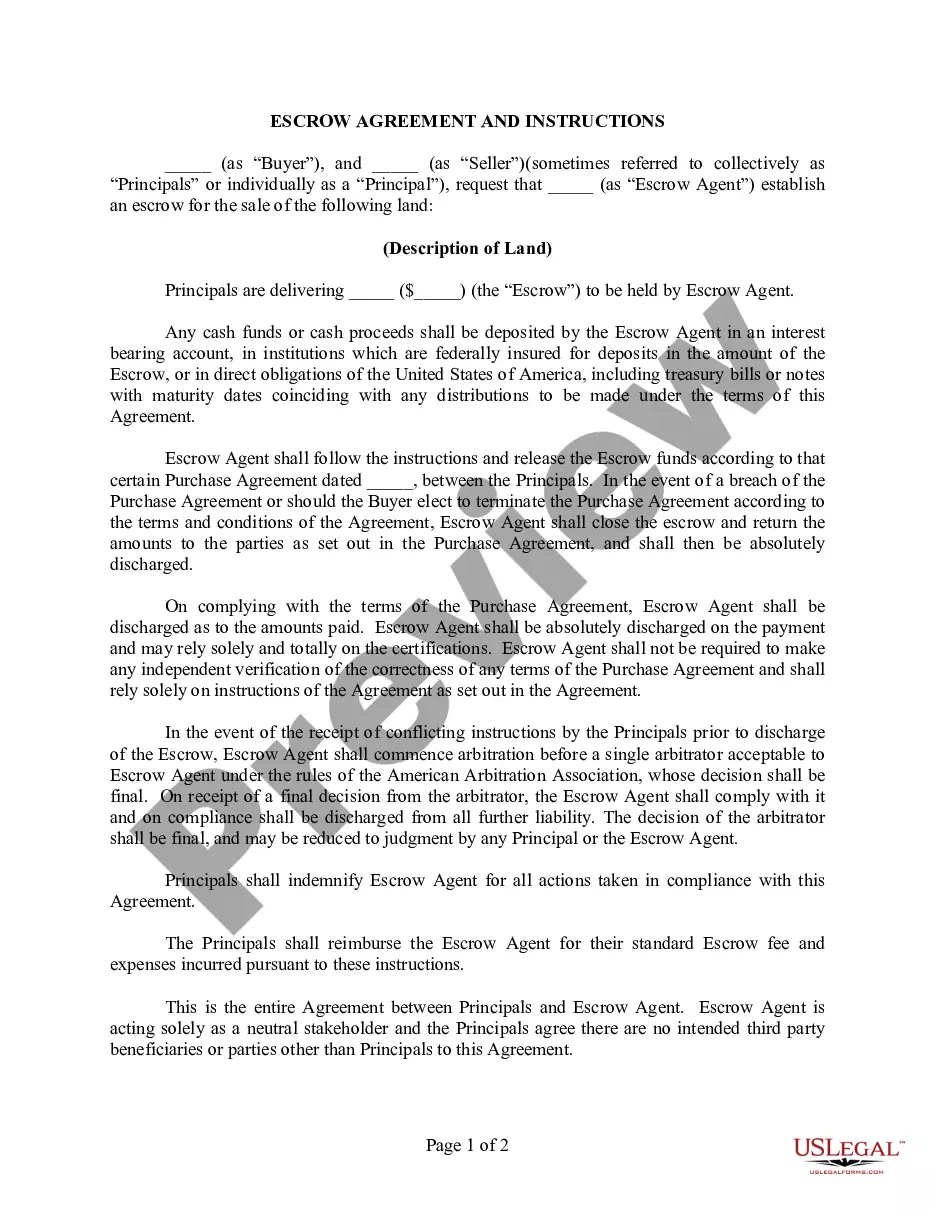
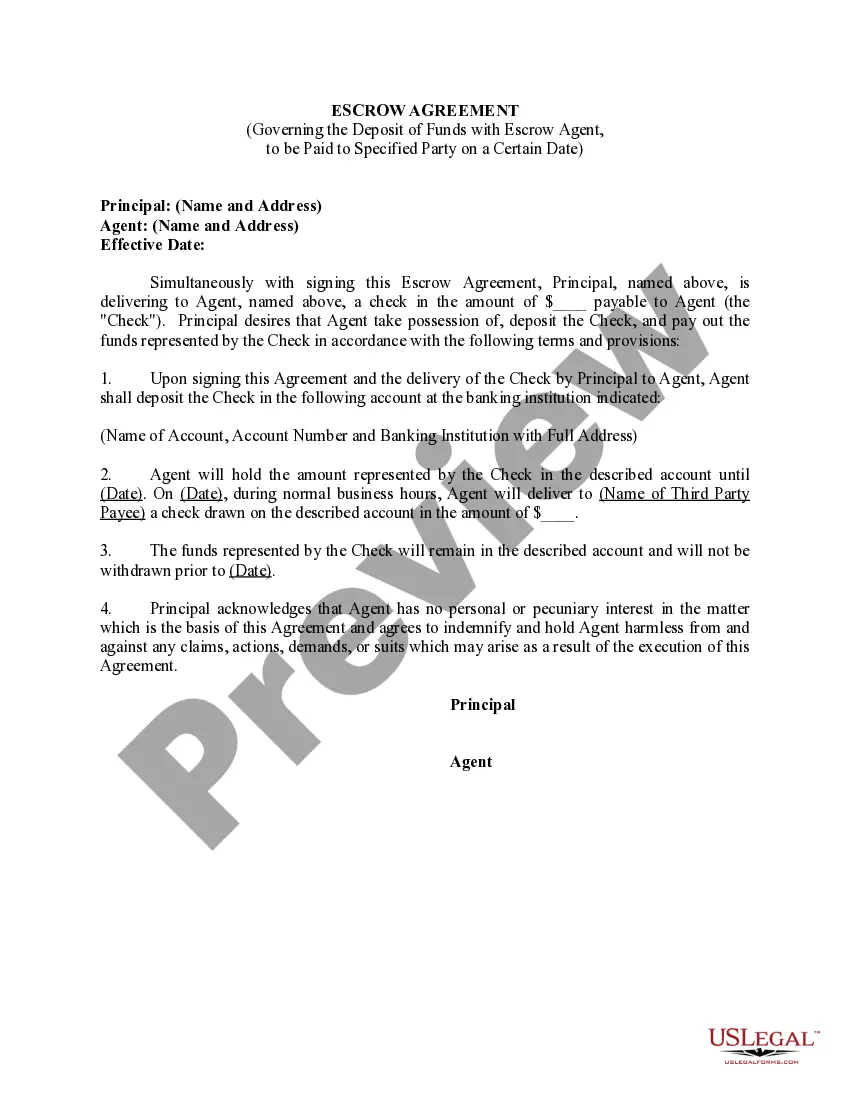
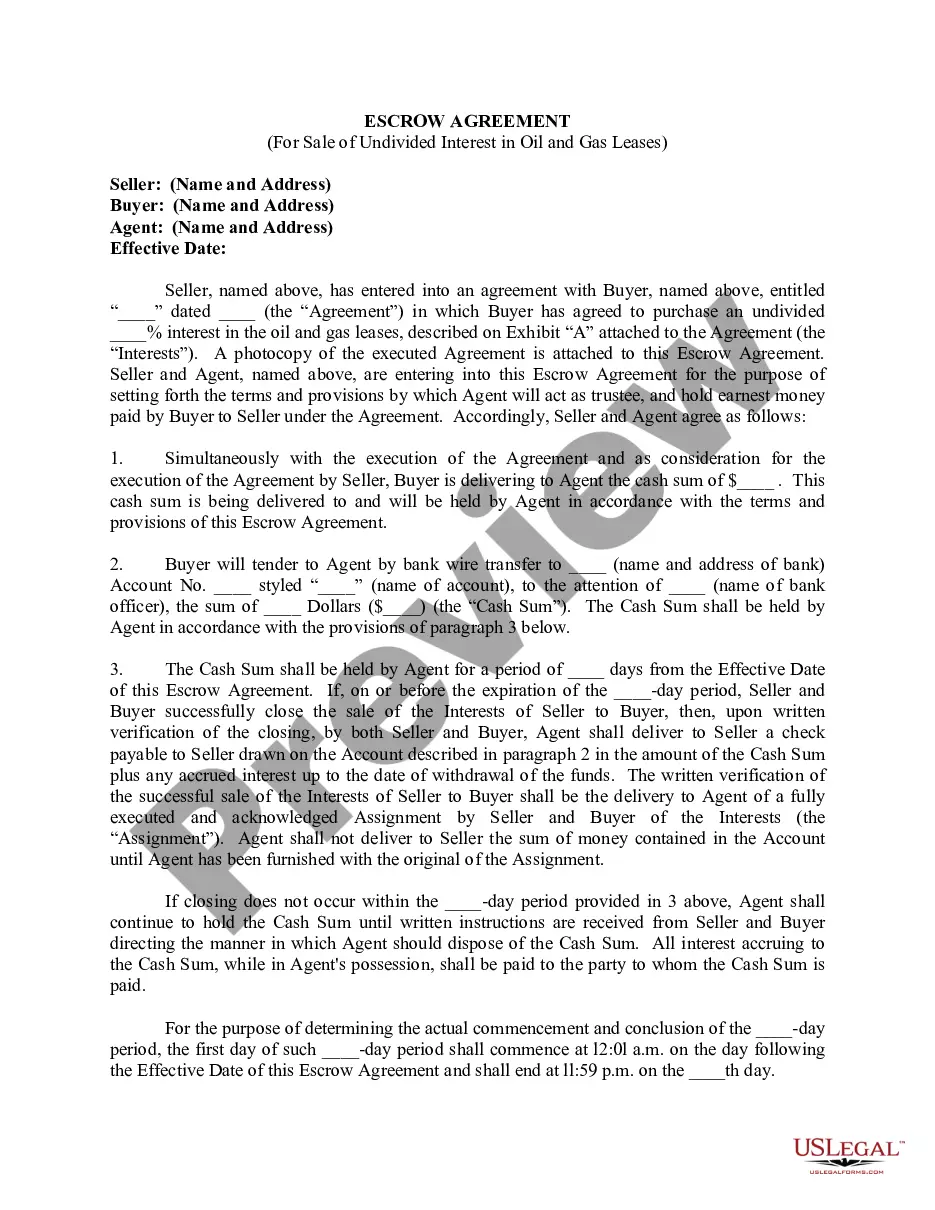
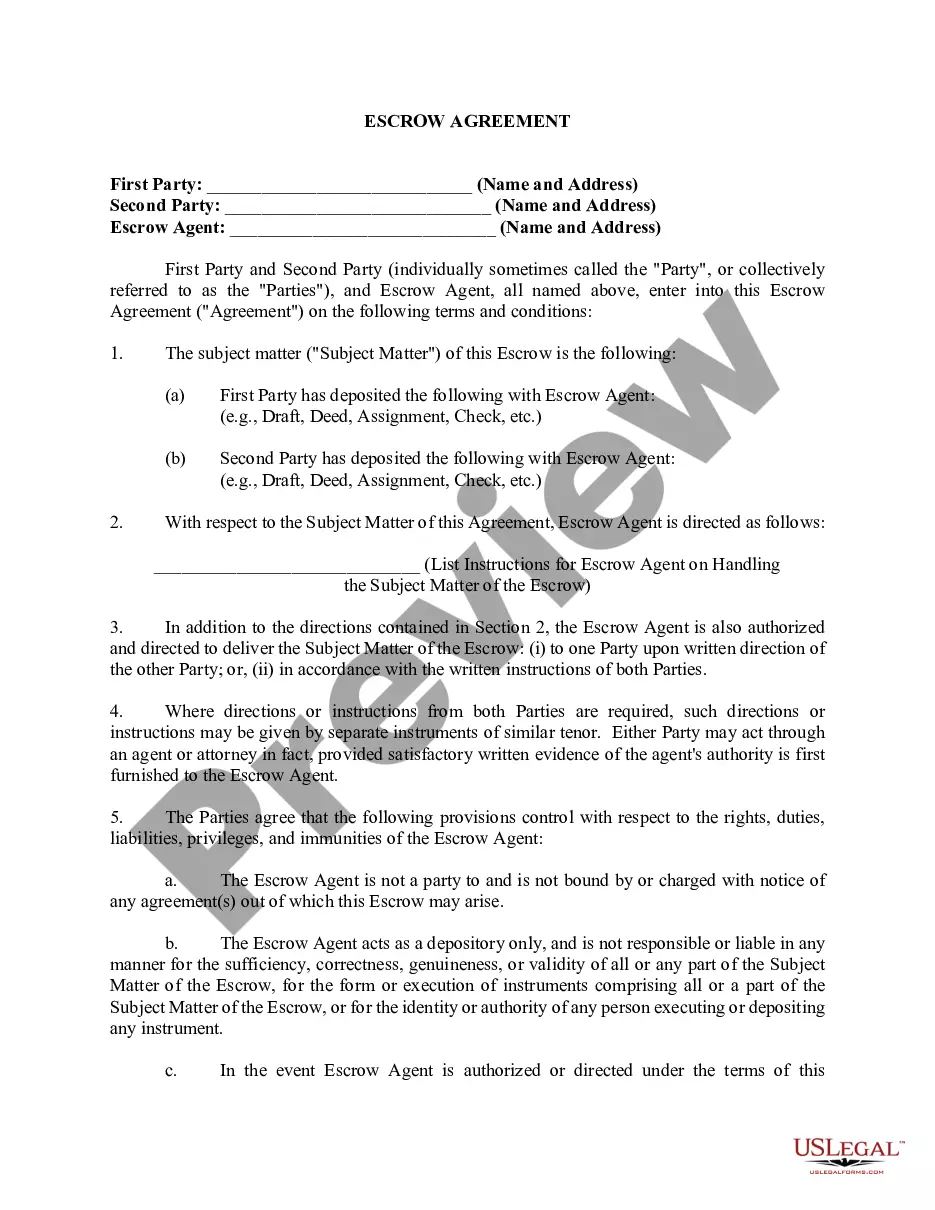
The Escrow Agreement provides for the delivery of Assignment to an Agent until payment is received. This form is a legally binding contract between an Assignor, an Assignee, and an Agent, detailing the conditions under which the Assignment is held in escrow. It differs from other agreements by specifically addressing situations involving the transfer of interests in property, particularly in the oil and gas sector, until payment verification is completed.
Main sections of this form
- Identification of the parties: Assignor, Assignee, and Agent with their names and addresses.
- Effective Date: The date the assignment agreement takes effect.
- Delivery of Assignment: Terms detailing the transfer of the Assignment to the Agent.
- Funds Transfer: Conditions under which payment is to be made from the Assignee to the Assignor.
- Return of Assignment: Procedures if payment is not received by the specified time.
- Indemnification: Clauses that protect the Agent from liability during the process.
When to use this form
This form is necessary when an Assignor wishes to transfer an interest in property to an Assignee but requires assurance that payment will be made. It is commonly used in transactions involving oil and gas leases where the Assignee wants to verify the title prior to payment. Using this agreement ensures that all parties understand their responsibilities and protects the interests involved until the transaction is finalized.
Who can use this document
- Property owners looking to assign rights and interests in oil and gas leases.
- Investors purchasing interests in similar properties.
- Legal professionals facilitating transactions between Assignors and Assignees.
- Agents handling escrow agreements and payments tied to property assignments.
Instructions for completing this form
- Identify the parties: Fill in the names and addresses of the Assignor, Assignee, and Agent in the specified fields.
- Enter the Effective Date: Specify the date the agreement takes effect.
- Attach the Assignment: Include a copy of the Assignment as Attachment A.
- Specify payment details: Indicate the amount to be held in escrow from the Assignee to the Assignor.
- Signatures: Ensure all parties sign the agreement, acknowledging their roles and responsibilities.
Is notarization required?
Notarization is not commonly needed for this form. However, certain documents or local rules may make it necessary. Our notarization service, powered by Notarize, allows you to finalize it securely online anytime, day or night.
Get your form ready online
Our built-in tools help you complete, sign, share, and store your documents in one place.
Make edits, fill in missing information, and update formatting in US Legal Forms—just like you would in MS Word.
Download a copy, print it, send it by email, or mail it via USPS—whatever works best for your next step.
Sign and collect signatures with our SignNow integration. Send to multiple recipients, set reminders, and more. Go Premium to unlock E-Sign.
If this form requires notarization, complete it online through a secure video call—no need to meet a notary in person or wait for an appointment.
We protect your documents and personal data by following strict security and privacy standards.

Make edits, fill in missing information, and update formatting in US Legal Forms—just like you would in MS Word.

Download a copy, print it, send it by email, or mail it via USPS—whatever works best for your next step.

Sign and collect signatures with our SignNow integration. Send to multiple recipients, set reminders, and more. Go Premium to unlock E-Sign.

If this form requires notarization, complete it online through a secure video call—no need to meet a notary in person or wait for an appointment.

We protect your documents and personal data by following strict security and privacy standards.
Mistakes to watch out for
- Not accurately identifying all parties involved, which can lead to confusion.
- Failing to attach the required Assignment documentation.
- Inaccurately specifying the payment amount or terms of delivery.
- Not having all parties sign the form, rendering it unenforceable.
Advantages of online completion
- Convenience: Easily access and download the document from any location.
- Editability: Customize the form to fit your specific transaction needs.
- Reliability: Ensure that you are using a legally vetted document drafted by licensed attorneys.
Summary of main points
- The Escrow Agreement facilitates secure transactions involving oil and gas lease assignments.
- It involves three key parties: the Assignor, Assignee, and Agent.
- All parties should understand their roles, responsibilities, and the payment conditions.
- Proper completion of the form is crucial for legal validity and to avoid common pitfalls.
Looking for another form?

Form popularity
FAQ
An escrow agreement is a contract that outlines the terms and conditions between parties involved, and the responsibility of each. Escrow agreements generally involve an independent third party, called an escrow agent, who holds an asset of value until the specified conditions of the contract are met.
That's usually at least 30 days. The deposit, often called earnest money because it shows that you're serious, is held in escrow the seller doesn't get the money until you come to a final agreement on the sale.
An escrow agent safeguards money or assets and enforces escrow agreements in financial transactions, particularly those involving real estate. An escrow agent has a fiduciary duty to both parties involved in the transaction and can only act in accordance with the terms of the agreement.
Of course you can get scammed with a escrow system in place.Escrow only provides a bit more of security for both the buyer and the seller, but that doesn't mean that, as you said, you can't get scammed. But as a seller, you know that the buyer has the money to pay for your work.
Also called an escrow agent or settlement agent, a closing agent is an impartial entity present for the final details of a real estate transaction.
Which of the following are duties performed by an escrow agent if so directed in the escrow instructions? - Order the title insurance report and policies. - Disburse funds as authorized by the principals. An escrow agent may disburse funds as directed by the parties and order the title insurance report and policies.
You pay escrow to seal the deal after a property owner accepts your offer. While these funds show the seller you're serious about purchasing the dwelling, if you can't close the loan, you could lose your escrow money.
So, while a "typical" escrow is 30 days, they can go from one week to many weeks. A: The length of an escrow can vary widely depending upon the terms agreed upon by the parties.
If you're already getting a good deal on your mortgage rate, forgoing escrow may be a good idea.By investing the money you'd normally be putting in escrow into a CD, money market account or even a regular savings account, you could earn a bit of a return on your cash in the process.