Legal Description and Well or Unit Information
What is this form?
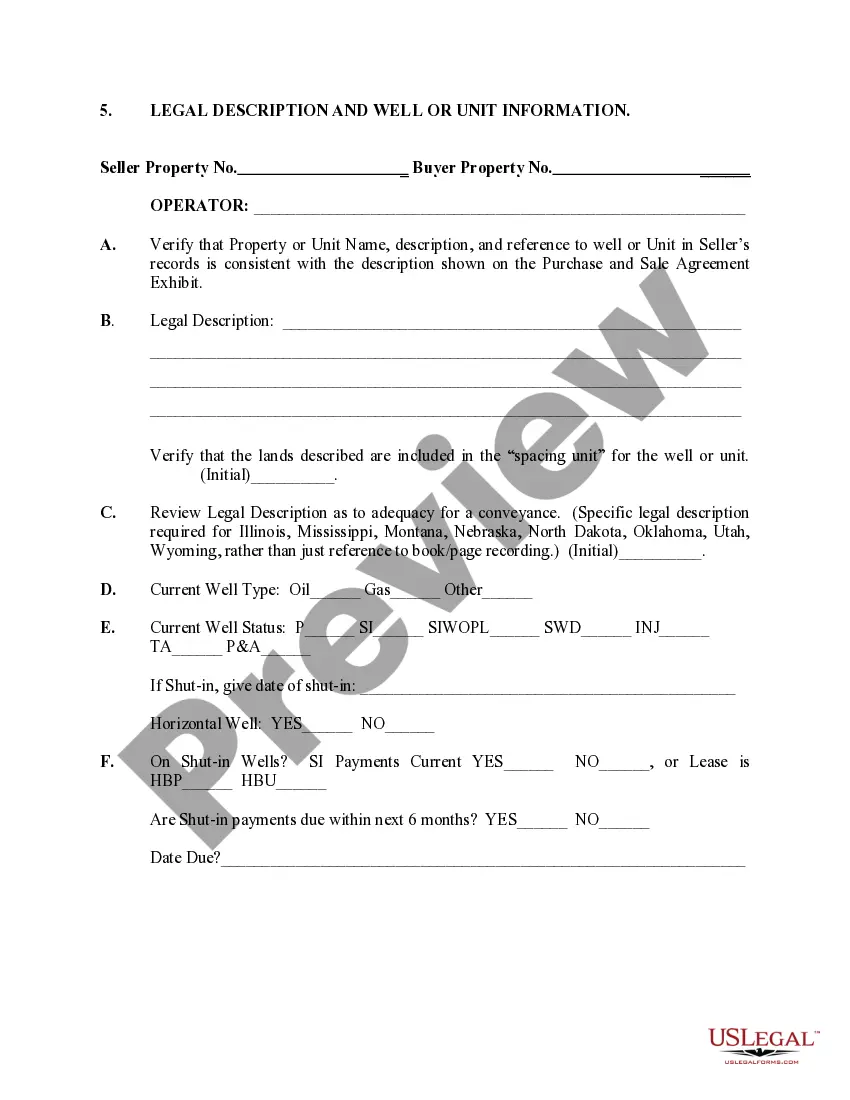
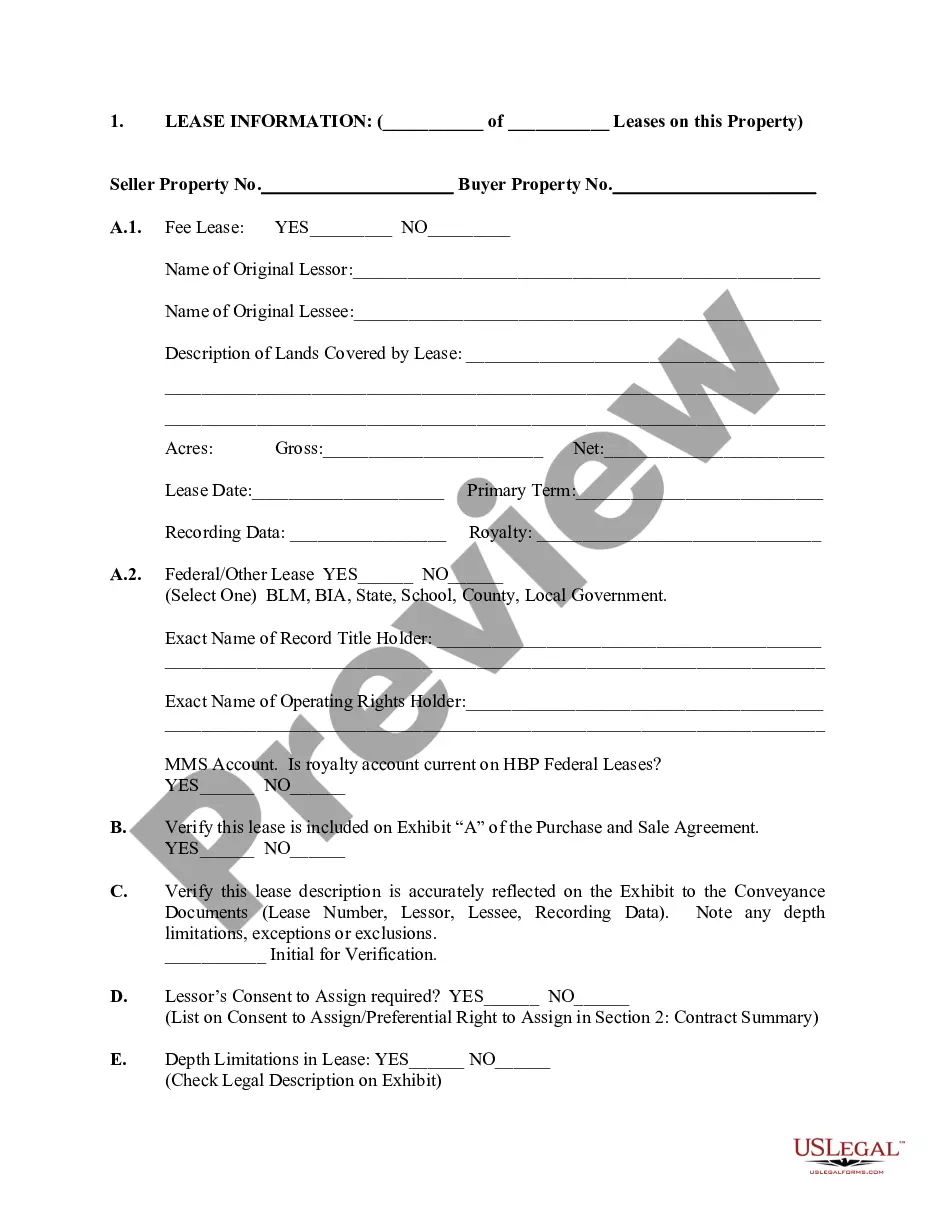
The Legal Description and Well or Unit Information form is a document used to accurately describe a property and its associated well or unit details. This form is essential for parties involved in the sale or transfer of property rights, particularly in the oil and gas industry, as it ensures that all legal descriptions are precise and up-to-date. Unlike other property documents, this form includes specific sections for verifying well types and current statuses, making it a vital tool for buyers and sellers alike.
Form components explained
- Seller and Buyer Property Numbers: Fields to track the respective property identifiers.
- Operator Information: Details pertaining to the entity managing the well or unit.
- Legal Description: Section for entering the precise legal description of the property.
- Well Type and Status: Options to specify the current type and operational status of the well.
- Shut-in Information: Questions addressing the status and payments related to shut-in wells.
When to use this document
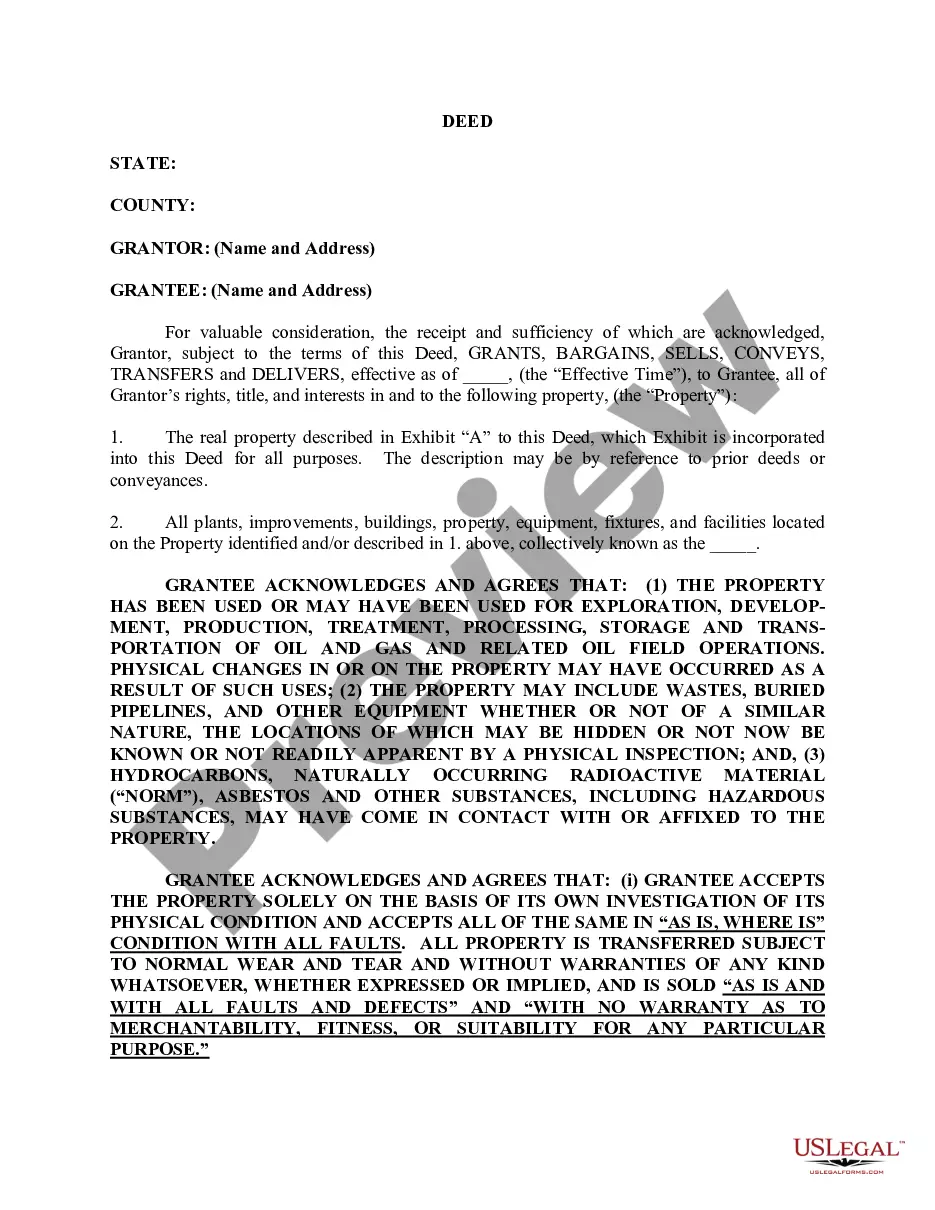
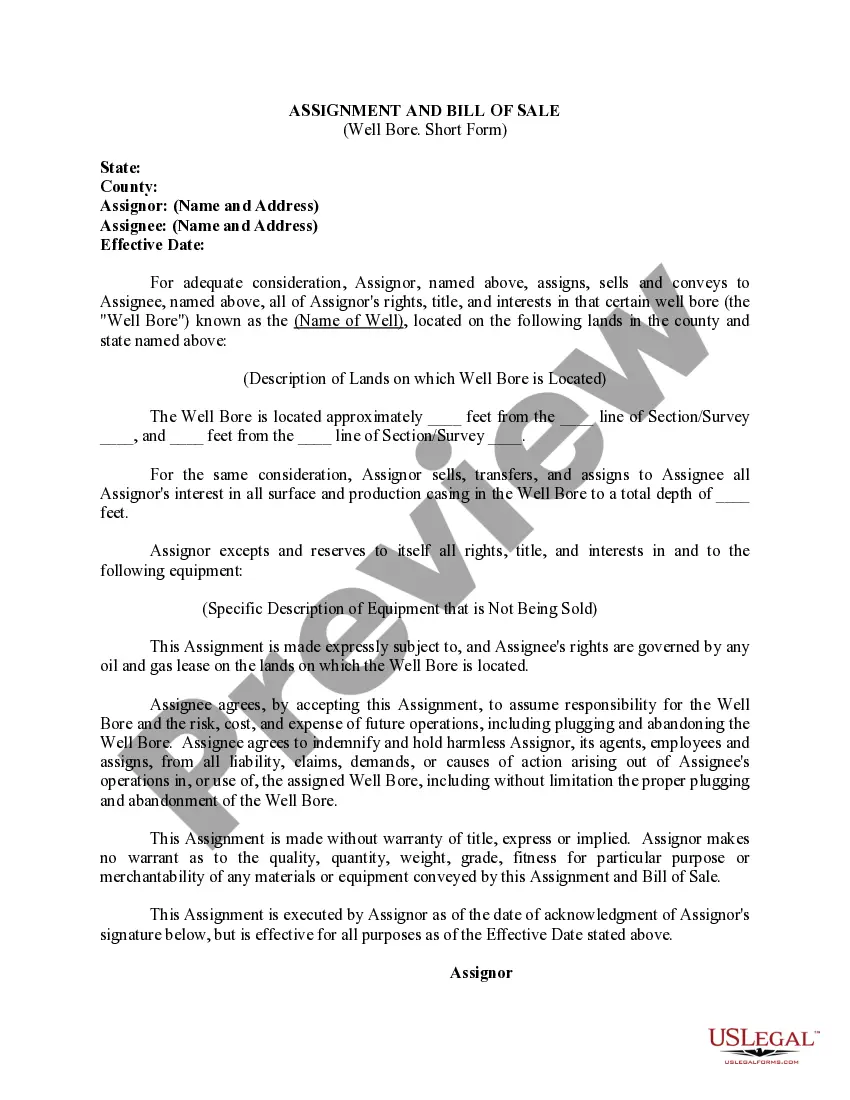
This form should be used when transferring ownership of property associated with oil and gas wells. It is particularly important during real estate transactions involving mineral rights or leases, where accurate legal descriptions and well information are necessary. This form may also be needed when updating records or resolving disputes over property boundaries and well rights.
Who needs this form
The following individuals or entities may need this form:
- Property sellers and buyers involved in oil and gas transactions.
- Real estate agents and brokers specializing in mineral rights.
- Operators managing wells or units.
- Legal professionals ensuring compliance with property laws.
Completing this form step by step
- Identify the seller and buyer property numbers and fill them in the designated fields.
- Provide the operatorâs information to ensure clear management accountability.
- Complete the legal description section with accurate and thorough property details.
- Specify the current well type and operational status to provide essential context.
- If applicable, fill out details regarding shut-in wells and associated payments.
Does this form need to be notarized?
This form does not typically require notarization unless specified by local law. It is advisable to check the regulations pertinent to the jurisdiction involved in the property transaction.
Get your form ready online
Our built-in tools help you complete, sign, share, and store your documents in one place.
Make edits, fill in missing information, and update formatting in US Legal Forms—just like you would in MS Word.
Download a copy, print it, send it by email, or mail it via USPS—whatever works best for your next step.
Sign and collect signatures with our SignNow integration. Send to multiple recipients, set reminders, and more. Go Premium to unlock E-Sign.
If this form requires notarization, complete it online through a secure video call—no need to meet a notary in person or wait for an appointment.
We protect your documents and personal data by following strict security and privacy standards.

Make edits, fill in missing information, and update formatting in US Legal Forms—just like you would in MS Word.

Download a copy, print it, send it by email, or mail it via USPS—whatever works best for your next step.

Sign and collect signatures with our SignNow integration. Send to multiple recipients, set reminders, and more. Go Premium to unlock E-Sign.

If this form requires notarization, complete it online through a secure video call—no need to meet a notary in person or wait for an appointment.

We protect your documents and personal data by following strict security and privacy standards.
Typical mistakes to avoid
- Omitting or inaccurately detailing the legal description, which is essential for validity.
- Failing to verify the well's current status or type, leading to insufficient information for buyers.
- Not completing the shut-in sections if the well is not currently active, which can result in disputes.
Why complete this form online
- Convenient access to legal forms anytime, providing flexibility to complete at your own pace.
- Editability allows users to customize the document according to their specific needs.
- Reliable templates drafted by licensed attorneys help ensure compliance with legal standards.
Looking for another form?
Form popularity
FAQ
Property signifies dominion or right of use, control, and disposition which one may lawfully exercise over things, objects, or land. One of the basic dividing lines between property is that between real property and personal property. Generally, the term real property refers to land.
Real property is defined as any property that is attached to, or affixed to land, including the land itself.In a legal description, the real property should be described using set boundaries rather than natural landmarks, which can change over time.
The goal of a legal description of property is to provide a means of identifying a property in such a way that it is able to be completely identified by using the legal description provided. This often means using strict identifiers that will not change over time.
That's why using a legal description is the most accurate way to identify real estate. A legal description can be long and look complicated, but it's a more precise method of describing where a property is located.
The best place to find a legal description is usually the most recent deed to the property (the deed that conveyed the property to the current owner). The legal description is usually contained in the body of the deed.
There are five types of legal descriptions that have been developed to achieve greater accuracy and precision in identifying land and land rights: 1) the United States Public Land Survey System (USPLSS), sometimes referred to as the rectangular or quadrangular survey system; 2) descriptions referring to recorded
A copy of the legal description for your property can be found on the most recent recorded deed. If you do not have a copy of your deed, you can get a copy at the Sacramento County Clerk-Recorder's Office.
What are the methods of description? There are three common methods used to describe real estate: metes and bounds, government survey, and lot and block. Here's a closer look at how they work.
Legal descriptions of real estate must always identify the county and state the property is located in.The most common methods used to create legal descriptions are rectangular survey, metes and bounds, and the lot and block systems.