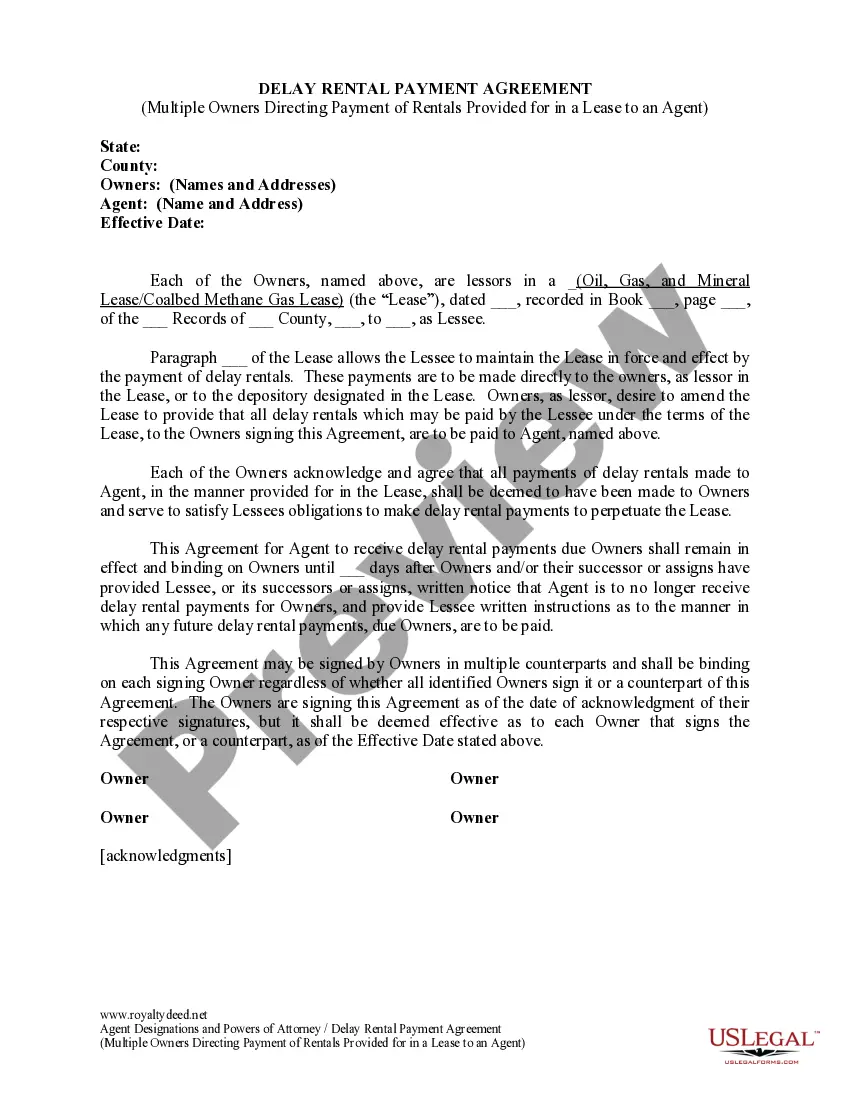
Delay Rental Payment Agreement for Multiple Owners Directing Payment of Rentals Provided For in A Lease to An Agent
About this form
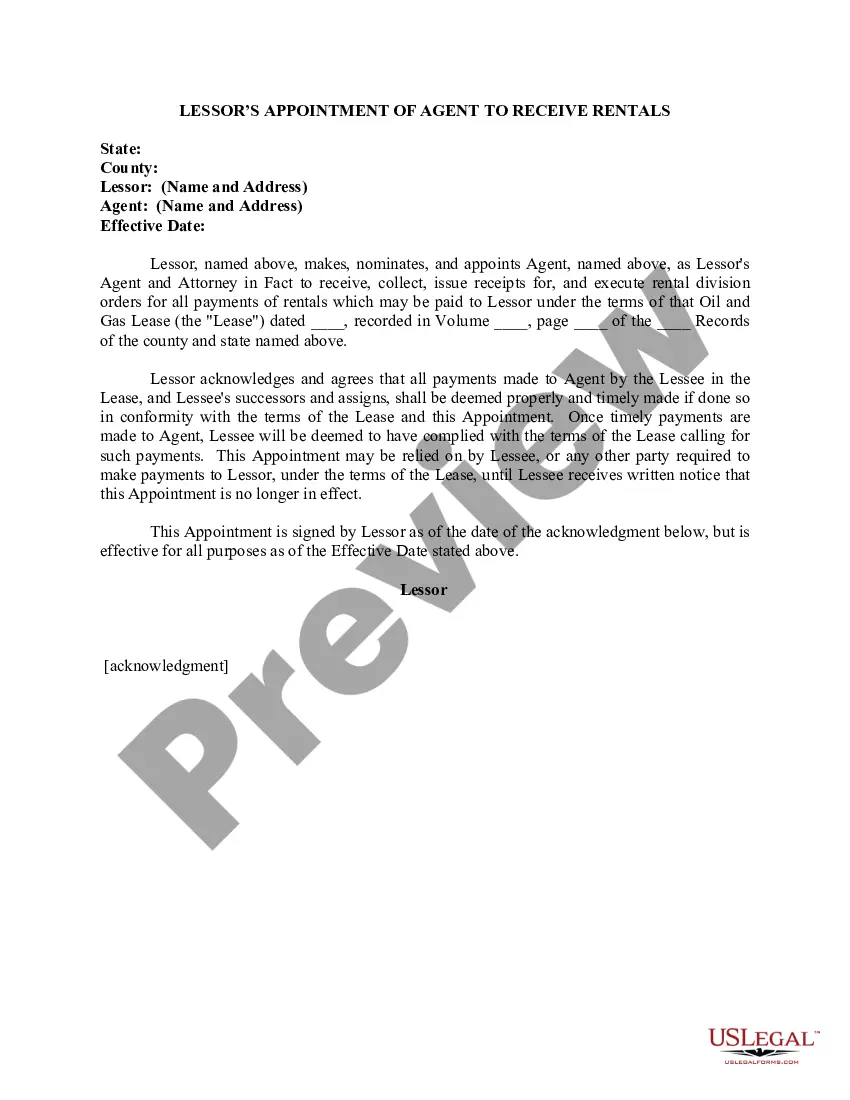
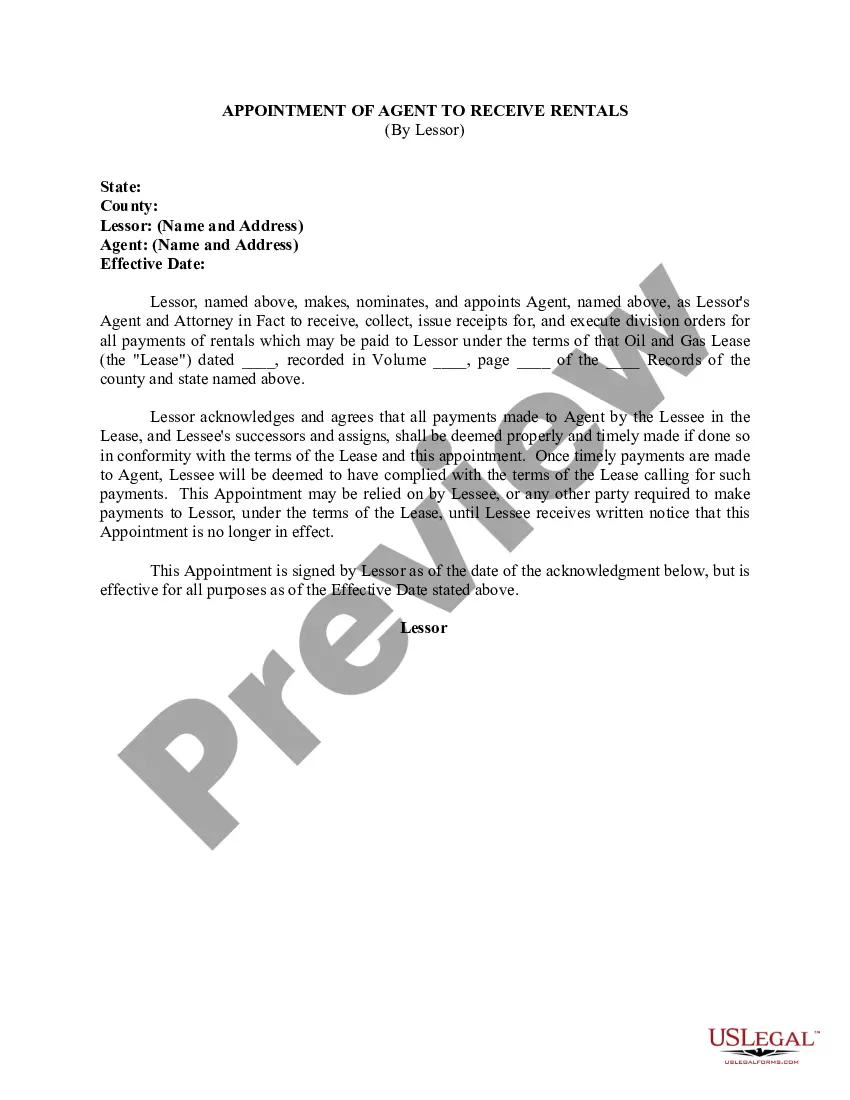
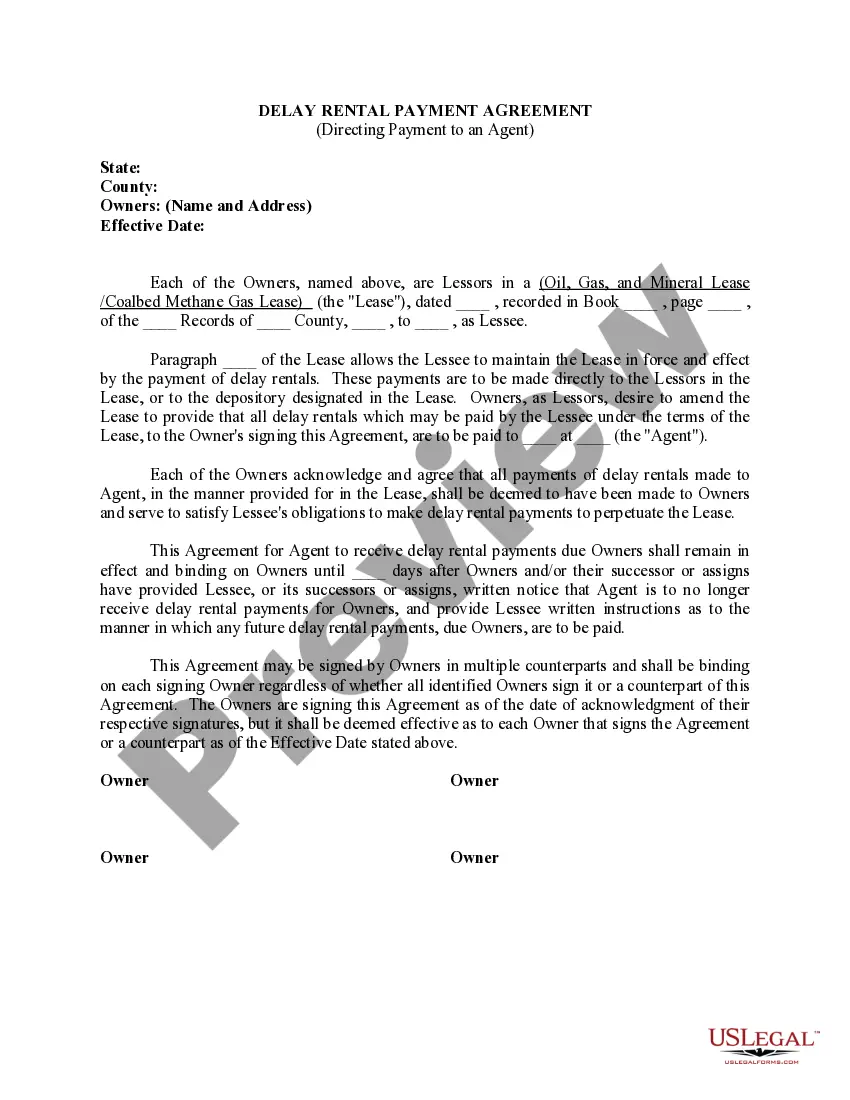
The Delay Rental Payment Agreement for Multiple Owners Directing Payment of Rentals Provided For in A Lease to An Agent is a legal document that allows property owners to appoint an agent responsible for collecting delay rental payments outlined in a lease. This agreement is essential for ensuring that multiple owners can manage rental payments efficiently without receiving individual payments directly. It differs from standard lease agreements as it specifically addresses the delegation of payment responsibilities to an agent on behalf of multiple owners.
Key parts of this document
- Identification of owners and their addresses.
- Details of the appointed agent with their contact information.
- Effective date for the agreement.
- Specific lease information, including type and recorded details.
- Clause on the delegation of payment receipt to the appointed agent.
- Conditions under which the agreement remains valid and how notifications can be made.
When to use this form
This agreement is beneficial when multiple property owners have entered into an oil, gas, or mineral lease and wish to designate a single agent to collect delay rental payments. It is particularly useful when the owners are related parties looking for a streamlined process for managing payments without direct involvement in each transaction.
Who should use this form
- Property owners involved in oil, gas, or mineral leases.
- Multiple owners who prefer to manage rental payments through a single agent.
- Owners who seek to clarify payment responsibilities and streamline communication with lessees.
How to complete this form
- Identify the names and addresses of all owners involved in the lease.
- Enter the name and address of the designated agent.
- Specify the effective date of the agreement.
- Fill in the details of the existing lease, including type, recording book, and page references.
- Ensure all owners sign the agreement, acknowledging the agent's authority to receive payments.
- Maintain a copy of the signed agreement for your records and provide a copy to the lessee as needed.
Does this document require notarization?
In most cases, this form does not require notarization. However, some jurisdictions or signing circumstances might. US Legal Forms offers online notarization powered by Notarize, accessible 24/7 for a quick, remote process.
Get your form ready online
Our built-in tools help you complete, sign, share, and store your documents in one place.
Make edits, fill in missing information, and update formatting in US Legal Forms—just like you would in MS Word.
Download a copy, print it, send it by email, or mail it via USPS—whatever works best for your next step.
Sign and collect signatures with our SignNow integration. Send to multiple recipients, set reminders, and more. Go Premium to unlock E-Sign.
If this form requires notarization, complete it online through a secure video call—no need to meet a notary in person or wait for an appointment.
We protect your documents and personal data by following strict security and privacy standards.

Make edits, fill in missing information, and update formatting in US Legal Forms—just like you would in MS Word.

Download a copy, print it, send it by email, or mail it via USPS—whatever works best for your next step.

Sign and collect signatures with our SignNow integration. Send to multiple recipients, set reminders, and more. Go Premium to unlock E-Sign.

If this form requires notarization, complete it online through a secure video call—no need to meet a notary in person or wait for an appointment.

We protect your documents and personal data by following strict security and privacy standards.
Avoid these common issues
- Failing to include all property owners in the agreement.
- Not specifying the lease details accurately.
- Omitting the effective date, which can lead to confusion.
- Not ensuring all owners sign the form, risking its validity.
Advantages of online completion
- Convenient access to legal forms anytime, allowing flexibility in completion.
- Editability ensures that you can fill in the form accurately without errors.
- Reliability of forms drafted by licensed attorneys to meet legal standards.
Looking for another form?

Form popularity
FAQ
When you're the one leaving lease What you can normally do is give 30-days' notice you'll be quitting. At the same time, ask the landlord and your roommates to find a new tenant. Indeed, you may be able to find an acceptable one yourself. Once one's moved in, your obligations should end.
#1: Encourage Roommate Agreements. #2: Advise That The Actions Of One Tenant Can Affect Everyone. #3: Don't Allow For Subleasing In The Rental Agreement. #4: Make Sure There is a Joint and Several Liability Clause Within the Lease Agreement. #5: Don't Divide Security Deposits. #6: Ask the Tenants To Appoint a Representative.
Step 1: Obtain a Written Request. Invite the tenant to submit in writing the request to add another person to the lease. Step 2: Check the Property's Occupancy Limit. Step 3: Acquire a Completed Rental Application. Step 4: Make a Decision. Step 5: Review the Details With the Tenants.
Give as much notice to your landlord as you can. Show prospective tenants around while you're still there and sell the place hard. Try to find replacement tenants yourself.
Collect each party's information. Include specifics about your property. Consider all of the property's utilities and services. Know the terms of your lease. Set the monthly rent amount and due date. Calculate any additional fees. Determine a payment method. Consider your rights and obligations.
Step 1: Understand Your Personal Expectations for a Tenant. Step 2: Inform Applicant that Rental History Information is Required. Step 3: Have Applicant Sign a Rental History Release Agreement. Step 4: Review the Rental Application. Step 5: Conduct a Landlord Reference Check.
Collect each party's information. Include specifics about your property. Consider all of the property's utilities and services. Know the terms of your lease. Set the monthly rent amount and due date. Calculate any additional fees. Determine a payment method. Consider your rights and obligations.
Yes. All owners do not need to sign. One owner can represent all the owners, just as a property manager represents the owner of the apartment complex or the property owners. The only time all owners would need to sign is if they were selling the property.
Your name and your landlord's name and the address of the property which is being let. the date the tenancy began. details of whether other people are allowed the use of the property and, if so, which rooms.