Materials Release
What is this form?
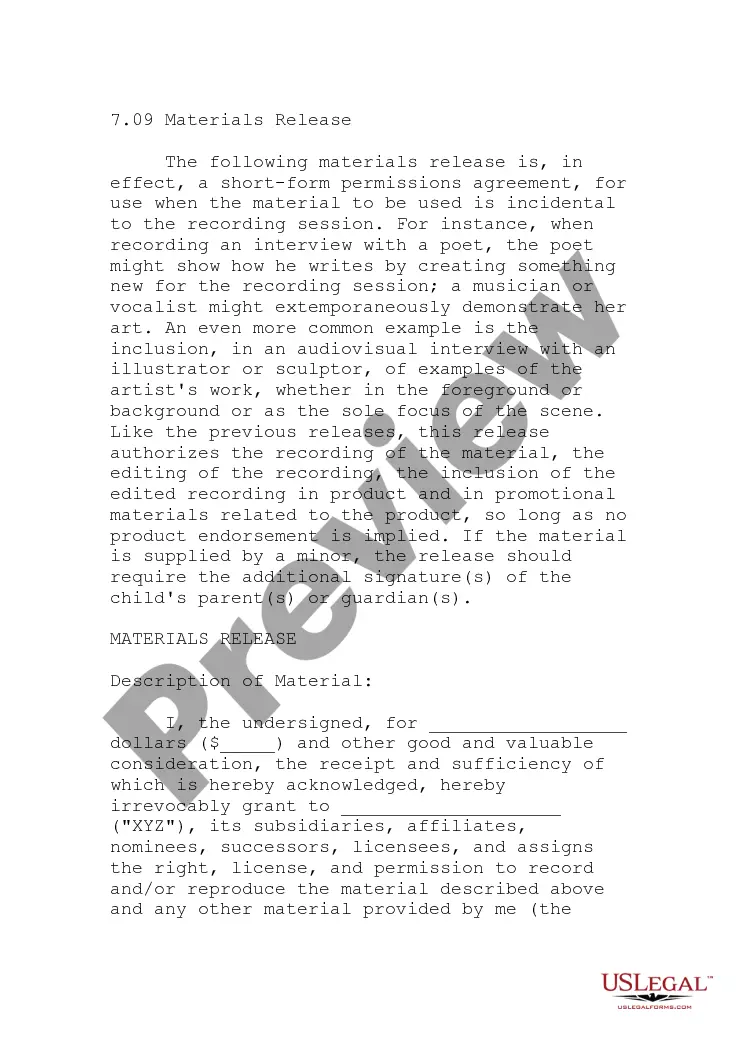
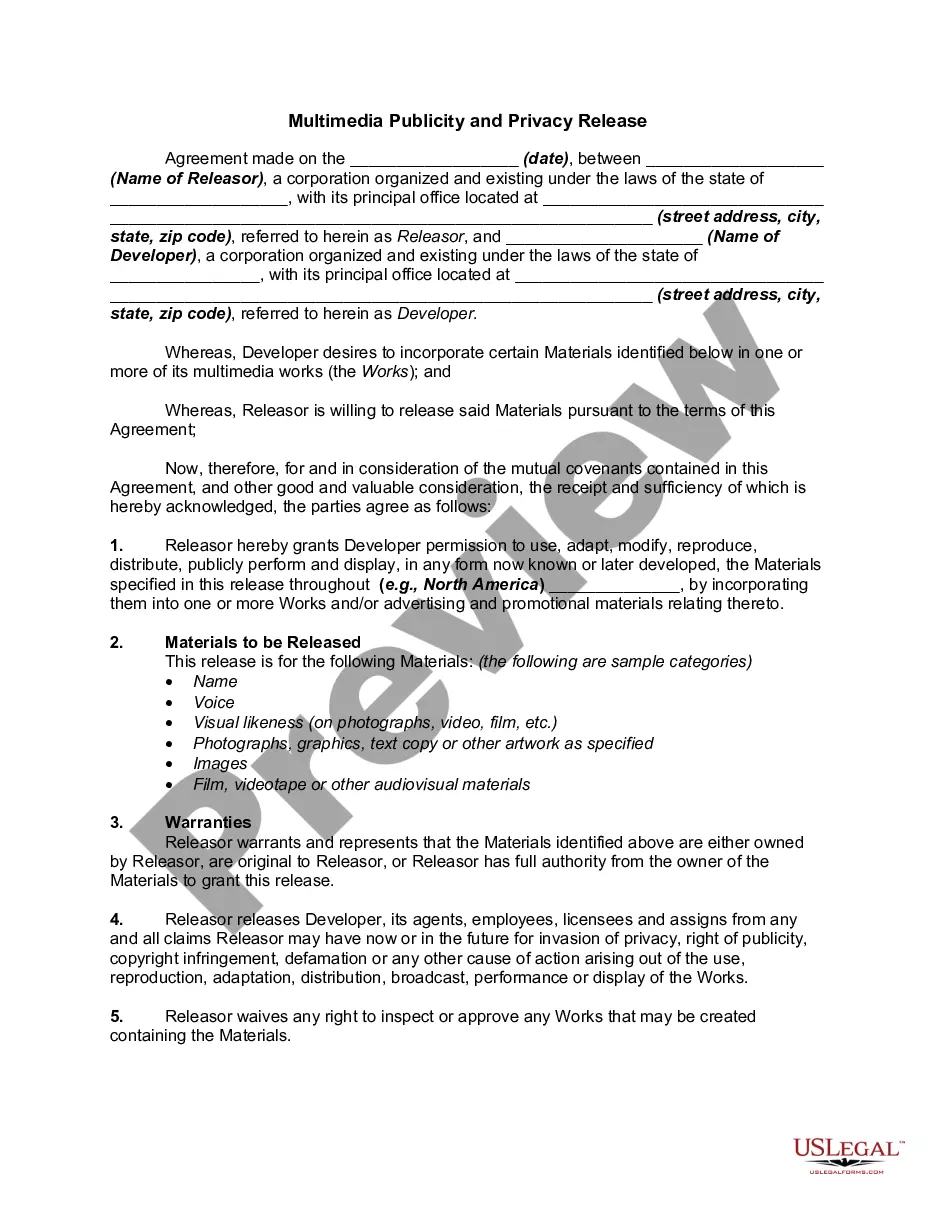
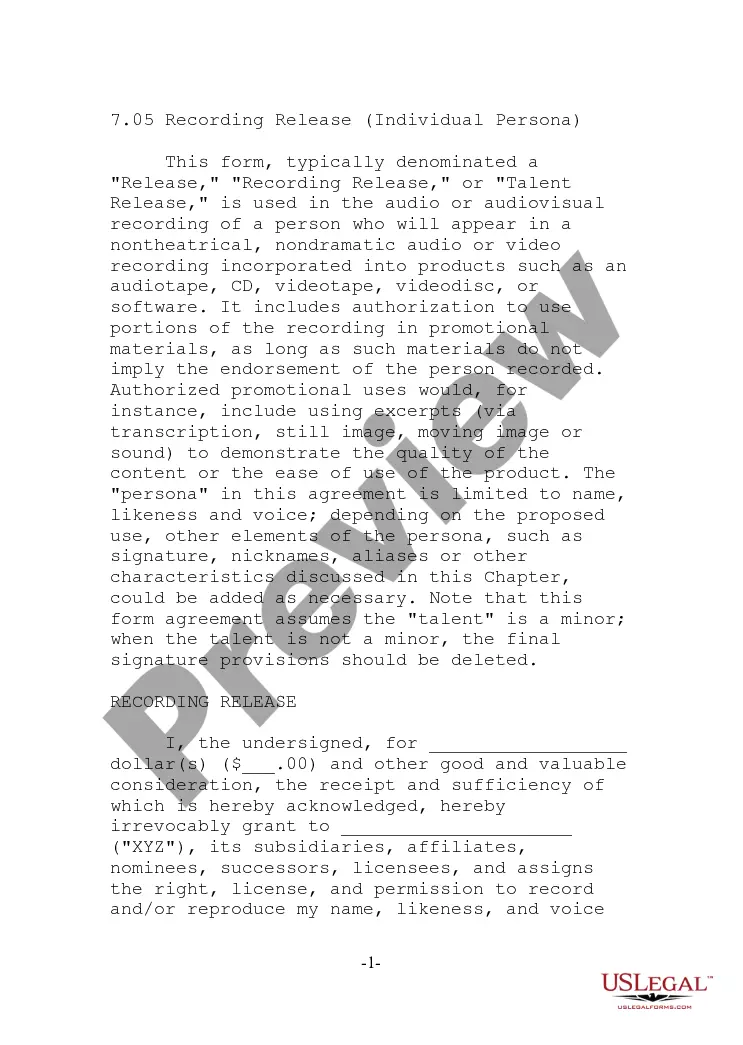
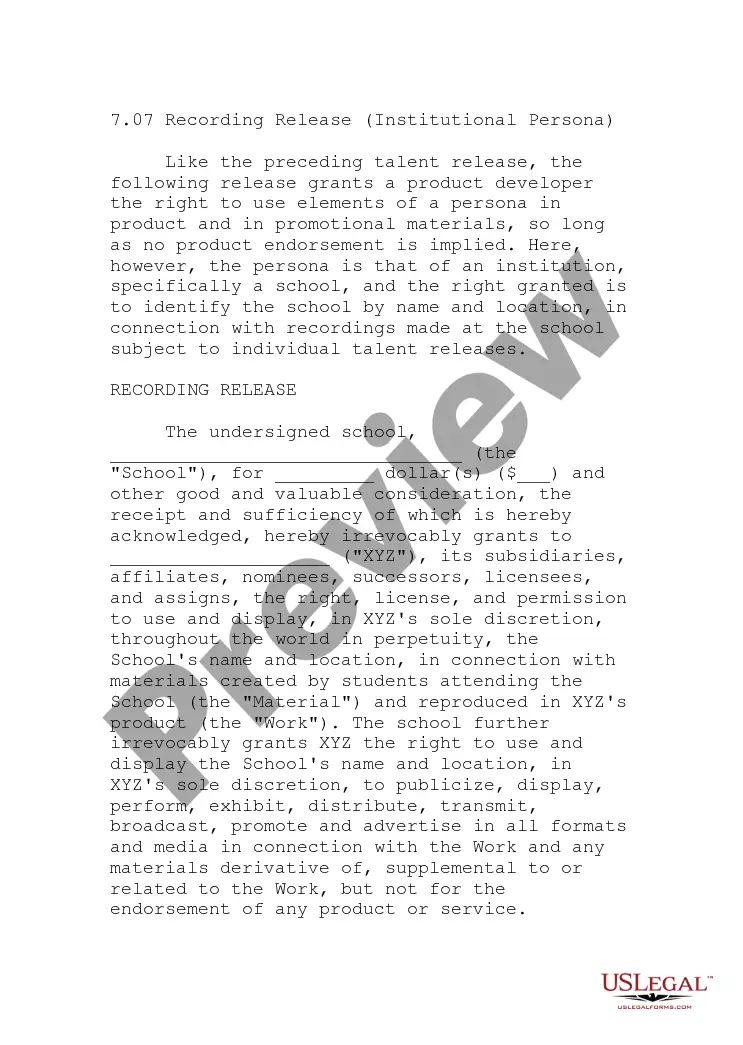
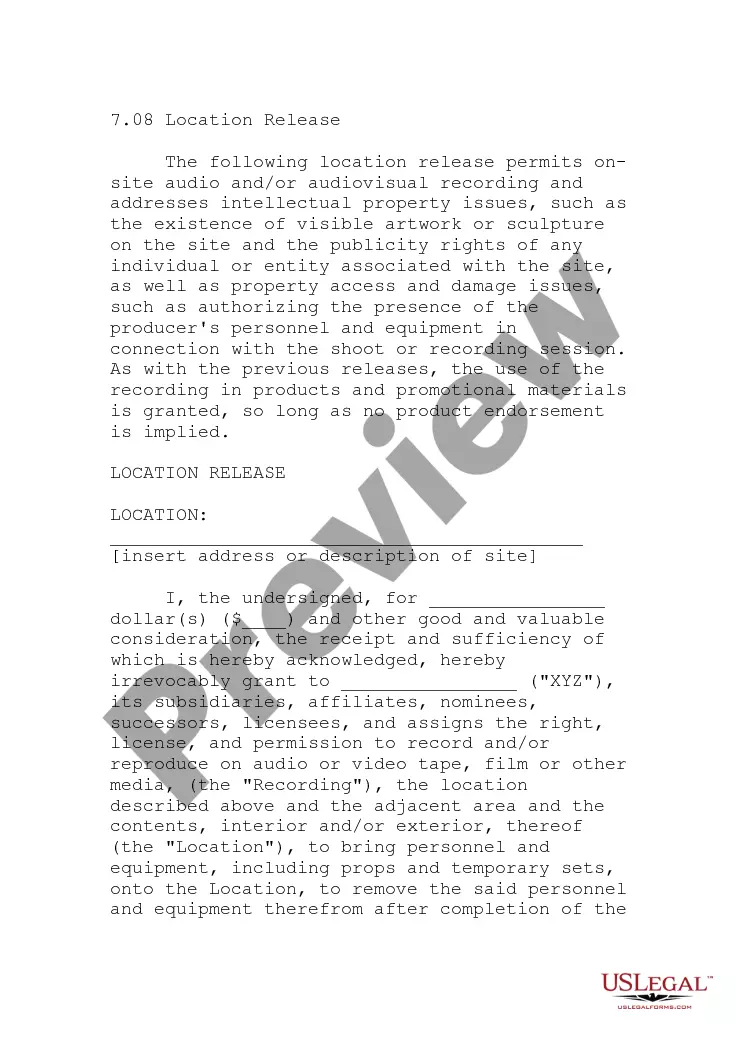
The Materials Release is a legal document that grants permission to record and use materials provided by an individual in various media formats. This form is particularly useful in creative industries, such as entertainment and intellectual property, where artists and creators may want to show their work or talent without risking the unauthorized use of their material. Unlike general permission forms, the Materials Release specifically covers situations where the material is incidental to a recording session, ensuring that all parties are protected legally.
Form components explained
- Description of Material: Identifies the material being released.
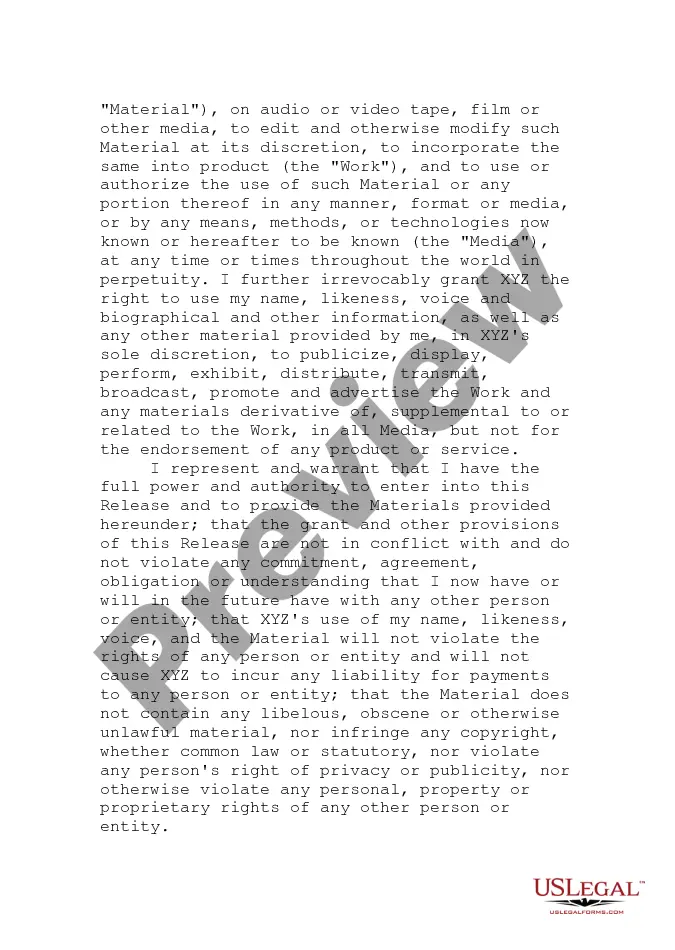
- Grant of Rights: Specifies the rights granted to the entity recording the material.
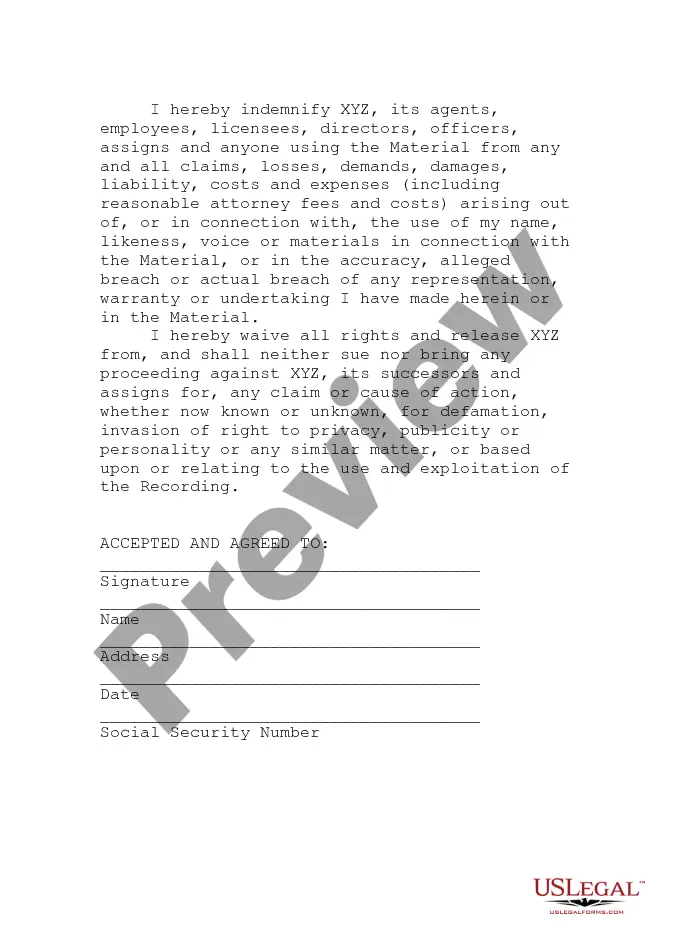
- Indemnification Clause: Protects the recording entity from claims related to the material.
- Signature Section: Requires the signature of the individual providing the material.
- Additional Parental Consent: Necessary if the material involves a minor.
- Warranties: Confirms that the provider has the authority to grant these rights and that the material is lawful.
When this form is needed
This form should be used in scenarios such as recording art demonstrations, interviews with artists, or any situation where a creator showcases their work during a live session. For example, if a poet interacts with a musician who incorporates their writing techniques, this form clarifies the ownership and usage rights of the material produced in that session. It is crucial whenever there is a potential need to use the recorded material for products or promotional purposes.
Who this form is for
- Artists and creators wanting to protect their material during collaborative projects.
- Producers and companies in the audio-visual field.
- Anyone recording interviews or demonstrations involving artwork or performances.
- Individuals representing minors who will be providing material.
Instructions for completing this form
- Identify the parties involved: Clearly state who is granting rights and who is receiving them.
- Describe the material being used: Provide a detailed description of the materials being released.
- Fill in the compensation details: Specify any monetary compensation for the rights granted.
- Gather signatures: Have all parties involved, including parents or guardians for minors, to sign the document.
- Review considerations: Ensure all warranties and representations about the material are clearly stated.
Is notarization required?
This form usually doesn’t need to be notarized. However, local laws or specific transactions may require it. Our online notarization service, powered by Notarize, lets you complete it remotely through a secure video session, available 24/7.
Get your form ready online
Our built-in tools help you complete, sign, share, and store your documents in one place.
Make edits, fill in missing information, and update formatting in US Legal Forms—just like you would in MS Word.
Download a copy, print it, send it by email, or mail it via USPS—whatever works best for your next step.
Sign and collect signatures with our SignNow integration. Send to multiple recipients, set reminders, and more. Go Premium to unlock E-Sign.
If this form requires notarization, complete it online through a secure video call—no need to meet a notary in person or wait for an appointment.
We protect your documents and personal data by following strict security and privacy standards.

Make edits, fill in missing information, and update formatting in US Legal Forms—just like you would in MS Word.

Download a copy, print it, send it by email, or mail it via USPS—whatever works best for your next step.

Sign and collect signatures with our SignNow integration. Send to multiple recipients, set reminders, and more. Go Premium to unlock E-Sign.

If this form requires notarization, complete it online through a secure video call—no need to meet a notary in person or wait for an appointment.

We protect your documents and personal data by following strict security and privacy standards.
Mistakes to watch out for
- Failing to provide a clear description of the material being released.
- Not obtaining signatures from all necessary parties, particularly for minors.
- Omitting important details about compensation or usage rights.
Benefits of completing this form online
- Convenient access: Download and complete the form from anywhere at any time.
- Editability: Easily customize the form to meet specific needs without hassle.
- Reliability: Forms are drafted by licensed attorneys, ensuring legal accuracy.
Legal use & context
- This form establishes clear permissions, safeguarding against potential legal disputes.
- It defines rights for both the provider and the entity receiving the material.
- It should be accompanied by a review of any local regulations affecting the use of artistic materials.
What to keep in mind
- The Materials Release is essential when utilizing creative works in any recording context.
- Ensure all parties understand their rights and obligations under the agreement.
- Always secure necessary signatures and ensure the accuracy of the material description.
Looking for another form?


Form popularity
FAQ
Identify the releasor. Describe the photo, image, likeness, or video. Address any payment the model receives for the release. Address royalties. Address whether the model has the ability to revoke their authorization. The parties sign and date the release.
A Personal Release form is a document that gives you, the filmmaker, the rights to film another person for your project and then to use that footage in your film.
Standard Releases and Volunteer Acknowledgment. Standard standard releases and the standard volunteer acknowledgment are documents that have been approved for use by the President, appropriate Vice President, and the Office of the General Counsel.
The standard talent release form is designed for the purpose of an individual to grant full permission to have images of their likeness and the sound of their voice to be recorded on audio or video and used at the user's discretion and without payment, other compensation or legal repercussion to the grantee.
$19.95 $9.95. The Materials Release is used when a producer wants to include personal property owned by a third-party in the productions. Often used in documentaries when a producer wants to use for example, written material such as diaries or visual material such as family photographs.
Your name and business name. Your business address. A release of all claims against your company. Whether you want to release claims from other companies that buy, use, or obtain the licenses for your photos.
A legal release is a legal instrument that acts to terminate any legal liability between the releasor and the releasee(s), signed by the releasor. A release may also be made orally in some circumstances.A general release may release any claims known or unknown that the releasor may have against the releasee.