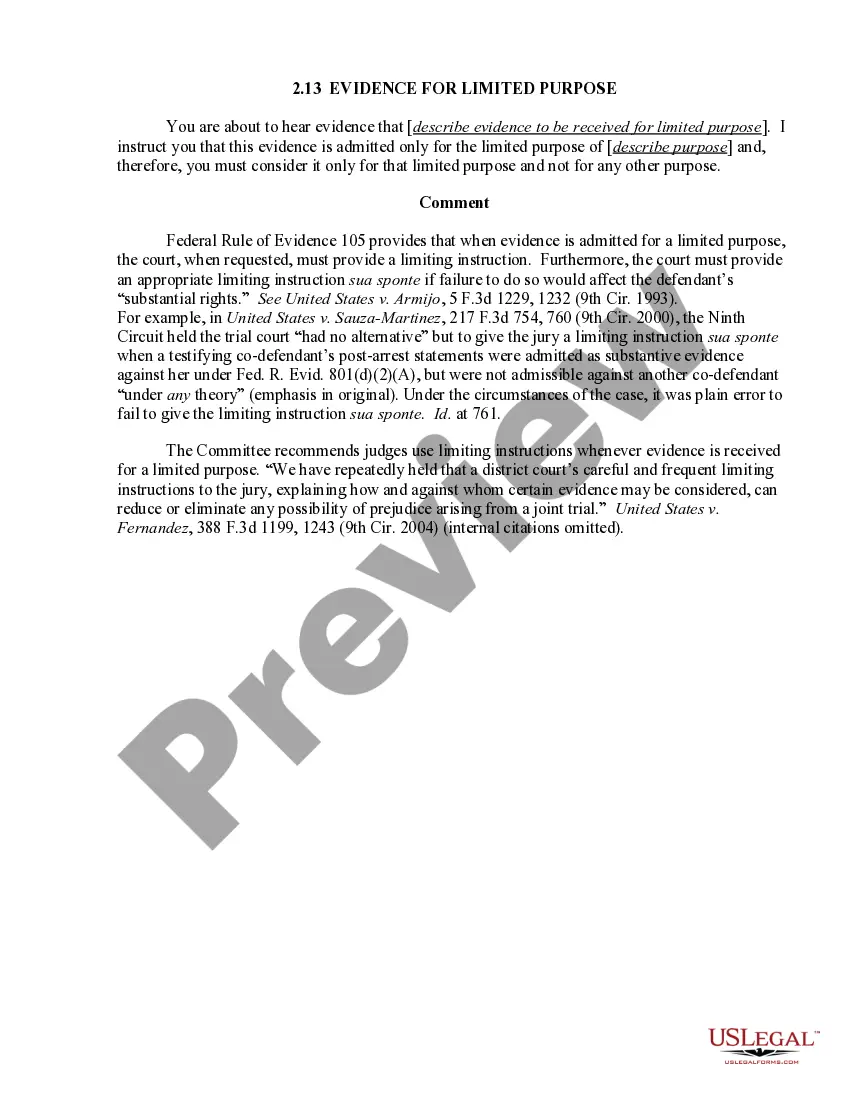
2.13 Evidence for Limited Purpose
Does this document require notarization?
Notarization is generally not required for this form. However, certain states or situations might demand it. You can complete notarization online through US Legal Forms, powered by Notarize, using a verified video call available anytime.
Get your form ready online
Our built-in tools help you complete, sign, share, and store your documents in one place.
Make edits, fill in missing information, and update formatting in US Legal Forms—just like you would in MS Word.
Download a copy, print it, send it by email, or mail it via USPS—whatever works best for your next step.
Sign and collect signatures with our SignNow integration. Send to multiple recipients, set reminders, and more. Go Premium to unlock E-Sign.
If this form requires notarization, complete it online through a secure video call—no need to meet a notary in person or wait for an appointment.
We protect your documents and personal data by following strict security and privacy standards.

Make edits, fill in missing information, and update formatting in US Legal Forms—just like you would in MS Word.

Download a copy, print it, send it by email, or mail it via USPS—whatever works best for your next step.

Sign and collect signatures with our SignNow integration. Send to multiple recipients, set reminders, and more. Go Premium to unlock E-Sign.

If this form requires notarization, complete it online through a secure video call—no need to meet a notary in person or wait for an appointment.

We protect your documents and personal data by following strict security and privacy standards.
Looking for another form?
Form popularity
FAQ
Rule 105 ? Limited Admissibility. When evidence which is admissible as to one party or for one purpose but not admissible as to another party or for another purpose is admitted, the court, upon request, shall restrict the evidence to its proper scope and instruct the jury ingly.
You are about to hear evidence that describe evidence to be received for limited purpose. I instruct you that this evidence is admitted only for the limited purpose of describe purpose and, therefore, you must consider it only for that limited purpose and not for any other purpose.
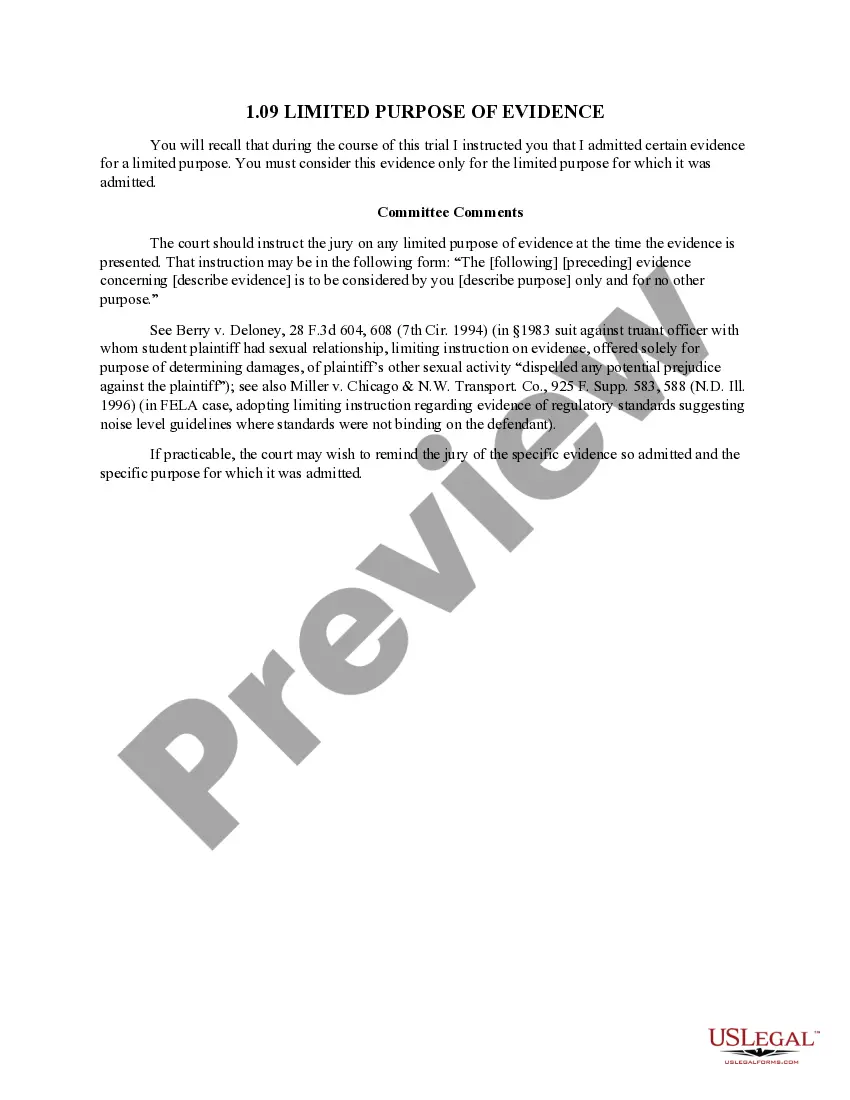
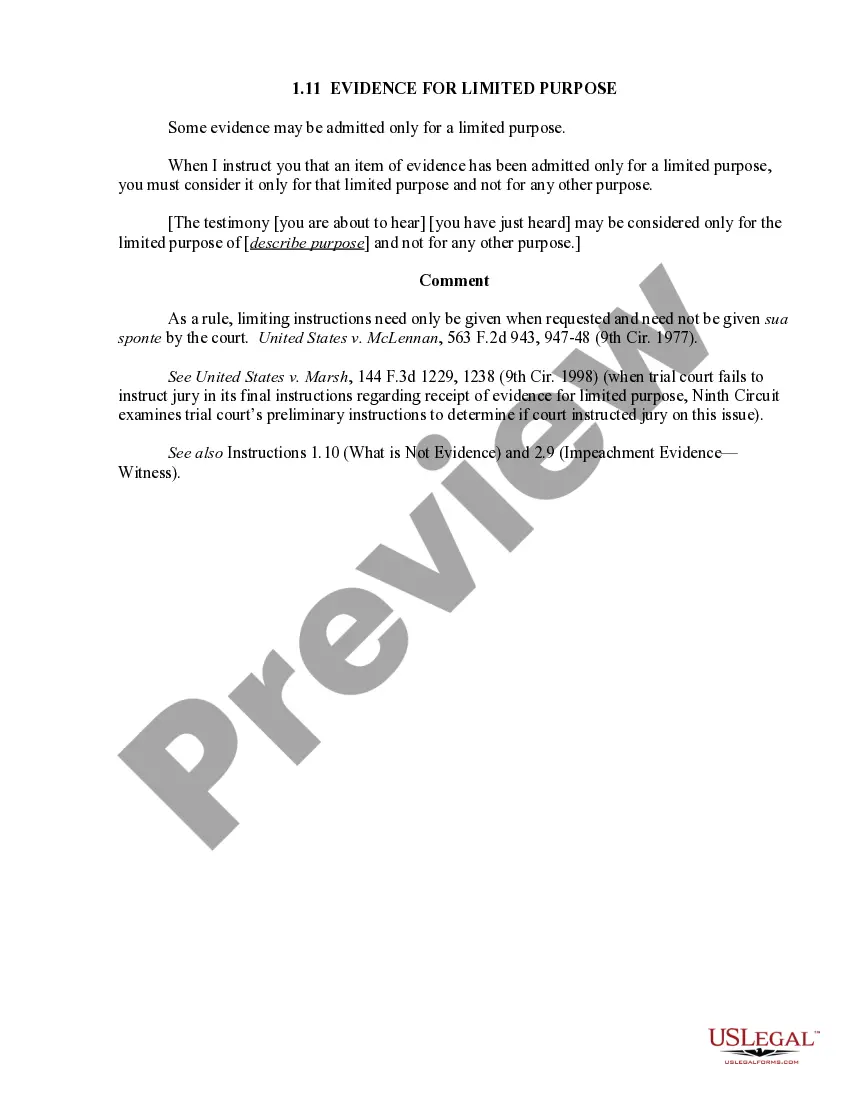
A jury instruction in which the judge instructs the jury to consider a piece of evidence for a specific purpose and ignore it for any other purpose. At trial, a court may admit evidence that is admissible for one purpose or against one party but not another.
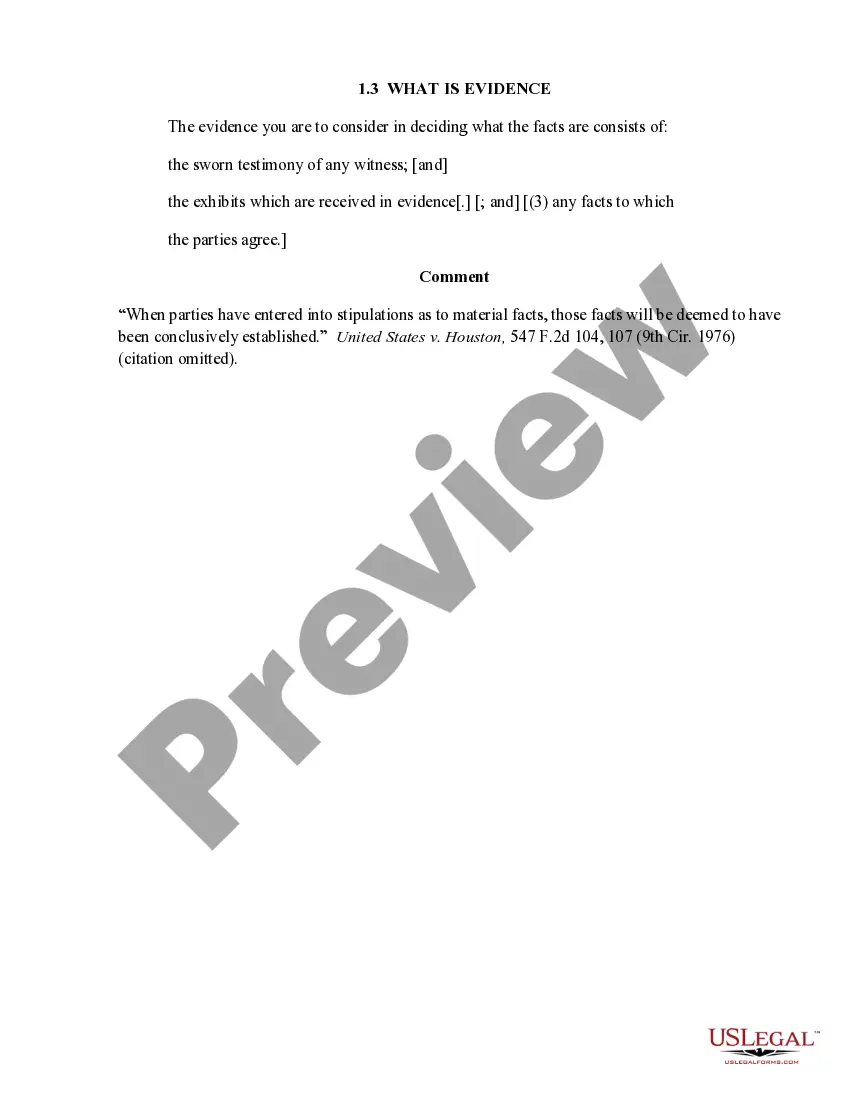
These instructions explain your duties as jurors and define the law that applies to this case. It is your duty to determine the facts, to apply the law set forth in these instructions to those facts, and in this way, to decide the case.
During trial, the court may need to give the jury limiting instructions, advising the jury that evidence is being admitted only for a limited purpose. Or the court may give the jury a curative instruction to correct some error during trial.
"We have repeatedly held that a district court's careful and frequent limiting instructions to the jury, explaining how and against whom certain evidence may be considered, can reduce or eliminate any possibility of prejudice arising from a joint trial." United States v.
If the court admits evidence that is admissible against a party or for a purpose ? but not against another party or for another purpose ? the court, on timely request, must restrict the evidence to its proper scope and instruct the jury ingly.
The Basic Rule When evidence which is admissible as to one party or for one purpose but not admissible as to another party or for another purpose is admitted, the court, upon request, shall restrict the evidence to its proper scope and instruct the jury ingly.