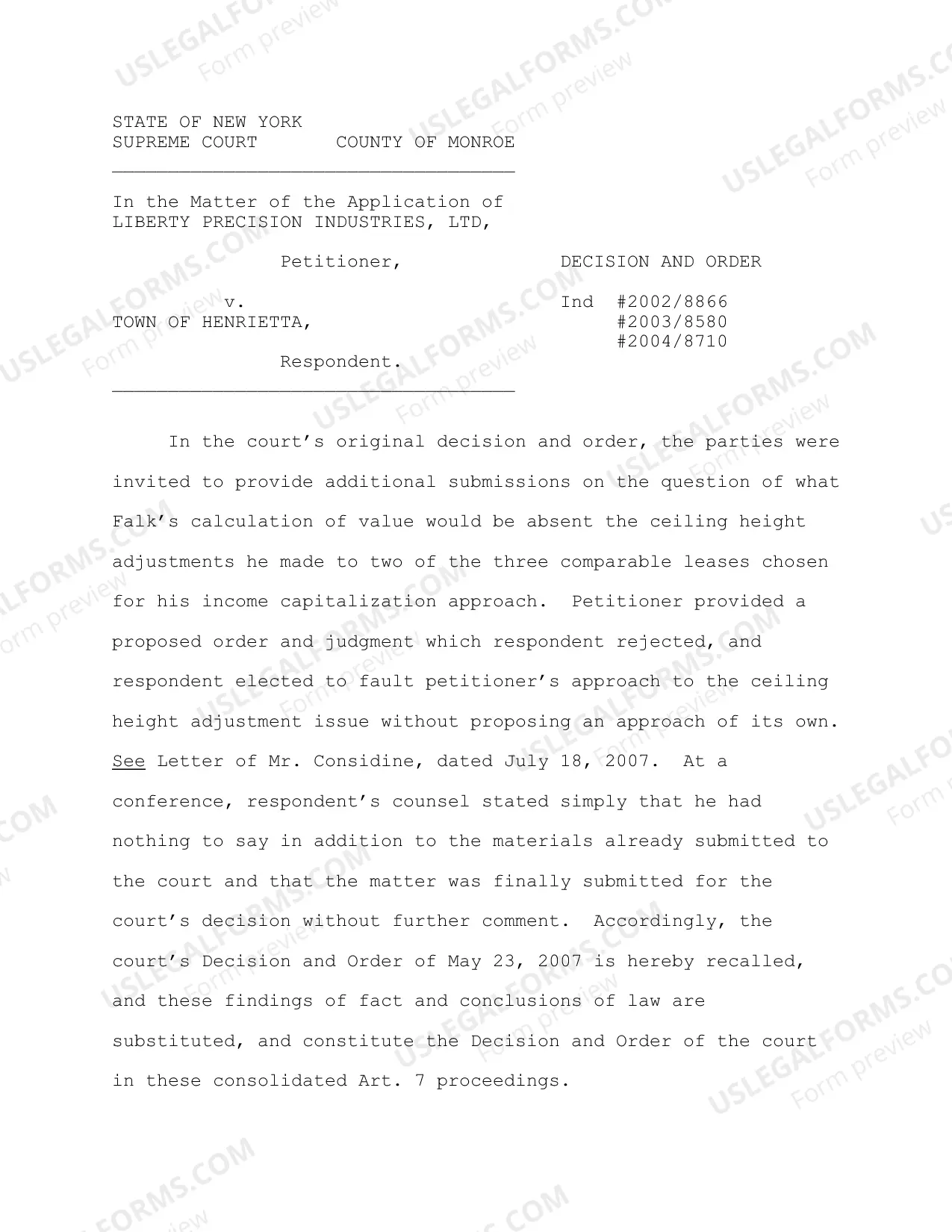
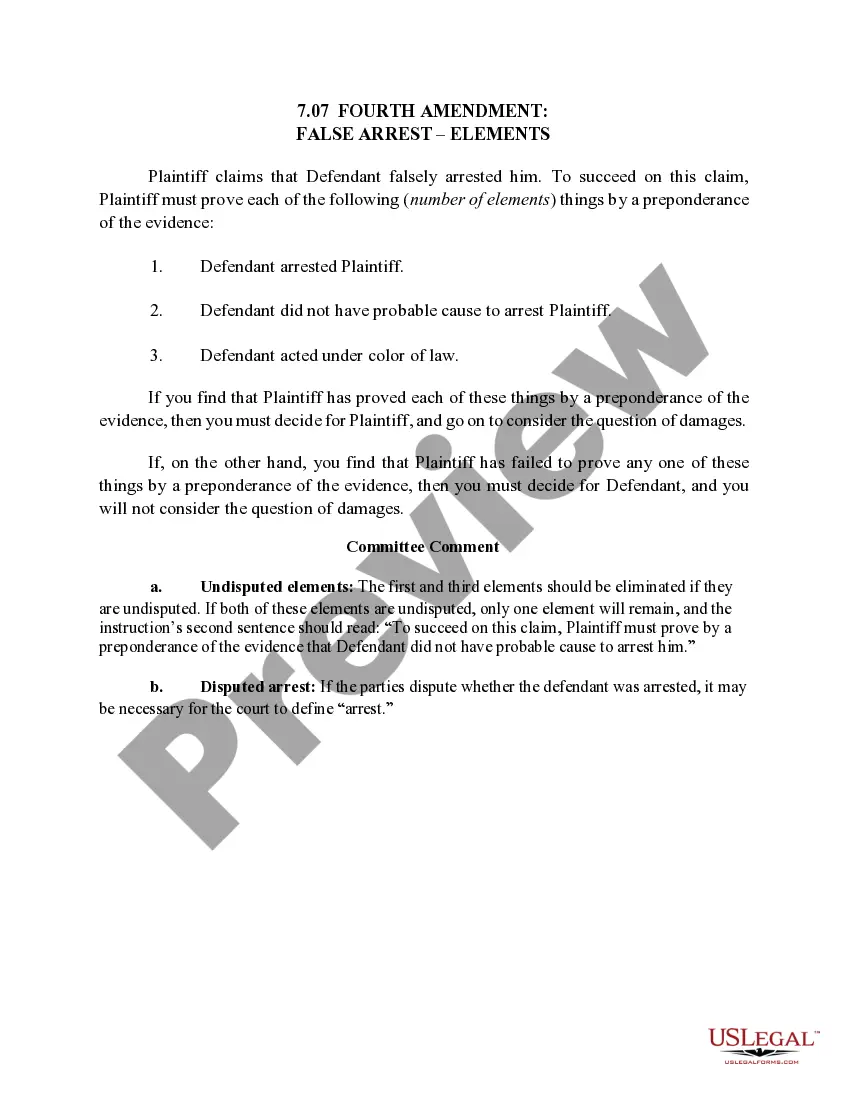
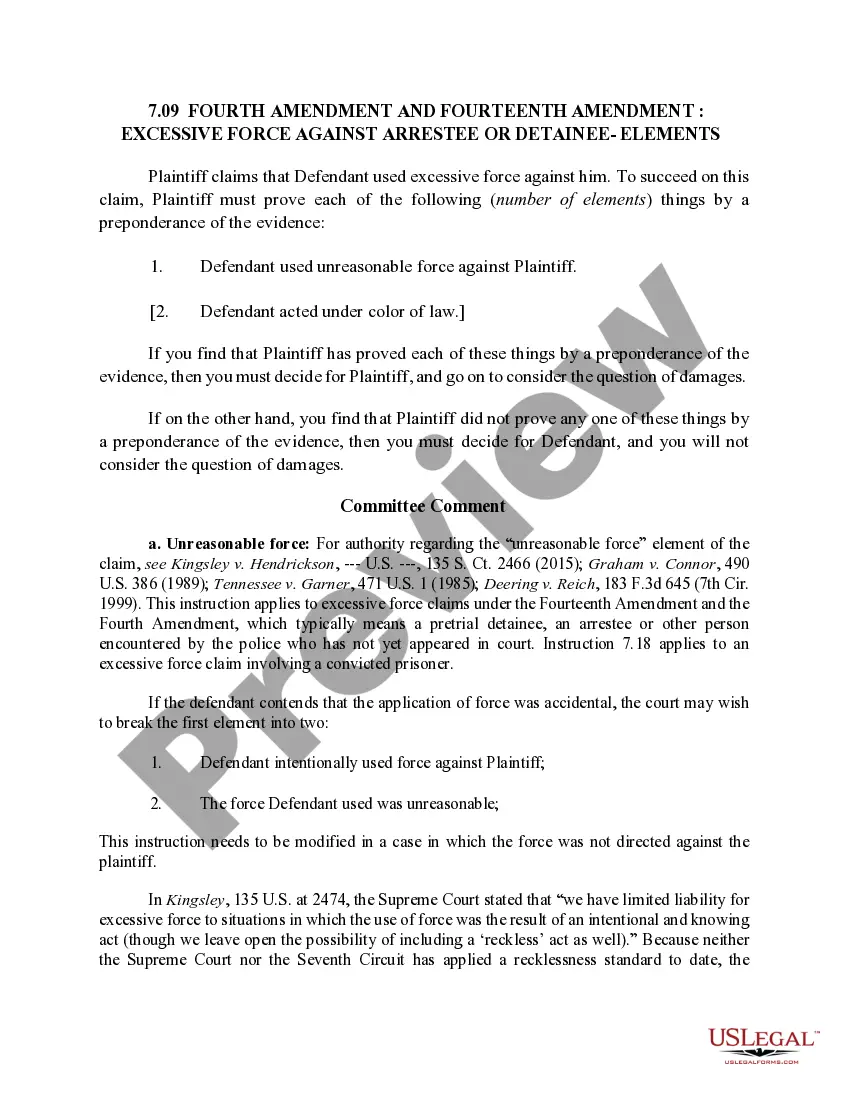
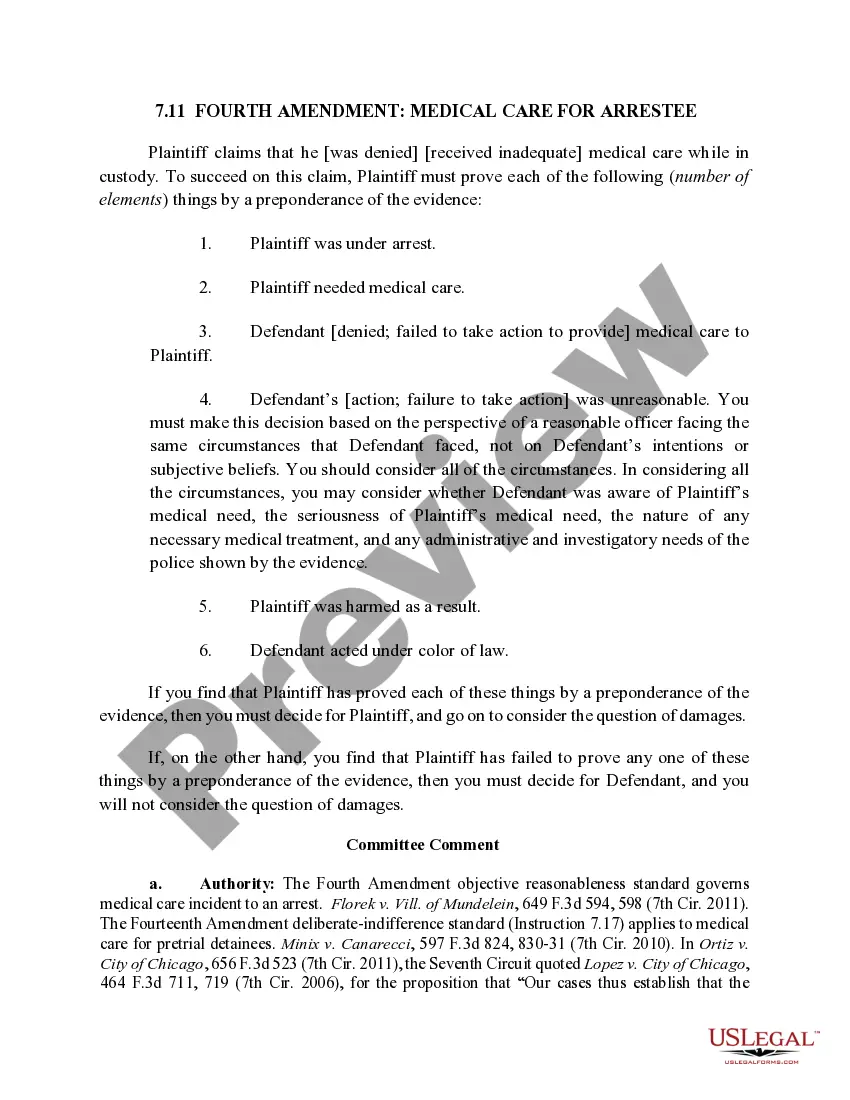
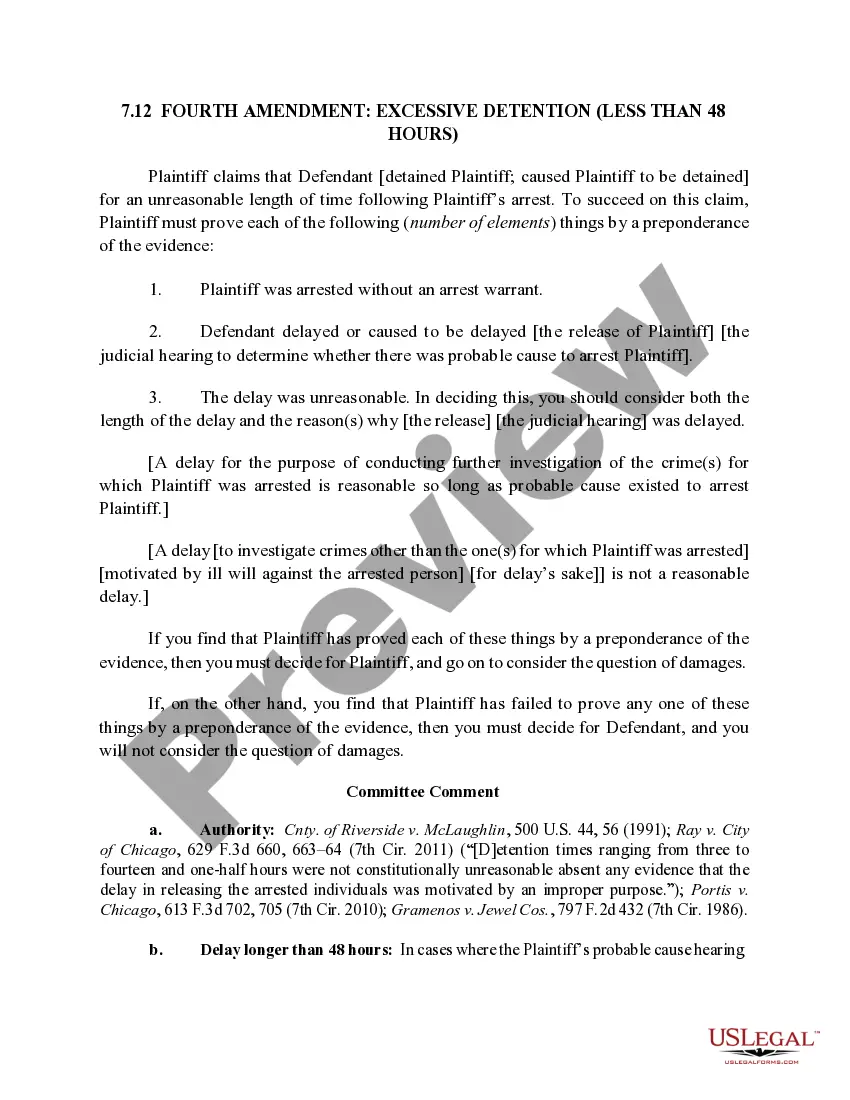
7.13 Fourth Amendment: Excessive Detention (After 48 Hours)
Overview of this form
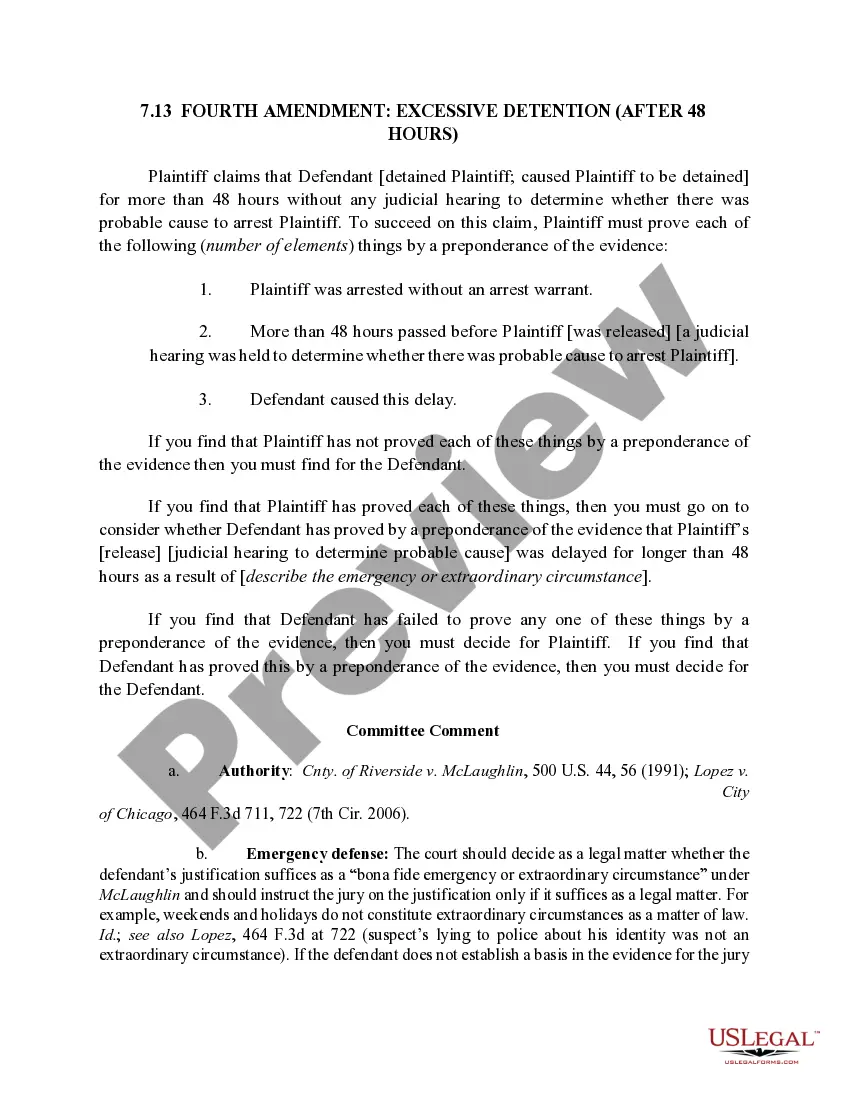
The Fourth Amendment: Excessive Detention form addresses claims related to unlawful detention without a judicial hearing. Specifically, it pertains to situations where an individual is detained for more than 48 hours without being given the opportunity for a probable cause hearing. This form, derived from official federal jury instructions, establishes the legal framework necessary for plaintiffs asserting their rights against excessive detention claims. It offers guidance in distinguishing between lawful and unlawful detentions and the conditions under which emergency circumstances may extend detention periods.
What’s included in this form
- The plaintiff's claim of unlawful detention beyond 48 hours.
- The proof required from the plaintiff that they were arrested without a warrant.
- The need to establish who caused the delay in detention.
- The potential for defendants to prove existence of an emergency or extraordinary circumstance.
- Guidance on how the timing of detention affects legal standards.

When this form is needed
This form is useful in situations where an individual believes they have been unlawfully detained by law enforcement for more than 48 hours without a judicial hearing to determine probable cause. It is relevant for cases involving wrongful arrests or prolonged detentions that lack sufficient legal justification. This form can help plaintiffs assert their rights in civil suits aimed at addressing potential violations of the Fourth Amendment.
Intended users of this form
- Individuals who have been detained by law enforcement without a proper judicial hearing.
- Legal representatives or attorneys advocating for clients in excessive detention cases.
- Citizens who seek to understand their rights concerning unlawful detentions.
Completing this form step by step
- Identify the plaintiff and defendant in the case.
- Specify the details surrounding the arrest and detention.
- Enter the duration of detention exceeding 48 hours.
- Provide evidence or details supporting the claim of unlawful detention.
- Document any emergency or extraordinary circumstances that the defendant may argue.
Notarization guidance
In most cases, this form does not require notarization. However, some jurisdictions or signing circumstances might. US Legal Forms offers online notarization powered by Notarize, accessible 24/7 for a quick, remote process.
Get your form ready online
Our built-in tools help you complete, sign, share, and store your documents in one place.
Make edits, fill in missing information, and update formatting in US Legal Forms—just like you would in MS Word.
Download a copy, print it, send it by email, or mail it via USPS—whatever works best for your next step.
Sign and collect signatures with our SignNow integration. Send to multiple recipients, set reminders, and more. Go Premium to unlock E-Sign.
If this form requires notarization, complete it online through a secure video call—no need to meet a notary in person or wait for an appointment.
We protect your documents and personal data by following strict security and privacy standards.

Make edits, fill in missing information, and update formatting in US Legal Forms—just like you would in MS Word.

Download a copy, print it, send it by email, or mail it via USPS—whatever works best for your next step.

Sign and collect signatures with our SignNow integration. Send to multiple recipients, set reminders, and more. Go Premium to unlock E-Sign.

If this form requires notarization, complete it online through a secure video call—no need to meet a notary in person or wait for an appointment.

We protect your documents and personal data by following strict security and privacy standards.
Typical mistakes to avoid
- Failing to provide sufficient evidence that detention exceeded 48 hours.
- Not clearly establishing the lack of a warrant at the time of arrest.
- Overlooking the requirement to show how the defendant caused the detention delay.
- Neglecting to consider if emergency circumstances may apply.
Benefits of completing this form online
- Convenience of downloading and filling out the form at your own pace.
- Editability, allowing you to customize your claim as needed.
- Access to legally drafted templates reviewed by licensed attorneys for reliability.
Legal use & context
- This form aligns with federal standards for addressing excessive detention claims.
- Helps plaintiffs navigate the judicial process of proving unlawful detention.
- Enforceable in civil court if the necessary criteria outlined in the form are met.
Looking for another form?

Form popularity
FAQ
Overview of the Fourth Amendment Under the Fourth Amendment , anyone in the United States, citizen or not, has the constitutional right to be free from excessive force by police officers, sheriff's deputies, highway patrol officers, federal agents, and other law enforcement officials.
Examples of excessive force include: An officer who shoots a person with a service weapon. Illegal use of a baton and causing an assault and battery on a person. Unlawful use of a Taser. Assaulting a person while they are already in handcuffs or police custody.
Overview of the Fourth Amendment Under the Fourth Amendment , anyone in the United States, citizen or not, has the constitutional right to be free from excessive force by police officers, sheriff's deputies, highway patrol officers, federal agents, and other law enforcement officials.
If the excessive-force victim succeeds at trial, a jury may allow damages for pain, suffering, and to make an example out of the defendant's conduct?also known as ?punitive? damages. The victim may also get the losing party to pay the victim's attorney's fees (and costs), under 42 U.S.C. § 1988.
For example, consider the following scenarios: An arrest is found to violate the Fourth Amendment because it was not supported by probable cause or a valid warrant. Any evidence obtained through that unlawful arrest, such as a confession, will be kept out of the case.
Generally, a search or seizure is illegal under the Fourth Amendment if it happens without consent, a warrant, or probable cause to believe a crime has been committed.
Excessive force is generally prohibited by the Fourth, Eighth, and Fourteenth Amendments.
The Eighth Amendment to the United States Constitution states: ?Excessive bail shall not be required, nor excessive fines imposed, nor cruel and unusual punishments inflicted.? This amendment prohibits the federal government from imposing unduly harsh penalties on criminal defendants, either as the price for obtaining