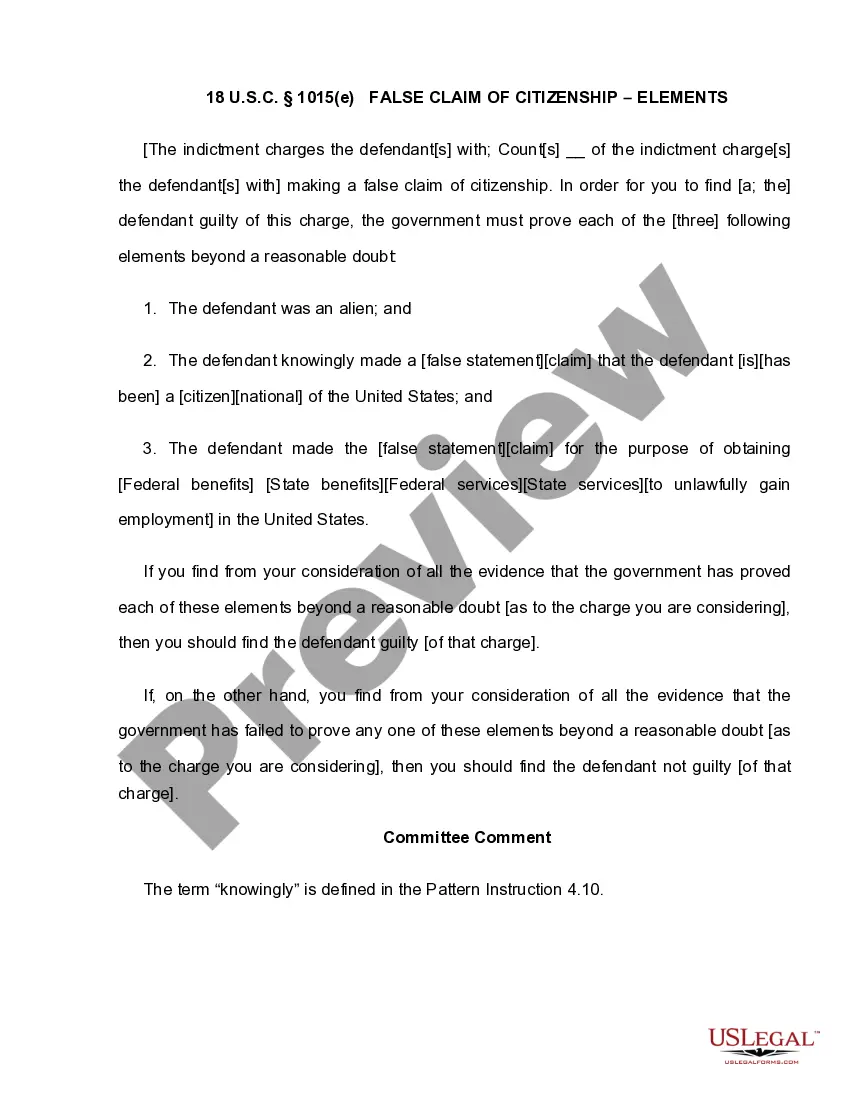
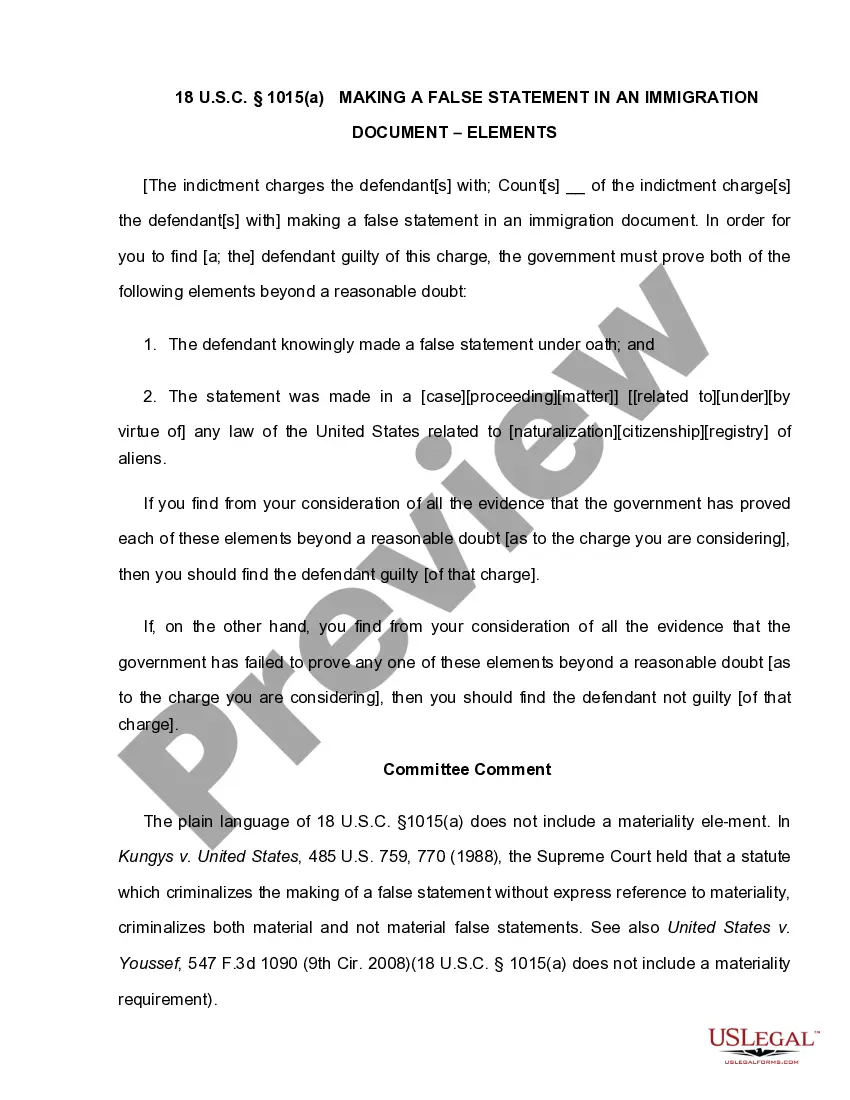
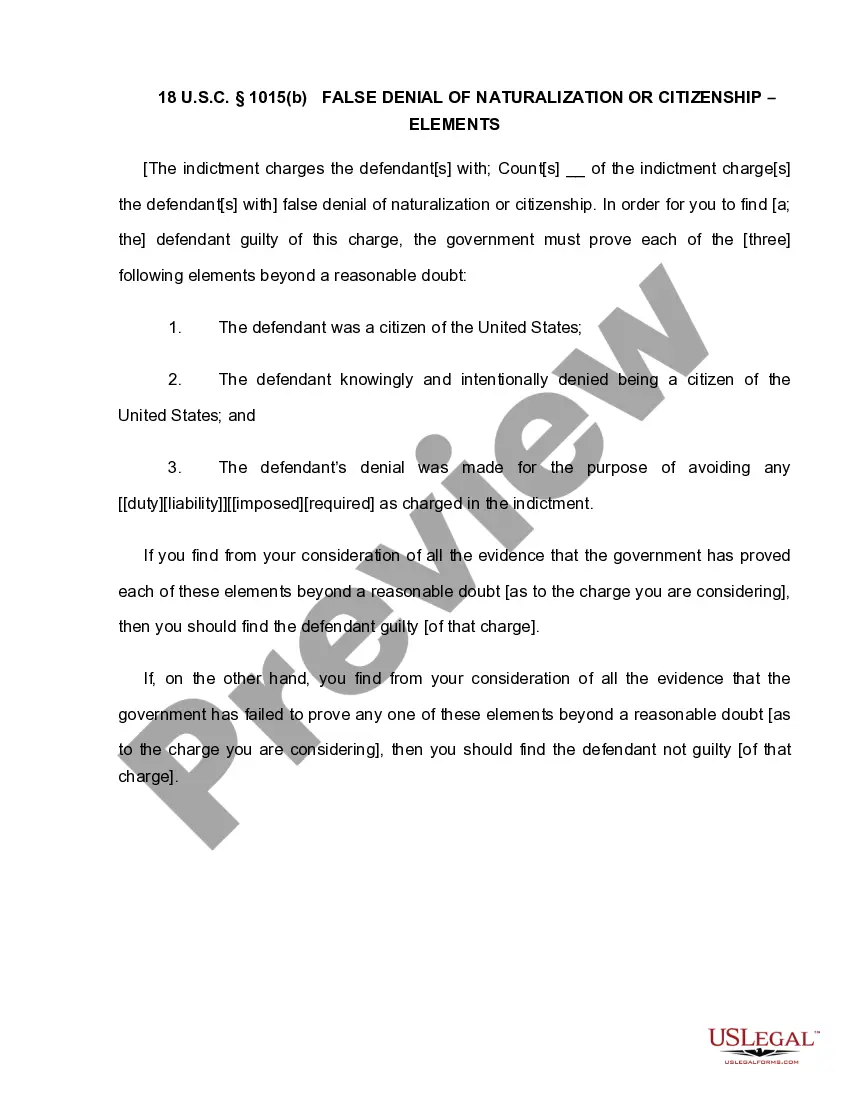
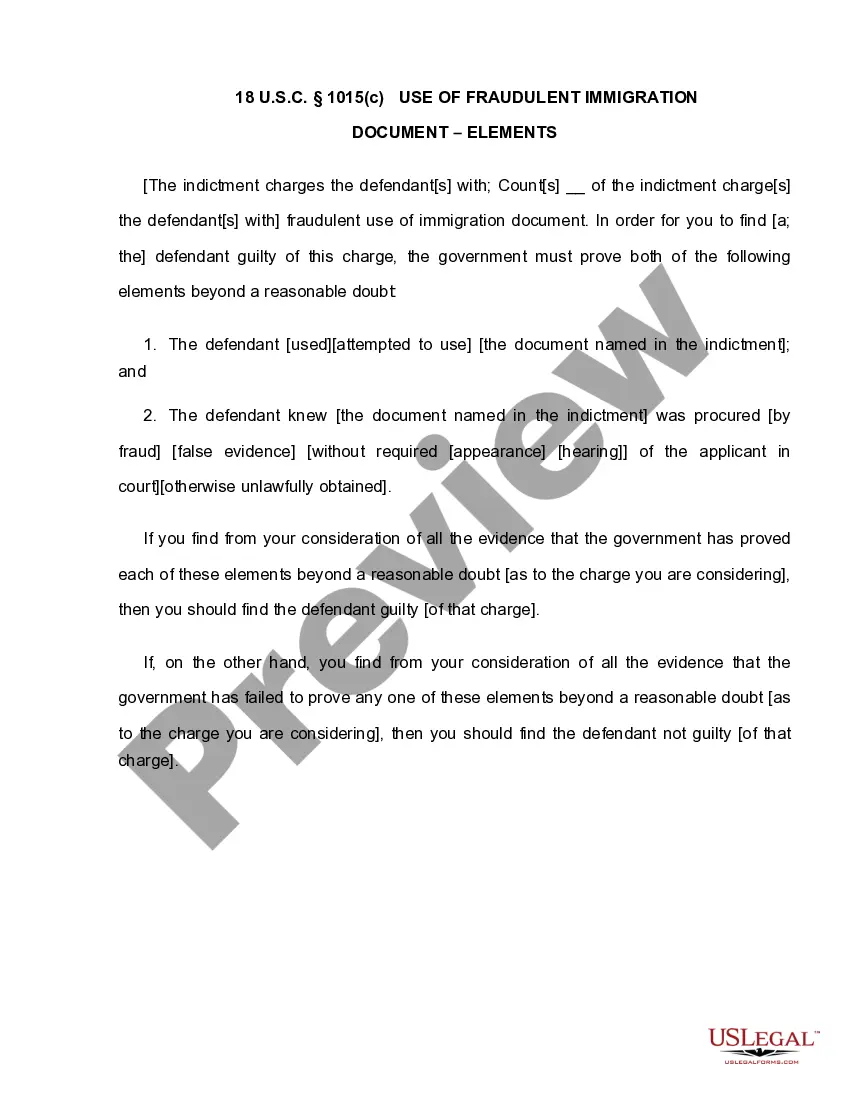
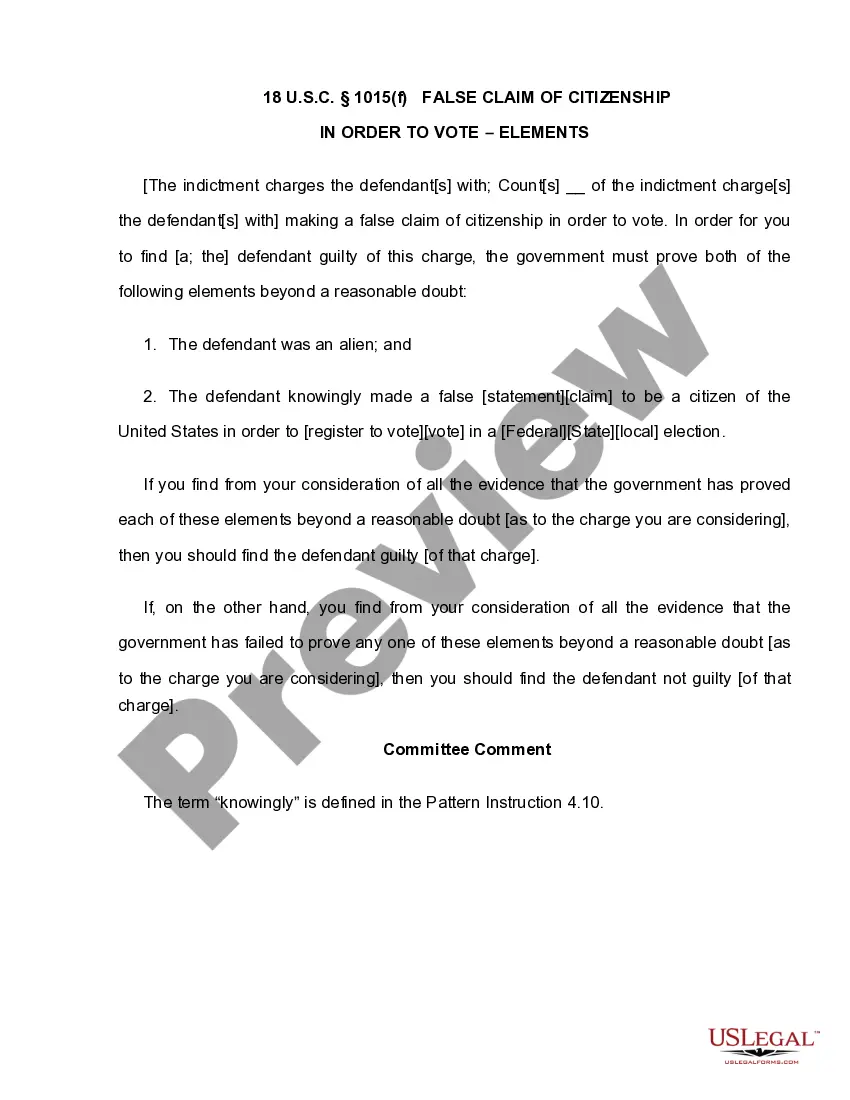
18 U.S.C. Sec. 1015(e) FALSE CLAIM OF CITIZENSHIP - ELEMENTS

Is notarization required?
This form does not typically require notarization to be legally valid. However, some jurisdictions or document types may still require it. US Legal Forms provides secure online notarization powered by Notarize, available 24/7 for added convenience.
Get your form ready online
Our built-in tools help you complete, sign, share, and store your documents in one place.
Make edits, fill in missing information, and update formatting in US Legal Forms—just like you would in MS Word.
Download a copy, print it, send it by email, or mail it via USPS—whatever works best for your next step.
Sign and collect signatures with our SignNow integration. Send to multiple recipients, set reminders, and more. Go Premium to unlock E-Sign.
If this form requires notarization, complete it online through a secure video call—no need to meet a notary in person or wait for an appointment.
We protect your documents and personal data by following strict security and privacy standards.

Make edits, fill in missing information, and update formatting in US Legal Forms—just like you would in MS Word.

Download a copy, print it, send it by email, or mail it via USPS—whatever works best for your next step.

Sign and collect signatures with our SignNow integration. Send to multiple recipients, set reminders, and more. Go Premium to unlock E-Sign.

If this form requires notarization, complete it online through a secure video call—no need to meet a notary in person or wait for an appointment.

We protect your documents and personal data by following strict security and privacy standards.
Looking for another form?

Form popularity
FAQ
Defenses to a False Claim of Citizenship False claims made after the date of enactment cannot be waived. False Claims by a Child will not Cause Deportation if: the child's parents were U.S. citizens by birth or naturalization. the child made the false claim when he or she was under age 18.
Acts Proving Good Moral Character Any special recognition or awards from your employer or school can help prove your case. Any proof of community involvement or involvement with a religious organization will also help prove good moral character.
Under the law, an alien is inadmissible or deportable if the alien falsely represents him or herself to be a citizen of the United States for any purpose or benefit under immigration law or under other federal or state law.
The inadmissibility ground for false claims of U.S. citizenship is found in INA § 212(a)(6)(C)(ii). This provision states that anyone who falsely represents themselves as being a U.S. citizen for any purpose or benefit under the INA, federal, or state law is inadmissible.
The U.S. Citizenship and Immigration Services (USCIS) policy manual for adjudicators defines Good Moral Character as ?character which measures up to the standards of average citizens of the community where the applicant resides.? Simply put, it means proving that you are an upstanding member of society.
Unlawful voter registration and false claims to U.S. citizenship made during the statutory period can therefore bar an individual from establishing good moral character because they may be considered unlawful acts under federal or state law.
The good moral character naturalization provision allows the United States government to conclude whether a green card holder would be a good fit for U.S. citizenship. To verify good moral character, you need to confirm that you are continuing to be a law-abiding individual free of significant offense arrests.
False claims of U.S. citizenship can lead to civil penalties for document fraud under INA § 274C. Individuals may also be criminally convicted for falsely and willfully representing U.S. citizenship and face a criminal fine or imprisonment for up to three years.