Preliminary and Explanatory Instructions to Innominate (Anonymous) Jury
About this form
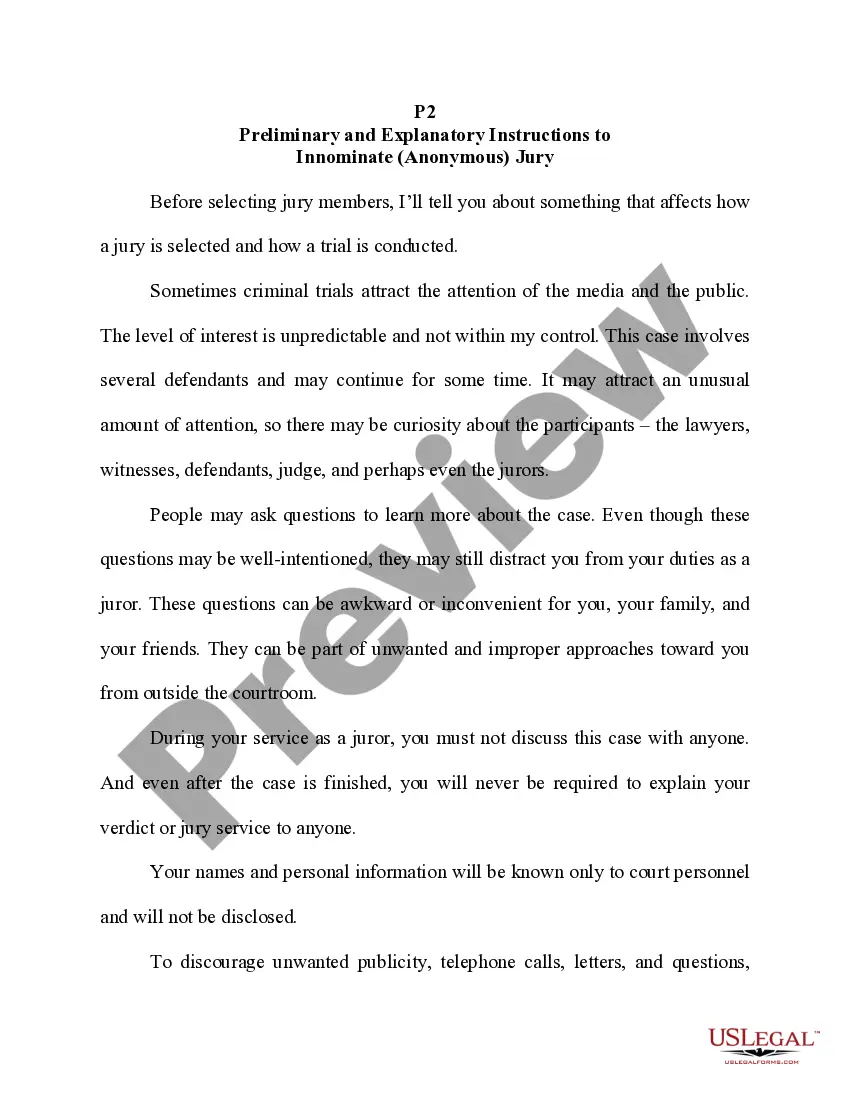
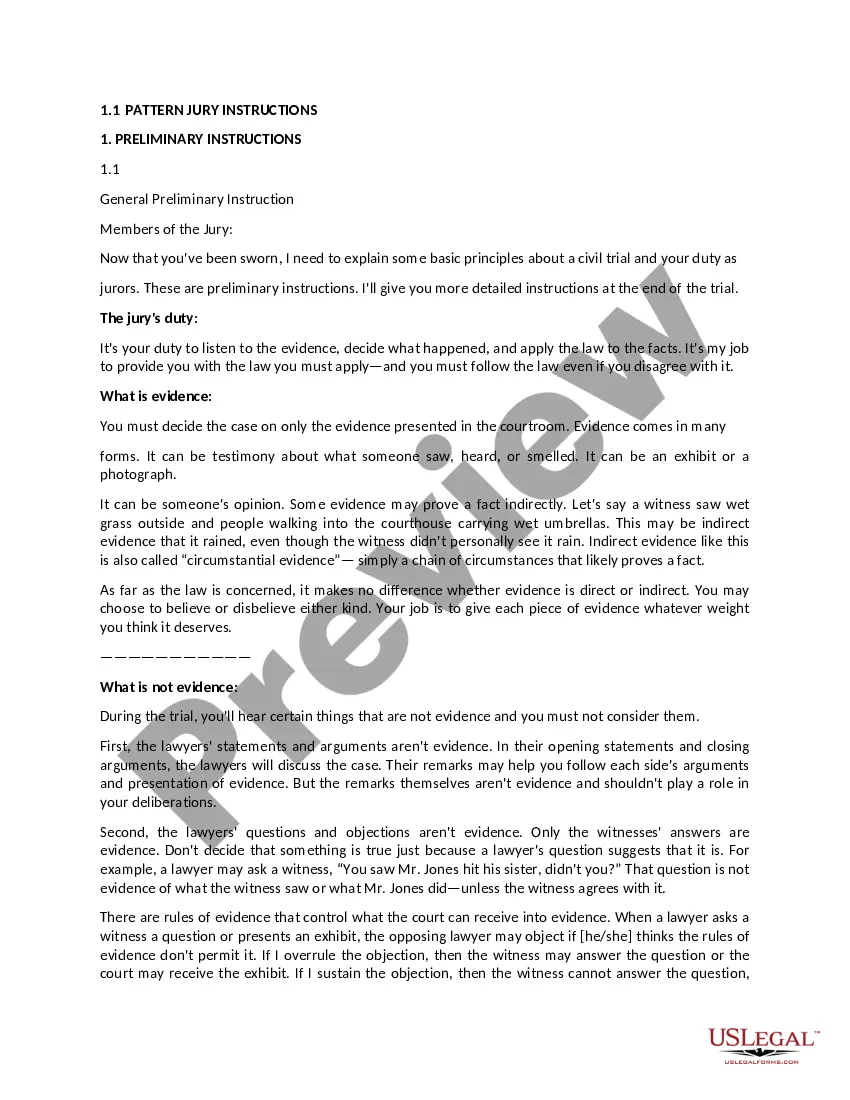
The Preliminary and Explanatory Instructions to Innominate (Anonymous) Jury is designed to guide jurors on the unique circumstances surrounding their jury service in high-profile criminal trials. This form emphasizes the importance of confidentiality and the jurors' responsibilities, distinguishing it from other jury instructions by specifically addressing the management of juror anonymity amid public interest in the case.
Form components explained
- Introduction to potential media scrutiny during the trial.
- Instructions on maintaining confidentiality and avoiding discussion about the case.
- Information on how jurors will be referenced during the trial process.
- Guidance on the unwelcome attention jurors may face.
- Reassurance that juror names and personal details will be kept confidential.

Situations where this form applies
This form is used during criminal trials where there is a potential for significant media coverage and public interest, especially when multiple defendants are involved. It helps jurors understand their rights and responsibilities regarding confidentiality and the handling of inquiries about their service.
Who this form is for
- Judges overseeing criminal trials with high media attention.
- Court personnel responsible for managing juror selection and instructions.
- Jurors participating in trials where anonymity is a concern.
How to prepare this document
- Begin by explaining the importance of anonymity to the jurors.
- Address potential concerns about media inquiries and personal attention.
- Reiterate the requirement for jurors not to discuss the case with anyone during the trial.
- Provide jurors with their anonymous juror number for reference.
- Conclude by assuring jurors their personal information will remain confidential throughout the process.
Notarization guidance
In most cases, this form does not require notarization. However, some jurisdictions or signing circumstances might. US Legal Forms offers online notarization powered by Notarize, accessible 24/7 for a quick, remote process.
Get your form ready online
Our built-in tools help you complete, sign, share, and store your documents in one place.
Make edits, fill in missing information, and update formatting in US Legal Forms—just like you would in MS Word.
Download a copy, print it, send it by email, or mail it via USPS—whatever works best for your next step.
Sign and collect signatures with our SignNow integration. Send to multiple recipients, set reminders, and more. Go Premium to unlock E-Sign.
If this form requires notarization, complete it online through a secure video call—no need to meet a notary in person or wait for an appointment.
We protect your documents and personal data by following strict security and privacy standards.

Make edits, fill in missing information, and update formatting in US Legal Forms—just like you would in MS Word.

Download a copy, print it, send it by email, or mail it via USPS—whatever works best for your next step.

Sign and collect signatures with our SignNow integration. Send to multiple recipients, set reminders, and more. Go Premium to unlock E-Sign.

If this form requires notarization, complete it online through a secure video call—no need to meet a notary in person or wait for an appointment.

We protect your documents and personal data by following strict security and privacy standards.
Avoid these common issues
- Jurors discussing the case with friends or family, violating confidentiality.
- Failing to understand the importance of their juror number for anonymity.
- Underestimating the impact of media attention on the trial process.
Benefits of using this form online
- Convenience of accessing the form from anywhere, anytime.
- Editability allows for tailored instructions specific to the case.
- Reliable standard wording to ensure compliance with federal guidelines.
Legal use & context
- This form provides essential guidance to jurors, ensuring their rights and responsibilities are clearly communicated.
- Helps to maintain the integrity of the trial process by minimizing outside influence.
Quick recap
- The form serves to instruct jurors on handling their duties amidst potential media scrutiny.
- Confidentiality is crucial, and jurors must avoid discussing the case.
- Anonymity protects jurors from unwanted public attention.
Looking for another form?
Form popularity
FAQ
Summary: Preliminary substantive jury instructions are instructions provided to jurors at the start of a trial, before the presentation of evidence by the parties, on the elements of a claim or defense.
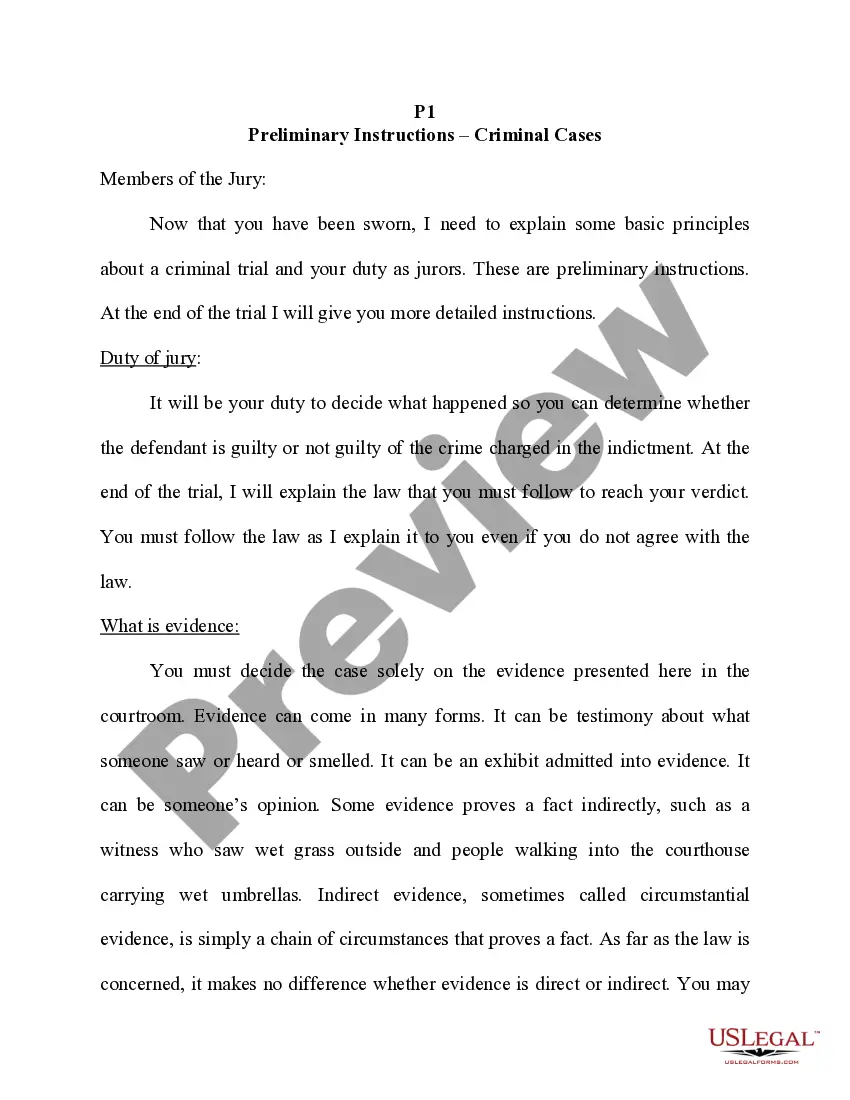
The judge will instruct the jury in each separate case as to the law of that case. For example, in each criminal case, the judge will tell the jury, among other things, that a defendant charged with a crime is presumed to be innocent and the burden of proving his guilt beyond a reasonable doubt is upon the Government.
As explained above, the closing argument is the time when the parties may forcefully argue their cases. The parties may summarize the evidence, point out discrepancies, and extensively argue how the law applies in their favor. Rather than tell a story, the closing argument is just that ? an argument.
Jury instructions should ideally be brief, concise, non-repetitive, relevant to the case's details, understandable to the average juror, and should correctly state the law without misleading the jury or inviting unnecessary speculation.
General Order (Where Defendant Introduces Evidence). provide the first closing argument, defendant then provides its full closing argument, and plaintiff then offers a rebuttal of defendant's argument.
Following the closing arguments, the judge ?charges the jury,? or informs them of the appropriate law and of what they must do to reach a verdict.
In its current form, Rule 30 requires that the court instruct the jury after the arguments of counsel. In some districts, usually where the state practice is otherwise, the parties prefer to stipulate to instruction before closing arguments.
In its current form, Rule 30 requires that the court instruct the jury after the arguments of counsel. In some districts, usually where the state practice is otherwise, the parties prefer to stipulate to instruction before closing arguments.