New Mexico Commercial Rental Lease Application Questionnaire
Overview of this form
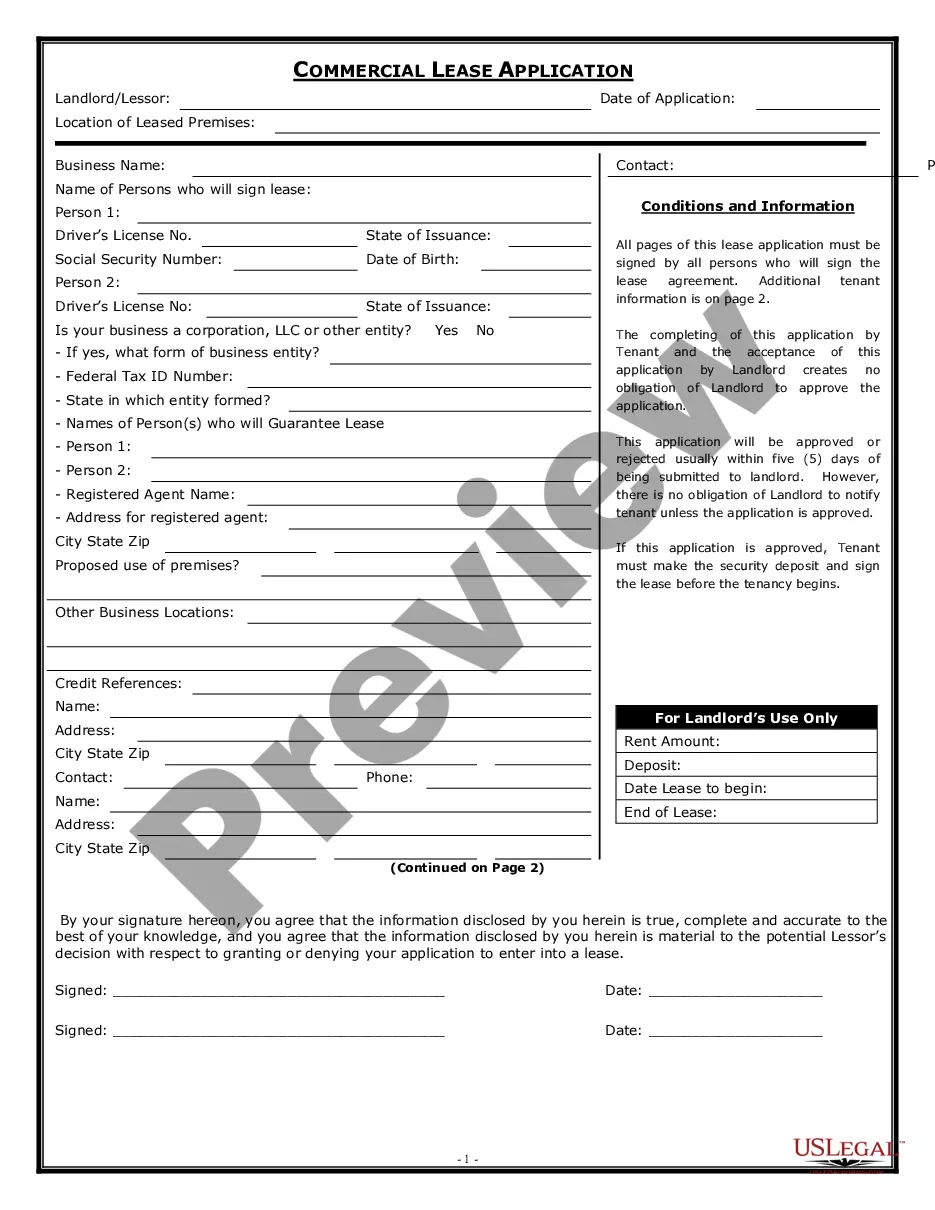
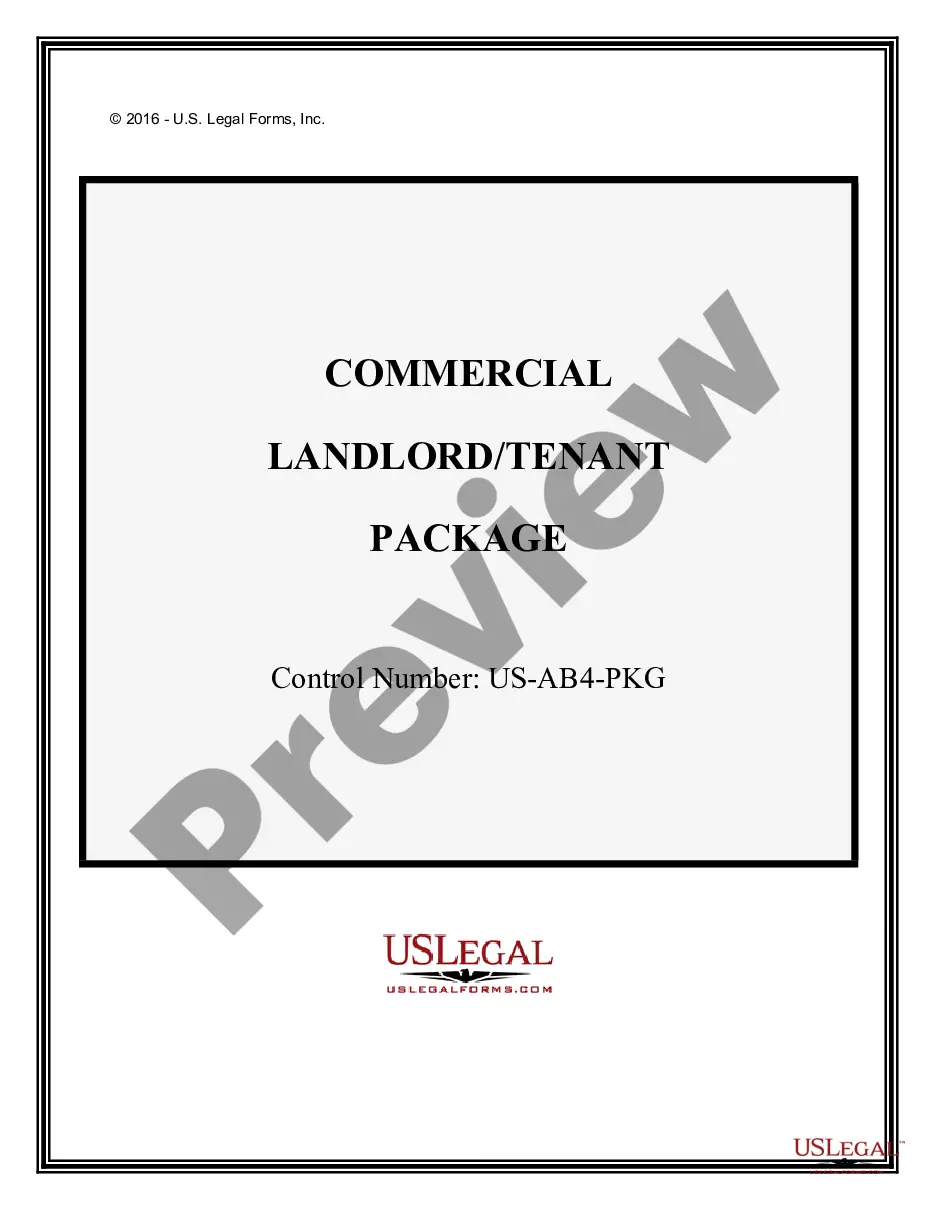
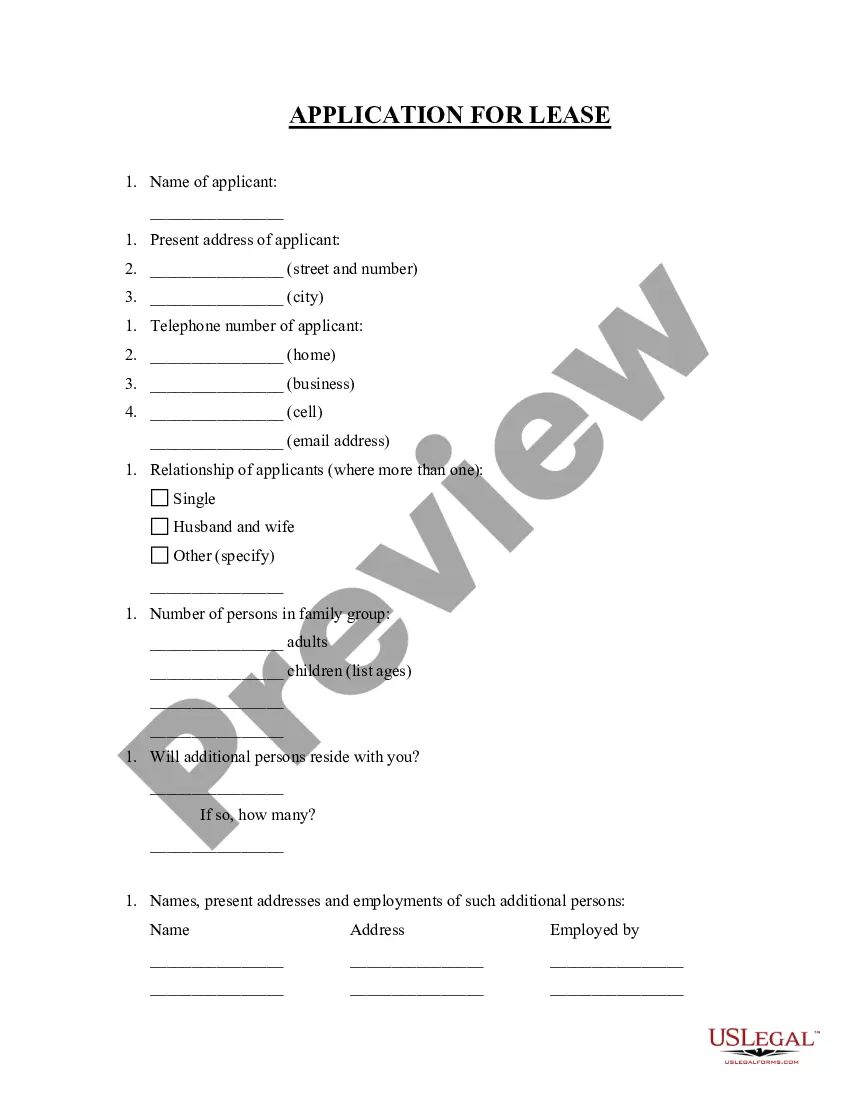
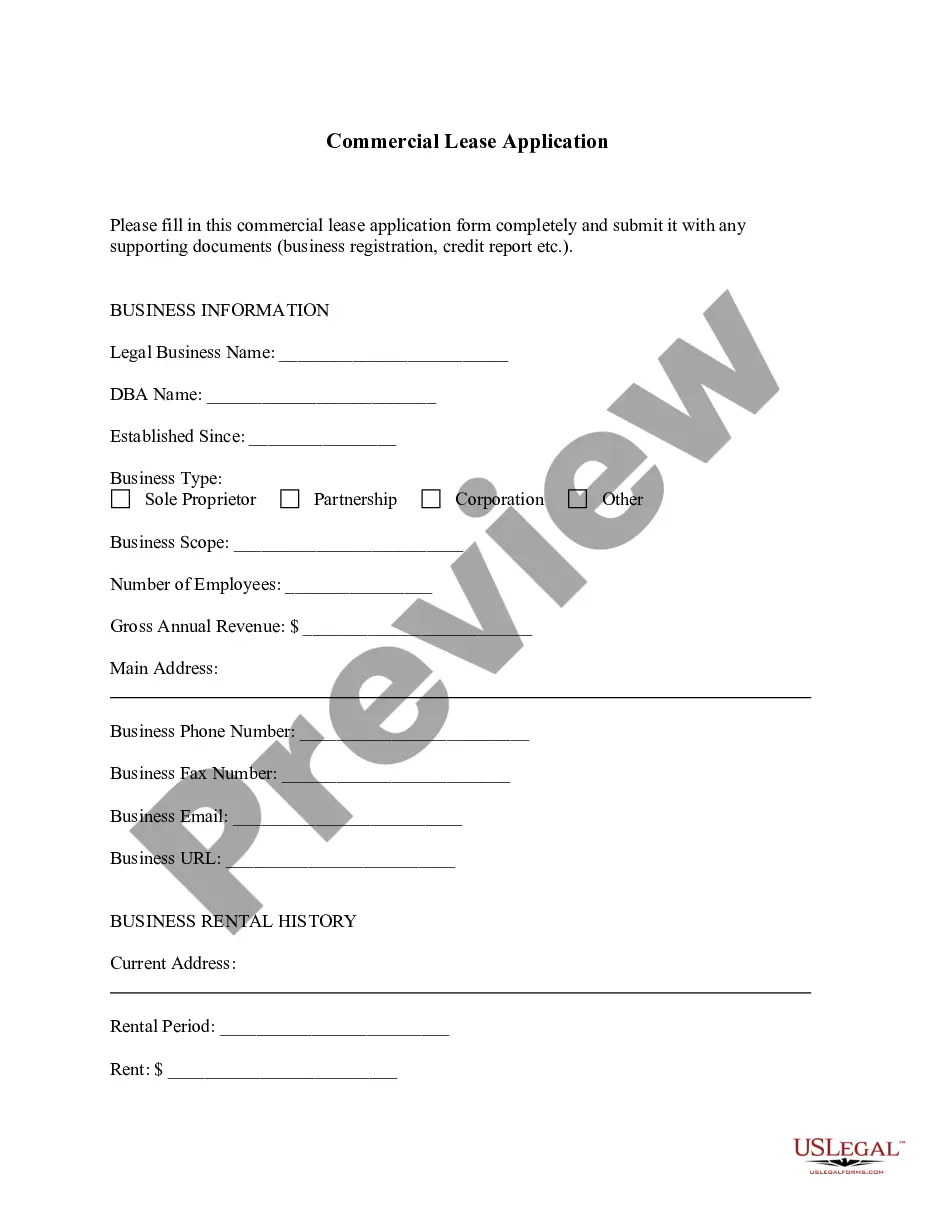
The Commercial Rental Lease Application Questionnaire is a legal document that allows landlords to collect essential information from potential tenants before finalizing a commercial lease. Unlike residential lease applications, this questionnaire is tailored for business-oriented properties and includes specific disclosures and authorizations for information release. It serves as a foundational step in the leasing process, ensuring landlords make informed decisions regarding rental agreements.
What’s included in this form
- Applicant information: Including name, address, and contact details.
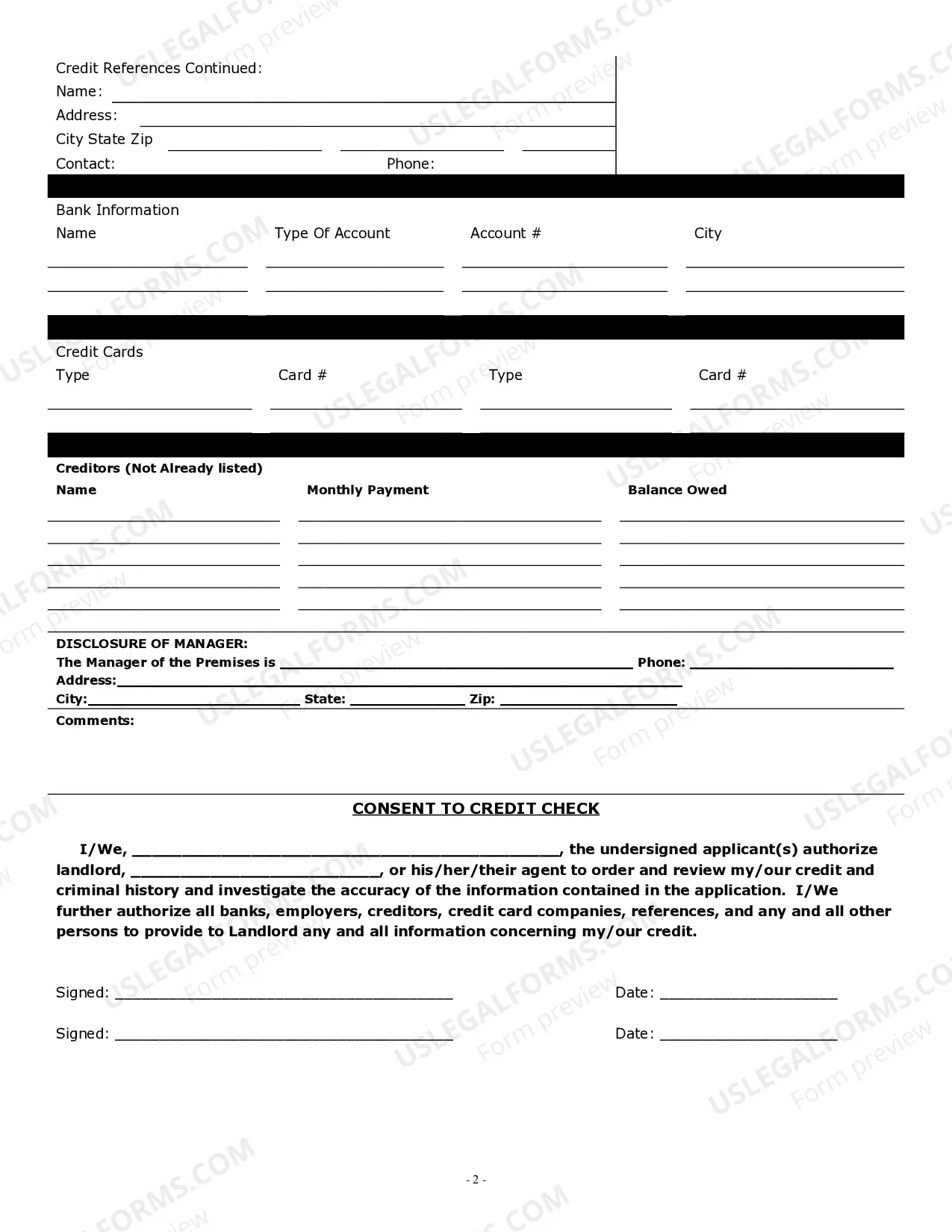
- Disclosure of background: Grants permission for landlords to check credit and criminal history.
- Financial information: Requests details about bank accounts and credit card obligations.
- Landlord contact information: Includes the landlord's or property manager's name and contact details.
- Disclosures: Important notices regarding the application process and landlord obligations.

When to use this form
This form is typically used when a business seeks to lease commercial property. If you are a landlord looking for potential tenants, providing this application helps gather necessary applicant information. It should be completed before entering any lease agreements, ensuring both parties are informed and prepared for the lease terms.
Intended users of this form
The following individuals or entities may find this form beneficial:
- Commercial property landlords seeking thorough tenant evaluations.
- Business owners looking to lease commercial space.
- Property management companies representing landlords during the application process.
- Real estate agents facilitating commercial leases for clients.
How to prepare this document
- Identify the parties: Provide the names and contact details of the applicant and the landlord.
- Specify the property: Detail the address and description of the commercial property being leased.
- Complete financial sections: Enter accurate information related to your financial status, including bank details and any credit obligations.
- Sign and date the form: Ensure that all individuals involved understand and agree to the information provided by signing the application.
- Submit the application: Deliver the completed questionnaire to the landlord for review and approval.
Is notarization required?
This form does not typically require notarization unless specified by local law. Always check state-specific guidelines to ensure compliance.
Get your form ready online
Our built-in tools help you complete, sign, share, and store your documents in one place.
Make edits, fill in missing information, and update formatting in US Legal Forms—just like you would in MS Word.
Download a copy, print it, send it by email, or mail it via USPS—whatever works best for your next step.
Sign and collect signatures with our SignNow integration. Send to multiple recipients, set reminders, and more. Go Premium to unlock E-Sign.
If this form requires notarization, complete it online through a secure video call—no need to meet a notary in person or wait for an appointment.
We protect your documents and personal data by following strict security and privacy standards.

Make edits, fill in missing information, and update formatting in US Legal Forms—just like you would in MS Word.

Download a copy, print it, send it by email, or mail it via USPS—whatever works best for your next step.

Sign and collect signatures with our SignNow integration. Send to multiple recipients, set reminders, and more. Go Premium to unlock E-Sign.

If this form requires notarization, complete it online through a secure video call—no need to meet a notary in person or wait for an appointment.

We protect your documents and personal data by following strict security and privacy standards.
Common mistakes to avoid
- Failing to sign the application, which can result in automatic rejection.
- Omitting essential financial information, risking inaccuracies in assessments.
- Forgetting to include references or contact details for credit checks.
- Not reviewing the form before submission, potentially leading to unintentional errors.
Benefits of completing this form online
- Convenience: Download and complete the form at any time from any location.
- Editability: Modify the form easily to suit your specific needs.
- Reliability: Ensure that you are using legally vetted documents prepared by licensed attorneys.
Legal use & context
- The application helps establish a basis for rental agreements and tenant selection.
- Completing the form accurately is essential for legal enforceability of the lease agreement.
- Landlords are advised to maintain this documentation as part of their records to defend their leasing decisions if needed.
What to keep in mind
- The Commercial Rental Lease Application Questionnaire is vital for tenant evaluations in a commercial context.
- Proper completion and accuracy of the form can facilitate a smoother leasing process.
- Understanding state-specific requirements can help prevent legal issues during the leasing process.
Looking for another form?
Form popularity
FAQ
The Letter of Intent should include the names of the parties negotiating, such as the name of the Tenant and the Property Owner/Landlord, and a list of industry standard list items. You should also include items that are important to your business when leasing commercial real estate.
Adding an Addendum An addendum must include the basic elements of any landlord/tenant agreement. You should include the date, the address of the rental property and the names of each party just as you would in the original lease.
Inspect the Property and Record Any Current Damages. Know What's Included in the Rent. Can You Make Adjustments and Customizations? Clearly Understand the Terms Within the Agreement and Anticipate Problems. Communicate with Your Landlord About Your Expectations.
Evaluate the Length of the Lease. Research Comparable Rents. Look for Hidden Costs. Ask for Favorable Clauses. Check the Termination Clause Closely.
Step 1: Write a Cover Letter. Step 2: Provide a Summary of the Proposal. Step 3: Specify the Operations of the Tenant. Step 4: Present the Cost Summary. Step 5: List the Terms of the Contract. Step 6: Mention the Benefits. >
ESSENTIAL ELEMENTS OF A VALID LEASE AGREEMENT. Competent Parties. Legal Purpose. Statute of Frauds. Reversionary Right. Property Description. Mutual Assent (Offer and Acceptance) Consideration.
The Person Liable for the Lease. Your Business Structure. How Long You Have Been in Business. The Nature of Your Business. Contact Information. Your Proposed Terms (or, Counter Offer) The Length of the Lease. Condition of the Property.
Names of all tenants. Limits on occupancy. Term of the tenancy. Rent. Deposits and fees. Repairs and maintenance. Entry to rental property. Restrictions on tenant illegal activity.
Settle ahead of time on your budget, your must-haves, and your nice-to-haves. Get an agent or lawyer to negotiate for you. Do negotiate on more than one location at the same time. Don't pay asked base rent. Check the square footage yourself.