Jury Questions
What this document covers
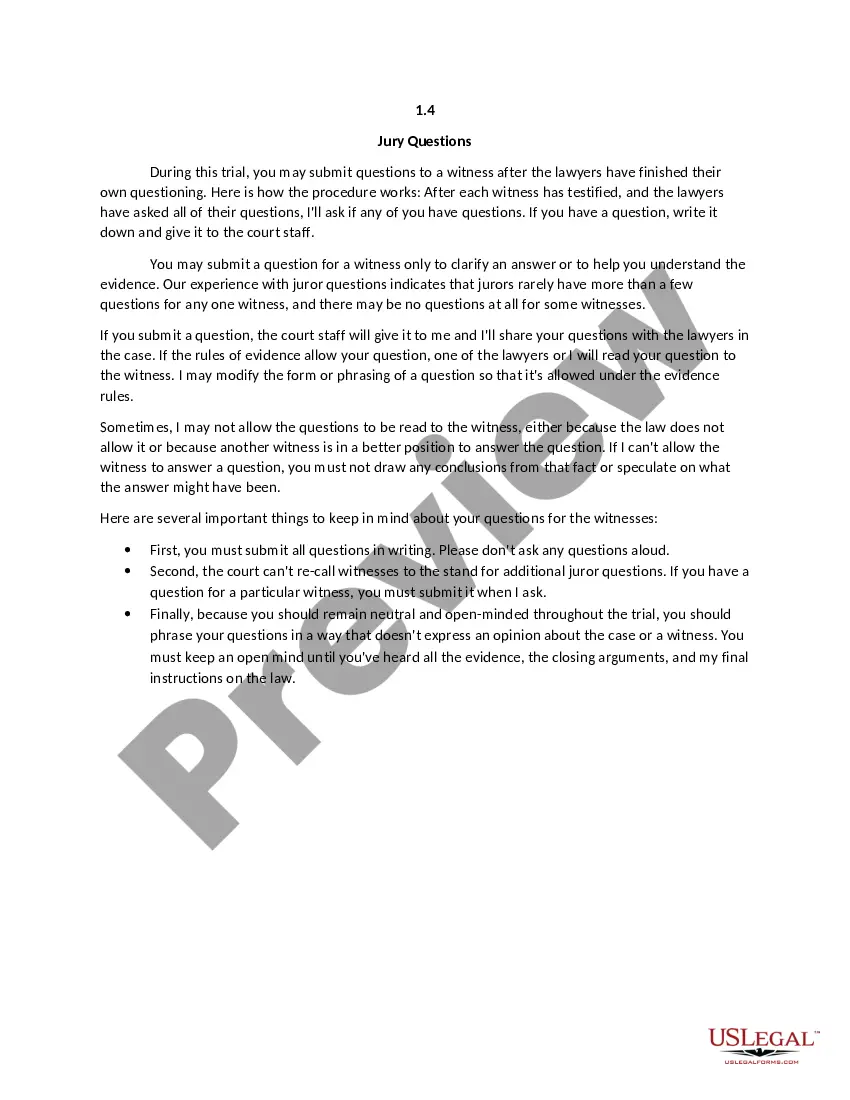
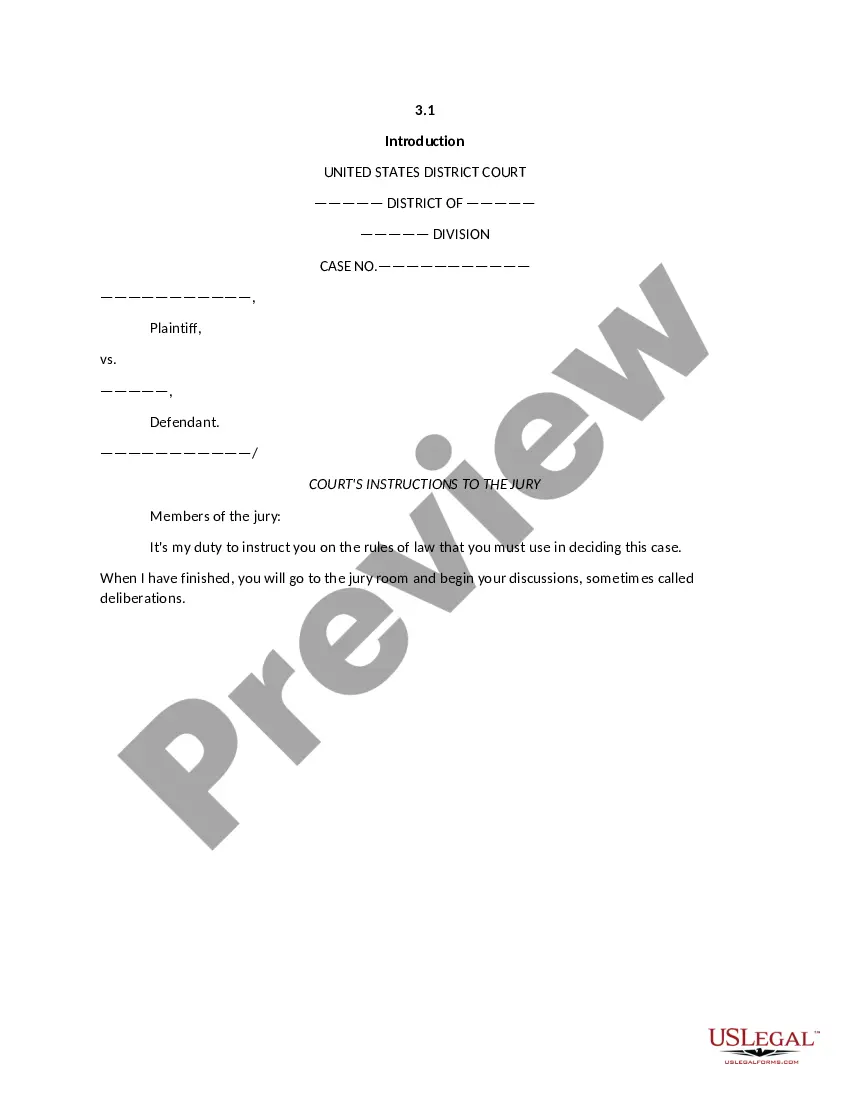
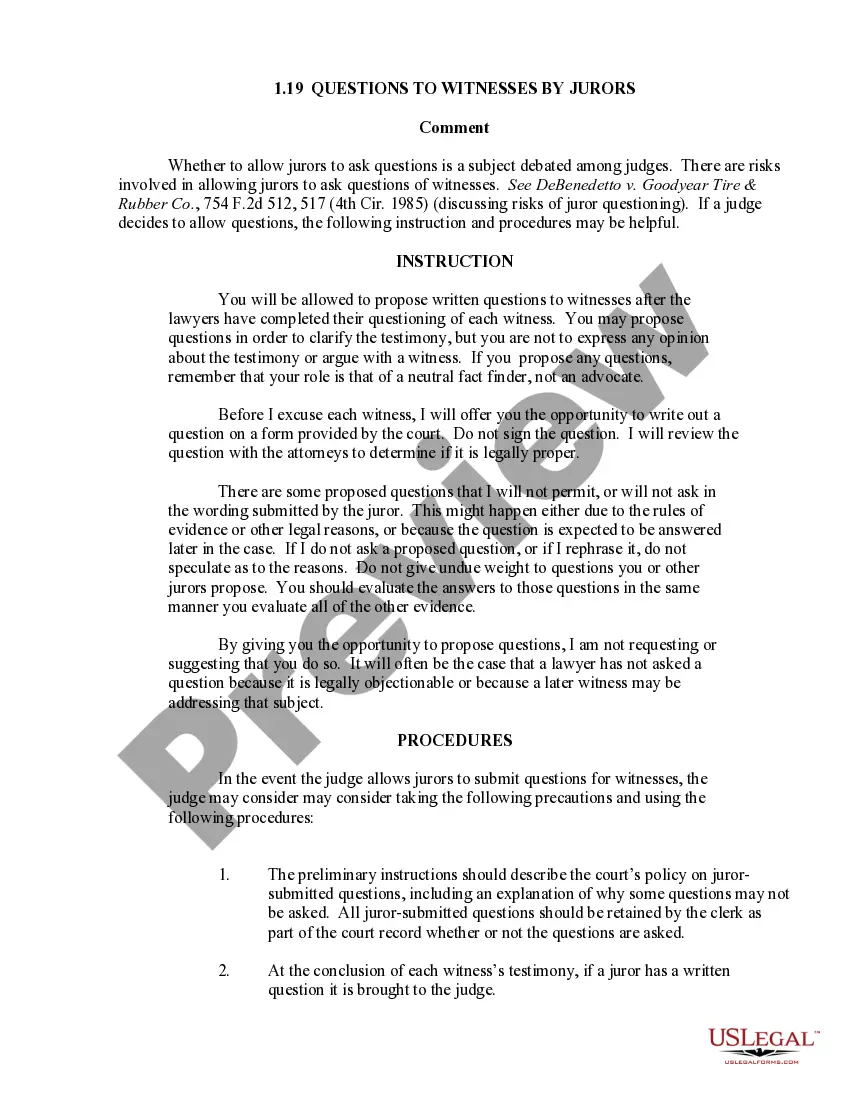
The Jury Questions form provides jurors in federal court trials with specific guidelines on how to submit questions for witnesses. This form outlines the procedure for jurors to clarify testimony or understand evidence better. It differs from regular interrogatories, as it is directed at witnesses during the trial and allows jurors to engage directly with the testimony presented, ensuring they grasp crucial details before deliberation.
Key parts of this document
- Instructions for submitting questions in writing.
- Clarification on when jurors can ask questions after testimony.
- Guidelines for formulating neutral questions.
- Explanation of how the judge or lawyers handle submitted questions.
- Warnings about speculation based on unanswered questions.

When to use this document
This form should be used during a trial when jurors have the opportunity to ask questions of witnesses after the completion of all lawyers' questioning. It is particularly important in cases where jurors may require further clarification on complex testimony or evidence to ensure an informed decision during deliberation.
Intended users of this form
- Jurors in federal court cases.
- Individuals participating in jury trials that allow for juror questions.
- Those seeking to better understand the evidence presented in court.
Completing this form step by step
- Listen carefully to the witness's testimony and the lawyers' questions.
- Write down any questions you have for the witness on a notepad.
- Submit your written questions to the court staff when asked.
- Remain neutral and avoid expressing opinions when framing your questions.
- Understand that some questions may not be allowed based on evidentiary rules.
Is notarization required?
Notarization is generally not required for this form. However, certain states or situations might demand it. You can complete notarization online through US Legal Forms, powered by Notarize, using a verified video call available anytime.
Get your form ready online
Our built-in tools help you complete, sign, share, and store your documents in one place.
Make edits, fill in missing information, and update formatting in US Legal Forms—just like you would in MS Word.
Download a copy, print it, send it by email, or mail it via USPS—whatever works best for your next step.
Sign and collect signatures with our SignNow integration. Send to multiple recipients, set reminders, and more. Go Premium to unlock E-Sign.
If this form requires notarization, complete it online through a secure video call—no need to meet a notary in person or wait for an appointment.
We protect your documents and personal data by following strict security and privacy standards.

Make edits, fill in missing information, and update formatting in US Legal Forms—just like you would in MS Word.

Download a copy, print it, send it by email, or mail it via USPS—whatever works best for your next step.

Sign and collect signatures with our SignNow integration. Send to multiple recipients, set reminders, and more. Go Premium to unlock E-Sign.

If this form requires notarization, complete it online through a secure video call—no need to meet a notary in person or wait for an appointment.

We protect your documents and personal data by following strict security and privacy standards.
Mistakes to watch out for
- Asking questions aloud instead of submitting them in writing.
- Formulating questions that express an opinion or bias.
- Submitting questions after the opportunity has passed.
- Attempting to ask questions of witnesses that are not relevant to their testimony.
Benefits of using this form online
- Easy access to clear instructions for jurors during trials.
- Streamlined process for submitting questions to enhance understanding.
- Reliable format drafted by legal professionals to ensure compliance with court procedures.
Legal use & context
- The form establishes the framework for jurors to clarify evidence.
- Questions must align with rules of evidence to be permissible.
- This process is integral to jury duty, supporting informed decisions during deliberations.
Looking for another form?
Form popularity
FAQ
Appropriate dress, such as business casual attire, is required. Tank tops, sweat pants and flip flops are not considered appropriate. You may wish to bring a light sweater or jacket as temperatures can vary in the courtrooms.
Prospective jurors are paid $30.00 per day for each day appearing for jury service up to and including ten (10) days. On the eleventh (11th) consecutive day and thereafter, you are paid $45.00 per day. You will sign in each day you are required to report for jury duty.
Always check for up-to-date reporting instructions. What is the dress code for jurors? Appropriate attire for jurors is clothing that would be worn for an important business meeting. You are requested not to wear shorts, tank tops, tee shirts, halters or similar attire when reporting for jury service.
If you cannot give a good reason why you missed jury duty, the judge can hold you in contempt of court. The punishment for missing jury duty can include a fine of up to $500, a jail sentence of up to ten days, or both a fine and jail time. Most judges will order a minimal fine.
Excuse from Service You have no means of transportation. You would have to travel an excessive distance to the courthouse. You have a physical or mental impairment. You provide care for a dependent and cannot afford to have someone cover for you. Serving would be an extreme financial burden.
Jurors must wear suitable attire when serving. Blue jeans are acceptable, but cannot be torn. All clothing should be neat in appearance without being provocative or gaudy. Skirts must reach and extend below the fingertip.
Is there an exemption due to my age? Pennsylvania law does not exclude persons due to their age. Jurors are to be over the age of 18. However, if you are 70 years of age or older you may be excused without a doctor's note.
Types of Questions Asked During Juror Voir Dire General Biographical Information. Often, jurors will be asked to state the neighborhood or area they live in, their profession, whether they have children, are married, and so on.Prior Experiences.Special Knowledge.