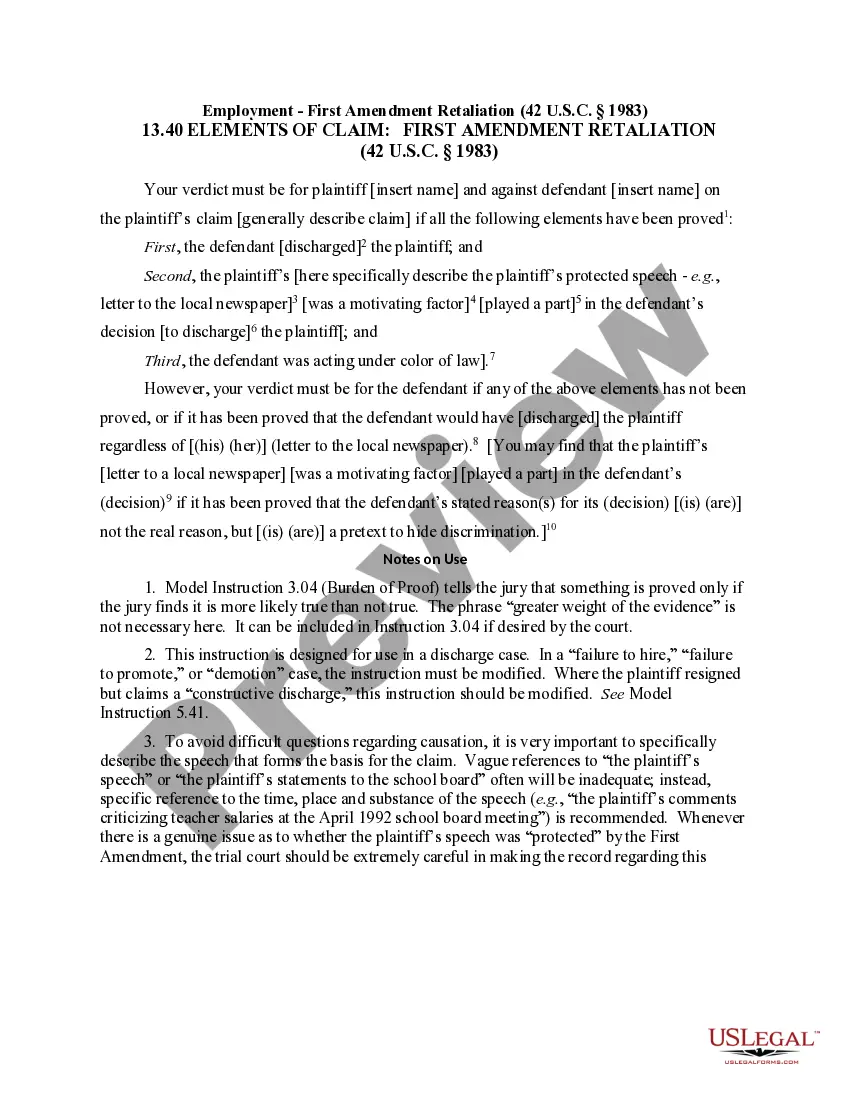
13.40 ELEMENTS OF CLAIM: FIRST AMENDMENT RETALIATION (42 U.S.C. Civ. 1983)
What is this form?
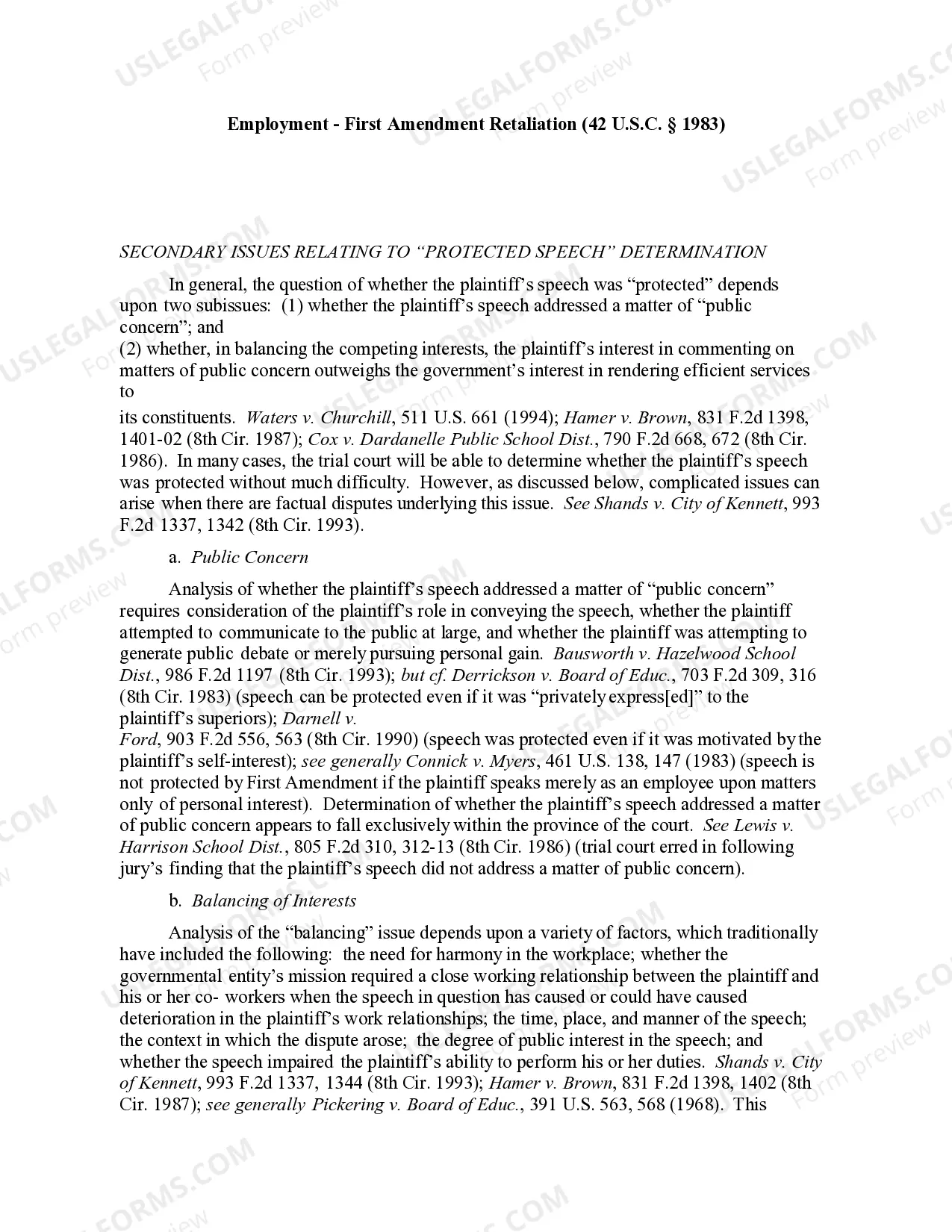
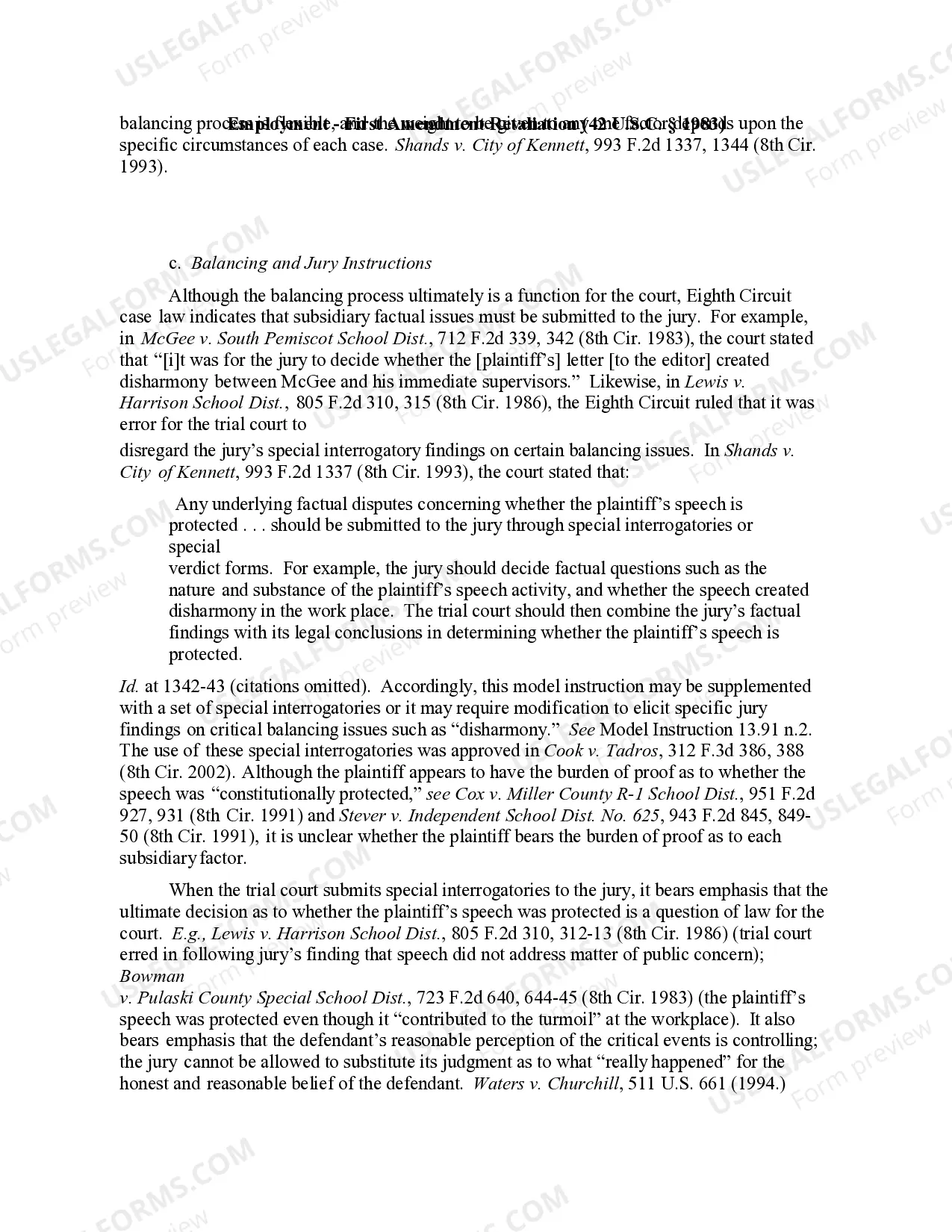
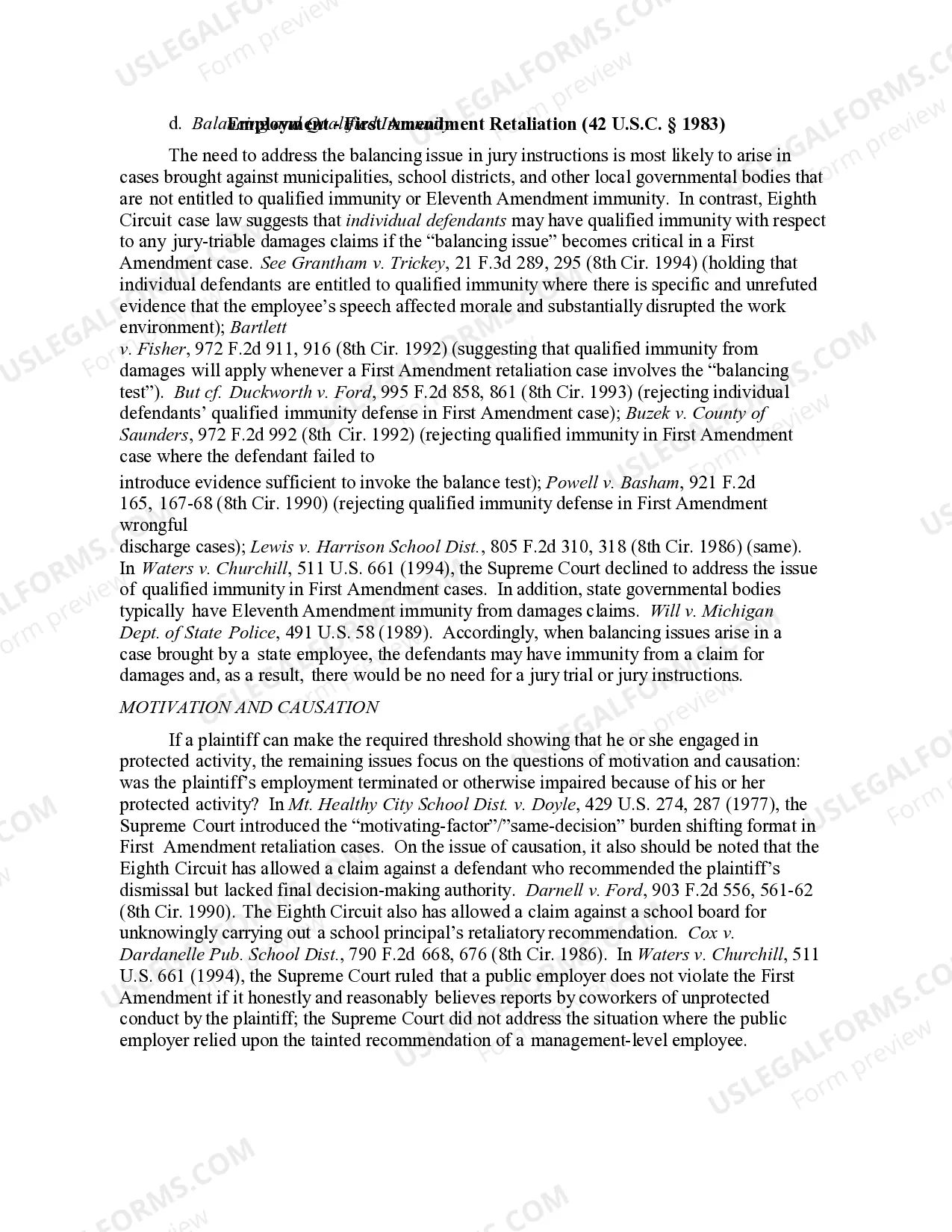
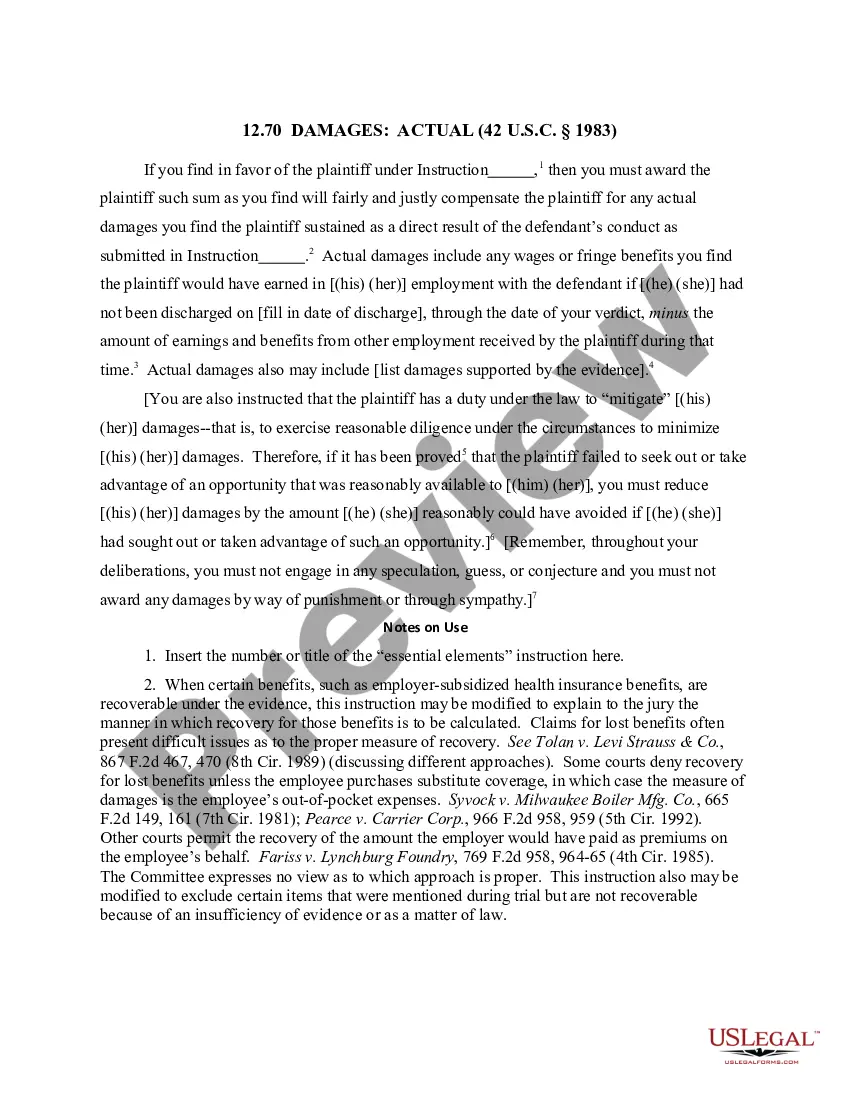
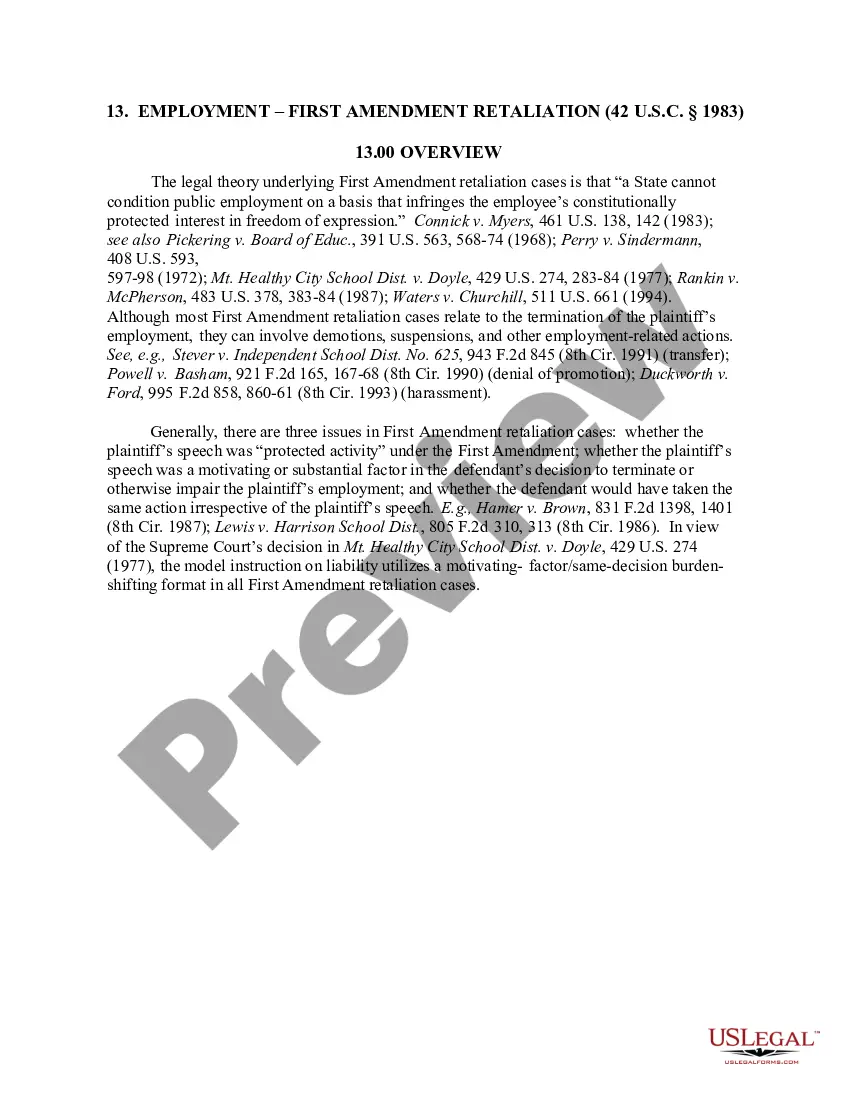
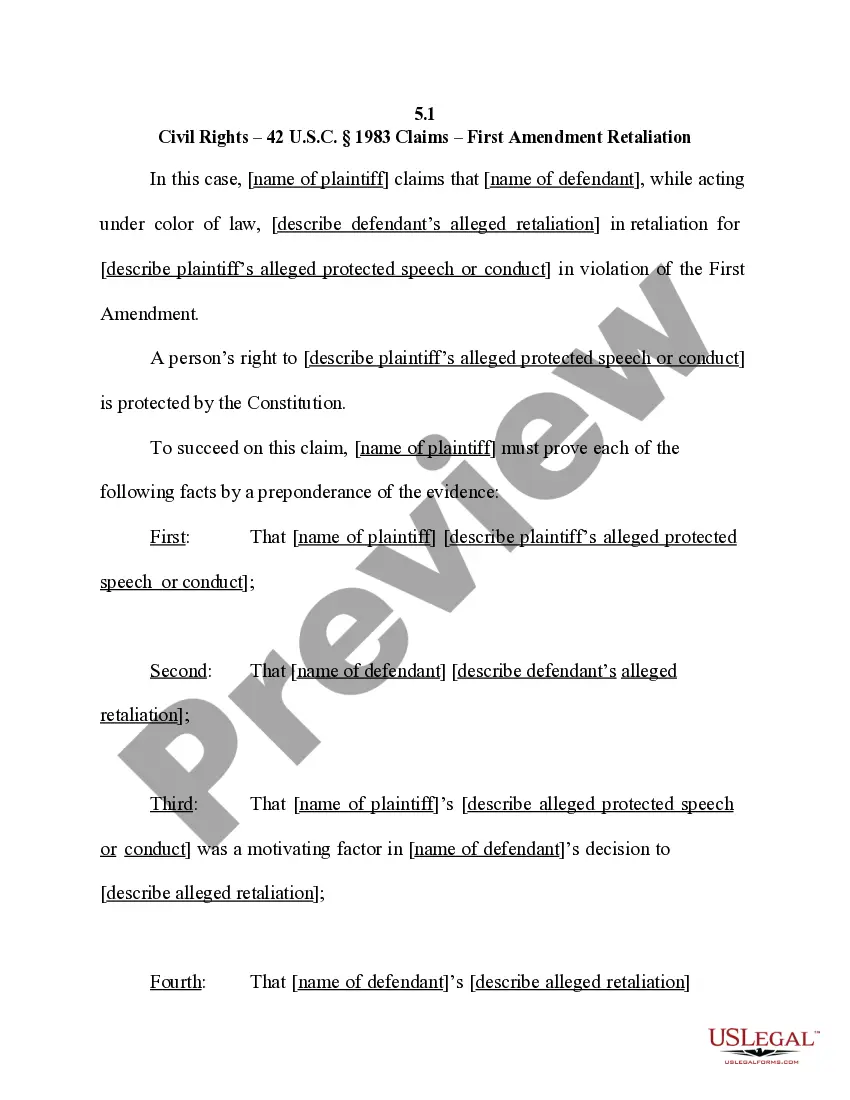
The 13.40 elements of claim: First Amendment retaliation form is a legal document used to file a claim against a defendant under 42 U.S.C. § 1983, alleging retaliation for protected speech. This form is essential for plaintiffs asserting their rights when they believe they were punished for exercising their First Amendment rights. Unlike other employment-related legal forms, this one specifically addresses claims of retaliation based on free speech in the public sector.
Form components explained
- Identification of parties involved, including plaintiff and defendant.
- Details of the plaintiff's protected speech that led to the claim.
- Statement regarding the motivation behind the defendant's actions.
- Confirmation that the defendant was acting under color of law.
- Conditions under which the verdict must be in favor of the defendant.
When this form is needed
This form should be used in situations where an employee believes they have been subjected to adverse actionsâsuch as discharge, failure to hire, or demotionâdue to their engagement in protected speech. It is applicable when the speech addresses matters of public concern and the employer's decision can be attributed to that speech.
Who can use this document
- Public employees who have experienced retaliation for exercising their First Amendment rights.
- Individuals seeking to challenge a negative employment decision linked to their speech.
- Attorneys representing clients in First Amendment retaliation cases.
Instructions for completing this form
- Identify the parties: Enter the names of the plaintiff and defendant.
- Describe the protected speech: Clearly specify the speech that led to the retaliation claim.
- Outline the defendant's actions: Detail how the defendant discharged or discriminated against the plaintiff.
- State the motivation: Indicate that the plaintiff's speech was a motivating factor in the defendant's decision.
- Sign and date the document: Ensure all necessary signatures are included for validity.
Does this document require notarization?
This form does not typically require notarization unless specified by local law, ensuring easy use in filing a First Amendment retaliation claim.
Get your form ready online
Our built-in tools help you complete, sign, share, and store your documents in one place.
Make edits, fill in missing information, and update formatting in US Legal Forms—just like you would in MS Word.
Download a copy, print it, send it by email, or mail it via USPS—whatever works best for your next step.
Sign and collect signatures with our SignNow integration. Send to multiple recipients, set reminders, and more. Go Premium to unlock E-Sign.
If this form requires notarization, complete it online through a secure video call—no need to meet a notary in person or wait for an appointment.
We protect your documents and personal data by following strict security and privacy standards.

Make edits, fill in missing information, and update formatting in US Legal Forms—just like you would in MS Word.

Download a copy, print it, send it by email, or mail it via USPS—whatever works best for your next step.

Sign and collect signatures with our SignNow integration. Send to multiple recipients, set reminders, and more. Go Premium to unlock E-Sign.

If this form requires notarization, complete it online through a secure video call—no need to meet a notary in person or wait for an appointment.

We protect your documents and personal data by following strict security and privacy standards.
Typical mistakes to avoid
- Vague description of the protected speech, which can hinder the case's clarity.
- Failing to establish the motivating factor linking the speech to the defendant's actions.
- Not completing all required fields or providing necessary signatures.
- Neglecting to verify if the speech qualifies as âprotectedâ under the First Amendment.
Why complete this form online
- Convenience of downloading and filling out at your own pace.
- Editability allows customization based on specific details of your case.
- Access to forms created by licensed attorneys ensures legal reliability.
- Immediate availability, reducing wait times for legal documents.
Legal use & context
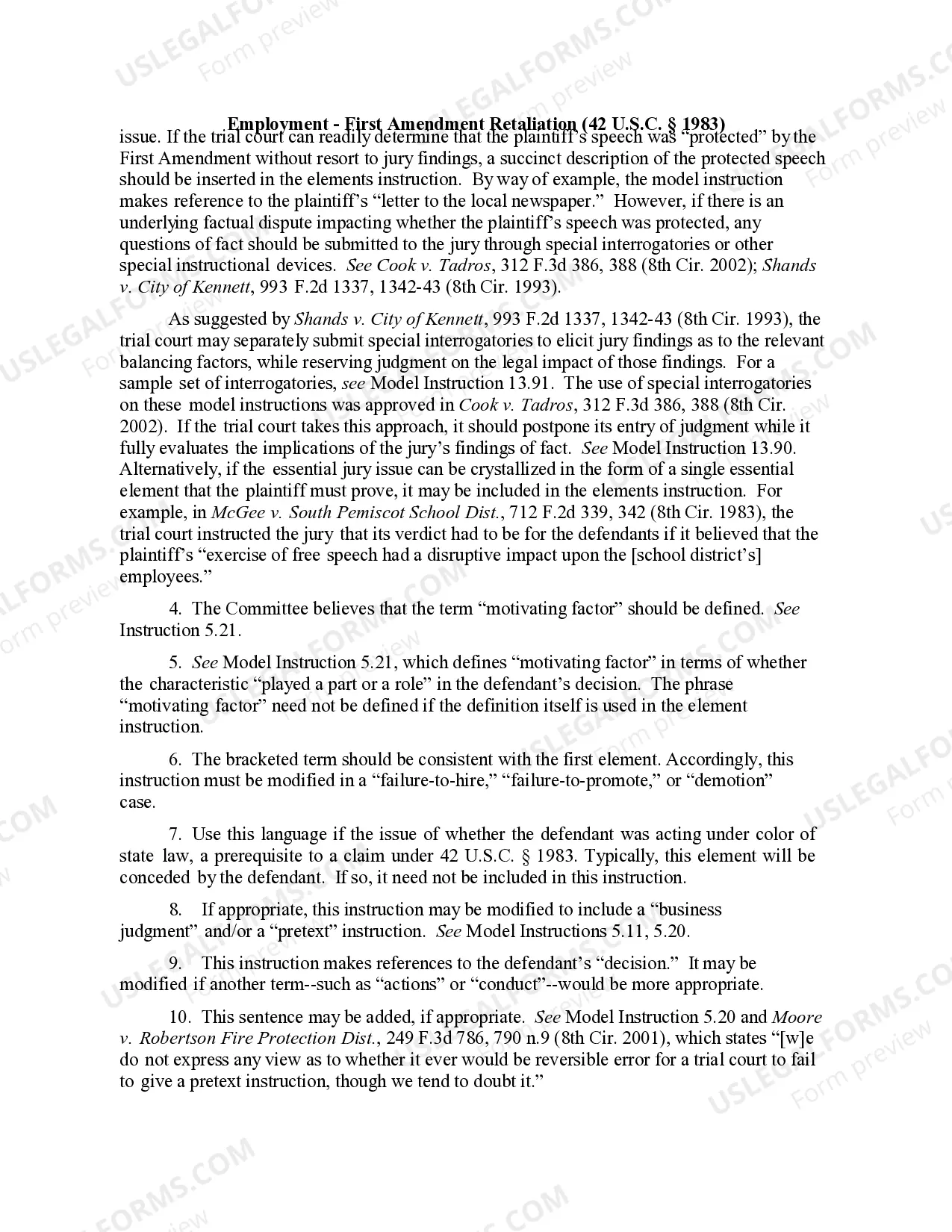
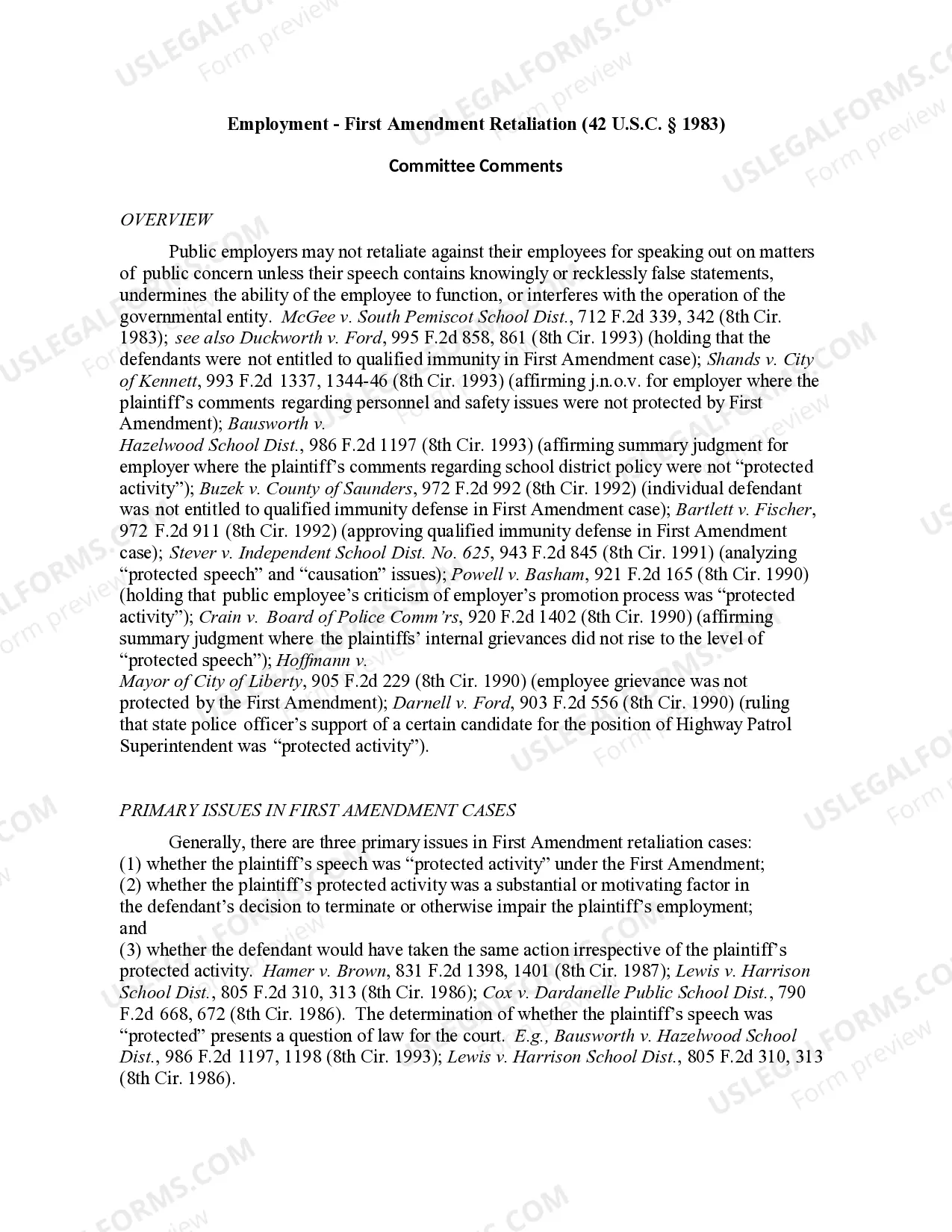
- The form is based on established legal rulings regarding First Amendment rights and employment laws.
- Employers cannot retaliate against an employee for engaging in protected speech unless certain criteria are met.
- The legal principles may vary slightly based on jurisdiction, necessitating careful review for local applicability.
Key takeaways
- This form is essential for individuals seeking to prove claims of First Amendment retaliation.
- Specificity regarding the protected speech and adverse employment actions is crucial.
- Understanding the legal context surrounding free speech rights in employment is key to properly using this form.
Looking for another form?
Form popularity
FAQ
To state a section 1983 claim, a person must show: that the conduct complained of was committed by a person acting under color of state law; and. that the conduct deprived the person of a constitutional right.
The elements of a § 1983 claim are (1) the action occurred ?under color of state law? and (2) the action resulted in the deprivation of a constitutional right or federal statutory right.
For a section1983 lawsuit to succeed, the plaintiff must prove both of the following elements: the defendant was acting under color of law, and there was a violation of a right given by the constitution or by federal law. officer using power possessed by virtue of law.
42 U.S.C. § 1983 allows claims against public employers for retaliation towards workers who oppose race discrimination in employment (noting prior intra-circuit split on issue).
To succeed on a Section 1983 claim, a plaintiff must prove that his constitutional rights were violated, and that the violation was caused by a person acting under color of law. West v. Atkins, 487 U.S. 4242 (1988).
Wade, the Supreme Court held that a § 1983 plaintiff may recover punitive damages against an official in her personal capacity if the official acted with malicious or evil intent or in callous disregard of the plaintiff's federally protected rights.
The First Amendment right to criticize public officials is well-established and supported by ample caselaw; a public official's retaliation against an individual exercising his or her First Amendment rights is a violation of § 1983.
DAMAGES ARE RECOVERABLE IN A § 1983 ACTION 42 U. S. C. § 1983 creates "'a species of tort liability' in favor of persons who are deprived of 'rights, privileges, or immunities secured' to them by the Constitution." Carey v. Piphus, 435 U.S. 247, 253 (1978). See also Smith v.