Sexual Abuse - Victim Incapable
What this document covers
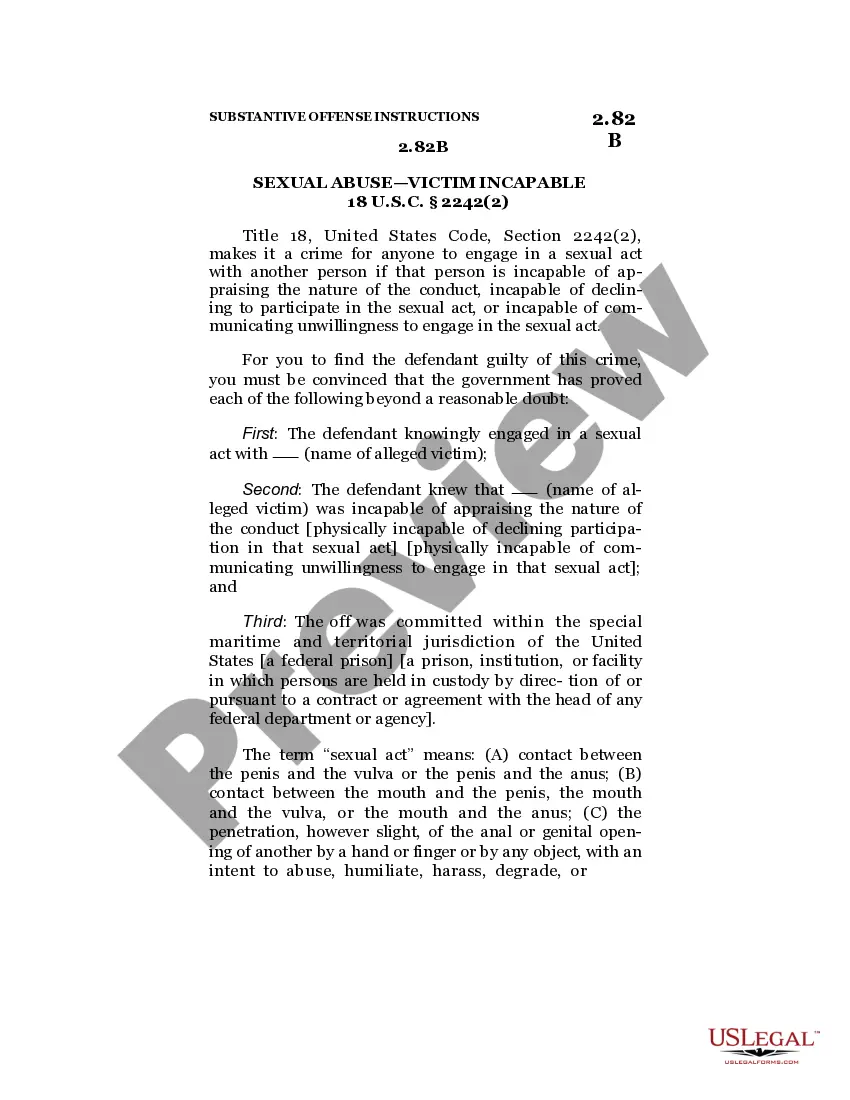
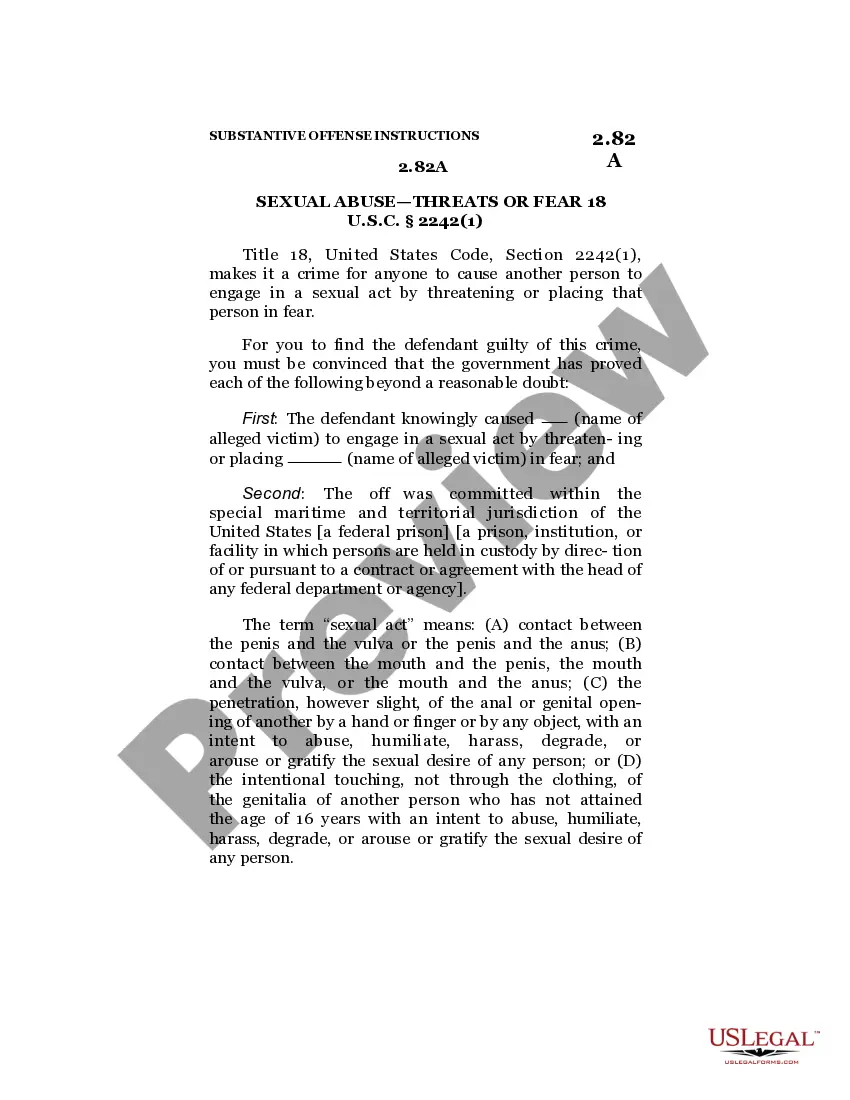
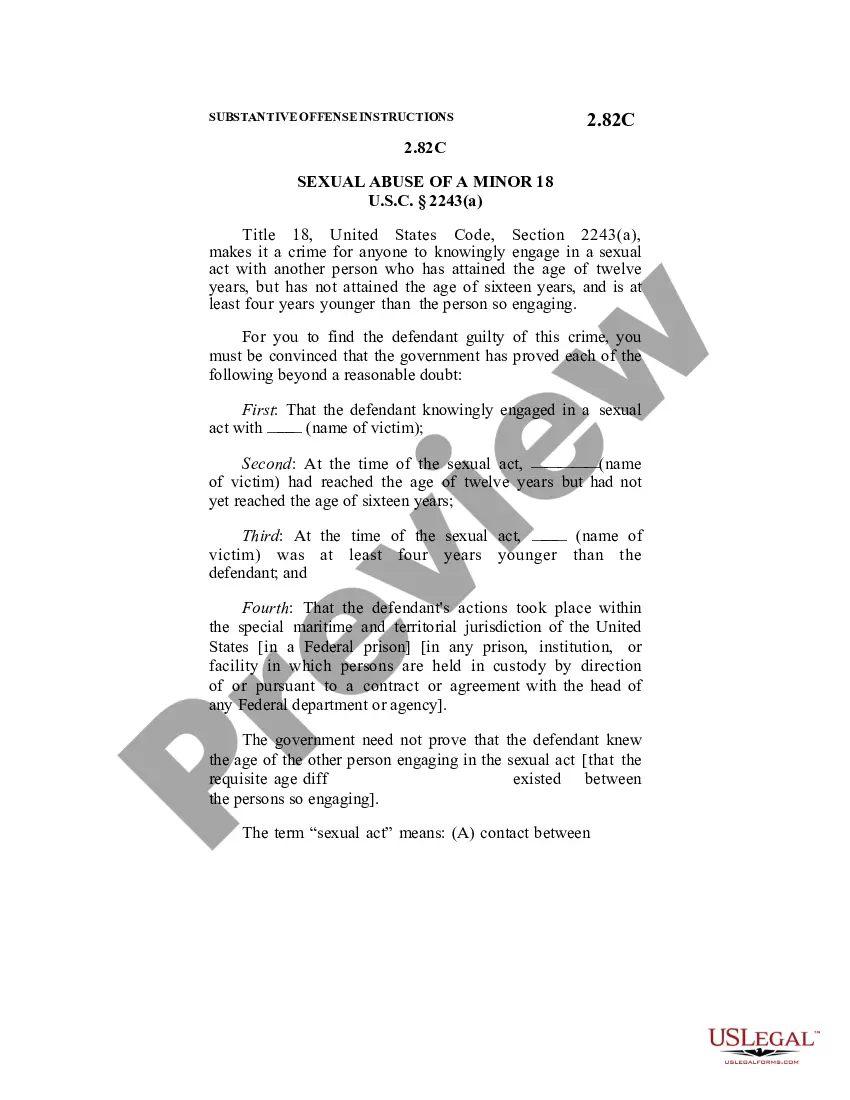
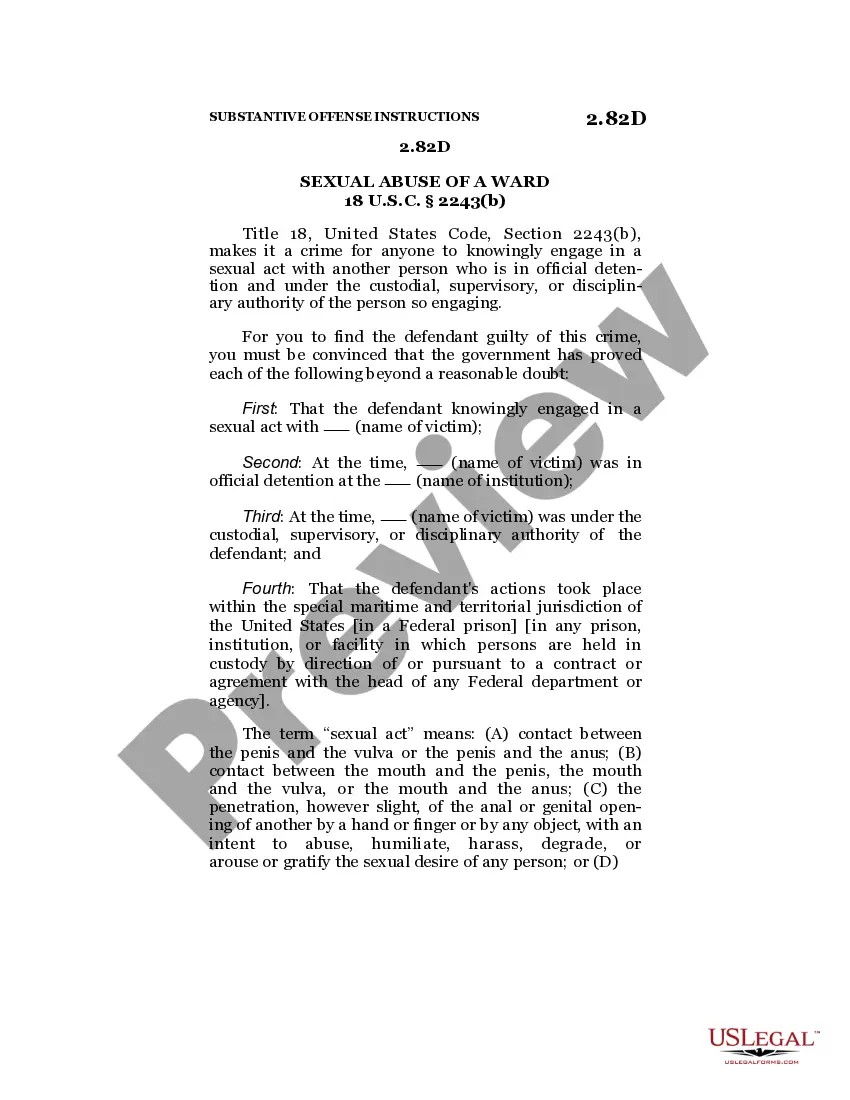
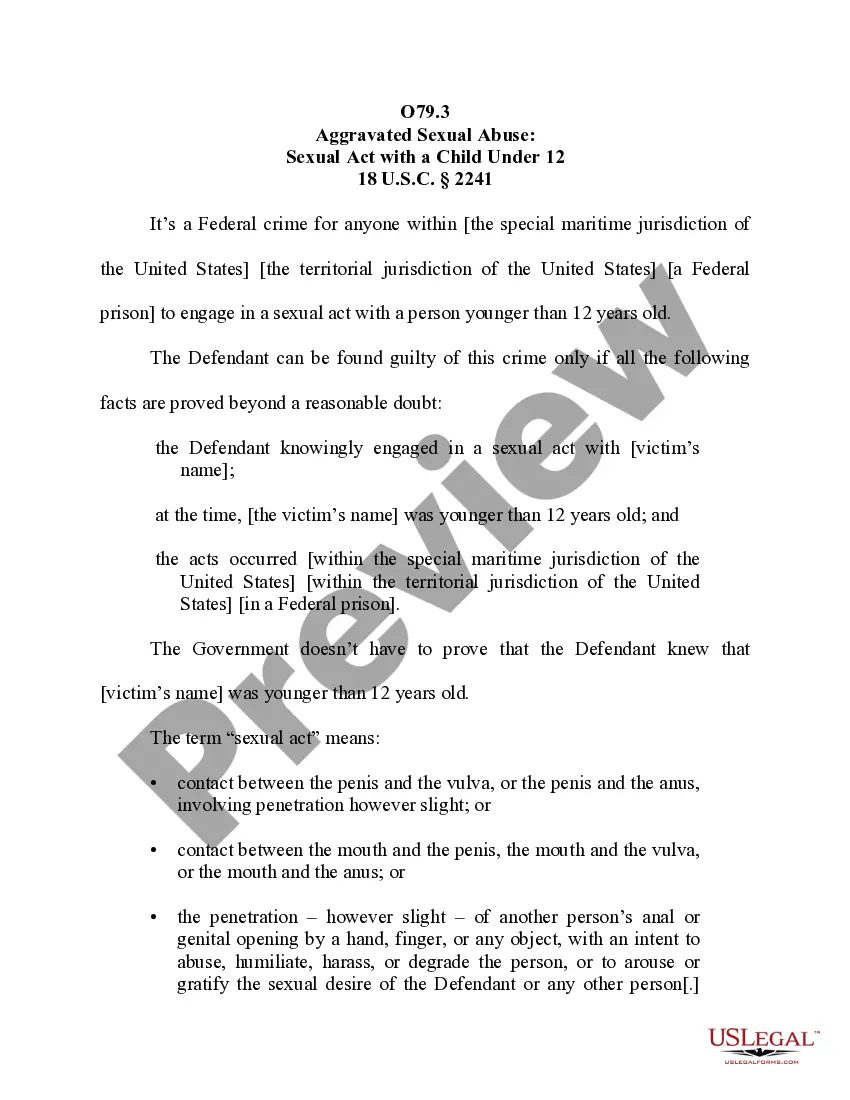
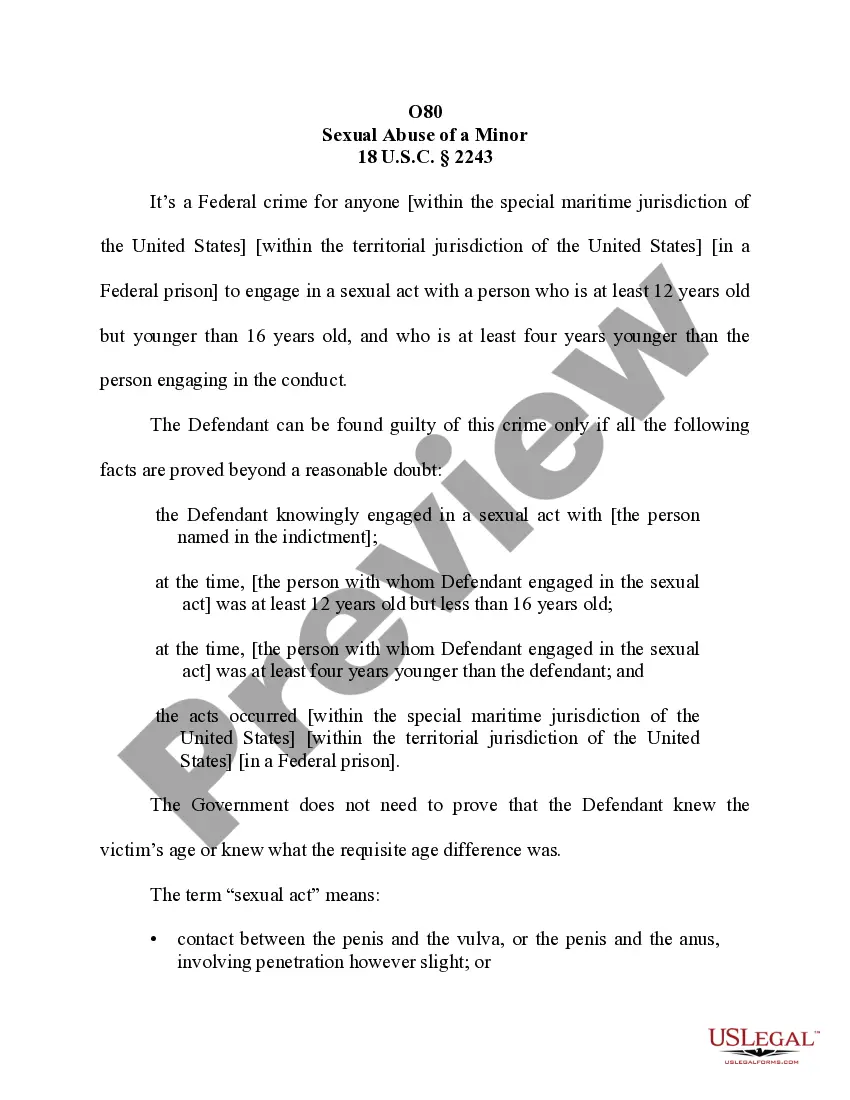
The Sexual Abuse - Victim Incapable form is a legal document that outlines the definitions and criteria under which an individual can be found guilty of engaging in sexual acts with a person who is incapable of consenting. This form is essential in cases where a victim's incapacity to appraise or decline participation in a sexual act is a focal element of the legal proceedings. It is important to note that this form specifically addresses circumstances related to sexual offenses within federal jurisdiction, distinguishing it from similar state-level forms.
Main sections of this form
- Definition of a sexual act as per 18 U.S.C.
- Criteria for determining incapacity of the victim.
- Required elements for proving the defendant's knowledge of the victim's incapacity.
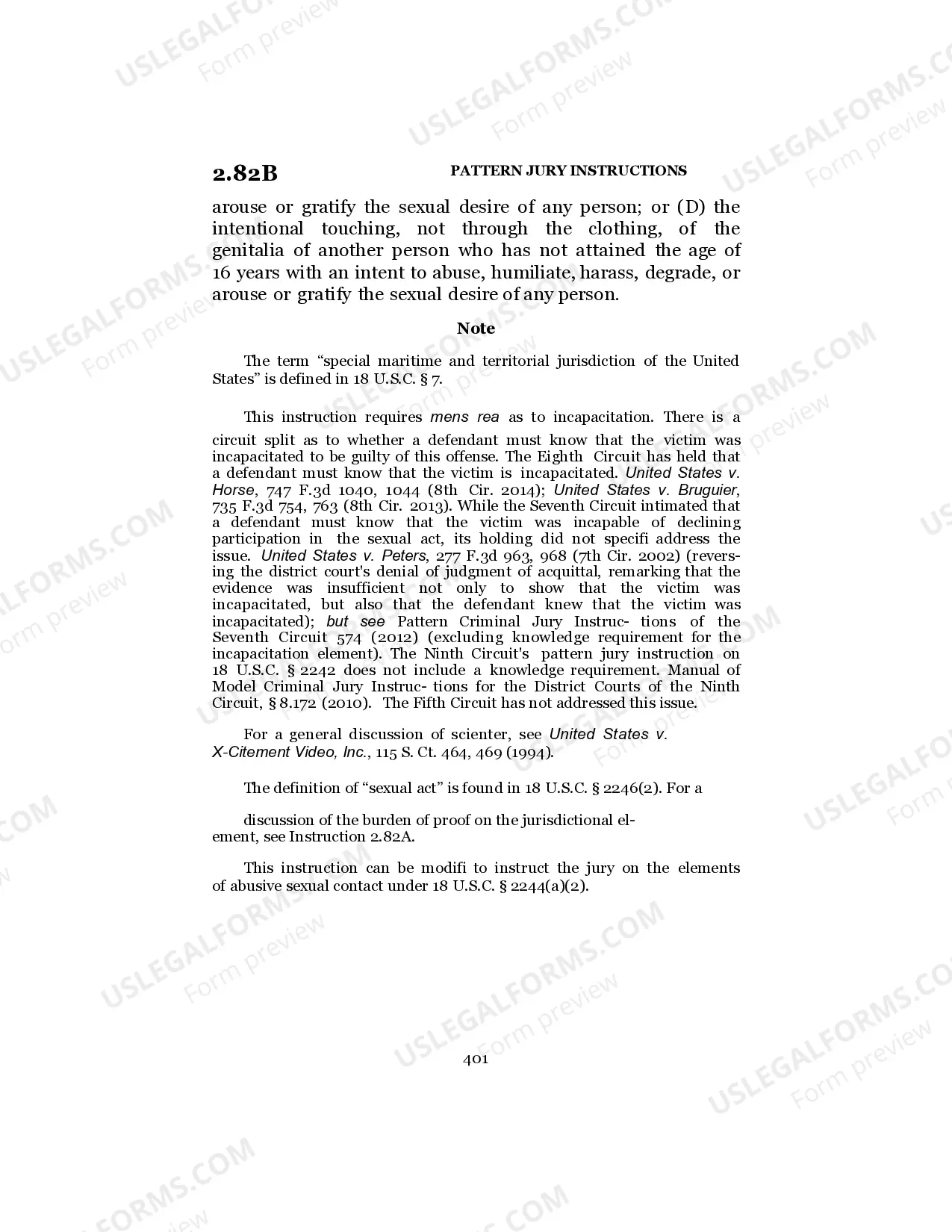
- Jurisdictional considerations regarding federal laws.
- Discussion of circuit splits regarding the knowledge requirement.
Common use cases
This form should be utilized when legal proceedings involve allegations of sexual abuse where the victim is deemed incapable of consenting due to incapacitation. It is relevant in criminal cases where the prosecution must demonstrate that the defendant knew the victim was unable to comprehend or communicate their unwillingness to engage in the sexual act. This form serves as a guideline for jurors in evaluating evidence presented in court.
Intended users of this form
This form is intended for:
- Prosecutors preparing cases involving allegations of sexual abuse with incapacitated victims.
- Defense attorneys representing individuals accused of such offenses.
- Court officials needing a structured framework for jury instructions regarding these cases.
- Legal scholars studying the implications of incapacity in sexual abuse laws.
How to complete this form
- Identify the parties involved, including the alleged victim and the defendant.
- Fill in the specific circumstances related to the alleged incident.
- Provide the jurisdiction details where the offense occurred.
- Enter any pertinent evidence or statements supporting the claims of incapacitation.
- Review for completeness before submission to ensure all necessary information is included.
Notarization requirements for this form
This form does not typically require notarization unless specified by local law. It is advisable to check state regulations for any specific requirements regarding notarization in sexual abuse cases.
Get your form ready online
Our built-in tools help you complete, sign, share, and store your documents in one place.
Make edits, fill in missing information, and update formatting in US Legal Forms—just like you would in MS Word.
Download a copy, print it, send it by email, or mail it via USPS—whatever works best for your next step.
Sign and collect signatures with our SignNow integration. Send to multiple recipients, set reminders, and more. Go Premium to unlock E-Sign.
If this form requires notarization, complete it online through a secure video call—no need to meet a notary in person or wait for an appointment.
We protect your documents and personal data by following strict security and privacy standards.

Make edits, fill in missing information, and update formatting in US Legal Forms—just like you would in MS Word.

Download a copy, print it, send it by email, or mail it via USPS—whatever works best for your next step.

Sign and collect signatures with our SignNow integration. Send to multiple recipients, set reminders, and more. Go Premium to unlock E-Sign.

If this form requires notarization, complete it online through a secure video call—no need to meet a notary in person or wait for an appointment.

We protect your documents and personal data by following strict security and privacy standards.
Typical mistakes to avoid
- Failing to accurately describe the victimâs incapacity.
- Not providing sufficient evidence that supports the claims of incapacity.
- Omitting jurisdictional information, which can affect the case.
- Neglecting to review and ensure the form is complete before submission.
Why complete this form online
- Convenience of accessing and completing the form from anywhere.
- Ease of editing allows users to make adjustments as needed.
- Reliability of legal content drafted by licensed attorneys.
- Time-saving compared to traditional methods of obtaining legal forms.
Looking for another form?
Form popularity
FAQ
Disabilities are three times as likely to be physically abused or assaulted. than 90% of all people with developmental disabilities will experience sexual assault.
PHYSICALLY HELPLESS means that a person is. unconscious or for any other reason is physically unable to. communicate unwillingness to an act.4.
Anyone can be the target of sexual assault, regardless of age, gender, race, ethnicity, sexual orientation, sexual history, or social class. There is no stereotypical victim or rapist.
People with disabilities are more likely to experience abuse for longer periods of time because they have difficulties and concerns when accessing the support that they need. Their reliance on other people means that often they are reliant on their abuser for personal care or mobility.
Studies show that people with disabilities are more likely to experience abuse than people without them. Abuse is premised on power and control, and people with disabilities often face specific barriers to accessing help that make them more vulnerable to abuse.
An estimated 30% of people with disabilities who need assistance for daily life suffer from some type of mistreatment. This kind of harm may involve verbal abuse, physical abuse, or financial abuse. In one study of adult men, 55% of them were physically abused by someone after they became disabled.
Women and Girls Experience Sexual Violence at High Rates Young women are especially at risk. 82% of all juvenile victims are female. 90% of adult rape victims are female. Females ages 16-19 are 4 times more likely than the general population to be victims of rape, attempted rape, or sexual assault.