Extortion by Force, Violence, or Fear
What is this form?
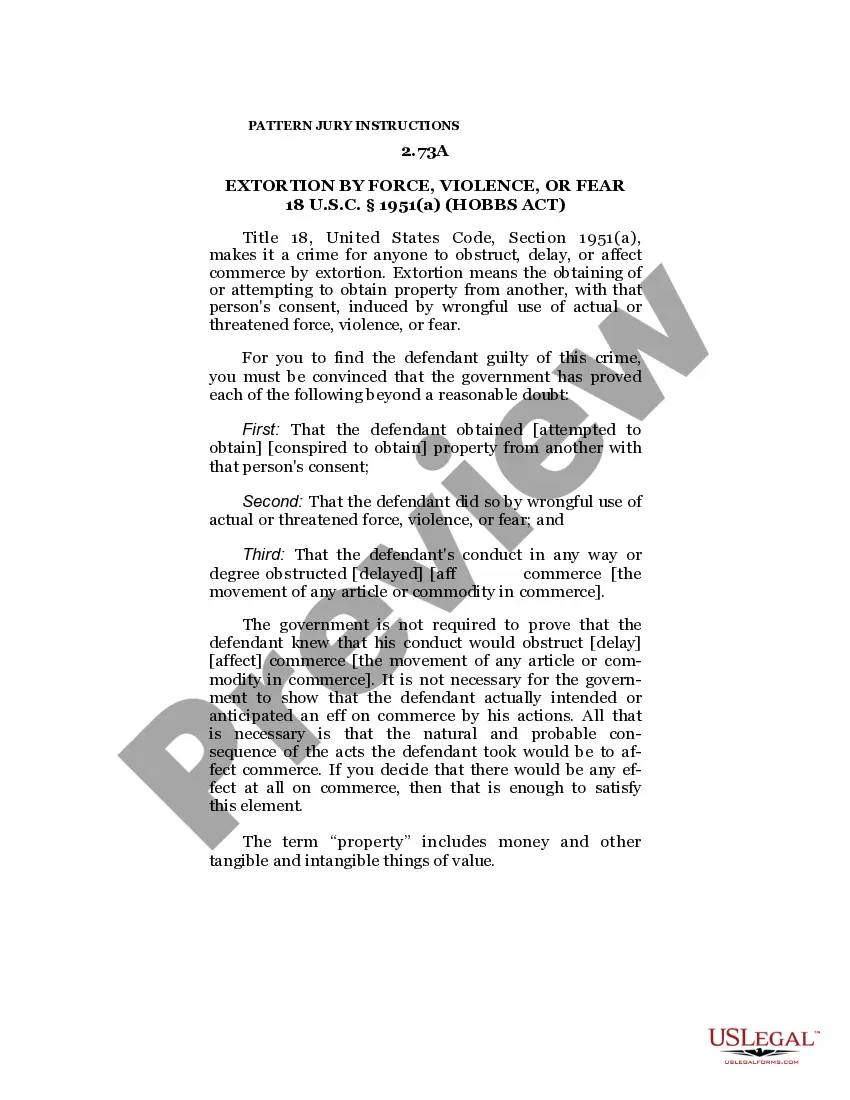
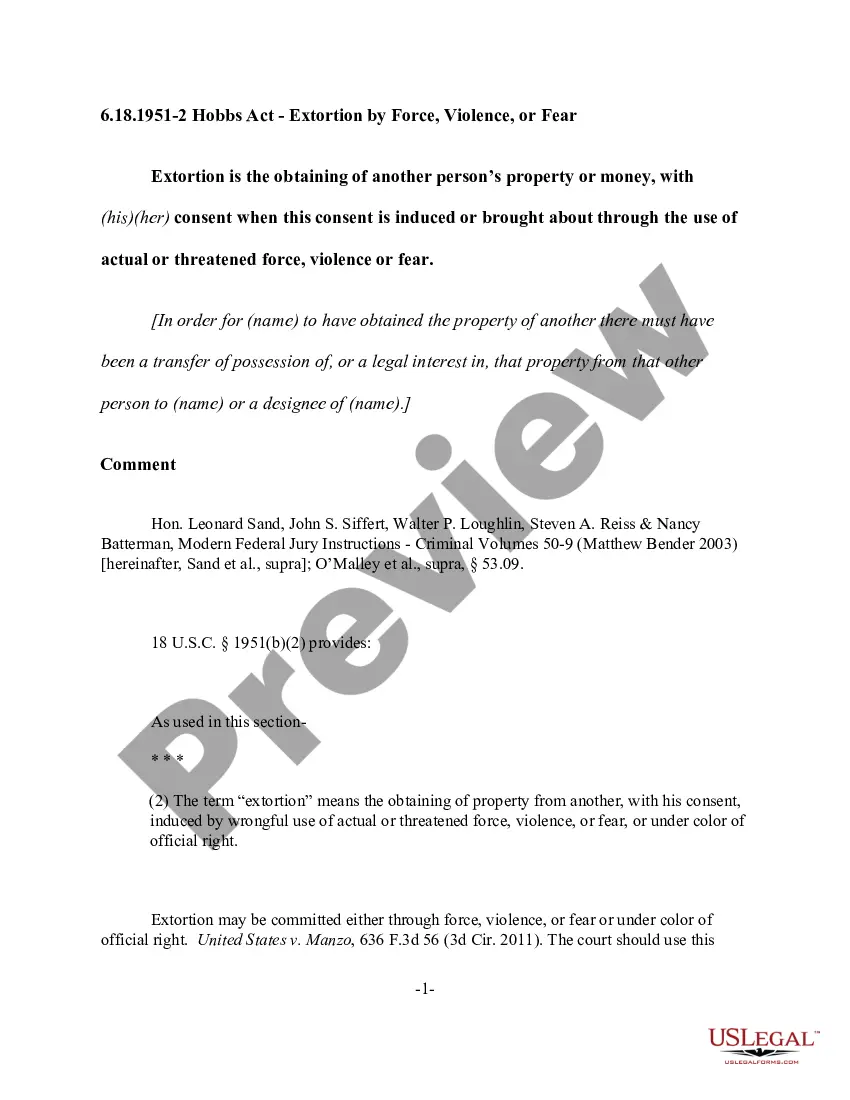
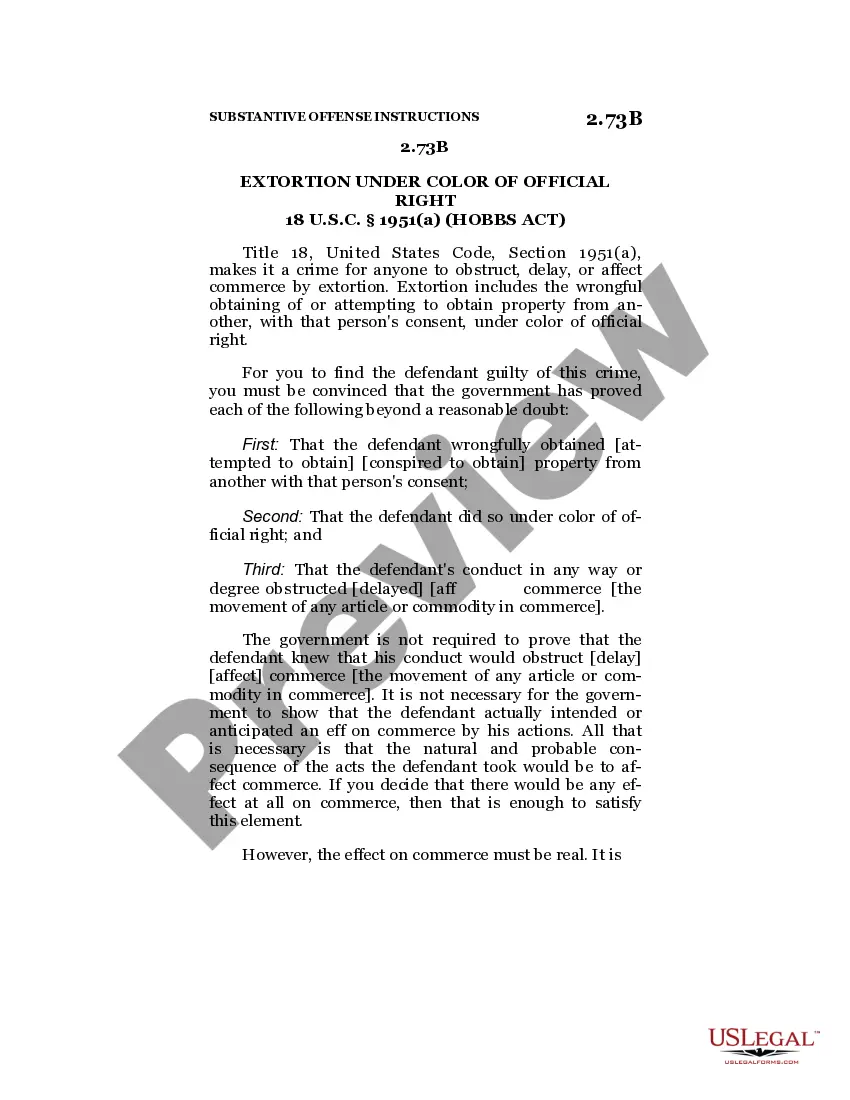
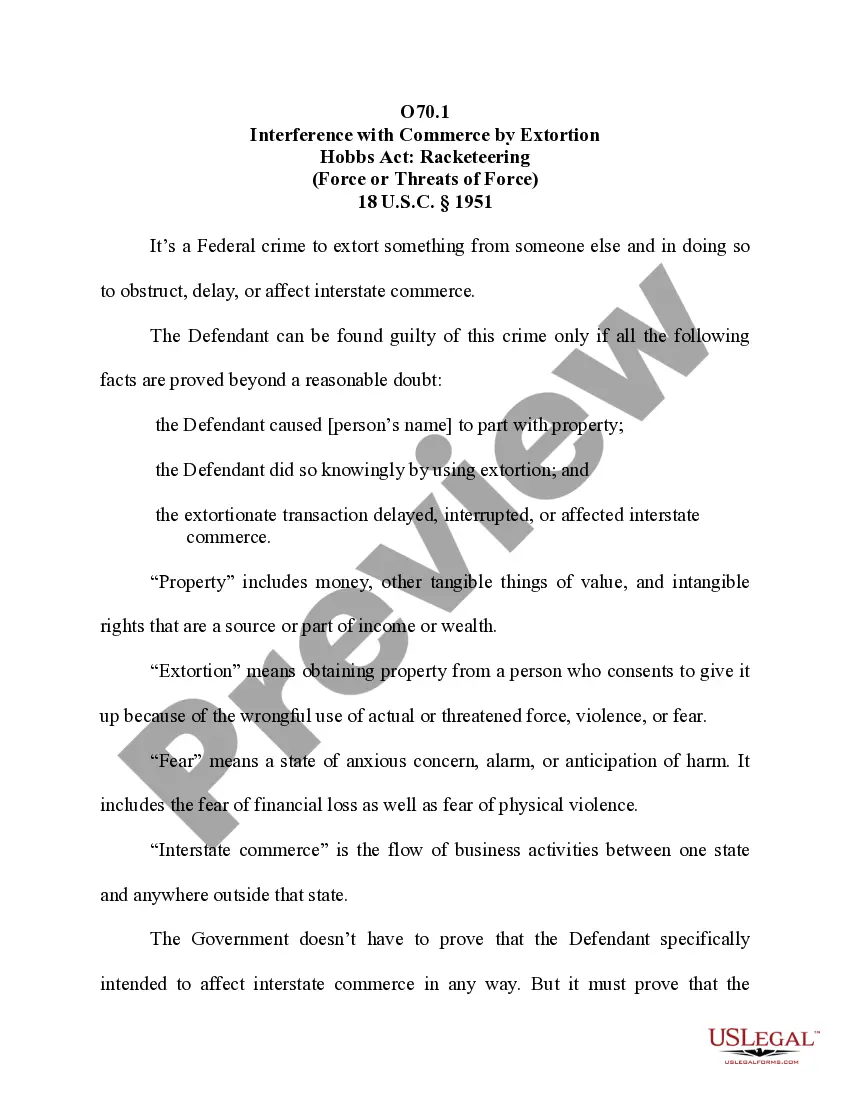
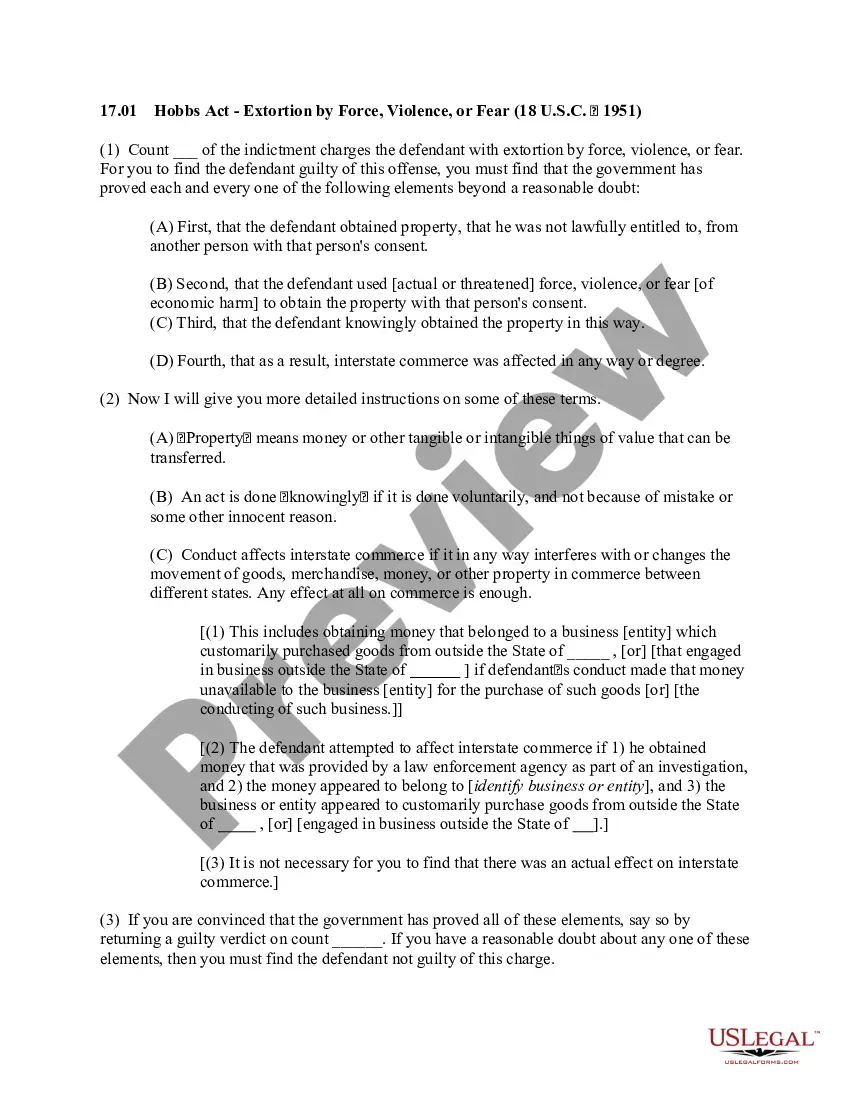
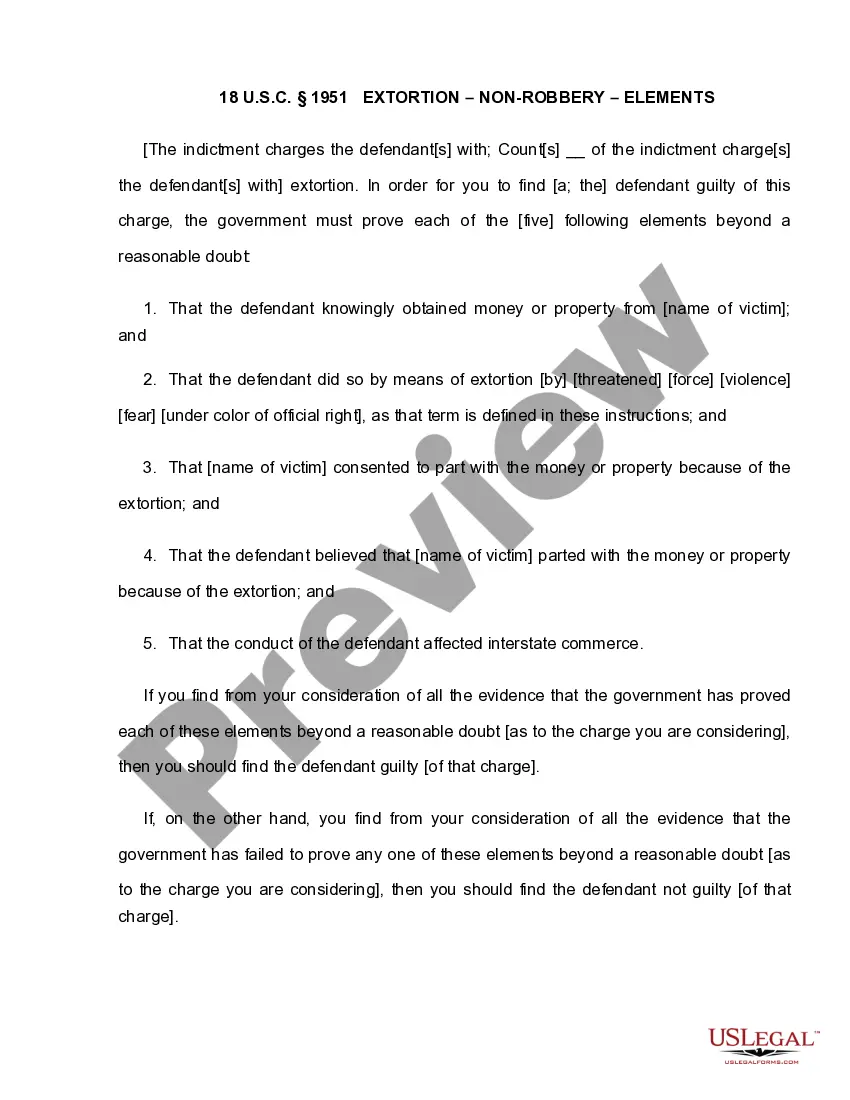
The Extortion by Force, Violence, or Fear form outlines the legal parameters and procedural guidelines related to the crime of extortion under the Hobbs Act. This form serves to inform individuals about the conditions under which someone can be charged with extortion, specifically involving the wrongful use of force, violence, or fear. It is crucial for understanding not just the responsibilities of those involved but also the implications this crime has on commerce and individual rights.
Main sections of this form
- Definition of extortion and the requirements for proving the offense.
- Clarification on the wrongful use of force, violence, or fear in obtaining property.
- Explanation of the commerce requirement, noting that any effect on commerce suffices for an extortion charge.
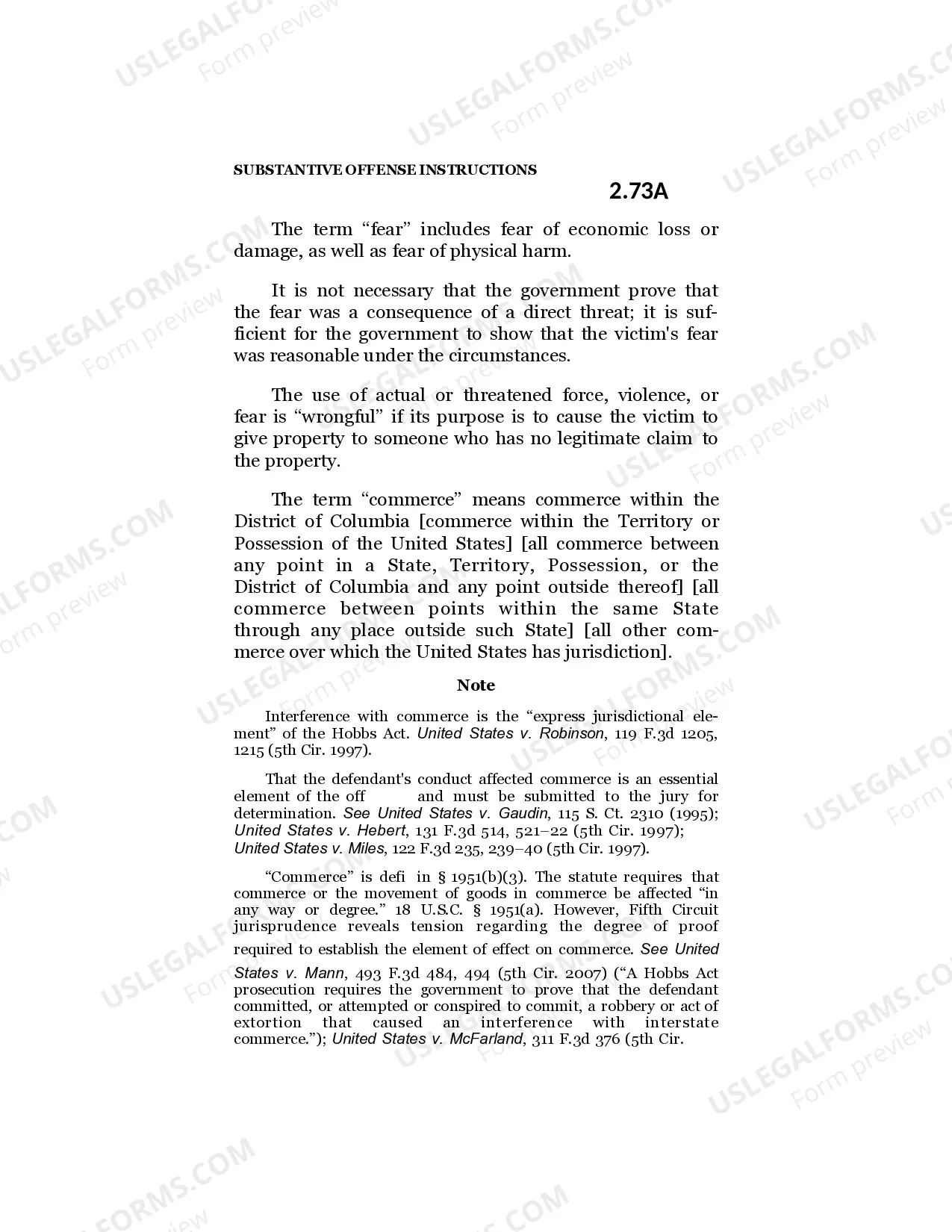
- Inclusion of definitions for relevant terms, such as "property," "commerce," and "fear."
- Details on how direct threats are not required to establish the basis of fear in victims.
When to use this document
This form is needed in cases where individuals or entities may be involved in or affected by extortion involving the use of force, violence, or fear. It is particularly relevant when someone is engaging in activities that could potentially obstruct or delay commerce through wrongful means. Understanding the legal implications can help victims decide whether to report such incidents or take legal action.
Intended users of this form
- Individuals who suspect they have been victims of extortion.
- Legal professionals seeking to understand the nuances of extortion cases under the Hobbs Act.
- Law enforcement agencies dealing with complaints related to extortion.
- Businesses wanting to protect themselves from extortion and understand their rights.
Steps to complete this form
- Identify the parties involved in the extortion case.
- Clearly state the property that is the subject of extortion.
- Detail the actions taken by the defendant, specifying any force, violence, or fear used.
- Document how the conduct affected commerce, providing evidence if available.
- Sign and date the form to affirm the accuracy of the information provided.
Does this form need to be notarized?
This form does not typically require notarization unless specified by local law. Users should check state regulations to ensure compliance and validity.
Get your form ready online
Our built-in tools help you complete, sign, share, and store your documents in one place.
Make edits, fill in missing information, and update formatting in US Legal Forms—just like you would in MS Word.
Download a copy, print it, send it by email, or mail it via USPS—whatever works best for your next step.
Sign and collect signatures with our SignNow integration. Send to multiple recipients, set reminders, and more. Go Premium to unlock E-Sign.
If this form requires notarization, complete it online through a secure video call—no need to meet a notary in person or wait for an appointment.
We protect your documents and personal data by following strict security and privacy standards.

Make edits, fill in missing information, and update formatting in US Legal Forms—just like you would in MS Word.

Download a copy, print it, send it by email, or mail it via USPS—whatever works best for your next step.

Sign and collect signatures with our SignNow integration. Send to multiple recipients, set reminders, and more. Go Premium to unlock E-Sign.

If this form requires notarization, complete it online through a secure video call—no need to meet a notary in person or wait for an appointment.

We protect your documents and personal data by following strict security and privacy standards.
Common mistakes
- Failing to clearly define the property involved in the case.
- Omitting specific details about how force or fear was applied.
- Not providing sufficient evidence of the impact on commerce.
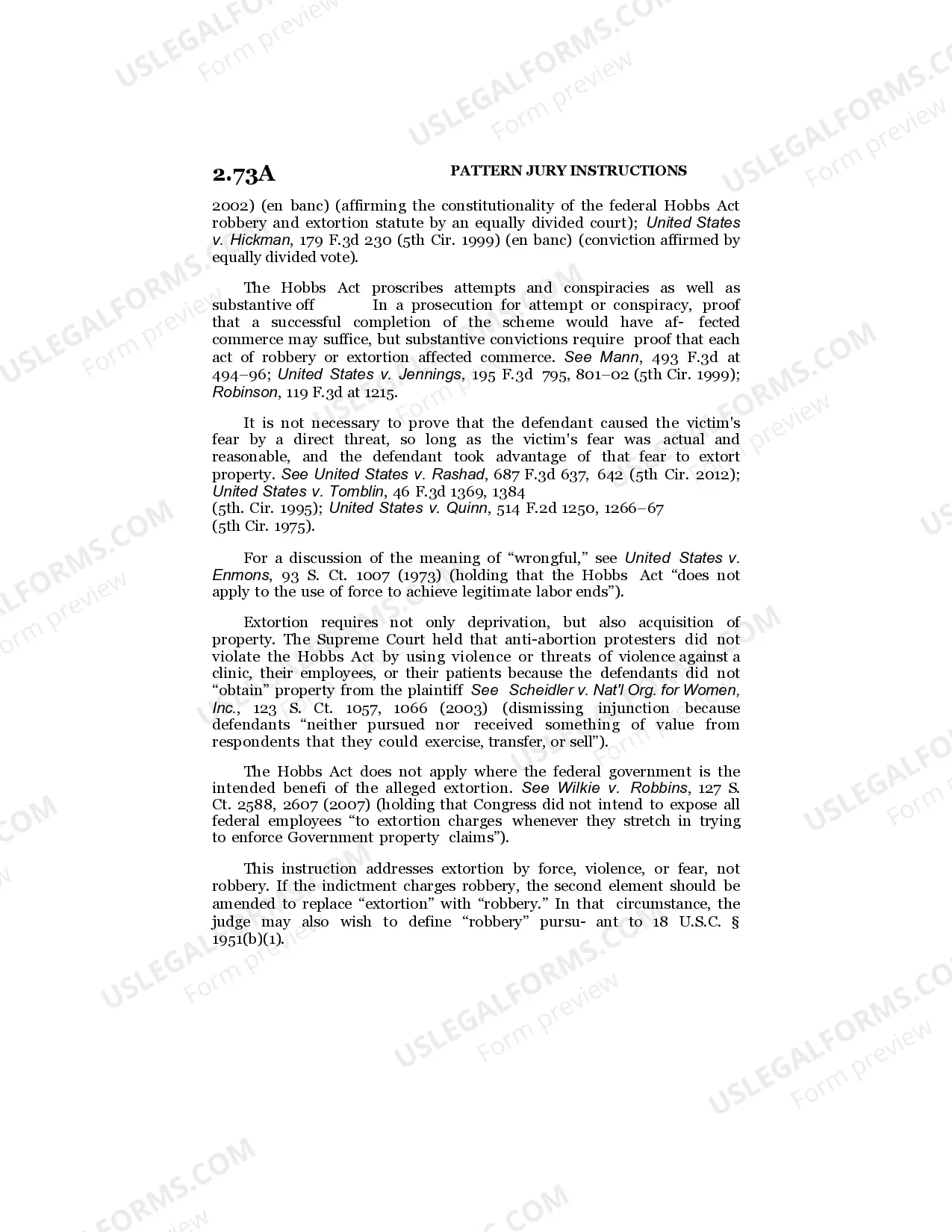
- Mixing up terms related to extortion with those pertaining to robbery.
Why complete this form online
- Convenient access to legal resources without needing to visit a law office.
- Editable templates that allow customization to meet specific needs.
- Secure and reliable format prepared by licensed attorneys.
Legal use & context
- This form serves as a crucial resource in legal contexts pertaining to criminal prosecutions for extortion.
- It clarifies roles and responsibilities in handling extortion cases, ensuring prosecutors meet legal requirements.
- Understanding the applicable laws helps in mitigating potential legal risks for those involved.
Quick recap
- The form provides essential definitions and criteria regarding extortion under the Hobbs Act.
- It is important for establishing the legal framework for prosecution and defense in extortion cases.
- Understanding this form aids in ensuring that legal proceedings reflect the complexities of extortion offenses.
Looking for another form?

Form popularity
FAQ
The Hobbs Act, named after United States Representative Sam Hobbs (D-AL) and codified as 18 U.S.C. § 1951, is a United States federal law enacted in 1946 that prohibits actual or attempted robbery or extortion that affect intrastate or foreign commerce. It also forbids conspiracy to do so.
Under California Penal Code §211, you can be convicted of Robbery if you use force or fear to take property from another person with the intent of not returning it. Robbery is linked to Extortion because both crimes require fear or force to make the victim provide something.
Many jurisdictions classify extortion as a ?crime against property? or a theft-related offense, but the threat of harm to a person is an essential element of the offense. This could consist of physical harm, financial harm, destruction of property, or abuse of official power.
Extortion: Definition and Overview Most states define extortion as the gaining of property or money by almost any kind of force or threat of violence, property damage, harm to reputation, or unfavorable government action. Extortion is often charged as a felony in most states.
Extortion is the wrongful use of actual or threatened force, intimidation, or even violence to gain money or property. Typically extortion generally involves a threat made to the victim or their property, friends, or family members. Blackmail is a form of extortion, and ransomware is a growing form of it.
The various types of extortion include protection schemes, blackmail, and ransomware. All three are intimidation tactics used to scare a person into giving up money or valuables.
Extortion is typically nonviolent, but the elements of extortion are very similar to robbery, which is considered a forcible theft offense. Robbery is discussed shortly. Extortion has the elements of criminal act, criminal intent, attendant circumstances, causation, and harm, as is explored in Section 11.2.