Extortion under Color of Official Right
About this form
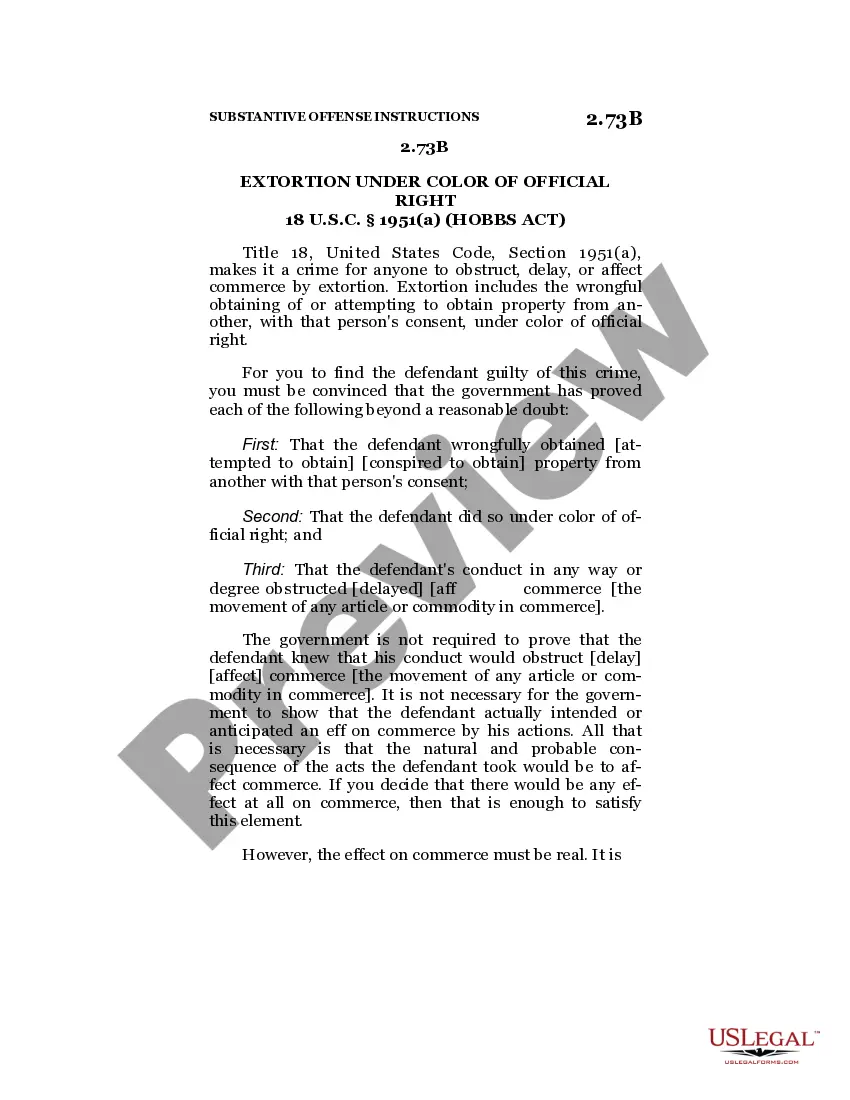
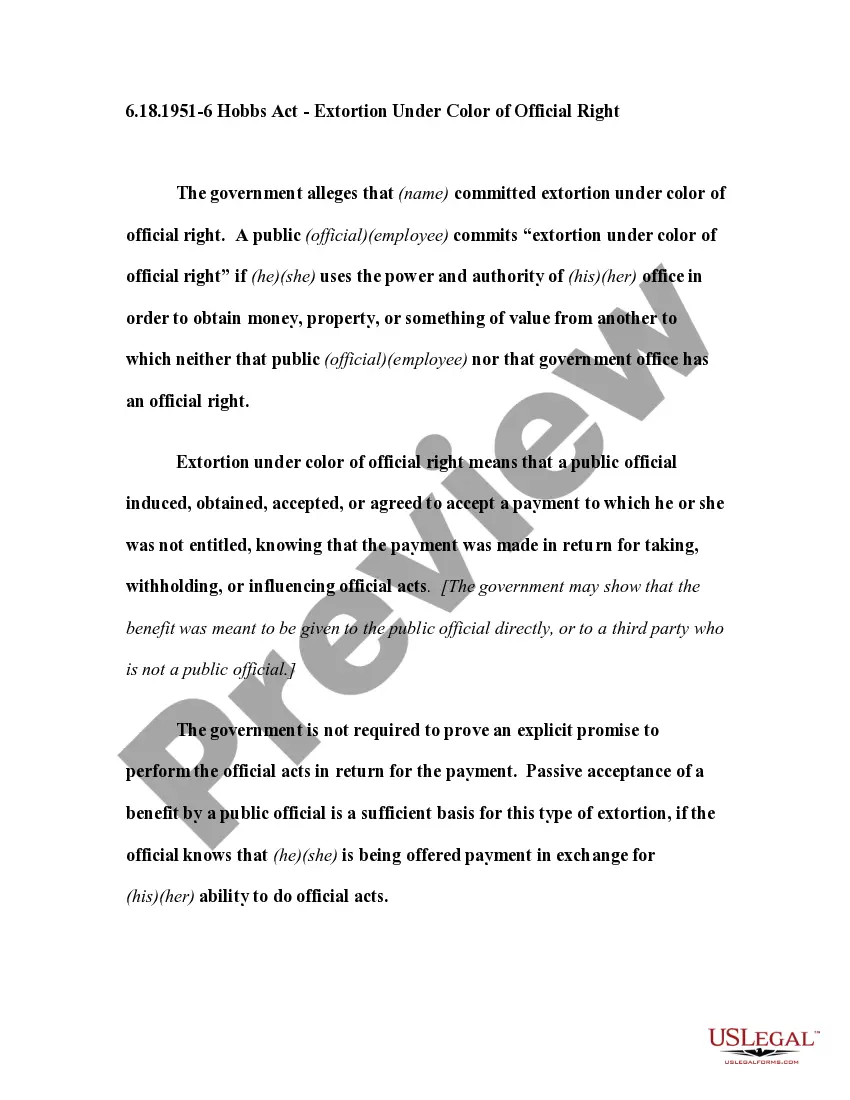
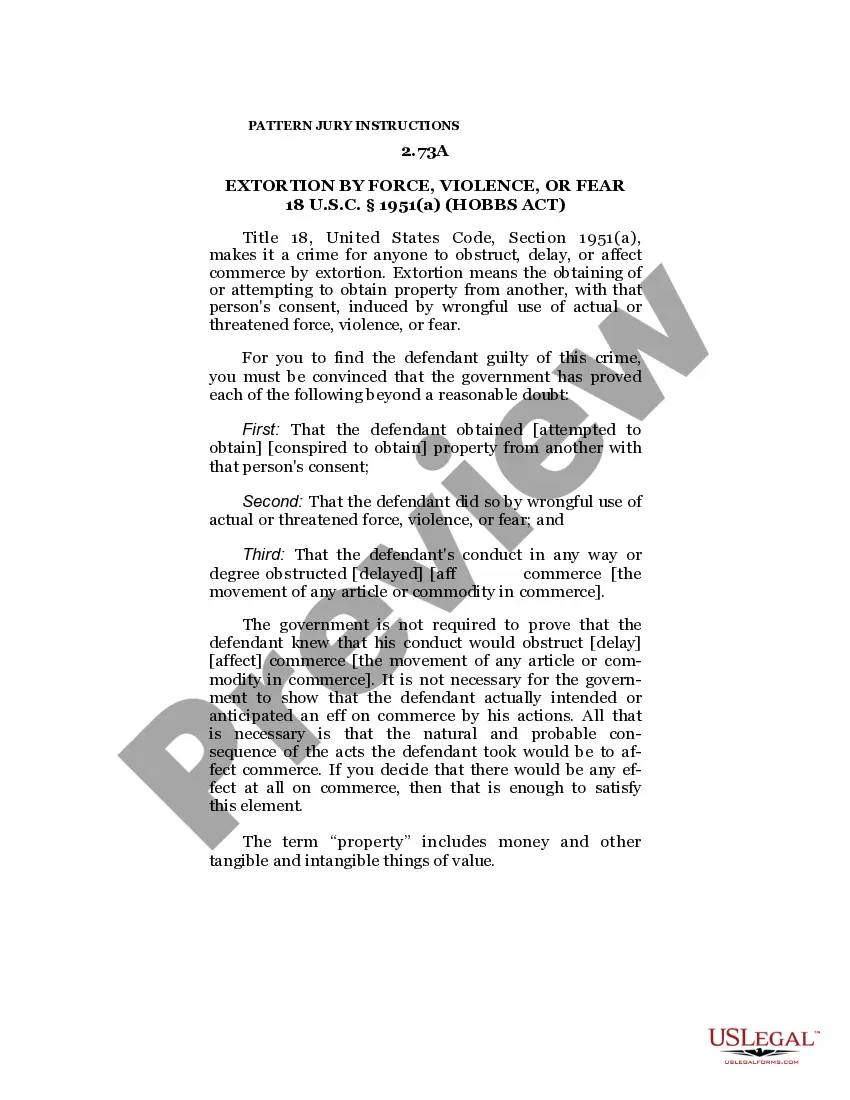
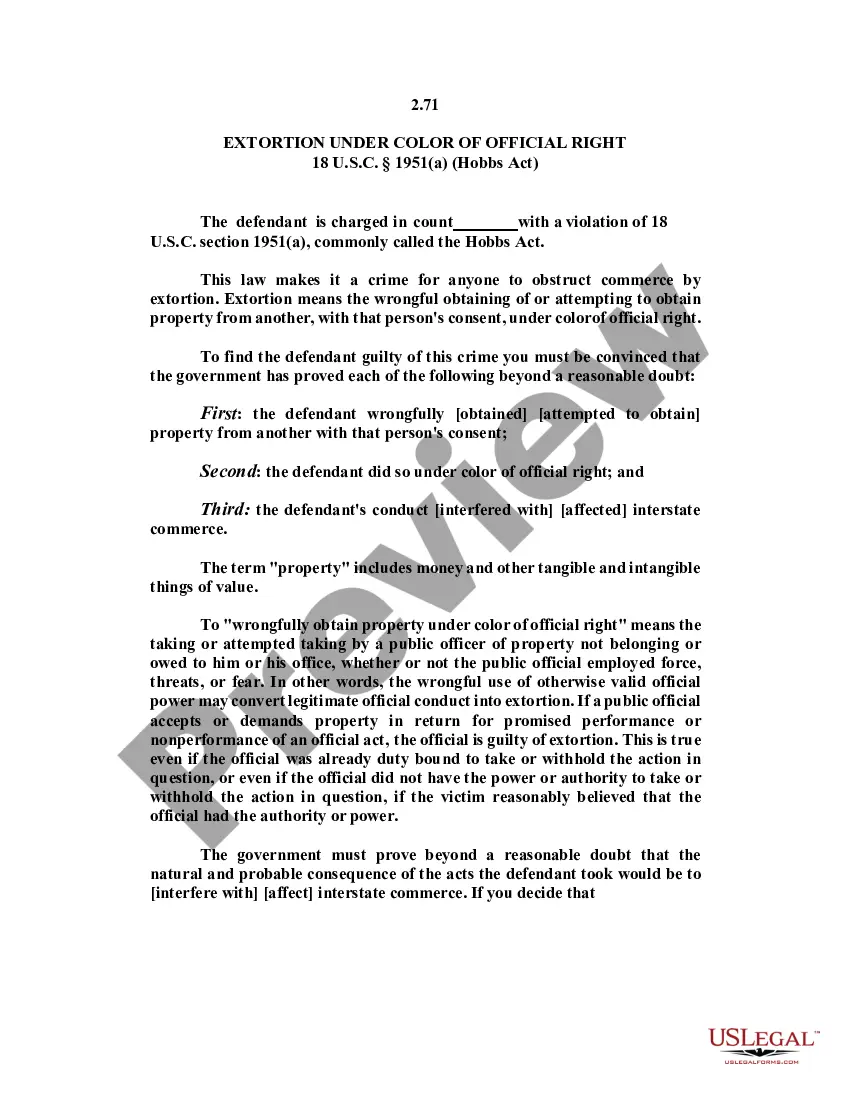
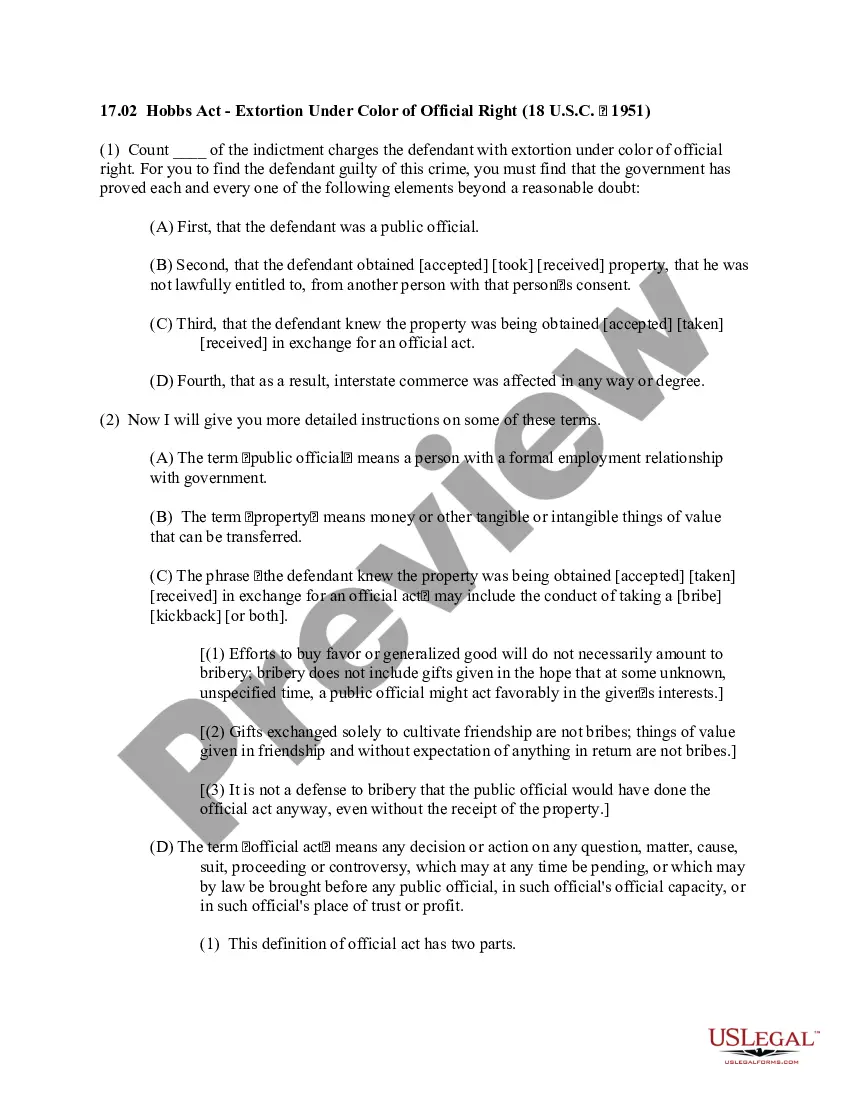
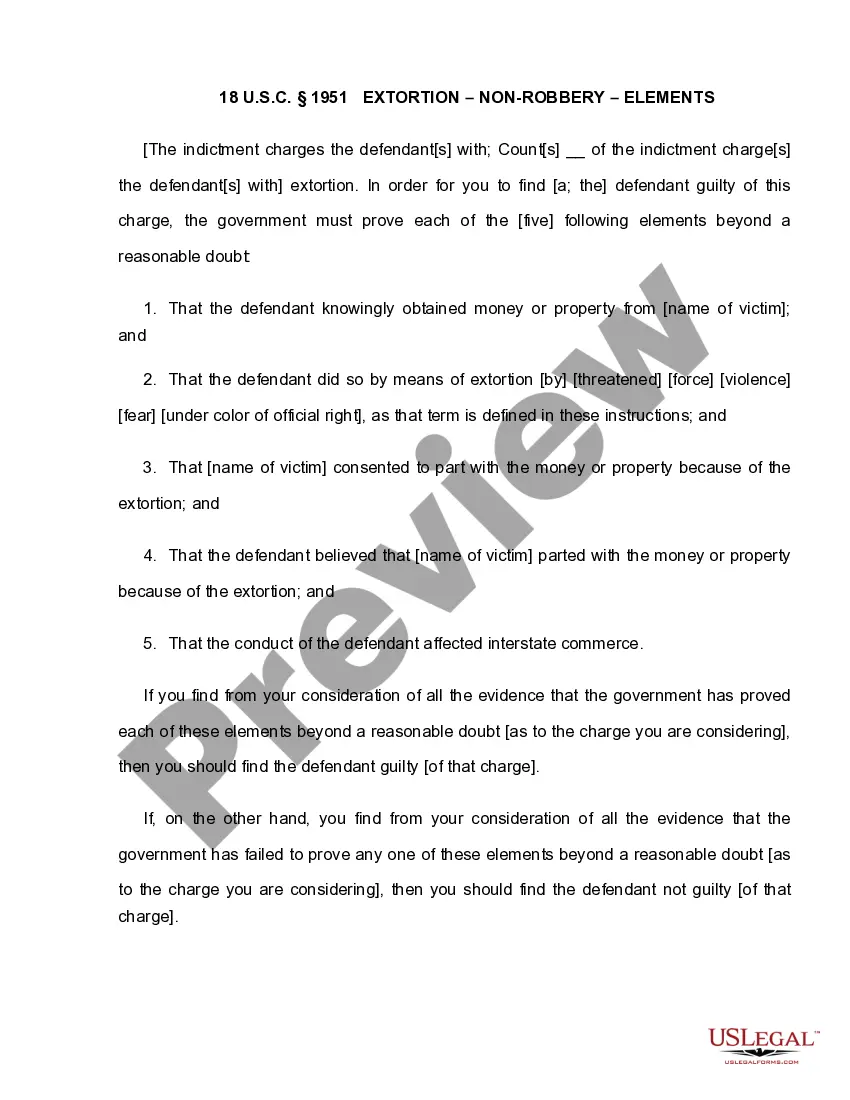
The Extortion under Color of Official Right form serves as a legal template for addressing acts of extortion committed by public officials in the United States. This form is crucial in cases where individuals wrongfully obtain property under the guise of their official position, distinguishing it from other forms of extortion that may involve threats or violence. It outlines the legal framework under Title 18, U.S. Code, Section 1951(a), also known as the Hobbs Act.
What’s included in this form
- Description of the crime of extortion as defined under federal law.
- Elements that must be proven to establish guilt, including wrongful obtaining of property.
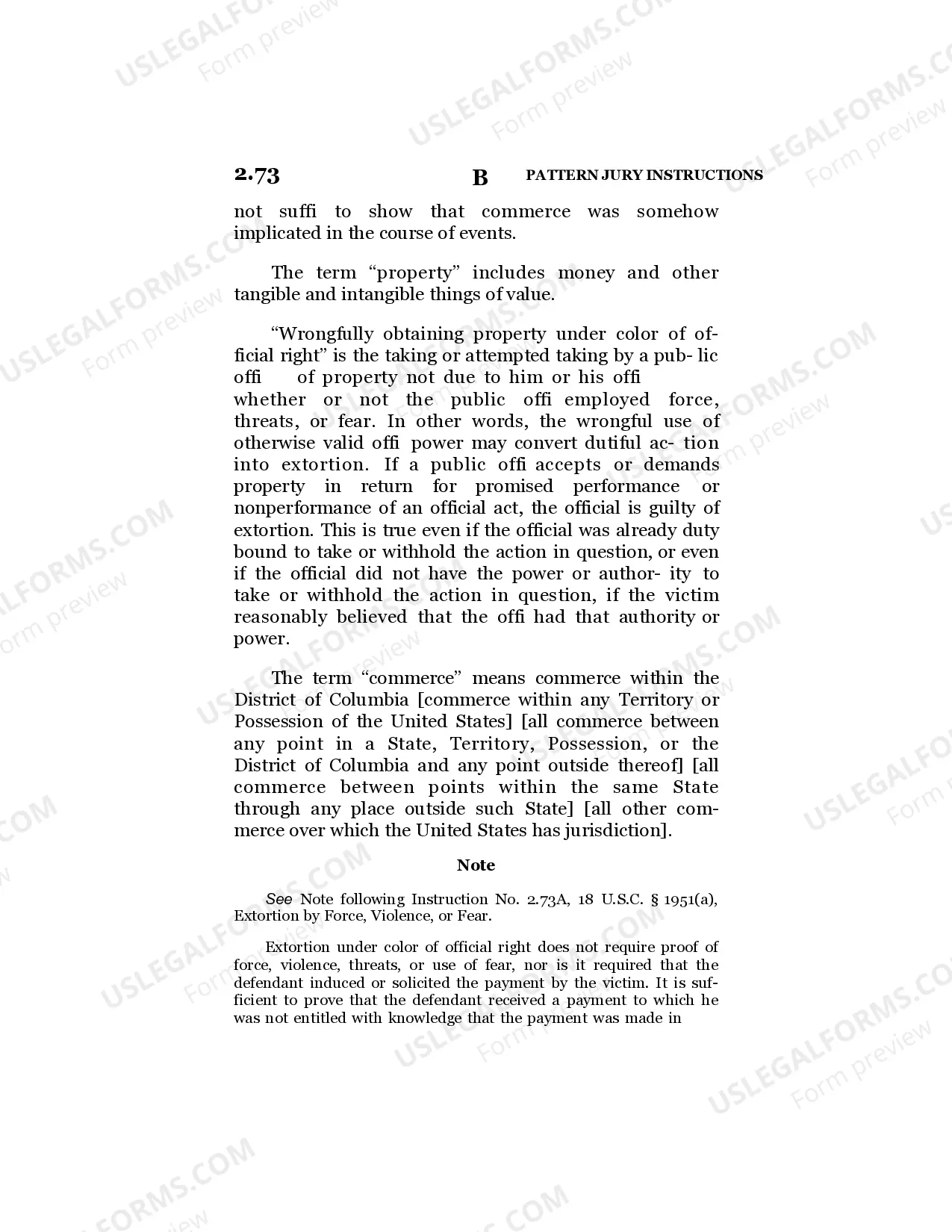
- Explanation of "color of official right" and its implications for public officials.
- Clarification of what constitutes commerce and its relevance to the offense.
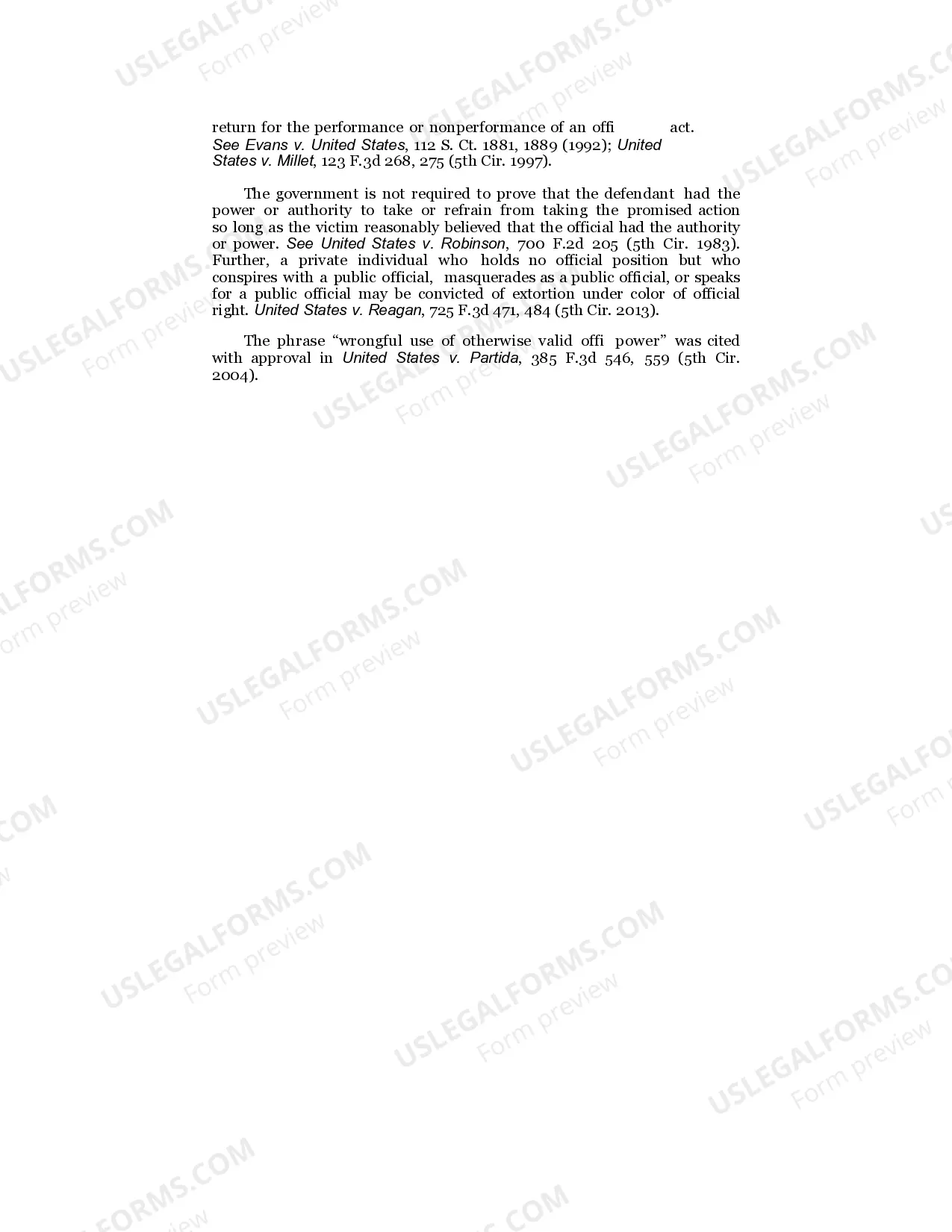
- Legal precedents that provide context for the application of the law.

When to use this document
This form should be used in situations where there is evidence of a public official engaging in extortion under the color of their official role. It is applicable in cases where the official demands or accepts property not legally due to them, exploiting their position without the need for threats or violence.
Who needs this form
- Individuals who have been victims of extortion by a public official.
- Legal professionals who are representing clients in cases of alleged official misconduct.
- Law enforcement agencies involved in prosecuting extortion cases.
How to complete this form
- Identify the parties involved, including the public official and the victim.
- Detail the property that was wrongfully obtained.
- Describe the circumstances surrounding the extortion, including any official acts involved.
- Provide evidence supporting the claim of wrongful obtaining of property.
- Sign and date the form to validate the allegations.
Does this document require notarization?
Notarization is not commonly needed for this form. However, certain documents or local rules may make it necessary. Our notarization service, powered by Notarize, allows you to finalize it securely online anytime, day or night.
Get your form ready online
Our built-in tools help you complete, sign, share, and store your documents in one place.
Make edits, fill in missing information, and update formatting in US Legal Forms—just like you would in MS Word.
Download a copy, print it, send it by email, or mail it via USPS—whatever works best for your next step.
Sign and collect signatures with our SignNow integration. Send to multiple recipients, set reminders, and more. Go Premium to unlock E-Sign.
If this form requires notarization, complete it online through a secure video call—no need to meet a notary in person or wait for an appointment.
We protect your documents and personal data by following strict security and privacy standards.

Make edits, fill in missing information, and update formatting in US Legal Forms—just like you would in MS Word.

Download a copy, print it, send it by email, or mail it via USPS—whatever works best for your next step.

Sign and collect signatures with our SignNow integration. Send to multiple recipients, set reminders, and more. Go Premium to unlock E-Sign.

If this form requires notarization, complete it online through a secure video call—no need to meet a notary in person or wait for an appointment.

We protect your documents and personal data by following strict security and privacy standards.
Avoid these common issues
- Failing to provide sufficient details about the property involved.
- Not adequately describing the actions of the public official.
- Neglecting to include evidence that supports the claim of extortion.
- Overlooking local laws that may affect the proceedings.
Benefits of completing this form online
- Convenience of downloading the form instantly from any location.
- Flexibility to edit the form as needed to fit your specific situation.
- Access to templates created by licensed attorneys, ensuring legal accuracy.
Looking for another form?
Form popularity
FAQ
Color of law refers to an appearance of legal power to act that may operate in violation of law. For example, if a police officer acts with the "color of law" authority to arrest someone, the arrest, if it is made without probable cause, may actually be in violation of law.
To prove someone is trying to extorting you, you need to gather evidence, and then report to relevant authorities. You may check your state's law to learn the elements of extortion, which will generally include a spoken threat or a written threat. And usually the written evidence is much stronger.
Hobbs Act -- Generally. The Hobbs Act prohibits actual or attempted robbery or extortion affecting interstate or foreign commerce "in any way or degree." Section 1951 also proscribes conspiracy to commit robbery or extortion without reference to the conspiracy statute at 18 U.S.C. § 371.
Specifically, you can: Refuse to pay the extortion demand; Serve the extorter with a cease and desist; File a police report against the extorter; Pursue legal action against the extorter.
Section 242 of Title 18 makes it a crime for a person acting under color of any law to willfully deprive a person of a right or privilege protected by the Constitution or laws of the United States.
The various types of extortion include protection schemes, blackmail, and ransomware. All three are intimidation tactics used to scare a person into giving up money or valuables.
Extortion refers to imposing an action or obtaining something by force or coercion. The crime of extortion does exclude legitimate negotiation methods. One example could be a party negotiating a deal with a contractor; neither party could make a threat towards one another in exchange for something in the contract.
Robbery is considered to be the most common form of extortion.