Impeachment by Evidence of Untruthful Chartacter
Understanding this form
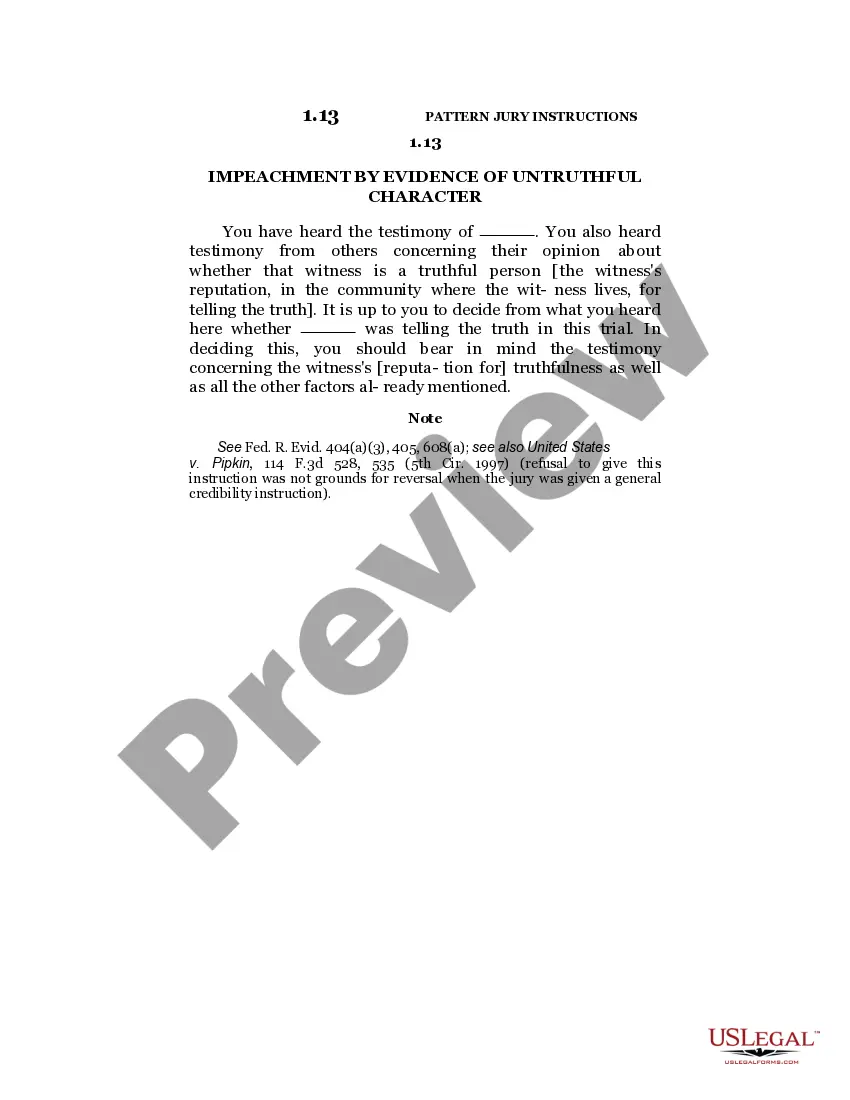
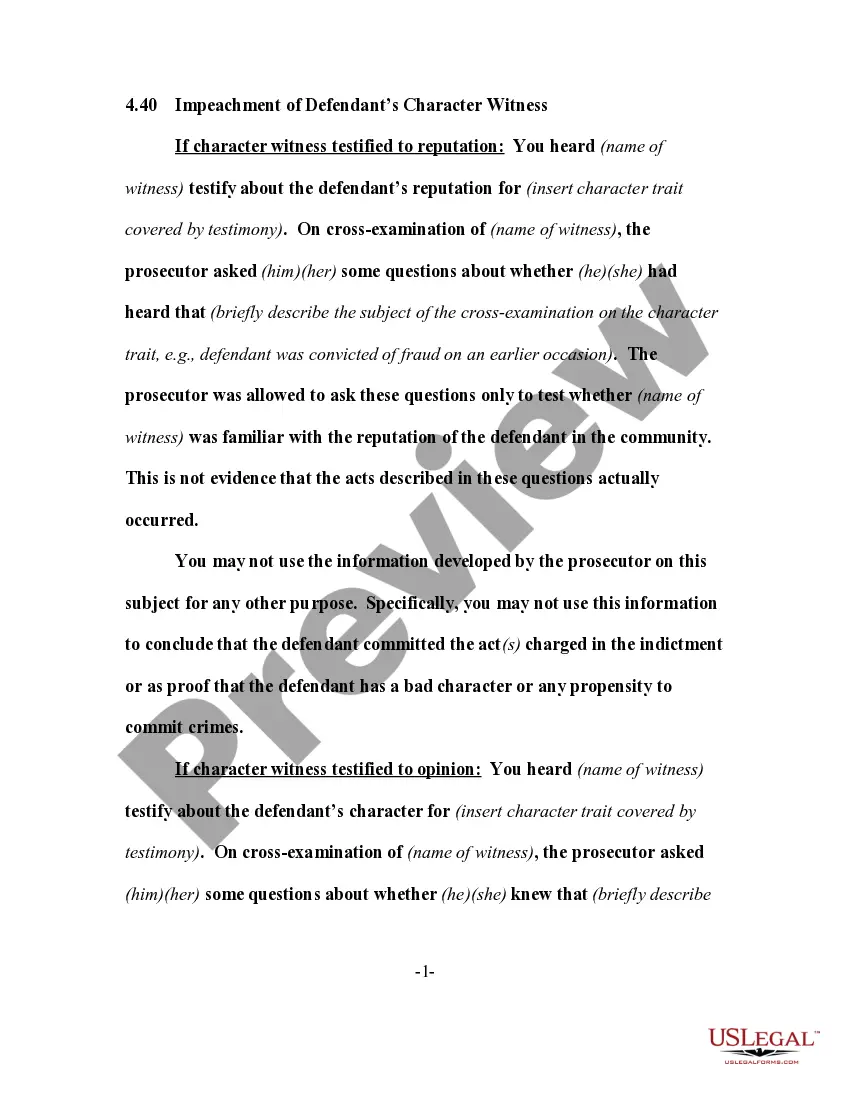
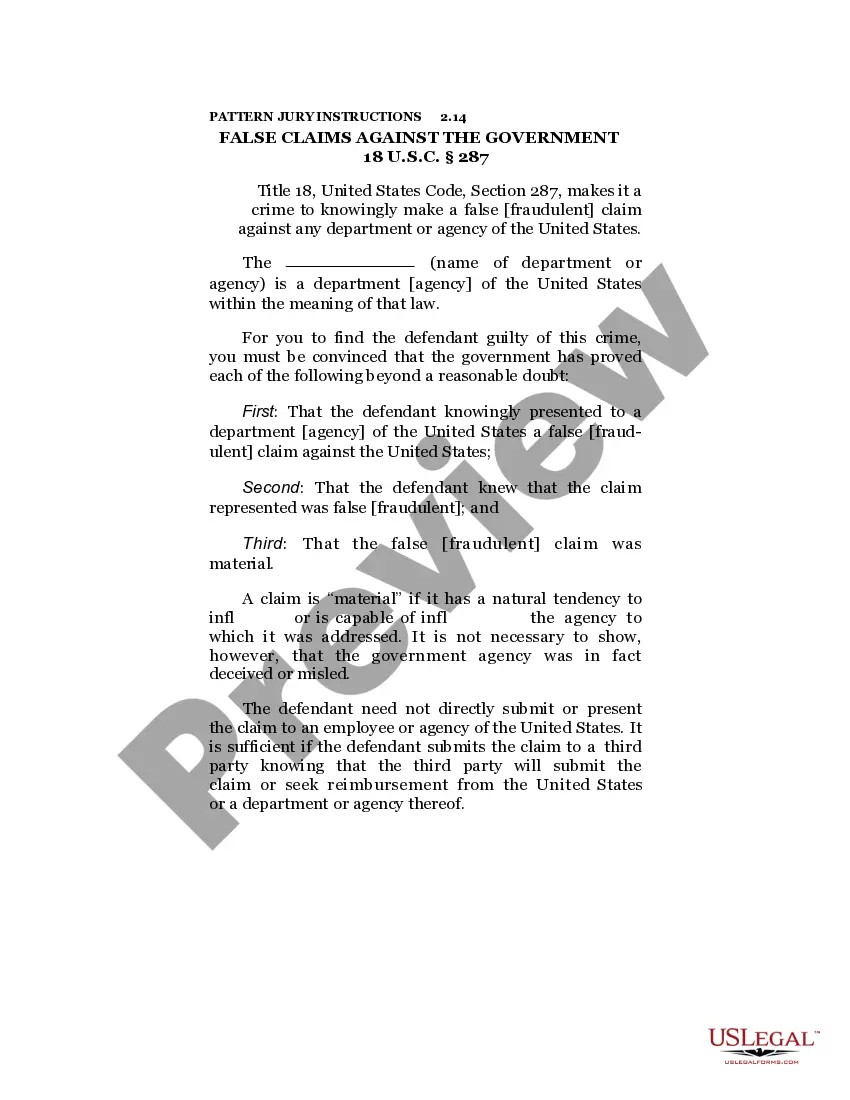
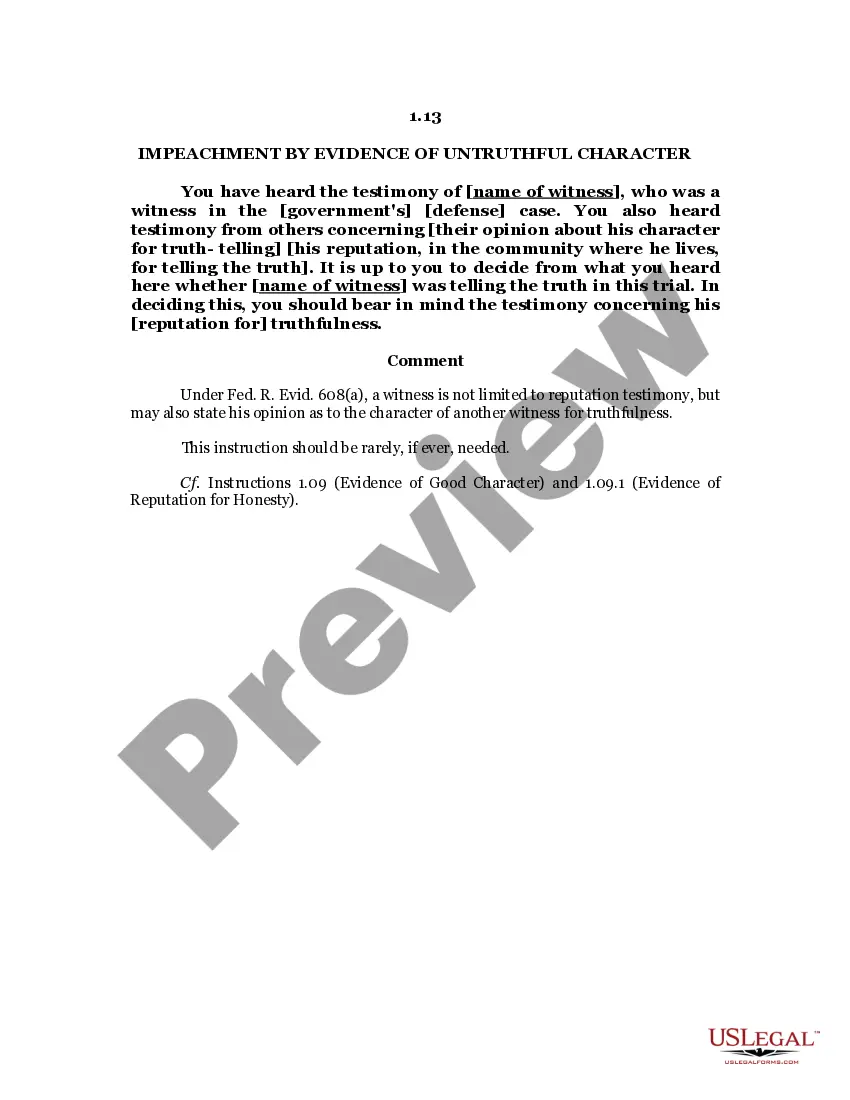
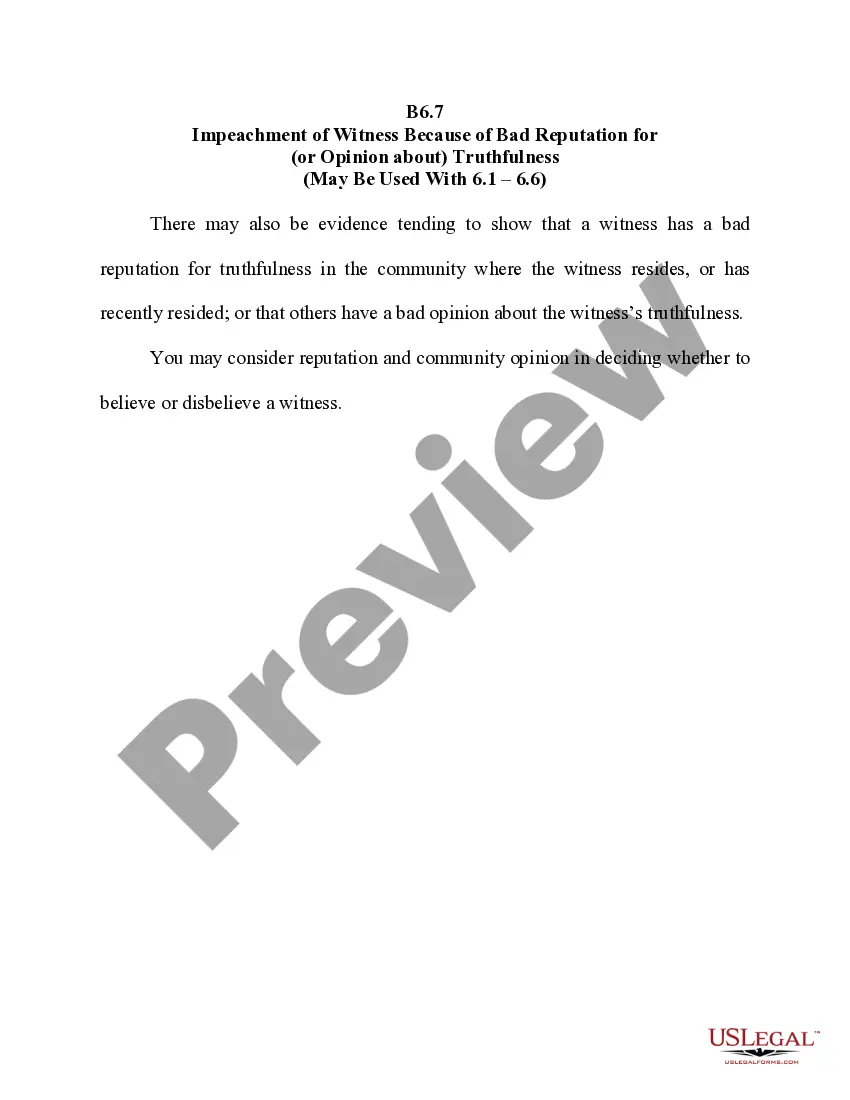
The Impeachment by Evidence of Untruthful Character form is a legal document used in court to challenge the credibility of a witness. This form allows you to present evidence regarding a witness's reputation for truthfulness, helping the jury assess their reliability. Unlike other forms, this document specifically addresses the character of a witness in relation to their honesty, making it crucial for cases where witness credibility is a significant issue.
Key components of this form
- Witness testimony: Includes statements made by witnesses regarding their opinions about another witness's truthfulness.
- Community reputation: Considers the general perception of the witness's reputation for telling the truth within their community.
- Decision-making criteria: Provides guidelines for jurors on how to evaluate the included testimony and evidence.
- Reference to legal standards: Cites pertinent legal rules and case law to support the impeachment process.
When this form is needed
This form is essential when you need to question the reliability of a witness during a trial. It is particularly useful in cases where witness testimony plays a pivotal role in the outcome. Utilize this form when you believe that evidence regarding a witness's untruthful character can influence the jury's perception of the truthfulness of their testimony.
Intended users of this form
- Attorneys representing clients in civil or criminal cases who wish to challenge witness credibility.
- Defendants seeking to undermine the prosecution's case by discrediting their witnesses.
- Prosecutors who aim to bolster the credibility of their own witnesses against challenges from defense counsel.
- Parties involved in legal disputes where witness credibility is in question.
How to complete this form
- Identify the witnesses involved in the case and gather testimonies regarding their truthfulness.
- Document the community reputation of the witness, including relevant opinions and perceptions.
- Refer to applicable legal standards and precedents that support your claims of untruthfulness.
- Prepare your argument to present to the jury, incorporating the evidence collected.
- Submit the form to the court as part of your case documentation.
Does this document require notarization?
This form does not typically require notarization to be legally valid. However, some jurisdictions or document types may still require it. US Legal Forms provides secure online notarization powered by Notarize, available 24/7 for added convenience.
Get your form ready online
Our built-in tools help you complete, sign, share, and store your documents in one place.
Make edits, fill in missing information, and update formatting in US Legal Forms—just like you would in MS Word.
Download a copy, print it, send it by email, or mail it via USPS—whatever works best for your next step.
Sign and collect signatures with our SignNow integration. Send to multiple recipients, set reminders, and more. Go Premium to unlock E-Sign.
If this form requires notarization, complete it online through a secure video call—no need to meet a notary in person or wait for an appointment.
We protect your documents and personal data by following strict security and privacy standards.

Make edits, fill in missing information, and update formatting in US Legal Forms—just like you would in MS Word.

Download a copy, print it, send it by email, or mail it via USPS—whatever works best for your next step.

Sign and collect signatures with our SignNow integration. Send to multiple recipients, set reminders, and more. Go Premium to unlock E-Sign.

If this form requires notarization, complete it online through a secure video call—no need to meet a notary in person or wait for an appointment.

We protect your documents and personal data by following strict security and privacy standards.
Common mistakes to avoid
- Failing to gather sufficient evidence to support claims of untruthfulness.
- Not considering the context in which witness statements were made.
- Overlooking state-specific legal standards and requirements related to impeachment.
- Presenting irrelevant personal opinions instead of factual evidence regarding the witness's character.
Benefits of completing this form online
- Convenience: Access and download the form anytime, streamlining the preparation process.
- Editability: Easily modify the template to suit your specific case needs.
- Reliability: Legal forms are drafted by licensed attorneys, ensuring they meet necessary legal standards.
Looking for another form?

Form popularity
FAQ
A witnesses may be impeached with evidence that shows a defect in his or her perception, memory, or truthfulness, such as evidence of bias, mistake, character for untruthfulness, or prior inconsistent statements.
Rule 609 provides that, with certain restrictions, a witness may be impeached witrh evidence of two kids of criminal convictions: (1) felonies, regardless of their nature; and (2) misdemeanors involving crimes of dishonesty and false statement, such as check deception and perjury.
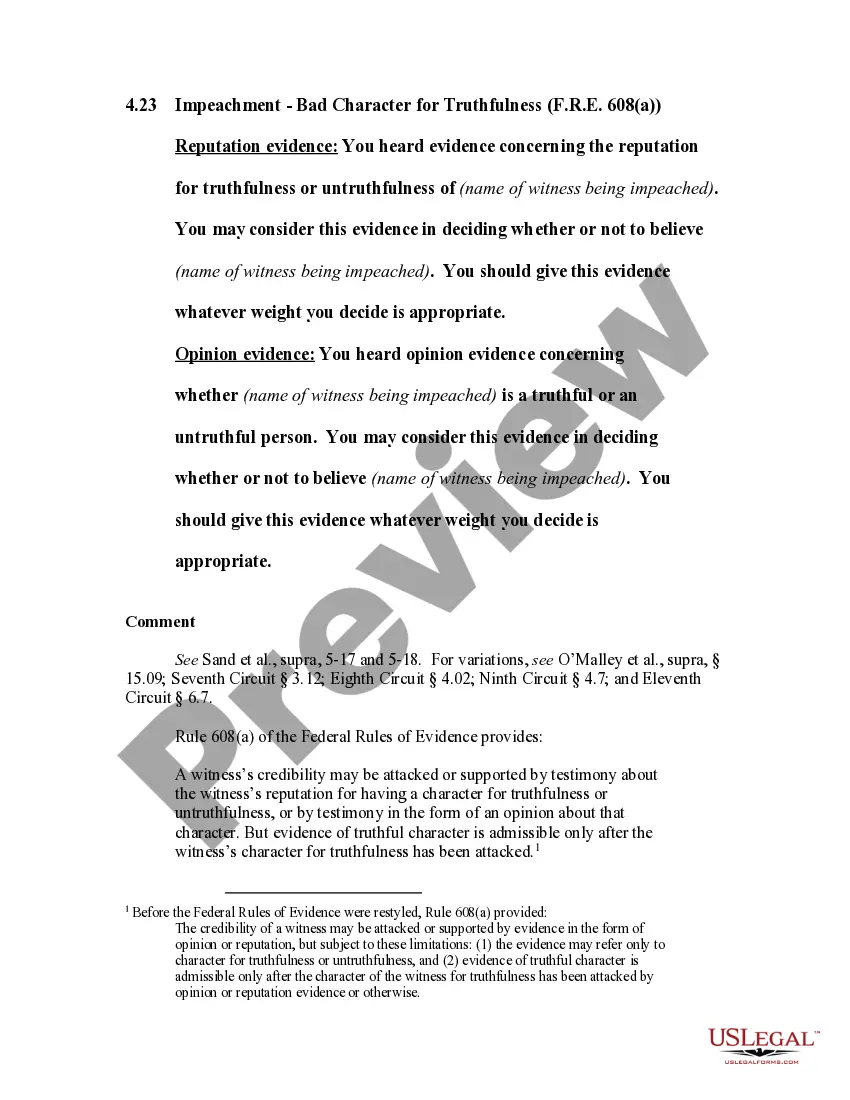
(a) Reputation or Opinion Evidence. A witness's credibility may be attacked or supported by testimony about the witness's reputation for having a character for truthfulness or untruthfulness, or by testimony in the form of an opinion about that character.
Impeachment of a witness refers to the process of discrediting or undermining the credibility of a witness during a trial, by presenting evidence or asking questions that contradict their testimony or reveal a bias, inconsistency, or falsehood in their statements.
Under common law, a witness may be impeached by proof the witness has contradicted him- or herself through evidence of prior acts or statements that are inconsistent with testimony given on direct examination.
What about impeachment? As with corroboration, a statement is not hearsay if it is offered to impeach a testifying witness. This does not, however, create a ?back door? for admitting the impeaching statement as substantive evidence. See State v.
Extrinsic evidence of a prior inconsistent statement by a witness is admissible if both of the following apply: (1) If the statement is offered solely for the purpose of impeaching the witness, the witness is afforded a prior opportunity to explain or deny the statement and the opposite party is afforded an opportunity
But evidence of truthful character is admissible only after the witness's character for truthfulness has been attacked. (2) another witness whose character the witness being cross-examined has testified about.