California Homestead Declaration for Husband and Wife
Understanding this form
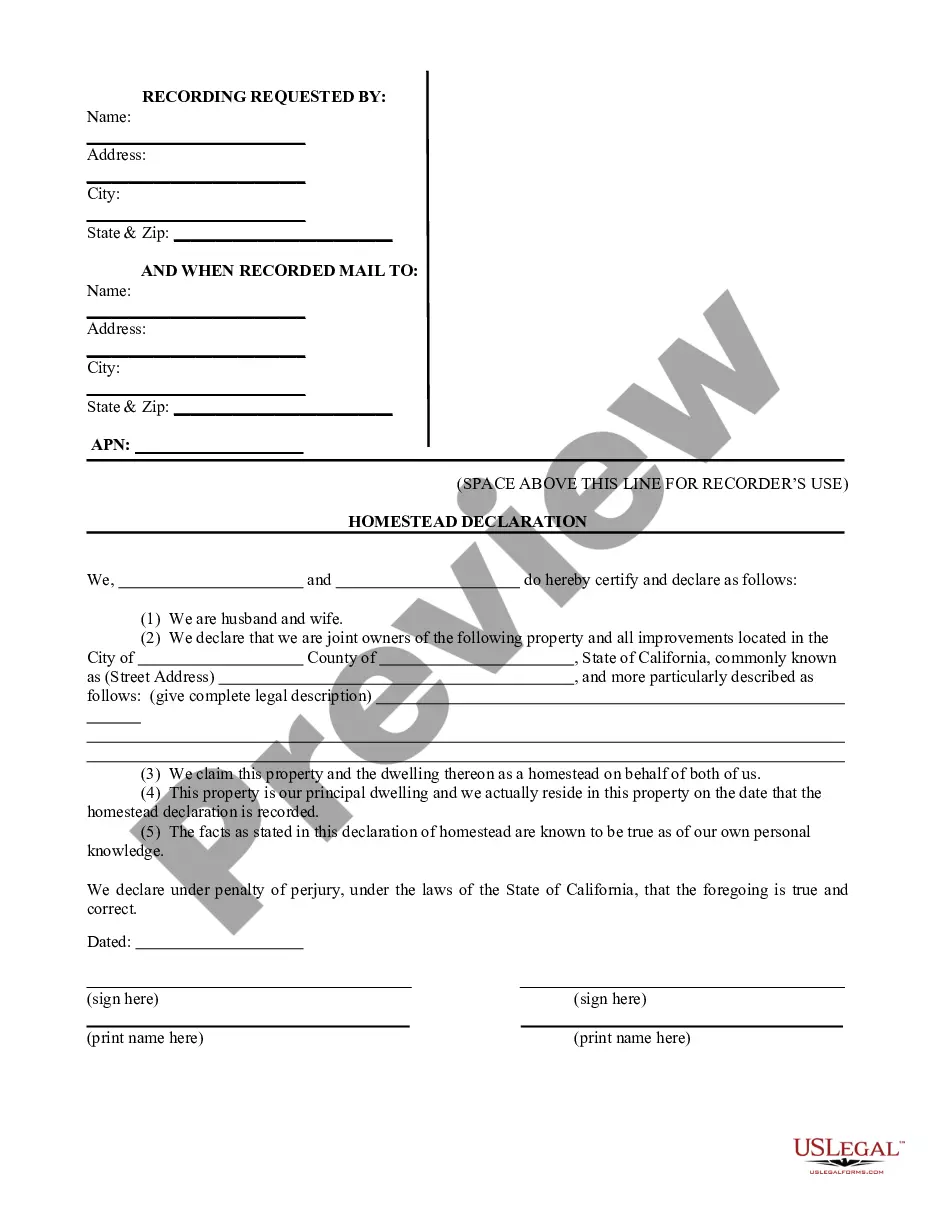
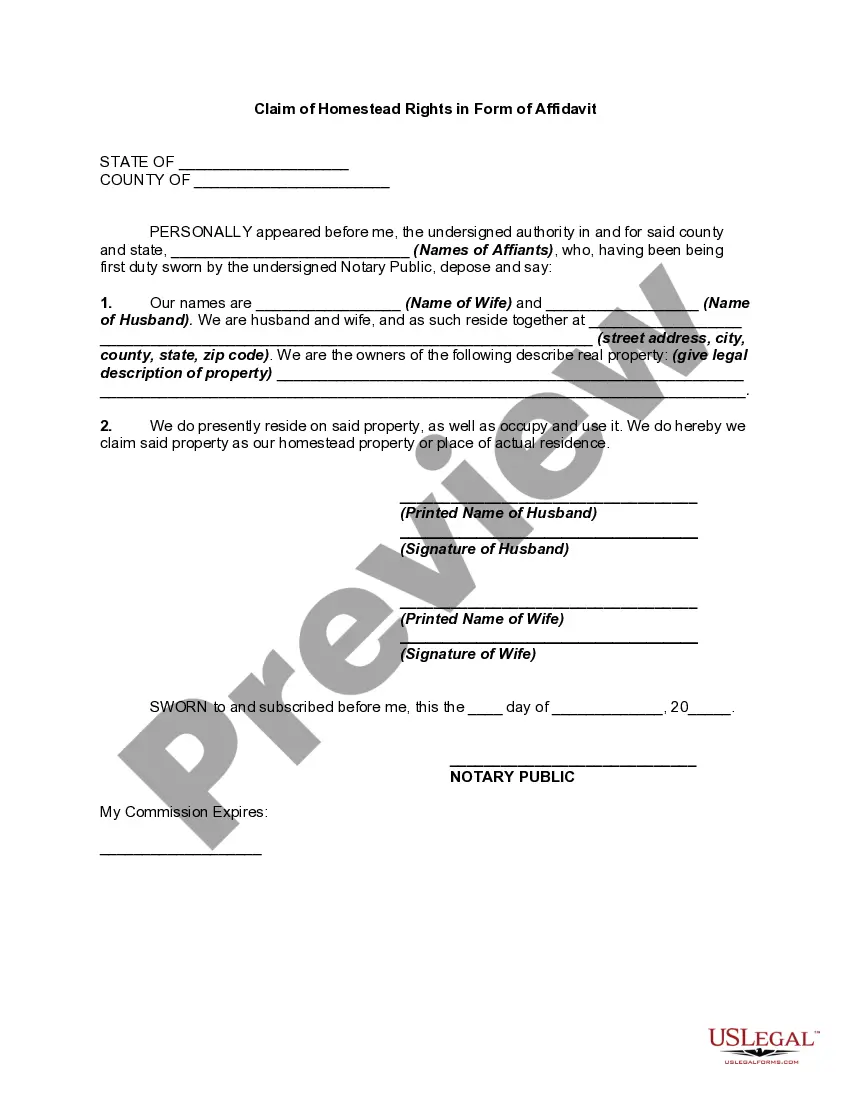
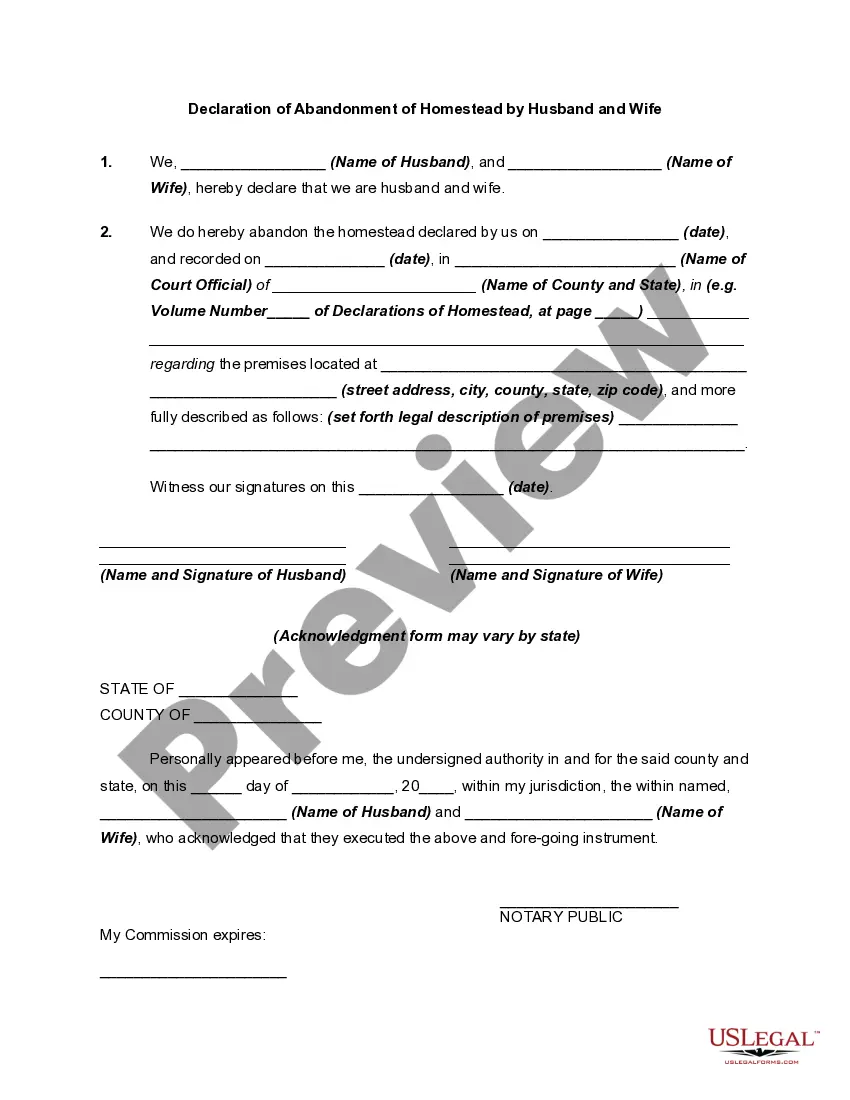
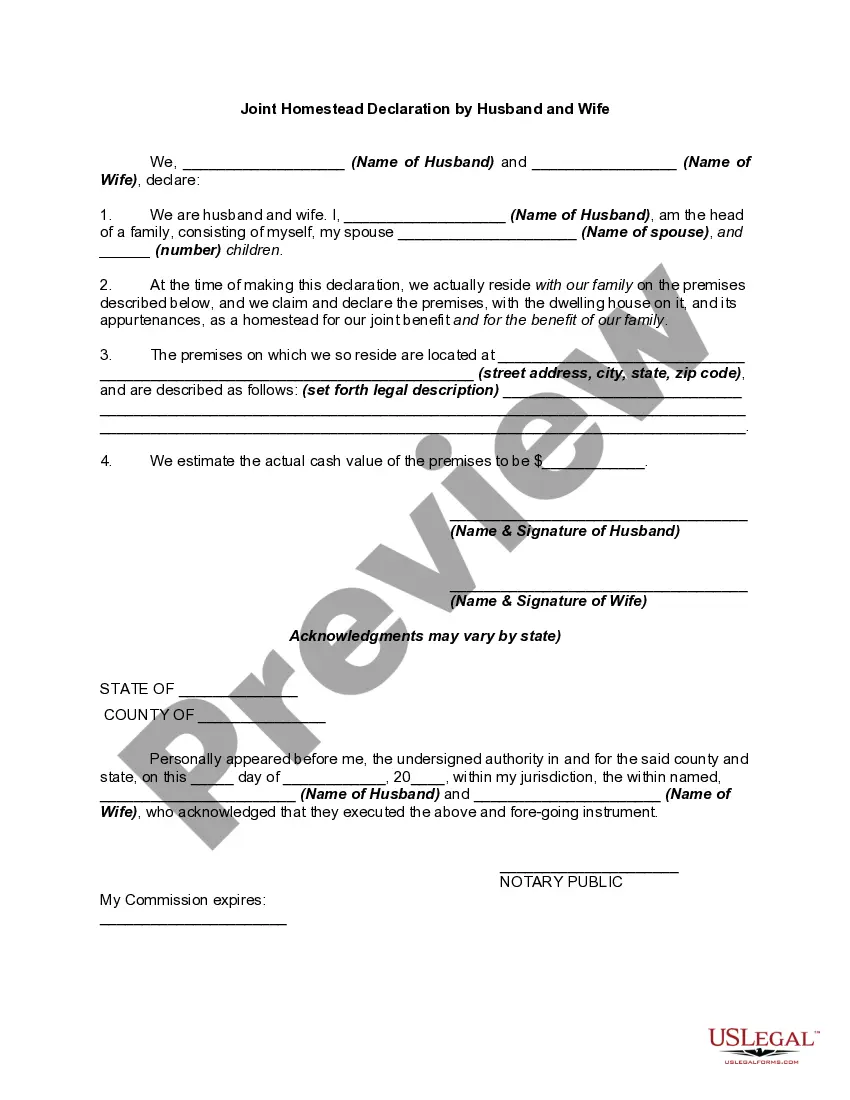
The Homestead Declaration for Husband and Wife is a legal form used to establish a declared homestead in California. This declaration serves to protect the couple's primary residence from certain creditors and provides legal recognition of their ownership. Unlike other property-related forms, this declaration specifically caters to married couples, ensuring that their homestead status is recognized by the County Recorder's Office.
Form components explained
- Declaration of homestead facts, affirming the truth of the information provided.
- Signatures of both spouses, confirming their agreement and understanding of the declaration.
- Date of declaration, marking when the form was completed and signed.

Situations where this form applies
You should use the Homestead Declaration for Husband and Wife when you and your spouse want to legally declare your primary residence as a homestead. This is particularly important if you wish to protect your home from certain types of creditors and wish to ensure that your homestead status is recorded officially. It's commonly used when purchasing a new home or when refinancing an existing mortgage.
Who this form is for
Eligible users include:
- Married couples who own a home together.
- Couples who wish to protect their residence from creditors.
- Spouses preparing to record their homestead declaration with local authorities.
Instructions for completing this form
- Identify both parties' names as husband and wife.
- Specify the property address that you are declaring as your homestead.
- Fill in the date when the declaration is completed.
- Both spouses must sign the declaration to confirm their agreement.
- Submit the completed form to the County Recorder's Office in the relevant county.
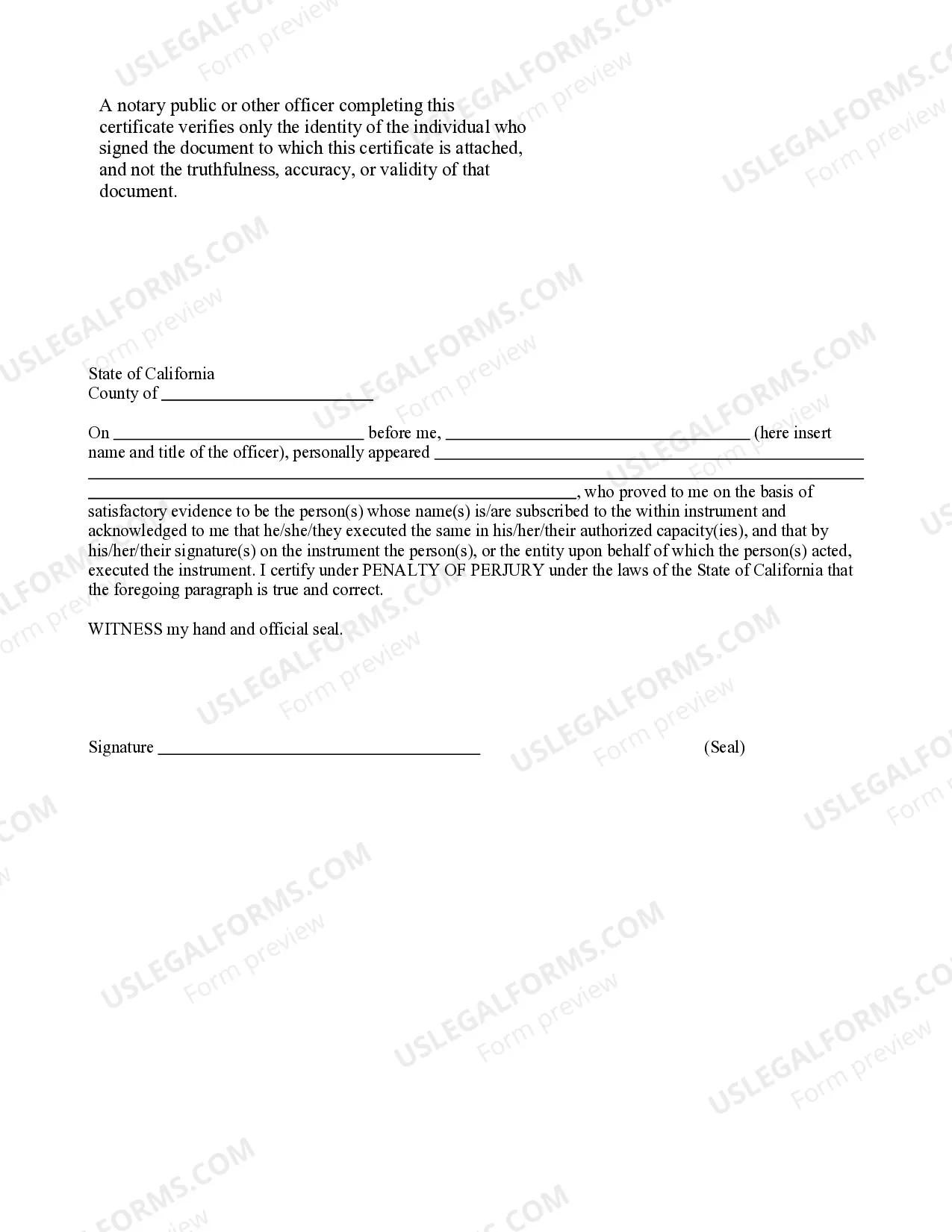
Does this document require notarization?
Notarization is not commonly needed for this form. However, certain documents or local rules may make it necessary. Our notarization service, powered by Notarize, allows you to finalize it securely online anytime, day or night.
Get your form ready online
Our built-in tools help you complete, sign, share, and store your documents in one place.
Make edits, fill in missing information, and update formatting in US Legal Forms—just like you would in MS Word.
Download a copy, print it, send it by email, or mail it via USPS—whatever works best for your next step.
Sign and collect signatures with our SignNow integration. Send to multiple recipients, set reminders, and more. Go Premium to unlock E-Sign.
If this form requires notarization, complete it online through a secure video call—no need to meet a notary in person or wait for an appointment.
We protect your documents and personal data by following strict security and privacy standards.

Make edits, fill in missing information, and update formatting in US Legal Forms—just like you would in MS Word.

Download a copy, print it, send it by email, or mail it via USPS—whatever works best for your next step.

Sign and collect signatures with our SignNow integration. Send to multiple recipients, set reminders, and more. Go Premium to unlock E-Sign.

If this form requires notarization, complete it online through a secure video call—no need to meet a notary in person or wait for an appointment.

We protect your documents and personal data by following strict security and privacy standards.
Common mistakes
- Failing to have both spouses sign the declaration.
- Not providing complete and accurate property information.
- Submitting the form to the wrong county Recorder's Office.
Why use this form online
- Convenient access to downloadable and editable legal forms.
- Reliable templates drafted by licensed attorneys.
- Time-saving process that avoids the need for physical appointments.
Looking for another form?
Form popularity
FAQ
Filing a California Homestead Declaration for Husband and Wife involves a few straightforward steps. First, complete the homestead declaration form, which you can find on legal websites like US Legal Forms. After filling out the form correctly, submit it to your local county recorder's office, either in person or via mail. This ensures your property receives the legal protections intended under California law.
No, the California Homestead Declaration for Husband and Wife is not automatic. You must actively file a declaration to receive homestead protection. Without filing, your home may not qualify for the protections against creditors. It is an important step for married couples to prioritize their home's security.
To file a California Homestead Declaration for Husband and Wife, you need to complete the required form. First, obtain the form from your local county recorder's office or download it from a reliable source like US Legal Forms. Next, fill it out with necessary details and submit it in person or by mail to your county recorder. Ensure that both spouses sign the declaration for it to be valid.
Filing a California Homestead Declaration for Husband and Wife is not automatic; you must submit the required form to your local county recorder. Once this declaration is filed, it provides legal acknowledgment of your homestead rights. This proactive step is essential to protect your home against certain types of creditors. For detailed guidance, UsLegalForms provides tools to ensure your filing is accurate and timely.
The California Homestead Declaration for Husband and Wife does not directly lower your property taxes. Instead, it offers protection against creditors and helps ensure that a portion of your home's equity remains safe. This means that while your property tax rate remains unchanged, the homestead exemption allows you to safeguard your assets effectively. If you need assistance, UsLegalForms offers resources to navigate the homestead declaration process.
Starting a homestead in California involves a few straightforward steps. First, ensure your property qualifies as a primary residence. Then, complete and file the California Homestead Declaration for Husband and Wife, which establishes your homestead rights. If you need assistance, platforms like USLegalForms can guide you through the process, making it easier to protect your home.
The new homestead exemption in California offers increased protection for homeowners facing debt collection. As of recent legislation, the exemption allows for a larger portion of your home's value to be shielded from creditors. Filing a California Homestead Declaration for Husband and Wife helps couples access these protections effectively and secure their home.
To establish a homestead in California, several requirements must be met. First, the property must be your primary residence, and you must be an owner or spouse on title. Additionally, filing a California Homestead Declaration for Husband and Wife is necessary to ensure your homestead rights are protected under state law.
A homestead specifically refers to a property that receives legal protection under California law, while a home is simply a place where someone lives. The distinction lies in the legal rights and benefits afforded to a homestead homeowner. By filing a California Homestead Declaration for Husband and Wife, couples can secure their residence from unwanted claims.
In California, a homestead qualifies as a primary residence that fulfills specific criteria under state law. To qualify, the home must be owned by you or your spouse, and it should serve as your main dwelling. Additionally, you must file a California Homestead Declaration for Husband and Wife to protect your home from certain creditors.