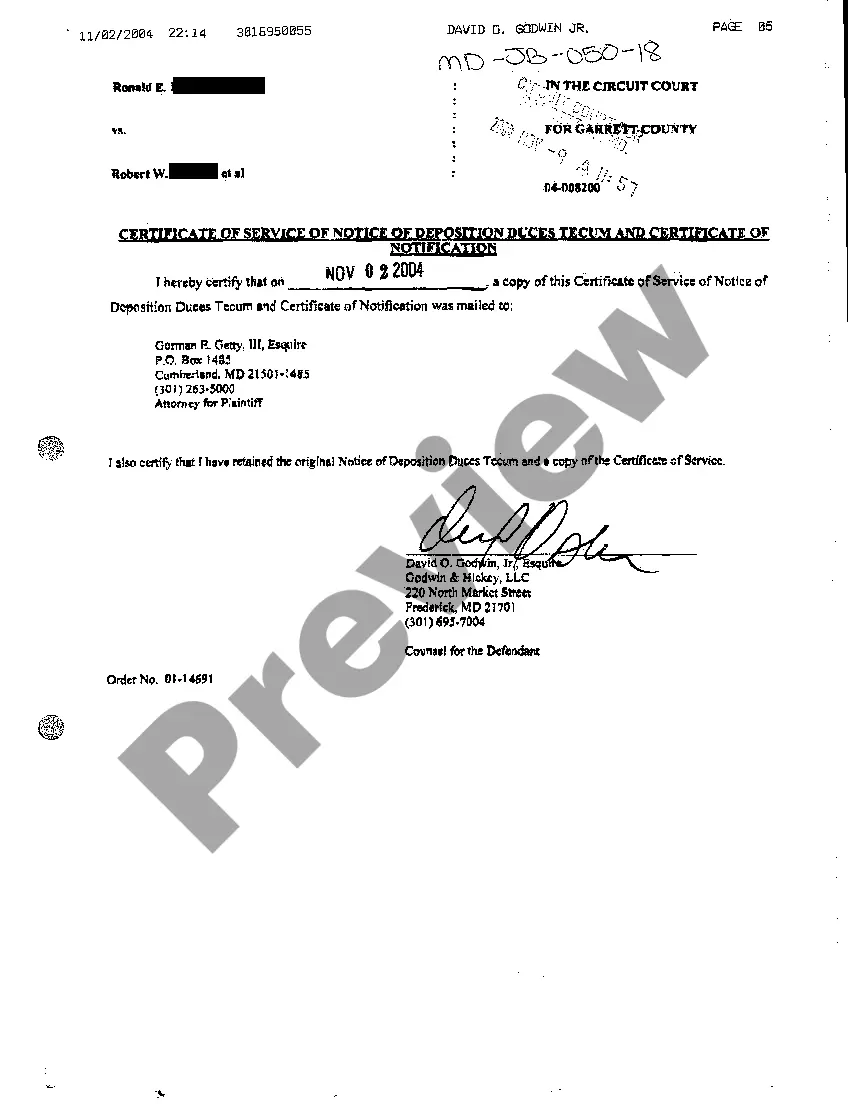
Impeachment - Bad Character for Truthfulness (F.R.E. 608(a))
What is this form?
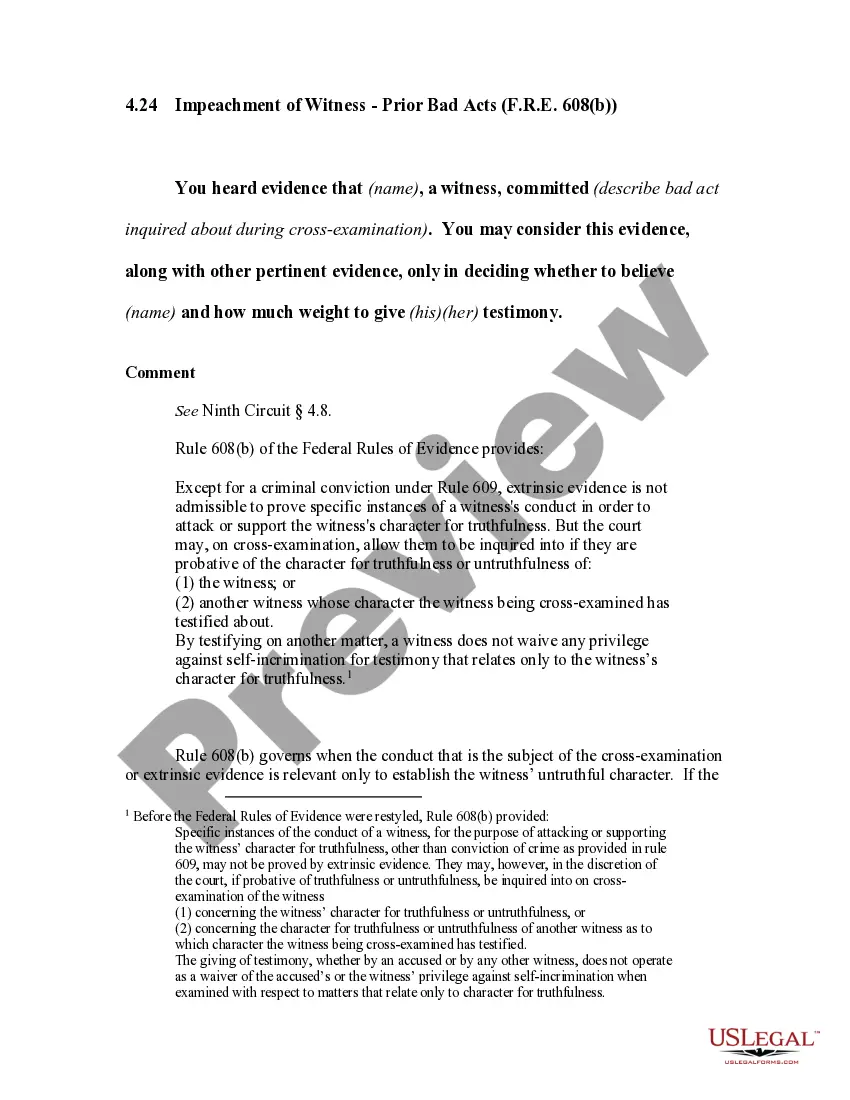
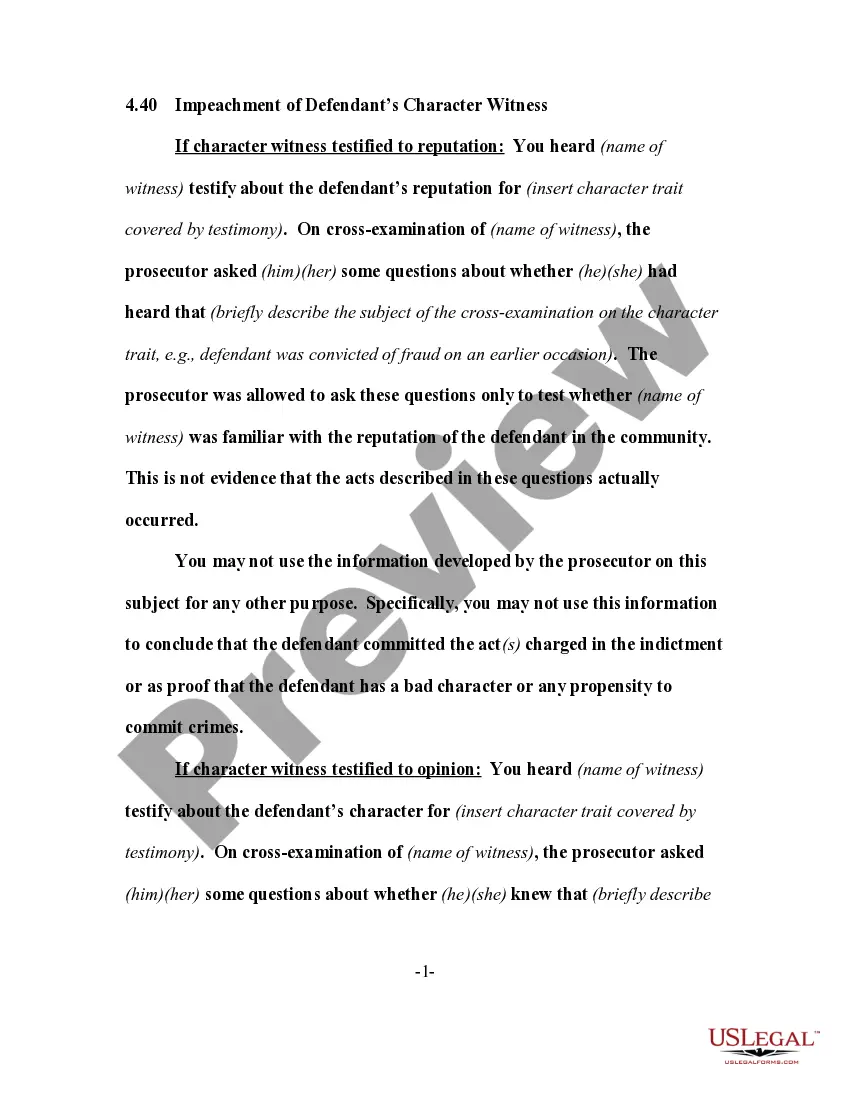
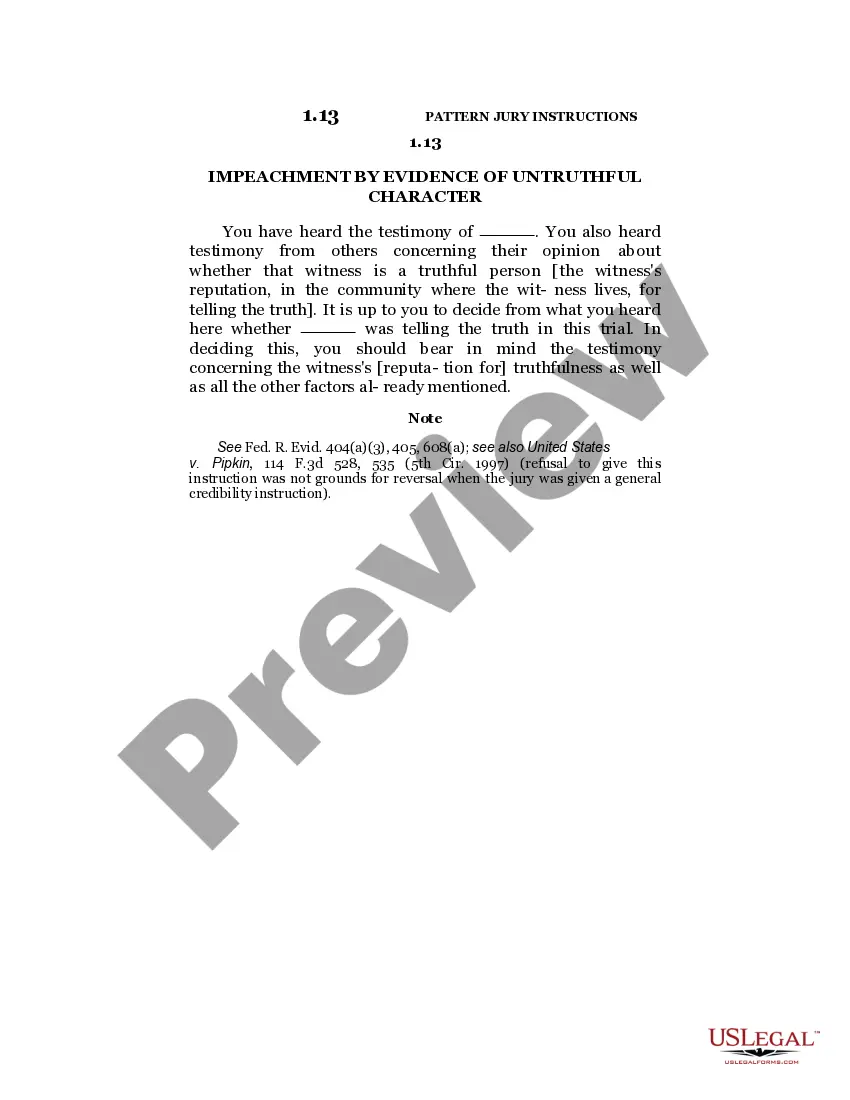
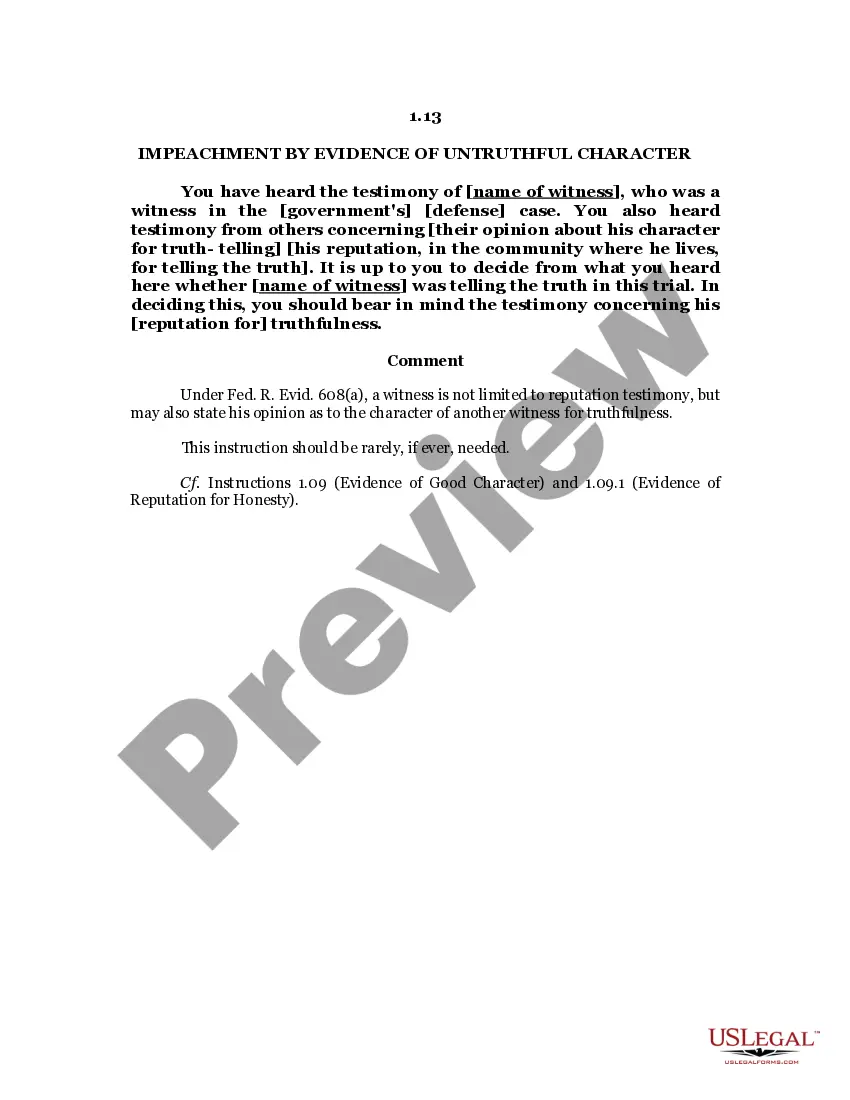
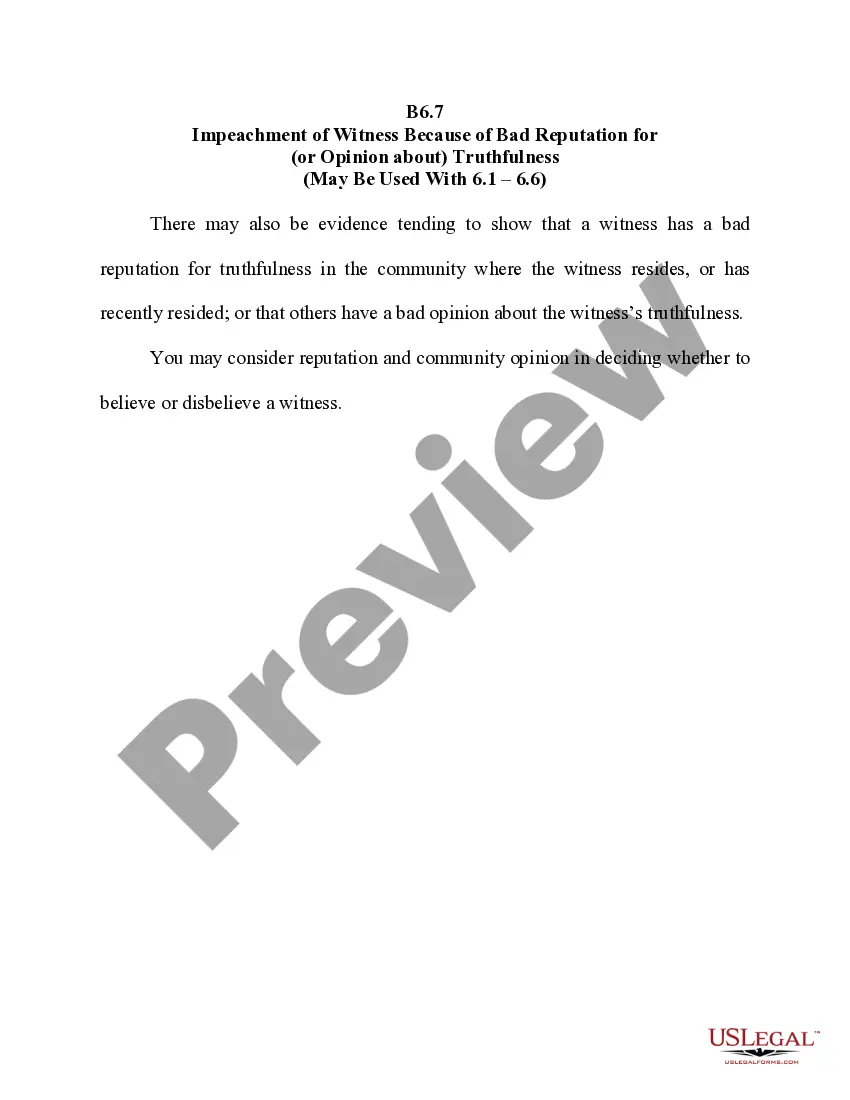
The Impeachment - Bad Character for Truthfulness form, governed by F.R.E. 608(a), is used in legal proceedings to challenge a witness's credibility based on their reputation or opinion regarding truthfulness. This form allows parties to present evidence concerning a witness's character, specifically focusing on their credibility, which differs from other forms that address different aspects of witness testimony or trial procedures.
Key parts of this document
- Reputation evidence: Assessment of the witness's reputation for truthfulness or untruthfulness.
- Opinion evidence: Evaluation of the witness based on opinions regarding their character.
- Guidance on admissibility: Clarification of when evidence of truthful character may be introduced.
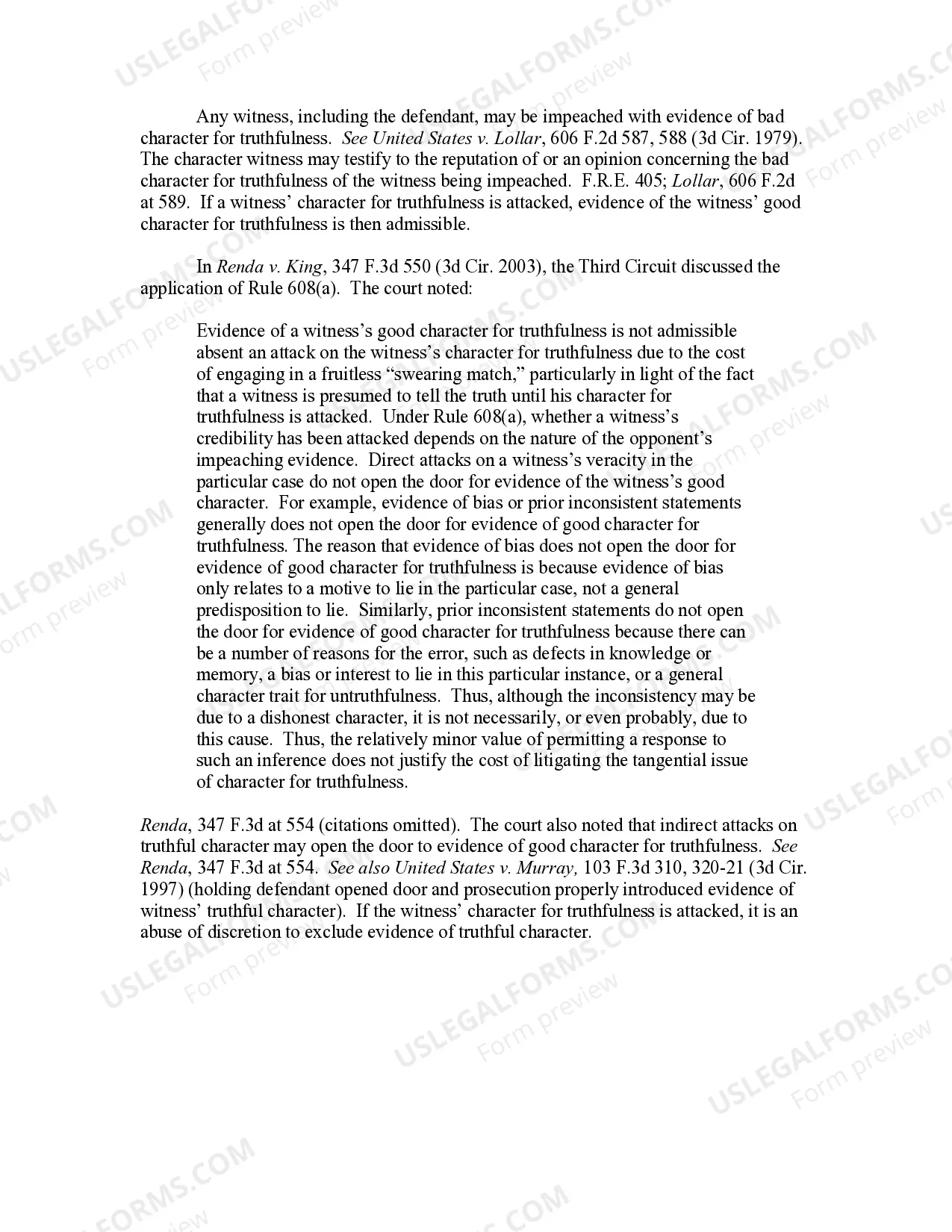
- Precedent references: Citations to relevant cases explaining the application of Rule 608(a).
When this form is needed
This form is applicable in legal cases where the credibility of a witness is essential to the outcome. It is particularly useful when one party intends to challenge the testimony of a witness based on allegations of dishonesty. Scenarios may include criminal trials, civil lawsuits, or any setting where witness credibility impacts the court's decision-making.
Who should use this form
- Attorneys representing clients in court cases.
- Defendants aiming to refute witness claims against them.
- Prosecutors seeking to uphold the credibility of their witnesses.
- Any party involved in legal proceedings where witness testimony is disputed.
Completing this form step by step
- Identify the witness being impeached.
- Gather evidence regarding the witness's reputation for truthfulness.
- Assemble any opinion evidence related to the witness's character.
- Prepare to present this evidence at the appropriate time during the trial.
- Ensure compliance with the rules of evidence in your jurisdiction.
Notarization requirements for this form
In most cases, this form does not require notarization. However, some jurisdictions or signing circumstances might. US Legal Forms offers online notarization powered by Notarize, accessible 24/7 for a quick, remote process.
Get your form ready online
Our built-in tools help you complete, sign, share, and store your documents in one place.
Make edits, fill in missing information, and update formatting in US Legal Forms—just like you would in MS Word.
Download a copy, print it, send it by email, or mail it via USPS—whatever works best for your next step.
Sign and collect signatures with our SignNow integration. Send to multiple recipients, set reminders, and more. Go Premium to unlock E-Sign.
If this form requires notarization, complete it online through a secure video call—no need to meet a notary in person or wait for an appointment.
We protect your documents and personal data by following strict security and privacy standards.

Make edits, fill in missing information, and update formatting in US Legal Forms—just like you would in MS Word.

Download a copy, print it, send it by email, or mail it via USPS—whatever works best for your next step.

Sign and collect signatures with our SignNow integration. Send to multiple recipients, set reminders, and more. Go Premium to unlock E-Sign.

If this form requires notarization, complete it online through a secure video call—no need to meet a notary in person or wait for an appointment.

We protect your documents and personal data by following strict security and privacy standards.
Common mistakes to avoid
- Failing to establish clear relevance between character evidence and the witness's testimony.
- Introducing character evidence without first attacking the witness's credibility.
- Misunderstanding the difference between direct and indirect attacks on a witnessâs character.
Benefits of completing this form online
- Convenient access to legal forms anytime, without the need to travel.
- Editability allows customization to fit specific legal needs.
- Reliability of forms drafted by licensed attorneys, ensuring legal compliance.
Legal use & context
- This form is rooted in federal evidence rules and is recognized across multiple jurisdictions.
- It is crucial for ensuring that witness credibility is appropriately challenged in court.
- This form cannot be used arbitrarily; specific conditions must be met for evidential admissibility.
Looking for another form?
Form popularity
FAQ
Federal Rules of Evidence ? Rule 608 On cross-examination, you can challenge a character witness's opinion by asking about specific contrary conduct and you can attack a witness's credibility by asking about that witness's past lies.
DESTROYING A WITNESS' CREDIBILITY Show contradictions between their pre-trial testimony and trial testimony. Exposing their 'little white lie' Showing a witness didn't know the answer during deposition but suddenly at trial they know all the answers.
A witnesses may be impeached with evidence that shows a defect in his or her perception, memory, or truthfulness, such as evidence of bias, mistake, character for untruthfulness, or prior inconsistent statements.
Rule 609 provides that, with certain restrictions, a witness may be impeached witrh evidence of two kids of criminal convictions: (1) felonies, regardless of their nature; and (2) misdemeanors involving crimes of dishonesty and false statement, such as check deception and perjury.
Expert witnesses can be impeached if they contradict themselves or are confronted by a contradictory statement from an authoritative work in the field. Credibility is the overriding issue in witness testimony, and it depends upon the appearance and impression of truth as perceived by the jury.
A witness's credibility may be attacked or supported by testimony about the witness's reputation for having a character for truthfulness or untruthfulness, or by testimony in the form of an opinion about that character.
Impeachment of a witness refers to the process of discrediting or undermining the credibility of a witness during a trial, by presenting evidence or asking questions that contradict their testimony or reveal a bias, inconsistency, or falsehood in their statements.