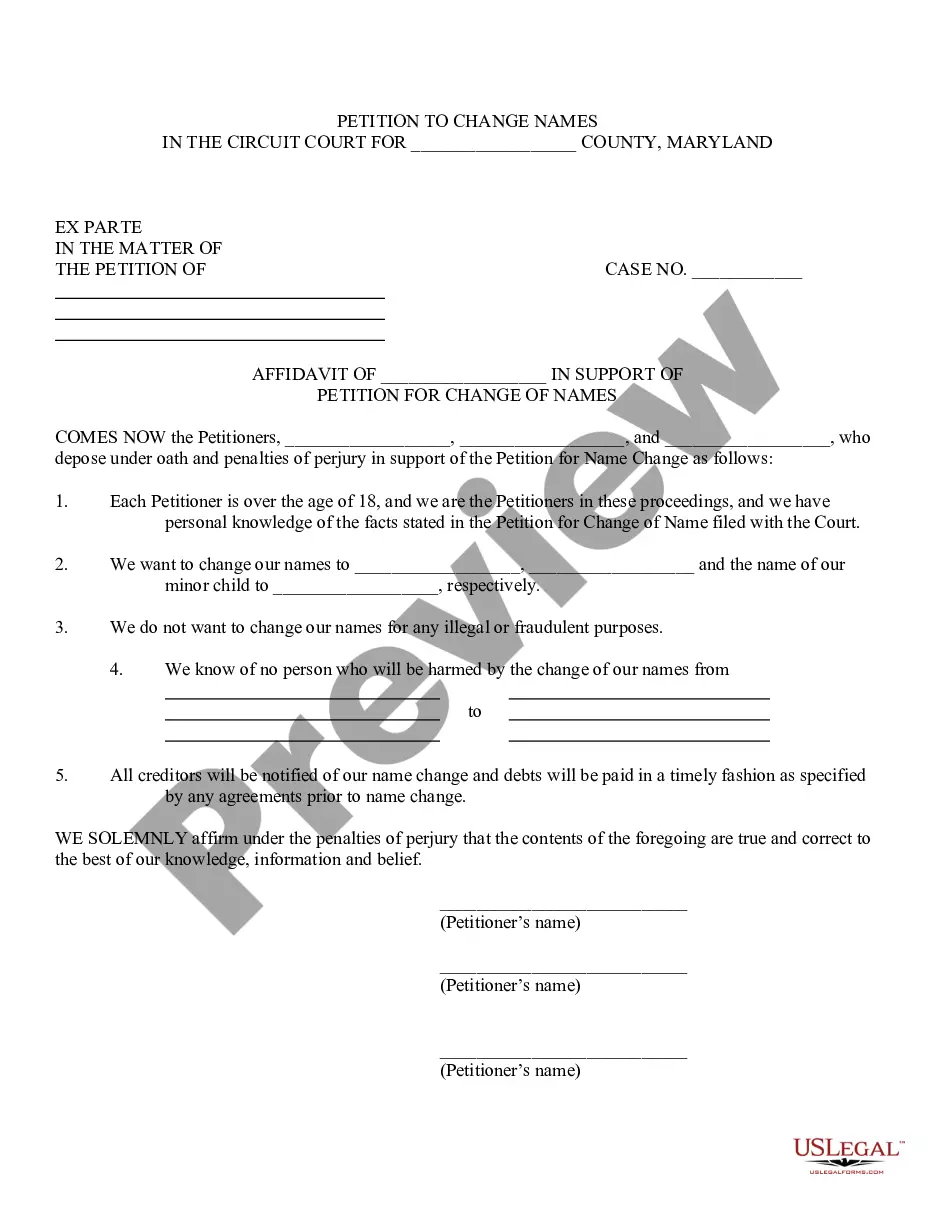
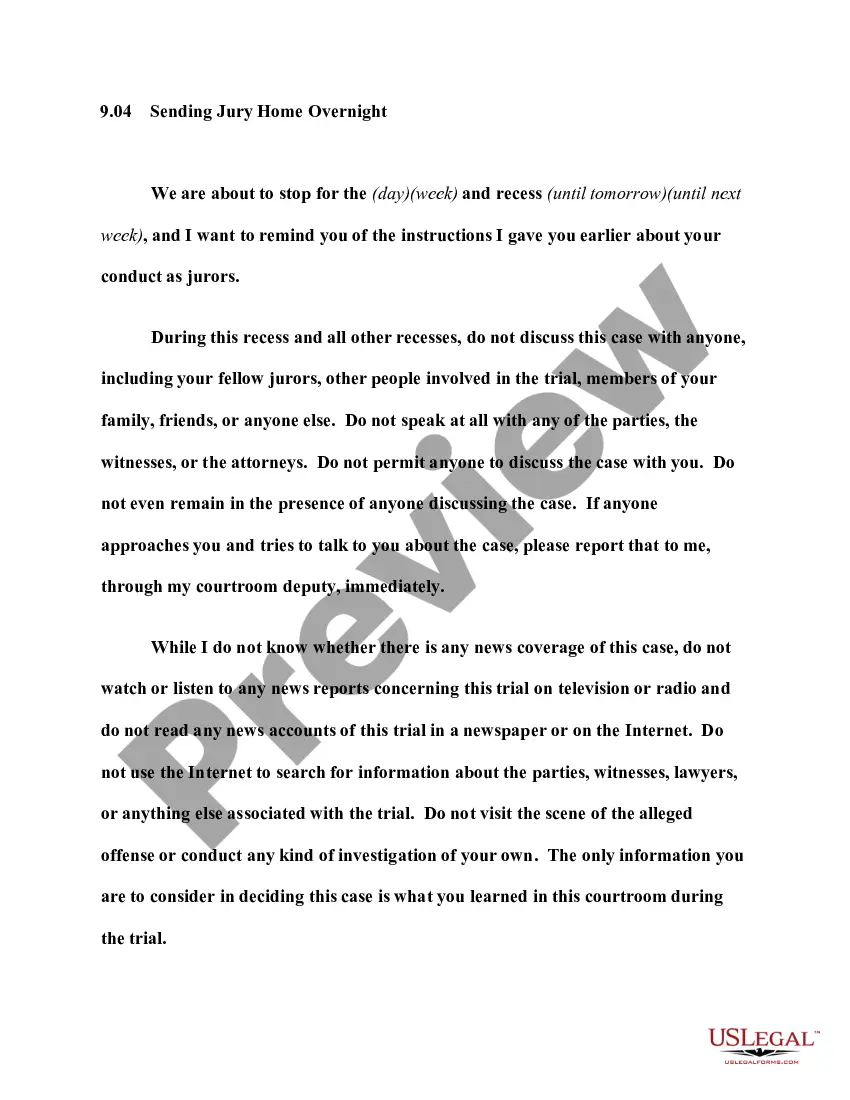
Sending Jury Home Overnight
What is this form?
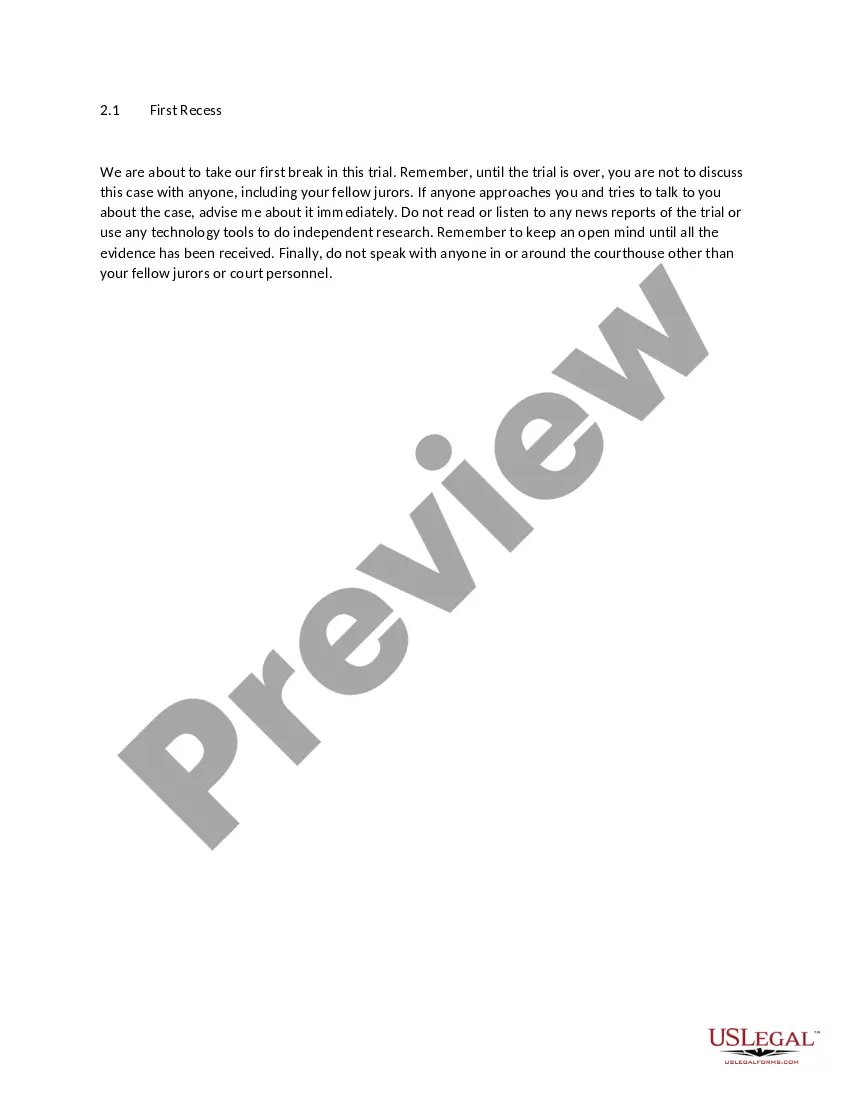
The Sending Jury Home Overnight form provides important instructions to jurors when they are allowed to leave the courtroom during a recess. This form outlines the conduct expected from jurors to ensure a fair trial and prevent any outside influence on their decision-making process. This form is crucial for maintaining the integrity of jury deliberations, distinguishing it from other jury instructions that may not include specific guidelines on personal conduct during breaks.
Form components explained
- Instructions about discussing the case with anyone while on recess.
- Guidance on avoiding news coverage related to the trial.
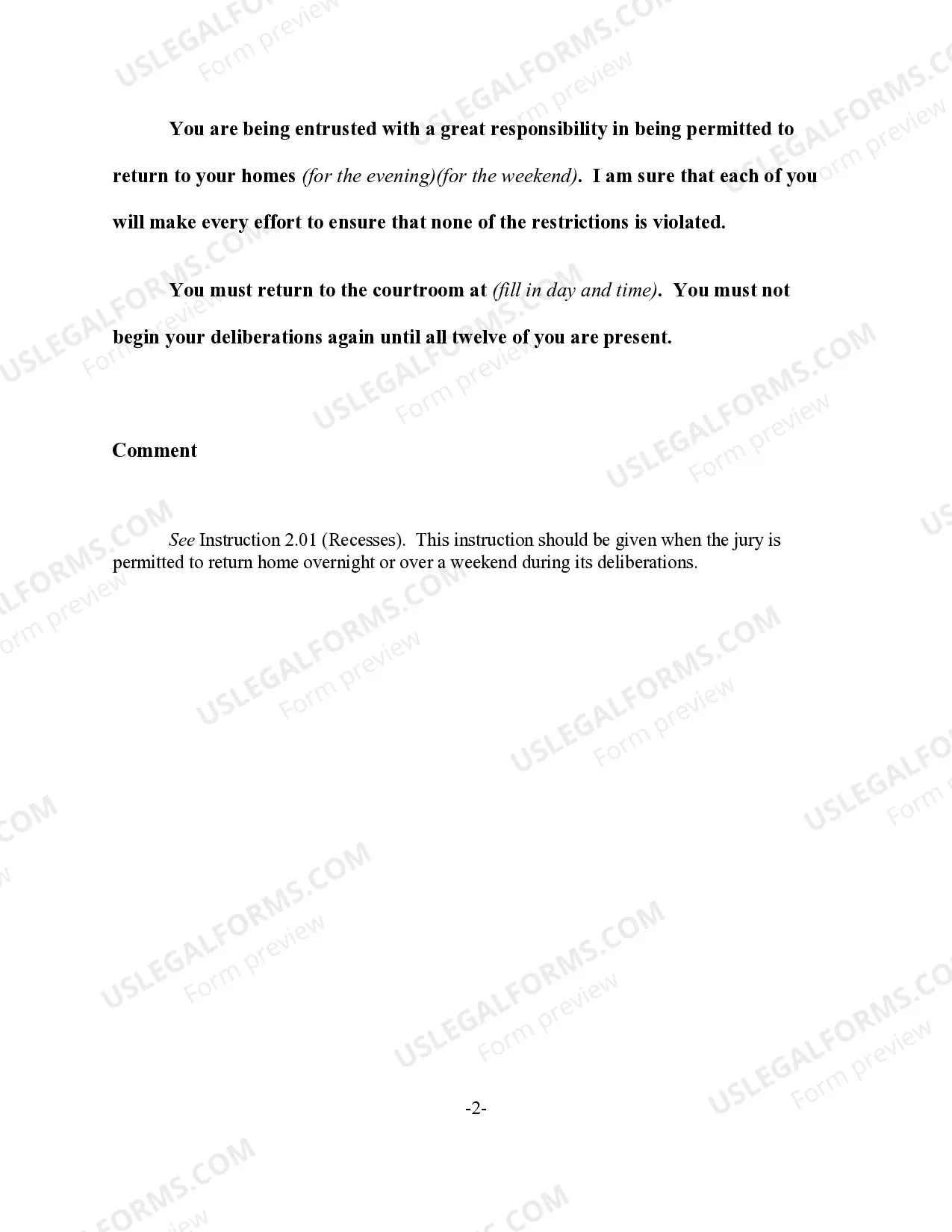
- Emphasis on the responsibility of jurors while they are away from the courtroom.
- Details on when jurors must return to continue deliberations.
- Reminder to report any attempts to discuss the case by outsiders.
Common use cases
This form should be used when a jury is permitted to leave the courtroom for an overnight or weekend recess during their deliberations. It serves as a reminder to jurors regarding their conduct during this time to ensure they do not inadvertently compromise the trial's integrity.
Who can use this document
- Judges presiding over a trial with a jury.
- Court personnel involved in jury management.
- Attorneys representing parties in a trial where jurors are present.
Completing this form step by step
- State the duration of the recess (day or week).
- Fill in the resumption day and time when jurors must return to the courtroom.
- Ensure jurors understand the instruction regarding discussing the case.
- Emphasize the importance of avoiding outside information about the trial.
- Instruct jurors to report any inappropriate interactions regarding the case.
Notarization requirements for this form
This form does not typically require notarization unless specified by local law. Jurors will receive immediate guidance on proper conduct without the need for notarized documentation.
Get your form ready online
Our built-in tools help you complete, sign, share, and store your documents in one place.
Make edits, fill in missing information, and update formatting in US Legal Forms—just like you would in MS Word.
Download a copy, print it, send it by email, or mail it via USPS—whatever works best for your next step.
Sign and collect signatures with our SignNow integration. Send to multiple recipients, set reminders, and more. Go Premium to unlock E-Sign.
If this form requires notarization, complete it online through a secure video call—no need to meet a notary in person or wait for an appointment.
We protect your documents and personal data by following strict security and privacy standards.

Make edits, fill in missing information, and update formatting in US Legal Forms—just like you would in MS Word.

Download a copy, print it, send it by email, or mail it via USPS—whatever works best for your next step.

Sign and collect signatures with our SignNow integration. Send to multiple recipients, set reminders, and more. Go Premium to unlock E-Sign.

If this form requires notarization, complete it online through a secure video call—no need to meet a notary in person or wait for an appointment.

We protect your documents and personal data by following strict security and privacy standards.
Typical mistakes to avoid
- Jurors discussing the case with family or friends outside of court.
- Ignoring news coverage or reporting of the trial.
- Failing to report any approaches from outsiders about the case.
Advantages of online completion
- Convenience of easy access and downloadable format.
- Editability to tailor instructions as needed for specific cases.
- Reliable templates drafted by licensed attorneys for maximum legal accuracy.
Legal use & context
- This form helps ensure jurors do not receive outside influences that could affect their judgment.
- It reinforces the legal obligation of jurors to base their decisions solely on courtroom evidence.
- Non-compliance may lead to significant legal consequences, impacting trial outcomes.
Quick recap
- The Sending Jury Home Overnight form is essential for maintaining the integrity of jury deliberations.
- Jurors must follow specific guidelines during any recess to prevent compromise of the trial.
- This form provides clarity on what jurors can and cannot do while away from the courtroom.
Looking for another form?
Form popularity
FAQ
In order to be summoned for jury duty, a citizen must be a registered voter, or have a driver's license, an Illinois Identification Card, or an Illinois Disabled Person Identification Card. Every eligible citizen may be called for jury service once every twelve months.
What happens if I do not report for jury service? Title 28, United States Code, §1866(g) (link is external) provides, ?Any person summoned for jury service who fails to appear as directed shall be ordered by the District Court to appear forthwith and show cause for his failure to comply with the summons.
To be unqualified or ineligible to serve jury duty under Illinois Law. Examples include: Juror deceased, Not a U.S. Citizen, Not a resident of Lake County, Permanent Medical disability, Under 18 years of ages.
Failure to Appear You must report for jury service if you are qualified and you have not been excused or had your service postponed. Any person who fails to respond may be fined up to $1,500, incarcerated, or both. Carefully follow the instructions on the summons and contact the court if you need help.
No. An employer is NOT required by law to pay employees who are on jury service but many employers do.
Failing to appear for jury duty in Illinois is against the law. A juror who does not answer a summons can be found in contempt of court and can be fined up to $100 for a state summons; or spend up to three days in jail, or be ordered to perform community service, for a federal summons.
Employers do not have to compensate an employee for his or her time spent on jury duty. See Compensation During Leave. Illinois law protects an employee's job when the employee serves on a jury. Employers cannot terminate or penalize an employee for serving on a jury.
If a jury is unable to reach a unanimous verdict and results in a hung jury, the case may be retried with a new jury. If the second jury is also unable to reach a verdict, the judge may declare a mistrial.