Firearm Offenses - In or Affecting Interstate or Foreign Commerce
Overview of this form
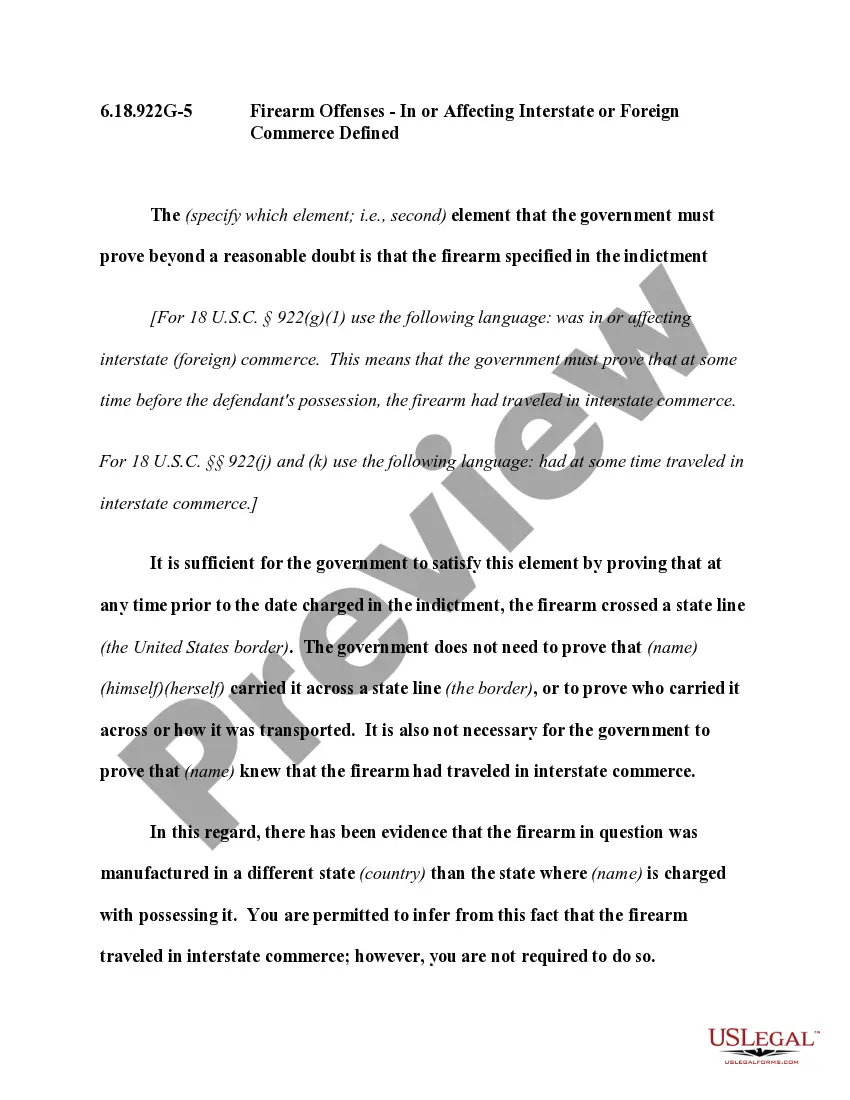
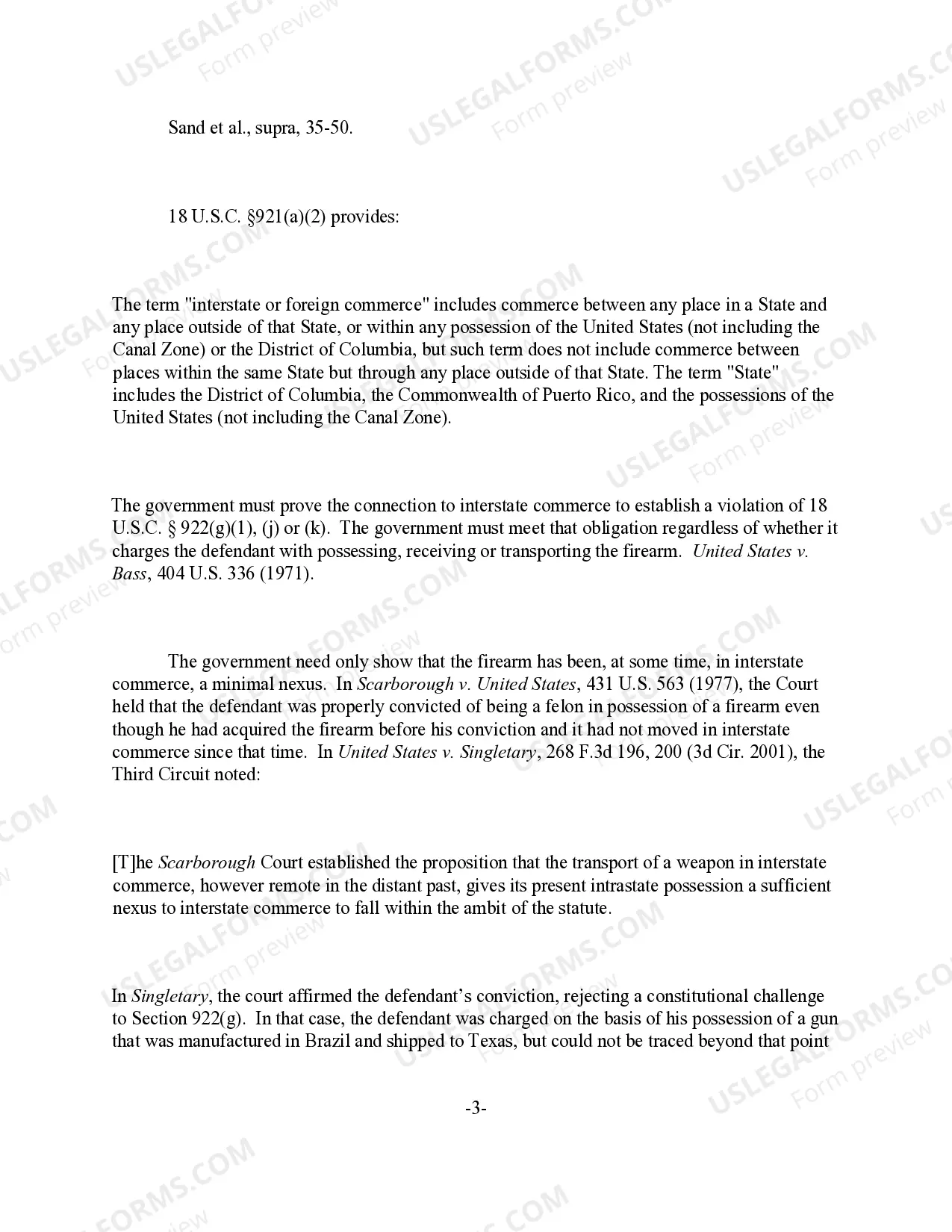
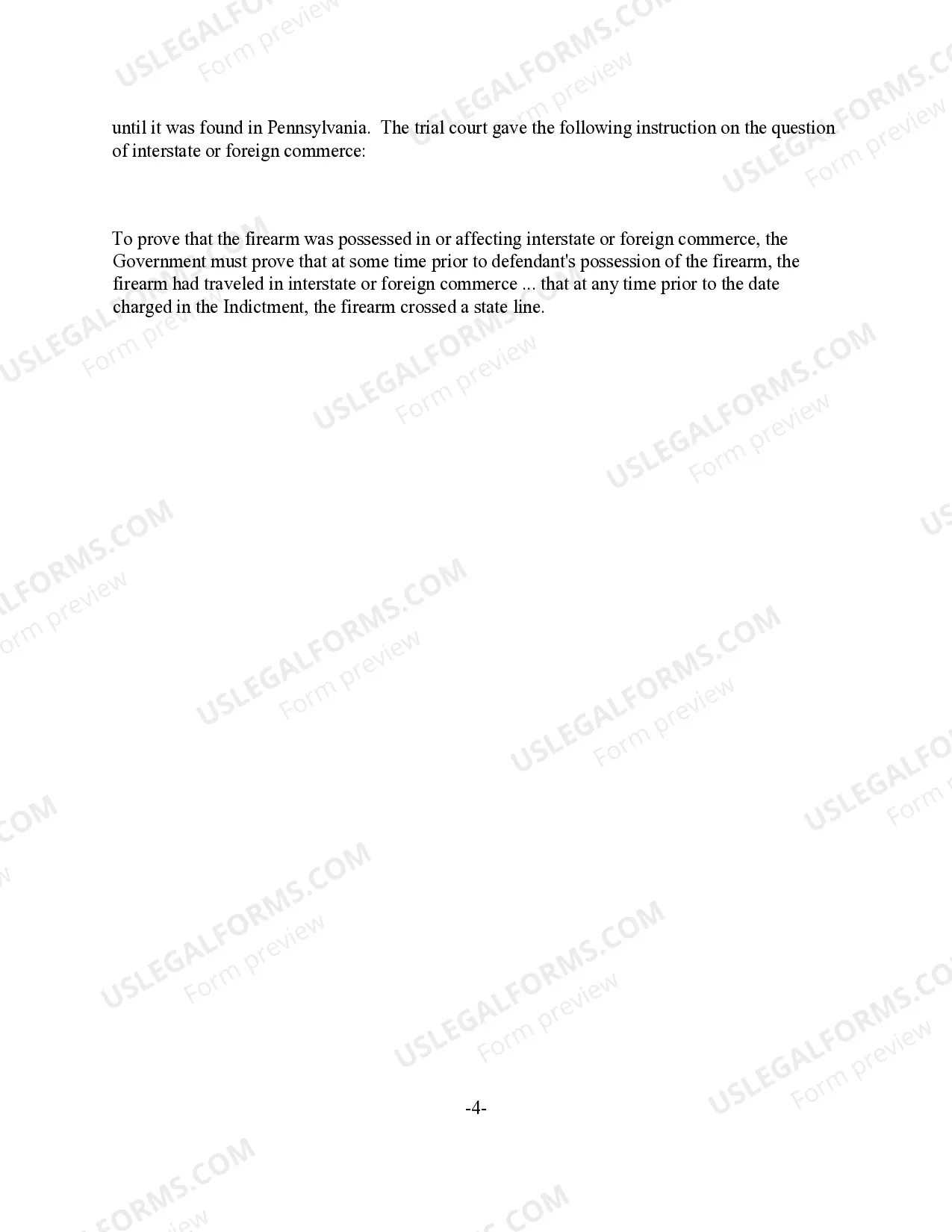
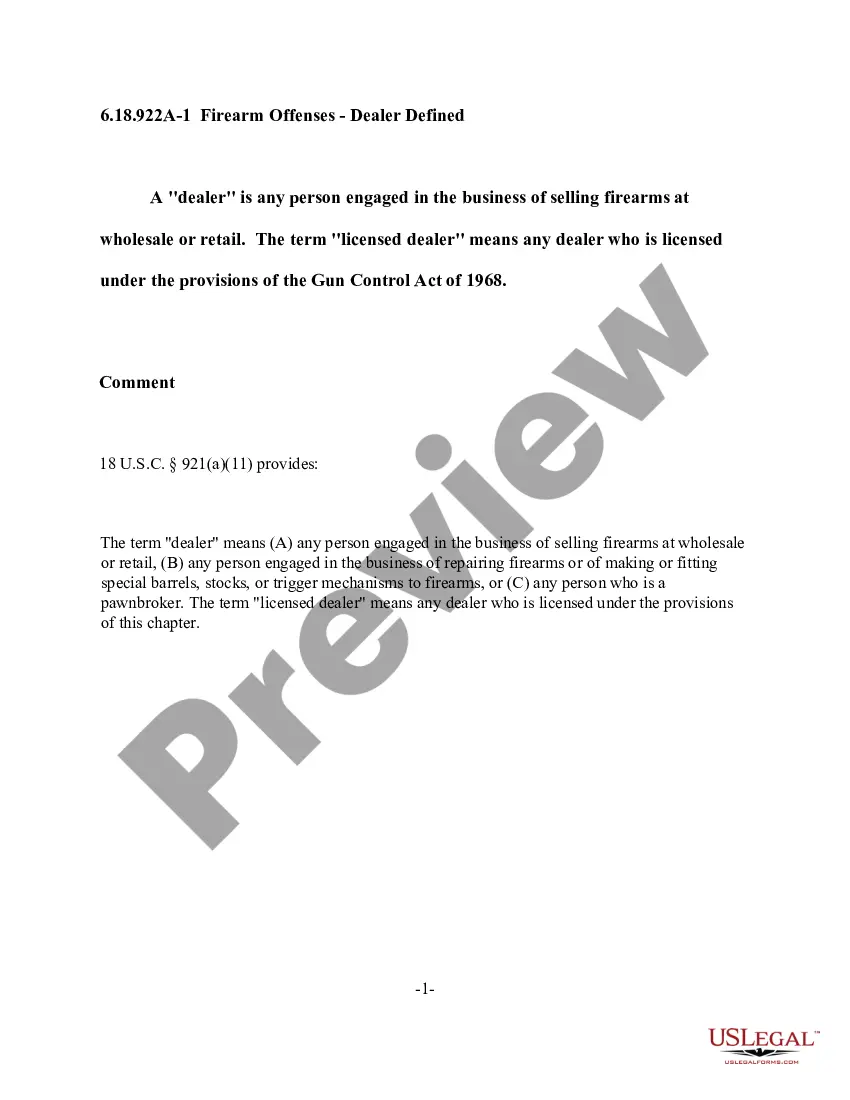
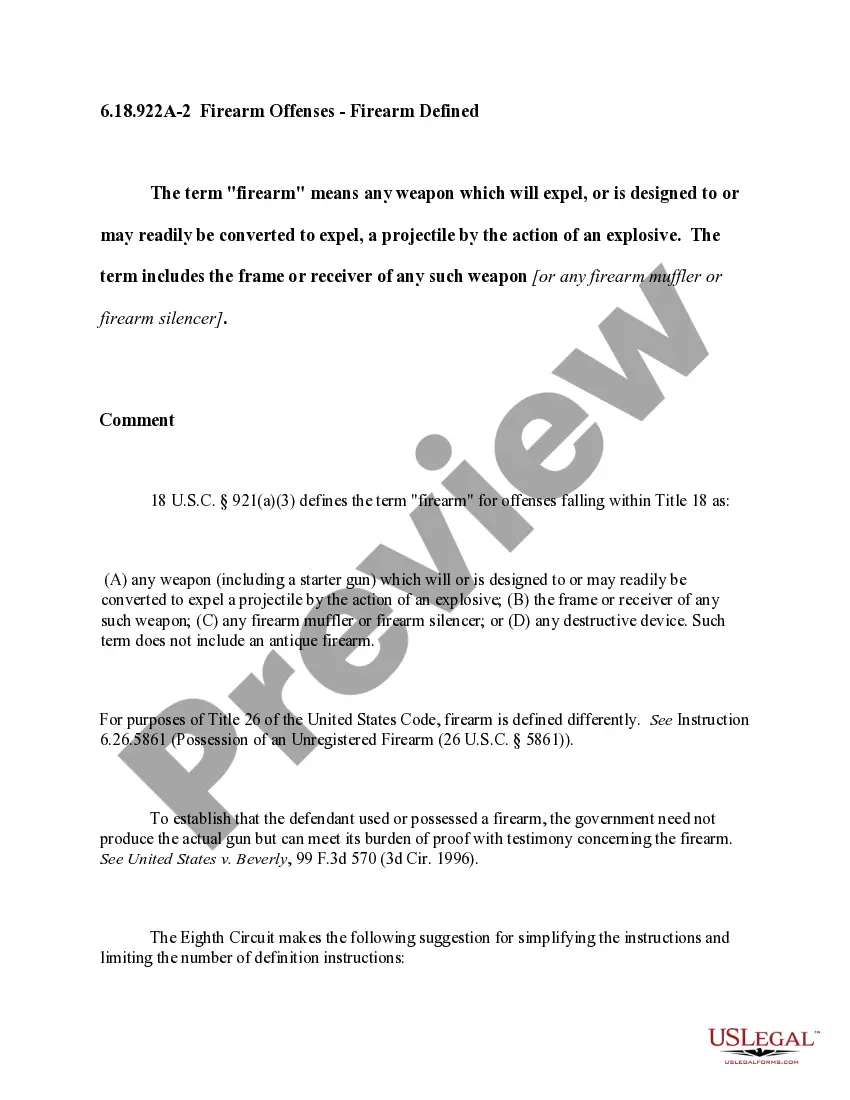
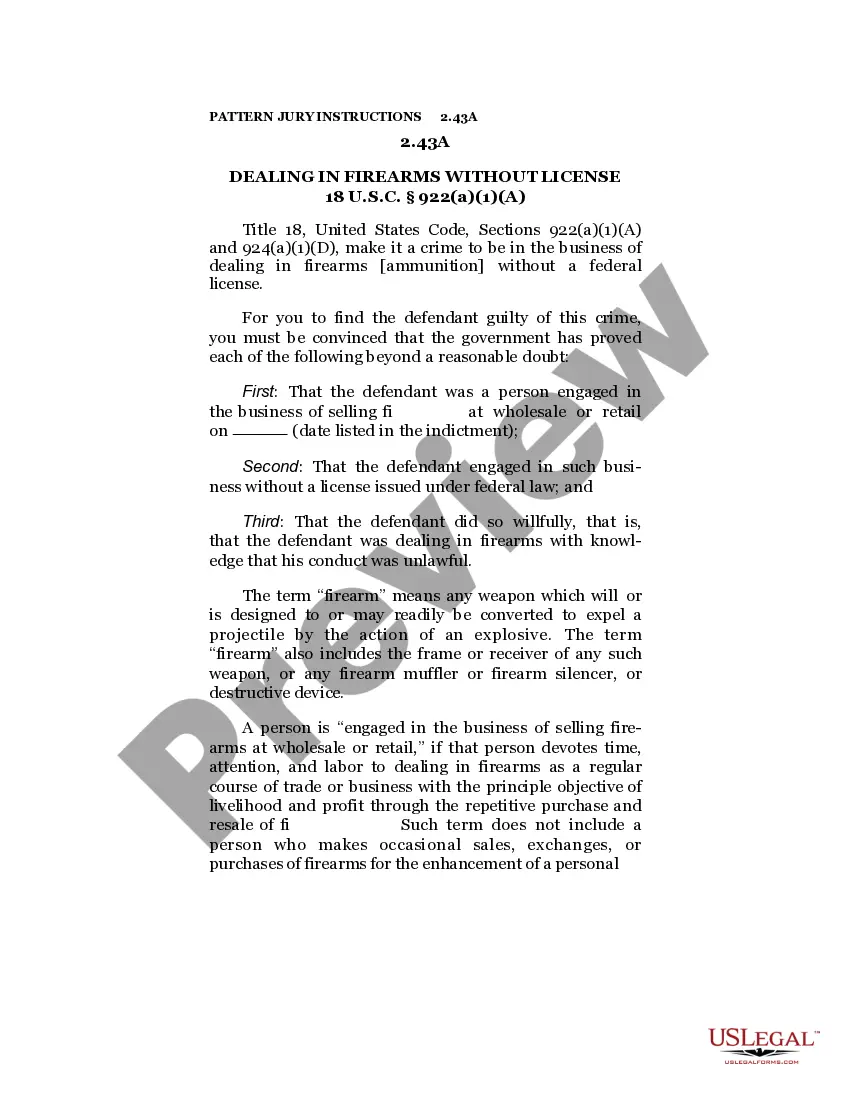
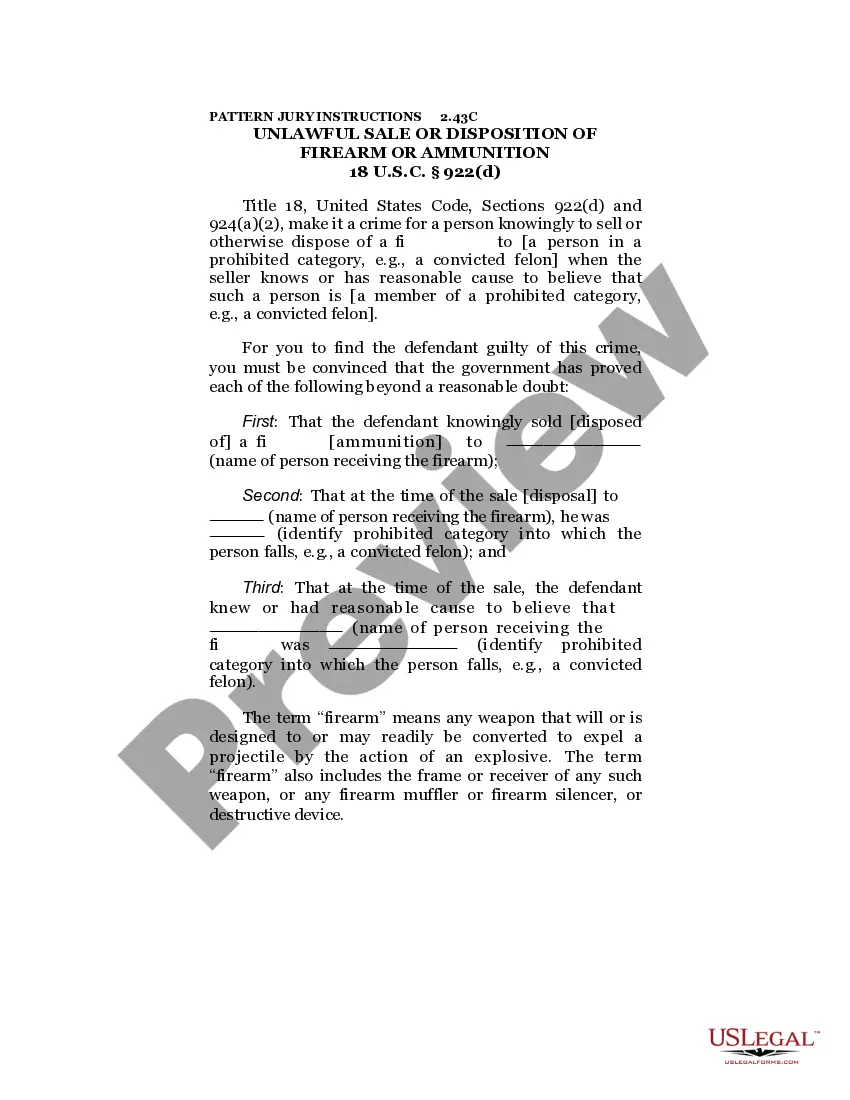
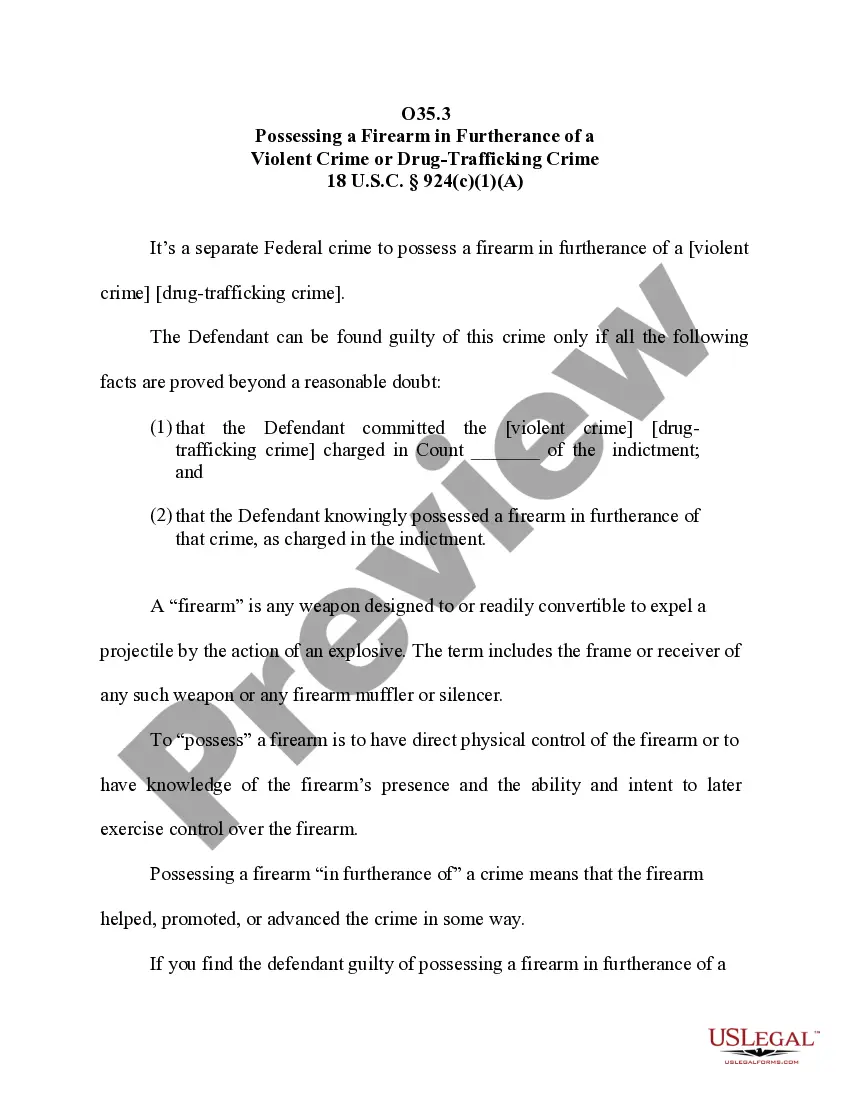
This form addresses firearm offenses related to interstate or foreign commerce. It establishes the legal requirements the government must meet to prove that a firearm has crossed state lines or borders before a person is charged with possession, receiving, or transporting that firearm. Understanding this form can help individuals navigate legal proceedings involving firearm ownership or charges arising under 18 U.S.C. § 922.
Key parts of this document
- Definition of firearm offenses related to interstate or foreign commerce.
- Elements required for the government to establish possession of a firearm.
- Requirements regarding when the firearm must have traveled in interstate commerce.
- Exceptions pertaining to the defendant's knowledge of interstate travel.
- Legal precedents supporting the prosecution's obligations.

Common use cases
This form is necessary when an individual is charged with a firearm offense that involves the possession, receiving, or transportation of a firearm that has previously crossed state lines or entered the United States. It is crucial during legal proceedings to clarify the connection between the firearm and interstate commerce.
Who this form is for
- Individuals facing charges under 18 U.S.C. § 922 related to firearm offenses.
- Legal professionals handling cases involving firearm possession or commerce issues.
- Individuals seeking to understand the legal implications of firearm ownership across state lines.
Instructions for completing this form
- Identify the defendant and the specific charge under 18 U.S.C. § 922.
- Clearly state the firearm involved in the case.
- Indicate evidence showing that the firearm traveled in interstate commerce.
- Document any relevant dates, including the time of possession.
- Ensure all parties involved have the necessary signatures and information before submission.
Does this form need to be notarized?
This form does not typically require notarization unless specified by local law. However, it is important to check for any additional requirements based on the jurisdiction in which the form is being filed.
Get your form ready online
Our built-in tools help you complete, sign, share, and store your documents in one place.
Make edits, fill in missing information, and update formatting in US Legal Forms—just like you would in MS Word.
Download a copy, print it, send it by email, or mail it via USPS—whatever works best for your next step.
Sign and collect signatures with our SignNow integration. Send to multiple recipients, set reminders, and more. Go Premium to unlock E-Sign.
If this form requires notarization, complete it online through a secure video call—no need to meet a notary in person or wait for an appointment.
We protect your documents and personal data by following strict security and privacy standards.

Make edits, fill in missing information, and update formatting in US Legal Forms—just like you would in MS Word.

Download a copy, print it, send it by email, or mail it via USPS—whatever works best for your next step.

Sign and collect signatures with our SignNow integration. Send to multiple recipients, set reminders, and more. Go Premium to unlock E-Sign.

If this form requires notarization, complete it online through a secure video call—no need to meet a notary in person or wait for an appointment.

We protect your documents and personal data by following strict security and privacy standards.
Mistakes to watch out for
- Failing to prove that the firearm was involved in interstate commerce.
- Not including relevant evidence regarding the firearm's travel history.
- Mistakenly assuming that the defendant's knowledge of interstate travel is essential for prosecution.
Advantages of online completion
- Convenient access to downloadable legal templates, drafted by experienced attorneys.
- Editable forms that allow users to tailor content to their specific circumstances.
- Secure and reliable options for completing and submitting legal forms.
Legal use & context
- Ensures compliance with federal firearm laws, specifically 18 U.S.C. § 922.
- Clarifies the thresholds for proving possession related to interstate commerce.
- Guides defendants and attorneys in understanding statutory obligations and potential defenses.
What to keep in mind
- This form addresses important legal standards for firearm offenses regarding interstate commerce.
- Understanding the requirements of the form is critical for anyone charged or involved in legal issues related to firearms.
- Proper completion can impact the outcome of legal proceedings significantly.
Looking for another form?
Form popularity
FAQ
Title 18, United States Code, Section 922(g) makes it unlawful for certain classes of individuals to ship, transport, possess or receive any firearm or ammunition with the required interstate commerce nexus.
The Commerce Clause refers to Article 1, Section 8, Clause 3 of the U.S. Constitution, which gives Congress the power ?to regulate commerce with foreign nations, and among the several states, and with the Indian tribes.?
§ 922(G) Felon in possession of a firearm is a serious criminal offense in the United States. Under 18 U.S.C. § 922(g), it is unlawful for a person convicted of a felony to ship, transport, receive, or possess a firearm or ammunition.
States generally base their power to control firearms on the police-power provisions of their constitutions, which grant to the states the right to enact laws for public safety. Congress derives its power to regulate firearms in the COMMERCE CLAUSE, in Article I, Section 8, Clause 3, of the U.S. Constitution.
To Federal Firearms Laws As described above, Congress's authority under the Commerce Clause extends to regulating items that move through interstate commerce and commercial activities that affect interstate commerce. It is therefore relatively settled that Congress may regulate the manufacture and transfer of firearms.
POSSESSION OF A FIREARM OR AMMUNITION BY A PROHIBITED PERSON: 18 USC § 922(g) & (n). Punishable by up to 10 years imprisonment.
Constitutional Law Commerce Clause - Mere Possession of a Firearm Does Not Substantially Affect Interstate Commerce; and a Federal Law, 18 USC § 922(q), Making Mere Possession a Crime, Exceeds Congressional Power Pursuant to the Commerce Clause (United States v. Lopez, 115 S. Ct. 1624 (1995))
The principal powers available to Congress to regulate firearms are the ?commerce power,? arising from the Commerce Clause, and the ?taxing power,? arising from the Taxing and Spending Clause. A regulation based on the exercise of the ?taxing power? must be consistent with that power.