Proof of Prior Conviction
About this form
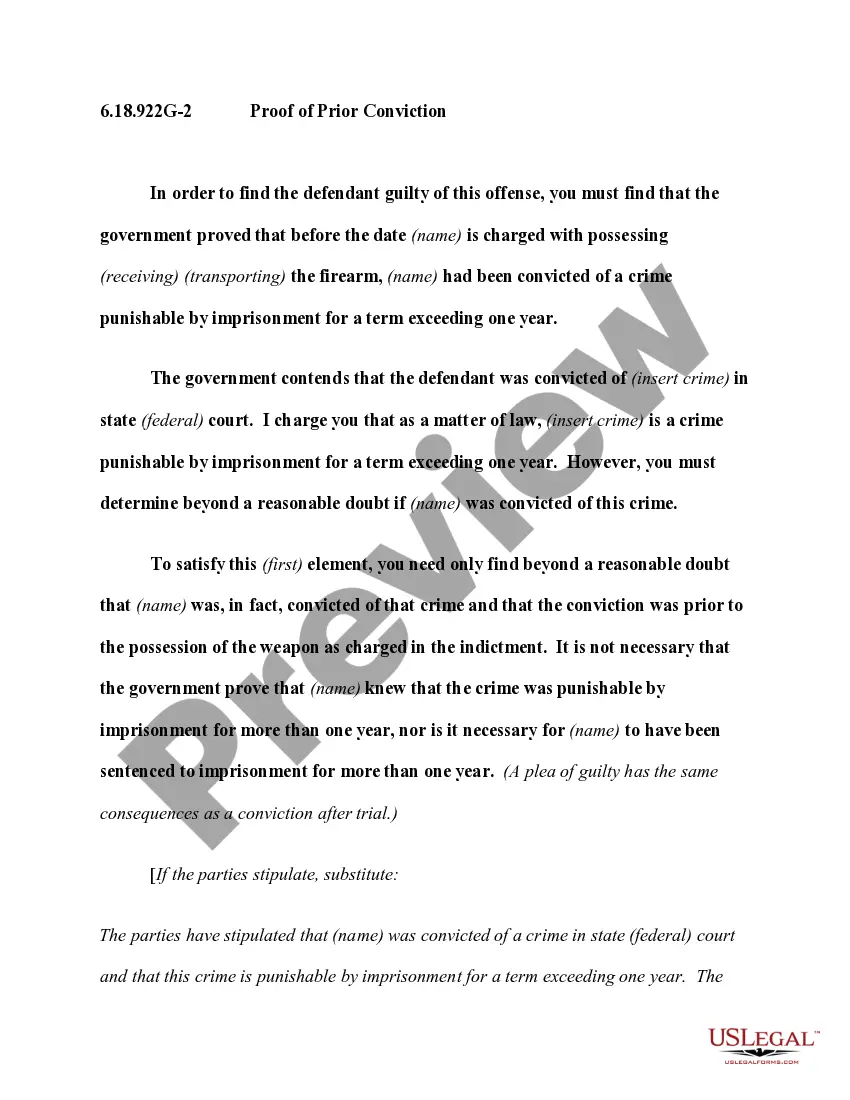
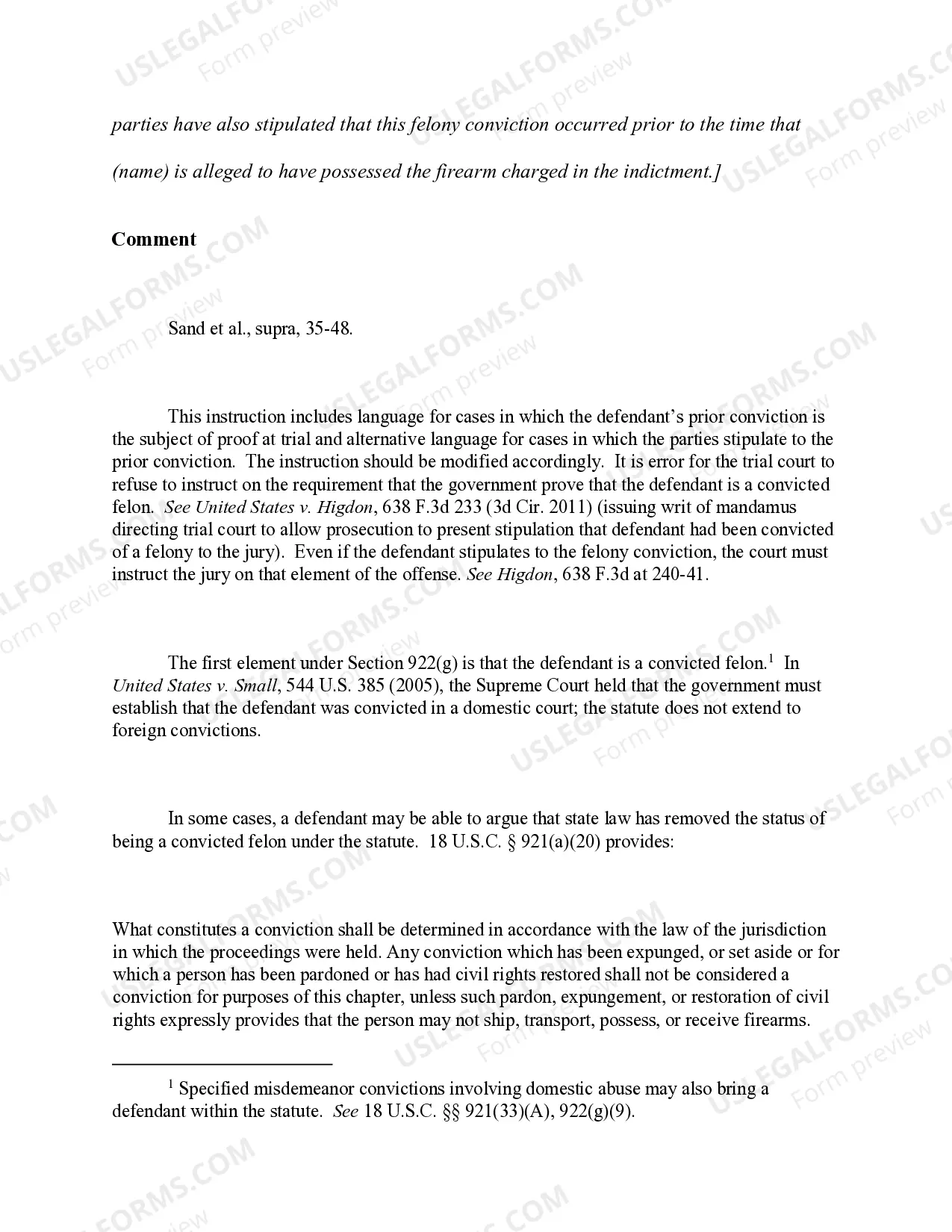
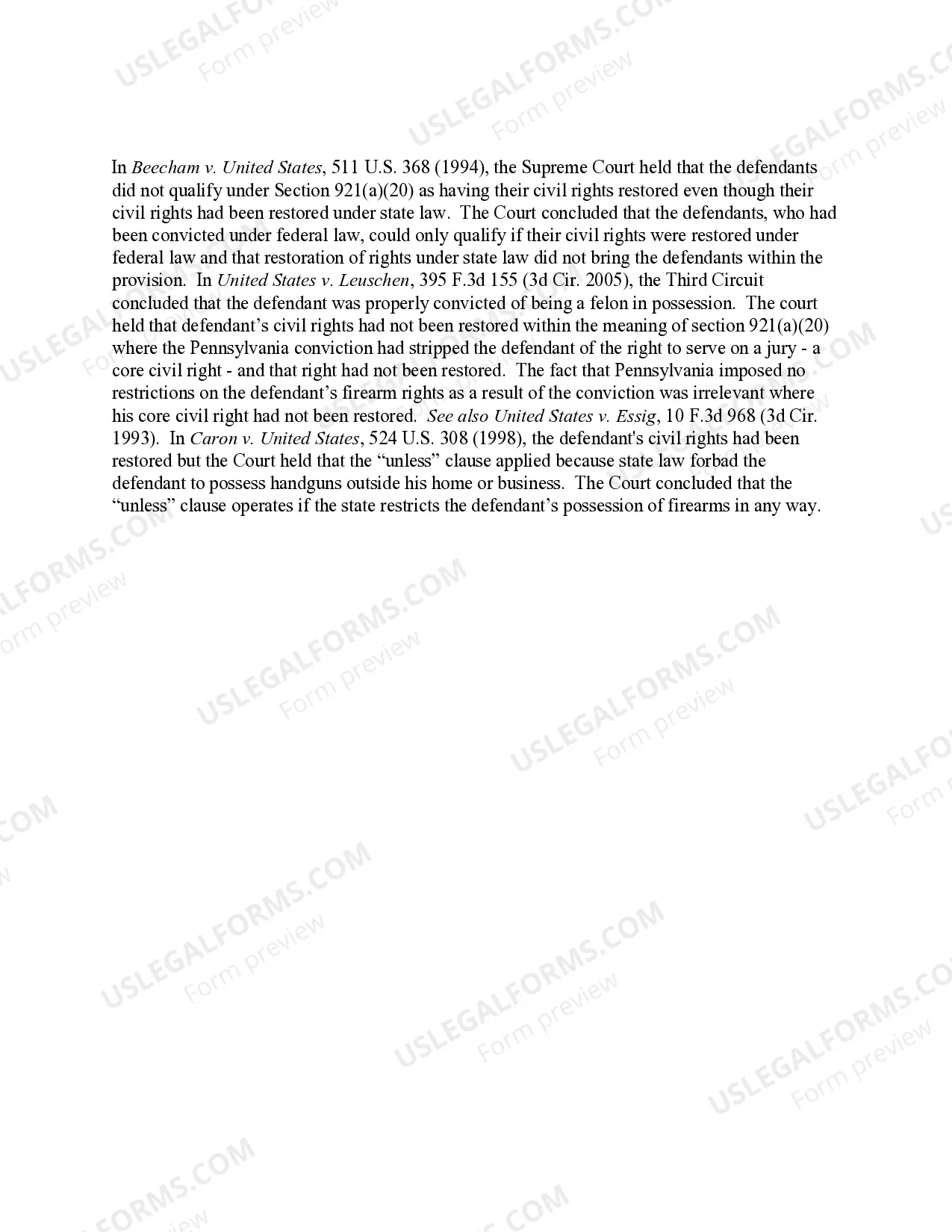
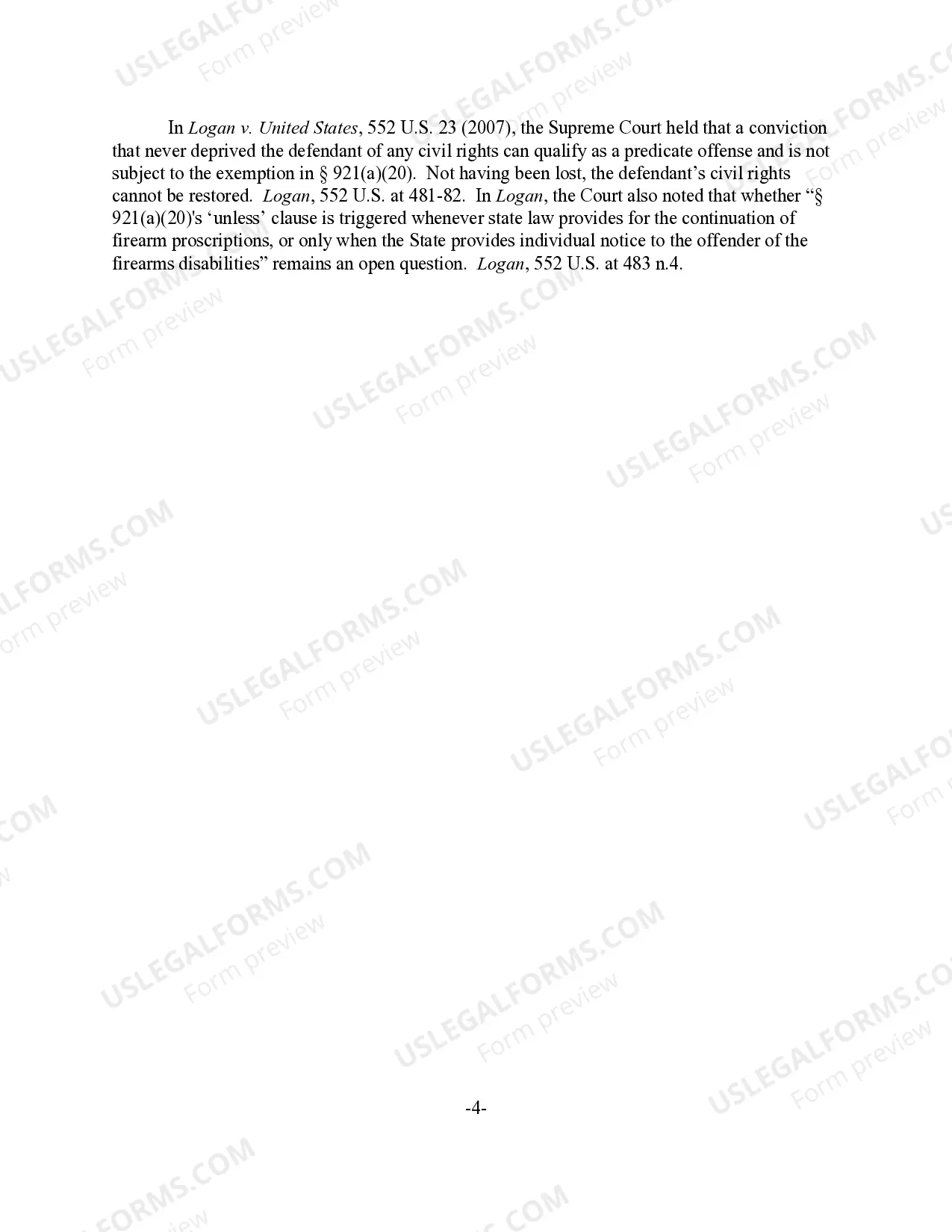
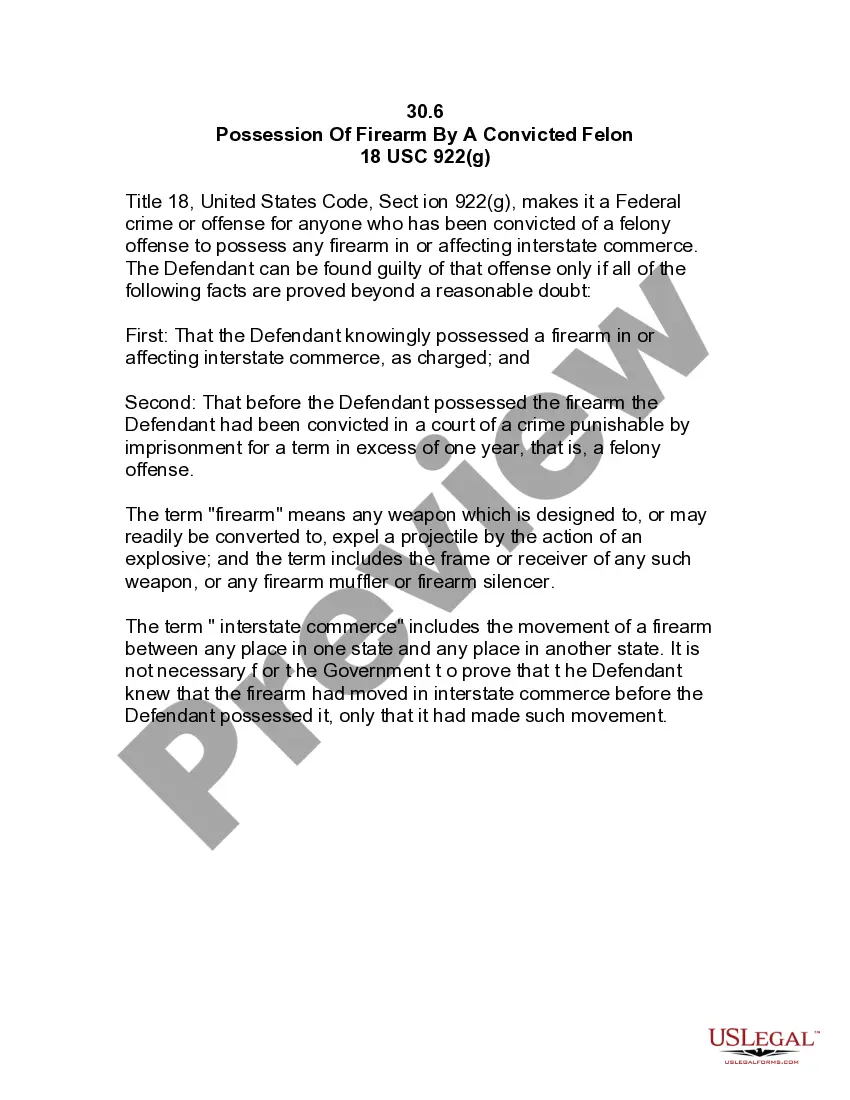
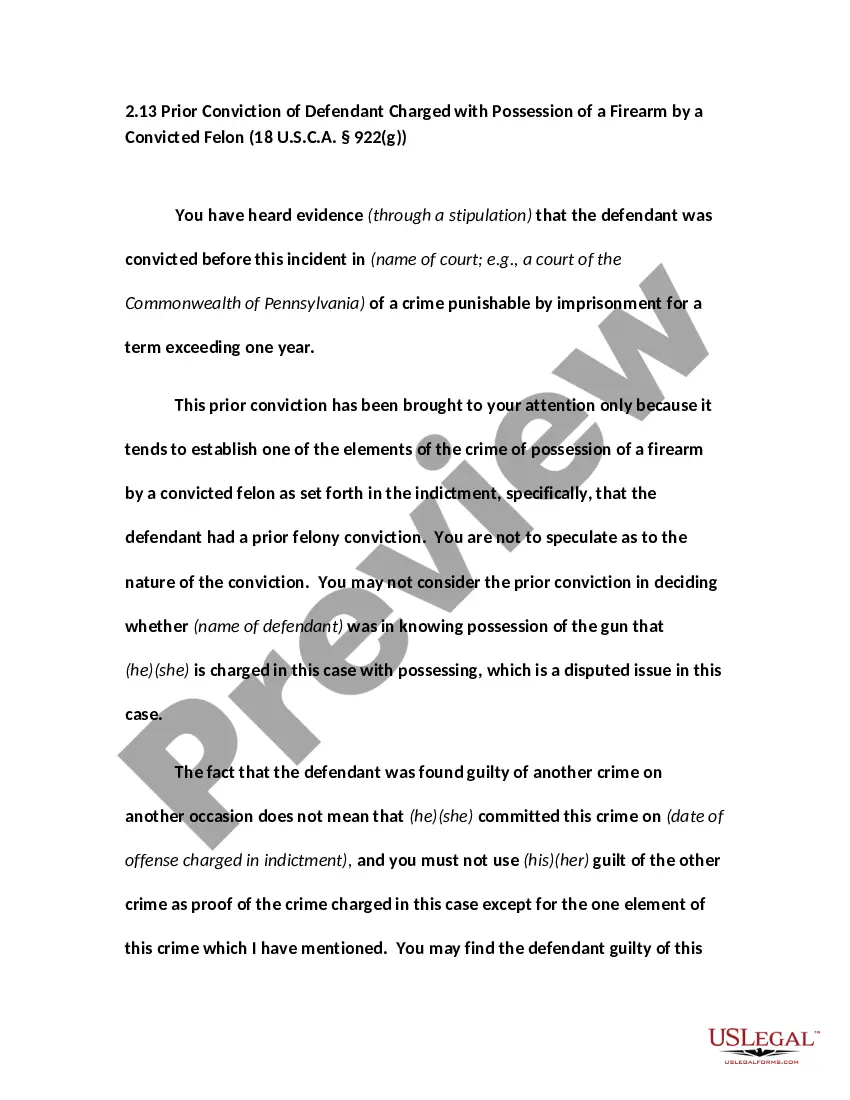
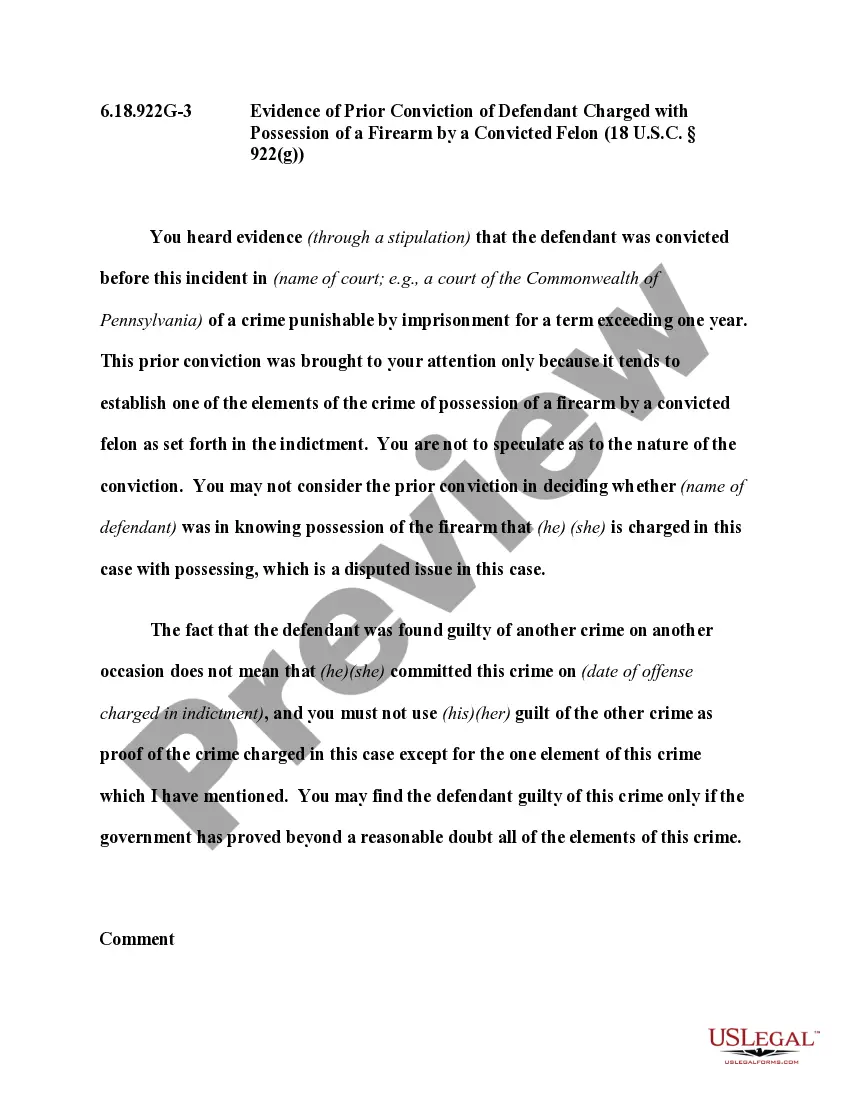
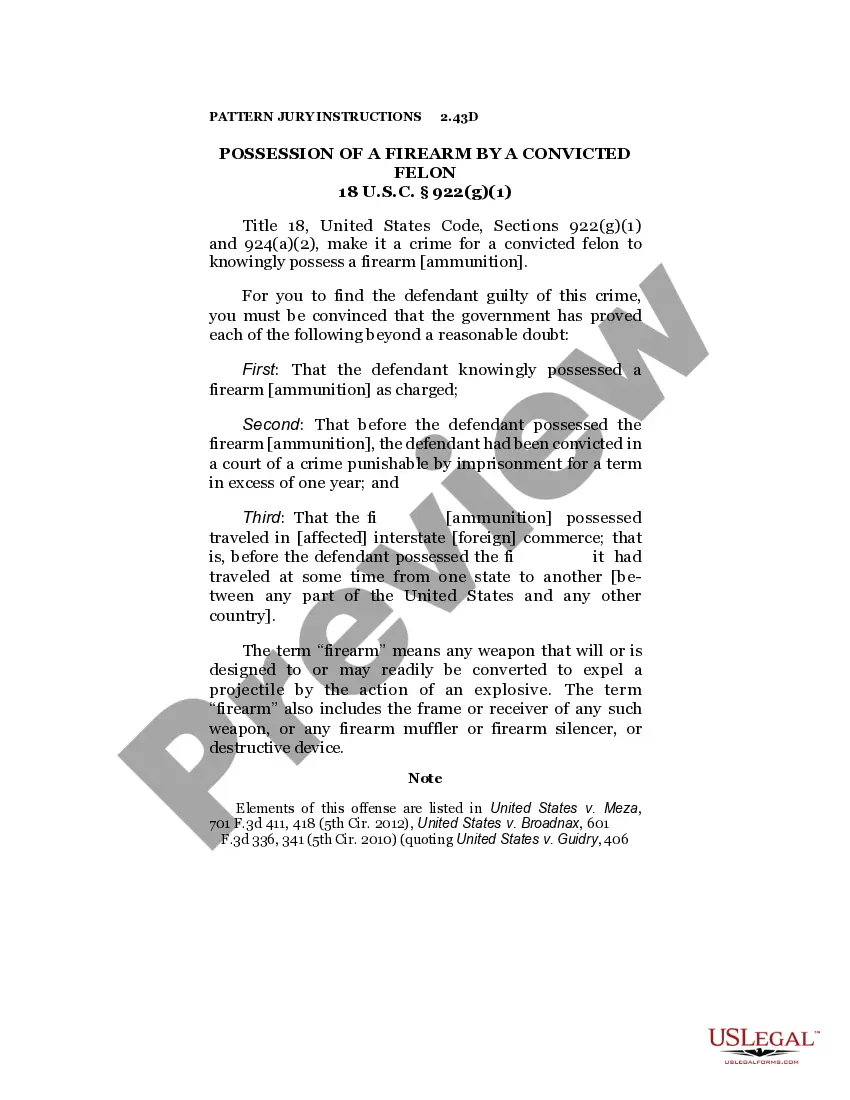
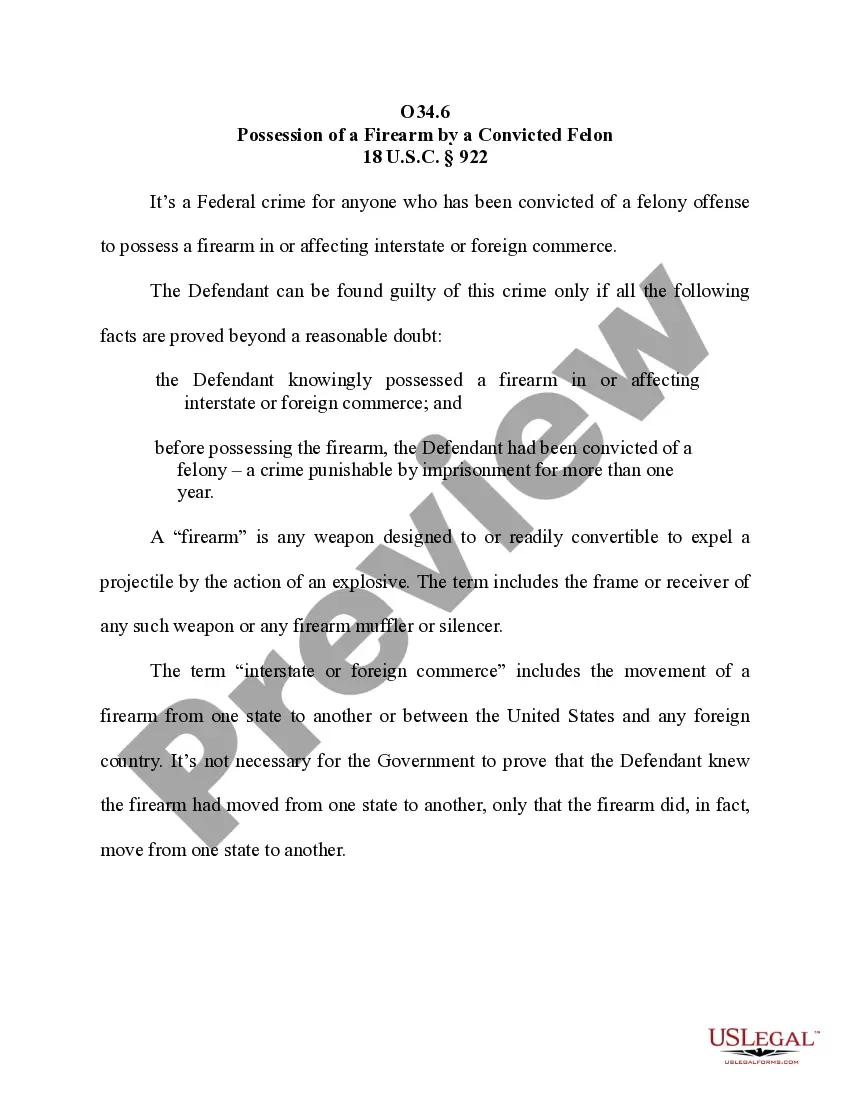
The Proof of Prior Conviction is a legal document used to establish that a defendant has a prior felony conviction. This form is critical in cases where the possession, receipt, or transportation of a firearm is involved, as it fulfills a legal requirement under federal law. The form is unique in its focus on demonstrating a specific aspect of a criminal case, distinct from general conviction documents or plea agreements.
What’s included in this form
- Defendant's name and details concerning the current charge.
- Details of the prior conviction, including the specific crime and court where it occurred.
- Legal language indicating the seriousness of the crime (punishable by imprisonment for over one year).
- Confirmation that the prior conviction took place before the alleged firearm possession.
- Stipulation option for parties to agree on the prior conviction without further proof.
When this form is needed
This form is needed in criminal cases when a defendant is being charged with illegally possessing a firearm. It is used to prove that the defendant has a prior felony conviction, which is essential for the prosecution to establish guilt under federal law. This form may also be used in plea negotiations or pre-trial discussions where stipulation of prior convictions is considered.
Who needs this form
- Prosecutors seeking to establish a defendant's prior felony conviction in firearm possession cases.
- Defense attorneys and their clients if disputing or negotiating aspects of prior convictions.
- Court officials responsible for ensuring that the necessary legal requirements are met in criminal cases.
Completing this form step by step
- Enter the defendant's full name and case details, including current charges related to firearm possession.
- Specify the prior conviction by naming the specific crime and the court where the conviction occurred.
- Indicate the nature of the crime to confirm it is punishable by imprisonment for more than one year.
- Provide information about the timing of the conviction in relation to the firearm possession.
- If applicable, include any stipulations agreed upon by the parties regarding the prior conviction.
Notarization requirements for this form
Notarization is generally not required for this form. However, certain states or situations might demand it. You can complete notarization online through US Legal Forms, powered by Notarize, using a verified video call available anytime.
Get your form ready online
Our built-in tools help you complete, sign, share, and store your documents in one place.
Make edits, fill in missing information, and update formatting in US Legal Forms—just like you would in MS Word.
Download a copy, print it, send it by email, or mail it via USPS—whatever works best for your next step.
Sign and collect signatures with our SignNow integration. Send to multiple recipients, set reminders, and more. Go Premium to unlock E-Sign.
If this form requires notarization, complete it online through a secure video call—no need to meet a notary in person or wait for an appointment.
We protect your documents and personal data by following strict security and privacy standards.

Make edits, fill in missing information, and update formatting in US Legal Forms—just like you would in MS Word.

Download a copy, print it, send it by email, or mail it via USPS—whatever works best for your next step.

Sign and collect signatures with our SignNow integration. Send to multiple recipients, set reminders, and more. Go Premium to unlock E-Sign.

If this form requires notarization, complete it online through a secure video call—no need to meet a notary in person or wait for an appointment.

We protect your documents and personal data by following strict security and privacy standards.
Common mistakes
- Failing to clearly state the relationship between the prior conviction and the current charge.
- Overlooking the need to confirm the conviction occurred before the firearm possession.
- Not including stipulations if both parties agree to the prior conviction.
Why use this form online
- Convenience of immediate access to legal forms from anywhere.
- Editability to customize the document for specific cases.
- Reliability of forms vetted by licensed attorneys to ensure legal compliance.
Looking for another form?

Form popularity
FAQ
Burden of proof beyond a reasonable doubt in criminal law. clear and convincing evidence in fraud in will disputes. preponderance of the evidence in most civil cases. probable cause in the acquisition of a warrant or arrest proceeding. reasonable belief as part of establishing probable cause.
Rule 606(b) is a reasoned compromise between the view that jury verdicts should be totally immunized from review in order to encourage freedom of deliberation, stability, and finality of judgments; and the necessity for having some check on the jury's conduct.
(b)Specific instances of conduct. Specific instances of the conduct of the witness, for the purpose of attacking or supporting the witness' character for truthfulness, other than conviction of crime as provided in Rule 609, may not be proved by extrinsic evidence.
Impeachment by Evidence of A Criminal Conviction. (2) for any crime regardless of the punishment, the evidence must be admitted if the court can readily determine that establishing the elements of the crime required proving - or the witness's admitting - a dishonest act or false statement.
Rule 609(a) does not prohibit impeachment through an unspecified felony conviction if the impeaching party makes a threshold showing that the underlying conviction falls into one of the two categories of admissible convictions under rule 609(a).
To convict you of a crime, a prosecutor must prove your guilt beyond a reasonable doubt. This burden means the prosecution must show there is no other reasonable explanation for the evidence it presents at trial.
Related Definitions Prior felony conviction means a prior adult federal or state conviction for an offense punishable by death or imprisonment for a term exceeding one year, regardless of whether such offense is specifically designated as a felony and regardless of the actual sentence imposed.
The best-evidence rule ?simply prohibits the introduction of secondary evidence to establish the contents of a writing where the writing itself is available.? State v. DeGidio, 152 N.W.