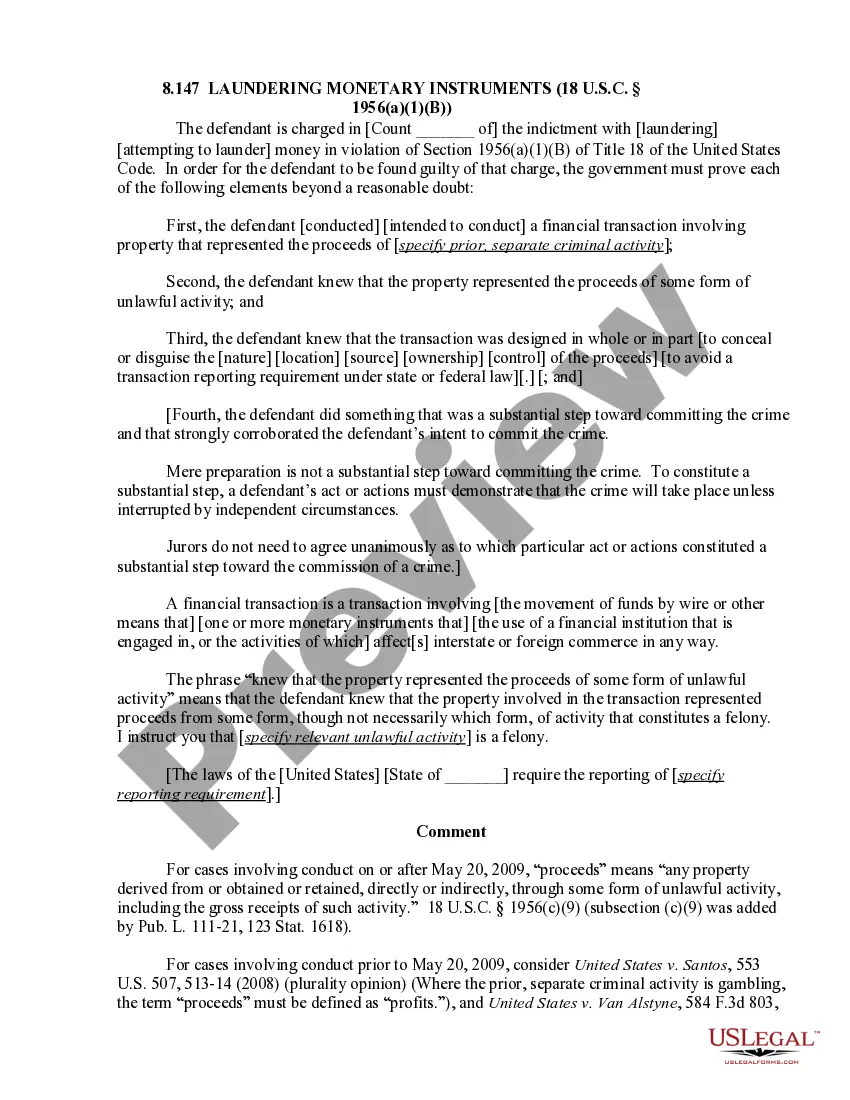
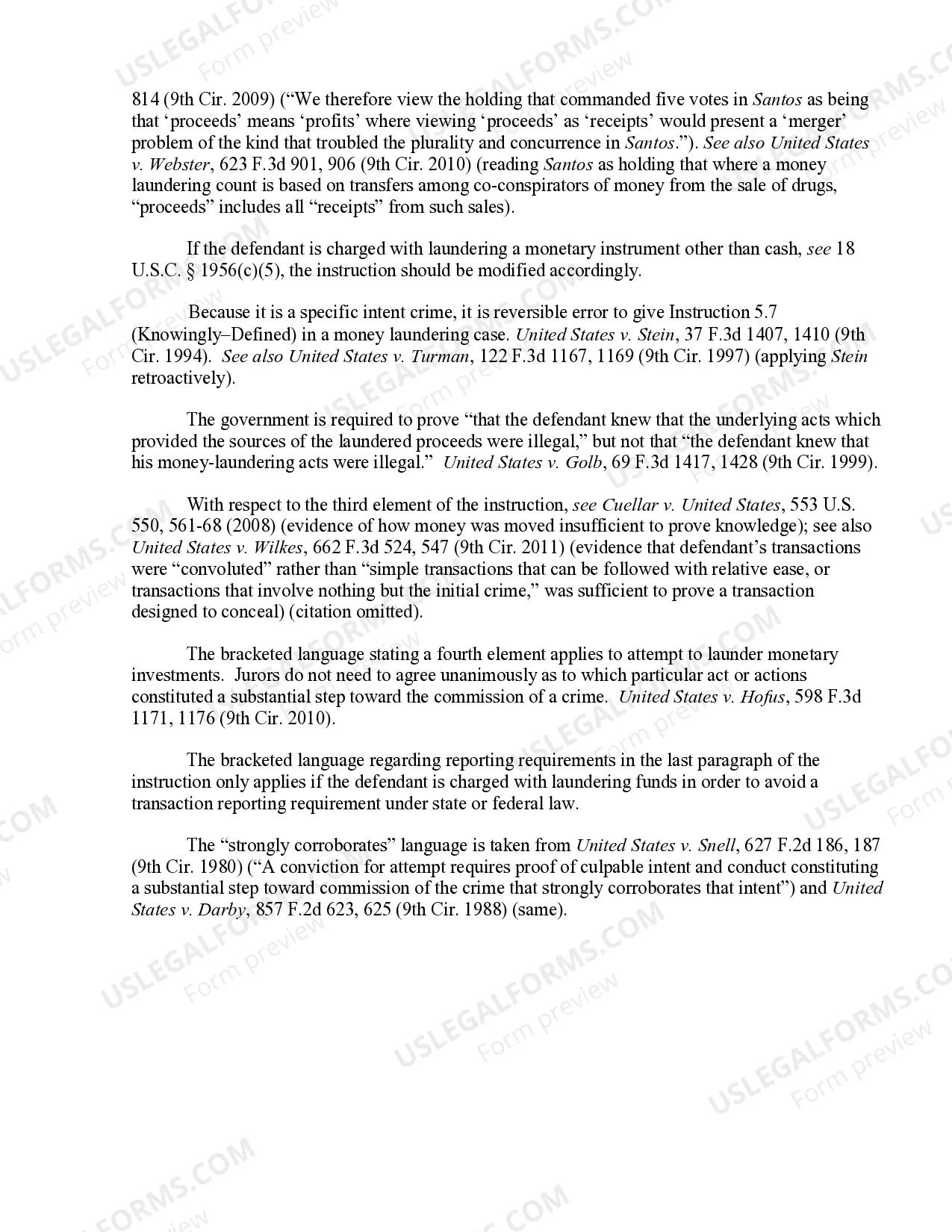
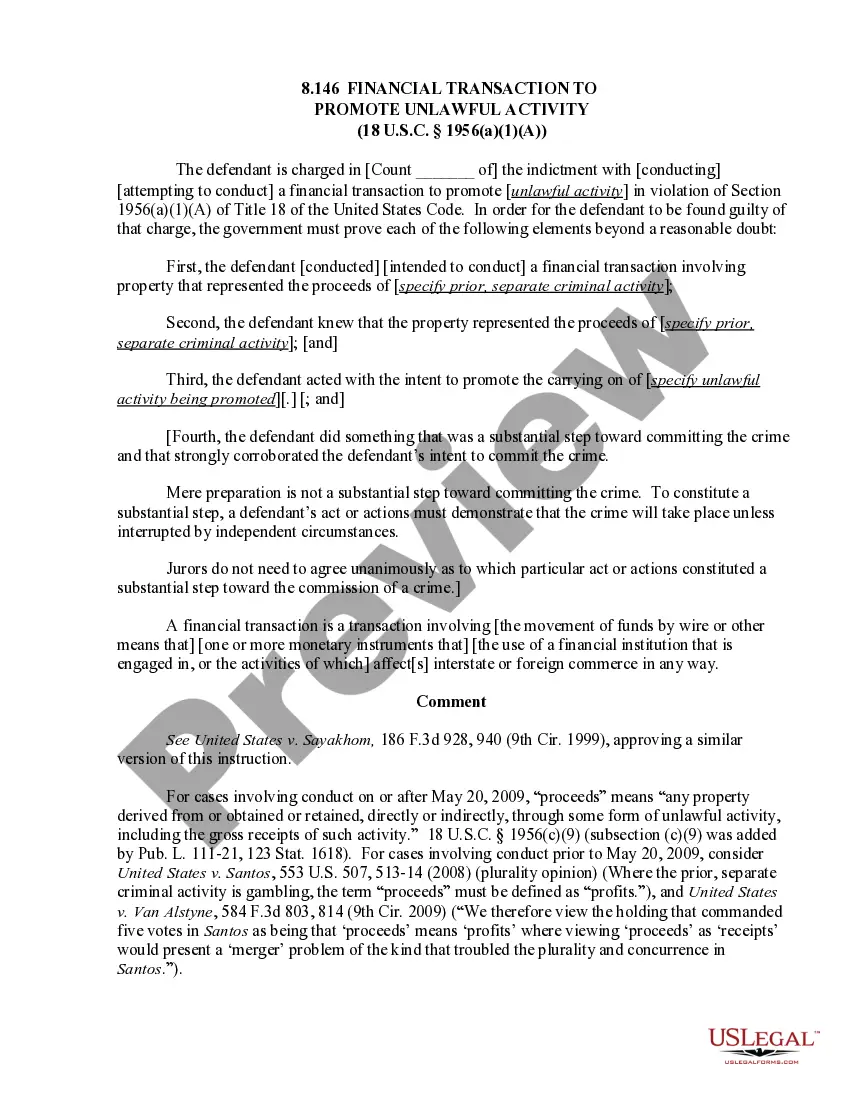
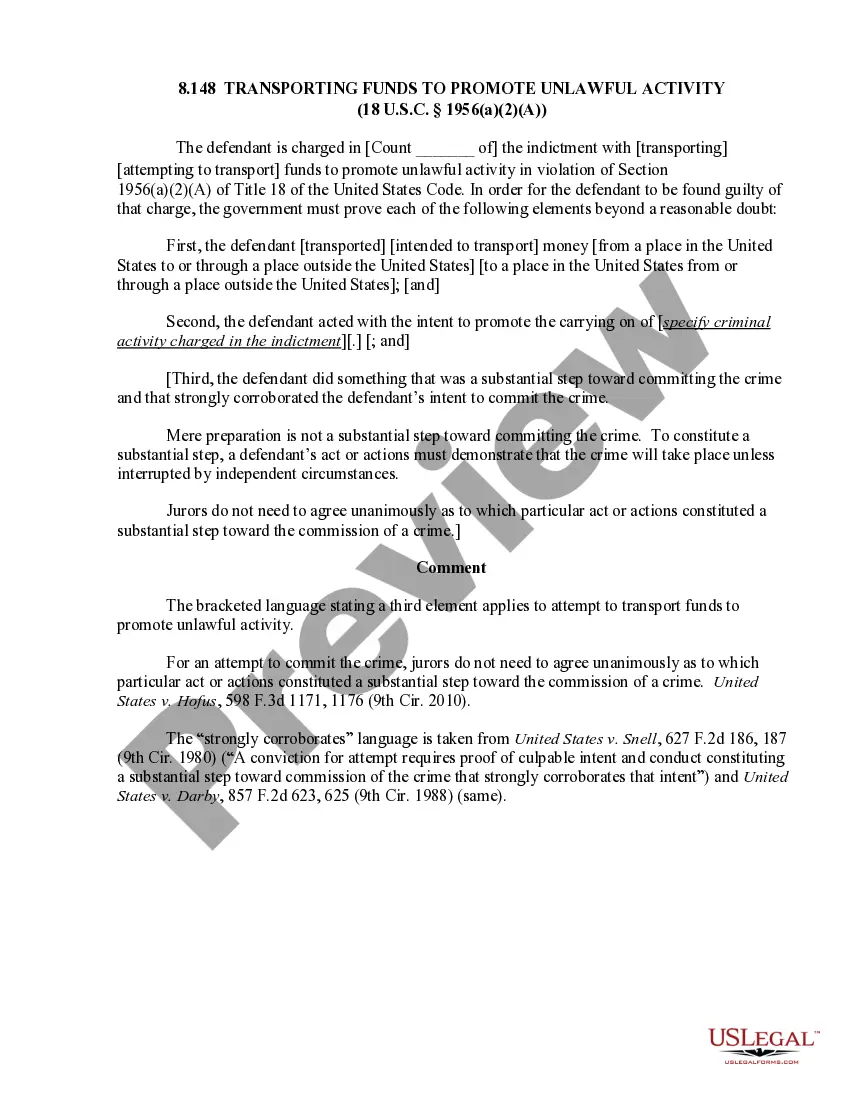
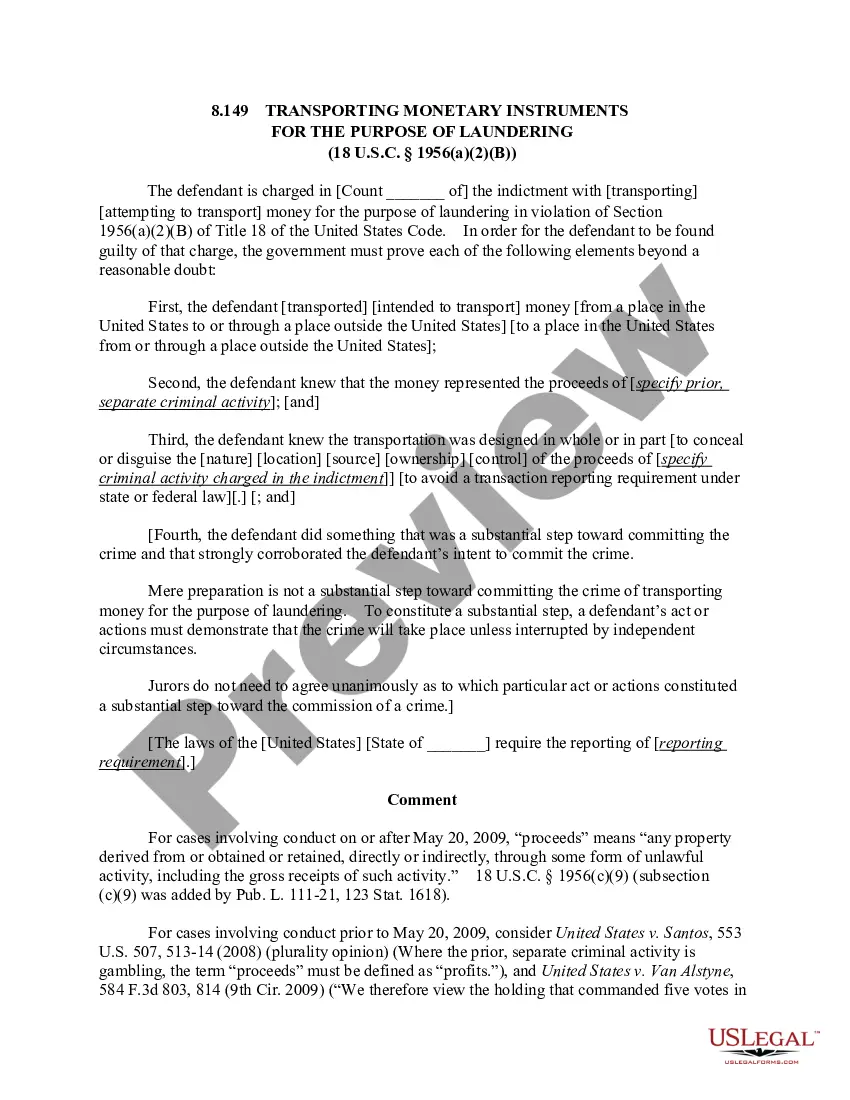
8.147 Laundering Monetary Instruments (18 U.S.C. Sec. 1956(a)(1)(B))
Is notarization required?
Notarization is not commonly needed for this form. However, certain documents or local rules may make it necessary. Our notarization service, powered by Notarize, allows you to finalize it securely online anytime, day or night.
Get your form ready online
Our built-in tools help you complete, sign, share, and store your documents in one place.
Make edits, fill in missing information, and update formatting in US Legal Forms—just like you would in MS Word.
Download a copy, print it, send it by email, or mail it via USPS—whatever works best for your next step.
Sign and collect signatures with our SignNow integration. Send to multiple recipients, set reminders, and more. Go Premium to unlock E-Sign.
If this form requires notarization, complete it online through a secure video call—no need to meet a notary in person or wait for an appointment.
We protect your documents and personal data by following strict security and privacy standards.

Make edits, fill in missing information, and update formatting in US Legal Forms—just like you would in MS Word.

Download a copy, print it, send it by email, or mail it via USPS—whatever works best for your next step.

Sign and collect signatures with our SignNow integration. Send to multiple recipients, set reminders, and more. Go Premium to unlock E-Sign.

If this form requires notarization, complete it online through a secure video call—no need to meet a notary in person or wait for an appointment.

We protect your documents and personal data by following strict security and privacy standards.
Looking for another form?


Form popularity
FAQ
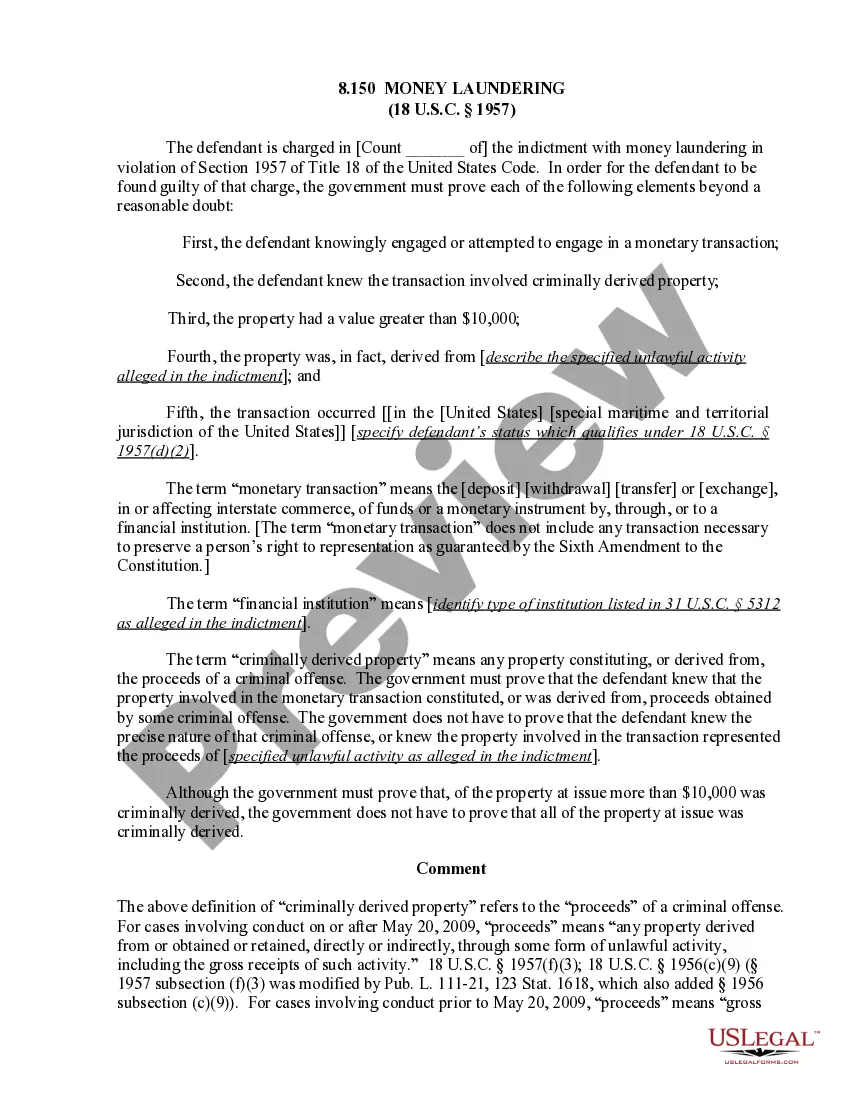
Its companion, 18 U.S.C. 1957, prohibits depositing or spending more than $10,000 of the proceeds from a Section 1956 predicate offense. Violations of Section 1956 are punishable by imprisonment for not more than 20 years; Section 1957 carries a maximum penalty of imprisonment for 10 years.
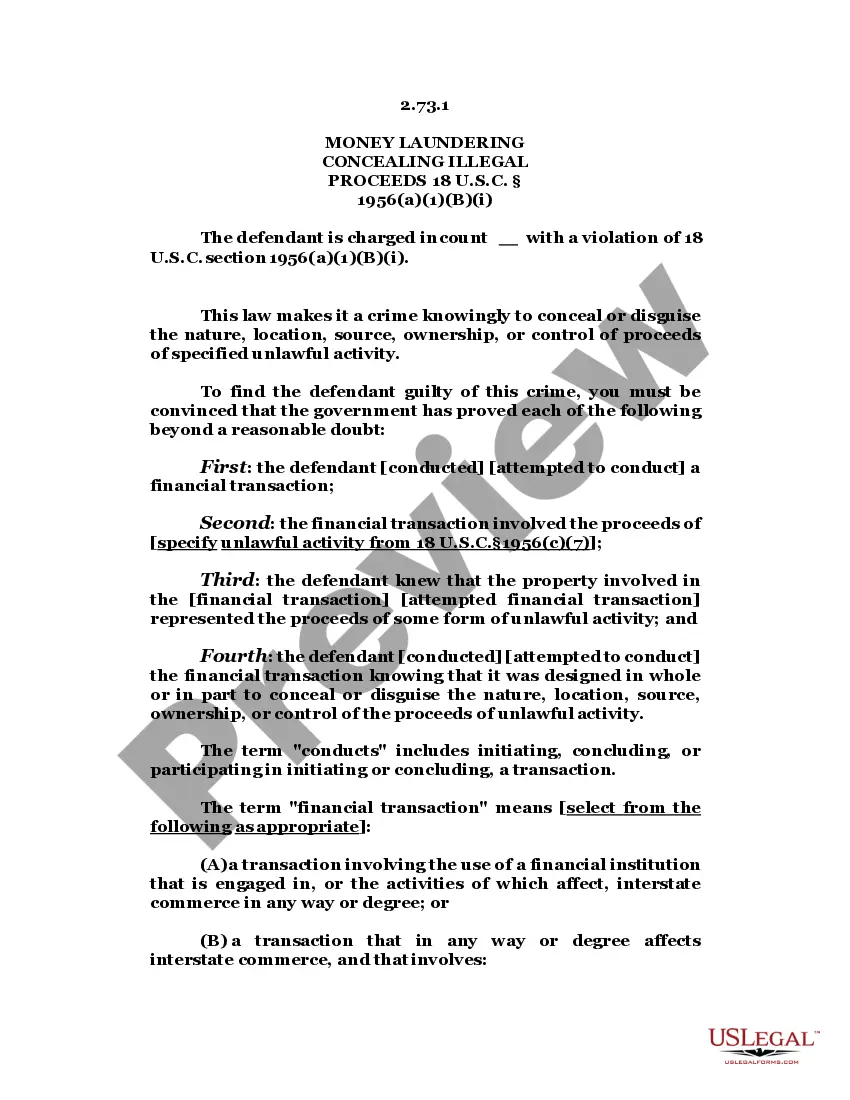
Jury Instruction -- 18 U.S.C. 1956(a)(1)(B)(i) (i) to conceal or disguise the nature, the location, the source, the ownership, or the control of the proceeds of specified unlawful activity is guilty of an offense against the United States.
There are three stages introducing laundered funds into the financial system: Placement. Layering. Integration/extraction.
§1956. Laundering of monetary instruments. (ii) to avoid a transaction reporting requirement under State or Federal law, shall be sentenced to a fine of not more than $500,000 or twice the value of the property involved in the transaction, whichever is greater, or imprisonment for not more than twenty years, or both.
§1956. Laundering of monetary instruments. (ii) to avoid a transaction reporting requirement under State or Federal law, shall be sentenced to a fine of not more than $500,000 or twice the value of the property involved in the transaction, whichever is greater, or imprisonment for not more than twenty years, or both.
Section 1956 violations are punishable by imprisonment for not more than 20 years. Section 1957 carries a maximum penalty of imprisonment for 10 years. Property involved in either case is subject to confiscation.
Prosecutions under 18 U.S.C. § 1957 arise when the defendant knowingly conducts a monetary transaction in criminally derived property in an amount greater than $10,000, which is in fact proceeds of a specified unlawful activity.