Massachusetts Last Will and Testament for Civil Union Partner with Adult Children from Prior Marriage
What is this form?
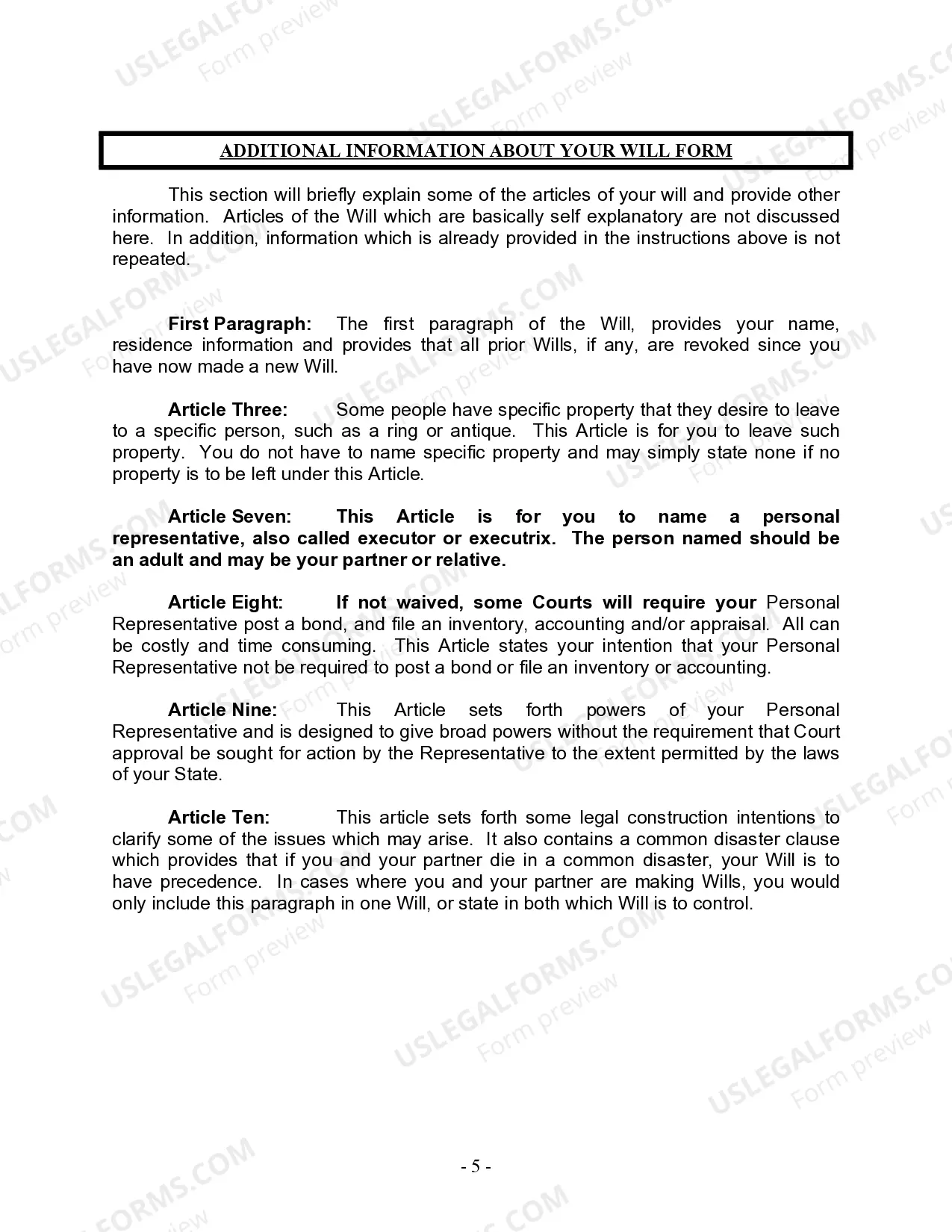
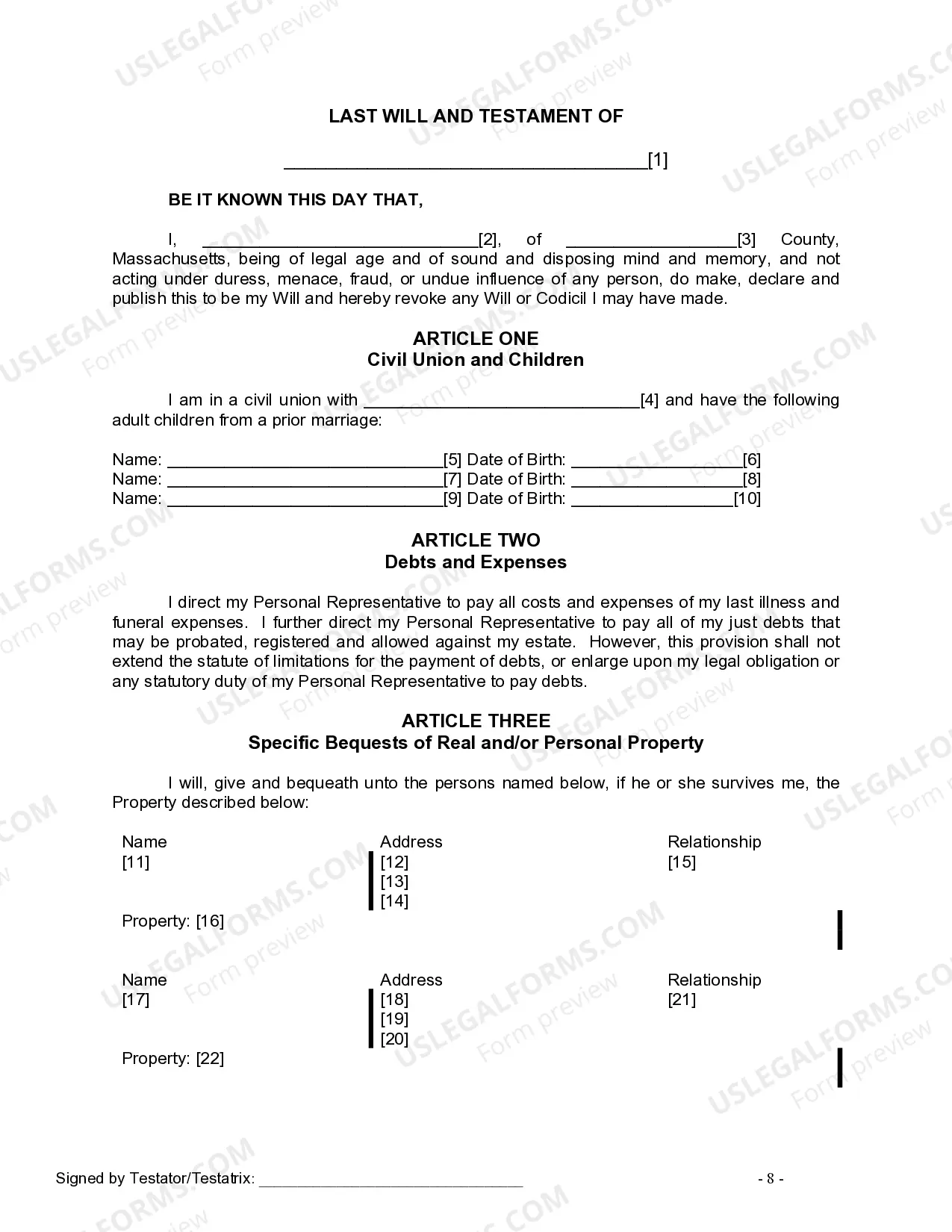
This Last Will and Testament for Civil Union Partner with Adult Children from Prior Marriage is a legal document that outlines how you wish to distribute your assets upon your death. This will is specifically designed for individuals in a civil union who have adult children from a prior marriage. It includes critical elements, such as appointing a personal representative, detailing who will inherit property, and addressing provisions for existing children. By using this form, you can ensure that your estate is handled according to your wishes and is compliant with relevant state laws.
Main sections of this form
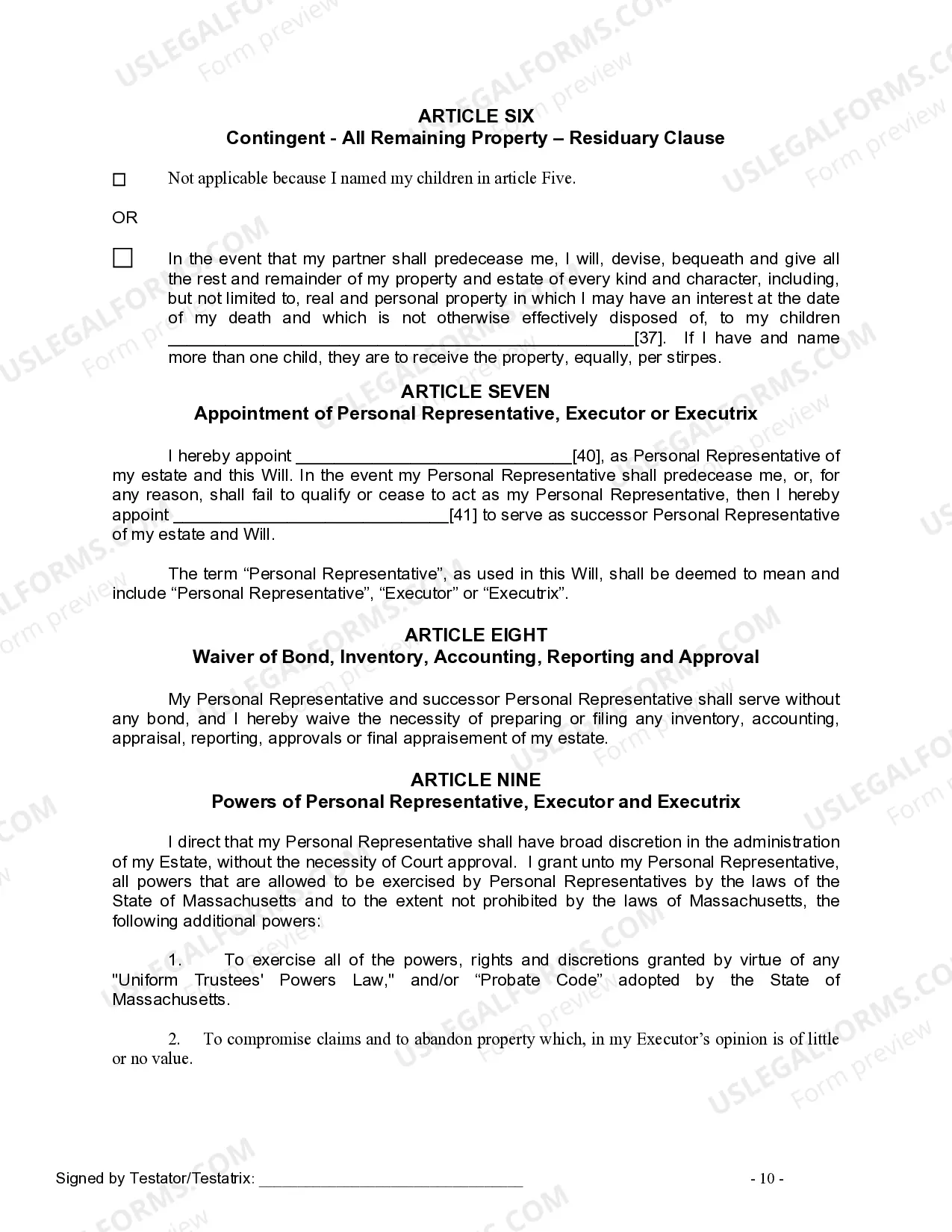
- Executor/Appointee: Designates a personal representative to manage the estate.
- Property Distribution: Indicates how assets are to be divided among beneficiaries, including any specific bequests.
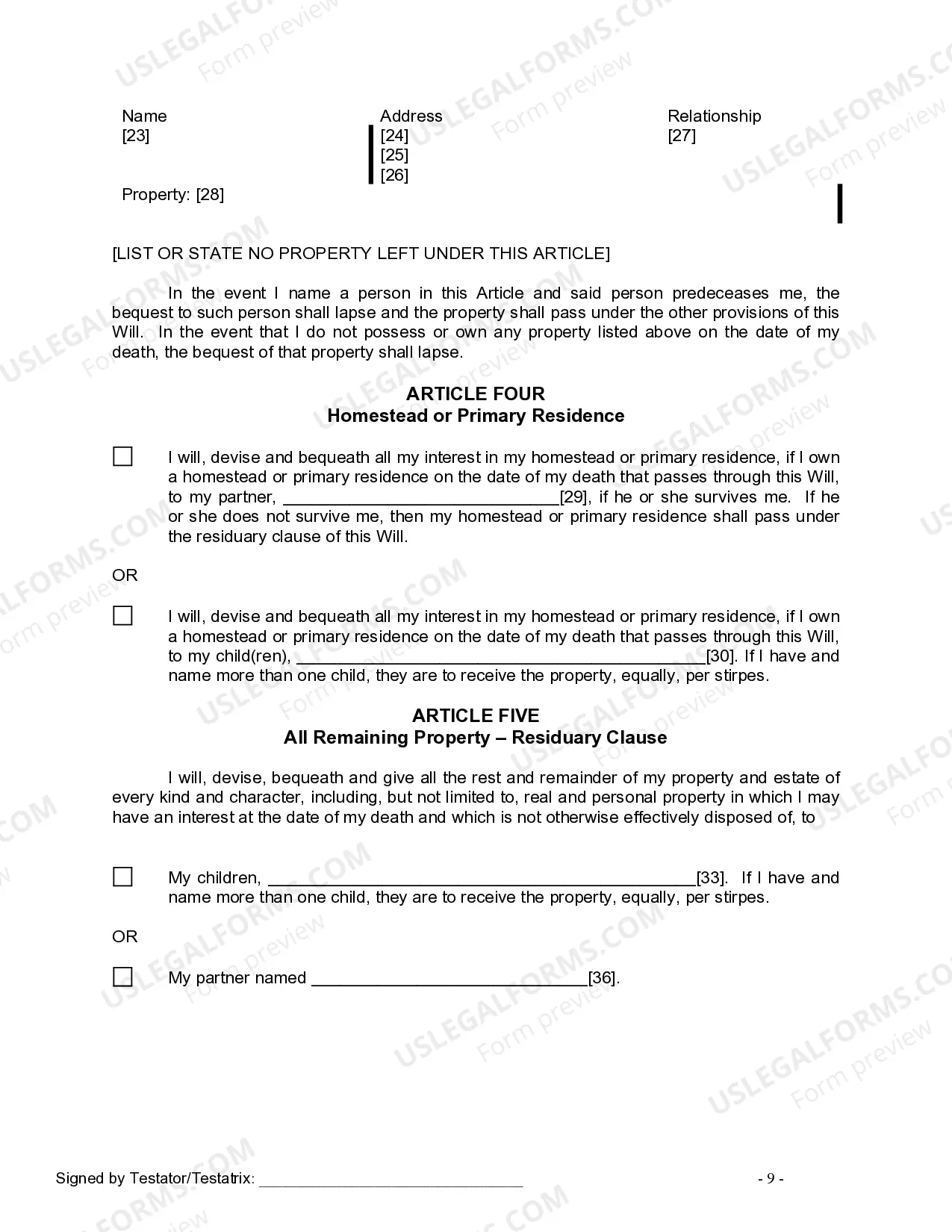
- Homestead Allocation: Specifies whether the homestead or primary residence goes to the civil union partner or children.
- Residue Clause: Details how remaining property not specified elsewhere in the will is to be distributed.
- Signature and Witnesses: Requires signatures in the presence of at least two witnesses and provides for a self-proving affidavit for probate purposes.
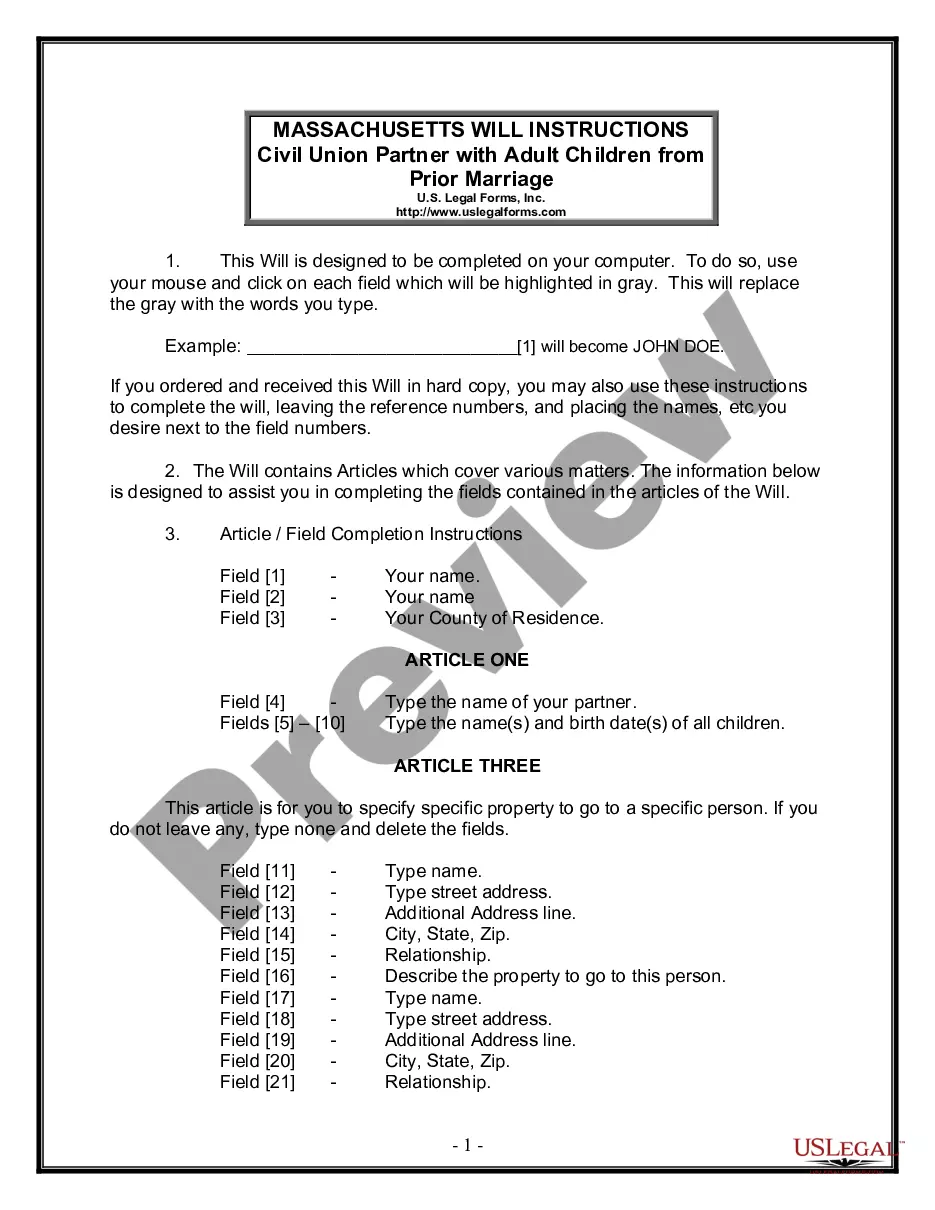
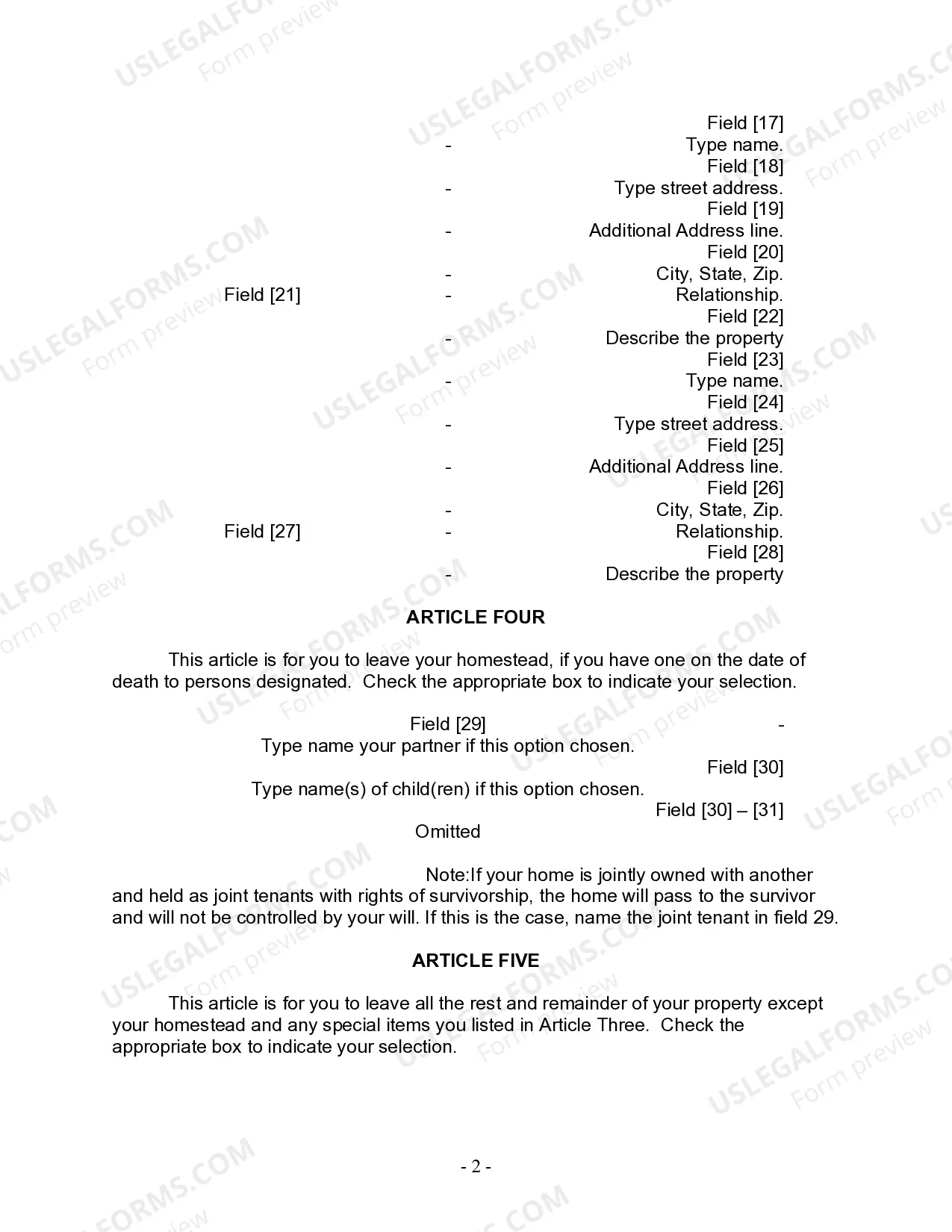
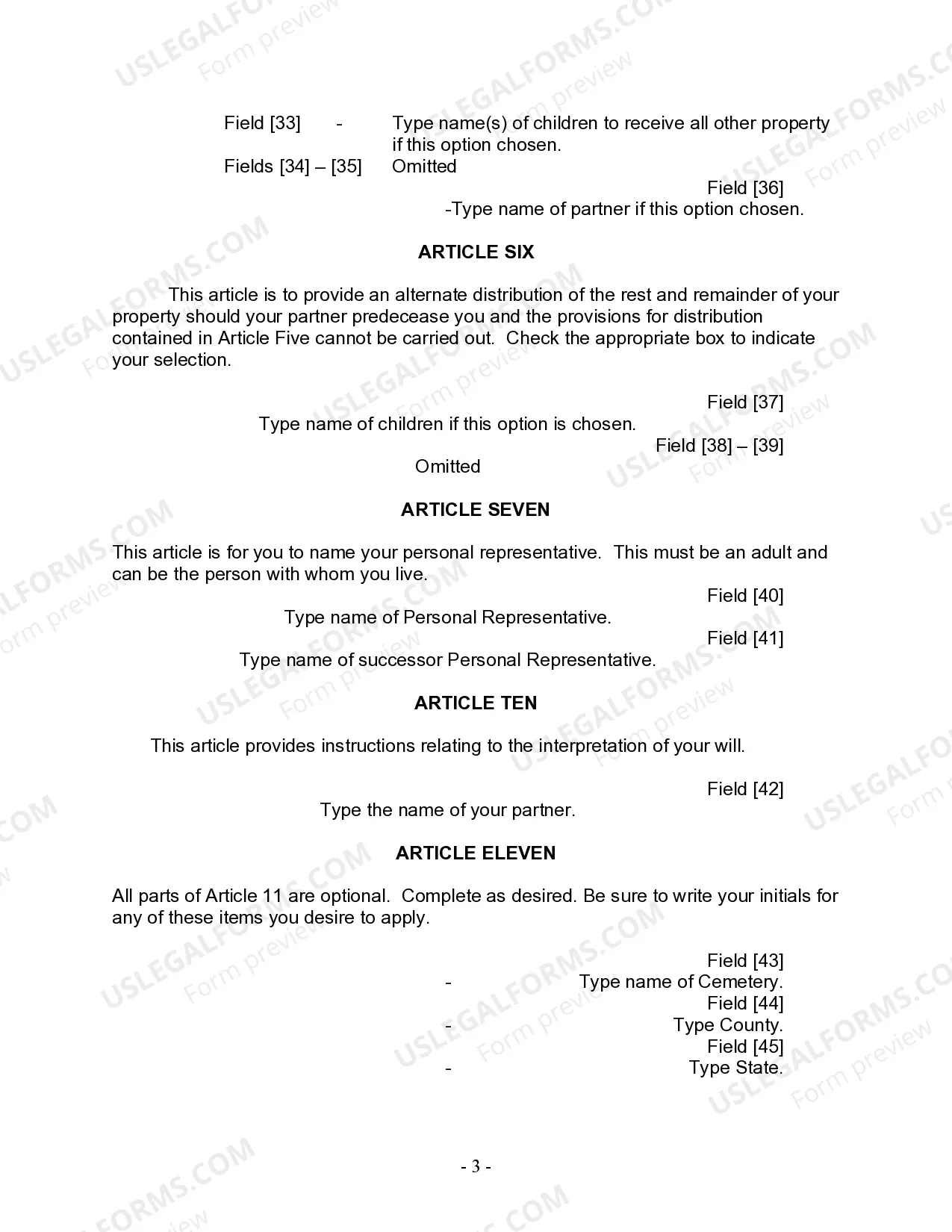




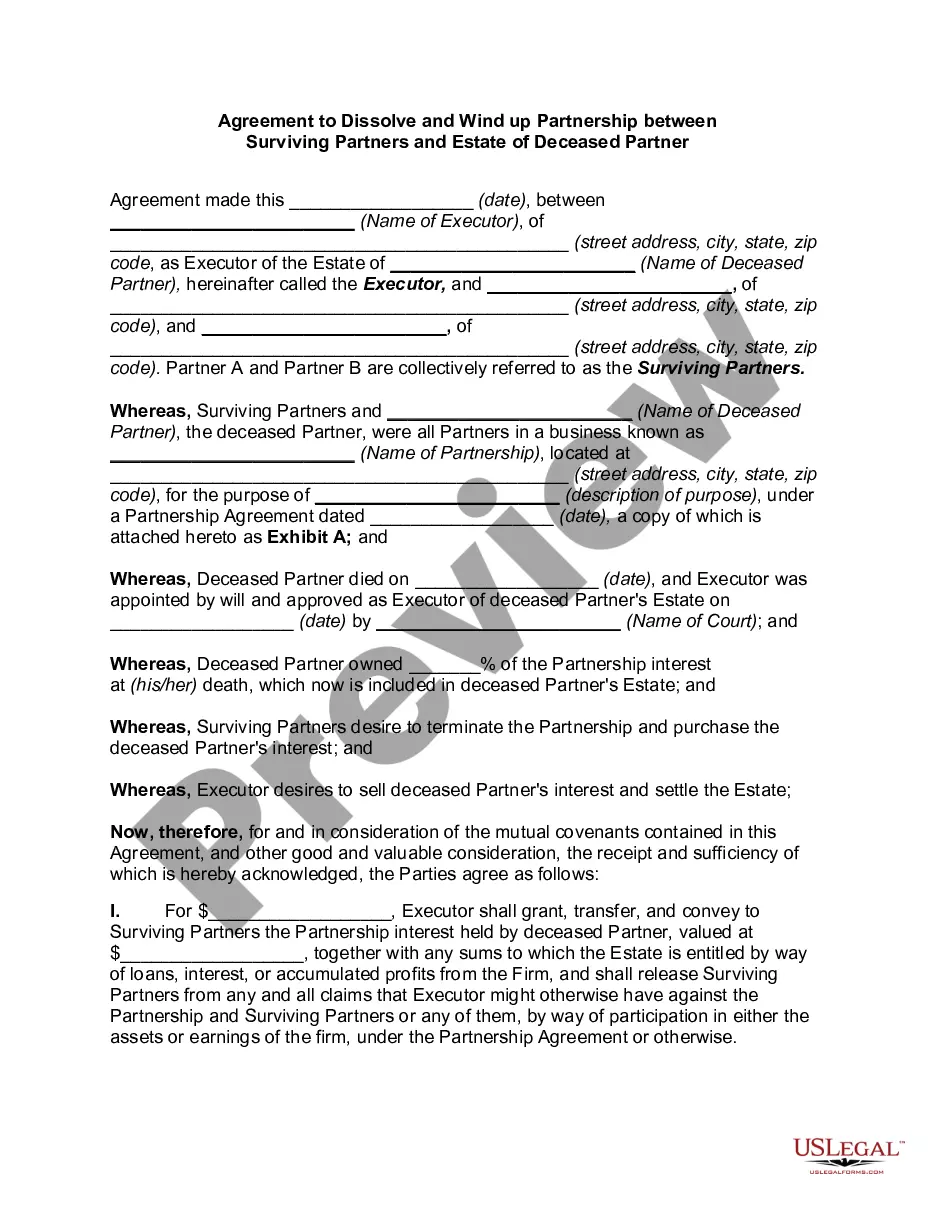




When to use this document
You should use this Last Will and Testament when you are in a civil union and have adult children from a previous marriage. This document is crucial in ensuring that your assets are distributed according to your wishes while minimizing potential conflicts among beneficiaries. It is particularly important if your financial situation has changed, or if you want to ensure that your civil union partner is adequately provided for after your passing.
Who this form is for
- Individuals in a civil union.
- Those with adult children from a prior marriage.
- Anyone needing a clear, legally enforceable method of asset distribution after death.
- People looking to appoint an executor for their estate tasks.
Steps to complete this form
- Fill in your name and county of residence at the beginning of the form.
- Enter the name of your civil union partner and provide details for your adult children.
- Specify any particular property you wish to leave to named beneficiaries.
- Designate who will receive your homestead and any remaining property.
- Sign the will in front of two witnesses and complete the self-proving affidavit if applicable.
Does this document require notarization?
Yes, this form must be notarized to be legally valid in Massachusetts. A notary public must witness the signing of the will, which helps to affirm the authenticity of the document and ensures it can easily be admitted to probate. US Legal Forms provides integrated online notarization options for your convenience.
Get your form ready online
Our built-in tools help you complete, sign, share, and store your documents in one place.
Make edits, fill in missing information, and update formatting in US Legal Forms—just like you would in MS Word.
Download a copy, print it, send it by email, or mail it via USPS—whatever works best for your next step.
Sign and collect signatures with our SignNow integration. Send to multiple recipients, set reminders, and more. Go Premium to unlock E-Sign.
If this form requires notarization, complete it online through a secure video call—no need to meet a notary in person or wait for an appointment.
We protect your documents and personal data by following strict security and privacy standards.

Make edits, fill in missing information, and update formatting in US Legal Forms—just like you would in MS Word.

Download a copy, print it, send it by email, or mail it via USPS—whatever works best for your next step.

Sign and collect signatures with our SignNow integration. Send to multiple recipients, set reminders, and more. Go Premium to unlock E-Sign.

If this form requires notarization, complete it online through a secure video call—no need to meet a notary in person or wait for an appointment.

We protect your documents and personal data by following strict security and privacy standards.
Common mistakes
- Not having the will signed in the presence of the required witnesses.
- Failing to update the will after significant life changes, such as marriage or the birth of additional children.
- Neglecting to clearly outline wishes regarding specific assets, leading to potential disputes.
- Not considering joint ownership of assets, which may bypass the will during distribution.
Advantages of online completion
- Convenience of filling out the document from home at your own pace.
- Easily editable fields allow for personalization without legal jargon disruptions.
- Access to attorney-drafted templates ensuring legal compliance.
- Integration with online notarization services for quick and secure witnessing.
Looking for another form?
Form popularity
FAQ
No, in Massachusetts, it is not necessary to notarize your will to make it legal. Massachusetts does, however, allow you to make your will "self-proving." A self-proving will speeds up probate because the court can accept the will without contacting the witnesses who signed it.
Include personal identifying information. Include a statement about your age and mental status. Designate an executor. Decide who will take care of your children. Choose your beneficiaries. List your funeral details. Sign and date your Last Will and Testament.
Signature: The will must be signed by the testator or by someone else in the testator's name in his presence, by his direction. Witnesses: A Massachusetts will must be signed by at least two witnesses, who should not also be beneficiaries in the will. Writing: A Massachusetts will must be in writing.
No, in Massachusetts, it is not necessary to notarize your will to make it legal. Massachusetts does, however, allow you to make your will "self-proving." A self-proving will speeds up probate because the court can accept the will without contacting the witnesses who signed it.
Does Massachusetts recognize domestic partnerships? Yes. Massachusetts allows any couple to register for domestic partnership if they meet certain requirements. Requirements for domestic partnership can be viewed in the section above that lists them.
No -- you can create your own will in Massachusetts, using Nolo's do-it-yourself will software or online will programs. You may want to consult a lawyer in some situations, however. For example, if you think that your will might be contested or if you want to disinherit your spouse, you should talk with an attorney.
If you die intestate, according to Massachusetts intestacy law, everything goes to your next of kin. Your next of kin are the people who have the closest relation to you. If you're married, then that's your spouse. If you're not married, your closest blood relations or equivalent, will inherit your property.
Massachusetts is one of only three states that recognizes Health Care Proxies but does not recognize Living Wills. Living Wills are still potentially useful because they guide Agents and physicians about the types of choices a person would make.
What happens if you die without a will? "If you die without a will in Massachusetts, your assets will go to your closest relatives under state 'intestate succession' laws.