Office Space Sublease the Right to use Parking Spaces
Understanding this form
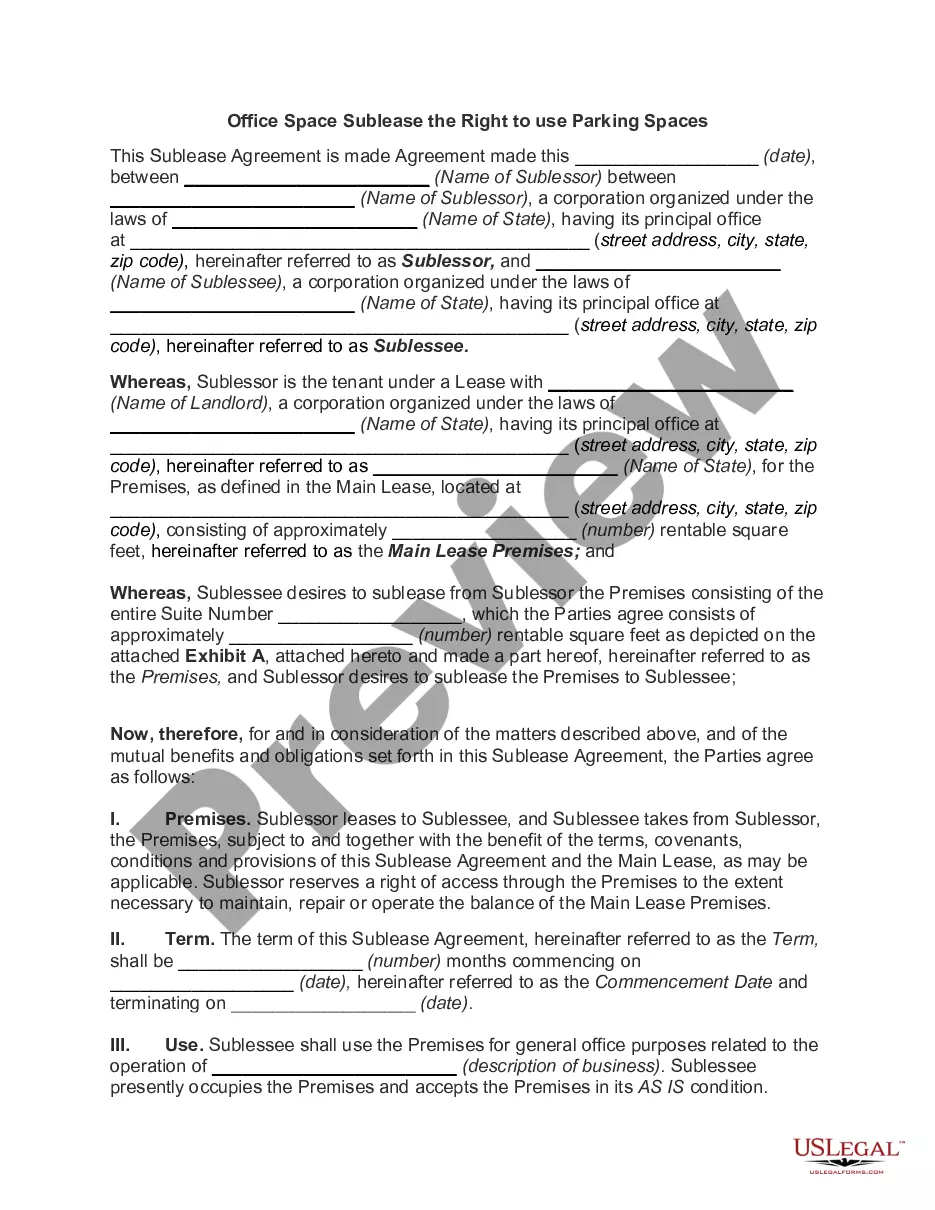
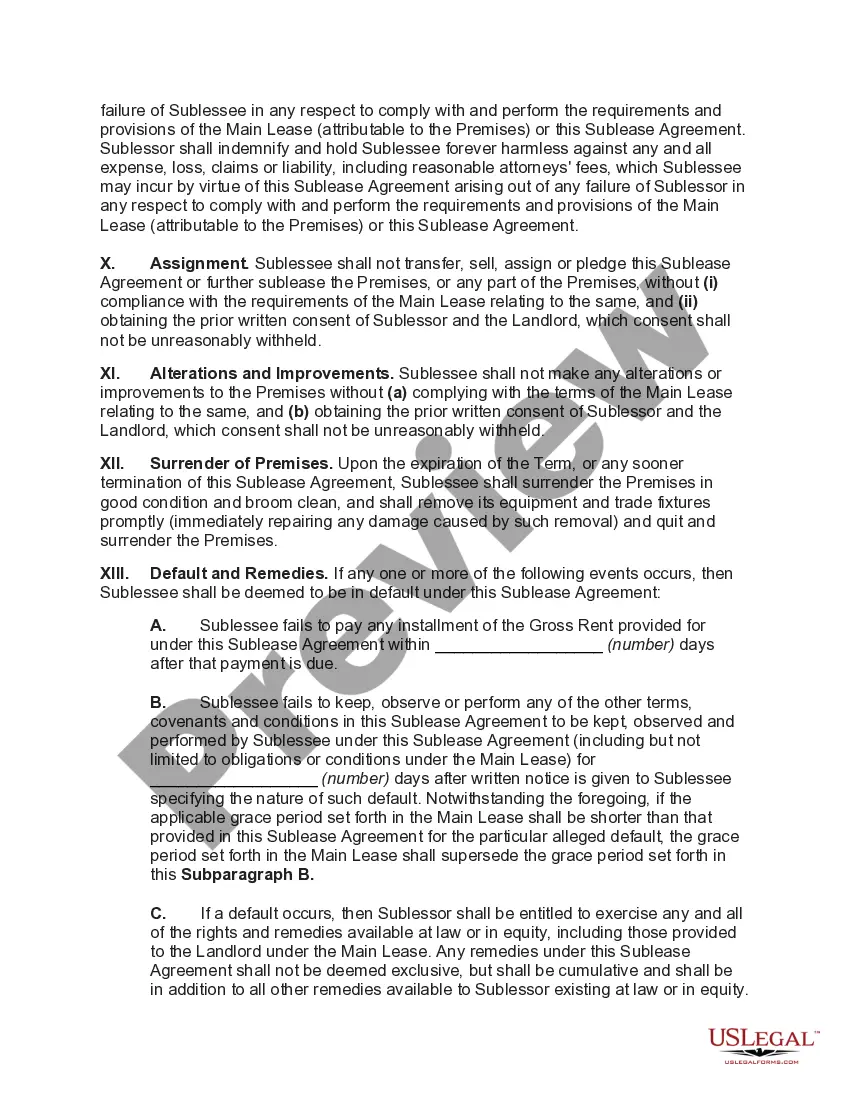
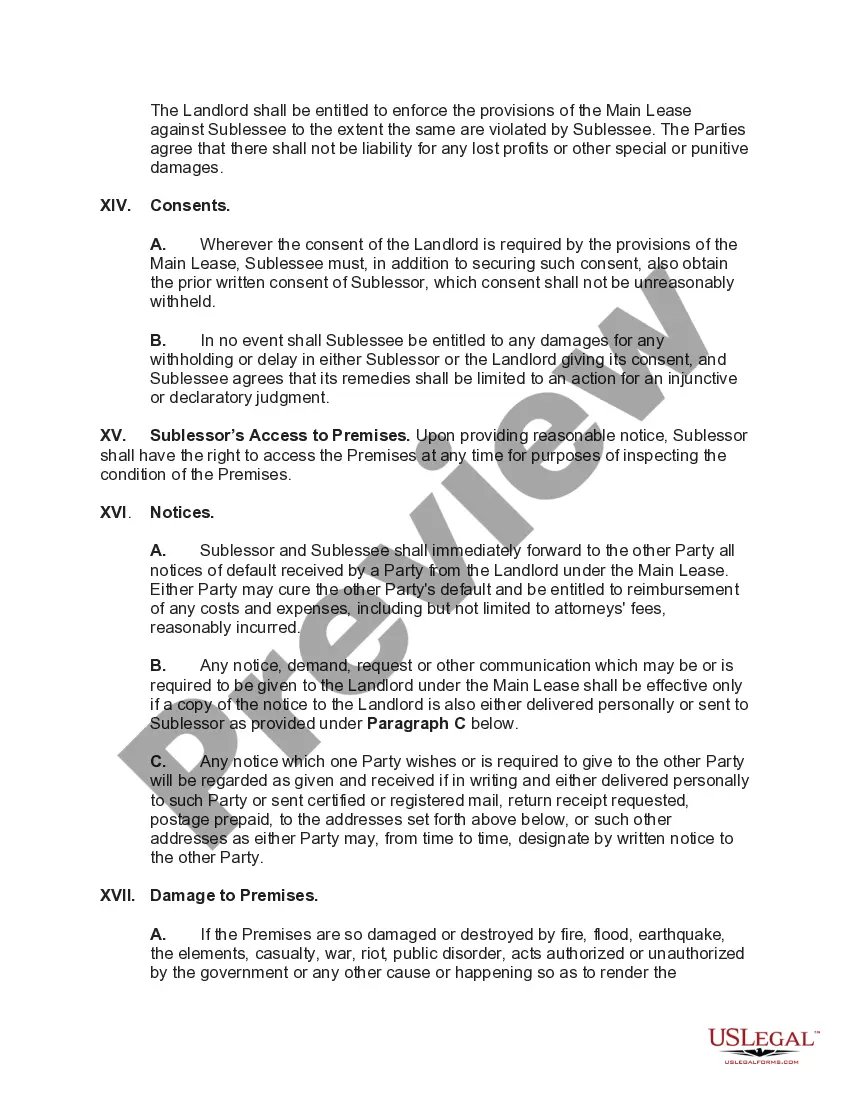
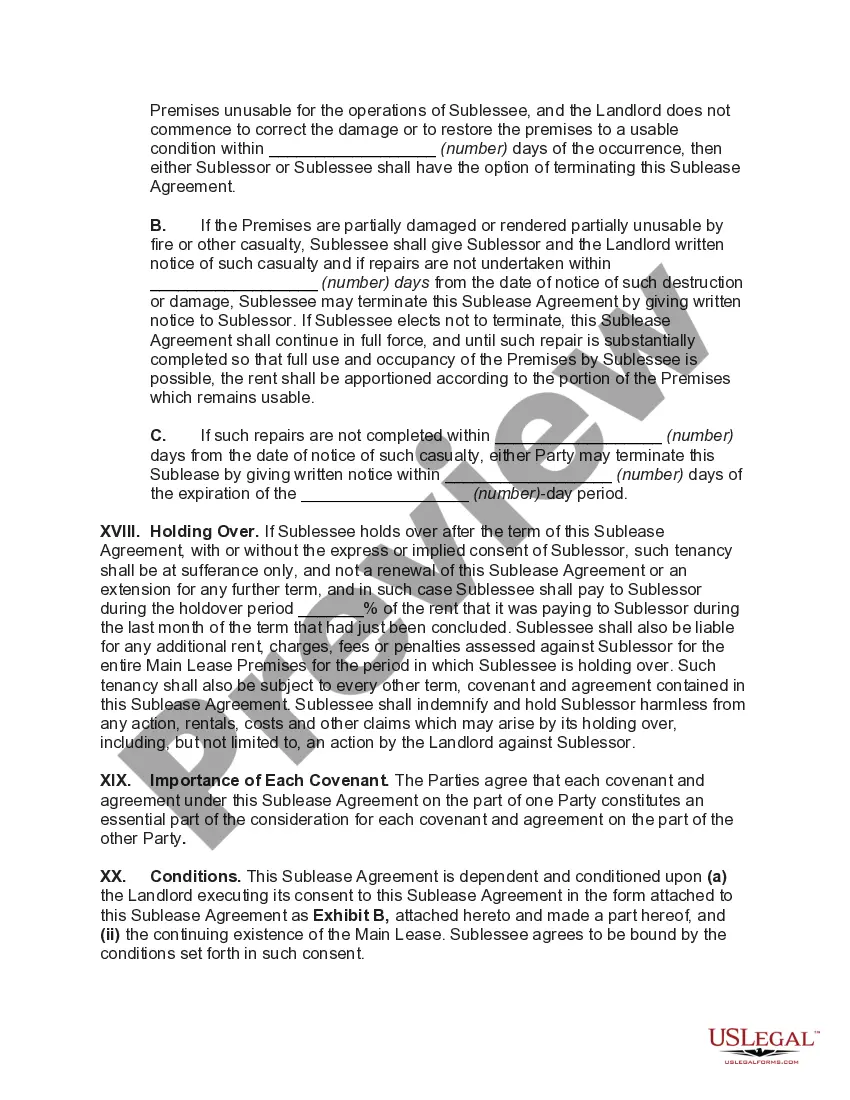
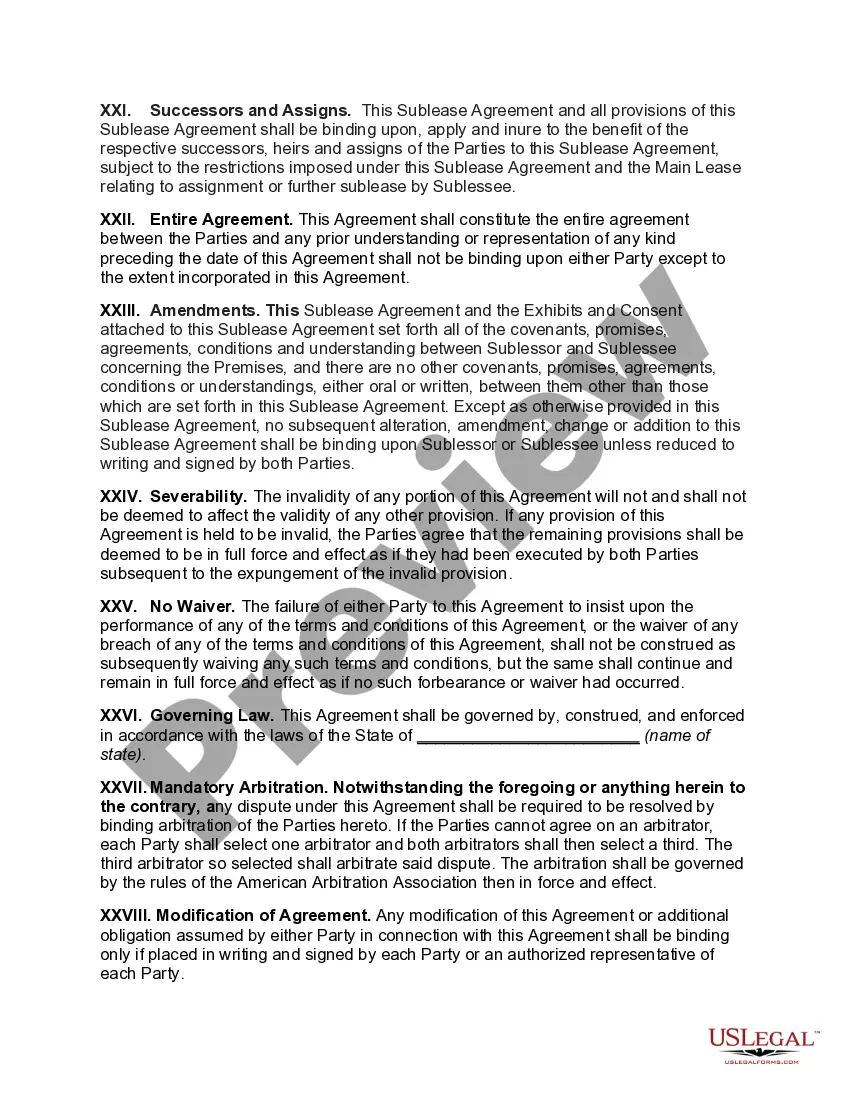
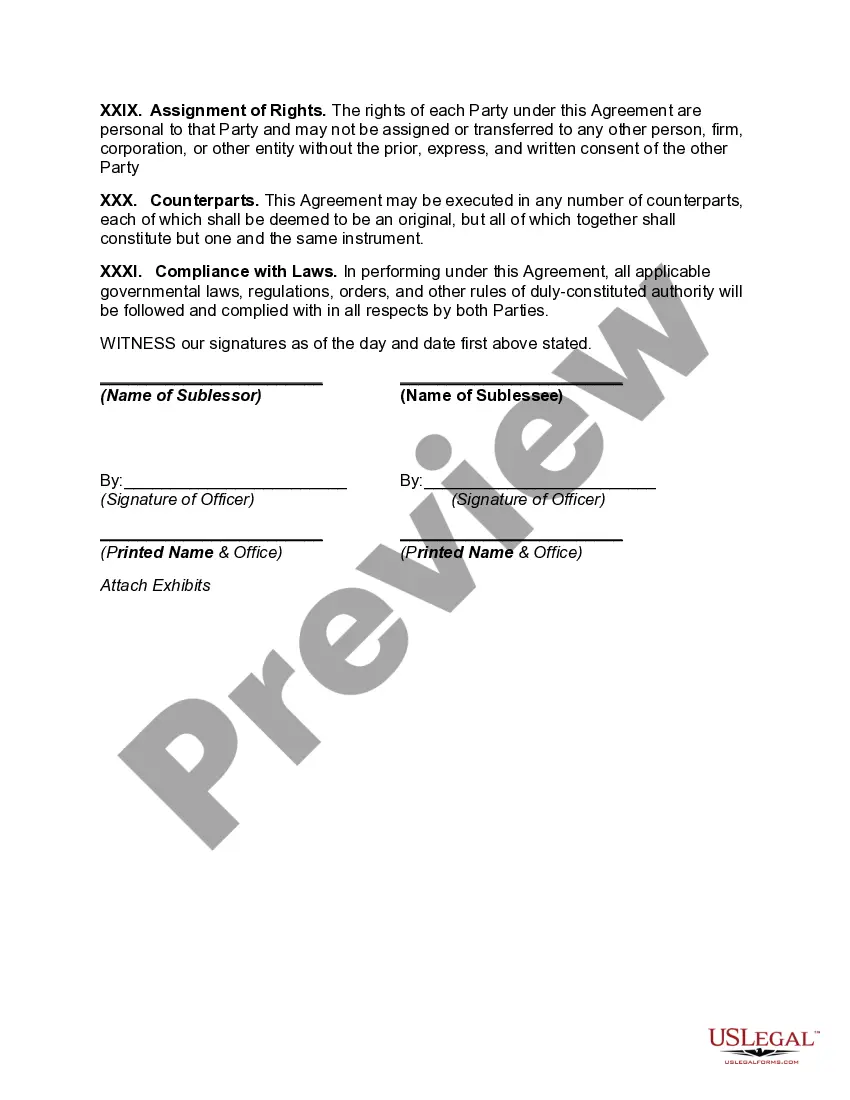
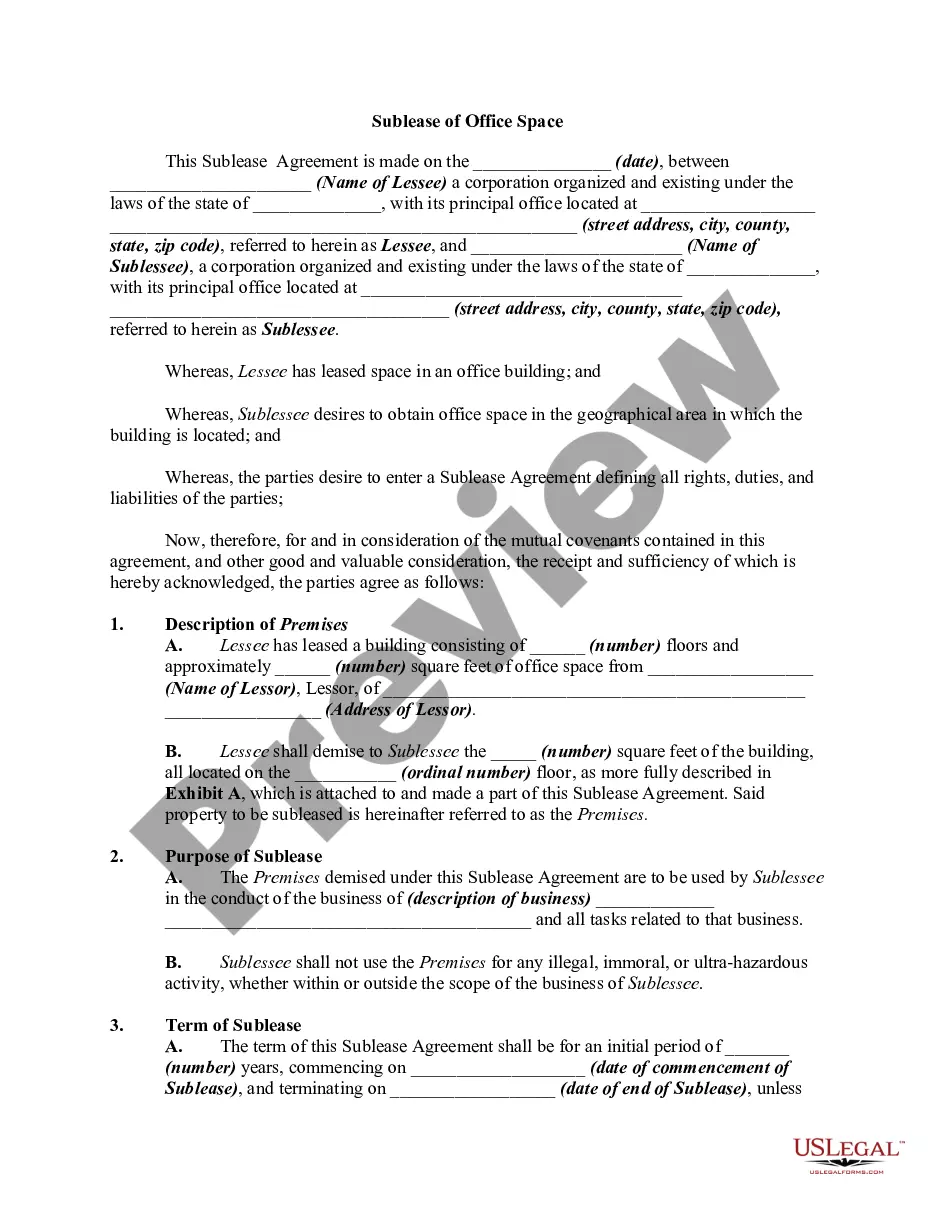
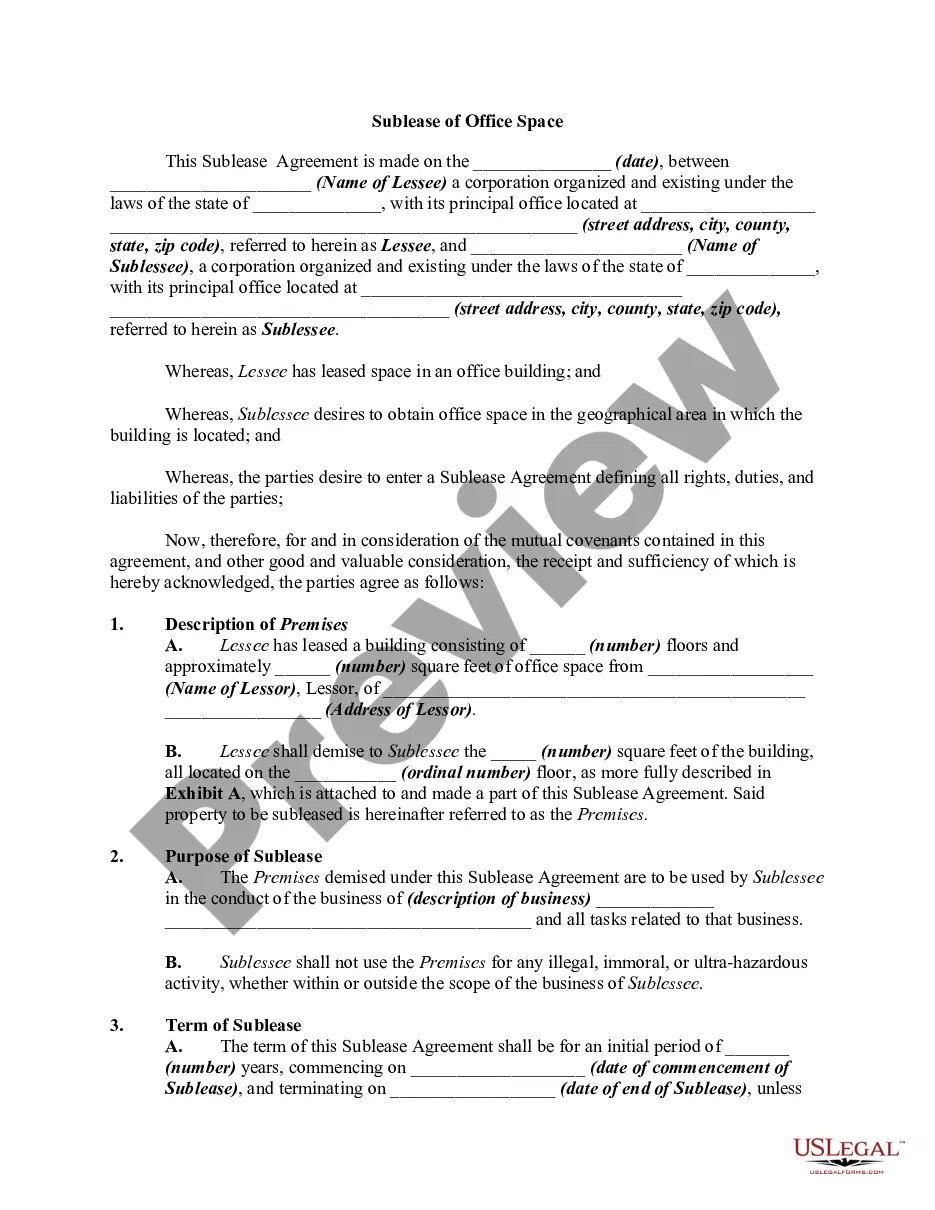
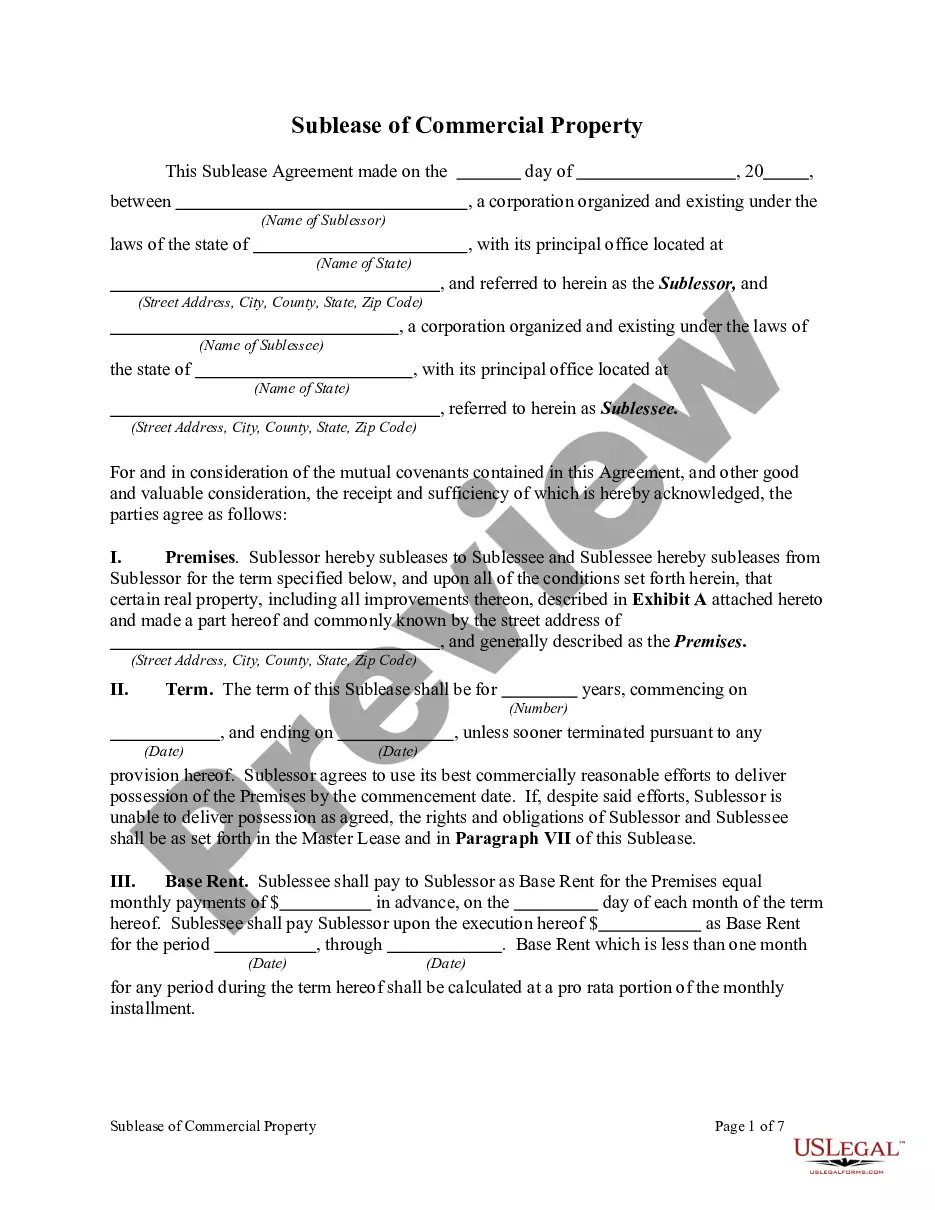
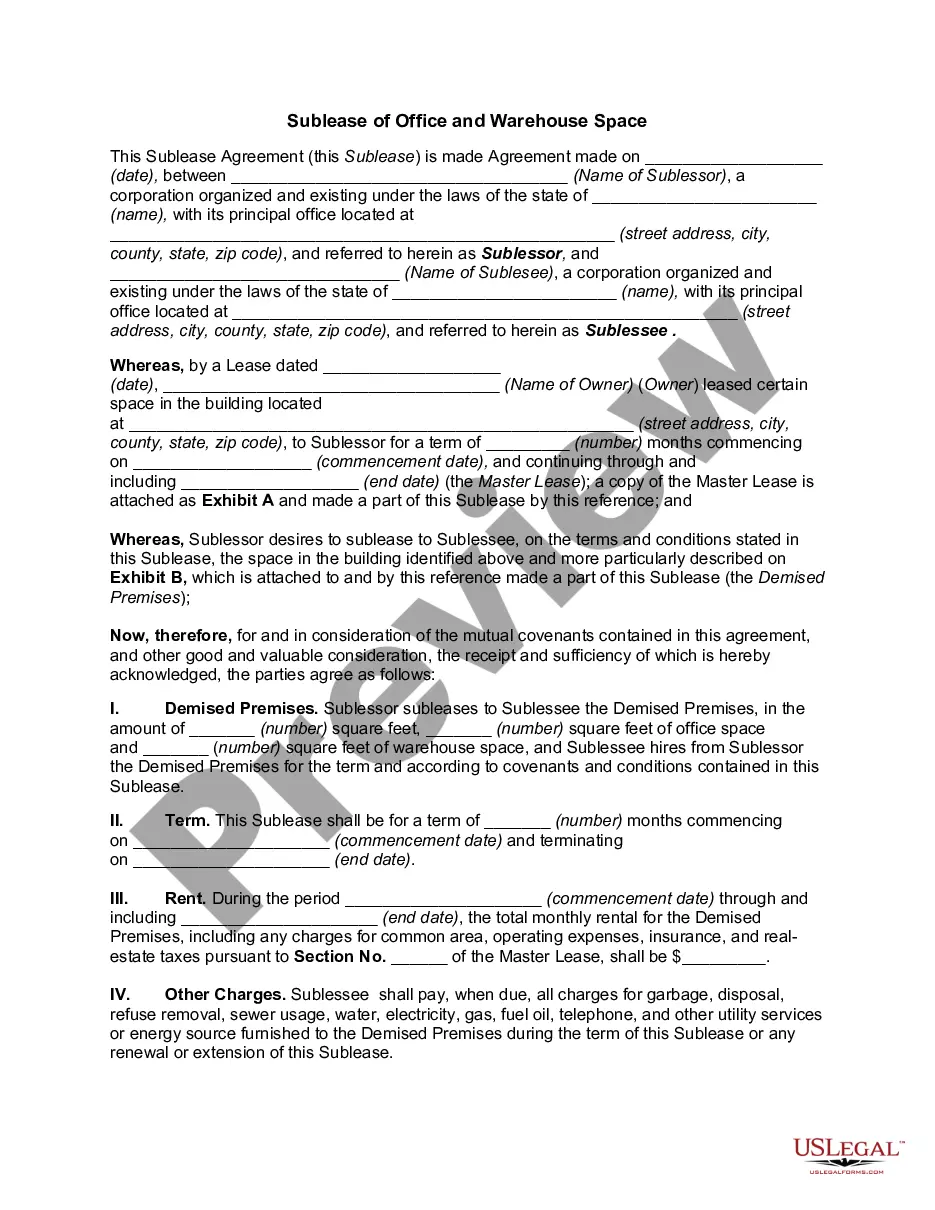
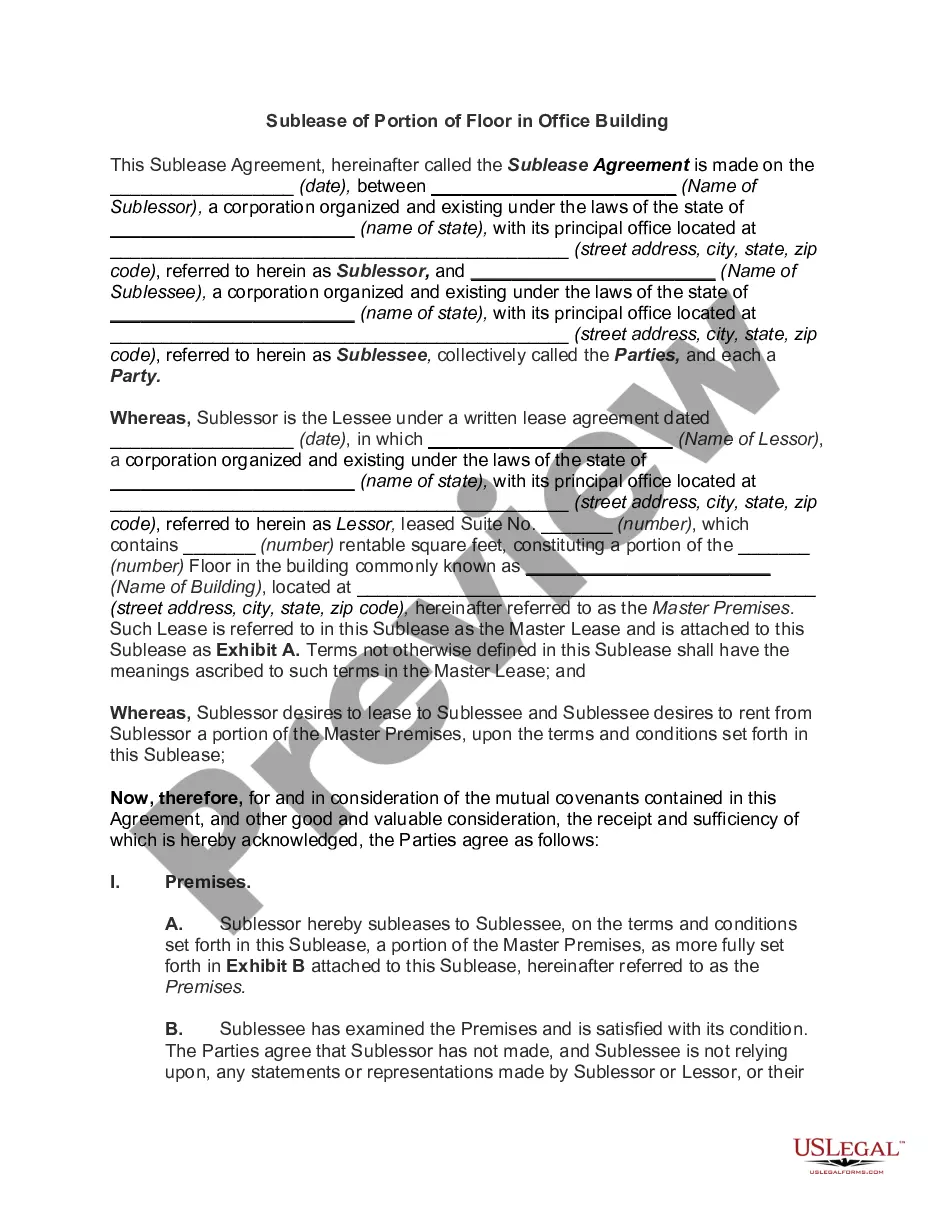
The Office Space Sublease Agreement for the right to use parking spaces is a legal document that allows a tenant (sublessor) to sublease part of a leased commercial property, including specific rights to parking spaces, to another party (sublessee). This agreement outlines the terms of the sublease and defines the responsibilities of both the sublessor and sublessee. It ensures that the sublessee has clear rights to occupy the space and use parking, while also maintaining the sublessorâs obligations under the main lease with the landlord.
Key components of this form
- Details of the parties involved: Names and addresses of the sublessor and sublessee.
- Premises information: Description and specific details of the subleased space.
- Term of sublease: Duration of the agreement, including start and end dates.
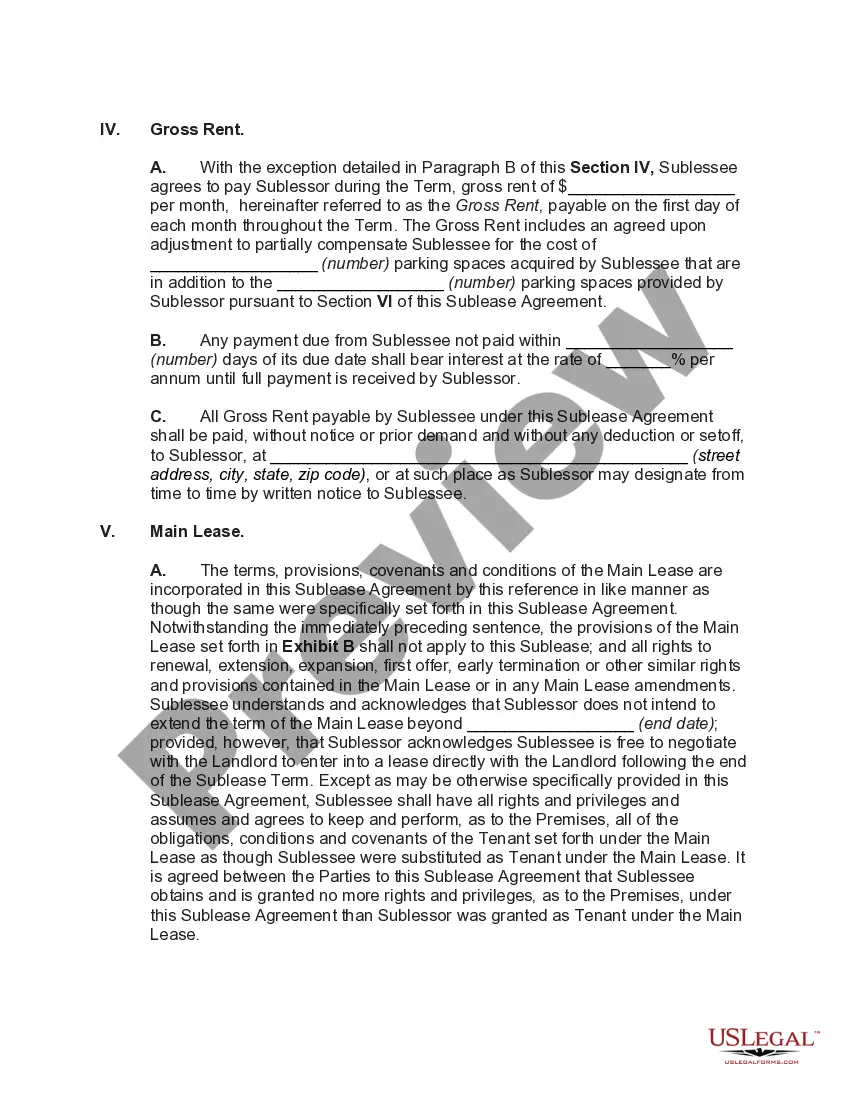
- Gross rent: Amount of rent to be paid by the sublessee for the space and any adjustments for additional parking spaces.
- Parking rights: Allocation of designated parking spaces and related costs.
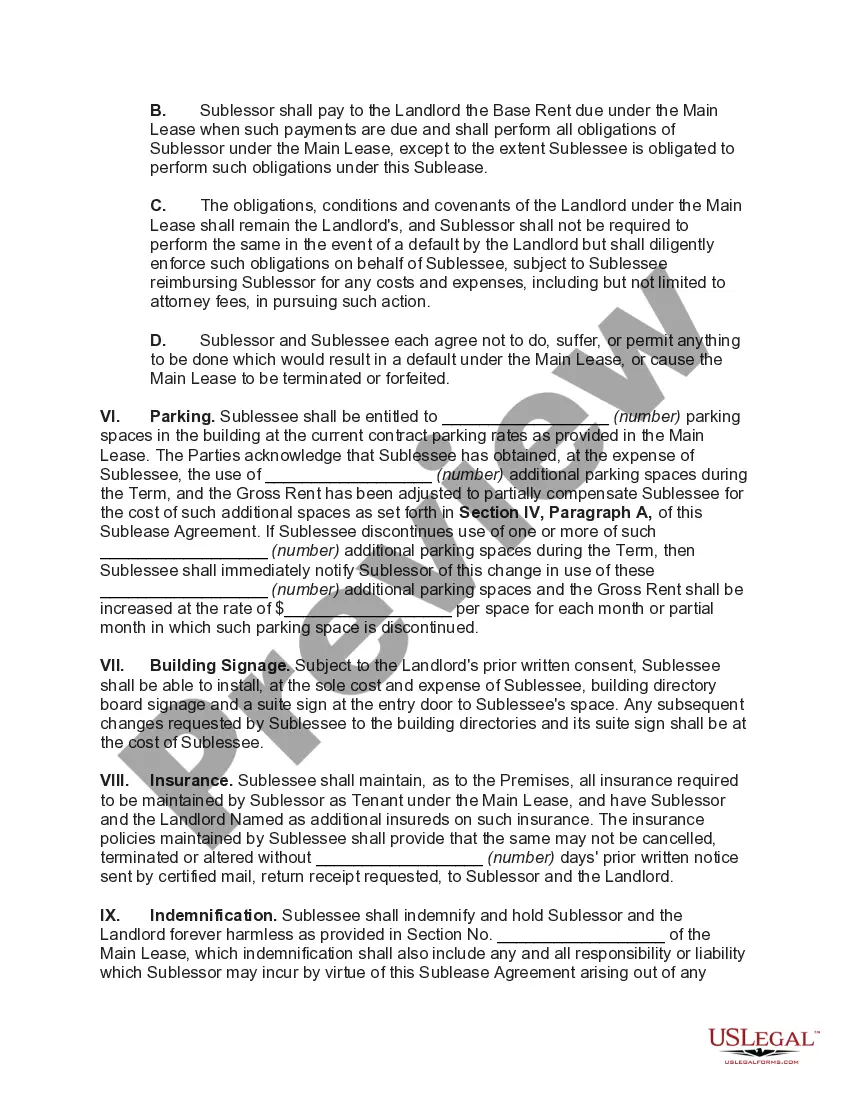
- Responsibilities: Outline of obligations for both parties, including maintenance and insurance requirements.
When to use this form
This form is useful when a tenant needs to sublease a part of their office space, particularly when it includes rights to specific parking areas. Common scenarios include businesses downsizing or relocating that want to retain their original lease while sharing costs, or if a tenant needs to temporarily vacate their space but wants to maintain their lease agreement.
Who can use this document
- Commercial tenants looking to sublease office space.
- Businesses needing extra parking space for employees or clients.
- Individuals or corporations wishing to retain rental rights while subletting part of their lease.
- Landlords who wish to provide clear guidelines to tenants about subleasing procedures.
Steps to complete this form
- Identify the parties involved by entering the names and addresses of the sublessor and sublessee.
- Specify the premises being subleased, including details about the space and any associated parking rights.
- Complete the term of the lease by filling in the duration (in months) and the start and end dates.
- Enter the agreed gross rent amount and any additional details regarding parking spaces.
- Make sure both parties sign and date the agreement, indicating their acceptance of the terms.
Does this form need to be notarized?
This form does not typically require notarization unless specified by local law. However, confirming with legal counsel can provide clarity specific to your jurisdiction.
Get your form ready online
Our built-in tools help you complete, sign, share, and store your documents in one place.
Make edits, fill in missing information, and update formatting in US Legal Forms—just like you would in MS Word.
Download a copy, print it, send it by email, or mail it via USPS—whatever works best for your next step.
Sign and collect signatures with our SignNow integration. Send to multiple recipients, set reminders, and more. Go Premium to unlock E-Sign.
If this form requires notarization, complete it online through a secure video call—no need to meet a notary in person or wait for an appointment.
We protect your documents and personal data by following strict security and privacy standards.

Make edits, fill in missing information, and update formatting in US Legal Forms—just like you would in MS Word.

Download a copy, print it, send it by email, or mail it via USPS—whatever works best for your next step.

Sign and collect signatures with our SignNow integration. Send to multiple recipients, set reminders, and more. Go Premium to unlock E-Sign.

If this form requires notarization, complete it online through a secure video call—no need to meet a notary in person or wait for an appointment.

We protect your documents and personal data by following strict security and privacy standards.
Mistakes to watch out for
- Failing to obtain the landlord's consent before subleasing.
- Not specifying the exact parking spaces included in the agreement.
- Omitting necessary details about rent adjustments and payment due dates.
- Not clearly defining the responsibilities of both parties, which can lead to disputes.
Benefits of using this form online
- Convenience of filling out and downloading the form from anywhere.
- Editable fields allow customization to fit specific needs.
- Access to forms drafted by licensed attorneys ensures legal compliance.
- Instant availability saves time compared to traditional methods of obtaining legal documents.
Looking for another form?
Form popularity
FAQ
Three year leases fall right in the middle. Usually, landlords are hesitant to go with a 1 year or 6 month lease. If you're going to go with a shorter-term lease, you should expect to have less room to work with on certain improvements and customizations you may want to make for the office space.
Gross Lease Gross leases are most common for commercial properties such as offices and retail space. The tenant pays a single, flat amount that includes rent, taxes, utilities, and insurance. The landlord is responsible for paying taxes, utilities, and insurance from the rent fees.
You must consult your landlord If you're renting the property, you need to make sure you're allowed to rent out the parking space. This is technically subletting. It could be a breach of your tenancy agreement, so it's best to get written consent from your landlord or agent.
Commercial leases are typically three to five years. That guarantees enough rental income for the landlords to recoup their investment. Leases are often negotiable, but for a commercial lease, landlords frequently allow customization of the space for the sake of the renting business.
A tenant parking provision outlines the area in which you as a tenant are allowed to park, and it explains who is responsible (the tenant or landlord) for parking space disputes and maintenance. Typical parking provisions fall under one of two categories: reserved or unreserved.
A Triple Net Lease (NNN Lease) is the most common type of lease in commercial buildings. In a NNN lease, the rent does not include operating expenses. Operating expenses include utilities, maintenance, property taxes, insurance and property management.
- Office buildings - tends to lease for 3-5 year term. Industrial properties - Many have special purpose buildings so leases are usually individualized. Tenants often want long term leases and most leases are net leases.
The landlord's consent is almost always required for an assignment or a sublease. In California, most leases state that the landlord's consent to a sublease is not to be unreasonably withheld.