Employment of Bookkeeper
What is this form?
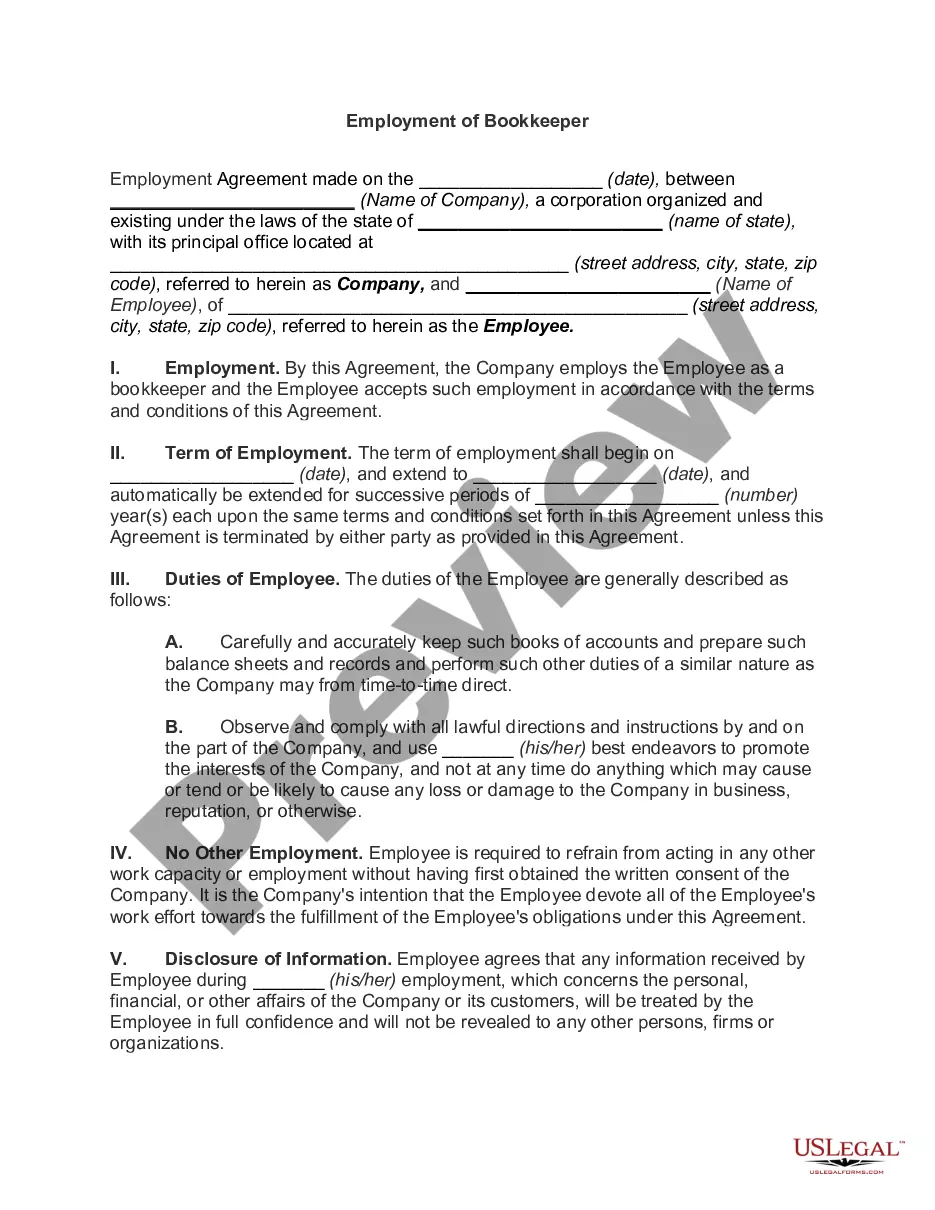
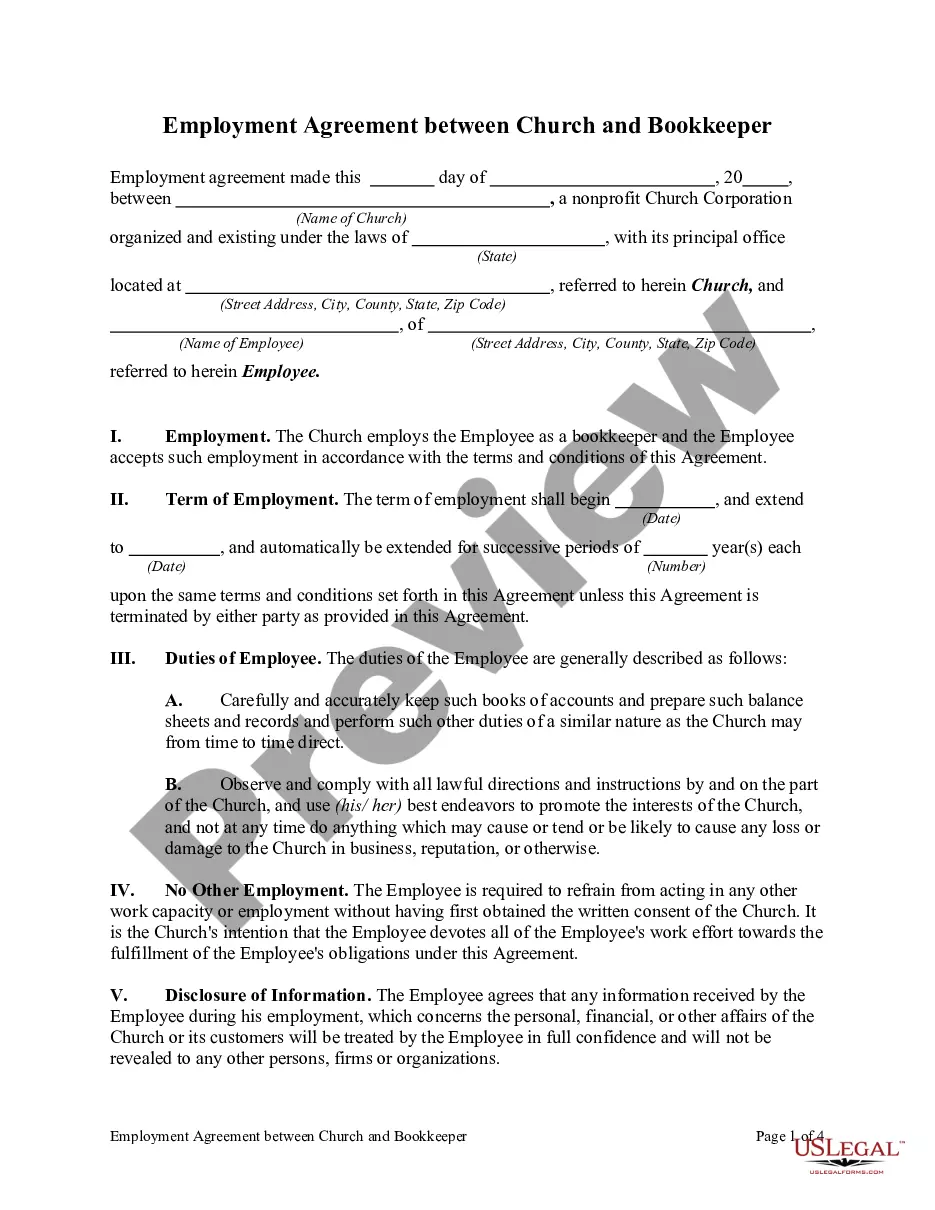
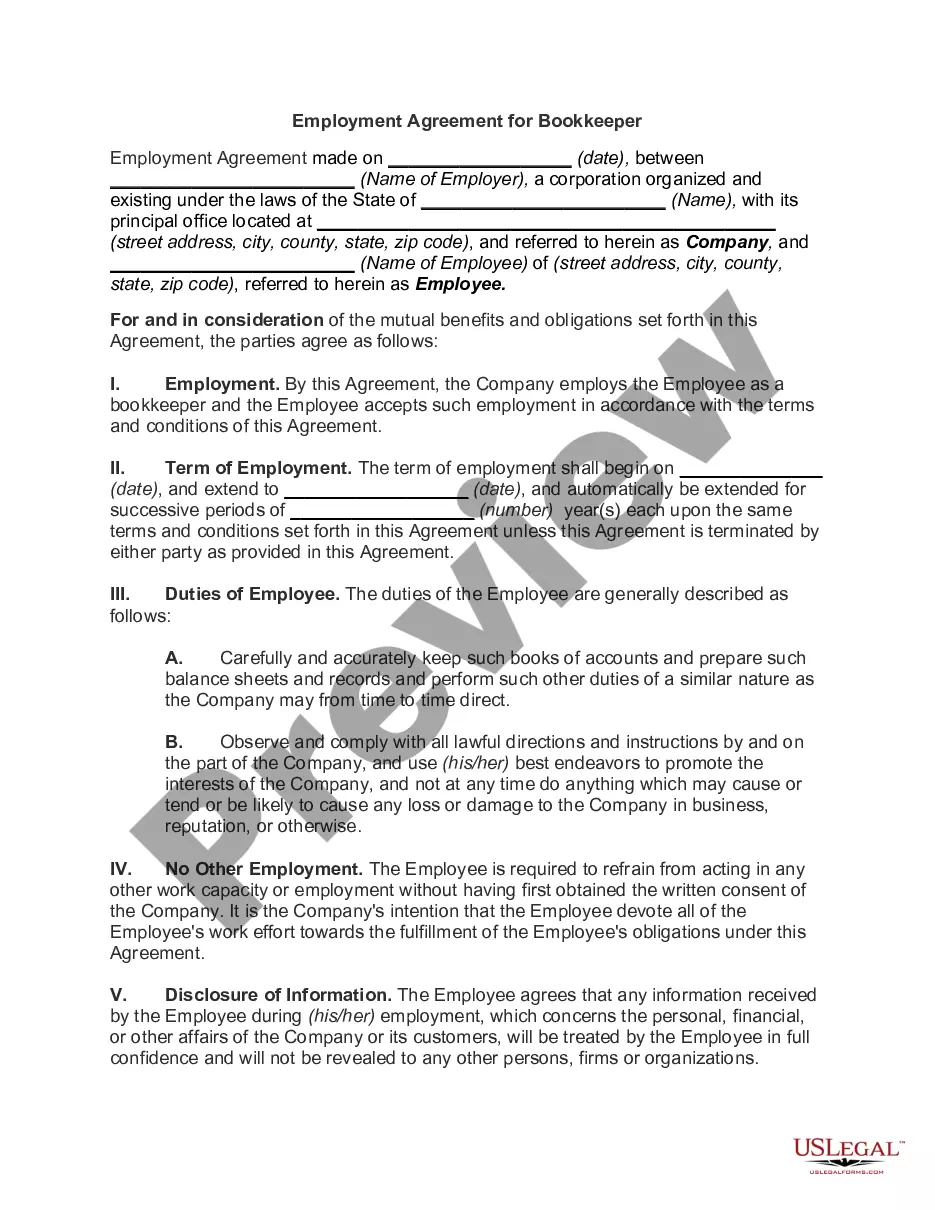
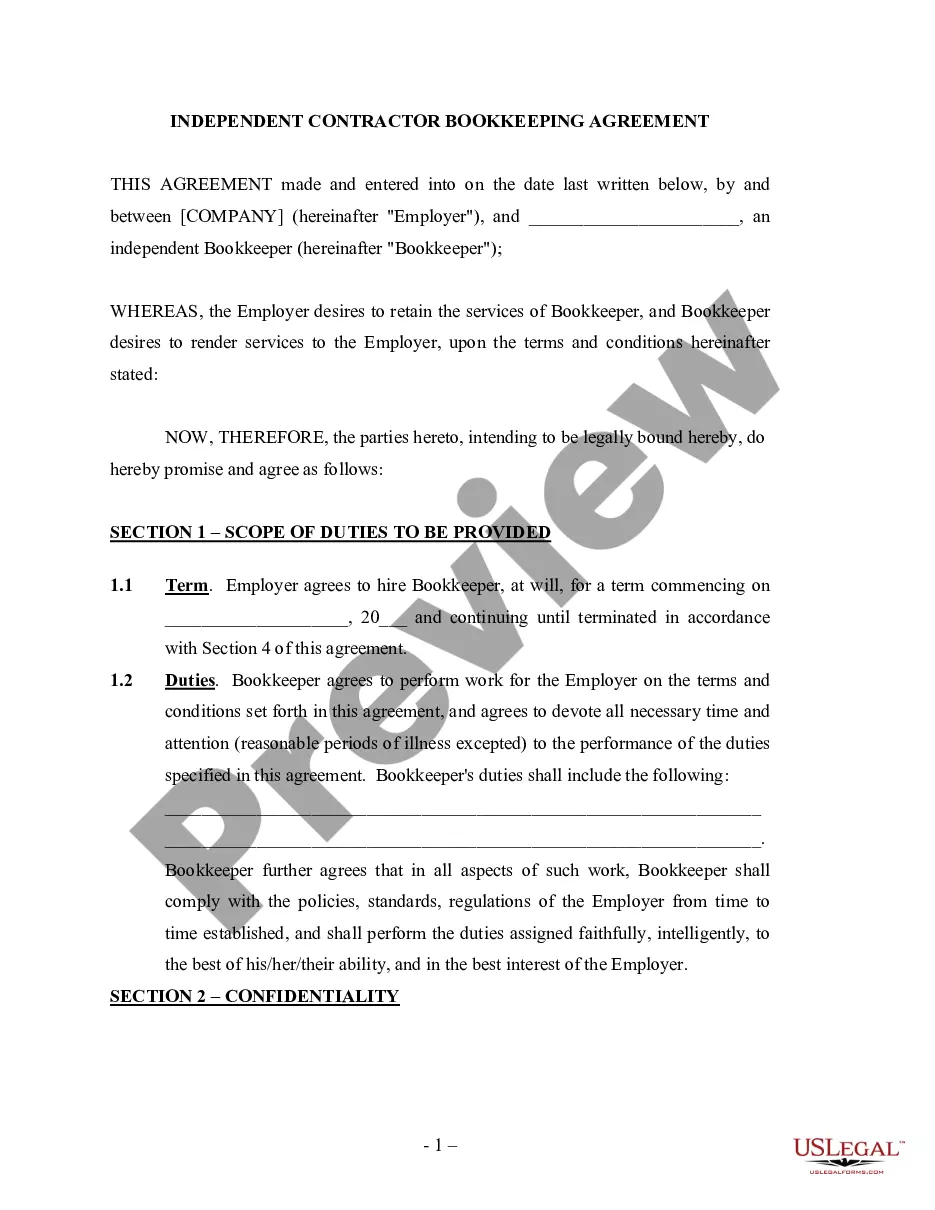
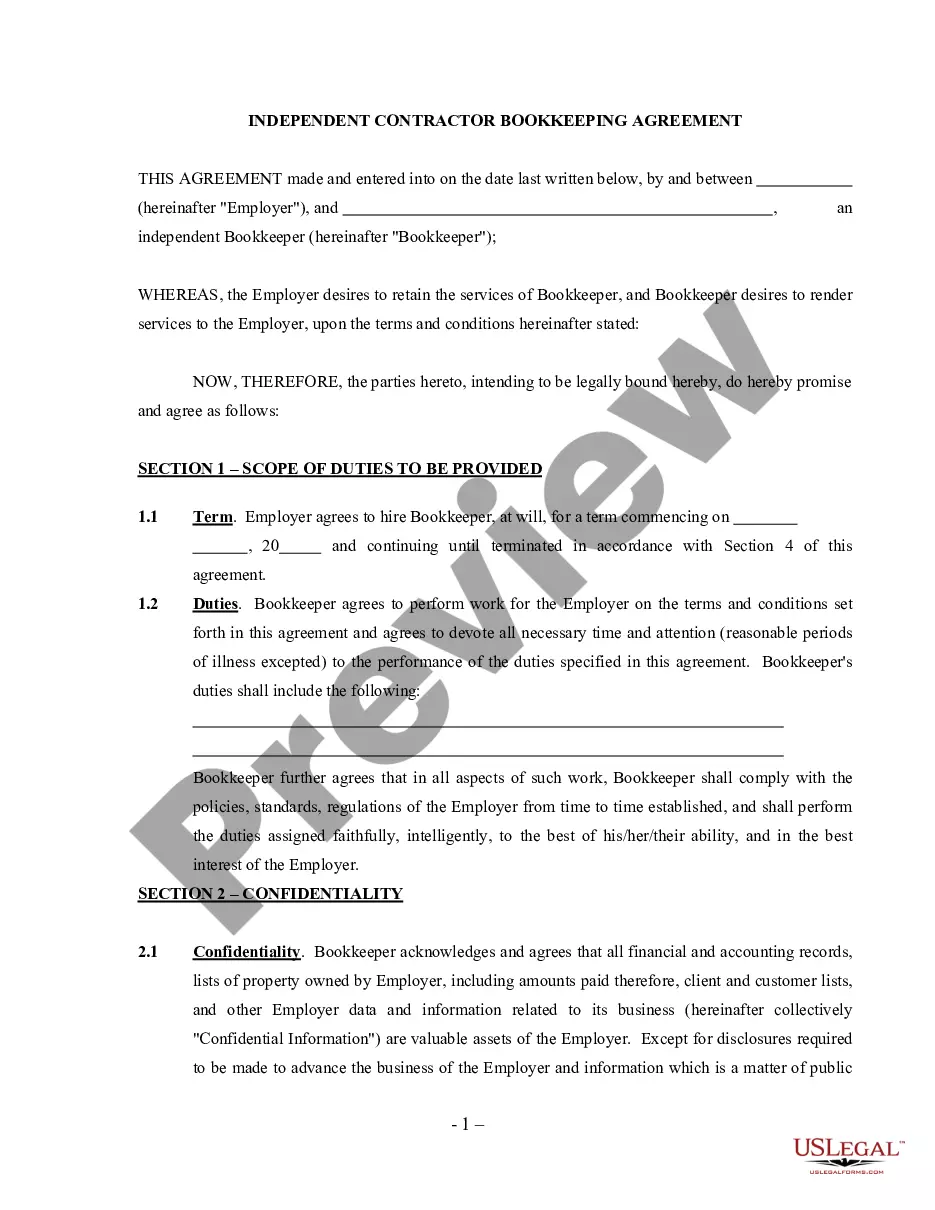
The Employment of Bookkeeper form is a legally binding agreement between a company and an employee designated as a bookkeeper. This form outlines the terms of employment, including job responsibilities, compensation, and benefits. Unlike generic employment agreements, this form is specifically tailored for bookkeeping roles, detailing unique duties related to financial records and reporting, making it essential for clear expectations in this financial position.
Key components of this form
- Employment section, establishing the relationship between the Company and Employee.
- Term of employment, specifying the start date and duration of the agreement.
- Duties of Employee, outlining specific bookkeeping responsibilities.
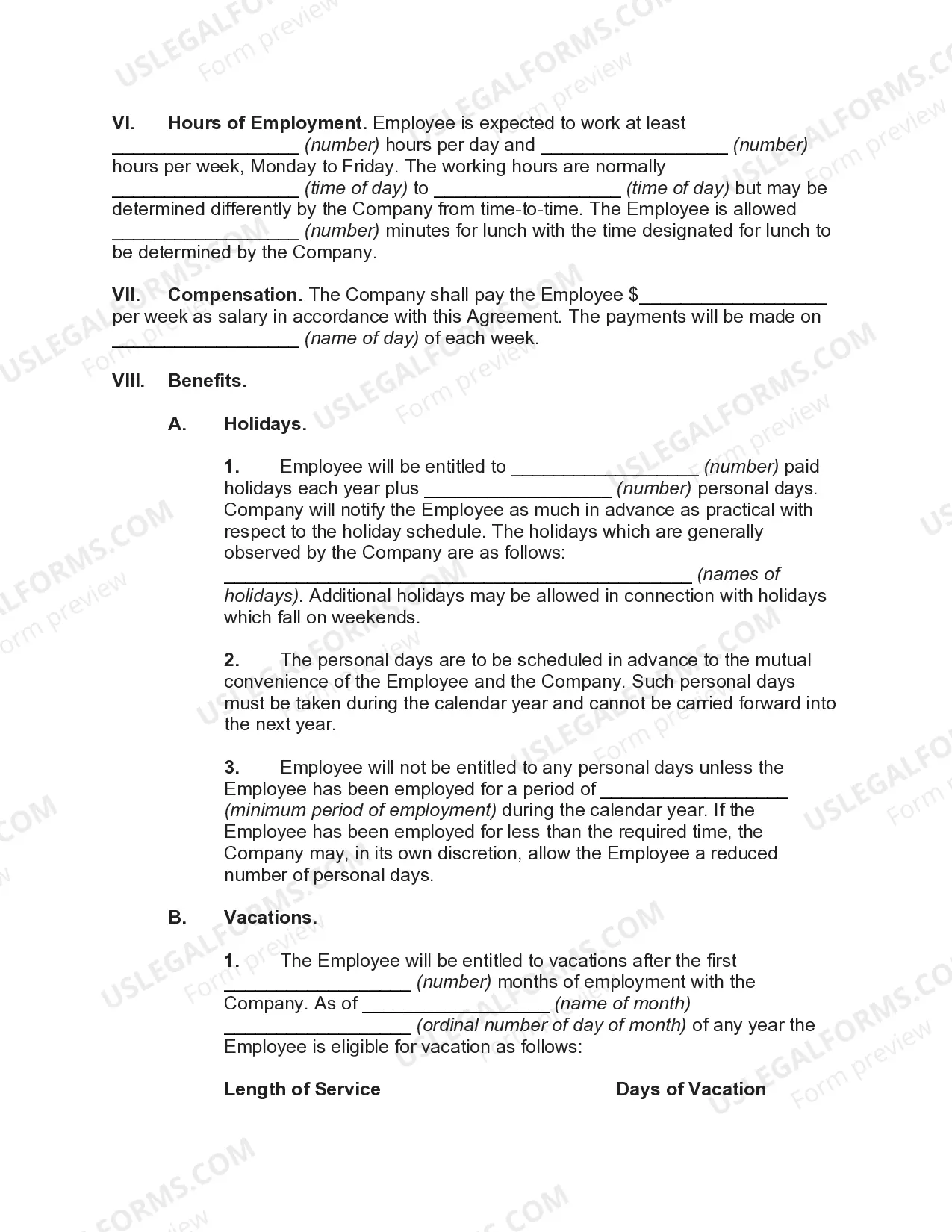
- Compensation details, including salary and payment schedule.
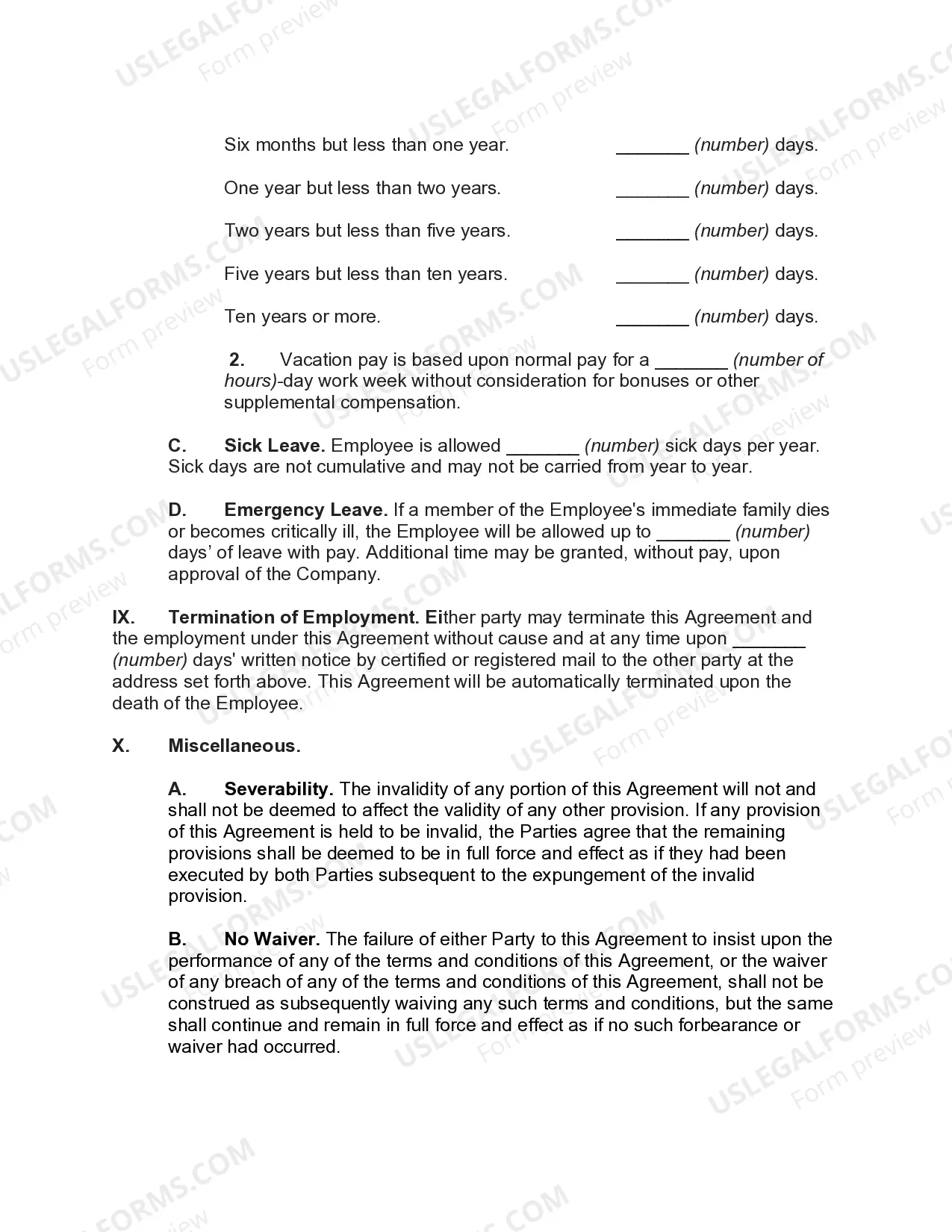
- Benefits, covering vacation, holidays, and sick leave entitlements.
- Termination procedures, including notice requirements for ending employment.
When to use this document
This form should be used when a company hires a bookkeeper and needs a formal agreement that outlines the terms and conditions of the employment. It is suitable for both new hires and existing employees transitioning into bookkeeping roles, providing clear documentation of job expectations and legal protections for both parties.
Who needs this form
- Employers looking to formalize the hiring of a bookkeeper.
- Businesses that require clear contractual terms for financial positions.
- Employees who are offered a bookkeeping position and need to understand their rights and responsibilities.
How to complete this form
- Identify the parties involved by entering the Company name and Employee details.
- Fill in the start date and duration of employment in the Term of Employment section.
- Specify the duties expected of the Employee in their bookkeeping role.
- Determine and enter the salary and pay schedule for the Employee.
- Detail the benefits offered, including vacation days and sick leave entitlements.
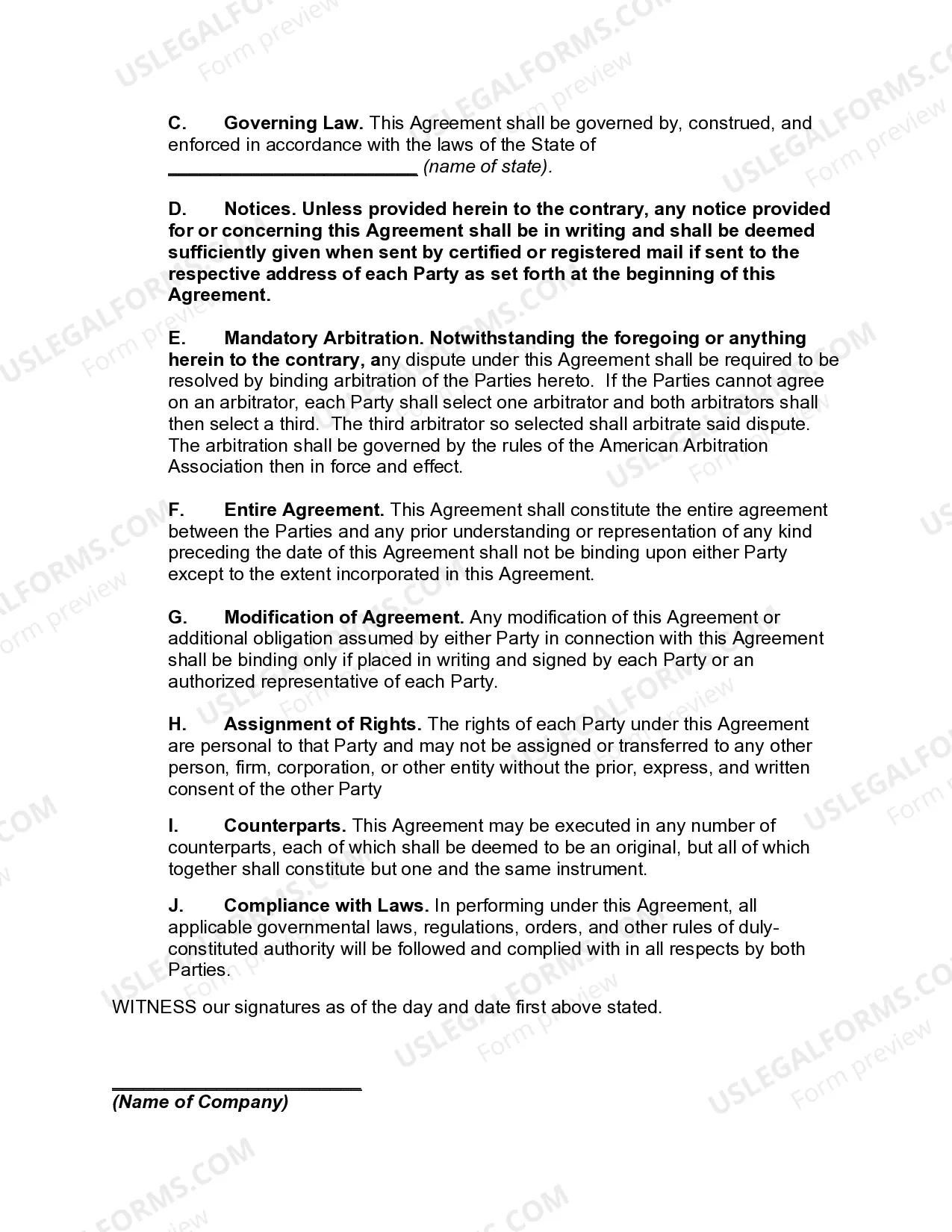
- Ensure both parties sign and date the agreement to finalize the employment contract.
Does this document require notarization?
This form does not typically require notarization unless specified by local law. It is advisable to check specific state requirements regarding notarization for employment contracts.
Get your form ready online
Our built-in tools help you complete, sign, share, and store your documents in one place.
Make edits, fill in missing information, and update formatting in US Legal Forms—just like you would in MS Word.
Download a copy, print it, send it by email, or mail it via USPS—whatever works best for your next step.
Sign and collect signatures with our SignNow integration. Send to multiple recipients, set reminders, and more. Go Premium to unlock E-Sign.
If this form requires notarization, complete it online through a secure video call—no need to meet a notary in person or wait for an appointment.
We protect your documents and personal data by following strict security and privacy standards.

Make edits, fill in missing information, and update formatting in US Legal Forms—just like you would in MS Word.

Download a copy, print it, send it by email, or mail it via USPS—whatever works best for your next step.

Sign and collect signatures with our SignNow integration. Send to multiple recipients, set reminders, and more. Go Premium to unlock E-Sign.

If this form requires notarization, complete it online through a secure video call—no need to meet a notary in person or wait for an appointment.

We protect your documents and personal data by following strict security and privacy standards.
Typical mistakes to avoid
- Failing to clearly define the Employee's duties, which can lead to misunderstandings.
- Not specifying the termination notice period, which may complicate employment cessation.
- Overlooking the requirement for both parties to sign the form, making it unenforceable.
Benefits of using this form online
- Convenience of accessing and downloading the form at any time.
- Editable content allows for company-specific customization.
- Reliability of professionally drafted legal language ensures clarity and compliance.
Looking for another form?
Form popularity
FAQ
Is being a bookkeeper hard? Yes. For the every so busy small business owner, finding the time and energy to properly maintain your books can be a taxing and arduous task.
The bookkeeper position creates financial transactions and generates reports from that information. The creation of financial transactions includes posting information to accounting journals or accounting software from such source documents as invoices to customers, cash receipts, and supplier invoices.
Record financial transactions. Reconcile bank accounts. Manage bank feeds. Handle accounts receivable. Handle accounts payable. Work with your tax preparer and assist with tax compliance. Prepare financial statements. Take on some payroll and human resource functions.
Bookkeeping services is the process of keeping records of financial transactions and preparing financial statements, such as balance sheets and income statements. In day-to-day operations, a bookkeeper would make sure employees are filing invoices and expenses correctly and handling payroll.
Keeping track of daily transactions. A bookkeeper can handle the recording of day-to-day bank transactions. Sending out invoices and managing the accounts receivable ledger. Handling the accounts payable ledger. Keeping an eye on cash flow. Preparing the books for the accountant.
13 Things Bookkeepers Do For Small Businesses. Bookkeeping. Day to Day Management of Accounts. Maintain Up-to-Date and Accurate Records. Keep Businesses Aligned With Laws. Keep You Prepared For Tax. Manage Bank Feeds. Handle Accounts Payable. Send Out Invoices and Manage Accounts Receivable.
Job Outlook Employment of bookkeeping, accounting, and auditing clerks is projected to decline 6 percent from 2019 to 2029. Technological change and automation are expected to reduce demand for these workers.
Bookkeepers prepare bank deposits by compiling data from cashiers, verifying receipts, and sending cash, checks, or other forms of payment to the bank. In addition, they may handle payroll, make purchases, prepare invoices, and keep track of overdue accounts.